×

Mongolia🇲🇳 | attractionsNational Museum of MongoliaEthnographic displays, ancient artifacts, nomadic heritage | things to do and best time to go

Explore Winter Palace of the Bogd KhanExplore Mongolian National Modern Art Gallery

Backpacking in National Museum of Mongolia
🌟 Highlightattraction ranked #3
By Johan Kruseman 🇳🇱 | Updated September 4, 2026

A heavy, ceremonial deel—blue silk, gold trim—hangs behind glass. You’re close enough to see the hand-stitched seams, but the real jolt comes from the faint scent of old leather and dust, the kind that clings to centuries-old saddles. Somewhere, a tour group’s chatter bounces off polished floors, but you’re locked in, tracing the curve of a bronze stirrup that once thundered across the steppe.

The National Museum of Mongolia sits right in the heart of Ulaanbaatar, a short walk from Sükhbaatar Square. Here’s the straight talk: this isn’t the place for adrenaline junkies or solitude seekers. It’s busy, especially in summer, and the ticket price is higher than you’d expect for Mongolia. But if you want to understand the country beyond yurts and eagle hunters, this is the real deal. The exhibits are dense, sometimes overwhelming, but they hit you with the raw, layered story of a nation that’s more than just Genghis Khan. Compared to the open wilds or the Gobi’s silence, the museum is a sensory overload—history in your face, not at your feet. Worth it? If you want Mongolia’s soul, absolutely.

Discover everything you want to know in the 📖 Mongolia Travel Guide.


Get your Mongolia guide
68 ranked highlights, routes & tips, works offline (272 pages)
Loading the map 🌍
CLICK TO FILTER
cities
towns
villages
landmarks
national parks
hikes
attractions
festivals
regions
SHOW COUNTRY’S BESTSHOW ALL

✨ Why go?
Ranked #3 attraction in Mongolia
Why National Museum of Mongolia should be on your travel list

The National Museum of Mongolia isn’t just another stop on the tourist checklist—it’s a hard-earned milestone for anyone serious about understanding this vast, often misunderstood country. Sure, it’s not the flashiest spot, and yes, it can get crowded with tour groups during peak hours. But here’s the kicker: this museum is the real deal when it comes to peeling back layers of Mongolia’s identity. You’ll find artifacts that span millennia, from the fierce days of Genghis Khan to the Soviet era’s shadow, all packed into one place. It’s a crash course in Mongolian resilience and transformation that no Instagram post can capture.

Backpackers who make time here aren’t just ticking a box—they’re diving deep into the cultural heartbeat of Mongolia. The exhibits aren’t just displays; they’re stories … read more 👉
The National Museum of Mongolia isn’t just another stop on the tourist checklist—it’s a hard-earned milestone for anyone serious about understanding this vast, often misunderstood country. Sure, it’s not the flashiest spot, and yes, it can get crowded with tour groups during peak hours. But here’s the kicker: this museum is the real deal when it comes to peeling back layers of Mongolia’s identity. You’ll find artifacts that span millennia, from the fierce days of Genghis Khan to the Soviet era’s shadow, all packed into one place. It’s a crash course in Mongolian resilience and transformation that no Instagram post can capture.

Backpackers who make time here aren’t just ticking a box—they’re diving deep into the cultural heartbeat of Mongolia. The exhibits aren’t just displays; they’re stories of survival, conquest, and reinvention. If you’re trekking across the country, this museum is a logical and rewarding pit stop that adds serious context to the landscapes and nomadic traditions you’ll witness outside. It’s a place where history hits you hard, and you walk away with a richer, more grounded understanding of Mongolia’s soul.
Want to include National Museum of Mongolia in your Mongolia route?
Create a personalized Mongolia itinerary that includes National Museum of Mongolia and the places that fit your trip — based on your travel style, budget, and available time. Get your route in seconds.

Generate my trip

💡 HighlightsDon't-miss highlights and experiences

The Chinggis Khaan Hall
This is the museum’s showstopper, and yes, you’ll be elbow-to-elbow with tour groups wielding selfie sticks. But push past the crowd and you’ll find the real deal: a room packed with armor, weapons, and relics that belonged to the Mongol Empire’s most famous son. The centerpiece is a full suit of 13th-century Mongol armor—no, it’s not a movie prop, and yes, it’s as intimidating up close as you’d hope. The hall doesn’t just glorify conquest; it lays out the raw, complicated legacy of Genghis Khan, from brutal tactics to the birth of a global postal system. If you want to understand why Mongolia still reveres him, this is your crash course.

Traditional Costume Gallery
Forget the Instagram fantasy of “nomad chic.” This gallery is a riot of color and texture, with real-deal … read more 👉
The Chinggis Khaan Hall
This is the museum’s showstopper, and yes, you’ll be elbow-to-elbow with tour groups wielding selfie sticks. But push past the crowd and you’ll find the real deal: a room packed with armor, weapons, and relics that belonged to the Mongol Empire’s most famous son. The centerpiece is a full suit of 13th-century Mongol armor—no, it’s not a movie prop, and yes, it’s as intimidating up close as you’d hope. The hall doesn’t just glorify conquest; it lays out the raw, complicated legacy of Genghis Khan, from brutal tactics to the birth of a global postal system. If you want to understand why Mongolia still reveres him, this is your crash course.

Traditional Costume Gallery
Forget the Instagram fantasy of “nomad chic.” This gallery is a riot of color and texture, with real-deal deels (traditional robes), hats, and boots from every corner of Mongolia. The craftsmanship is wild—think hand-stitched silk, silver ornaments, and boots designed for riding across the steppe, not posing for a filtered photo. The mannequins look ready to walk out and join a Naadam festival. If you’re a gear nerd or just appreciate the intersection of fashion and survival, this room is a goldmine.

Prehistoric Mongolia Exhibit
Dinosaur bones? Check. Stone tools? Check. But the real magic is how the museum connects Mongolia’s ancient past to its present. You’ll see petroglyphs and burial mounds that predate the Mongol Empire by thousands of years. It’s a reminder that this land has always been a crossroads—of tribes, of ideas, of survival strategies. The exhibit doesn’t sugarcoat the harshness of the steppe, but it does make you appreciate the ingenuity it takes to thrive here.

Religious Artifacts and Buddhist Relics
Mongolia’s spiritual history is messy, layered, and fascinating. This section pulls no punches: you’ll see Buddhist thangkas, shamanic drums, and relics that survived Soviet-era purges. The contrast between delicate gold statues and battered ritual objects tells a story of resilience and adaptation. If you want to understand how Mongolia’s soul survived decades of repression, linger here.

Personal Favorite: The Soviet Era Room
This one’s for the history junkies and anyone who thinks Mongolia is just about horses and yurts. The Soviet Era Room is blunt, unvarnished, and a little bit haunting. Propaganda posters, uniforms, and everyday objects from the socialist period are displayed without nostalgia. You’ll get a sense of how Mongolia was yanked into the 20th century—sometimes willingly, often not. It’s not pretty, but it’s honest, and it gives you context for everything else you’ll see in Ulaanbaatar.
Spotted a mistake or missing something? Contact us.

Things to do around National Museum of Mongolia

Ratings based on Tripadvisor reviews. When you book through this link, you support our work at no extra cost to you.

🌤️ When to go?Weather, crowds, and seasonal trade-offs


  • Topic: Weather – Mongolia’s brutal winters hit hard from November through March, with temperatures often plunging below -20°C (-4°F). Visiting during these months means braving icy winds and snow, which can make museum trips less enjoyable. The best weather window is late spring to early autumn, from May to September, when days are milder and more comfortable.

  • Topic: Temperature – Summer highs in Ulaanbaatar hover around 20-25°C (68-77°F), perfect for wandering the museum without overheating or freezing. Early spring and late autumn can still be chilly, dropping to near freezing, so pack layers if you go then.

  • Topic: Daylight Hours – Long summer days stretch daylight up to 16 hours in June, giving you plenty of time to explore without rushing. Winter days are short, barely 7 hours of
read more 👉

  • Topic: Weather – Mongolia’s brutal winters hit hard from November through March, with temperatures often plunging below -20°C (-4°F). Visiting during these months means braving icy winds and snow, which can make museum trips less enjoyable. The best weather window is late spring to early autumn, from May to September, when days are milder and more comfortable.

  • Topic: Temperature – Summer highs in Ulaanbaatar hover around 20-25°C (68-77°F), perfect for wandering the museum without overheating or freezing. Early spring and late autumn can still be chilly, dropping to near freezing, so pack layers if you go then.

  • Topic: Daylight Hours – Long summer days stretch daylight up to 16 hours in June, giving you plenty of time to explore without rushing. Winter days are short, barely 7 hours of light, which limits sightseeing time and can make the city feel gloomier.

  • Topic: Crowds – The museum sees a spike in visitors during the summer tourist season (June to August), especially around Naadam Festival in July. If you want a quieter experience, aim for May or September when crowds thin but the weather remains agreeable.

  • Topic: Seasonal Activities – Summer months bring cultural festivals and outdoor events that complement a museum visit, adding layers to your understanding of Mongolian heritage. Winter offers fewer activities and a more subdued city vibe, which isn’t ideal for first-timers.

  • Topic: Price Fluctuations – Accommodation and flights peak in summer, especially July, pushing up costs. Visiting in shoulder months like May or September can save you money while still offering good weather and manageable crowds.


Pro-tip: Visit in late May or early September to dodge the tourist crush, enjoy mild weather, and get the most bang for your buck without sacrificing the full cultural experience.


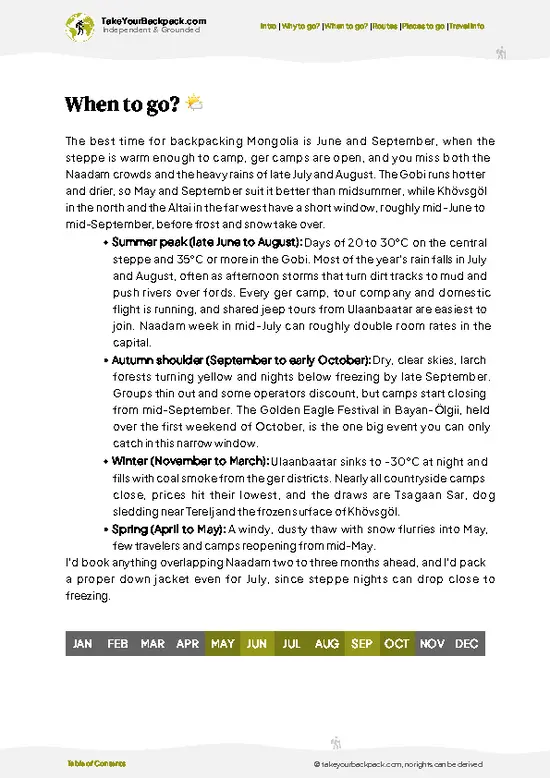
source: climatestotravel.comJANJanuary: below average for travelingFEBFebruary: below average for travelingMARMarch: fair for travelingAPRApril: good for travelingMAYMay: excellent for travelingJUNJune: excellent for travelingJULJuly: highly recommended for travelingAUGAugust: highly recommended for travelingSEPSeptember: excellent for travelingOCTOctober: good for travelingNOVNovember: fair for travelingDECDecember: below average for traveling
when-to-go

✈️ The backpacker research shortcutMongolia Travel Guide

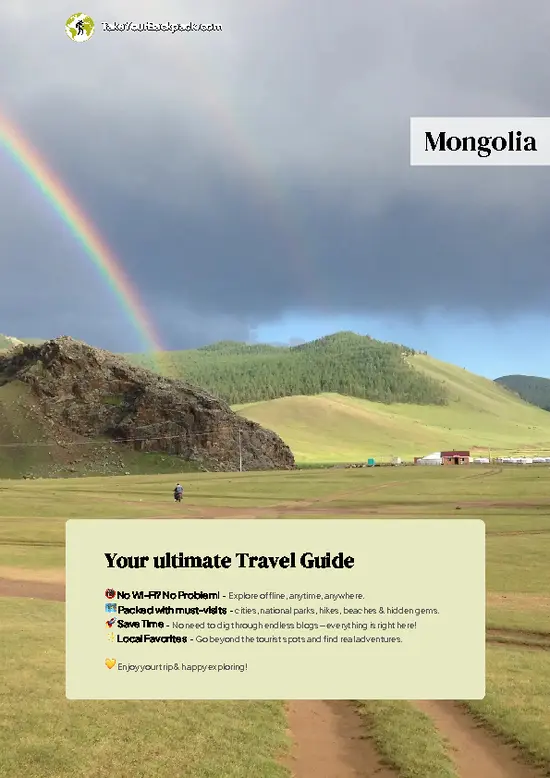
An offline-friendly backpacking guide with optimized travel routes, ranked highlights, transport advice, and the best areas to stay.
example page 0 from our offline Travel Guide for Mongolia
example page 1 from our offline Travel Guide for Mongolia
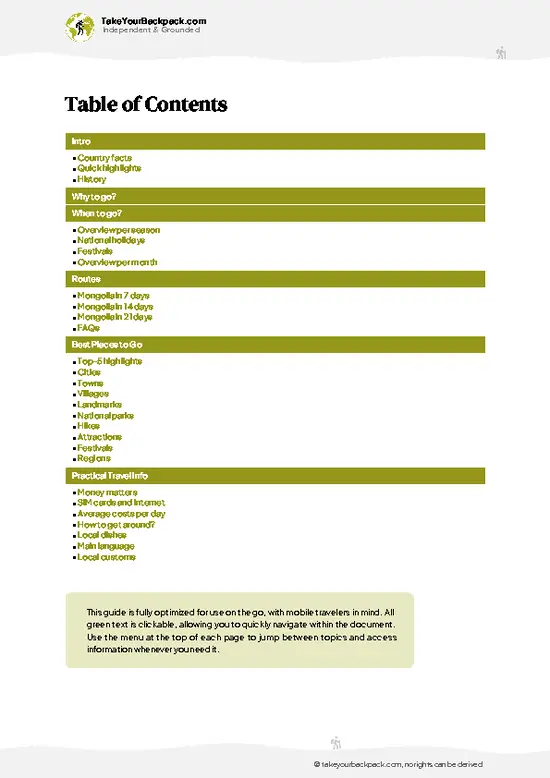
example page 2 from our offline Travel Guide for Mongolia
example page 3 from our offline Travel Guide for Mongolia
example page 4 from our offline Travel Guide for Mongolia
example page 5 from our offline Travel Guide for Mongolia
example page 6 from our offline Travel Guide for Mongolia
example page 7 from our offline Travel Guide for Mongolia
The digital guide (272 pages) contains:
68 highlights, ranked by travel appeal
Optimized 7, 14 & 21-day travel routes
Cities, national parks, landmarks, beaches
How to get around
Offline-friendly for travel without Wi-Fi
👉 Click to see all 30+ guide features

📅 Plan smarter in minutes, not weeks
Month by month travel advice
Festivals & national holidays
Budget expectations

🗺️ Go to the right places, skip the overrated ones
Honest pros & cons of destinations
Top hikes, parks & viewpoints
Lesser-known places most travelers miss
Clear “worth it vs skip it” guidance

🛏️ Travel smoothly without rookie mistakes
Best areas to stay
Transport systems explained simply
Common scams & safety advice
SIM cards, money & practical tips

🌍 Understand the country, not just visit it
Culture & traditions
52 Essential phrases & customs
Festivals worth planning around
Traveler-friendly historical context
Insights that make places more meaningful

📱 Built for real travel conditions
Fully downloadable PDF
Works completely offline
Optimized for phone use
Useful in remote areas & buses
Everything in one place
Save weeks of stressful planning
Get instant access to your full guide. 30‑day money-back guarantee.
+ Add another guide for just US$7.80

By proceeding you agree to our terms.
Sent to your inbox immediately after payment • 100% Secure Checkout
Best Backpacking Travel Advisor 2025 tourism awardBest Backpacking
Travel Advisor
2025
What others say about Take Your Backpack Guides:
⭐⭐⭐⭐⭐
Fantastic, amazing amount of information!
⭐⭐⭐⭐⭐
My goodness this is amazing, it's what I've been looking for hats off too you!
⭐⭐⭐⭐⭐
I think this is absolutely BRILLIANT
⭐⭐⭐⭐
Very complete and informative. It's still missing places, but I gotta to commend you
⭐⭐⭐⭐⭐
This is truly amazing, thank you, can't wait to explore it with my kids!
⭐⭐⭐⭐⭐
Awesome resource, thank you!
⭐⭐⭐⭐⭐
This is amazing! Can't wait to explore the ones I haven't seen
⭐⭐⭐⭐
I love this! Well done, great idea.
⭐⭐⭐⭐⭐
Thanks for taking the time to make this gem!
⭐⭐⭐⭐⭐
This might be the best website I've ever seen.
⭐⭐⭐⭐⭐
Congratulations, and thank you so much for your work; it's incredibly valuable.
⭐⭐⭐⭐
In all seriousness I think you did a great job pointing out the important spots
⭐⭐⭐⭐⭐
10/10 very good
⭐⭐⭐⭐⭐
As someone who's only just starting to visit regularly this is awesome, thank you.
⭐⭐⭐⭐
Thank you very much! I'm going to visit my dad, it's going to be very useful!
⭐⭐⭐⭐⭐
This is really cool! We'll be travelling for the first time and this definitely come in handy.
⭐⭐⭐⭐⭐
You are now our minister of culture, congratulations 👨‍💼
⭐⭐⭐⭐⭐
Just wanted to tell you that this is a pearl! Going to follow your recommendations.
⭐⭐⭐⭐⭐
This is so cool. I'll definitely be using the resource for my travels soon.
⭐⭐⭐⭐⭐
This is very impressive! Good work.
⭐⭐⭐⭐⭐
This is an amazing and informative site. Very well done!

🛏️ Where to stay?Choosing the right base

If you’re backpacking to see the National Museum of Mongolia, forget the idea that you’ll find a quiet, tucked-away neighborhood nearby. This part of Ulaanbaatar is the city’s pulse—busy, noisy, and unapologetically urban. The real deal is staying in the central districts around Sukhbaatar Square or the nearby Peace Avenue corridor. These areas are where the backpacker energy hums strongest, and you’ll find a mix of guesthouses, budget hostels, and small cafés that make it easy to meet other travelers without feeling like you’re trapped in a tourist bubble.

Safety here isn’t perfect, but it’s … read more 👉
If you’re backpacking to see the National Museum of Mongolia, forget the idea that you’ll find a quiet, tucked-away neighborhood nearby. This part of Ulaanbaatar is the city’s pulse—busy, noisy, and unapologetically urban. The real deal is staying in the central districts around Sukhbaatar Square or the nearby Peace Avenue corridor. These areas are where the backpacker energy hums strongest, and you’ll find a mix of guesthouses, budget hostels, and small cafés that make it easy to meet other travelers without feeling like you’re trapped in a tourist bubble.

Safety here isn’t perfect, but it’s solid enough if you keep your wits about you—like any capital city. The streets are lively well into the evening, which is a blessing for solo travelers who want to avoid the isolation that can come with quieter neighborhoods. Plus, you’re a short walk or a cheap taxi ride from the museum, so you can hit it early before the crowds flood in.

Don’t expect luxury or polished charm. This is raw Ulaanbaatar: a little rough around the edges, but full of character and real Mongolian life. If you want the Instagram version, look elsewhere. But if you want to feel the city’s heartbeat and connect with fellow backpackers, this is where you want to be.

👛 Costs (as of 4 September 2026)How expensive it really is

As of the most recent estimates, the National Museum of Mongolia charges an entrance fee of 5,000 MNT (approximately €1.50) for adults, 2,500 MNT (approximately €0.75) for students, and 1,000 MNT (approximately €0.30) for children. Photography is permitted with an additional fee of 10,000 MNT (approximately €3).

source: assa.mn
⚠️ Prices can change and everyone travels differently, so take this as a rough guide. Hope it helps you plan your adventure!

FAQFrequently asked questions about National Museum of Mongolia

2 to 3 hours is sufficient to visit the National Museum of Mongolia and explore its main exhibits. This allows time to see the extensive displays on Mongolian history, culture, and archaeology without rushing.
Yes, the National Museum of Mongolia is worth the entrance fee, which is typically around 3000 MNT (about 1 USD). It offers a comprehensive overview of Mongolia's rich heritage, making it valuable for history and culture enthusiasts.
You can get to the National Museum of Mongolia by taxi or local bus from central Ulaanbaatar. It is located near Sukhbaatar Square, making it accessible within 10 to 15 minutes from most central locations.
⚠️ Things can change over time, so always validate details locally before you go.

Other Mongolian attractions near National Museum of Mongolia

Explore more nearby:


💡 Not sure where to go next?
Create a personalized itinerary for Mongolia including National Museum of Mongolia and the places that fit your trip.

Generate my itinerary

👉 Discover all attractions

Or checkout all Mongolia has to offer (think cities, towns, villages, national parks, hikes, beaches, festivals)
Country photo of Mongolia

We 💚 feedbackParting advice and final tips

The National Museum of Mongolia isn’t a flashy tourist magnet, and yes, it can feel a bit sparse compared to flashier global counterparts. But if you want to grasp Mongolia’s raw identity—its nomadic roots, fierce independence, and unexpected artistry—this is the place. Skip the hype, focus on the artifacts that tell real stories, and you’ll leave with a deeper respect for a culture that’s often misunderstood. It’s worth the detour.

✈️ When did I visit Mongolia?
As part of my 1.5 year travel around the world trip, I visited Mongolia in July 2015. After a month of horse-riding and hitch-hiking I took the TransMongolia express to China.

✍️ Help improve this page!
The information on this page is based on my own backpacking experience in Mongolia, supplemented with up-to-date research and feedback from other travelers. Travel details can change, so if you notice anything outdated or incomplete, feel free to let me know.


🙋‍♂️ Give feedback

👋 Meet the founderWho’s Behind Take Your Backpack?

Johan, backpacker and founder of TakeYourBackpackHi, I’m Johan (Netherlands 🇳🇱), the creator of TakeYourBackpack. Over the past decade, I’ve backpacked through 80+ countries across six continents, gaining extensive experience with independent travel, long-term trips, and overland routes.

This site is built on a combination of firsthand travel experience and carefully curated insights from other backpackers. Many guides are based on places I’ve personally visited, while others bring together tips, observations, and practical advice shared by trusted travelers I’ve met along the way.

The goal is to provide realistic, experience-driven guidance — not generic itineraries — so you can explore destinations with better context, clearer expectations, and more confidence.

Get full Mongolia guide •
Instant download • 68 highlights • Full Offline guide