Seasonal Rhythms Shape the Mongolian Experience
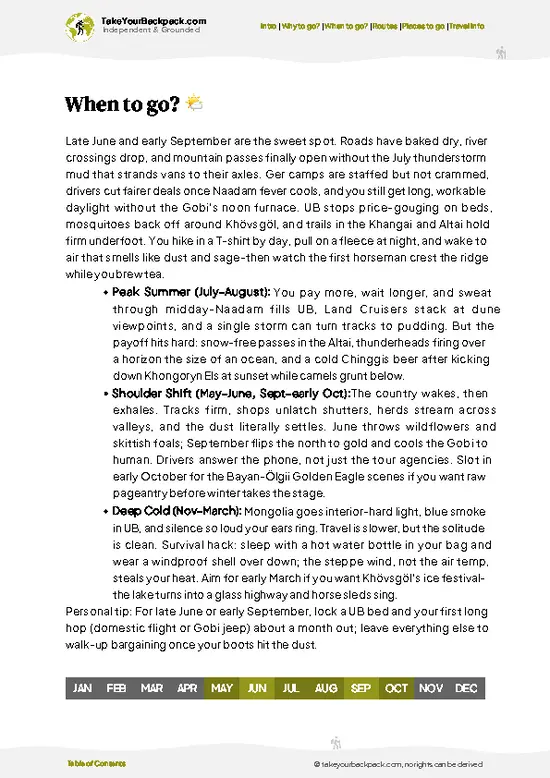
Mongolia’s vastness means its seasons hit hard and fast, dictating what you can see and do. Winters slam in with brutal cold, often plunging well below freezing, turning the landscape into a frozen expanse that’s as challenging as it is starkly beautiful. This is not the time for casual wandering; many attractions become inaccessible, and travel slows to a crawl. The reward here is for the well-prepared: the raw silence of snow-covered steppes and the chance to witness nomadic life adapting to the harshest conditions.
Spring arrives late and brief, with the thaw kicking off a rapid transformation. Early spring can still bite with cold winds and muddy trails, making travel unpredictable. By late spring, the land bursts into life, but the window …
read more 👉Seasonal Rhythms Shape the Mongolian Experience
Mongolia’s vastness means its seasons hit hard and fast, dictating what you can see and do. Winters slam in with brutal cold, often plunging well below freezing, turning the landscape into a frozen expanse that’s as challenging as it is starkly beautiful. This is not the time for casual wandering; many attractions become inaccessible, and travel slows to a crawl. The reward here is for the well-prepared: the raw silence of snow-covered steppes and the chance to witness nomadic life adapting to the harshest conditions.
Spring arrives late and brief, with the thaw kicking off a rapid transformation. Early spring can still bite with cold winds and muddy trails, making travel unpredictable. By late spring, the land bursts into life, but the window is tight. This shoulder season offers fewer crowds and lower costs, but some roads remain tricky, and certain attractions might still be off-limits due to lingering snow or wet conditions.
Summer is the powerhouse season. Warm days stretch long, skies open wide, and the steppe pulses with activity. This is when Mongolia’s attractions are fully accessible, from grasslands to mountain passes. The weather is generally stable, though sudden rainstorms can still surprise. Peak season means more visitors and higher prices, but the payoff is clear: every trail, festival, and cultural encounter is in full swing, making the physical effort of travel feel worthwhile.
Autumn creeps in with crisp air and a palette of golds and reds. It’s a quieter time, with fewer tourists and cooler temperatures that ease the strain of hiking or horseback riding. The landscape’s colors deepen, offering a different kind of visual reward. However, the days shorten quickly, and by late autumn, the first frosts return, signaling the approach of winter’s grip.
Planning a trip means balancing these rhythms. Summer delivers accessibility and energy but at a premium. Shoulder seasons offer solitude and savings but demand flexibility and grit. Winter tests endurance but reveals Mongolia’s stark, elemental soul. Each season shapes the journey’s challenge—and its payoff—in unmistakable ways.v2.webp)

 Best Backpacking
.jpg) Hi, I’m Johan (Netherlands 🇳🇱), the creator of TakeYourBackpack. Over the past decade, I’ve backpacked through 80+ countries across six continents, gaining extensive experience with independent travel, long-term trips, and overland routes.
Hi, I’m Johan (Netherlands 🇳🇱), the creator of TakeYourBackpack. Over the past decade, I’ve backpacked through 80+ countries across six continents, gaining extensive experience with independent travel, long-term trips, and overland routes.