×

Mongolia🇲🇳 | townsTsetserlegmountain backdrop, monastery complex, central square | things to do and best time to go

Explore ErdenetExplore Dalanzadgad

Backpacking in Tsetserleg
🌟 Highlighttown ranked #5
By Johan Kruseman 🇳🇱 | Updated June 8, 2026

Tsetserleg is not for anyone chasing big-city buzz, bar crawls, or a packed checklist of museums. It’s for when you’re ready to slow down, smell wood smoke in the cool evening air, and use a small town as your launch pad into real Mongolian countryside. Sitting in central Mongolia, in Arkhangai province west of Ulaanbaatar, it’s a green, hilly pause point between the capital and wilder lake and steppe regions. The town itself is compact and walkable, with a monastery-museum on the hill, a few solid cafés, and a market where you’ll actually see herders shopping. Buses in and out are straightforward but not frequent; once here, you mostly walk, or hire local drivers for day trips to hot springs and river valleys. It’s cheaper and calmer than Kharkhorin, less dramatic than Khovsgol, and feels more like a practical, friendly base than a destination in itself.

Discover everything you want to know in the 📖 Mongolia Travel Guide.


Get your Mongolia guide
70 ranked highlights, routes & tips, works offline (282 pages)
Loading the map 🌍
CLICK TO FILTER
cities
towns
villages
landmarks
national parks
hikes
attractions
festivals
regions
SHOW COUNTRY’S BESTSHOW ALL

✨ Why go?
Ranked #5 town in Mongolia
What makes this town worth visiting

Tsetserleg is a backpacker’s waypoint that offers a blend of convenience and charm. Nestled in the heart of Mongolia, it serves as a launchpad for nearby hikes in the Khangai Mountains. The air is crisp, and the scent of fresh bread wafts from local bakeries, inviting you to linger. Streets are walkable, making it easy to explore small-scale guesthouses and hostels that foster a friendly atmosphere. Here, you’ll find fellow travelers sharing stories over hearty bowls of buuz or sipping milk tea in cozy cafes.

Most backpackers stay a few days, soaking in the local culture and preparing for adventures. It’s a place that attracts slow travelers and solo adventurers, those who appreciate a slower pace and the chance to connect with locals. While nightlife isn’t a highlight, the social vibe is … read more 👉
Tsetserleg is a backpacker’s waypoint that offers a blend of convenience and charm. Nestled in the heart of Mongolia, it serves as a launchpad for nearby hikes in the Khangai Mountains. The air is crisp, and the scent of fresh bread wafts from local bakeries, inviting you to linger. Streets are walkable, making it easy to explore small-scale guesthouses and hostels that foster a friendly atmosphere. Here, you’ll find fellow travelers sharing stories over hearty bowls of buuz or sipping milk tea in cozy cafes.

Most backpackers stay a few days, soaking in the local culture and preparing for adventures. It’s a place that attracts slow travelers and solo adventurers, those who appreciate a slower pace and the chance to connect with locals. While nightlife isn’t a highlight, the social vibe is warm and welcoming, perfect for those looking to recharge before hitting the trails. If you’re seeking a genuine Mongolian experience, Tsetserleg is more than a stop; it’s a gateway to deeper exploration.
Want to include Tsetserleg in your Mongolia route?
Create a personalized Mongolia itinerary that includes Tsetserleg and the places that fit your trip — based on your travel style, budget, and available time. Get your route in seconds.

Generate my trip

💡 HighlightsEssential experiences to have while visiting Tsetserleg

  1. Zayiin Gegeen Monastery (Zaya Khuree) — The town’s spiritual heart: a restored temple complex with colorful murals, prayer wheels, resident monks and a small on-site museum. Visiting at prayer time gives a real sense of local Buddhist practice rather than a postcard shot.
  2. Arkhangai Regional (Local History) Museum — Compact but well-curated: ethnographic displays, nomadic gear, Soviet-era artifacts and some local paleontology. Great for understanding how Arkhangai’s landscape and people shaped each other.
  3. Tsetserleg Central Market — Morning life in a snapshot: dairy stalls, dried meat, local breads, cheap gear and friendly haggling. You’ll meet herders, buy snacks for the road and see foodways that don’t appear in guidebooks.
  4. Main Square and War Memorial — The civic pulse of town: statue(s),
read more 👉
  1. Zayiin Gegeen Monastery (Zaya Khuree) — The town’s spiritual heart: a restored temple complex with colorful murals, prayer wheels, resident monks and a small on-site museum. Visiting at prayer time gives a real sense of local Buddhist practice rather than a postcard shot.
  2. Arkhangai Regional (Local History) Museum — Compact but well-curated: ethnographic displays, nomadic gear, Soviet-era artifacts and some local paleontology. Great for understanding how Arkhangai’s landscape and people shaped each other.
  3. Tsetserleg Central Market — Morning life in a snapshot: dairy stalls, dried meat, local breads, cheap gear and friendly haggling. You’ll meet herders, buy snacks for the road and see foodways that don’t appear in guidebooks.
  4. Main Square and War Memorial — The civic pulse of town: statue(s), small parks and the spot for local celebrations or protests. Perfect for people-watching, catching local ceremonies, or orienting yourself when exploring on foot.
  5. Old Russian-era Wooden Houses — A cluster of painted, carved wooden buildings from the tsarist/Soviet era that give Tsetserleg a distinct, lived-in charm. Walk the streets at golden hour for good photos and a sense of the town’s layered history.
  6. Neighborhood Temples and Stupas — Scattered small temples, roadside stupas and family prayer sites around town: quieter than the main monastery but often richer in everyday devotion and local rituals. Nice to wander into without the tourist bustle.
  7. Ger-district Homestays and Family Visits — Staying with a family in a ger inside town is an easy way to experience nomadic hospitality without long drives: fresh milk tea, hands-on dairy tasting and candid conversation about daily life.
  8. Local Artisan and Felt Workshops — Small craftrooms where women still make felt, carpets and embroidered goods. Watching a short demo and buying directly supports makers and means you get an item with a story attached.
  9. Horse-culture Experiences (stables & short rides) — You don’t need to ride for days to taste Mongolian equestrian life: short rides or stable visits in or just outside town let you see local breeds, tack and hear about racing traditions.
  10. Ider River Bank & Riverside Walks — The river that threads past town is a quiet escape: riverside paths, simple picnic spots, sunset views and local anglers. It’s also where townspeople go to unwind, so good for low-effort, high-authenticity time.
A few real day-trip highlights a short drive from Tsetserleg are Amarbayasgalant Monastery, Terkhiin Tsagaan Lake with the Khorgo volcano and Tövkhön Monastery — my personal favorite for scenery and atmosphere is Terkhiin Tsagaan Lake & Khorgo.
Spotted a mistake or missing something? Contact us.

🏘️ NeighborhoodsWhere things are and how it's laid out

Tsetserleg is a charming town that serves as a gateway to Mongolia’s stunning landscapes. Each neighborhood has its own character, making it essential to know where to settle in for your adventure.

Central Tsetserleg: This is the heartbeat of the town. You’ll find local markets, cozy cafes, and a vibrant street life. It’s walkable, with everything within a 15-minute stroll. Prices are reasonable, making it ideal for budget travelers. The nightlife is low-key, perfect for unwinding after a day of exploration. Short stays work well here, as you can easily access transport options to nearby attractions.

Ulaanbaatar Street Area: A bit more laid-back, this area offers a quieter vibe. It’s slightly removed from the hustle, but still close enough to enjoy the local scene. Accommodations here are … read more 👉
Tsetserleg is a charming town that serves as a gateway to Mongolia’s stunning landscapes. Each neighborhood has its own character, making it essential to know where to settle in for your adventure.

Central Tsetserleg: This is the heartbeat of the town. You’ll find local markets, cozy cafes, and a vibrant street life. It’s walkable, with everything within a 15-minute stroll. Prices are reasonable, making it ideal for budget travelers. The nightlife is low-key, perfect for unwinding after a day of exploration. Short stays work well here, as you can easily access transport options to nearby attractions.

Ulaanbaatar Street Area: A bit more laid-back, this area offers a quieter vibe. It’s slightly removed from the hustle, but still close enough to enjoy the local scene. Accommodations here are affordable, and you can find some hidden eateries serving authentic Mongolian dishes. This area is great for longer stays, allowing you to soak in the local culture without the rush.

Outskirts: If you’re looking for a more rustic experience, head to the outskirts. Here, you’ll find traditional ger camps and stunning views of the surrounding mountains. It’s less walkable, but the tranquility is unmatched. Perfect for those wanting to disconnect and immerse themselves in nature, though transport can be a bit tricky. Ideal for longer retreats, where the journey becomes part of the adventure.

⌛️ 1 dayA smart one-day plan

Tsetserleg, the capital of Arkhangai Province, is a charming blend of Mongolian culture and stunning landscapes. The town sits at the foot of the Khangai Mountains, where the air is crisp and the sky stretches endlessly. It’s a place where you can feel the pulse of local life, far from the usual tourist trails.

Start your morning at the bustling local market. The scent of fresh bread mingles with the earthy aroma of dried herbs. Vendors display colorful produce, and you can grab a steaming bowl of buuz (dumplings) from a street stall. It’s a perfect way to fuel up for the day ahead. After breakfast, take a stroll through the town’s main square, where the vibrant blue sky contrasts beautifully with the traditional white yurts.

In the afternoon, head to the nearby Tsetserleg Museum. It’s … read more 👉
Tsetserleg, the capital of Arkhangai Province, is a charming blend of Mongolian culture and stunning landscapes. The town sits at the foot of the Khangai Mountains, where the air is crisp and the sky stretches endlessly. It’s a place where you can feel the pulse of local life, far from the usual tourist trails.

Start your morning at the bustling local market. The scent of fresh bread mingles with the earthy aroma of dried herbs. Vendors display colorful produce, and you can grab a steaming bowl of buuz (dumplings) from a street stall. It’s a perfect way to fuel up for the day ahead. After breakfast, take a stroll through the town’s main square, where the vibrant blue sky contrasts beautifully with the traditional white yurts.

In the afternoon, head to the nearby Tsetserleg Museum. It’s often overlooked by tourists, but it’s a treasure trove of local history, showcasing everything from ancient artifacts to contemporary art. The museum’s quiet atmosphere allows you to absorb the stories of the land and its people. Afterward, wander through the nearby neighborhoods, where you’ll find friendly locals and perhaps a chance to join in a game of shagai (ankle bones) with children in the street.

As evening approaches, make your way to the Khangai Mountains for a short hike. The golden light of sunset casts a warm glow over the landscape, making the effort worthwhile. Find a spot to sit and soak in the view; the silence is profound, broken only by the distant call of a bird.

Wrap up your day at a local eatery, where you can enjoy a hearty meal of mutton and vegetables. The warmth of the food and the hospitality of the locals will leave you feeling connected to this unique corner of Mongolia. Tsetserleg isn’t just a stop; it’s an experience that lingers long after you leave.
Turn your Tsetserleg visit into an Mongolia adventure
Build a complete Mongolia route with Tsetserleg, hidden gems, must-see destinations, and realistic travel times included.

Generate my trip

🌤️ When to go?Best time to visit Tsetserleg


  • Weather: Tsetserleg’s weather swings sharply. Summers (June to August) bring mild warmth, around 15-25°C (59-77°F), perfect for hiking without overheating. Winters plunge below -20°C (-4°F), freezing the landscape into a stark, silent world—beautiful but brutal for backpackers.

  • Temperature: Spring and fall are transitional, with chilly mornings near 0°C (32°F) and afternoons warming to 10-15°C (50-59°F). Layering is essential. The cold air feels crisp and clean, but the sun’s low angle means you’ll want to time your outdoor activities to midday warmth.

  • Daylight Hours: Summer days stretch long, offering up to 16 hours of light—ideal for extended treks and soaking in the landscape’s raw edges. Winter cuts daylight to about 8 hours, making early starts and efficient planning a must.

read more 👉

  • Weather: Tsetserleg’s weather swings sharply. Summers (June to August) bring mild warmth, around 15-25°C (59-77°F), perfect for hiking without overheating. Winters plunge below -20°C (-4°F), freezing the landscape into a stark, silent world—beautiful but brutal for backpackers.

  • Temperature: Spring and fall are transitional, with chilly mornings near 0°C (32°F) and afternoons warming to 10-15°C (50-59°F). Layering is essential. The cold air feels crisp and clean, but the sun’s low angle means you’ll want to time your outdoor activities to midday warmth.

  • Daylight Hours: Summer days stretch long, offering up to 16 hours of light—ideal for extended treks and soaking in the landscape’s raw edges. Winter cuts daylight to about 8 hours, making early starts and efficient planning a must.

  • Crowds: The town stays quiet year-round, but summer sees a modest bump from local tourists and nomads attending festivals. This means more energy and cultural exchange but also slightly higher prices and busier guesthouses.

  • Seasonal Activities: Summer hosts Naadam festivals and horse races, offering a deep dive into Mongolian culture. Spring and fall are quieter, letting you explore trails and hot springs in solitude. Winter’s harshness limits activities but rewards those seeking stark, snowy vistas.

  • Price Fluctuations: Accommodation and transport costs peak in summer due to demand. Off-season (late fall to early spring) offers lower prices but requires readiness for cold and limited services.


Pro-tip: Aim for late June to early September—long days, manageable temperatures, and cultural events combine for a backpacking experience that feels both alive and accessible, with the landscape’s raw beauty fully on display.


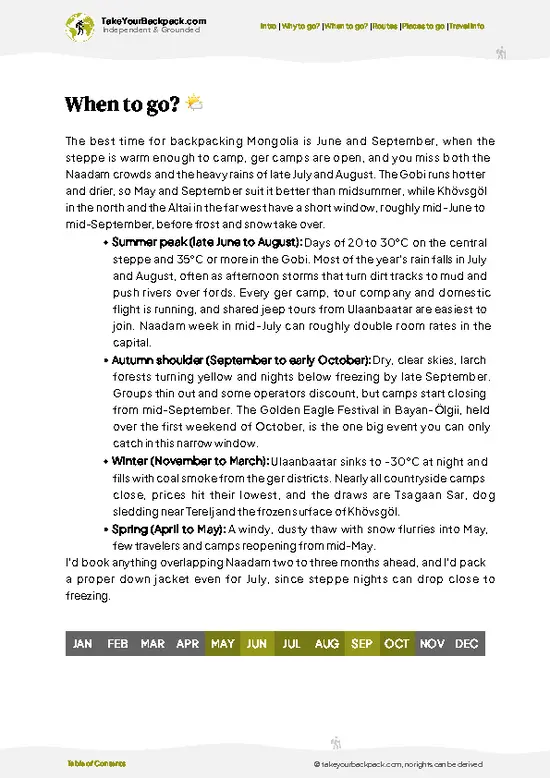
source: climatestotravel.comJANJanuary: below average for travelingFEBFebruary: below average for travelingMARMarch: fair for travelingAPRApril: good for travelingMAYMay: good for travelingJUNJune: excellent for travelingJULJuly: excellent for travelingAUGAugust: excellent for travelingSEPSeptember: highly recommended for travelingOCTOctober: good for travelingNOVNovember: fair for travelingDECDecember: below average for traveling
when-to-go

✈️ The backpacker research shortcutMongolia Travel Guide

An offline-friendly backpacking guide with optimized travel routes, ranked highlights, transport advice, and the best areas to stay.
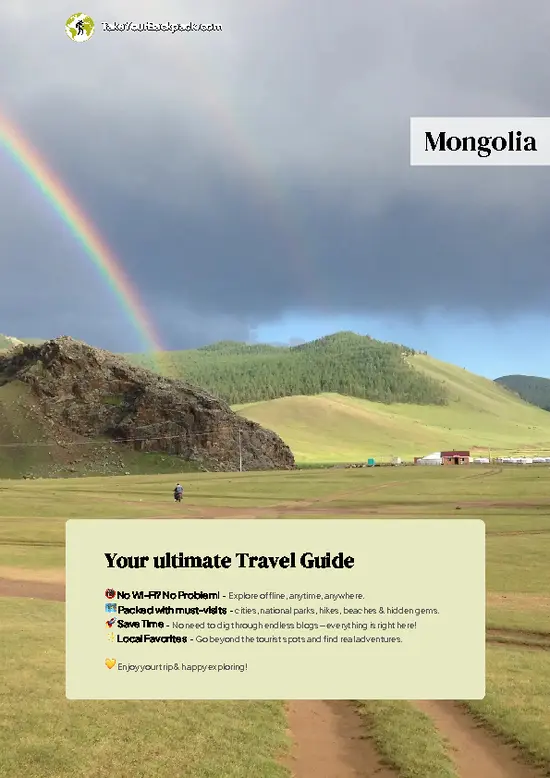
example page 0 from our offline Travel Guide for Mongolia
example page 1 from our offline Travel Guide for Mongolia
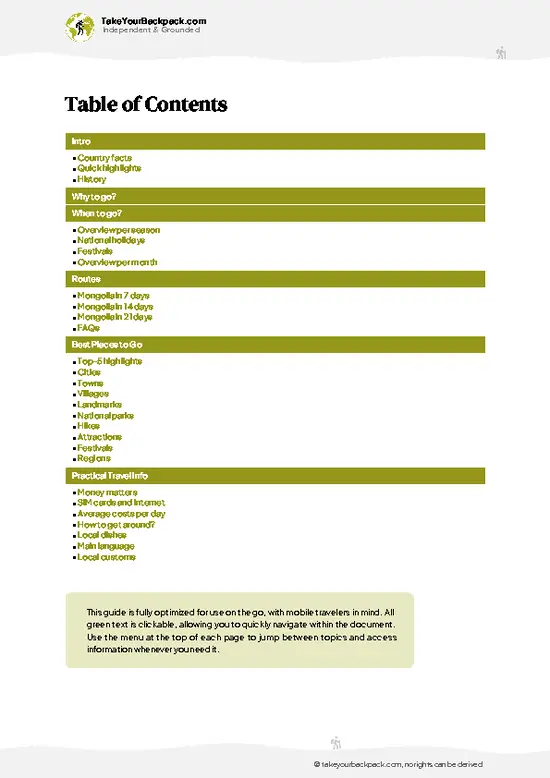
example page 2 from our offline Travel Guide for Mongolia
example page 3 from our offline Travel Guide for Mongolia
example page 4 from our offline Travel Guide for Mongolia
example page 5 from our offline Travel Guide for Mongolia
example page 6 from our offline Travel Guide for Mongolia
example page 7 from our offline Travel Guide for Mongolia
The digital guide (282 pages) contains:
70 highlights, ranked by travel appeal
Optimized 7, 14 & 21-day travel routes
Cities, national parks, landmarks, beaches
How to get around
Offline-friendly for travel without Wi-Fi
👉 Click to see all 30+ guide features

📅 Plan smarter in minutes, not weeks
Month by month travel advice
Festivals & national holidays
Budget expectations

🗺️ Go to the right places, skip the overrated ones
Honest pros & cons of destinations
Top hikes, parks & viewpoints
Lesser-known places most travelers miss
Clear “worth it vs skip it” guidance

🛏️ Travel smoothly without rookie mistakes
Best areas to stay
Transport systems explained simply
Common scams & safety advice
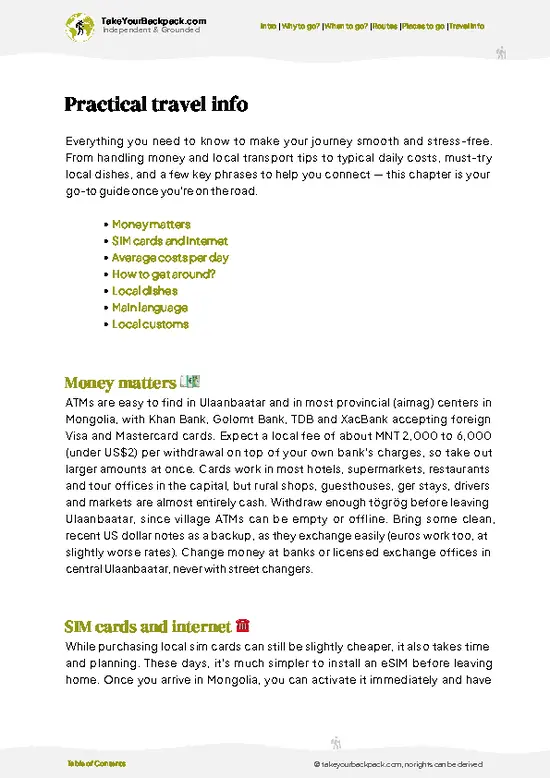
SIM cards, money & practical tips

🌍 Understand the country, not just visit it
Culture & traditions
52 Essential phrases & customs
Festivals worth planning around
Traveler-friendly historical context
Insights that make places more meaningful

📱 Built for real travel conditions
Fully downloadable PDF
Works completely offline
Optimized for phone use
Useful in remote areas & buses
Everything in one place
Save weeks of stressful planning
Get instant access to your full guide. 30‑day money-back guarantee.


By proceeding you agree to our terms.
Sent to your inbox immediately after payment • 100% Secure Checkout
Best Backpacking Travel Advisor 2025 tourism awardBest Backpacking
Travel Advisor
2025
What others say about Take Your Backpack Guides:
⭐⭐⭐⭐⭐
Fantastic, amazing amount of information!
⭐⭐⭐⭐⭐
My goodness this is amazing, it's what I've been looking for hats off too you!
⭐⭐⭐⭐⭐
I think this is absolutely BRILLIANT
⭐⭐⭐⭐
Very complete and informative. It's still missing places, but I gotta to commend you
⭐⭐⭐⭐⭐
This is truly amazing, thank you, can't wait to explore it with my kids!
⭐⭐⭐⭐⭐
Awesome resource, thank you!
⭐⭐⭐⭐⭐
This is amazing! Can't wait to explore the ones I haven't seen
⭐⭐⭐⭐
I love this! Well done, great idea.
⭐⭐⭐⭐⭐
Thanks for taking the time to make this gem!
⭐⭐⭐⭐⭐
This might be the best website I've ever seen.
⭐⭐⭐⭐⭐
Congratulations, and thank you so much for your work; it's incredibly valuable.
⭐⭐⭐⭐
In all seriousness I think you did a great job pointing out the important spots
⭐⭐⭐⭐⭐
10/10 very good
⭐⭐⭐⭐⭐
As someone who's only just starting to visit regularly this is awesome, thank you.
⭐⭐⭐⭐
Thank you very much! I'm going to visit my dad, it's going to be very useful!
⭐⭐⭐⭐⭐
This is really cool! We'll be travelling for the first time and this definitely come in handy.
⭐⭐⭐⭐⭐
You are now our minister of culture, congratulations 👨‍💼
⭐⭐⭐⭐⭐
Just wanted to tell you that this is a pearl! Going to follow your recommendations.
⭐⭐⭐⭐⭐
This is so cool. I'll definitely be using the resource for my travels soon.
⭐⭐⭐⭐⭐
This is very impressive! Good work.
⭐⭐⭐⭐⭐
This is an amazing and informative site. Very well done!

🛏️ Where to stay?Best areas and accommodation options

In Tsetserleg, the heart of Arkhangai Province, the best spot for backpackers is the area around the central square and the main street that runs through it. This neighborhood pulses with local life—vendors selling fresh dairy, the scent of wood smoke curling from traditional gers, and the steady hum of conversations in Mongolian. It’s safe, easy to navigate, and packed with guesthouses and hostels that cater to budget travelers and solo adventurers. Staying here means you’re never far from the pulse of the town, where you can swap stories with fellow travelers over a cup of salty milk tea or … read more 👉
In Tsetserleg, the heart of Arkhangai Province, the best spot for backpackers is the area around the central square and the main street that runs through it. This neighborhood pulses with local life—vendors selling fresh dairy, the scent of wood smoke curling from traditional gers, and the steady hum of conversations in Mongolian. It’s safe, easy to navigate, and packed with guesthouses and hostels that cater to budget travelers and solo adventurers. Staying here means you’re never far from the pulse of the town, where you can swap stories with fellow travelers over a cup of salty milk tea or join locals in the evening market buzz.

Compared to the quieter outskirts, this central zone offers a social vibe that’s hard to beat. You’ll find it easier to connect, whether it’s arranging a horseback trek or catching a ride to nearby hot springs. The streets are compact, so walking feels natural, and the light in the late afternoon—soft and golden—makes wandering feel like an invitation rather than a chore. Other neighborhoods might offer more space or quiet, but they lack this blend of accessibility, safety, and the chance to plug into Tsetserleg’s genuine rhythm. For backpackers, that’s the real win.

🚌 Getting aroundTransportation options and practical tips

Tsetserleg moves at its own pace, a rhythm shaped by the vast Mongolian steppe and the quiet pulse of a small town where time feels more like a suggestion than a rule. The air carries a faint scent of pine and woodsmoke, and the streets hum with a mix of old-school practicality and the occasional burst of lively chatter. Here, schedules blur; buses might not leave exactly on the hour, but they do show up, and locals navigate the town with a mix of patience and intuition. This isn’t a place for rigid timetables but for reading the flow of daily life, where the best way to get around is to blend in and move with the natural tempo.


  • Walking: The heart of Tsetserleg is compact enough to explore on foot. Strolling through the town lets you soak in the scent of fresh bread from local bakeries
read more 👉
Tsetserleg moves at its own pace, a rhythm shaped by the vast Mongolian steppe and the quiet pulse of a small town where time feels more like a suggestion than a rule. The air carries a faint scent of pine and woodsmoke, and the streets hum with a mix of old-school practicality and the occasional burst of lively chatter. Here, schedules blur; buses might not leave exactly on the hour, but they do show up, and locals navigate the town with a mix of patience and intuition. This isn’t a place for rigid timetables but for reading the flow of daily life, where the best way to get around is to blend in and move with the natural tempo.


  • Walking: The heart of Tsetserleg is compact enough to explore on foot. Strolling through the town lets you soak in the scent of fresh bread from local bakeries and the occasional whiff of livestock from nearby stalls. Walking is free, flexible, and the best way to catch the subtle shifts in light as the sun arcs low over the steppe. Expect uneven sidewalks and dusty paths, so sturdy shoes are a must.


  • Local Minibuses: These are the workhorses of Tsetserleg’s transit, running roughly from 7 a.m. to 7 p.m. They don’t follow strict schedules, so you’ll often find them waiting until full before rolling out. Fares hover around 300-500 MNT (about $0.10-$0.15), making them the cheapest option. The ride is bumpy but quick, and the windows often open wide, letting in the crisp mountain air.


  • Shared Taxis: For a bit more speed and comfort, shared taxis are a solid choice. They operate on a semi-flexible schedule, usually departing when seats fill up, mostly between 8 a.m. and 6 p.m. Prices range from 1,000 to 2,000 MNT ($0.30-$0.60). These vehicles are faster than minibuses and offer a smoother ride, but expect to squeeze in with locals and their goods.


  • Bicycle Rentals: If you want to cover more ground without losing the sensory connection to the town, renting a bike is a smart move. Rentals cost about 5,000-10,000 MNT per day ($1.50-$3). The terrain is mostly flat with some gentle hills, and the fresh air and open roads make cycling a refreshing way to explore beyond the center. Watch for loose gravel and occasional livestock on the roads.


  • Motorbike Taxis: For the adventurous and time-pressed, motorbike taxis offer quick hops around town or to nearby spots. They’re available sporadically, with fares negotiated upfront, usually around 2,000-3,000 MNT ($0.60-$0.90). The ride is exposed to the elements, so bring a scarf or jacket to shield against dust and wind.

👛 Costs (as of 1 August 2025)What things cost and how to budget

Backpacking in Tsetserleg, Mongolia, feels like stepping into a quieter, slower rhythm, but knowing the daily costs helps you keep that flow smooth without surprises.
  • Dorm Accommodation: Expect to pay around $8 to $15 per night for a bed in a basic guesthouse dorm. These places are simple—wood floors, thin walls, but clean enough and often with a shared bathroom. It’s not luxury, but it’s enough to rest after a day wandering the dusty streets and open skies.
  • Meals: Local meals run about $3 to $7 each. Think hearty bowls of noodle soup or fried dumplings, often cooked over a wood fire, filling and warming in the crisp air. Street food stalls and small cafes dominate, so fresh, quick, and cheap is the norm.
  • Local Transport: Tsetserleg is small enough to explore mostly on foot, but if you
read more 👉
Backpacking in Tsetserleg, Mongolia, feels like stepping into a quieter, slower rhythm, but knowing the daily costs helps you keep that flow smooth without surprises.
  • Dorm Accommodation: Expect to pay around $8 to $15 per night for a bed in a basic guesthouse dorm. These places are simple—wood floors, thin walls, but clean enough and often with a shared bathroom. It’s not luxury, but it’s enough to rest after a day wandering the dusty streets and open skies.
  • Meals: Local meals run about $3 to $7 each. Think hearty bowls of noodle soup or fried dumplings, often cooked over a wood fire, filling and warming in the crisp air. Street food stalls and small cafes dominate, so fresh, quick, and cheap is the norm.
  • Local Transport: Tsetserleg is small enough to explore mostly on foot, but if you need a ride, expect to pay around $1 to $2 for short local taxi trips. There’s no formal bus system, so taxis or hitching rides with locals are your go-to options.
  • Basic Activities/Entry Fees: Most cultural sites and museums charge minimal fees, usually between $1 and $3. Visiting the local monastery or small museums is affordable and gives you a real sense of the town’s history and daily life.
  • Miscellaneous Expenses: Budget around $2 to $5 for extras like bottled water, snacks, or a cup of tea in a café. Internet access can be patchy, so if you rely on data, consider a local SIM card, which might cost around $10 for a basic package lasting several days.

All told, you’re looking at roughly $15 to $30 per day to cover the essentials in Tsetserleg. It’s a place where the modest price tags match the unhurried pace—spend wisely, and you’ll have enough left over to linger longer in the quiet moments that make this town quietly memorable.
⚠️ Prices can change and everyone travels differently, so take this as a rough guide. Hope it helps you plan your adventure!

🚌 Day tripsWhere to go beyond the main area

Tsetserleg, Mongolia, is a backpacker’s dream base for exploring the rugged beauty of the surrounding landscapes. With its rich culture and proximity to stunning natural wonders, you’ll find plenty of day trips that are both accessible and rewarding.

Khorgo-Terkhiin Tsagaan Nuur National Park
Just a couple of hours from Tsetserleg, this park is a feast for the senses. The drive winds through rolling hills, and the air is crisp and fresh. Once there, you can hike up to the Khorgo volcano for panoramic views that make the effort worthwhile. The park is dotted with turquoise lakes and unique rock formations, perfect for a picnic. Expect to spend around 10,000 MNT for entry and transportation. Late spring to early fall is ideal, as the trails are clear and the weather is pleasant. A common … read more 👉
Tsetserleg, Mongolia, is a backpacker’s dream base for exploring the rugged beauty of the surrounding landscapes. With its rich culture and proximity to stunning natural wonders, you’ll find plenty of day trips that are both accessible and rewarding.

Khorgo-Terkhiin Tsagaan Nuur National Park
Just a couple of hours from Tsetserleg, this park is a feast for the senses. The drive winds through rolling hills, and the air is crisp and fresh. Once there, you can hike up to the Khorgo volcano for panoramic views that make the effort worthwhile. The park is dotted with turquoise lakes and unique rock formations, perfect for a picnic. Expect to spend around 10,000 MNT for entry and transportation. Late spring to early fall is ideal, as the trails are clear and the weather is pleasant. A common mistake? Underestimating the chill at higher elevations; pack an extra layer.


Jarkhyn Valley
This hidden valley is a short drive away and offers a glimpse into traditional nomadic life. The landscape is a patchwork of green pastures and rugged mountains. You can spend the day hiking or even visiting a local ger (yurt) to experience authentic Mongolian hospitality. The journey takes about an hour, and costs around 5,000 MNT for transport. Late summer is the best time to see the valley in full bloom. Many first-timers miss the chance to interact with locals; don’t be shy—ask questions and share stories.


Shireet Lake
A bit further out, but worth every minute of the drive, Shireet Lake is a serene spot surrounded by mountains. The water reflects the sky, creating a tranquil atmosphere perfect for a day of reflection or photography. It takes about two hours to reach, with total costs around 15,000 MNT. Late spring to early fall is best, as the lake can freeze over in winter. A common pitfall is not bringing enough water; the sun can be relentless, so hydrate often.


Ulaan Uul
For a taste of adventure, head to Ulaan Uul, a striking mountain range just an hour from Tsetserleg. The trails here are less traveled, offering solitude and stunning vistas. You can hike for a few hours and enjoy a packed lunch with a view. The trip costs about 7,000 MNT, and spring and early fall are ideal for comfortable hiking temperatures. Many backpackers overlook the importance of sturdy footwear; rocky paths can be tough on the unprepared.
Want to know what more Mongolia offers?
The Mongolia Travel Guide describes 70 highlights, from cities to national parks, from beaches to hikes

Get the Travel Guide -

🛡️ SafetySafety Tips and Common Scams in Tsetserleg

Tsetserleg is generally safe, but a few practical tips can enhance your experience. The town’s main square is lively, but keep an eye on your belongings, especially during busy market days. If you’re wandering solo at night, stick to well-lit areas and avoid empty streets; the atmosphere can shift quickly after dark.

Scams are rare, but be cautious with unofficial taxi drivers. Always agree on a fare beforehand to avoid surprises. When shopping, haggling is part of the game, but keep it friendly; a smile goes a long way.

Annoyances can include the occasional stray dog or a persistent vendor, but a firm yet polite “no, thank you” usually does the trick. Carry yourself with confidence, and you’ll find that Tsetserleg welcomes you with open arms, offering genuine connections and authentic experiences.

Other Mongolian towns near Tsetserleg

Explore more nearby:

  • Kharkhorin—ancient capital site, Erdene Zuu monastery, Orkhon Valley| 108 km away
  • Bayankhongor—mineral springs, regional bazaar, arid plain| 155 km away
  • Arvaikheer—horse culture, provincial museum, dry hills| 167 km away

💡 Not sure where to go next?
Create a personalized itinerary for Mongolia including Tsetserleg and the places that fit your trip.

Generate my itinerary

👉 Discover all towns

Or checkout all Mongolia has to offer (think cities, towns, villages, national parks, hikes, beaches, festivals)
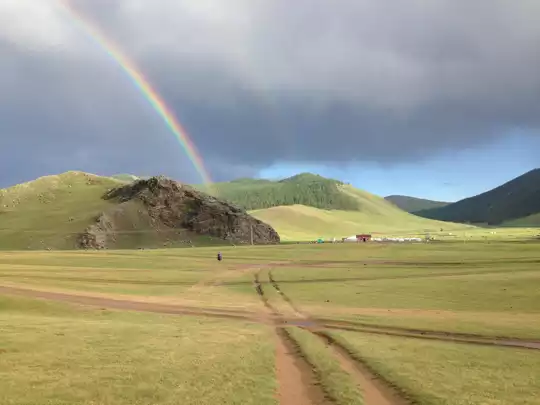
Country photo of Mongolia

We 💚 feedbackParting advice and final tips

Tsetserleg has a raw, unfiltered charm that pulls you in. The scent of fresh air mingles with the earthy tones of the surrounding hills, creating a backdrop that feels alive. But be ready for the reality check: amenities can be sparse, and language barriers might test your patience. Embrace the challenge; it’s part of the journey. The payoff? Authentic connections and a glimpse into Mongolia’s heart that you won’t find in guidebooks.

✈️ When did I visit Mongolia?
As part of my 1.5 year travel around the world trip, I visited Mongolia in July 2015. After a month of horse-riding and hitch-hiking I took the TransMongolia express to China.

✍️ Help improve this page!
The information on this page is based on my own backpacking experience in Mongolia, supplemented with up-to-date research and feedback from other travelers. Travel details can change, so if you notice anything outdated or incomplete, feel free to let me know.


🙋‍♂️ Give feedback

👋 Meet the founderWho’s Behind Take Your Backpack?

Johan, backpacker and founder of TakeYourBackpackHi, I’m Johan (Netherlands 🇳🇱), the creator of TakeYourBackpack. Over the past decade, I’ve backpacked through 80+ countries across six continents, gaining extensive experience with independent travel, long-term trips, and overland routes.

This site is built on a combination of firsthand travel experience and carefully curated insights from other backpackers. Many guides are based on places I’ve personally visited, while others bring together tips, observations, and practical advice shared by trusted travelers I’ve met along the way.

The goal is to provide realistic, experience-driven guidance — not generic itineraries — so you can explore destinations with better context, clearer expectations, and more confidence.

Get full Mongolia guide •
Instant download • 70 highlights • Full Offline guide