v2.webp)
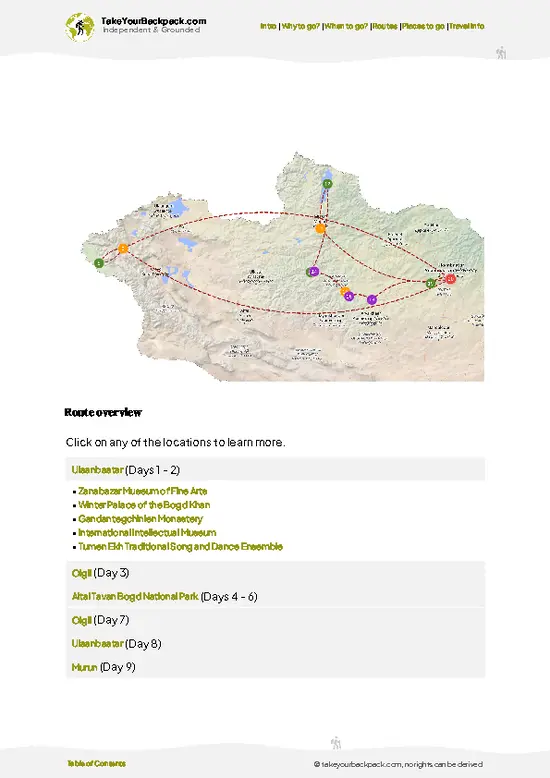
- Erdene Zuu Monastery — The town’s headline: a living, restored Buddhist complex built from the stones of old Karakorum. Walk the courtyard, circle the 108 stupas, watch monks at prayer and soak up a layer of Mongolia’s spiritual history right where the empire once breathed.
- Ruins of ancient Karakorum — Scattered foundations, outlines of the old palace and city, and interpretive signs mark where Genghis Khan’s capital once sat. It’s low-key archaeology you can wander into — better for imagination than polished displays, but hugely atmospheric.
- Karakorum (Kharkhorin) Museum — Small but well-curated: artifacts from excavations, local finds and explanations that stitch the monastery, the ruins and daily nomad life together. Great place to get the backstory before you go wandering outside.
- Erdene Zuu Monastery — The town’s headline: a living, restored Buddhist complex built from the stones of old Karakorum. Walk the courtyard, circle the 108 stupas, watch monks at prayer and soak up a layer of Mongolia’s spiritual history right where the empire once breathed.
- Ruins of ancient Karakorum — Scattered foundations, outlines of the old palace and city, and interpretive signs mark where Genghis Khan’s capital once sat. It’s low-key archaeology you can wander into — better for imagination than polished displays, but hugely atmospheric.
- Karakorum (Kharkhorin) Museum — Small but well-curated: artifacts from excavations, local finds and explanations that stitch the monastery, the ruins and daily nomad life together. Great place to get the backstory before you go wandering outside.
- Silver Tree monument (museum grounds) — A modern, sculptural nod to the legendary Silver Tree fountain of the Great Khan. It’s a quirky, photogenic piece that helps visualise the stories you’ve read about Karakorum — and it’s literally a ten-minute stroll from the monastery.
- Kharkhorin bazaar / local market — Not a tourist mall: fresh dairy, dried curds, leather goods, felt hats and the odd pile of yak tails. Go on market day to practice bartering, sample local snacks and meet traders from surrounding nomad camps.
- Orkhon riverfront & pedestrian bridge — A mellow riverside strip for evening walks, birdwatching and sunset views. Locals fish or picnic here; it’s a simple, genuine slice of life and a peaceful contrast to the monastery crowds.
- Ger camps and homestays in town — Plenty of family-run gers right in or next to town where you can stay, eat homemade dairy teas and watch how nomad households work. Hands-on, budget-friendly and the quickest way to get an honest glance at daily Mongolian life.
- Local handicraft workshops — Small workshops where artisans repair saddles, carve wood, stitch deels or tune morin khuur (horsehead fiddles). Watching a maker at work and buying directly is both useful and culturally meaningful — and keeps money in town.
- Erdene Zuu’s inner chapels & museum rooms — Inside the main complex are quieter chapels and little museum rooms with thangkas, old statues and ritual gear rescued from the region. They reward a slow walk-through and close-up attention.
- Scattered stone monuments and stelae around town — Walk a little off the beaten path and you’ll find old carved stones, Buddhist markers and tombstones pushed into fields and hedgerows. They’re easy to miss but give texture to the site — the leftovers of a very layered past.
Spotted a mistake or missing something? Contact us.


 Best Backpacking
.jpg) Hi, I’m Johan (Netherlands 🇳🇱), the creator of TakeYourBackpack. Over the past 3 decades, I’ve backpacked through 90+ countries across six continents, gaining extensive experience with independent travel, long-term trips, and overland routes.
Hi, I’m Johan (Netherlands 🇳🇱), the creator of TakeYourBackpack. Over the past 3 decades, I’ve backpacked through 90+ countries across six continents, gaining extensive experience with independent travel, long-term trips, and overland routes.