v2.webp)
- Rissani Souk: The town’s best-known draw, strongest on market days (Sunday, Tuesday, Thursday), best from 8 to 11 am. Entry is free, allow 2 to 3 hours. Look for the livestock and spice areas and the donkey parking lot.
- Mausoleum of Moulay Ali Cherif: The resting place of the founder of the Alaouite dynasty, built in the 18th century. Non-Muslims may view the courtyard and entry only to certain parts. Visit in the morning, 20 to 30 minutes, free to small donation.
- Ksar Abouam: A ruined fortified village with crumbling mud-brick walls, quiet and rarely visited. Late afternoon light is best. Free, about 1 hour.
- Ksar Oulad Abdelhalim: A large ksar with a walkable lanes and ruined towers. It is partly inhabited and photogenic in the morning. Free, tips for guides run about US$2 to 4, 1 hour.
- Bab Rissani
- Rissani Souk: The town’s best-known draw, strongest on market days (Sunday, Tuesday, Thursday), best from 8 to 11 am. Entry is free, allow 2 to 3 hours. Look for the livestock and spice areas and the donkey parking lot.
- Mausoleum of Moulay Ali Cherif: The resting place of the founder of the Alaouite dynasty, built in the 18th century. Non-Muslims may view the courtyard and entry only to certain parts. Visit in the morning, 20 to 30 minutes, free to small donation.
- Ksar Abouam: A ruined fortified village with crumbling mud-brick walls, quiet and rarely visited. Late afternoon light is best. Free, about 1 hour.
- Ksar Oulad Abdelhalim: A large ksar with a walkable lanes and ruined towers. It is partly inhabited and photogenic in the morning. Free, tips for guides run about US$2 to 4, 1 hour.
- Bab Rissani gate: The old arched gate on the market edge, the meeting point for taxis and the best place for a quick tea. Free, 15 minutes, nice in the evening.
Spotted a mistake or missing something? Contact us.

Overnight From Erfoud to Erg Chebbi Merzouga with Camel Ride

Night In Erg chebbi Desert Departing From Erfoud, Camel Trekking

Trip To Merzouga Desert From Erfoud, Sunset Over Dunes Camel Ride
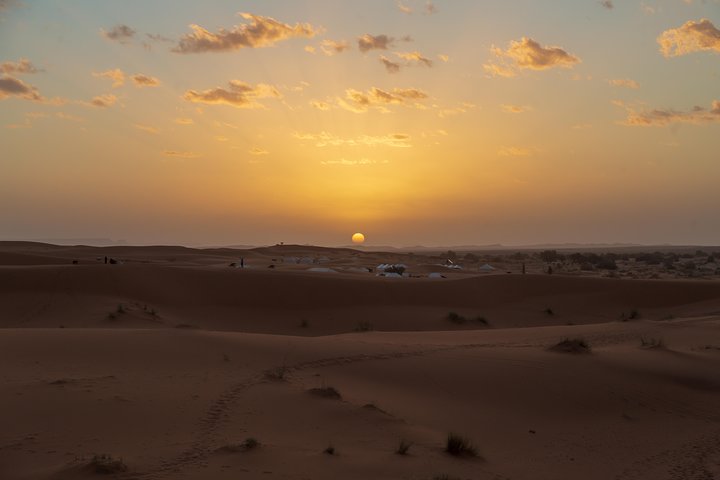
Erfoud Desert Tour, Sunset, Dinner, Camel Ride, Visit the Nomads

Merzouga Desert Sunrise Walking Trip From Erfoud With Local Guide

Overnight To Merzouga Desert From Erfoud & Camel Ride & Quad ATV

Private Taxi from Erfoud to Merzouga Desert

Private Day Trip From Erfoud To Merzouga Desert With Lunch


 Best Backpacking
.jpg) Hi, I’m Johan (Netherlands 🇳🇱), the creator of TakeYourBackpack. Over the past 3 decades, I’ve backpacked through 90+ countries across six continents, gaining extensive experience with independent travel, long-term trips, and overland routes.
Hi, I’m Johan (Netherlands 🇳🇱), the creator of TakeYourBackpack. Over the past 3 decades, I’ve backpacked through 90+ countries across six continents, gaining extensive experience with independent travel, long-term trips, and overland routes.