v2.webp)
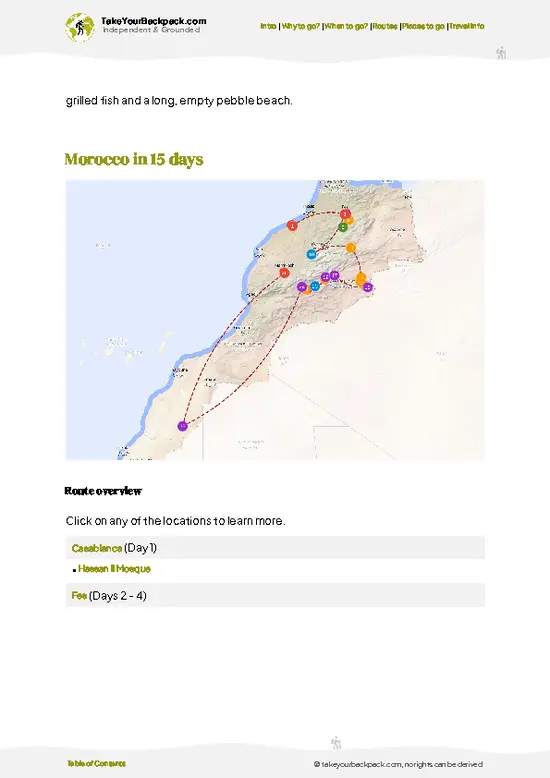
- The City Walls (Remparts): Rammed-earth ramparts about 5 kilometers around, with towers and gates. Free. Go in the late afternoon when the clay turns deep red. A full loop by calèche takes about 1 hour, or 2 hours on foot.
- Place Assarag: The main square, where orange juice stalls, cafés and street life gather after dark. Free. Visit in the evening for 1 hour.
- Berber Souk: Carpets, jewelry, pottery and argan products, sold in a tight maze of alleys. Free to enter. Go in the morning, 1 to 2 hours.
- Arab Souk: Spices, clothing, household goods and everyday items for locals. Free. Go in the morning for 1 hour.
- Bab El Kasbah: The best-known gate, with a pair of square towers and an arch used for events. Free. Best at golden hour, 20 to 30 minutes.
- Tannery Quarter (Tanneries): A working leather district
- The City Walls (Remparts): Rammed-earth ramparts about 5 kilometers around, with towers and gates. Free. Go in the late afternoon when the clay turns deep red. A full loop by calèche takes about 1 hour, or 2 hours on foot.
- Place Assarag: The main square, where orange juice stalls, cafés and street life gather after dark. Free. Visit in the evening for 1 hour.
- Berber Souk: Carpets, jewelry, pottery and argan products, sold in a tight maze of alleys. Free to enter. Go in the morning, 1 to 2 hours.
- Arab Souk: Spices, clothing, household goods and everyday items for locals. Free. Go in the morning for 1 hour.
- Bab El Kasbah: The best-known gate, with a pair of square towers and an arch used for events. Free. Best at golden hour, 20 to 30 minutes.
- Tannery Quarter (Tanneries): A working leather district outside the central souks, with pits and drying hides. Entry is free, though guides may ask for tips of US$1 to 3. Visit mid-morning for 30 to 45 minutes.
- Saadian Tombs Area and Old Kasbah Quarter: Quiet lanes past old Saadian-era houses and the old kasbah neighborhood. Free. 1 hour.
Spotted a mistake or missing something? Contact us.

Paradise valley excursion

Agadir & Taghazout Beach Horseback Riding (Morning or Sunset)

From Agadir & Taghazout: Sandboarding & Timlalin Canyon Tour

Paradise Valley excursion with botanical garden + Berber breakfast

Agadir Airport Transfer To or From Agadir & Taghazout

Agadir Guided Sandboarding And Sunset BBQ Dinner

Agadir Sunset Sandboarding & Moroccan BBQ Dinner Tour

Excursion Essaouira from agadir 1 day

Agadir City Tour & Crocopark Visit – 1 Day Full of Discovery


 Best Backpacking
.jpg) Hi, I’m Johan (Netherlands 🇳🇱), the creator of TakeYourBackpack. Over the past 3 decades, I’ve backpacked through 90+ countries across six continents, gaining extensive experience with independent travel, long-term trips, and overland routes.
Hi, I’m Johan (Netherlands 🇳🇱), the creator of TakeYourBackpack. Over the past 3 decades, I’ve backpacked through 90+ countries across six continents, gaining extensive experience with independent travel, long-term trips, and overland routes.