×

Mozambique🇲🇿 | regionsChimanimani Mountainsgranite peaks, montane forest, rare orchids, border trails | things to do and best time to go

Explore Magoe National ParkExplore Island of Mozambique

Backpacking in Chimanimani Mountains
👌 Worth visitingregion ranked #3
By Johan Kruseman 🇳🇱 | Updated September 3, 2026

Everyone says you come to the Chimanimani Mountains for the hiking—those misty peaks and the promise of “untouched wilderness.” But here’s the real secret: the best thing about Chimanimani isn’t just the trails, it’s the sense that you’re slipping into a parallel Mozambique, one that most travelers miss entirely. Tucked along the border with Zimbabwe in the country’s central highlands, Chimanimani is a region where the scenery feels almost smug in its drama—think jagged granite ridges, waterfalls that actually roar, and villages where the only schedule is sunrise and sunset. It’s not cheap to get here, and public transport is a test of patience (and your spine), but the payoff is a place that’s refreshingly light on crowds and heavy on authenticity. Unlike the more trafficked beaches of Tofo or the safari circuits up north, Chimanimani is for those who want their adventure with a side of real local life, not just another stamp in the passport.

Discover everything you want to know in the 📖 Mozambique Travel Guide.
Loading the map 🌍
CLICK TO FILTER
cities
towns
national parks
hikes
beaches
attractions
festivals
regions
SHOW COUNTRY’S BESTSHOW ALL

✨ Why go?
Ranked #3 region in Mozambique
Why Chimanimani Mountains should be on your travel list

In the Chimanimani Mountains, backpackers find a treasure trove of experiences that blend nature and culture seamlessly. The variety of landscapes is staggering. You can hike through lush forests, scale rugged peaks, and chill by crystal-clear rivers—all without the hassle of constant relocation. This region is a playground for those who want to dive deep into the local culture while soaking in breathtaking views.

Transport is surprisingly flexible here. You can hitch a ride with friendly locals or rent a bike to explore at your own pace. This means you can spend more time soaking in the sights and less time worrying about logistics.

Plus, the slow travel vibe lets you connect with the community. You’ll find yourself sharing stories over a fire with villagers or joining in on traditional … read more 👉
In the Chimanimani Mountains, backpackers find a treasure trove of experiences that blend nature and culture seamlessly. The variety of landscapes is staggering. You can hike through lush forests, scale rugged peaks, and chill by crystal-clear rivers—all without the hassle of constant relocation. This region is a playground for those who want to dive deep into the local culture while soaking in breathtaking views.

Transport is surprisingly flexible here. You can hitch a ride with friendly locals or rent a bike to explore at your own pace. This means you can spend more time soaking in the sights and less time worrying about logistics.

Plus, the slow travel vibe lets you connect with the community. You’ll find yourself sharing stories over a fire with villagers or joining in on traditional dances. It’s about savoring each moment, not just ticking boxes. The Chimanimani Mountains offer a chance to immerse yourself in the heart of Mozambique, making every step feel like a high-value experience.
Want to include Chimanimani Mountains in your Mozambique route?
Create a personalized Mozambique itinerary that includes Chimanimani Mountains and the places that fit your trip — based on your travel style, budget, and available time. Get your route in seconds.

Generate my trip

💡 HighlightsKey sights and experiences for travelers

  1. Monte Binga — Mozambique’s highest peak (right on the Chimanimani massif) and the proper “why you came” climb: big, raw granite slabs, narrow ridgelines and views that drop straight into Zimbabwe and down to the coastal plain. It’s a scramble more than a walk and feels like nowhere else in the country.
  2. Pungwe River headwaters and gorge — where a major east-flowing river is born in misty montane forest. Walks along the upper Pungwe give you waterfalls, steep-sided gorges and an intimate sense of the mountain’s water architecture — the source of downstream farms and towns.
  3. Revué Valley and its waterfalls — a green ribbon running through the massif on the Mozambique side, with a handful of plunging falls, natural pools and riverside farmland. Good for lazy swims, local picnics and quiet photography
read more 👉
  1. Monte Binga — Mozambique’s highest peak (right on the Chimanimani massif) and the proper “why you came” climb: big, raw granite slabs, narrow ridgelines and views that drop straight into Zimbabwe and down to the coastal plain. It’s a scramble more than a walk and feels like nowhere else in the country.
  2. Pungwe River headwaters and gorge — where a major east-flowing river is born in misty montane forest. Walks along the upper Pungwe give you waterfalls, steep-sided gorges and an intimate sense of the mountain’s water architecture — the source of downstream farms and towns.
  3. Revué Valley and its waterfalls — a green ribbon running through the massif on the Mozambique side, with a handful of plunging falls, natural pools and riverside farmland. Good for lazy swims, local picnics and quiet photography away from the busier routes.
  4. Granite towers and tors of the Chimanimani massif — the sculpted rock formations that define the skyline here: freestanding domes, balancing boulders and pocketed cliffs you can scramble, boulder-hop and photograph at golden hour. They give the mountains their character — dramatic and tactile.
  5. Escarpment lookouts over the Mozambique plain — razor-edge viewpoints on the eastern escarpment where the land drops a long way to the lowlands. Sunrises and storms from these spots are cinematic, and you get a real sense of how the Chimanimani punch up out of the coastal landscape.
  6. Espungabera market and village trailhead (hidden gem) — a genuine, unfussy frontier market and the local gateway into the Mozambican Chimanimani. Good place to hire a local guide, taste street snacks, buy fresh produce and see how mountain communities trade — low on tourist gloss, high on real life.
  7. Mossy montane forest patches and heathlands (hidden gem) — those wet, moss-draped pockets and high-altitude heaths that host orchids, ferns and insects you won’t find on the lowlands. They’re easy to miss if you race up the peaks, but spending an hour here feels like visiting a different planet.
  8. Community homestays and village farming experiences (hidden gem) — staying with families in the foothill villages to learn cassava and banana processing, cooking over wood fires, or joining a harvest. It’s slower, dirtier and way more memorable than any lodge dinner, and supports local folks directly.
  9. Seasonal plunge pools and minor cascades off tributaries — the little unnamed waterfalls locals go to on hot afternoons: clear plunge pools tucked under boulders, shaded by forest, perfect for cooling off after a walk. They don’t have signposts, which is exactly the point.
  10. Wild-camp granite scrambles and ridge bivouacs — spend a night on a windswept slab or between boulders under the stars. The mountains are compact enough that you can do honest, lightweight overnight routes that feel remote without the logistics headaches of bigger ranges.
Spotted a mistake or missing something? Contact us.

⌛️ 5 daysSeeing the highlights in 5 days

Day 1: Chimanimani Village
Arriving in Chimanimani Village sets the stage for your adventure. The transport here is a bit of a dance; you’ll likely take a shared taxi from the nearest major city, Mutare. This ride is a wild mix of local chatter and breathtaking views, but it can take a few hours. Settle in and soak up the village vibe. Grab a local meal at a small eatery—trust me, the chicken stew is a game-changer. This day is all about acclimatizing and getting a feel for the rhythm of the region.

Day 2: Chimanimani to the Peaks
Early morning, you’ll want to hit the trails. The transport options are limited, so plan for a guided hike to the peaks. This is where the magic happens. The trails are well-marked, but the real treasure lies in the panoramic views. You’ll sacrifice some comfort … read more 👉
Day 1: Chimanimani Village
Arriving in Chimanimani Village sets the stage for your adventure. The transport here is a bit of a dance; you’ll likely take a shared taxi from the nearest major city, Mutare. This ride is a wild mix of local chatter and breathtaking views, but it can take a few hours. Settle in and soak up the village vibe. Grab a local meal at a small eatery—trust me, the chicken stew is a game-changer. This day is all about acclimatizing and getting a feel for the rhythm of the region.

Day 2: Chimanimani to the Peaks
Early morning, you’ll want to hit the trails. The transport options are limited, so plan for a guided hike to the peaks. This is where the magic happens. The trails are well-marked, but the real treasure lies in the panoramic views. You’ll sacrifice some comfort for the thrill of the climb, but the sense of accomplishment is worth every bead of sweat. Pack a lunch; you’ll want to linger at the summit.

Day 3: Off-Path Reward: Mupungwe Falls
Take a detour today to Mupungwe Falls. It’s a bit off the beaten path, but the journey is part of the charm. The falls are stunning, and the swimming hole is a refreshing reward after your hike. The transport here is a local minibus, which adds to the adventure. This is where you’ll feel like a local, mingling with residents and soaking in the atmosphere.

Day 4: Return to Chimanimani Village
Head back to Chimanimani Village for a rest day. Use this time to explore local crafts and chat with artisans. The pace here is slower, allowing you to recharge. You’ll want to savor the local coffee and reflect on your journey so far.

Day 5: Must-Do Day: Hike to the Summit of Mount Binga
This is the day that justifies the trip. Mount Binga is the highest peak in Mozambique, and the hike is challenging yet rewarding. The transport to the trailhead is straightforward, and the views from the top are nothing short of spectacular. This experience will leave you with stories to tell and memories to cherish.
Turn your Chimanimani Mountains visit into an Mozambique adventure
Build a complete Mozambique route with Chimanimani Mountains, hidden gems, must-see destinations, and realistic travel times included.

Generate my trip

🌤️ When to go?Best time to visit Chimanimani Mountains


  • Weather: The dry season from May to September is your golden window. Expect crisp, clear days perfect for hiking, with minimal rain to ruin your gear or views. The wet season (October to April) brings heavy rains that turn trails into mudslides and rivers into barriers.

  • Temperature: Daytime highs hover around 20-25°C (68-77°F) during the dry months, which is downright comfortable for trekking. Nights can dip to 5-10°C (41-50°F), so pack a warm layer. The wet season heats up slightly but humidity spikes, making exertion tougher.

  • Daylight Hours: From May to September, you get roughly 10-11 hours of daylight—enough to start early and finish your hikes before dusk without rushing. The wet season offers longer days but often clouded skies, so don’t bank on extra light.

  • Crowds: The Chimanimani
read more 👉

  • Weather: The dry season from May to September is your golden window. Expect crisp, clear days perfect for hiking, with minimal rain to ruin your gear or views. The wet season (October to April) brings heavy rains that turn trails into mudslides and rivers into barriers.

  • Temperature: Daytime highs hover around 20-25°C (68-77°F) during the dry months, which is downright comfortable for trekking. Nights can dip to 5-10°C (41-50°F), so pack a warm layer. The wet season heats up slightly but humidity spikes, making exertion tougher.

  • Daylight Hours: From May to September, you get roughly 10-11 hours of daylight—enough to start early and finish your hikes before dusk without rushing. The wet season offers longer days but often clouded skies, so don’t bank on extra light.

  • Crowds: The Chimanimani Mountains are never overrun, but the dry season attracts more serious trekkers and nature lovers. If you want solitude, shoulder months like April or October can be quieter, though riskier weather-wise.

  • Seasonal Activities: Dry months are prime for hiking, birdwatching, and camping. The wet season can open up waterfalls and lush greenery but at the cost of accessibility and comfort.

  • Price Fluctuations: Expect slightly higher prices for guides and accommodation during the dry season due to demand. Off-season rates drop, but you pay in sweat and patience battling the elements.


Pro-tip: Aim for late August to early September—dry trails, manageable crowds, and a sweet spot before prices peak. It’s the insider’s timing to own the mountains without the hassle.


source: climatestotravel.comJANJanuary: below average for travelingFEBFebruary: below average for travelingMARMarch: below average for travelingAPRApril: good for travelingMAYMay: excellent for travelingJUNJune: excellent for travelingJULJuly: excellent for travelingAUGAugust: excellent for travelingSEPSeptember: excellent for travelingOCTOctober: good for travelingNOVNovember: below average for travelingDECDecember: below average for traveling
when-to-go

✈️ The backpacker research shortcutMozambique Travel Guide

An offline-friendly backpacking guide with optimized travel routes, ranked highlights, transport advice, and the best areas to stay.
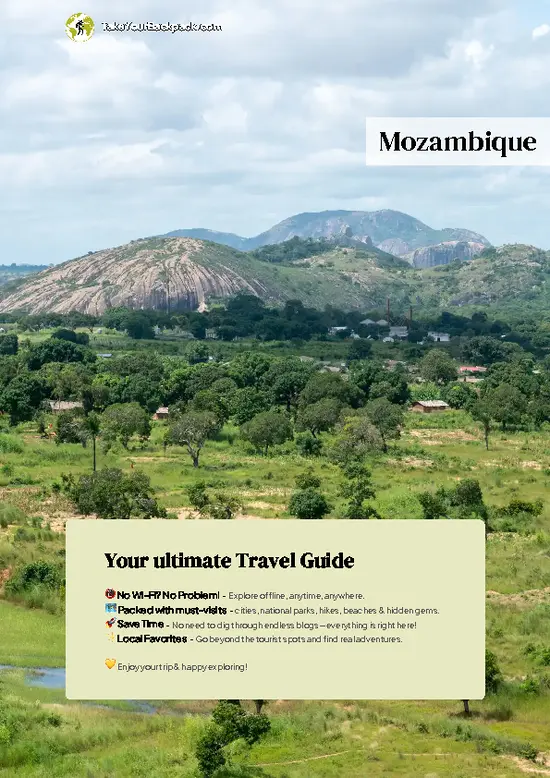
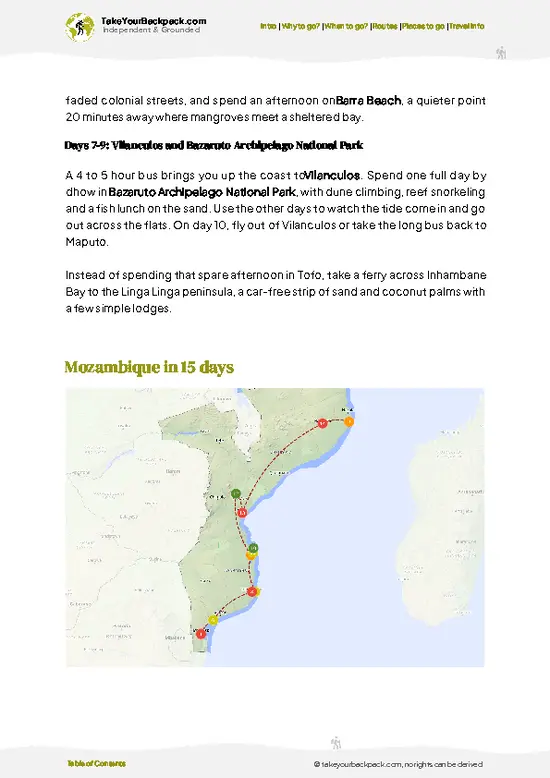
example page 0 from our offline Travel Guide for Mozambique
example page 1 from our offline Travel Guide for Mozambique
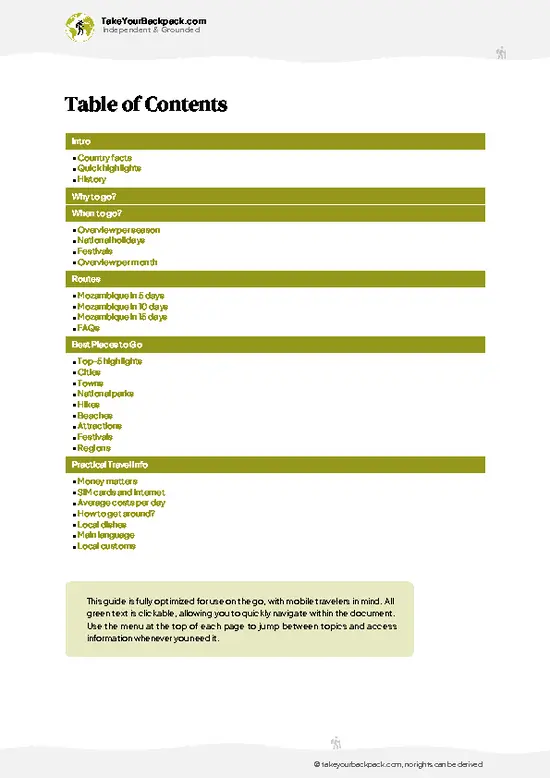
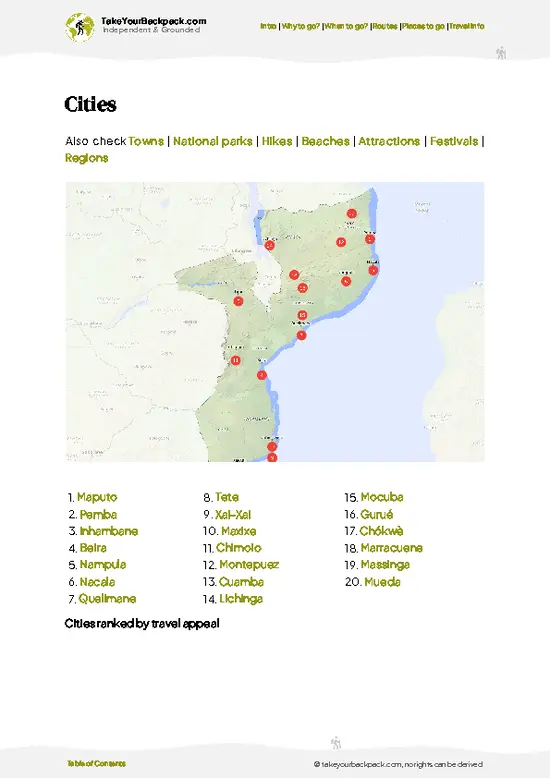
example page 2 from our offline Travel Guide for Mozambique
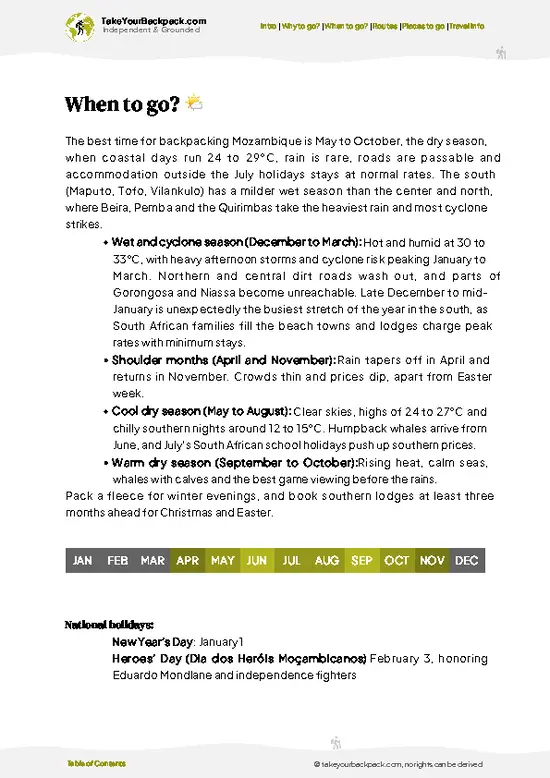
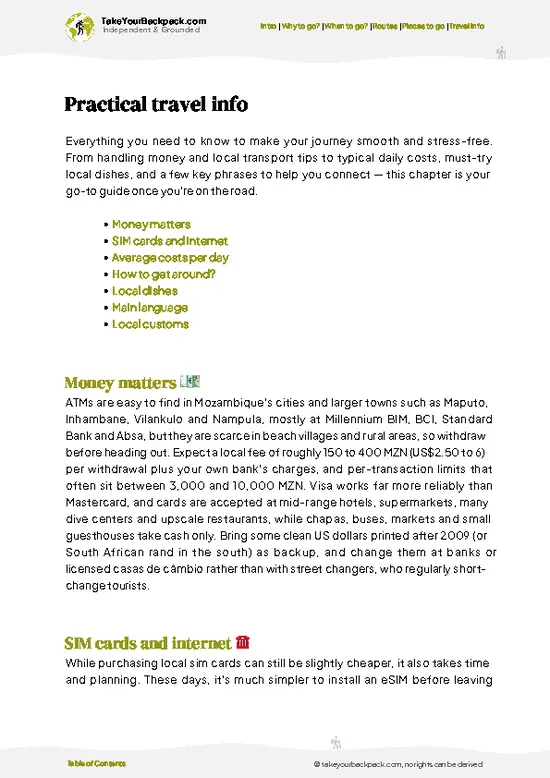
example page 3 from our offline Travel Guide for Mozambique
example page 4 from our offline Travel Guide for Mozambique
example page 5 from our offline Travel Guide for Mozambique
example page 6 from our offline Travel Guide for Mozambique
example page 7 from our offline Travel Guide for Mozambique
The digital guide (342 pages) contains:
87 highlights, ranked by travel appeal
Optimized 5, 10 & 15-day travel routes
Cities, national parks, landmarks, beaches
How to get around
Offline-friendly for travel without Wi-Fi
👉 Click to see all 30+ guide features

📅 Plan smarter in minutes, not weeks
Month by month travel advice
Festivals & national holidays
Budget expectations

🗺️ Go to the right places, skip the overrated ones
Honest pros & cons of destinations
Top hikes, parks & viewpoints
Lesser-known places most travelers miss
Clear “worth it vs skip it” guidance

🛏️ Travel smoothly without rookie mistakes
Best areas to stay
Transport systems explained simply
Common scams & safety advice
SIM cards, money & practical tips

🌍 Understand the country, not just visit it
Culture & traditions
52 Essential phrases & customs
Festivals worth planning around
Traveler-friendly historical context
Insights that make places more meaningful

📱 Built for real travel conditions
Fully downloadable PDF
Works completely offline
Optimized for phone use
Useful in remote areas & buses
Everything in one place
Save weeks of stressful planning
Get instant access to your full guide. 30‑day money-back guarantee.
+ Add another guide for just JP¥1170

By proceeding you agree to our terms.
Sent to your inbox immediately after payment • 100% Secure Checkout
Best Backpacking Travel Advisor 2025 tourism awardBest Backpacking
Travel Advisor
2025
What others say about Take Your Backpack Guides:
⭐⭐⭐⭐⭐
Fantastic, amazing amount of information!
⭐⭐⭐⭐⭐
My goodness this is amazing, it's what I've been looking for hats off too you!
⭐⭐⭐⭐⭐
I think this is absolutely BRILLIANT
⭐⭐⭐⭐
Very complete and informative. It's still missing places, but I gotta to commend you
⭐⭐⭐⭐⭐
This is truly amazing, thank you, can't wait to explore it with my kids!
⭐⭐⭐⭐⭐
Awesome resource, thank you!
⭐⭐⭐⭐⭐
This is amazing! Can't wait to explore the ones I haven't seen
⭐⭐⭐⭐
I love this! Well done, great idea.
⭐⭐⭐⭐⭐
Thanks for taking the time to make this gem!
⭐⭐⭐⭐⭐
This might be the best website I've ever seen.
⭐⭐⭐⭐⭐
Congratulations, and thank you so much for your work; it's incredibly valuable.
⭐⭐⭐⭐
In all seriousness I think you did a great job pointing out the important spots
⭐⭐⭐⭐⭐
10/10 very good
⭐⭐⭐⭐⭐
As someone who's only just starting to visit regularly this is awesome, thank you.
⭐⭐⭐⭐
Thank you very much! I'm going to visit my dad, it's going to be very useful!
⭐⭐⭐⭐⭐
This is really cool! We'll be travelling for the first time and this definitely come in handy.
⭐⭐⭐⭐⭐
You are now our minister of culture, congratulations 👨‍💼
⭐⭐⭐⭐⭐
Just wanted to tell you that this is a pearl! Going to follow your recommendations.
⭐⭐⭐⭐⭐
This is so cool. I'll definitely be using the resource for my travels soon.
⭐⭐⭐⭐⭐
This is very impressive! Good work.
⭐⭐⭐⭐⭐
This is an amazing and informative site. Very well done!

🛏️ Where to stay?How to pick the right area

When you’re in the Chimanimani Mountains, you want to feel the pulse of the place without breaking the bank. Start in Chimanimani Village. It’s the heart of the region, buzzing with fellow backpackers. You’ll find local markets where you can snag fresh produce and street food that won’t dent your wallet. The vibe is friendly, and you can easily strike up conversations with other travelers or locals over a cup of strong Mozambican coffee.

Next up, consider Pungwe River, a bit off the beaten path but worth it. This area offers stunning views and a more laid-back atmosphere. It’s perfect for those … read more 👉
When you’re in the Chimanimani Mountains, you want to feel the pulse of the place without breaking the bank. Start in Chimanimani Village. It’s the heart of the region, buzzing with fellow backpackers. You’ll find local markets where you can snag fresh produce and street food that won’t dent your wallet. The vibe is friendly, and you can easily strike up conversations with other travelers or locals over a cup of strong Mozambican coffee.

Next up, consider Pungwe River, a bit off the beaten path but worth it. This area offers stunning views and a more laid-back atmosphere. It’s perfect for those who want to escape the crowds and soak in nature. You’ll find campsites and communal areas where you can swap stories with fellow adventurers.

Lastly, check out Mafambisse, a small village with a rich cultural backdrop. It’s a great base for hiking and exploring the surrounding landscapes. The locals are welcoming, and you’ll get a genuine feel for Mozambican life.

Each of these spots offers a unique slice of the Chimanimani experience. Choose wisely, and you’ll walk away with stories that last a lifetime.

🚌 Getting aroundMoving around without the hassle

The Chimanimani Mountains pulse with a rhythm all their own. Here, schedules are more like suggestions, and the flow of travel feels like a dance between spontaneity and necessity. You might find yourself waiting for a ride that’s late or hopping into a shared taxi that’s already half-full, all while the stunning peaks loom overhead, urging you to embrace the chaos. This isn’t a place where you rush; it’s where you learn to savor the journey, letting the landscape guide your next move.


  • Shared Taxis (Mikoros): These are your best bet for budget travel. They run frequently, usually from dawn until dusk, and cost around $2-$5 per ride, depending on your destination. Expect a cozy squeeze with locals, but the speed and direct routes make it worth it.


  • Minibuses: A bit more structured than shared
read more 👉
The Chimanimani Mountains pulse with a rhythm all their own. Here, schedules are more like suggestions, and the flow of travel feels like a dance between spontaneity and necessity. You might find yourself waiting for a ride that’s late or hopping into a shared taxi that’s already half-full, all while the stunning peaks loom overhead, urging you to embrace the chaos. This isn’t a place where you rush; it’s where you learn to savor the journey, letting the landscape guide your next move.


  • Shared Taxis (Mikoros): These are your best bet for budget travel. They run frequently, usually from dawn until dusk, and cost around $2-$5 per ride, depending on your destination. Expect a cozy squeeze with locals, but the speed and direct routes make it worth it.


  • Minibuses: A bit more structured than shared taxis, minibuses connect major towns and can be a great way to cover longer distances. Prices range from $5 to $10, and they typically run from early morning until late afternoon. They’re slower than taxis, but you’ll get a taste of local life along the way.


  • Private Hire Cars: If you’re feeling a bit flush, hiring a car can be a game-changer. Prices vary widely, but expect to pay around $30-$50 for a day. This option gives you the freedom to explore at your own pace, but make sure to negotiate the price upfront.


  • Walking Trails: For the adventurous, many of the best sights are accessible on foot. Trails vary in difficulty, but they’re often well-marked. It’s free, and you’ll get an intimate experience with the landscape. Just pack plenty of water and snacks!


  • Motorbike Rentals: A thrilling way to navigate the region, rentals start around $15 a day. This option offers flexibility and speed, but be cautious on the rugged roads. Always wear a helmet and check the bike before you ride.


For a smooth experience, consider timing your travel around local market days. This not only gives you a chance to mingle with locals but also ensures that transport options are more plentiful. Embrace the rhythm of the Chimanimani Mountains, and let the journey unfold!

🍲 FoodLocal Cuisine & Drinks

In the Chimanimani Mountains, food is a celebration of local flavors and community. You’ll want to dive into matapa, a dish made from cassava leaves cooked with peanuts and coconut milk. It’s rich, earthy, and a staple that embodies the region’s culinary heart. Pair it with nsima, a thick porridge made from maize, which is the perfect vehicle for soaking up all those delicious sauces.

Street food is where the magic happens. Picture bustling markets filled with the aroma of grilled nyama (meat) skewers sizzling over open flames. Grab a few and enjoy them with a side of piri-piri sauce for a spicy kick. Don’t miss out on freshly squeezed sugarcane juice; it’s sweet, refreshing, and a great way to cool down after a hike.

Dining here is casual and communal. Expect to share tables and stories … read more 👉
In the Chimanimani Mountains, food is a celebration of local flavors and community. You’ll want to dive into matapa, a dish made from cassava leaves cooked with peanuts and coconut milk. It’s rich, earthy, and a staple that embodies the region’s culinary heart. Pair it with nsima, a thick porridge made from maize, which is the perfect vehicle for soaking up all those delicious sauces.

Street food is where the magic happens. Picture bustling markets filled with the aroma of grilled nyama (meat) skewers sizzling over open flames. Grab a few and enjoy them with a side of piri-piri sauce for a spicy kick. Don’t miss out on freshly squeezed sugarcane juice; it’s sweet, refreshing, and a great way to cool down after a hike.

Dining here is casual and communal. Expect to share tables and stories with locals, so don’t be shy. When you’re invited to join a meal, it’s a sign of respect and friendship. Just remember to eat with your right hand; it’s the local custom. Embrace the flavors, the warmth, and the vibrant social scene, and you’ll feel like you belong.

FAQCommon questions from travelers

3 to 5 days are ideal to explore the Chimanimani Mountains thoroughly, allowing time for hiking, wildlife spotting, and visiting key sites like Bridal Veil Falls. Longer stays enable more remote trail exploration and acclimatization to the altitude.
Getting around without a car is possible using local minibuses or shared taxis from Chimanimani town to trailheads and nearby villages. Walking is common for short distances, but expect limited public transport options beyond main routes.
The Chimanimani Mountains are known for their rugged granite peaks, diverse flora and fauna, and scenic hiking trails. The area is famous for the Chimanimani National Park, which offers unique biodiversity and stunning landscapes including waterfalls and ancient forests.
⚠️ Things can change over time, so always validate details locally before you go.

Other Mozambican regions near Chimanimani Mountains

Explore more nearby:

  • Island of Mozambique—stone fortresses, colonial architecture, narrow lanes, Indian Ocean port| 938 km away
  • Quirimbas Archipelago—coral islands, dhow crossings, Swahili ruins, tidal sandbars| 1006 km away

💡 Not sure where to go next?
Create a personalized itinerary for Mozambique including Chimanimani Mountains and the places that fit your trip.

Generate my itinerary

👉 Discover all regions

Or checkout all Mozambique has to offer (think cities, towns, villages, national parks, hikes, beaches, festivals)
Country photo of Mozambique

We 💚 feedbackSumming up the experience

If you find yourself in the Chimanimani Mountains, don’t rush. Take your time to soak in the atmosphere. The vibe here is laid-back, almost meditative. The best surprise? The locals. They’re warm and eager to share stories over a cup of strong tea. Just a heads-up: the weather can turn on a dime, so pack layers. Embrace the unpredictability; it’s part of the charm. Trust me, those moments of spontaneity will be what you remember most.

✍️ Help improve this page!
The information on this page is based on in-depth research, insights shared by experienced travelers, and feedback from the local travel community in Mozambique. While every effort is made to keep the information accurate and current, conditions can change — so if you spot anything incorrect or outdated, please get in touch.


🙋‍♂️ Give feedback

👋 Meet the founderWho’s Behind Take Your Backpack?

Johan, backpacker and founder of TakeYourBackpackHi, I’m Johan (Netherlands 🇳🇱), the creator of TakeYourBackpack. Over the past decade, I’ve backpacked through 80+ countries across six continents, gaining extensive experience with independent travel, long-term trips, and overland routes.

This site is built on a combination of firsthand travel experience and carefully curated insights from other backpackers. Many guides are based on places I’ve personally visited, while others bring together tips, observations, and practical advice shared by trusted travelers I’ve met along the way.

The goal is to provide realistic, experience-driven guidance — not generic itineraries — so you can explore destinations with better context, clearer expectations, and more confidence.

Get full Mozambique guide •
Instant download • 87 highlights • Full Offline guide