×

Mozambique🇲🇿 | regionsQuirimbas Archipelagocoral islands, dhow crossings, Swahili ruins, tidal sandbars | things to do and best time to go

Explore Island of MozambiqueExplore Morrumbene

Backpacking in Quirimbas Archipelago
🏆 Top pickregion ranked #1
By Johan Kruseman 🇳🇱 | Updated May 28, 2026

Here’s what nobody tells you until it’s too late: in the Quirimbas Archipelago, the best beaches and islands are often empty by mid-afternoon—because the day-trippers have already left. If you stay overnight, you get the whole show: pink dusk, fishermen hauling in their catch, and the kind of silence you can’t buy in Zanzibar. The Quirimbas dangle off Mozambique’s northern coast, just above Pemba, stretching toward the Tanzanian border. For backpackers, this is the Mozambique you brag about finding before everyone else. The islands are wild and raw, with mangroves, coral reefs, and villages where the only “resort” is a hammock under a palm. It’s not cheap to hop between islands—boats are slow, and schedules are more like rumors—but you’re rewarded with world-class diving, fresh seafood, and a vibe that’s more “castaway” than “cocktail bar.” Compared to Tofo or Vilanculos, Quirimbas is less polished, less party, and a lot more real. You’ll trade convenience for authenticity, and if you’re after crowds or nightlife, you’re in the wrong archipelago. But if you want to feel like you’ve slipped through a crack in the map, this is the spot.

Discover everything you want to know in the 📖 Mozambique Travel Guide.
Loading the map 🌍
CLICK TO FILTER
cities
towns
national parks
hikes
beaches
attractions
festivals
regions
SHOW COUNTRY’S BESTSHOW ALL

✨ Why go?
Ranked #1 region in Mozambique
The unique appeal for travelers

The Quirimbas Archipelago in Mozambique is a backpacker’s paradise, and here’s why you should consider it. First off, the variety of landscapes is mind-blowing. You’ve got pristine beaches, lush mangroves, and vibrant coral reefs all within a stone’s throw. This means you can dive, snorkel, and chill on the beach without the hassle of constant relocation.

Transport here is surprisingly flexible. You can hop on a local dhow for a scenic ride between islands or catch a quick ferry. This allows you to explore at your own pace, soaking in the slow travel vibe that’s hard to find elsewhere.

But it’s not just about nature; the cultural experiences are rich and immersive. Spend time with local fishermen, learn about traditional crafts, or enjoy the rhythm of local music. You’re not just a tourist; … read more 👉
The Quirimbas Archipelago in Mozambique is a backpacker’s paradise, and here’s why you should consider it. First off, the variety of landscapes is mind-blowing. You’ve got pristine beaches, lush mangroves, and vibrant coral reefs all within a stone’s throw. This means you can dive, snorkel, and chill on the beach without the hassle of constant relocation.

Transport here is surprisingly flexible. You can hop on a local dhow for a scenic ride between islands or catch a quick ferry. This allows you to explore at your own pace, soaking in the slow travel vibe that’s hard to find elsewhere.

But it’s not just about nature; the cultural experiences are rich and immersive. Spend time with local fishermen, learn about traditional crafts, or enjoy the rhythm of local music. You’re not just a tourist; you’re part of the community, even if just for a moment.

So, if you’re looking for a place where you can balance comfort and adventure, while diving deep into both nature and culture, the Quirimbas are calling. Trust me, you won’t regret it.
Want to include Quirimbas Archipelago in your Mozambique route?
Create a personalized Mozambique itinerary that includes Quirimbas Archipelago and the places that fit your trip — based on your travel style, budget, and available time. Get your route in seconds.

Generate my trip

💡 HighlightsWhat this place is best known for

  1. Ibo Island (Ilha do Ibo) — The archipelago’s most atmospheric island: a compact old town of crumbling Portuguese houses, narrow alleys, mosques and churches, plus the coastal fort that watches the bay. Walkable, genuine and full of local life — markets, fishermen hauling in dhows and workshops where you still see traditional boat-building. Feels like Mozambique history you can touch.
  2. Vamizi Island — Turtle beaches & world-class reefs — One of the best places in the Quirimbas for seeing nesting green and loggerhead turtles, plus immediate access to deep, healthy coral walls. Divers and snorkelers will find mantas, reef sharks and huge coral bommies; nights bring bioluminescence and quiet sand beaches that actually stay pristine.
  3. Medjumbe Island — Tiny coral cay for total escape — A single-beach,
read more 👉
  1. Ibo Island (Ilha do Ibo) — The archipelago’s most atmospheric island: a compact old town of crumbling Portuguese houses, narrow alleys, mosques and churches, plus the coastal fort that watches the bay. Walkable, genuine and full of local life — markets, fishermen hauling in dhows and workshops where you still see traditional boat-building. Feels like Mozambique history you can touch.
  2. Vamizi Island — Turtle beaches & world-class reefs — One of the best places in the Quirimbas for seeing nesting green and loggerhead turtles, plus immediate access to deep, healthy coral walls. Divers and snorkelers will find mantas, reef sharks and huge coral bommies; nights bring bioluminescence and quiet sand beaches that actually stay pristine.
  3. Medjumbe Island — Tiny coral cay for total escape — A single-beach, palm-ringed islet with impossibly clear water and snorkel trails right off the shore. It’s intimate rather than flashy: day trips or a short overnight here feel like staying on your own postcard island.
  4. Matemo Island — Sandbanks, mangrove channels and village life — Matemo mixes picture-perfect sandbars and sheltered mangrove waterways with small Makonde/Mwani villages. Take a local skiff through the mangroves, walk across shifting sandbanks at low tide and end the afternoon chatting with fishermen — a chance to see island life that hasn’t been turned into a package tour.
  5. Quilalea Island — Secluded sandbank and pristine reef — A quieter private island vibe without the crowds: low dunes, a long coastal sandbank and coral gardens perfect for snorkeling right off the beach. Great for day-trippers who want remote, empty beaches and good snorkeling without long boat runs.
  6. Rubane Island — Slow village rhythm and sunrise beaches (hidden gem) — Often overlooked by itineraries that stick to Ibo, Rubane is small, peaceful and intensely local. Early mornings are magic: fishermen hauling nets, kids practicing football on the sand, and long untouched beaches — the kind of place locals go to reset, not a tourist checklist.
  7. Quirimba (northern islets) — Remote fishing camps and raw dunes — The northern fringes of the archipelago are rawer and wind-sculpted: low dunes, scattered fishing huts and rhythmic dhow traffic. It’s not about resorts here — it’s about empty horizons, watching traditional netting techniques and feeling how isolated island life can be.
  8. Ephemeral sandbanks between islands — daytrip barefoot islands (hidden gem) — At low tide whole sand islands appear between the isles: walk out from a mainland boat, picnic on your own white strip of sand, snorkel the shallow fringing reefs and then watch the water slowly reclaim it. Locals love them for weekend escapes; they’re ephemeral and unforgettable.
  9. Hands-on dhow trips & octopus jigging with local fishermen — cultural seafaring experience (hidden gem) — Skip the glassy charter and take a real dhow with a fisherman: learn to set a net, try traditional octopus jigging, land at a village jetty and share a simple meal. It’s the quickest route to understanding how people here make a living from the sea.
  10. Shallow coral gardens and seagrass flats off Vamizi/Matemo — snorkelling with turtles — Shallow labyrinths of seagrass and coral between islands attract sea turtles, juvenile fish and rays in huge numbers; you can snorkel them straight from small local beaches. These flats are different from deep-reef diving — peaceful, bright, and teeming with life you can study from the surface.
Spotted a mistake or missing something? Contact us.

⌛️ 5 daysWhat you can realistically do in a week

Day 1: Pemba
Arrive in Pemba, the gateway to the Quirimbas Archipelago. This bustling coastal city is your launchpad. Spend the day acclimating and soaking in the local vibe. Hit the markets for fresh seafood and local crafts. The transport options here are straightforward: taxis and tuk-tuks are abundant, but don’t miss the chance to walk along the waterfront. It’s a great way to get your bearings while enjoying the salty breeze.

Day 2: Pemba to Ibo Island
Catch an early boat to Ibo Island. This is where the magic begins. The ride takes about two hours, but the views of the turquoise waters are worth every minute. Ibo is rich in history, with crumbling forts and ancient ruins. Spend your day exploring the island’s past and chatting with locals. The pace here is slower, which allows … read more 👉
Day 1: Pemba
Arrive in Pemba, the gateway to the Quirimbas Archipelago. This bustling coastal city is your launchpad. Spend the day acclimating and soaking in the local vibe. Hit the markets for fresh seafood and local crafts. The transport options here are straightforward: taxis and tuk-tuks are abundant, but don’t miss the chance to walk along the waterfront. It’s a great way to get your bearings while enjoying the salty breeze.

Day 2: Pemba to Ibo Island
Catch an early boat to Ibo Island. This is where the magic begins. The ride takes about two hours, but the views of the turquoise waters are worth every minute. Ibo is rich in history, with crumbling forts and ancient ruins. Spend your day exploring the island’s past and chatting with locals. The pace here is slower, which allows you to truly absorb the culture.

Day 3: Ibo Island to Matemo Island
Take a short boat ride to Matemo Island. This leg is all about comfort and relaxation. Matemo is known for its pristine beaches and laid-back atmosphere. Spend your day lounging, snorkeling, or indulging in a beachside massage. The transport is simple, but the experience is luxurious. You’re sacrificing time for comfort, but it’s a worthy trade-off.

Day 4: Matemo Island to Quirimba Island
Head to Quirimba Island, a hidden treasure. The boat ride is about an hour, and you’ll feel like you’re in a postcard. Quirimba offers stunning coral reefs and vibrant marine life. Spend your day diving or kayaking. The trade-off here is money; the activities can be pricey, but the underwater world is a spectacle you won’t forget.

Day 5: Ibo Island Detour
Before heading back to Pemba, take a detour to the nearby sandbanks. This off-path reward is a slice of paradise. You’ll find solitude and stunning scenery, perfect for reflection. The boat ride is short, and the experience is priceless.

The must-do day? Day 2 on Ibo Island. The blend of history, culture, and local interaction makes it the heart of your trip. You’ll leave feeling like you’ve truly experienced the soul of the Quirimbas.
Turn your Quirimbas Archipelago visit into an Mozambique adventure
Build a complete Mozambique route with Quirimbas Archipelago, hidden gems, must-see destinations, and realistic travel times included.

Generate my trip

🌤️ When to go?Choosing the right time of year


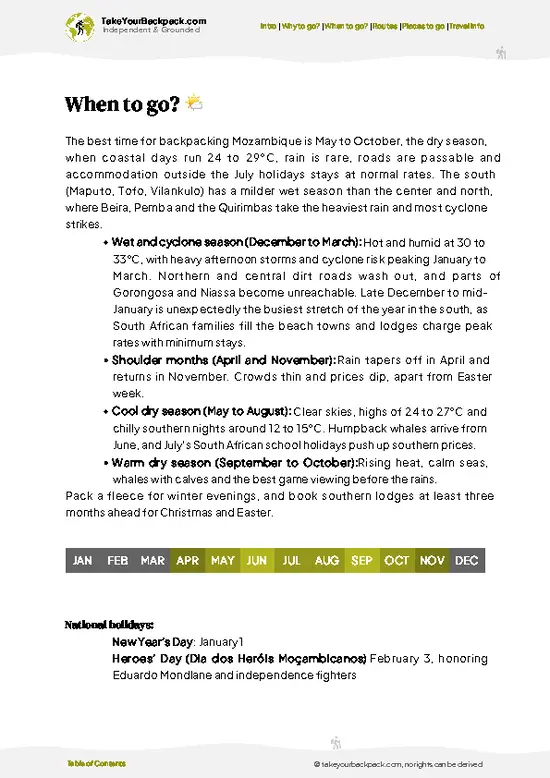
  • Weather: The dry season from May to October is your golden window. Expect clear skies and minimal rain, perfect for beach days and diving. The wet season, November to April, brings heavy rains and humidity, which can turn your plans into a soggy mess.

  • Temperature: During the dry months, temperatures hover between 22°C and 28°C (72°F to 82°F). Comfortable warmth without the oppressive heat. The wet season cranks it up to 28°C–32°C (82°F–90°F), sticky and less pleasant for trekking or exploring.

  • Daylight Hours: Around 11 to 12 hours of daylight year-round, but the dry season offers more consistent sunny mornings, ideal for early starts and maximizing your day.

  • Crowds: The archipelago stays relatively quiet, but the dry season draws more international travelers. Still, it’s never overwhelming—think
read more 👉

  • Weather: The dry season from May to October is your golden window. Expect clear skies and minimal rain, perfect for beach days and diving. The wet season, November to April, brings heavy rains and humidity, which can turn your plans into a soggy mess.

  • Temperature: During the dry months, temperatures hover between 22°C and 28°C (72°F to 82°F). Comfortable warmth without the oppressive heat. The wet season cranks it up to 28°C–32°C (82°F–90°F), sticky and less pleasant for trekking or exploring.

  • Daylight Hours: Around 11 to 12 hours of daylight year-round, but the dry season offers more consistent sunny mornings, ideal for early starts and maximizing your day.

  • Crowds: The archipelago stays relatively quiet, but the dry season draws more international travelers. Still, it’s never overwhelming—think laid-back, not packed.

  • Seasonal Activities: Dry months unlock snorkeling, diving, and dhow sailing at their best. Wet season limits water clarity and outdoor adventures, but it’s prime time for witnessing lush greenery and bird migrations if you’re into that.

  • Price Fluctuations: Expect higher prices and booked-up spots during the dry season, especially July and August. The wet season offers bargains but at the cost of comfort and activity options.


Pro-tip: Book your trip for late May or early October to snag the sweet spot—great weather, fewer crowds, and better deals. That’s the insider’s edge.


source: climatestotravel.comJANJanuary: fair for travelingFEBFebruary: fair for travelingMARMarch: fair for travelingAPRApril: fair for travelingMAYMay: highly recommended for travelingJUNJune: excellent for travelingJULJuly: excellent for travelingAUGAugust: excellent for travelingSEPSeptember: excellent for travelingOCTOctober: highly recommended for travelingNOVNovember: fair for travelingDECDecember: fair for traveling
when-to-go

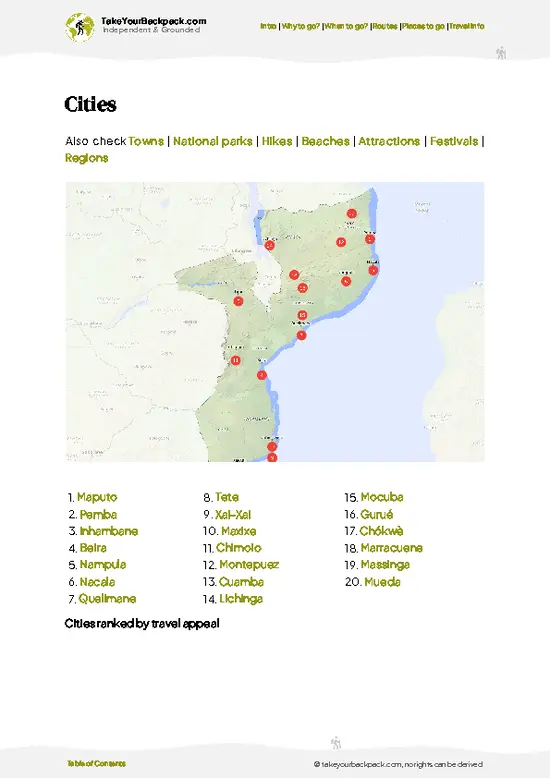
✈️ The backpacker research shortcutMozambique Travel Guide

An offline-friendly backpacking guide with optimized travel routes, ranked highlights, transport advice, and the best areas to stay.
example page 0 from our offline Travel Guide for Mozambique
example page 1 from our offline Travel Guide for Mozambique
example page 2 from our offline Travel Guide for Mozambique
example page 3 from our offline Travel Guide for Mozambique
example page 4 from our offline Travel Guide for Mozambique
example page 5 from our offline Travel Guide for Mozambique
example page 6 from our offline Travel Guide for Mozambique
example page 7 from our offline Travel Guide for Mozambique
The digital guide (345 pages) contains:
86 highlights, ranked by travel appeal
Optimized 5, 10 & 15-day travel routes
Cities, national parks, landmarks, beaches
How to get around
Offline-friendly for travel without Wi-Fi
👉 Click to see all 30+ guide features

📅 Plan smarter in minutes, not weeks
Month by month travel advice
Festivals & national holidays
Budget expectations

🗺️ Go to the right places, skip the overrated ones
Honest pros & cons of destinations
Top hikes, parks & viewpoints
Lesser-known places most travelers miss
Clear “worth it vs skip it” guidance

🛏️ Travel smoothly without rookie mistakes
Best areas to stay
Transport systems explained simply
Common scams & safety advice
SIM cards, money & practical tips

🌍 Understand the country, not just visit it
Culture & traditions
52 Essential phrases & customs
Festivals worth planning around
Traveler-friendly historical context
Insights that make places more meaningful

📱 Built for real travel conditions
Fully downloadable PDF
Works completely offline
Optimized for phone use
Useful in remote areas & buses
Everything in one place
Save weeks of stressful planning
Get instant access to your full guide. 30‑day money-back guarantee.


By proceeding you agree to our terms.
Sent to your inbox immediately after payment • 100% Secure Checkout
Best Backpacking Travel Advisor 2025 tourism awardBest Backpacking
Travel Advisor
2025
What others say about Take Your Backpack Guides:
⭐⭐⭐⭐⭐
Fantastic, amazing amount of information!
⭐⭐⭐⭐⭐
My goodness this is amazing, it's what I've been looking for hats off too you!
⭐⭐⭐⭐⭐
I think this is absolutely BRILLIANT
⭐⭐⭐⭐
Very complete and informative. It's still missing places, but I gotta to commend you
⭐⭐⭐⭐⭐
This is truly amazing, thank you, can't wait to explore it with my kids!
⭐⭐⭐⭐⭐
Awesome resource, thank you!
⭐⭐⭐⭐⭐
This is amazing! Can't wait to explore the ones I haven't seen
⭐⭐⭐⭐
I love this! Well done, great idea.
⭐⭐⭐⭐⭐
Thanks for taking the time to make this gem!
⭐⭐⭐⭐⭐
This might be the best website I've ever seen.
⭐⭐⭐⭐⭐
Congratulations, and thank you so much for your work; it's incredibly valuable.
⭐⭐⭐⭐
In all seriousness I think you did a great job pointing out the important spots
⭐⭐⭐⭐⭐
10/10 very good
⭐⭐⭐⭐⭐
As someone who's only just starting to visit regularly this is awesome, thank you.
⭐⭐⭐⭐
Thank you very much! I'm going to visit my dad, it's going to be very useful!
⭐⭐⭐⭐⭐
This is really cool! We'll be travelling for the first time and this definitely come in handy.
⭐⭐⭐⭐⭐
You are now our minister of culture, congratulations 👨‍💼
⭐⭐⭐⭐⭐
Just wanted to tell you that this is a pearl! Going to follow your recommendations.
⭐⭐⭐⭐⭐
This is so cool. I'll definitely be using the resource for my travels soon.
⭐⭐⭐⭐⭐
This is very impressive! Good work.
⭐⭐⭐⭐⭐
This is an amazing and informative site. Very well done!

🛏️ Where to stay?Best areas and accommodation options

When you’re diving into the Quirimbas Archipelago, you want to land in spots that balance safety, social vibes, and budget-friendly options. Here are the places that’ll make you feel like you’re in the know.

Start with Ibo Island. This place is a treasure trove of history and culture. The laid-back atmosphere is perfect for solo travelers. You’ll find friendly locals and fellow backpackers eager to share stories. The beaches are stunning, but the real magic is in the old ruins and the vibrant community. Time spent here feels rich, and you won’t break the bank.

Next up is Pemba, the gateway to … read more 👉
When you’re diving into the Quirimbas Archipelago, you want to land in spots that balance safety, social vibes, and budget-friendly options. Here are the places that’ll make you feel like you’re in the know.

Start with Ibo Island. This place is a treasure trove of history and culture. The laid-back atmosphere is perfect for solo travelers. You’ll find friendly locals and fellow backpackers eager to share stories. The beaches are stunning, but the real magic is in the old ruins and the vibrant community. Time spent here feels rich, and you won’t break the bank.

Next up is Pemba, the gateway to the archipelago. It’s bustling and offers a mix of urban life and coastal charm. You’ll find markets, street food, and plenty of opportunities to meet other travelers. The waterfront is a great hangout spot, especially at sunset. Just be mindful of your belongings; it’s a city, after all.

Lastly, consider Matemo Island. It’s a bit more secluded, but the sense of community is palpable. You’ll connect with other backpackers over shared meals and activities. The beaches are pristine, and the snorkeling is top-notch.

Each of these spots offers a unique slice of the archipelago, ensuring you get the most out of your adventure without sacrificing comfort or safety.

🚌 Getting aroundMoving around without the hassle

The Quirimbas Archipelago is a wild, untamed paradise where time feels fluid and schedules are more like suggestions than rules. Picture this: you’re on a small island, the sun dipping low, and the sound of waves crashing against the shore. Here, the rhythm of life is dictated by the tides and the whims of the locals. You might find yourself waiting for a boat that’s running late, or you could hop on one that’s just about to leave. It’s chaotic, sure, but that’s part of the charm. Embrace the unpredictability, and you’ll discover that the journey is just as rewarding as the destination.


  • Dhows: Traditional wooden boats that ply the waters between islands. Prices range from $5 to $15 depending on distance. They’re not the fastest option, taking about 1-2 hours, but the experience is authentic
read more 👉
The Quirimbas Archipelago is a wild, untamed paradise where time feels fluid and schedules are more like suggestions than rules. Picture this: you’re on a small island, the sun dipping low, and the sound of waves crashing against the shore. Here, the rhythm of life is dictated by the tides and the whims of the locals. You might find yourself waiting for a boat that’s running late, or you could hop on one that’s just about to leave. It’s chaotic, sure, but that’s part of the charm. Embrace the unpredictability, and you’ll discover that the journey is just as rewarding as the destination.


  • Dhows: Traditional wooden boats that ply the waters between islands. Prices range from $5 to $15 depending on distance. They’re not the fastest option, taking about 1-2 hours, but the experience is authentic and scenic. Just be prepared for a bit of swaying!


  • Speedboats: For those who want to zip around, speedboats are your best bet. Expect to pay around $30 to $50 for a ride, with travel times of about 30-60 minutes. They’re comfortable and get you where you need to go quickly, but book in advance to avoid disappointment.


  • Ferries: The reliable workhorses of the archipelago, ferries connect the main islands. Prices hover around $10, with departures typically at 8 AM and 3 PM. They take about an hour, and while they may not be the most thrilling ride, they’re a solid choice for budget travelers.


  • Motorbike Taxis: For short distances on the main islands, motorbike taxis are a fun and affordable option. Fares usually start at $2. They’re quick, but hold on tight; the roads can be bumpy!


  • Walking: Don’t underestimate the power of your own two feet. Many islands are small enough to explore on foot. It’s free, and you’ll stumble upon local life in a way that no vehicle can offer.


Here’s the insider tip: always ask locals about the best times to travel. They know the unofficial schedules and can help you avoid long waits. If you’re flexible and open to spontaneity, you’ll navigate the Quirimbas like a local, soaking in every moment of this enchanting archipelago.

🍲 FoodLocal Flavors for Backpackers

In the Quirimbas Archipelago, food is a vibrant celebration of coastal life. Dive into peri-peri prawns, grilled to perfection, their spicy kick balanced by a squeeze of fresh lime. Don’t miss matapa, a hearty dish made from cassava leaves simmered with peanuts and coconut milk, offering a creamy, nutty flavor that’s pure comfort.

For drinks, seek out Rooibos tea, a local favorite, or sip on a cashew fruit juice—it’s sweet, tangy, and refreshingly unique. The local beer, like 2M, is a must-try after a long day of exploring.

When it comes to dining, embrace the markets. Vendors serve up fresh seafood, grilled over open flames, filling the air with mouthwatering aromas. Street food stalls offer samosas bursting with spiced potatoes or meat, perfect for a quick bite. Casual cafés are great … read more 👉
In the Quirimbas Archipelago, food is a vibrant celebration of coastal life. Dive into peri-peri prawns, grilled to perfection, their spicy kick balanced by a squeeze of fresh lime. Don’t miss matapa, a hearty dish made from cassava leaves simmered with peanuts and coconut milk, offering a creamy, nutty flavor that’s pure comfort.

For drinks, seek out Rooibos tea, a local favorite, or sip on a cashew fruit juice—it’s sweet, tangy, and refreshingly unique. The local beer, like 2M, is a must-try after a long day of exploring.

When it comes to dining, embrace the markets. Vendors serve up fresh seafood, grilled over open flames, filling the air with mouthwatering aromas. Street food stalls offer samosas bursting with spiced potatoes or meat, perfect for a quick bite. Casual cafés are great for people-watching while you enjoy a bowl of xima, a staple made from maize, often paired with grilled fish.

Etiquette is laid-back; don’t be surprised if you share a table with locals. It’s common to eat with your hands, especially with xima. Just remember, the more you engage with the locals, the richer your experience will be. Enjoy the flavors, and let the warmth of the community envelop you.

Other Mozambican regions near Quirimbas Archipelago

Explore more nearby:


💡 Not sure where to go next?
Create a personalized itinerary for Mozambique including Quirimbas Archipelago and the places that fit your trip.

Generate my itinerary

👉 Discover all regions

Or checkout all Mozambique has to offer (think cities, towns, villages, national parks, hikes, beaches, festivals)
Country photo of Mozambique

We 💚 feedbackKey takeaways before you go

The Quirimbas Archipelago is a slice of paradise where time feels like it slows down. You’ll find yourself sipping fresh coconut water while watching dhows glide by. The best surprise? The local seafood—try the grilled prawns; they’re a game changer. Just a heads-up: the tides can be tricky, so plan your beach days accordingly. Embrace the laid-back vibe, but don’t rush. This isn’t just a destination; it’s a state of mind. Enjoy every moment like it’s your last.

✍️ Help improve this page!
The information on this page is based on in-depth research, insights shared by experienced travelers, and feedback from the local travel community in Mozambique. While every effort is made to keep the information accurate and current, conditions can change — so if you spot anything incorrect or outdated, please get in touch.


🙋‍♂️ Give feedback

👋 Meet the founderWho’s Behind Take Your Backpack?

Johan, backpacker and founder of TakeYourBackpackHi, I’m Johan (Netherlands 🇳🇱), the creator of TakeYourBackpack. Over the past decade, I’ve backpacked through 80+ countries across six continents, gaining extensive experience with independent travel, long-term trips, and overland routes.

This site is built on a combination of firsthand travel experience and carefully curated insights from other backpackers. Many guides are based on places I’ve personally visited, while others bring together tips, observations, and practical advice shared by trusted travelers I’ve met along the way.

The goal is to provide realistic, experience-driven guidance — not generic itineraries — so you can explore destinations with better context, clearer expectations, and more confidence.

Get full Mozambique guide •
Instant download • 86 highlights • Full Offline guide