×

Mozambique🇲🇿 | best regionsDiscover the 3 Best regions Across Mozambique

Mozambique is a tapestry of diverse regions, each offering unique landscapes, cultures, and experiences that shape your backpacking journey. From the coastal paradise of the Bazaruto Archipelago to the bustling streets of Maputo, the choice of region influences everything—from climate to budget. The north boasts lush rainforests and rich wildlife, while the south features arid savannas and vibrant markets. Seasonal nuances, like the rainy season from November to March, can affect accessibility and safety. Choosing the right region not only enhances your cultural immersion but also defines the overall vibe of your independent travel experience in this captivating country.

By Johan Kruseman 🇳🇱 | Updated June 14, 2026
Explore the best cities in Mozambique

Why go?What Makes Them Special

Mozambique stands out for its climatic diversity, which ranges from coastal warmth to highland coolness. This variety shapes not just the landscapes but also the cultural character of the regions. The coastal areas pulse with the rhythm of the Indian Ocean, while the inland regions reveal a tapestry of traditions influenced by centuries of trade and migration.

Travelers will find that Mozambique’s infrastructure is a mixed bag. Major highways connect key areas, but expect some rough patches. This means that while you can cover distances, the journey may take longer than anticipated. The trade-off here is significant: a longer travel time can lead to deeper, more immersive experiences in local cultures and environments.

Geographically, Mozambique is a land of contrasts. From the breathtaking read more 👉
Mozambique stands out for its climatic diversity, which ranges from coastal warmth to highland coolness. This variety shapes not just the landscapes but also the cultural character of the regions. The coastal areas pulse with the rhythm of the Indian Ocean, while the inland regions reveal a tapestry of traditions influenced by centuries of trade and migration.

Travelers will find that Mozambique’s infrastructure is a mixed bag. Major highways connect key areas, but expect some rough patches. This means that while you can cover distances, the journey may take longer than anticipated. The trade-off here is significant: a longer travel time can lead to deeper, more immersive experiences in local cultures and environments.

Geographically, Mozambique is a land of contrasts. From the breathtaking beaches to the rugged mountains, each region offers unique opportunities for exploration. However, accessibility can be a challenge in remote areas, which may deter some travelers. Those willing to venture off the beaten path will be rewarded with authentic encounters and stunning vistas.

In summary, Mozambique’s regions matter because they encapsulate a rich blend of cultural heritage, natural beauty, and adventurous spirit. Understanding the trade-offs in travel time and accessibility will enhance the journey, making it a rewarding experience for those who embrace the challenge.
Why These Made the Cut
The list of best regions in Mozambique is created based on landscapes, local culture, attractions, vibes, and overall appeal. If you feel a region is missing in this list, please let us know.

When to go?When to Plan Your Trip

Climate Variation
Mozambique’s climate shifts dramatically from region to region. Coastal areas experience a tropical climate, while the interior can be more arid. The wet season, typically from November to March, brings heavy rains, particularly in the north. This can lead to lush landscapes but also muddy trails and potential travel disruptions.

Optimal Months
The dry season, from April to October, is ideal for most travelers. Temperatures are cooler, and wildlife is easier to spot as animals gather around water sources. This period also offers clear skies, perfect for photography and outdoor activities.

Shoulder Seasons
Visiting during the shoulder months—April and October—can be rewarding. Fewer crowds and lower prices are significant advantages. However, expect some variability … read more 👉
Climate Variation
Mozambique’s climate shifts dramatically from region to region. Coastal areas experience a tropical climate, while the interior can be more arid. The wet season, typically from November to March, brings heavy rains, particularly in the north. This can lead to lush landscapes but also muddy trails and potential travel disruptions.

Optimal Months
The dry season, from April to October, is ideal for most travelers. Temperatures are cooler, and wildlife is easier to spot as animals gather around water sources. This period also offers clear skies, perfect for photography and outdoor activities.

Shoulder Seasons
Visiting during the shoulder months—April and October—can be rewarding. Fewer crowds and lower prices are significant advantages. However, expect some variability in weather; early rains can still linger in April, while late rains may arrive in October.

Peak Periods
Peak travel times coincide with school holidays and major festivals. These periods can lead to crowded accommodations and higher prices. Planning around these times may enhance the experience, but flexibility is key.

Seasonal Constraints
Travelers should consider the trade-offs between comfort and experience. The wet season can limit accessibility but offers vibrant scenery and fewer tourists. Balancing timing with personal preferences will yield the best experience.

region hoppingHow to Combine regions Into One Trip

Combining Regions in Mozambique requires a strategic approach. Start by clustering regions based on proximity and travel routes. The coastal stretch from Maputo to Inhambane offers stunning beaches and vibrant markets. Head north to the Gorongosa National Park for wildlife and hiking. This route flows naturally, allowing for a mix of urban and natural experiences.

Timing is crucial. Allocate at least two to three days in each major stop. This pacing allows for exploration without feeling rushed. For instance, spend a day in Maputo soaking in the local culture, then move to Inhambane for beach time and water activities. The drive between these locations is scenic but can take several hours, so plan accordingly.

Common pitfalls include trying to see too much too quickly. Mozambique’s charm … read more 👉
Combining Regions in Mozambique requires a strategic approach. Start by clustering regions based on proximity and travel routes. The coastal stretch from Maputo to Inhambane offers stunning beaches and vibrant markets. Head north to the Gorongosa National Park for wildlife and hiking. This route flows naturally, allowing for a mix of urban and natural experiences.

Timing is crucial. Allocate at least two to three days in each major stop. This pacing allows for exploration without feeling rushed. For instance, spend a day in Maputo soaking in the local culture, then move to Inhambane for beach time and water activities. The drive between these locations is scenic but can take several hours, so plan accordingly.

Common pitfalls include trying to see too much too quickly. Mozambique’s charm lies in its laid-back vibe, so prioritize quality over quantity. Rushing through regions can lead to missed connections and experiences.

Trade-offs are inevitable. Balancing speed with depth means sometimes sacrificing comfort for adventure. Budget travelers might opt for local transport, which can be slower but offers a richer experience. Flexibility is key; be ready to adjust plans based on local conditions or newfound interests. Embrace the journey, and let the rhythm of Mozambique guide the way.

The ListTop regions of Mozambique

1 Quirimbas Archipelago

coral islands, dhow crossings, Swahili ruins, tidal sandbars

Sail between remote islands where shifting tides reveal sandbanks, and centuries-old ruins hint at layered histories along the Indian Ocean.

2 Island of Mozambique

stone fortresses, colonial architecture, narrow lanes, Indian Ocean port

Wander through a compact island town where faded colonial buildings and centuries-old forts overlook a busy natural harbor and quiet backstreets.

3 Chimanimani Mountains

granite peaks, montane forest, rare orchids, border trails

Hike rugged trails through misty forests and rocky outcrops, encountering endemic plants and panoramic views along the Mozambique-Zimbabwe border.

Loading the map 🌍

Expert viewExpert Commentary on regions

Regions in Mozambique pulse with life, each offering a distinct flavor shaped by geography, culture, and history. You’ll want to explore at least three regions to grasp the country’s essence fully. The coastal stretch, the inland plateaus, and the vibrant urban centers each tell a different story.

Start with the coast. The Indian Ocean beckons with its turquoise waters and white sands. Here, you’ll find a laid-back vibe, where fishing villages hum with the rhythm of daily life. The seafood is fresh, and the sunsets are a spectacle. But don’t be fooled; the infrastructure can be patchy. Roads may be unpaved, and public transport can be an adventure in itself. Expect delays and plan for flexibility. If you’re eager to dive into local culture, this is where you’ll find it—markets bustling with … read more 👉
Regions in Mozambique pulse with life, each offering a distinct flavor shaped by geography, culture, and history. You’ll want to explore at least three regions to grasp the country’s essence fully. The coastal stretch, the inland plateaus, and the vibrant urban centers each tell a different story.

Start with the coast. The Indian Ocean beckons with its turquoise waters and white sands. Here, you’ll find a laid-back vibe, where fishing villages hum with the rhythm of daily life. The seafood is fresh, and the sunsets are a spectacle. But don’t be fooled; the infrastructure can be patchy. Roads may be unpaved, and public transport can be an adventure in itself. Expect delays and plan for flexibility. If you’re eager to dive into local culture, this is where you’ll find it—markets bustling with color, music spilling from open doorways, and the scent of grilled fish wafting through the air.

Next, venture inland to the plateaus. This region is a stark contrast, with rolling hills and lush greenery. The pace slows down here, inviting you to breathe deeply and soak in the scenery. You’ll encounter rural communities where traditions run deep. The cultural richness is palpable, but getting around can be a challenge. Expect longer travel times between spots, and be prepared for less frequent transport options. The reward? A chance to connect with locals, share stories, and witness age-old customs that haven’t changed in generations.

Then there’s the urban pulse of cities like Maputo. Here, the energy is electric. Streets buzz with life, and the blend of cultures is a feast for the senses. You’ll find art galleries, lively markets, and a nightlife that can keep you dancing until dawn. However, urban areas come with their own set of challenges. Safety can be a concern, especially at night. Stay aware of your surroundings and opt for reputable transport options. The trade-off is worth it; the cultural exchange and vibrant atmosphere are unmatched.

Transport between these regions varies significantly. Coastal roads can be rough, while inland routes may require a 4x4. Domestic flights can save time but can also stretch your budget. If you’re on a tighter schedule, consider flying between major hubs, but if you have the luxury of time, embrace the road. The journey itself can be a revelation, offering glimpses of daily life and stunning landscapes.

Time is another crucial factor. A week can feel rushed if you’re trying to cover too much ground. Aim for a balanced itinerary that allows you to immerse yourself in each region. Two to three weeks is ideal for a deeper dive, letting you savor the nuances of each area without feeling like you’re racing against the clock.

Safety and cultural considerations are paramount. Respect local customs, especially in rural areas. Dress modestly and engage with locals respectfully. Learning a few phrases in Portuguese can go a long way in breaking the ice.

Mozambique is a land of contrasts, where every region offers a unique lens through which to view its rich tapestry. Embrace the grit of the streets and the burn of the trails, and you’ll find that the journey is just as rewarding as the destination.

✈️ The backpacker research shortcutMozambique Travel Guide

An offline-friendly backpacking guide with optimized travel routes, ranked highlights, transport advice, and the best areas to stay.
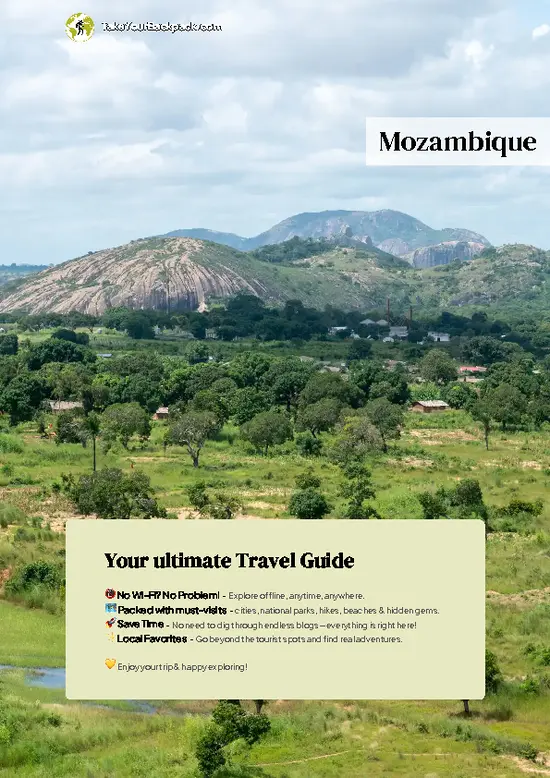
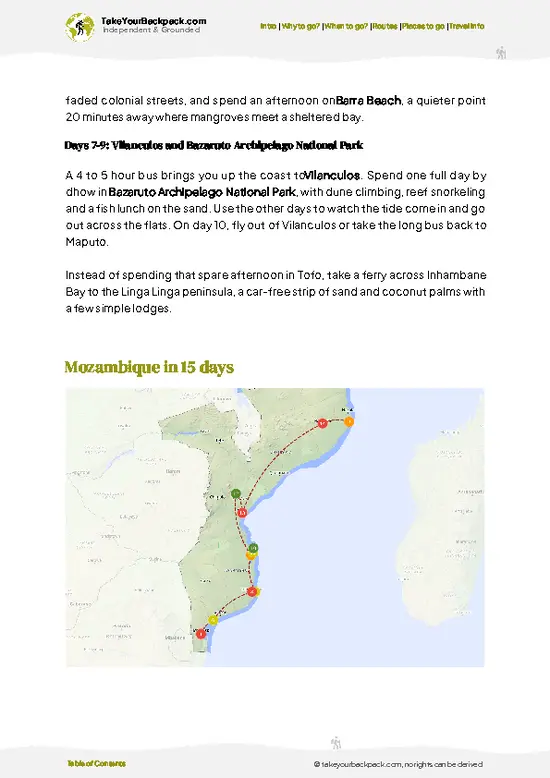
example page 0 from our offline Travel Guide for Mozambique
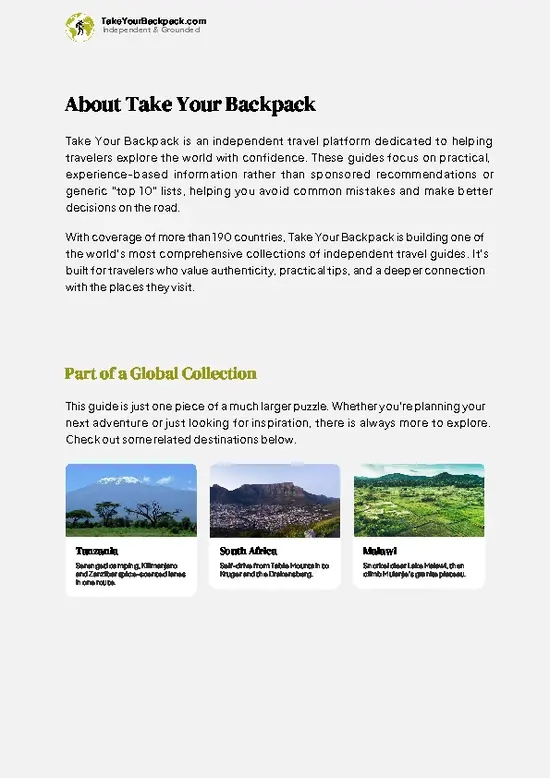
example page 1 from our offline Travel Guide for Mozambique
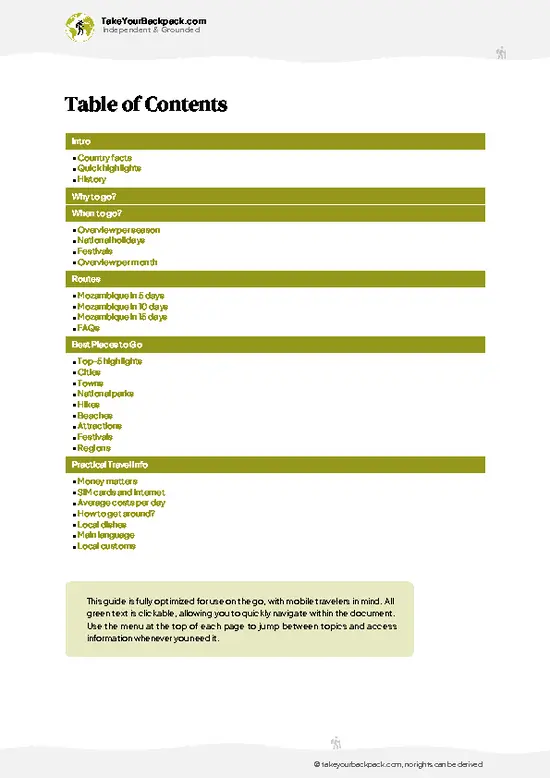
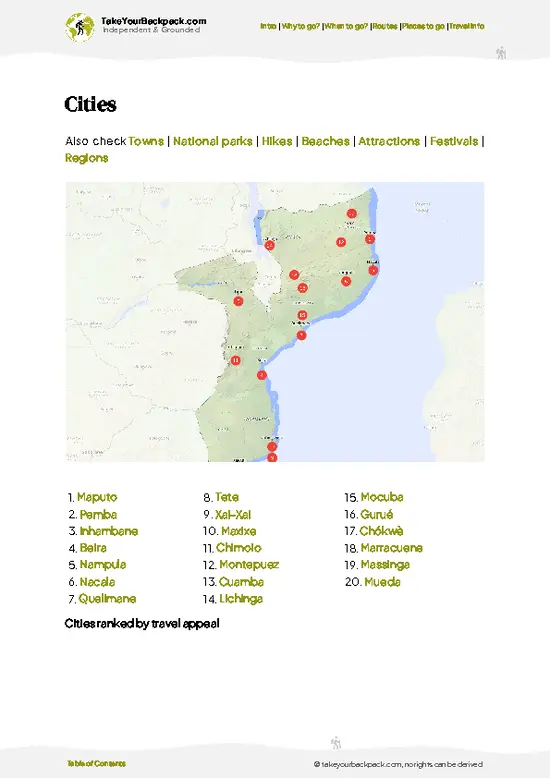
example page 2 from our offline Travel Guide for Mozambique
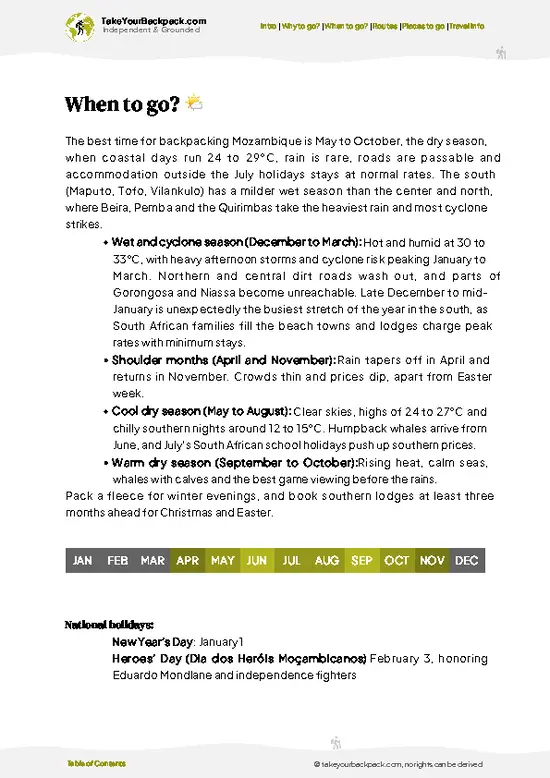
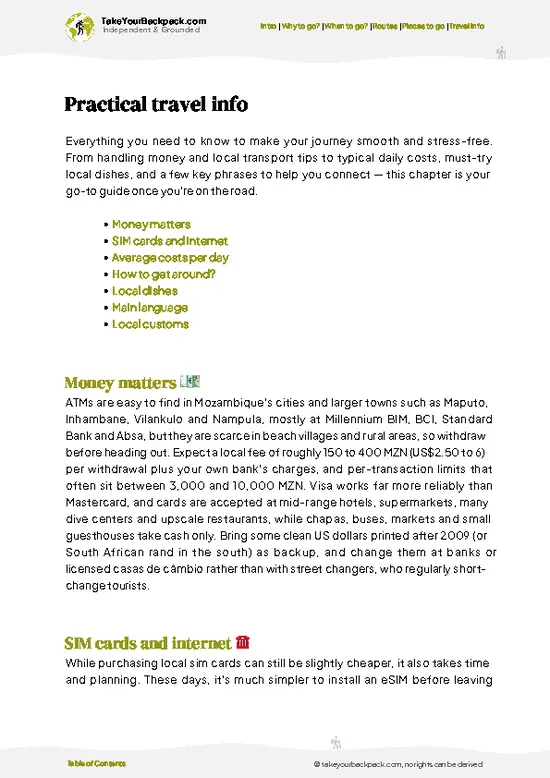
example page 3 from our offline Travel Guide for Mozambique
example page 4 from our offline Travel Guide for Mozambique
example page 5 from our offline Travel Guide for Mozambique
example page 6 from our offline Travel Guide for Mozambique
example page 7 from our offline Travel Guide for Mozambique
The digital guide (345 pages) contains:
86 highlights, ranked by travel appeal
Optimized 5, 10 & 15-day travel routes
Cities, national parks, landmarks, beaches
How to get around
Offline-friendly for travel without Wi-Fi
👉 Click to see all 30+ guide features

📅 Plan smarter in minutes, not weeks
Month by month travel advice
Festivals & national holidays
Budget expectations

🗺️ Go to the right places, skip the overrated ones
Honest pros & cons of destinations
Top hikes, parks & viewpoints
Lesser-known places most travelers miss
Clear “worth it vs skip it” guidance

🛏️ Travel smoothly without rookie mistakes
Best areas to stay
Transport systems explained simply
Common scams & safety advice
SIM cards, money & practical tips

🌍 Understand the country, not just visit it
Culture & traditions
52 Essential phrases & customs
Festivals worth planning around
Traveler-friendly historical context
Insights that make places more meaningful

📱 Built for real travel conditions
Fully downloadable PDF
Works completely offline
Optimized for phone use
Useful in remote areas & buses
Everything in one place
Save weeks of stressful planning
Get instant access to your full guide. 30‑day money-back guarantee.


By proceeding you agree to our terms.
Sent to your inbox immediately after payment • 100% Secure Checkout
Best Backpacking Travel Advisor 2025 tourism awardBest Backpacking
Travel Advisor
2025
What others say about Take Your Backpack Guides:
⭐⭐⭐⭐⭐
Fantastic, amazing amount of information!
⭐⭐⭐⭐⭐
My goodness this is amazing, it's what I've been looking for hats off too you!
⭐⭐⭐⭐⭐
I think this is absolutely BRILLIANT
⭐⭐⭐⭐
Very complete and informative. It's still missing places, but I gotta to commend you
⭐⭐⭐⭐⭐
This is truly amazing, thank you, can't wait to explore it with my kids!
⭐⭐⭐⭐⭐
Awesome resource, thank you!
⭐⭐⭐⭐⭐
This is amazing! Can't wait to explore the ones I haven't seen
⭐⭐⭐⭐
I love this! Well done, great idea.
⭐⭐⭐⭐⭐
Thanks for taking the time to make this gem!
⭐⭐⭐⭐⭐
This might be the best website I've ever seen.
⭐⭐⭐⭐⭐
Congratulations, and thank you so much for your work; it's incredibly valuable.
⭐⭐⭐⭐
In all seriousness I think you did a great job pointing out the important spots
⭐⭐⭐⭐⭐
10/10 very good
⭐⭐⭐⭐⭐
As someone who's only just starting to visit regularly this is awesome, thank you.
⭐⭐⭐⭐
Thank you very much! I'm going to visit my dad, it's going to be very useful!
⭐⭐⭐⭐⭐
This is really cool! We'll be travelling for the first time and this definitely come in handy.
⭐⭐⭐⭐⭐
You are now our minister of culture, congratulations 👨‍💼
⭐⭐⭐⭐⭐
Just wanted to tell you that this is a pearl! Going to follow your recommendations.
⭐⭐⭐⭐⭐
This is so cool. I'll definitely be using the resource for my travels soon.
⭐⭐⭐⭐⭐
This is very impressive! Good work.
⭐⭐⭐⭐⭐
This is an amazing and informative site. Very well done!

🛏️ Where to stay?Where to Base Yourself

Hostels in Mozambique and other budget accommodation are widely available, concentrated in Maputo (Baixa/City Centre and Polana), Tofo/Inhambane, Vilanculos, Ilha de Moçambique, Ponta do Ouro and Nampula.
Maputo has the most options with good transport links and nightlife but can be pricier and less safe after dark; Tofo/Inhambane and Vilanculos are best for diving, beaches and backpacker social life but get crowded in high season and have basic infrastructure; Ilha de Moçambique and Nampula are quieter and cheaper with historic or gateway value but offer very limited facilities and transport; Ponta do Ouro offers diving and weekend nightlife but is quieter on weekdays and requires careful … read more 👉
Hostels in Mozambique and other budget accommodation are widely available, concentrated in Maputo (Baixa/City Centre and Polana), Tofo/Inhambane, Vilanculos, Ilha de Moçambique, Ponta do Ouro and Nampula.
Maputo has the most options with good transport links and nightlife but can be pricier and less safe after dark; Tofo/Inhambane and Vilanculos are best for diving, beaches and backpacker social life but get crowded in high season and have basic infrastructure; Ilha de Moçambique and Nampula are quieter and cheaper with historic or gateway value but offer very limited facilities and transport; Ponta do Ouro offers diving and weekend nightlife but is quieter on weekdays and requires careful border/transfer planning.
Book ahead for high season, carry cash, expect simple rooms with intermittent power and variable Wi‑Fi, and plan transfers and activities in advance to avoid being stranded.

If you enjoy meeting fellow travelers, consider choosing hostels with high ratings for atmosphere. On the other hand, if you prefer having your own space, a hotel might be a better option.

MozambiqueExpand Your Journey

👋 Meet the founderWho’s Behind Take Your Backpack?

Johan, backpacker and founder of TakeYourBackpackHi, I’m Johan (Netherlands 🇳🇱), the creator of TakeYourBackpack. Over the past decade, I’ve backpacked through 80+ countries across six continents, gaining extensive experience with independent travel, long-term trips, and overland routes.

This site is built on a combination of firsthand travel experience and carefully curated insights from other backpackers. Many guides are based on places I’ve personally visited, while others bring together tips, observations, and practical advice shared by trusted travelers I’ve met along the way.

The goal is to provide realistic, experience-driven guidance — not generic itineraries — so you can explore destinations with better context, clearer expectations, and more confidence.

Get full Mozambique guide •
Instant download • 86 highlights • Full Offline guide