v2.webp)
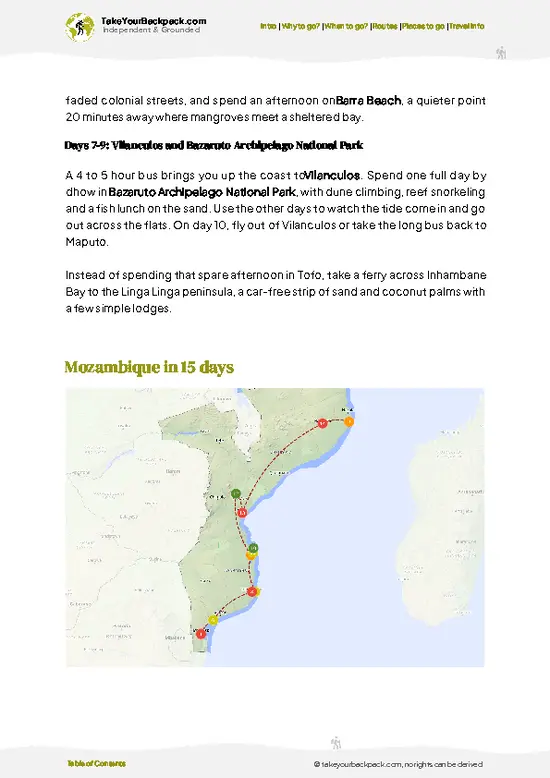
- Fortaleza de São Sebastião — The hulking 16th-century Portuguese fort that dominates the island: walk the ramparts, see centuries of cannon emplacements, and feel why this tiny island once controlled the route down the Mozambique Channel.
- Capela de Nossa Senhora do Baluarte — Tucked into the fort complex, this little chapel is often cited as one of the oldest European stone buildings in the southern hemisphere; the low, battered walls and simple altar are strangely moving in person.
- Old Town (Stone-built coral quarter) — Narrow lanes, coral-stone mansions, carved wooden doors and peeling Portuguese facades: the architecture and the slow street life here are a one-of-a-kind mash of Swahili, Arab and Portuguese history you won’t easily find elsewhere.
- Farol da Ilha de Moçambique (the lighthouse)
- Fortaleza de São Sebastião — The hulking 16th-century Portuguese fort that dominates the island: walk the ramparts, see centuries of cannon emplacements, and feel why this tiny island once controlled the route down the Mozambique Channel.
- Capela de Nossa Senhora do Baluarte — Tucked into the fort complex, this little chapel is often cited as one of the oldest European stone buildings in the southern hemisphere; the low, battered walls and simple altar are strangely moving in person.
- Old Town (Stone-built coral quarter) — Narrow lanes, coral-stone mansions, carved wooden doors and peeling Portuguese facades: the architecture and the slow street life here are a one-of-a-kind mash of Swahili, Arab and Portuguese history you won’t easily find elsewhere.
- Farol da Ilha de Moçambique (the lighthouse) — Climb (or stand beside) the island’s lighthouse at golden hour for big views across the sandbanks and boats; the light and horizon make for great photos and a real sense of place.
- Dhow boatyards and shipwright workshops — Hidden gem: local craftsmen still build and repair traditional dhows and wooden boats along the shore; walk through the yards, talk to the builders, and watch the timeless techniques up close.
- Fishermen’s landing and beach grills — Hidden gem: early morning or late afternoon the small landing beaches fill with freshly hauled fish and charcoal grills run by families; it’s the best place to taste straight-off-the-boat prawns and learn how locals eat.
- Sandbanks, tidal pools and snorkeling trips by dhow — Take a short local boat out to the surrounding sandbanks and reefs for clear, shallow snorkeling and quiet beaches; the island’s tidal geography creates lagoons and pools you can’t access by road.
- Old Arab/Swahili quarter and cemetery — Hidden gem: the quieter lanes and small Muslim cemeteries reveal the island’s centuries-long trade links with the Swahili coast and Arabia; it’s less touristy and full of intimate historical detail.
- Ruined colonial mansions and palace facades — Wander the fringes of the main square to find faded palaces and private houses—crumbling coral stone façades, carved balconies and sleepy courtyards that tell the social history of the island in a way museums don’t.
- Causeway edge and sunset ritual — Walk the slim causeway that links island to mainland, sit where local kids fish and families gather, and watch the sun slip behind rows of dhows; it’s simple, local, and a perfect way to end a day on the island.
Spotted a mistake or missing something? Contact us.

 Best Backpacking
.jpg) Hi, I’m Johan (Netherlands 🇳🇱), the creator of TakeYourBackpack. Over the past 3 decades, I’ve backpacked through 90+ countries across six continents, gaining extensive experience with independent travel, long-term trips, and overland routes.
Hi, I’m Johan (Netherlands 🇳🇱), the creator of TakeYourBackpack. Over the past 3 decades, I’ve backpacked through 90+ countries across six continents, gaining extensive experience with independent travel, long-term trips, and overland routes.