v2.webp)
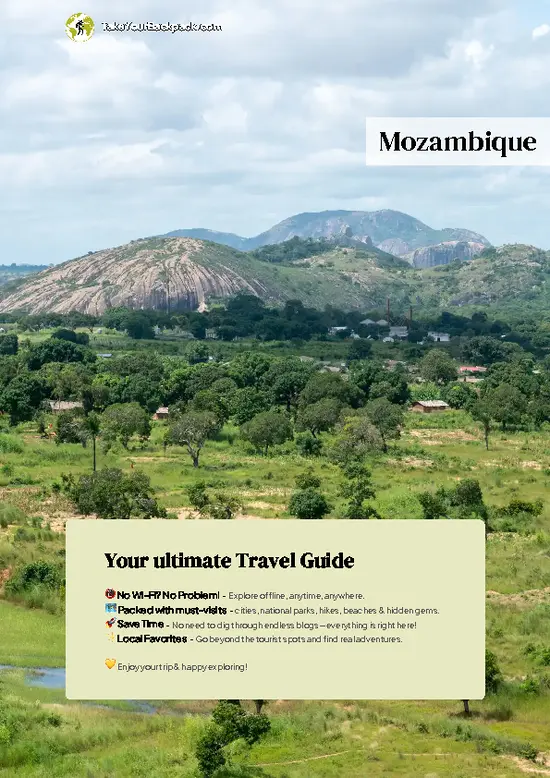
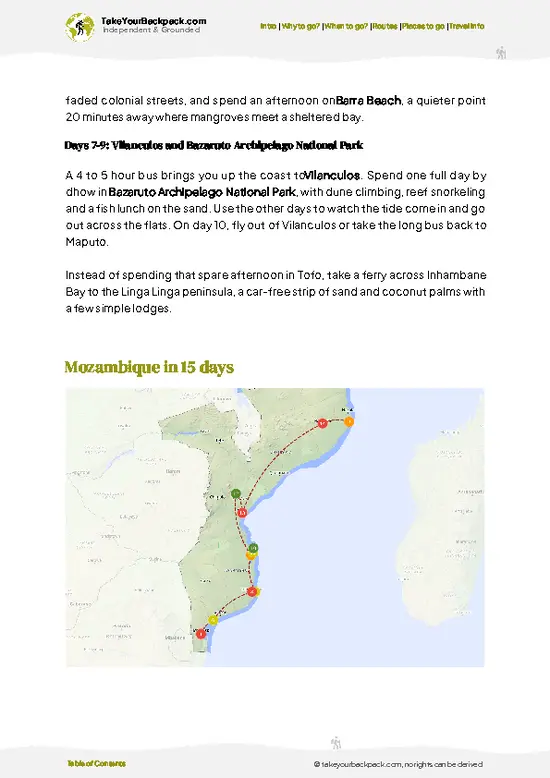
- Mocímboa da Praia Beachfront and Fishing Harbor: The town’s best-known scene is the sandy waterfront where wooden dhows and outrigger canoes are hauled in. Go early in the morning when the night catch is sorted and sold on the sand. Free, 1 to 2 hours. Ask before photographing people, and expect to be noticed as a visitor.
- Mocímboa da Praia Central Market: The main market is where the town’s trade shows itself: dried fish, cassava, coconuts, cashews, capulana cloth and phone-charging stalls. Morning is the liveliest and coolest time. Free entry, snacks and fruit cost US$0.50 to 3, and an hour is enough.
- Old Portuguese Colonial Center: The grid of low colonial buildings around the main avenue, with arcaded shopfronts and the administrative buildings, shows the town’s past as a district seat.
- Mocímboa da Praia Beachfront and Fishing Harbor: The town’s best-known scene is the sandy waterfront where wooden dhows and outrigger canoes are hauled in. Go early in the morning when the night catch is sorted and sold on the sand. Free, 1 to 2 hours. Ask before photographing people, and expect to be noticed as a visitor.
- Mocímboa da Praia Central Market: The main market is where the town’s trade shows itself: dried fish, cassava, coconuts, cashews, capulana cloth and phone-charging stalls. Morning is the liveliest and coolest time. Free entry, snacks and fruit cost US$0.50 to 3, and an hour is enough.
- Old Portuguese Colonial Center: The grid of low colonial buildings around the main avenue, with arcaded shopfronts and the administrative buildings, shows the town’s past as a district seat. Late afternoon light flatters the faded façades. Free, about 1 hour on foot. Some buildings carry damage from the conflict years, so look rather than wander inside.
- Mocímboa da Praia Bay Shoreline at Low Tide: At low tide the flats along the bay open up for a walk past mangrove edges, crab holes and wading birds. Check tide times with locals the day before. Free, 1 to 2 hours. Wear sandals you can get muddy.
Spotted a mistake or missing something? Contact us.

 Best Backpacking
.jpg) Hi, I’m Johan (Netherlands 🇳🇱), the creator of TakeYourBackpack. Over the past 3 decades, I’ve backpacked through 90+ countries across six continents, gaining extensive experience with independent travel, long-term trips, and overland routes.
Hi, I’m Johan (Netherlands 🇳🇱), the creator of TakeYourBackpack. Over the past 3 decades, I’ve backpacked through 90+ countries across six continents, gaining extensive experience with independent travel, long-term trips, and overland routes.