v2.webp)
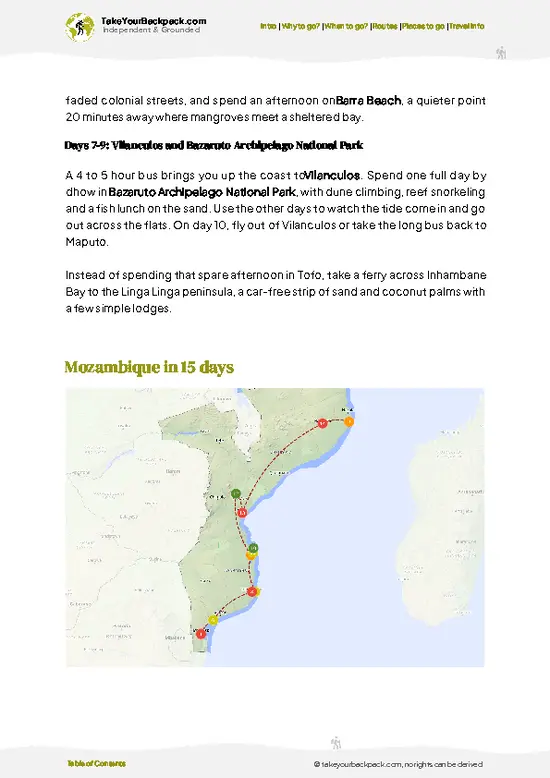
- Mueda Massacre Memorial: The site recalls the 1960 killing of protesters by Portuguese colonial forces, a turning point that pushed many toward the liberation struggle. Go in the morning, when the light is soft and the square is quiet. Entry is usually free or a small tip to a caretaker, and 30 to 45 minutes is enough.
- Makonde carving workshops: Carvers shape African blackwood into the twisting family-tree figures called ujamaa, and you can watch the work and buy direct. Pieces run from about US$5 for small items to US$100 or more for large works. Allow 1 to 2 hours, best in the morning.
- Mueda Museum area and liberation history sites: Local guides can point out places tied to FRELIMO’s war and the colonial era. Expect to pay a guide US$5 to 10 for 1 to 2 hours.
- Mueda Market: The town market sells
- Mueda Massacre Memorial: The site recalls the 1960 killing of protesters by Portuguese colonial forces, a turning point that pushed many toward the liberation struggle. Go in the morning, when the light is soft and the square is quiet. Entry is usually free or a small tip to a caretaker, and 30 to 45 minutes is enough.
- Makonde carving workshops: Carvers shape African blackwood into the twisting family-tree figures called ujamaa, and you can watch the work and buy direct. Pieces run from about US$5 for small items to US$100 or more for large works. Allow 1 to 2 hours, best in the morning.
- Mueda Museum area and liberation history sites: Local guides can point out places tied to FRELIMO’s war and the colonial era. Expect to pay a guide US$5 to 10 for 1 to 2 hours.
- Mueda Market: The town market sells cassava, maize, dried fish and fruit from the plateau farms, plus cloth and household goods. Morning is liveliest. Plan 45 minutes and a few dollars for snacks.
- Makonde mapiko masks and dance: The masked mapiko dancers are a signature Makonde tradition, performed at ceremonies and festivals rather than on a schedule. Ask locally. Costs depend on the gathering.
Spotted a mistake or missing something? Contact us.

 Best Backpacking
.jpg) Hi, I’m Johan (Netherlands 🇳🇱), the creator of TakeYourBackpack. Over the past 3 decades, I’ve backpacked through 90+ countries across six continents, gaining extensive experience with independent travel, long-term trips, and overland routes.
Hi, I’m Johan (Netherlands 🇳🇱), the creator of TakeYourBackpack. Over the past 3 decades, I’ve backpacked through 90+ countries across six continents, gaining extensive experience with independent travel, long-term trips, and overland routes.