×

Mozambique🇲🇿 | townsMarromeuZambezi delta, sugar mill, buffalo reserve, cane railway | things to do and best time to go

Explore Mocímboa da PraiaExplore Namialo

Backpacking in Marromeu
👌 Worth visitingtown ranked #8
By Johan Kruseman 🇳🇱 | Updated October 22, 2026

Marromeu was once a sugar town, with a mill that kept the whole district running and rail wagons rolling out cane. Today it is a quiet service town where the sugar is still the main employer and the pace is slow. You will find it in central Mozambique, in Sofala Province on the south bank of the Zambezi delta, northeast of Beira. Skip any hunt for a polished old center, because there isn’t one. Spend your time at the market, the river landings and the edges of the Marromeu Complex, a wetland reserve known for buffalo, waterbuck and huge bird flocks. Roads are rough and hostels are absent, so expect basic guesthouses and few other backpackers. Come for raw wildlife and real local life. The cane trucks grinding through at dusk are impossible to miss.

Discover everything you want to know in the 📖 Mozambique Travel Guide.


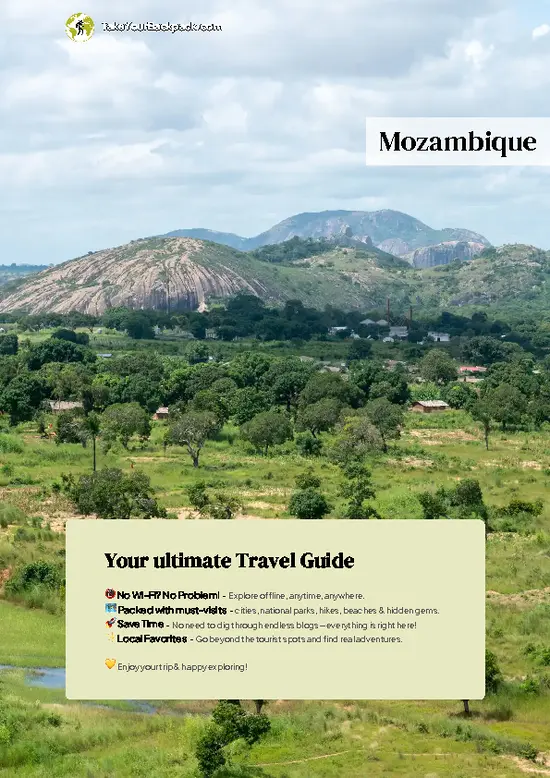
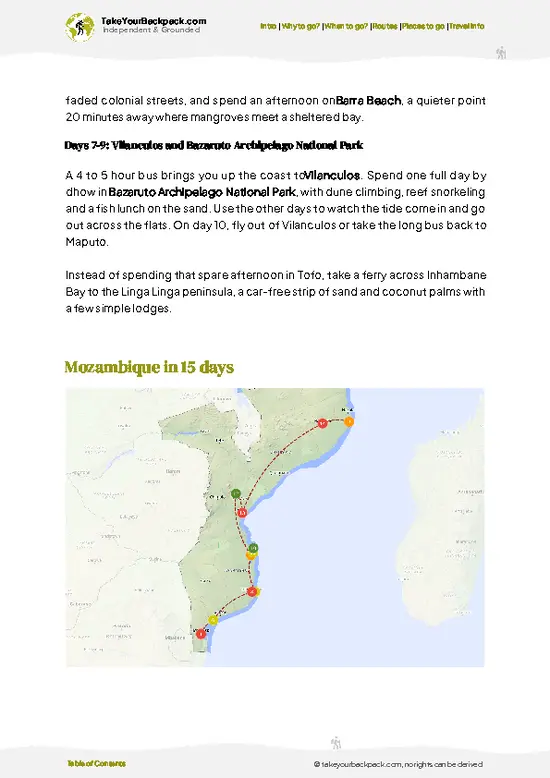
example page 0 from our offline Travel Guide for Mozambique
example page 1 from our offline Travel Guide for Mozambique
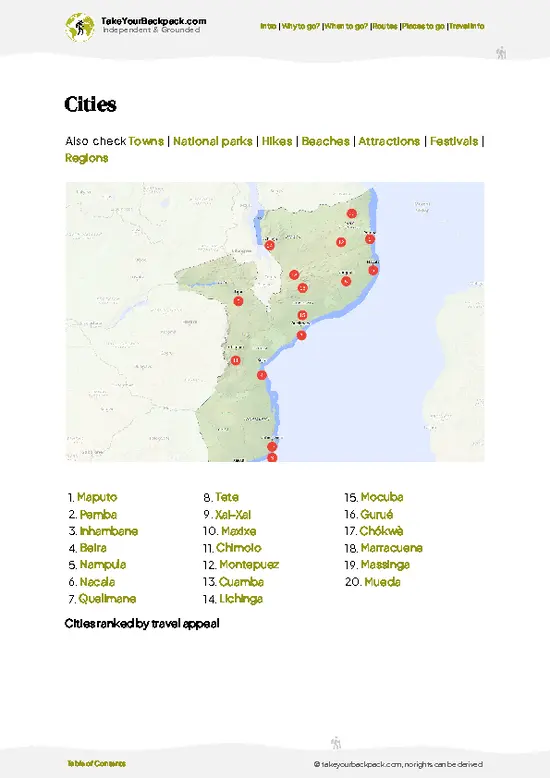
example page 2 from our offline Travel Guide for Mozambique
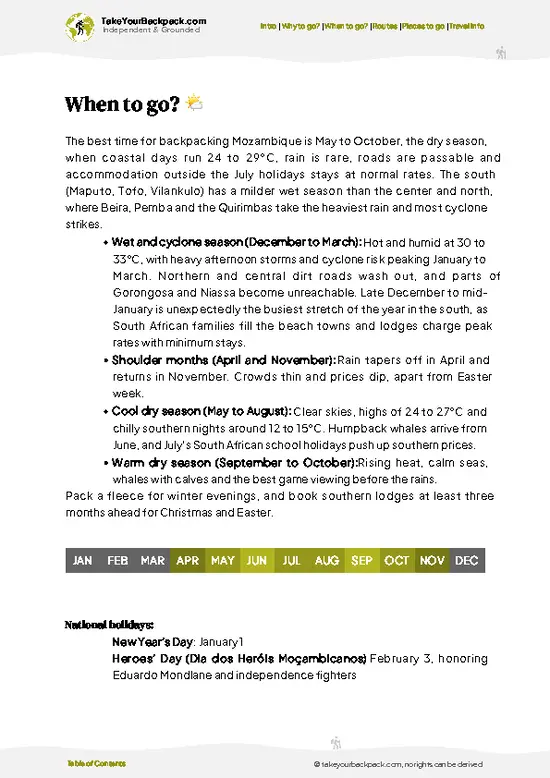
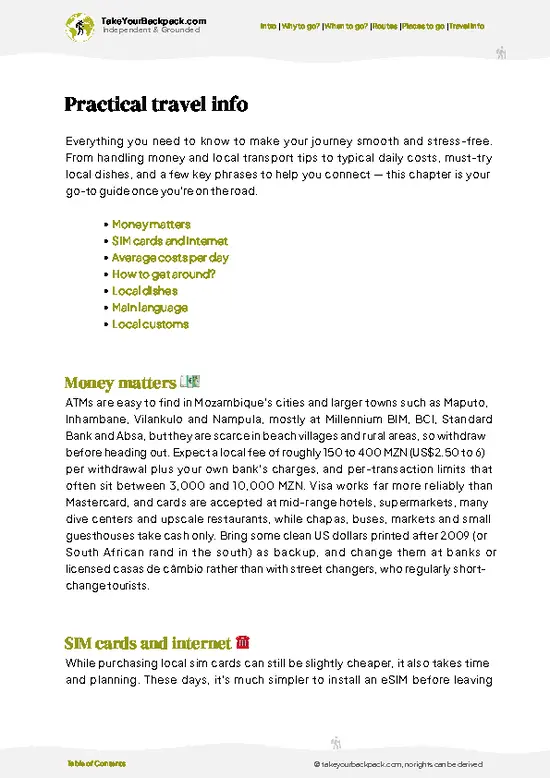
example page 3 from our offline Travel Guide for Mozambique
example page 4 from our offline Travel Guide for Mozambique
example page 5 from our offline Travel Guide for Mozambique
example page 6 from our offline Travel Guide for Mozambique
example page 7 from our offline Travel Guide for Mozambique
Loading the map 🌍
CLICK TO FILTER
cities
towns
national parks
hikes
beaches
attractions
festivals
regions
SHOW COUNTRY’S BESTSHOW ALL

✨ Why go?
Ranked #8 town in Mozambique
Why visitors keep coming back

Marromeu is for the traveler who wants the Zambezi delta without a lodge brochure. Its main draw is the Marromeu Complex, a Ramsar-listed wetland where buffalo herds, waterbuck and wattled cranes live on floodplains that few outsiders ever see. The town gives you a place to sleep, eat and arrange a guide, and little else, so most people stay one or two nights, longer if they are birding or arranging a river trip. Evenings are quiet: grilled fish, cold drinks at a local bar, and conversation with sugar workers and fishermen. It is not social in the hostel sense, and you may be the only foreigner in town. That suits self-reliant solo travelers, wildlife lovers and slow travelers with patience for rough roads and improvised plans. If you need nightlife, tours on tap or easy company, push on to Beira instead.

💡 HighlightsKey sights and experiences for travelers

  1. Marromeu Complex: the wetland reserve on the delta is the reason to come, with buffalo, waterbuck, hippos and many waterbirds. Go in the cooler months when animals gather near water. Access usually needs a guide or arranged park permission, so allow US$20 to 60 and half a day.
  2. Marromeu Sugar Mill: the mill dominates the skyline and explains the town’s whole economy. Viewing from outside is easy any weekday morning and takes 20 to 30 minutes for free. Entry inside is not routine.
  3. Central Market: the best place to see local life, with river fish, cassava, mangoes and cheap capulana cloth. Morning is liveliest. Plan 45 minutes to 1 hour and about US$2 to 5 for snacks.
  4. Zambezi river landings: fishermen launch canoes and mend nets here, and the light is gentle early or late. Walk or take a moto-taxi
… read more 👉
  1. Marromeu Complex: the wetland reserve on the delta is the reason to come, with buffalo, waterbuck, hippos and many waterbirds. Go in the cooler months when animals gather near water. Access usually needs a guide or arranged park permission, so allow US$20 to 60 and half a day.
  2. Marromeu Sugar Mill: the mill dominates the skyline and explains the town’s whole economy. Viewing from outside is easy any weekday morning and takes 20 to 30 minutes for free. Entry inside is not routine.
  3. Central Market: the best place to see local life, with river fish, cassava, mangoes and cheap capulana cloth. Morning is liveliest. Plan 45 minutes to 1 hour and about US$2 to 5 for snacks.
  4. Zambezi river landings: fishermen launch canoes and mend nets here, and the light is gentle early or late. Walk or take a moto-taxi for about US$1 to 2, and linger 1 hour.
  5. Sugar-cane fields and railway line: walking the edges of the plantations shows the scale of cane cutting and the old narrow-gauge tracks. Go in the cooler hours and give it 1 to 2 hours, free of charge.
Marromeu works as a base for day trips toward the Zambezi delta channels and Coutada 11 hunting and conservation lands, plus riverside villages along the south bank. The sugar mill exterior, the river landings and the cane-field walk cost nothing, so they are the cheapest ways to fill your time.
Spotted a mistake or missing something? Contact us.

Things to do near Marromeu

Ratings based on Tripadvisor reviews. When you book through this link, you support our work at no extra cost to you.

🏘️ NeighborhoodsHow different areas shape the experience

Marromeu is a small sugar-cane town on the south bank of the Zambezi delta, and you can cover its parts on foot or by bicycle taxi in an afternoon. Pick your stops and go.
  • The Centro and market area: Start here. Stalls spill along the main road selling tomatoes, dried fish, cassava and sugar-cane-based sweets, and plastic-chair cafés serve grilled chicken, rice and cold beer. Everything is flat and walkable, and this is where you will find a bank, a mobile-money agent and minibus stops.
  • The sugar-mill district: Worth a slow wander rather than a long visit. Tall chimneys, cane trucks and worker housing show you why the town exists. Photograph from a distance, because the mill grounds are private industrial land.
  • The Zambezi riverside and fishing spots: Head here at dawn. Dugout canoes push off,
… read more 👉
Marromeu is a small sugar-cane town on the south bank of the Zambezi delta, and you can cover its parts on foot or by bicycle taxi in an afternoon. Pick your stops and go.
  • The Centro and market area: Start here. Stalls spill along the main road selling tomatoes, dried fish, cassava and sugar-cane-based sweets, and plastic-chair cafés serve grilled chicken, rice and cold beer. Everything is flat and walkable, and this is where you will find a bank, a mobile-money agent and minibus stops.
  • The sugar-mill district: Worth a slow wander rather than a long visit. Tall chimneys, cane trucks and worker housing show you why the town exists. Photograph from a distance, because the mill grounds are private industrial land.
  • The Zambezi riverside and fishing spots: Head here at dawn. Dugout canoes push off, nets get mended and the air smells of smoke and wet mud. Quiet by evening, so keep nights for the center.
  • Edge-of-town villages toward the Marromeu buffalo reserve: Skip these on foot, since distances are long and sandy. Go with a driver or a guide if you want to see the wetlands.

⌛️ 1 daySeeing the highlights in 24 hours

7:00 AM, Zambezi river landings: Start at the water as canoes come in with the night’s catch. Watch the nets, buy tea or a bread roll nearby, and chat with fishermen. Then take a moto-taxi into town.
9:00 AM, Central Market: Browse fruit, dried fish and cloth while stalls are busy. Try fresh mangoes if in season. Walk about 15 minutes toward the mill when you are done.
11:00 AM, Marromeu Sugar Mill: Look at the industrial heart of the town from the road, and notice the trucks stacked with cane. This is the story of Marromeu in one view, and photographing the plant itself is best done with permission.
12:30 PM, Lunch: Choose a simple local eatery for grilled chicken or fish with rice and sauce. Rest through the hottest hours.
3:00 PM, Cane fields and railway tracks: Walk the quiet edge of the plantations, … read more 👉
7:00 AM, Zambezi river landings: Start at the water as canoes come in with the night’s catch. Watch the nets, buy tea or a bread roll nearby, and chat with fishermen. Then take a moto-taxi into town.
9:00 AM, Central Market: Browse fruit, dried fish and cloth while stalls are busy. Try fresh mangoes if in season. Walk about 15 minutes toward the mill when you are done.
11:00 AM, Marromeu Sugar Mill: Look at the industrial heart of the town from the road, and notice the trucks stacked with cane. This is the story of Marromeu in one view, and photographing the plant itself is best done with permission.
12:30 PM, Lunch: Choose a simple local eatery for grilled chicken or fish with rice and sauce. Rest through the hottest hours.
3:00 PM, Cane fields and railway tracks: Walk the quiet edge of the plantations, an area visitors rarely bother with. Old tracks, workers heading home and open sky make it the most atmospheric stretch of the day.
5:30 PM, Wetland edge: Finish at the margins of the delta floodplain with a guide if possible, watching birds settle as the day cools. Return to town for dinner.

🌤️ When to go?Seasonal considerations and timing

May to October is the easiest window for Marromeu, with dry roads, low humidity and fewer mosquitoes.
  • Cool Dry Season (May to August): Days reach 25 to 29°C (77 to 84°F) and nights drop to 14 to 18°C (57 to 64°F). Daylight is shortest, around 11 hours. Wildlife viewing around the delta is at its best as animals gather near water.
  • Hot Dry Season (September to November): Highs of 32 to 37°C (90 to 99°F) make midday punishing. Roads stay firm and prices barely move.
  • Rainy Season (December to April): Expect 30 to 34°C (86 to 93°F), thick humidity and downpours. Dirt roads turn to mud, and Zambezi floods can cut access, especially from January to March. Cyclones occasionally bring heavy disruption.
Book onward transport a day ahead in the rainy months, since services get canceled when roads wash out.

source: climatestotravel.comJANJanuary: fair for travelingFEBFebruary: fair for travelingMARMarch: fair for travelingAPRApril: fair for travelingMAYMay: highly recommended for travelingJUNJune: excellent for travelingJULJuly: excellent for travelingAUGAugust: excellent for travelingSEPSeptember: excellent for travelingOCTOctober: highly recommended for travelingNOVNovember: fair for travelingDECDecember: fair for traveling
when-to-go

✈️ The backpacker research shortcutMozambique Travel Guide

An offline-friendly backpacking guide with optimized travel routes, ranked highlights, transport advice, and the best areas to stay.
example page 0 from our offline Travel Guide for Mozambique
example page 1 from our offline Travel Guide for Mozambique
example page 2 from our offline Travel Guide for Mozambique
example page 3 from our offline Travel Guide for Mozambique
example page 4 from our offline Travel Guide for Mozambique
example page 5 from our offline Travel Guide for Mozambique
example page 6 from our offline Travel Guide for Mozambique
example page 7 from our offline Travel Guide for Mozambique
The digital guide (324 pages) contains:
✅ 78 highlights, ranked by travel appeal
✅ Optimized 5, 10 & 15-day travel routes
✅ Cities, national parks, landmarks, beaches
✅ How to get around
✅ Offline-friendly for travel without Wi-Fi
👉 Click to see all 30+ guide features

📅 Plan smarter in minutes, not weeks
✅ Month by month travel advice
✅ Festivals & national holidays
✅ Budget expectations

🗺️ Go to the right places, skip the overrated ones
✅ Honest pros & cons of destinations
✅ Top hikes, parks & viewpoints
✅ Lesser-known places most travelers miss
✅ Clear “worth it vs skip it” guidance

🛏️ Travel smoothly without rookie mistakes
✅ Best areas to stay
✅ Transport systems explained simply
✅ Common scams & safety advice
✅ SIM cards, money & practical tips

🌍 Understand the country, not just visit it
✅ Culture & traditions
✅ 52 Essential phrases & customs
✅ Festivals worth planning around
✅ Traveler-friendly historical context
✅ Insights that make places more meaningful

📱 Built for real travel conditions
✅ Fully downloadable PDF
✅ Works completely offline
✅ Optimized for phone use
✅ Useful in remote areas & buses
✅ Everything in one place
Stop searching, start planning
Get instant access to your full guide. 30‑day money-back guarantee.
+ Add another guide for just

By proceeding you agree to our terms.
Sent to your inbox immediately after payment • 100% Secure Checkout
Best Backpacking Travel Advisor 2025 tourism awardBest Backpacking
Travel Advisor
2025
What others say about Take Your Backpack Guides:
⭐⭐⭐⭐⭐
Fantastic, amazing amount of information!
⭐⭐⭐⭐⭐
My goodness this is amazing, it's what I've been looking for hats off too you!
⭐⭐⭐⭐⭐
I think this is absolutely BRILLIANT
⭐⭐⭐⭐
Very complete and informative. It's still missing places, but I gotta to commend you
⭐⭐⭐⭐⭐
This is truly amazing, thank you, can't wait to explore it with my kids!
⭐⭐⭐⭐⭐
Awesome resource, thank you!
⭐⭐⭐⭐⭐
This is amazing! Can't wait to explore the ones I haven't seen
⭐⭐⭐⭐
I love this! Well done, great idea.
⭐⭐⭐⭐⭐
Thanks for taking the time to make this gem!
⭐⭐⭐⭐⭐
This might be the best website I've ever seen.
⭐⭐⭐⭐⭐
Congratulations, and thank you so much for your work; it's incredibly valuable.
⭐⭐⭐⭐
In all seriousness I think you did a great job pointing out the important spots
⭐⭐⭐⭐⭐
10/10 very good
⭐⭐⭐⭐⭐
As someone who's only just starting to visit regularly this is awesome, thank you.
⭐⭐⭐⭐
Thank you very much! I'm going to visit my dad, it's going to be very useful!
⭐⭐⭐⭐⭐
This is really cool! We'll be travelling for the first time and this definitely come in handy.
⭐⭐⭐⭐⭐
You are now our minister of culture, congratulations 👨‍💼
⭐⭐⭐⭐⭐
Just wanted to tell you that this is a pearl! Going to follow your recommendations.
⭐⭐⭐⭐⭐
This is so cool. I'll definitely be using the resource for my travels soon.
⭐⭐⭐⭐⭐
This is very impressive! Good work.
⭐⭐⭐⭐⭐
This is an amazing and informative site. Very well done!

🛏️ Where to stay?Best areas and accommodation options

Stay near the town center and market in Marromeu, where the few guesthouses cluster and everything you need is a short walk away. Budget beds are limited here, and there are no true hostel dorms, so expect simple private rooms with a fan, often with shared or basic bathrooms. Rooms fill during sugar-mill contractor visits, so arrive before dark or call ahead.
The center is also the safest option after dark, because streets have more people and some lighting, and you can walk to dinner. Noise comes from generators, music from bars and roosters at dawn, so bring earplugs. Taxis and minibuses pass … read more 👉
Stay near the town center and market in Marromeu, where the few guesthouses cluster and everything you need is a short walk away. Budget beds are limited here, and there are no true hostel dorms, so expect simple private rooms with a fan, often with shared or basic bathrooms. Rooms fill during sugar-mill contractor visits, so arrive before dark or call ahead.
The center is also the safest option after dark, because streets have more people and some lighting, and you can walk to dinner. Noise comes from generators, music from bars and roosters at dawn, so bring earplugs. Taxis and minibuses pass through the main road, which makes early departures easy.
A second option is the quieter streets nearer the river, which are calmer at night but have fewer shops and food stalls. Mosquitoes are worse there, so bring a net or repellent either way. Cash matters here, as card payments are rare.

🚌 Getting aroundHow to get from A to B

Bicycle taxis and motorbike taxis are the easiest way to get around Marromeu, because the town is flat, small and short on formal public transport. Expect dust in the dry months and mud in the wet ones, and plan your longer moves around daylight.
  • Walking: The center, market and riverside lie within about 2 km (1.2 miles) of each other, so your feet do most of the work. Go early or late, as midday heat is heavy.
  • Bicycle taxi (“tchopela” style rides): Cheap and fun, usually US$0.30 to 1 per short hop. Agree the price before you climb on the rear rack.
  • Motorbike taxi: Faster for the outskirts and villages, about US$1 to 3 for most trips. Helmets are rare, so ask the rider to go slowly on sandy tracks.
  • Minibus (chapa): Shared minivans link Marromeu with nearby towns such as Caia and Inhaminga and
… read more 👉
Bicycle taxis and motorbike taxis are the easiest way to get around Marromeu, because the town is flat, small and short on formal public transport. Expect dust in the dry months and mud in the wet ones, and plan your longer moves around daylight.
  • Walking: The center, market and riverside lie within about 2 km (1.2 miles) of each other, so your feet do most of the work. Go early or late, as midday heat is heavy.
  • Bicycle taxi (“tchopela” style rides): Cheap and fun, usually US$0.30 to 1 per short hop. Agree the price before you climb on the rear rack.
  • Motorbike taxi: Faster for the outskirts and villages, about US$1 to 3 for most trips. Helmets are rare, so ask the rider to go slowly on sandy tracks.
  • Minibus (chapa): Shared minivans link Marromeu with nearby towns such as Caia and Inhaminga and on toward Beira. Fares run roughly US$5 to 15 depending on distance, and journeys of 3 to 6 hours or more are normal. They leave when full, mostly in the morning, and the last departures are usually early afternoon.
  • Hired car with driver: The sensible choice for the buffalo reserve and delta wetlands, around US$60 to 120 a day with fuel. Share the cost with other travelers to make it sensible.
Always carry small notes, since drivers rarely have change.

👛 Costs (as of 22 October 2026)How expensive it really is

Marromeu costs most backpackers about US$38 to 60 a day, and the table below puts a high-season total at US$54. Prices here are modest, but beds are few and transport to the delta adds up.
CategoryBudget RangeLocal Reality
Dorm accommodationUS$12 to 25 (high season)No dorms exist, so a basic private room with fan is the norm. Prices dip slightly in the rainy season.
MealsUS$6 to 12Grilled chicken or fish with rice or xima costs US$2 to 4 at local eateries.
Local transportUS$2 to 6Bicycle and motorbike taxis cost US$0.30 to 3 per ride.
Basic activities/entry feesUS$10 to 20Reserve fees and a guide cost more, and vehicle hire is split among riders.
Miscellaneous expensesUS$3 to 6Water, mobile data, snacks and repellent.
Total Daily BudgetUS$54Excludes long-distance minibus fares.
Buy food at the market … read more 👉
Marromeu costs most backpackers about US$38 to 60 a day, and the table below puts a high-season total at US$54. Prices here are modest, but beds are few and transport to the delta adds up.
CategoryBudget RangeLocal Reality
Dorm accommodationUS$12 to 25 (high season)No dorms exist, so a basic private room with fan is the norm. Prices dip slightly in the rainy season.
MealsUS$6 to 12Grilled chicken or fish with rice or xima costs US$2 to 4 at local eateries.
Local transportUS$2 to 6Bicycle and motorbike taxis cost US$0.30 to 3 per ride.
Basic activities/entry feesUS$10 to 20Reserve fees and a guide cost more, and vehicle hire is split among riders.
Miscellaneous expensesUS$3 to 6Water, mobile data, snacks and repellent.
Total Daily BudgetUS$54Excludes long-distance minibus fares.
Buy food at the market and eat the cooked plate lunches to cut daily costs. Carry cash, since ATMs are scarce.
⚠️ Prices can change and everyone travels differently, so take this as a rough guide. Hope it helps you plan your adventure!

🚌 Day tripsBest day trips from Marromeu

Marromeu works as a base for short wildlife and river outings, though most need a hired vehicle and a guide, and you should leave early.Marromeu Buffalo Reserve: The reserve covers floodplain on the Zambezi delta and holds large buffalo herds, plus waterbuck, hippo and plenty of birds. Allow a full day with 1 to 2 hours each way on rough tracks. Budget US$80 to 150 per person when you split a vehicle and add fees and a guide. Go from June to October, when animals gather near water. First-timers often arrive without arranging access beforehand, so sort permission in advance.
Zambezi River Fishing Villages: Canoes, drying racks and market days make this an easy half day. Motorbike taxis cost about US$3 to 8 round trip. Go at dawn for the catch. Carry small bills and ask before photographing people. … read more 👉
Marromeu works as a base for short wildlife and river outings, though most need a hired vehicle and a guide, and you should leave early.Marromeu Buffalo Reserve: The reserve covers floodplain on the Zambezi delta and holds large buffalo herds, plus waterbuck, hippo and plenty of birds. Allow a full day with 1 to 2 hours each way on rough tracks. Budget US$80 to 150 per person when you split a vehicle and add fees and a guide. Go from June to October, when animals gather near water. First-timers often arrive without arranging access beforehand, so sort permission in advance.
Zambezi River Fishing Villages: Canoes, drying racks and market days make this an easy half day. Motorbike taxis cost about US$3 to 8 round trip. Go at dawn for the catch. Carry small bills and ask before photographing people.
Caia and the Zambezi Bridge: The town of Caia, across the river region, has a long bridge and a lively market. Minibuses take about 2 to 3 hours each way and cost US$5 to 12 total, so start early to return the same day. Road conditions worsen during rains.

🛡️ SafetyStaying Safe: What Travelers Should Know

Marromeu is broadly calm for travelers, and most problems are petty. Keep your phone and cash out of sight in the market, where pickpocketing happens in crowds. After dark, stick to lit main streets and take a motorbike taxi rather than walking sandy side roads. Solo travelers, women included, tend to be fine if they dress modestly and avoid isolated riverbanks at night. Police may stop vehicles at checkpoints, so carry a passport copy and stay polite. Drivers sometimes quote higher prices to foreigners, so agree fares first. The bigger risks are natural: hippos and crocodiles live in the Zambezi, so never swim or wade, and malaria is present, so bring prophylaxis and a net. Check road and flood conditions before long trips.

FAQFrequently asked questions about Marromeu

Marromeu is worth a detour if you want wildlife and river life without crowds, though it is not a classic stop. The nearby buffalo reserve on the Zambezi delta is the main draw, best from June to October, and the town itself has a market and sugar mill to see in an hour or two. Facilities are basic, so expect simple rooms and cash payments.
Marromeu needs one to two days for most travelers. One day covers the market, riverside and sugar-mill district, and a second lets you do a full reserve trip, which takes about 1 to 2 hours each way by vehicle. Add a buffer day in the rainy season, when roads flood.
Marromeu is hard to do as a day trip from a nearby city, because Beira is several hours away by road. Minibuses can take 5 to 8 hours each way depending on conditions, so a return trip in one day leaves almost no time. Sleep at least one night in Marromeu to see the reserve or riverside at dawn.
⚠️ Things can change over time, so always validate details locally before you go.

Other Mozambican towns near Marromeu

Explore more nearby:

  • Moma—Mangrove creeks, fishing canoes, tidal flats, district market| 388 km away
  • Vilankulo—Bazaruto boat trips, lateen dhows, tidal sandbars, beachfront bars| 417 km away
  • Mandimba—Malawi border, moto-taxis, money changers, Niassa hills| 440 km away

💡 Not sure where to go next?
Create a personalized itinerary for Mozambique including Marromeu and the places that fit your trip.

Generate my itinerary

👉 Discover all towns

Or checkout all Mozambique has to offer (think cities, towns, villages, national parks, hikes, beaches, festivals)
Country photo of Mozambique

We 💚 feedbackSumming up the experience

Marromeu suits wildlife nerds, patient solo travelers and anyone who likes places that haven’t been packaged. I would arrange a guide and permission for the wetlands before arriving, and bring cash, insect repellent and a full phone battery. Skip it if you need smooth logistics or company.

✍️ Help improve this page!
The information on this page is based on in-depth research, insights shared by experienced travelers, and feedback from the local travel community in Mozambique. While every effort is made to keep the information accurate and current, conditions can change — so if you spot anything incorrect or outdated, please get in touch.


🙋‍♂️ Give feedback

👋 Meet the founderWho’s Behind Take Your Backpack?

Johan, backpacker and founder of TakeYourBackpackHi, I’m Johan (Netherlands 🇳🇱), the creator of TakeYourBackpack. Over the past 3 decades, I’ve backpacked through 90+ countries across six continents, gaining extensive experience with independent travel, long-term trips, and overland routes.

This site is built on a combination of firsthand travel experience and carefully curated insights from other backpackers. Many guides are based on places I’ve personally visited, while others bring together tips, observations, and practical advice shared by trusted travelers I’ve met along the way.

The goal is to provide realistic, experience-driven guidance — not generic itineraries — so you can explore destinations with better context, clearer expectations, and more confidence.