×

Mozambique🇲🇿 | townsMomaMangrove creeks, fishing canoes, tidal flats, district market | things to do and best time to go

Explore NamialoExplore Mandimba

Backpacking in Moma
👍 Recommendedtown ranked #6
By Johan Kruseman 🇳🇱 | Updated October 22, 2026

Whether to spend a night in Moma or push straight through depends on how much you value empty coast over comfort. Moma sits on the Indian Ocean side of Nampula Province, in the north of Mozambique, and it is a working district town, not a resort. Tourist infrastructure is thin because few visitors come, so carry cash in meticais (ATMs are unreliable), buy supplies before you arrive, and ask locally about guesthouse rooms rather than expecting online listings. Roads here are rough and slow, so build in spare days instead of tight connections. Evenings are quiet, hostels are absent, and you will meet locals far more often than other backpackers, which suits curious travelers who enjoy greeting everyone in Portuguese or Emakhuwa. The payoff is mangrove-lined shoreline, fishing canoes, and a market where people stare, then smile.

Discover everything you want to know in the 📖 Mozambique Travel Guide.


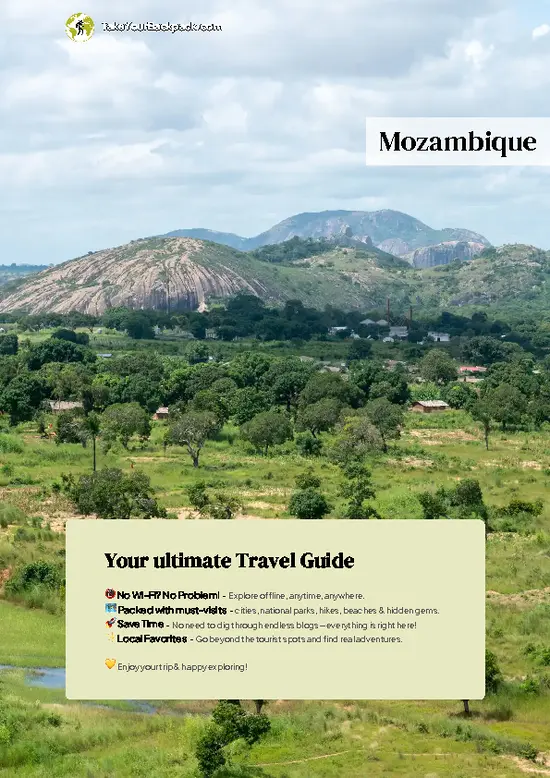
example page 0 from our offline Travel Guide for Mozambique
example page 1 from our offline Travel Guide for Mozambique
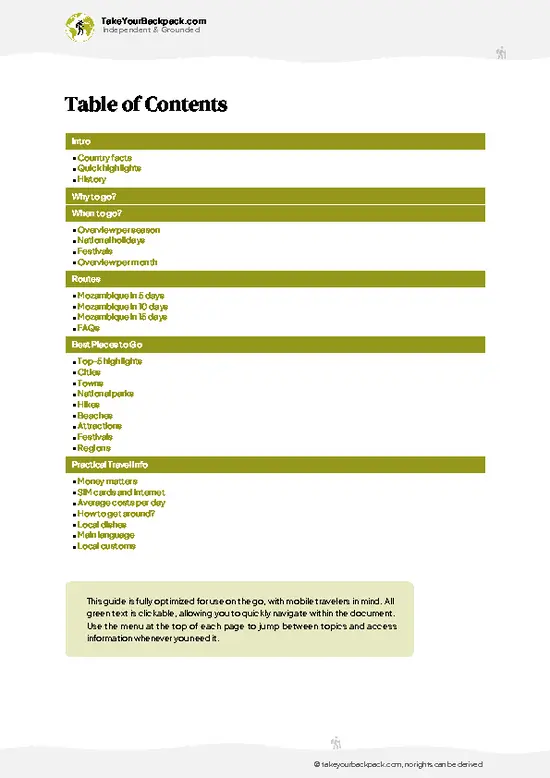
example page 2 from our offline Travel Guide for Mozambique
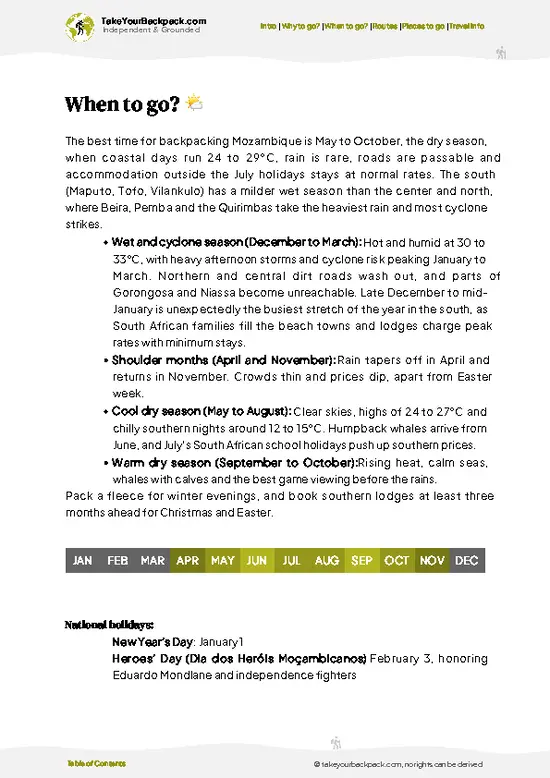
example page 3 from our offline Travel Guide for Mozambique
example page 4 from our offline Travel Guide for Mozambique
example page 5 from our offline Travel Guide for Mozambique
example page 6 from our offline Travel Guide for Mozambique
example page 7 from our offline Travel Guide for Mozambique
Loading the map 🌍
CLICK TO FILTER
cities
towns
national parks
hikes
beaches
attractions
festivals
regions
SHOW COUNTRY’S BESTSHOW ALL

✨ Why go?
Ranked #6 town in Mozambique
The unique appeal for travelers

Moma appeals to travelers who want the northern coast without the crowds of Ilha de Moçambique or Pemba. Nobody comes here for a checklist. You come for the working coastline, where fishermen haul in catches and mangrove channels fringe the shore, and for a market that serves the district rather than tourists, so prices and conversations are real. Most travelers stay one night, two if they want to wander at low tide or hire a local boatman. It suits slow, self-sufficient people: solo travelers with some Portuguese, overlanders working up the coast, and anyone who likes figuring out a place without a guidebook map. If you need hostel social life, cafés, or a lineup of organized tours, you will be bored by the second evening. Treat Moma as a window into everyday coastal life in Nampula Province, … read more 👉
Moma appeals to travelers who want the northern coast without the crowds of Ilha de Moçambique or Pemba. Nobody comes here for a checklist. You come for the working coastline, where fishermen haul in catches and mangrove channels fringe the shore, and for a market that serves the district rather than tourists, so prices and conversations are real. Most travelers stay one night, two if they want to wander at low tide or hire a local boatman. It suits slow, self-sufficient people: solo travelers with some Portuguese, overlanders working up the coast, and anyone who likes figuring out a place without a guidebook map. If you need hostel social life, cafés, or a lineup of organized tours, you will be bored by the second evening. Treat Moma as a window into everyday coastal life in Nampula Province, and arrive with patience, small notes, and a flexible schedule.

💡 HighlightsPlaces and moments you shouldn't skip

  1. Moma Market: The district’s main trading spot, where you find dried fish, cassava, coconuts, capulanas (printed wraps), and plastic basins stacked high. Go in the morning when stock is freshest. Entry is free, and an hour is plenty. Buy a few fruits and snacks, and greet vendors first; photos need permission.
  2. Moma Shoreline and Tidal Flats: The coast here drops away at low tide into wide, shallow flats where people collect shellfish and walk out to the water’s edge. Check tide times with locals and go in the early morning or late afternoon for cooler air. Free, allow 1 to 2 hours. Wear sandals you can get muddy.
  3. Fishing Landing Beach: Wooden dhows and dugout canoes come in to unload, and you can watch nets being mended and catches weighed and sold on the sand. Mornings are busiest. It costs
… read more 👉
  1. Moma Market: The district’s main trading spot, where you find dried fish, cassava, coconuts, capulanas (printed wraps), and plastic basins stacked high. Go in the morning when stock is freshest. Entry is free, and an hour is plenty. Buy a few fruits and snacks, and greet vendors first; photos need permission.
  2. Moma Shoreline and Tidal Flats: The coast here drops away at low tide into wide, shallow flats where people collect shellfish and walk out to the water’s edge. Check tide times with locals and go in the early morning or late afternoon for cooler air. Free, allow 1 to 2 hours. Wear sandals you can get muddy.
  3. Fishing Landing Beach: Wooden dhows and dugout canoes come in to unload, and you can watch nets being mended and catches weighed and sold on the sand. Mornings are busiest. It costs nothing to watch, though buying a fresh fish for a family meal at your guesthouse is a good gesture. Plan 45 minutes to an hour.
  4. Mangrove Edges: Mangrove creeks fringe the coast around Moma and are best seen at high tide with a local boatman, who can steer through the channels. Expect to negotiate; a short paddle or motor trip typically runs US$8 to 20 for 1 to 2 hours, depending on the boat and season. Bring water and sun protection.
  5. Main Street Evening Stroll: Small shops, grill stalls, and people gathering outside as the heat drops make this the town’s social hour. Go between late afternoon and dusk. Free, and an hour is enough. Try grilled fish or chicken from a stall for roughly US$2 to 4.
For day trips, Moma works as a jumping-off point toward the coastal town of Angoche and its island, and toward Pebane on the Zambezia side. Nothing in Moma needs a ticket, and boat trips are arranged on the spot with the owner.
Spotted a mistake or missing something? Contact us.

🏘️ NeighborhoodsUnderstanding the local layout

Moma is a district town in Nampula Province, spread along the EN1-linked road toward the coast, and it covers easily on foot or by bike in an afternoon. Move fast, because the interesting stuff clusters in a few spots.
  • Town center and market: Start here at the main market, where you can haggle for cassava, dried fish, coconuts and cheap capulana cloth. Grilled chicken and fried cassava stands pop up along the main road toward evening. It is flat, dusty and walkable end to end in 20 minutes.
  • Administrative area: Government offices, the bank and the main street shops sit together. Come here to change money, buy a SIM card and stock up on supplies. It is quiet after dark, so use it for errands, not entertainment.
  • Residential bairros: Wander the sandy lanes of mud-brick and cane homes, where Makhuwa
… read more 👉
Moma is a district town in Nampula Province, spread along the EN1-linked road toward the coast, and it covers easily on foot or by bike in an afternoon. Move fast, because the interesting stuff clusters in a few spots.
  • Town center and market: Start here at the main market, where you can haggle for cassava, dried fish, coconuts and cheap capulana cloth. Grilled chicken and fried cassava stands pop up along the main road toward evening. It is flat, dusty and walkable end to end in 20 minutes.
  • Administrative area: Government offices, the bank and the main street shops sit together. Come here to change money, buy a SIM card and stock up on supplies. It is quiet after dark, so use it for errands, not entertainment.
  • Residential bairros: Wander the sandy lanes of mud-brick and cane homes, where Makhuwa neighbors greet you and kids trail you with questions. Shade is thin, so go early. Bring a few words of Portuguese or Makhuwa and you will be waved into conversations.
  • Coastal fringe: Head toward the mangroves and fishing communities near Angoche district, where dhows land the catch at dawn. Transport is the limit here, so arrange a motorbike ride and a return pickup before you set off.

⌛️ 1 dayWhat you can realistically do in a day

7:00 AM: Moma Fishing Landing Start where the day begins, on the sand as boats unload. Watch the sorting and bargaining, say bom dia to everyone, and ask before photographing. Walk along the shore to the next stop.
8:30 AM: Breakfast near the Main Street Find a stall or small café for fried dough, sweet tea, or eggs and bread. It is simple fuel, and a good chance to ask locals about tide times and boat options.
10:00 AM: Moma Market Browse the dried fish, spices, capulanas, and produce while the stalls are still full. Buy fruit for later, and take your time. Vendors are curious and will ask where you come from.
12:30 PM: Lunch with a Local Family Grill Skip anything fancy and eat grilled fish or chicken with rice or xima (maize porridge) at a family-run spot off the main road. This is the part … read more 👉
7:00 AM: Moma Fishing Landing Start where the day begins, on the sand as boats unload. Watch the sorting and bargaining, say bom dia to everyone, and ask before photographing. Walk along the shore to the next stop.
8:30 AM: Breakfast near the Main Street Find a stall or small café for fried dough, sweet tea, or eggs and bread. It is simple fuel, and a good chance to ask locals about tide times and boat options.
10:00 AM: Moma Market Browse the dried fish, spices, capulanas, and produce while the stalls are still full. Buy fruit for later, and take your time. Vendors are curious and will ask where you come from.
12:30 PM: Lunch with a Local Family Grill Skip anything fancy and eat grilled fish or chicken with rice or xima (maize porridge) at a family-run spot off the main road. This is the part of Moma most visitors never see, and it is worth lingering over.
2:30 PM: Rest and Shade The midday heat is strong, so rest at your guesthouse and recharge.
4:00 PM: Tidal Flats and Mangrove Edge Walk out at low tide or arrange a short boat ride at high tide through the mangroves. Wear shoes you can get muddy, and take water.
6:00 PM: Main Street Stroll Finish with the evening social hour, shops lit by lamps, grill smoke, and people chatting outside. Pick up a grilled snack and call it a day.

🌤️ When to go?Weather, crowds, and seasonal trade-offs

  • Cool dry season (May to August): Days run 24 to 29°C (75 to 84°F) and nights drop to 16 to 19°C (61 to 66°F). Roads are firm, and daylight lasts about 11 hours. This is the easiest window for moving around.
  • Hot dry season (September to November): Temperatures climb to 30 to 35°C (86 to 95°F). Dust hangs in the air, but crowds stay nonexistent and the coast feels pleasant with a sea breeze.
  • Rainy season (December to April): Expect 28 to 33°C (82 to 91°F), thick humidity and downpours that turn dirt tracks to mud. Daylight stretches to about 13 hours. Cyclones can hit the Nampula coast between January and March. Transport prices rise a little when roads are bad.
Aim for June to September, when roads are passable and the heat is manageable.

source: climatestotravel.comJANJanuary: fair for travelingFEBFebruary: fair for travelingMARMarch: fair for travelingAPRApril: fair for travelingMAYMay: highly recommended for travelingJUNJune: excellent for travelingJULJuly: excellent for travelingAUGAugust: excellent for travelingSEPSeptember: excellent for travelingOCTOctober: highly recommended for travelingNOVNovember: fair for travelingDECDecember: fair for traveling
mozambique-city-moma v2
© Google |

✈️ The backpacker research shortcutMozambique Travel Guide

An offline-friendly backpacking guide with optimized travel routes, ranked highlights, transport advice, and the best areas to stay.
example page 0 from our offline Travel Guide for Mozambique
example page 1 from our offline Travel Guide for Mozambique
example page 2 from our offline Travel Guide for Mozambique
example page 3 from our offline Travel Guide for Mozambique
example page 4 from our offline Travel Guide for Mozambique
example page 5 from our offline Travel Guide for Mozambique
example page 6 from our offline Travel Guide for Mozambique
example page 7 from our offline Travel Guide for Mozambique
The digital guide (324 pages) contains:
✅ 78 highlights, ranked by travel appeal
✅ Optimized 5, 10 & 15-day travel routes
✅ Cities, national parks, landmarks, beaches
✅ How to get around
✅ Offline-friendly for travel without Wi-Fi
👉 Click to see all 30+ guide features

📅 Plan smarter in minutes, not weeks
✅ Month by month travel advice
✅ Festivals & national holidays
✅ Budget expectations

🗺️ Go to the right places, skip the overrated ones
✅ Honest pros & cons of destinations
✅ Top hikes, parks & viewpoints
✅ Lesser-known places most travelers miss
✅ Clear “worth it vs skip it” guidance

🛏️ Travel smoothly without rookie mistakes
✅ Best areas to stay
✅ Transport systems explained simply
✅ Common scams & safety advice
✅ SIM cards, money & practical tips

🌍 Understand the country, not just visit it
✅ Culture & traditions
✅ 52 Essential phrases & customs
✅ Festivals worth planning around
✅ Traveler-friendly historical context
✅ Insights that make places more meaningful

📱 Built for real travel conditions
✅ Fully downloadable PDF
✅ Works completely offline
✅ Optimized for phone use
✅ Useful in remote areas & buses
✅ Everything in one place
Stop searching, start planning
Get instant access to your full guide. 30‑day money-back guarantee.
+ Add another guide for just

By proceeding you agree to our terms.
Sent to your inbox immediately after payment • 100% Secure Checkout
Best Backpacking Travel Advisor 2025 tourism awardBest Backpacking
Travel Advisor
2025
What others say about Take Your Backpack Guides:
⭐⭐⭐⭐⭐
Fantastic, amazing amount of information!
⭐⭐⭐⭐⭐
My goodness this is amazing, it's what I've been looking for hats off too you!
⭐⭐⭐⭐⭐
I think this is absolutely BRILLIANT
⭐⭐⭐⭐
Very complete and informative. It's still missing places, but I gotta to commend you
⭐⭐⭐⭐⭐
This is truly amazing, thank you, can't wait to explore it with my kids!
⭐⭐⭐⭐⭐
Awesome resource, thank you!
⭐⭐⭐⭐⭐
This is amazing! Can't wait to explore the ones I haven't seen
⭐⭐⭐⭐
I love this! Well done, great idea.
⭐⭐⭐⭐⭐
Thanks for taking the time to make this gem!
⭐⭐⭐⭐⭐
This might be the best website I've ever seen.
⭐⭐⭐⭐⭐
Congratulations, and thank you so much for your work; it's incredibly valuable.
⭐⭐⭐⭐
In all seriousness I think you did a great job pointing out the important spots
⭐⭐⭐⭐⭐
10/10 very good
⭐⭐⭐⭐⭐
As someone who's only just starting to visit regularly this is awesome, thank you.
⭐⭐⭐⭐
Thank you very much! I'm going to visit my dad, it's going to be very useful!
⭐⭐⭐⭐⭐
This is really cool! We'll be travelling for the first time and this definitely come in handy.
⭐⭐⭐⭐⭐
You are now our minister of culture, congratulations 👨‍💼
⭐⭐⭐⭐⭐
Just wanted to tell you that this is a pearl! Going to follow your recommendations.
⭐⭐⭐⭐⭐
This is so cool. I'll definitely be using the resource for my travels soon.
⭐⭐⭐⭐⭐
This is very impressive! Good work.
⭐⭐⭐⭐⭐
This is an amazing and informative site. Very well done!

🛏️ Where to stay?Choosing the right base

Moma has a very small stock of guesthouses and no real hostel scene, so the best budget move is to sleep in the town center near the main market and roadside terminal. Beds there run about US$10 to 25 a night for a basic private room, often with a fan and sometimes a bucket shower. Dorms essentially do not exist, so solo travelers should expect to pay for a single room.
The center suits backpackers because everything you need sits within a short walk: food stalls, a bank, phone credit and the spot where chapas leave in the morning. Streets are lit only patchily after dark, but the area stays lively … read more 👉
Moma has a very small stock of guesthouses and no real hostel scene, so the best budget move is to sleep in the town center near the main market and roadside terminal. Beds there run about US$10 to 25 a night for a basic private room, often with a fan and sometimes a bucket shower. Dorms essentially do not exist, so solo travelers should expect to pay for a single room.
The center suits backpackers because everything you need sits within a short walk: food stalls, a bank, phone credit and the spot where chapas leave in the morning. Streets are lit only patchily after dark, but the area stays lively until early evening and feels safe enough for a short walk back from dinner. Noise is the main issue, with roosters, music and early engines starting before dawn, so pack earplugs.
The second option is the quieter residential edge of town, away from the main road. You gain calm nights and often a friendlier, family-run feel, but you lose easy access to transport and food, and a moto-taxi may be needed after dark. Book ahead by phone when you can, since the few rooms fill when contractors or NGO staff are in town. Carry cash, because card payment is rare.

🚌 Getting aroundHow to get from A to B

Moma has no train station, so arrivals by chapa (minibus) or bus drop you at the roadside terminal near the market, and the center is a 5 to 10 minute walk, or a US$0.50 to 1 moto-taxi ride if you carry a heavy pack. The town is small, flat and dusty, which makes walking the default. Public transport is informal and runs when vehicles fill, so build slack into every plan.
  • Walking: Free and quickest for everything in town. Go early or late, because midday sun is brutal and shade is rare.
  • Moto-taxi: The workhorse for short hops and for reaching outlying villages, at roughly US$0.50 to 2 per ride. Agree the price before you climb on, since there are no meters, and expect to hold your own luggage.
  • Bicycle taxi: Local riders carry passengers on a padded rear seat for about US$0.30 to 1. It is slow
… read more 👉
Moma has no train station, so arrivals by chapa (minibus) or bus drop you at the roadside terminal near the market, and the center is a 5 to 10 minute walk, or a US$0.50 to 1 moto-taxi ride if you carry a heavy pack. The town is small, flat and dusty, which makes walking the default. Public transport is informal and runs when vehicles fill, so build slack into every plan.
  • Walking: Free and quickest for everything in town. Go early or late, because midday sun is brutal and shade is rare.
  • Moto-taxi: The workhorse for short hops and for reaching outlying villages, at roughly US$0.50 to 2 per ride. Agree the price before you climb on, since there are no meters, and expect to hold your own luggage.
  • Bicycle taxi: Local riders carry passengers on a padded rear seat for about US$0.30 to 1. It is slow but cheap, and a fun way to cover the dirt lanes of the bairros.
  • Chapa to Nampula or Angoche: Minibuses leave when full, usually from early morning until mid-afternoon. Expect about US$4 to 8 and 3 to 5 hours to Nampula city, longer in the rains. Arrive before 8 am, since afternoon departures dry up and you can be stranded. Sit near a window and keep your bag on your lap, because boot space is packed with sacks and goods.
Vehicles fill slowly because few people travel at once, so ask drivers the evening before when they plan to leave. Carry small notes in meticais, since drivers rarely have change for big bills, and withdraw cash in Nampula before you come.

👛 Costs (as of 22 October 2026)Travel costs and budget guide for Moma

Moma costs roughly US$24 to 52 a day for a backpacker, and the average works out near US$40. Prices are low, but choice is limited and cash is essential.
CategoryBudget RangeLocal Reality
Dorm accommodationUS$10 to 20No true dorms, so this is a basic private room with fan in a guesthouse.
MealsUS$6 to 12Grilled chicken, rice, beans and fried cassava from stalls are cheap, and a sit-down meal costs a little more.
Local transportUS$2 to 6Moto-taxis cost US$0.50 to 2 a ride, and intercity chapas are extra.
Basic activities/entry feesUS$3 to 8Few paid sights, so spend goes to guides, boat rides and a driver for village visits.
Miscellaneous expensesUS$3 to 6Phone data, water, repellent and tips for helpers.
Total Daily BudgetUS$24 to 52Plan on about US$40 with transport and a few extras.
Buy fruit and … read more 👉
Moma costs roughly US$24 to 52 a day for a backpacker, and the average works out near US$40. Prices are low, but choice is limited and cash is essential.
CategoryBudget RangeLocal Reality
Dorm accommodationUS$10 to 20No true dorms, so this is a basic private room with fan in a guesthouse.
MealsUS$6 to 12Grilled chicken, rice, beans and fried cassava from stalls are cheap, and a sit-down meal costs a little more.
Local transportUS$2 to 6Moto-taxis cost US$0.50 to 2 a ride, and intercity chapas are extra.
Basic activities/entry feesUS$3 to 8Few paid sights, so spend goes to guides, boat rides and a driver for village visits.
Miscellaneous expensesUS$3 to 6Phone data, water, repellent and tips for helpers.
Total Daily BudgetUS$24 to 52Plan on about US$40 with transport and a few extras.
Buy fruit and snacks at the market in the morning instead of at roadside shops, and you can save a few dollars a day.


source: visitmozambique.net
⚠️ Prices can change and everyone travels differently, so take this as a rough guide. Hope it helps you plan your adventure!

🚌 Day tripsExploring the surroundings

Moma works as a base for rural, coastal day trips if you accept slow roads and arrange transport the day before. Public vehicles are thin, so a hired motorbike or a shared pickup is the practical route.
Angoche Island and Old Town:
The historic sultanate port on the coast has crumbling Swahili-era stone buildings, mangrove channels and dhows launching at low tide. Expect 2 to 4 hours each way by chapa, and a total of US$12 to 25 with a boat crossing. Dry months from May to October are best. First-timers often leave too late and miss the last ride back.

Mangrove and Fishing Villages:
Point a moto-taxi toward the nearby coastal settlements to watch crews haul in nets and women dry fish on racks. It is short, usually 30 to 90 minutes each way, and costs US$5 to 12 including your driver waiting. … read more 👉
Moma works as a base for rural, coastal day trips if you accept slow roads and arrange transport the day before. Public vehicles are thin, so a hired motorbike or a shared pickup is the practical route.
Angoche Island and Old Town:
The historic sultanate port on the coast has crumbling Swahili-era stone buildings, mangrove channels and dhows launching at low tide. Expect 2 to 4 hours each way by chapa, and a total of US$12 to 25 with a boat crossing. Dry months from May to October are best. First-timers often leave too late and miss the last ride back.

Mangrove and Fishing Villages:
Point a moto-taxi toward the nearby coastal settlements to watch crews haul in nets and women dry fish on racks. It is short, usually 30 to 90 minutes each way, and costs US$5 to 12 including your driver waiting. Go at dawn for the catch. Negotiate the return fare before leaving, or you may pay double.

Nampula City:
The provincial capital offers a proper market, ATMs, restaurants and the regional museum, plus onward connections. Count 3 to 5 hours each way by chapa at US$4 to 8, so it is a long day and best done in the dry season. Leave before sunrise, because the return options shrink after midday.
👉 Explore Nampula

🛡️ SafetySafety Tips and Common Scams in Moma

Moma is a quiet, small town where most trouble is petty and avoidable. Keep your phone and cash tucked away in the market, where crowds make pickpocketing possible, and carry only what you need for the day. Streets are poorly lit after dark, so walk in a group or take a moto-taxi if you must go out late, and solo women should expect plenty of attention and answer with a firm, polite no. Police may stop vehicles on the main road, so carry a photocopy of your passport and visa and stay calm and courteous. Price inflation for foreigners is the usual annoyance, so ask a local what a ride costs and agree before you go. Landmines are not an issue near town, but stick to marked paths in remote countryside. Malaria is common, so use repellent and a net.

FAQTraveler FAQ

Moma is worth a short detour rather than a long stay, best for travelers who like empty Indian Ocean coastline and working fishing villages over resort infrastructure. The district sits in Nampula Province, roughly 4 to 5 hours by road from Nampula city, and the draw is quiet beaches, mangroves and the Angoche and Pebane coast beyond. Facilities are basic, so carry cash in meticais and expect to pay about US$20 to 40 a day on a tight budget.
Two to three days is enough in Moma. One day covers the town, market and nearest beach, and a second lets you hire a local boat or motorbike to reach fishing settlements and mangrove channels. Add a third day only if transport timing is awkward, since chapas (shared minibuses) can leave late and fill slowly.
Moma is not a realistic day trip from Nampula. The drive takes roughly 4 to 5 hours each way on a route of mixed road quality, so a round trip would leave almost no time on the ground. Plan at least one night in Moma, and leave Nampula early, ideally before 6 am, so you arrive with daylight to find a bed and food.
⚠️ Things can change over time, so always validate details locally before you go.

Other Mozambican towns near Moma

Explore more nearby:

  • Namialo—Road junction, Nacala rail line, fried cassava, granite outcrops| 221 km away
  • Ilha de Moçambique—Coral-stone fortress, island lanes, reed-roofed quarter, mosque streets| 251 km away
  • Marromeu—Zambezi delta, sugar mill, buffalo reserve, cane railway| 388 km away

💡 Not sure where to go next?
Create a personalized itinerary for Mozambique including Moma and the places that fit your trip.

Generate my itinerary

👉 Discover all towns

Or checkout all Mozambique has to offer (think cities, towns, villages, national parks, hikes, beaches, festivals)
Country photo of Mozambique

We 💚 feedbackWhat to keep in mind

Moma is best in the cooler dry months, and best early in the morning, when the fishing boats are landing and the market is in full swing. Go then, bring small bills, and learn a few words of Portuguese before you arrive. I would skip any plan that depends on tight schedules and leave a spare day in your route.

✍️ Help improve this page!
The information on this page is based on in-depth research, insights shared by experienced travelers, and feedback from the local travel community in Mozambique. While every effort is made to keep the information accurate and current, conditions can change — so if you spot anything incorrect or outdated, please get in touch.


🙋‍♂️ Give feedback

👋 Meet the founderWho’s Behind Take Your Backpack?

Johan, backpacker and founder of TakeYourBackpackHi, I’m Johan (Netherlands 🇳🇱), the creator of TakeYourBackpack. Over the past 3 decades, I’ve backpacked through 90+ countries across six continents, gaining extensive experience with independent travel, long-term trips, and overland routes.

This site is built on a combination of firsthand travel experience and carefully curated insights from other backpackers. Many guides are based on places I’ve personally visited, while others bring together tips, observations, and practical advice shared by trusted travelers I’ve met along the way.

The goal is to provide realistic, experience-driven guidance — not generic itineraries — so you can explore destinations with better context, clearer expectations, and more confidence.