×

Myanmar🇲🇲 | best citiesTop-Rated 10 cities in Myanmar

Myanmar (previously Burma) offers a unique tapestry of cities, each with its own character and charm. The major hubs like Yangon and Mandalay buzz with energy, featuring vibrant nightlife and extensive transport connections. In contrast, smaller urban centers such as Bagan and Inle Lake provide a more laid-back atmosphere, ideal for cultural immersion.

Seasonal nuances affect travel experiences; the dry season is perfect for exploring ancient temples, while the monsoon can limit accessibility. Choosing the right city impacts your budget, safety, and overall vibe, making it essential for backpackers and independent travelers to consider these factors carefully.

By Johan Kruseman 🇳🇱 | Updated June 11, 2026
Explore the best towns in Myanmar

Why go?Key Factors That Shape the Experience

Myanmar’s cities are a tapestry of cultural diversity and historical depth, shaped by a rich tapestry of ethnic groups and colonial influences. This complexity sets them apart from urban experiences in many other Southeast Asian countries. The regional identities within Myanmar are distinct, with each city reflecting its unique heritage, traditions, and languages.

However, the transport networks can be a double-edged sword. While major cities are accessible, the infrastructure outside urban centers may require significant travel time, impacting how deeply one can explore. This trade-off between accessibility and immersive experiences is crucial; travelers may find that longer journeys yield richer interactions with local cultures, but they must balance this against the time constraints of … read more 👉
Myanmar’s cities are a tapestry of cultural diversity and historical depth, shaped by a rich tapestry of ethnic groups and colonial influences. This complexity sets them apart from urban experiences in many other Southeast Asian countries. The regional identities within Myanmar are distinct, with each city reflecting its unique heritage, traditions, and languages.

However, the transport networks can be a double-edged sword. While major cities are accessible, the infrastructure outside urban centers may require significant travel time, impacting how deeply one can explore. This trade-off between accessibility and immersive experiences is crucial; travelers may find that longer journeys yield richer interactions with local cultures, but they must balance this against the time constraints of their itinerary.

Myanmar’s geographic and climatic factors also play a role. The monsoon season can disrupt travel plans, while the varied terrain influences city layouts and accessibility. Understanding these elements is vital for effective planning.

Ultimately, Myanmar offers a unique urban experience, but it demands a thoughtful approach to travel. The constraints of time, transport, and climate require careful consideration, ensuring that travelers can engage meaningfully with the vibrant life of its cities without feeling rushed or overwhelmed.
Why These Made the Cut
The list of best cities in Myanmar is created based on culture, vibe, attractions, transport ease, and local charm. If you feel a city is missing in this list, please let us know.

When to go?Timing Your Visit for the Best Experience

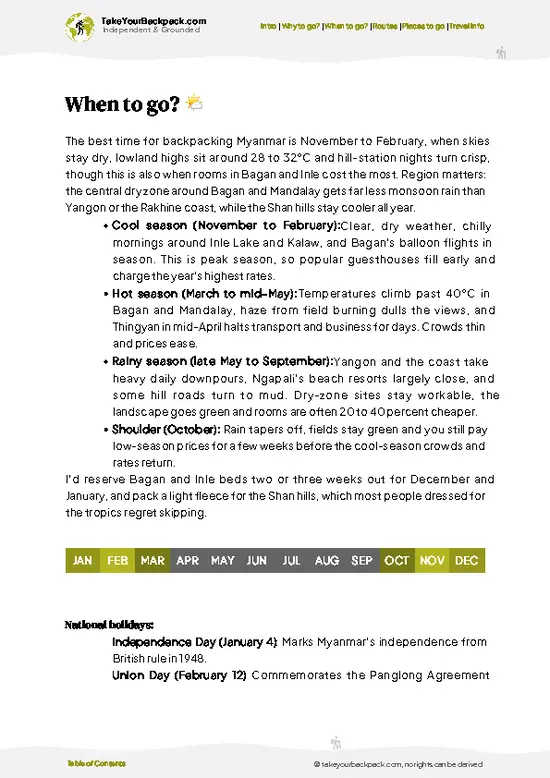
Myanmar’s climate is largely influenced by the monsoon season, which shapes the travel experience across its cities. The dry season, typically from November to February, offers the most comfortable temperatures and lower humidity. This period attracts the highest number of visitors, leading to crowded attractions and inflated prices. However, the pleasant weather makes it ideal for exploring urban areas.

March to May sees rising temperatures, often exceeding 100°F. While this is the off-peak season, the heat can be oppressive. Travelers willing to brave the heat may find fewer crowds and lower accommodation costs.

June to October marks the monsoon season, bringing heavy rains that can disrupt travel plans. While some cities may experience flooding, this period also offers a unique perspective … read more 👉
Myanmar’s climate is largely influenced by the monsoon season, which shapes the travel experience across its cities. The dry season, typically from November to February, offers the most comfortable temperatures and lower humidity. This period attracts the highest number of visitors, leading to crowded attractions and inflated prices. However, the pleasant weather makes it ideal for exploring urban areas.

March to May sees rising temperatures, often exceeding 100°F. While this is the off-peak season, the heat can be oppressive. Travelers willing to brave the heat may find fewer crowds and lower accommodation costs.

June to October marks the monsoon season, bringing heavy rains that can disrupt travel plans. While some cities may experience flooding, this period also offers a unique perspective on local life, as fewer tourists mean a more authentic experience. However, outdoor activities may be limited, and transportation can be affected.

Shoulder seasons, particularly late October and early November, present a mixed bag. The weather begins to cool, and festivals may occur, but crowds can still be significant as tourists flock to catch the tail end of the dry season. Balancing the desire for ideal weather with the experience of local culture is essential for planning a successful trip.

city hoppingOptimizing Your Multi-Stop Itinerary

General Routing Logic

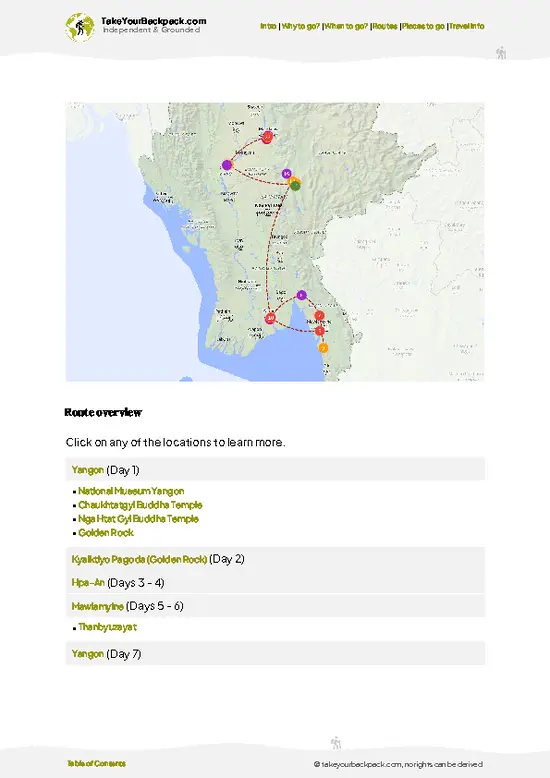
Myanmar’s geography lends itself to regional clustering. Start in Yangon, the main international gateway, then move north to Mandalay. This route allows for a natural progression into the cultural heart of the country. From Mandalay, consider heading to Bagan, famous for its ancient temples, before making your way to Inle Lake for a more relaxed pace.

Typical Time Needed

Allocate at least two to three days in each major city. This pacing allows for exploration without feeling rushed. For instance, Bagan deserves time to soak in the sunrise over the temples, while Inle Lake offers unique experiences that can’t be rushed.

Common Planning Mistakes

Travelers often underestimate travel times between cities. Roads can be slow, and flights may not always be direct. Avoid … read more 👉

General Routing Logic

Myanmar’s geography lends itself to regional clustering. Start in Yangon, the main international gateway, then move north to Mandalay. This route allows for a natural progression into the cultural heart of the country. From Mandalay, consider heading to Bagan, famous for its ancient temples, before making your way to Inle Lake for a more relaxed pace.

Typical Time Needed

Allocate at least two to three days in each major city. This pacing allows for exploration without feeling rushed. For instance, Bagan deserves time to soak in the sunrise over the temples, while Inle Lake offers unique experiences that can’t be rushed.

Common Planning Mistakes

Travelers often underestimate travel times between cities. Roads can be slow, and flights may not always be direct. Avoid cramming too many stops into a short period; this leads to exhaustion and missed opportunities.

Trade-offs and Constraints

Speed versus depth is a constant balancing act. While it’s tempting to see more cities quickly, deeper experiences often yield richer memories. Budget travelers might opt for buses, but these can be uncomfortable and time-consuming. Prioritize comfort and flexibility to enhance the overall experience.

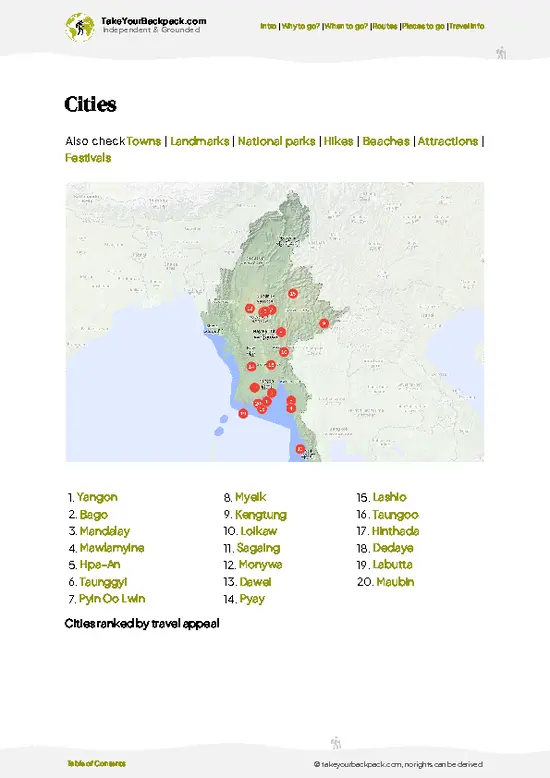
The ListTop cities of Myanmar

1 Yangon

Shwedagon Pagoda, teahouses, colonial downtown

Navigate crowded streets lined with crumbling facades, pause at bustling teashops, and witness daily devotion at Myanmar’s most iconic pagoda.

2 Mandalay

royal palace, artisan quarters, Irrawaddy views

Trace the city’s layered history through its palace grounds, bustling craft districts, and riverfront scenes that reveal Mandalay’s role as a cultural crossroads.

3 Kengtung

Golden Triangle, hill tribe villages, lakeside town

Set out on day hikes to minority villages or wander the lakeside market, surrounded by distant mountains and cross-border influences.

4 Hpa-An

limestone caves, karst peaks, Thanlwin River

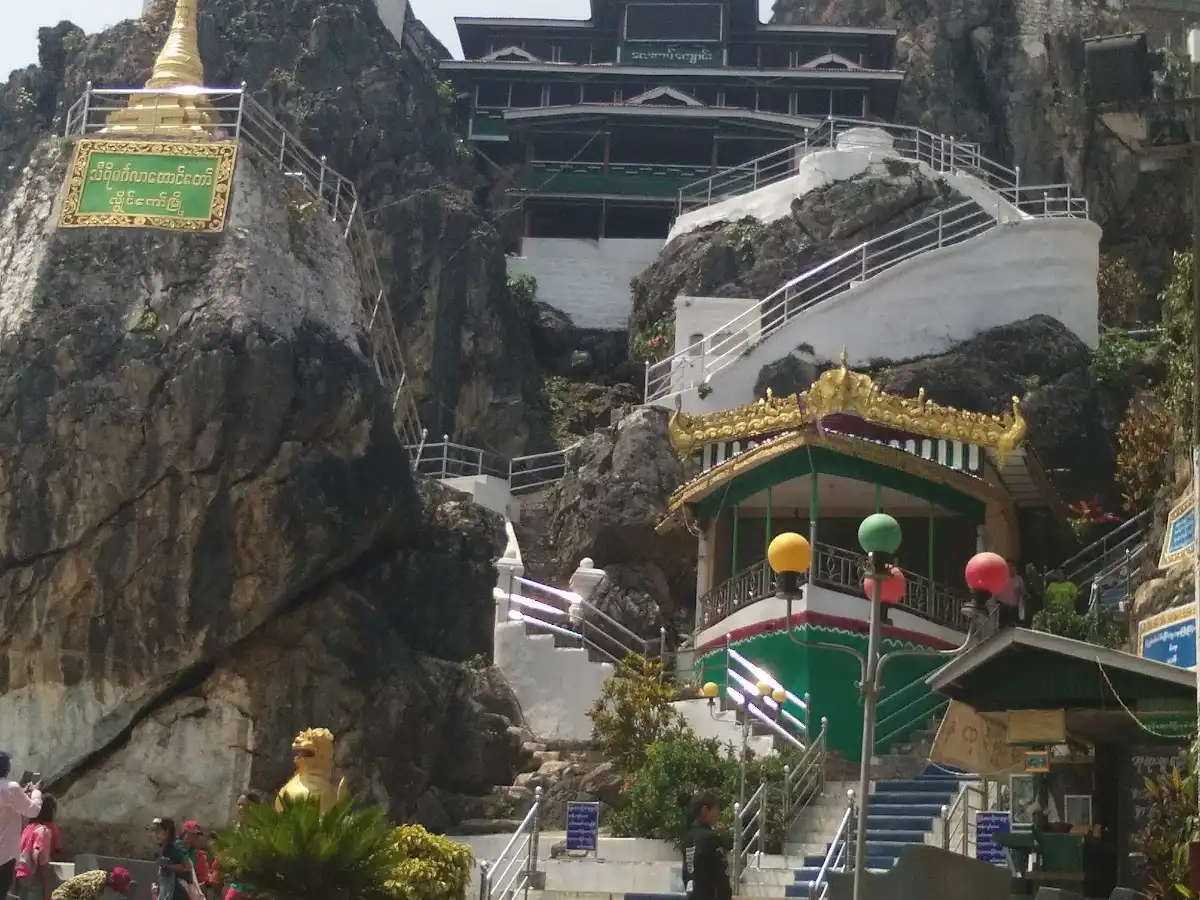
Climb rugged hills, wander through vast cave temples, and watch daily life unfold along the riverbanks in a landscape shaped by dramatic geology.

5 Mawlamyine

colonial architecture, hilltop pagodas, Mon heritage

Stroll faded streets lined with colonial relics, climb to panoramic shrines, and discover the city’s deep Mon traditions along the river.

myanmar-city-mawlamyine
© Google |

6 Pyin Oo Lwin

botanical gardens, colonial mansions, cool climate

Wander shaded avenues, visit flower-filled parks, and experience a distinct blend of British-era architecture and local culture in the hills.

myanmar-city-pyin-oo-lwin
© Google |

7 Shwebo

royal ruins, dry zone, irrigation canals

Trace the legacy of ancient kings among scattered palace remains and agricultural fields, where water management defines the rhythm of the region.

8 Taunggyi

mountain plateau, ethnic festivals, Shan cuisine

Join in vibrant local celebrations, taste regional dishes, and explore a city perched high above the plains with a strong Shan identity.

myanmar-city-taunggyi
© Google |

9 Myeik

archipelago gateway, seafood industry, colonial lanes

Arrange island trips, sample fresh seafood, and wander narrow streets lined with remnants of past trading eras.

10 Dawei

long beaches, cashew orchards, sleepy town center

Cycle quiet roads to uncrowded shores, visit family-run orchards, and observe a slow-paced town life rarely seen by outsiders.

11 Thazi

rail junction, roadside town, bus stopover

Change trains or buses at a dusty crossroads, with basic guesthouses and food stalls serving travelers heading north or east.

12 Loikaw

Kayah villages, limestone hills, local markets

Meet Kayah communities, hike through rugged countryside, and explore a town known for its distinct traditions and scenic surroundings.

myanmar-city-loikaw
© Google |

13 Minbu

oil wells, Irrawaddy banks, hot springs

Visit a working town where oil rigs dot the landscape and locals gather at riverside pagodas or soak in natural hot pools.

14 Tamu

India border, trade markets, frontier town

Cross into Myanmar from Manipur, navigating bustling markets and a blend of cultures shaped by cross-border commerce and migration.

15 Bago

reclining Buddha, ancient capitals, monastery life

Visit monumental religious sites, trace the remnants of former kingdoms, and observe the rhythms of monastic communities.

16 Sittwe

Bay of Bengal, seafood markets, Rakhine culture

Watch fishing boats return at dawn, sample fresh catch at lively markets, and observe daily rituals shaped by the sea and Rakhine traditions.

17 Pathein

delta port, umbrella workshops, riverfront

Watch boats unload at busy docks, visit colorful parasol makers, and stroll along the river that links the delta to the sea.

18 Maubin

canal town, rice barges, delta bridges

Cross low bridges over wide canals, watching rice barges drift past and stopping at local teashops in a town built on water.

19 Myitkyina

Kachin State, Ayeyarwady headwaters, jade trade

Travel to the northern frontier, where river journeys begin and the city’s markets pulse with the energy of the jade business.

20 Monywa

giant Buddhas, Chindwin River, mural caves

Marvel at towering statues, explore cave temples adorned with ancient art, and observe river life in a city off the main tourist trail.

21 Labutta

cyclone recovery, delta outpost, boat transport

Travel by boat through remote waterways to a town rebuilt after disaster, where aid projects and fishing define the local economy.

22 Dedaye

rice mills, river crossings, rural delta

Cross the river by ferry to a quiet agricultural center, where rice processing and farming set the pace of daily life.

23 Sagaing

monastic hills, meditation centers, pagoda clusters

Climb hills dotted with monasteries, join meditation retreats, and witness daily rituals in a city central to Buddhist practice.

24 Pyay

Pyu ruins, riverbank town, ancient stupas

Explore archaeological sites from an early civilization, walk along the river, and visit centuries-old stupas overlooking the plains.

25 Pakokku

tobacco markets, river port, monastery town

Wander through bustling produce and tobacco markets, visit quiet monasteries, and use the city as a gateway to the central plains.

26 Nyaunglebin

transport hub, highway junction, central Myanmar

Transfer between buses or trains in a practical stopover town, where roadside eateries and busy intersections serve passing travelers.

27 Lashio

northern hills, Chinese markets, train terminus

Experience a trading hub where cultures meet, browse lively markets, and use the city as a springboard to remote northern regions.

28 Meiktila

lakeside town, crossroads junction, university hub

Relax by the central lake, navigate a city shaped by its role as a transport and education center, and watch student life unfold.

29 Magway

oil fields, Irrawaddy bluffs, golden pagodas

See oil wells dotting the landscape, visit hilltop shrines, and take in wide river views from the city’s elevated vantage points.

30 Taungoo

old city walls, teak forests, elephant camps

Walk remnants of ancient defenses, venture into nearby forests, and learn about the region’s long history with elephants.

31 Muse

China border, trade hub, market town

See the pulse of cross-border commerce, navigate crowded markets, and experience a city defined by its links to Yunnan.

32 Yenangyaung

oil heritage, dry zone, rural landscapes

Visit relics of Myanmar’s oil industry, explore arid countryside, and see how local communities adapt to the dry central plains.

33 Hinthada

Irrawaddy delta, rice fields, market town

Travel through vast paddies, visit lively local markets, and see how river life shapes this agricultural center.

Think you know Myanmar?

Prove you’re a true local — uncover 23 lesser-known cities in Myanmar that locals tend to keep to themselves.
Loading the map 🌍

Expert viewInsights from Locals and Experts

Transport Hubs


Myanmar’s transport network is a patchwork of options, each with its own quirks. Major cities serve as transport hubs, but don’t expect seamless connections. Buses are the backbone of intercity travel, often running on a schedule that feels more like a suggestion. Trains can be slow and unreliable, yet they offer a unique glimpse into local life. Domestic flights are available but can be pricey, especially if booked last minute.

Consider how you want to balance time and experience. If you’re eager to cover more ground, buses will get you there, but be prepared for long hours and occasional breakdowns. If you prefer a more immersive experience, opt for trains, even if it means sacrificing speed. Each mode of transport has its own rhythm, and understanding this will help you … read more 👉

Transport Hubs


Myanmar’s transport network is a patchwork of options, each with its own quirks. Major cities serve as transport hubs, but don’t expect seamless connections. Buses are the backbone of intercity travel, often running on a schedule that feels more like a suggestion. Trains can be slow and unreliable, yet they offer a unique glimpse into local life. Domestic flights are available but can be pricey, especially if booked last minute.

Consider how you want to balance time and experience. If you’re eager to cover more ground, buses will get you there, but be prepared for long hours and occasional breakdowns. If you prefer a more immersive experience, opt for trains, even if it means sacrificing speed. Each mode of transport has its own rhythm, and understanding this will help you manage your energy and expectations.

Urban Pacing


Cities in Myanmar have their own pace, often dictated by local culture and infrastructure. Some areas are bustling with activity, while others feel almost sleepy. This contrast can be refreshing but also disorienting. If you’re moving quickly from one city to another, you might miss the subtle nuances that make each place unique.

Plan for at least three to five cities if you want a well-rounded experience. This allows you to dive deeper into local customs and traditions without feeling rushed. However, if you try to squeeze in more, you risk turning your trip into a blur of sights rather than meaningful interactions. The trade-off is clear: more cities mean less immersion, while fewer cities allow for richer experiences.

Local Costs


Budgeting in Myanmar requires a keen eye. Costs can vary significantly between urban and rural areas. In cities, you’ll find a range of accommodations, from budget hostels to mid-range hotels. Eating at local restaurants is affordable, but prices can spike in tourist-heavy areas. Always check menus before sitting down; some places charge a premium for the same dishes you could find elsewhere for a fraction of the cost.

Be mindful of hidden fees, especially when it comes to transportation and entry fees for attractions. Some sites have different pricing for locals and foreigners, which can feel frustrating. Factor in these costs when planning your itinerary. A little research can save you from unexpected expenses that could drain your budget.

Exploring vs. Immersion


The choice between rapid exploration and deep immersion is a critical one. If you’re the type who thrives on ticking off boxes, you might be tempted to visit as many cities as possible. However, this often leads to a superficial understanding of the culture. You’ll see the sights but miss the stories behind them.

On the other hand, taking the time to immerse yourself in fewer cities can yield richer experiences. You’ll have the chance to engage with locals, learn about their lives, and perhaps even pick up a few words of the language. This deeper connection can transform your trip from a checklist into a journey of discovery.

Safety & Cultural Considerations


Safety in Myanmar is generally good, but it’s essential to stay informed about local customs and practices. Dress modestly, especially in rural areas, and be respectful of local traditions. Always ask before taking photos of people or sacred sites.

Cultural sensitivity goes a long way in building rapport with locals. Understanding the nuances of local etiquette can enhance your experience and open doors that might otherwise remain closed.

In summary, Myanmar offers a rich tapestry of experiences, but navigating its cities requires thoughtful planning. Balancing transport, urban pacing, local costs, and cultural immersion will help you make the most of your journey.

✈️ The backpacker research shortcutMyanmar Travel Guide

An offline-friendly backpacking guide with optimized travel routes, ranked highlights, transport advice, and the best areas to stay.
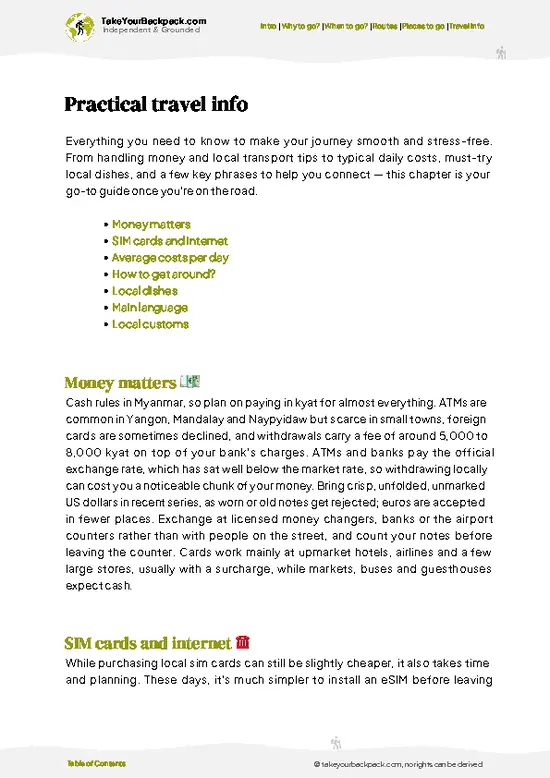
example page 0 from our offline Travel Guide for Myanmar
example page 1 from our offline Travel Guide for Myanmar
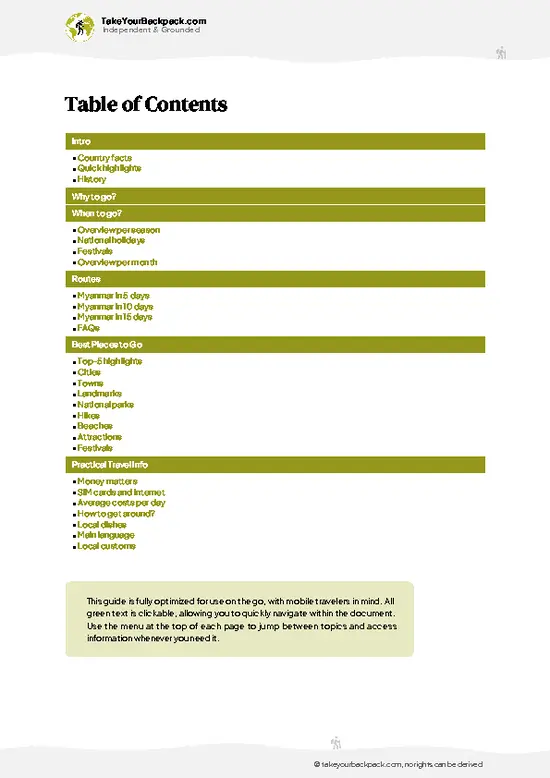
example page 2 from our offline Travel Guide for Myanmar
example page 3 from our offline Travel Guide for Myanmar
example page 4 from our offline Travel Guide for Myanmar
example page 5 from our offline Travel Guide for Myanmar
example page 6 from our offline Travel Guide for Myanmar
example page 7 from our offline Travel Guide for Myanmar
The digital guide (405 pages) contains:
110 highlights, ranked by travel appeal
Optimized 5, 10 & 15-day travel routes
Cities, national parks, landmarks, beaches
How to get around
Offline-friendly for travel without Wi-Fi
👉 Click to see all 30+ guide features

📅 Plan smarter in minutes, not weeks
Month by month travel advice
Festivals & national holidays
Budget expectations

🗺️ Go to the right places, skip the overrated ones
Honest pros & cons of destinations
Top hikes, parks & viewpoints
Lesser-known places most travelers miss
Clear “worth it vs skip it” guidance

🛏️ Travel smoothly without rookie mistakes
Best areas to stay
Transport systems explained simply
Common scams & safety advice
SIM cards, money & practical tips

🌍 Understand the country, not just visit it
Culture & traditions
52 Essential phrases & customs
Festivals worth planning around
Traveler-friendly historical context
Insights that make places more meaningful

📱 Built for real travel conditions
Fully downloadable PDF
Works completely offline
Optimized for phone use
Useful in remote areas & buses
Everything in one place
Save weeks of stressful planning
Get instant access to your full guide. 30‑day money-back guarantee.


By proceeding you agree to our terms.
Sent to your inbox immediately after payment • 100% Secure Checkout
Best Backpacking Travel Advisor 2025 tourism awardBest Backpacking
Travel Advisor
2025
What others say about Take Your Backpack Guides:
⭐⭐⭐⭐⭐
Fantastic, amazing amount of information!
⭐⭐⭐⭐⭐
My goodness this is amazing, it's what I've been looking for hats off too you!
⭐⭐⭐⭐⭐
I think this is absolutely BRILLIANT
⭐⭐⭐⭐
Very complete and informative. It's still missing places, but I gotta to commend you
⭐⭐⭐⭐⭐
This is truly amazing, thank you, can't wait to explore it with my kids!
⭐⭐⭐⭐⭐
Awesome resource, thank you!
⭐⭐⭐⭐⭐
This is amazing! Can't wait to explore the ones I haven't seen
⭐⭐⭐⭐
I love this! Well done, great idea.
⭐⭐⭐⭐⭐
Thanks for taking the time to make this gem!
⭐⭐⭐⭐⭐
This might be the best website I've ever seen.
⭐⭐⭐⭐⭐
Congratulations, and thank you so much for your work; it's incredibly valuable.
⭐⭐⭐⭐
In all seriousness I think you did a great job pointing out the important spots
⭐⭐⭐⭐⭐
10/10 very good
⭐⭐⭐⭐⭐
As someone who's only just starting to visit regularly this is awesome, thank you.
⭐⭐⭐⭐
Thank you very much! I'm going to visit my dad, it's going to be very useful!
⭐⭐⭐⭐⭐
This is really cool! We'll be travelling for the first time and this definitely come in handy.
⭐⭐⭐⭐⭐
You are now our minister of culture, congratulations 👨‍💼
⭐⭐⭐⭐⭐
Just wanted to tell you that this is a pearl! Going to follow your recommendations.
⭐⭐⭐⭐⭐
This is so cool. I'll definitely be using the resource for my travels soon.
⭐⭐⭐⭐⭐
This is very impressive! Good work.
⭐⭐⭐⭐⭐
This is an amazing and informative site. Very well done!

🛏️ Where to stay?Where to Base Yourself

Yes — Myanmar has hostels and budget accommodation concentrated in major tourist hubs: Yangon (downtown/Sule/Chinatown), Mandalay (near the palace/Zegyo market), Bagan (Nyaung-U), Inle Lake (Nyaung Shwe), Ngapali (Thandwe), and trekking towns like Hsipaw.
Yangon is cheapest and best for transport, markets and nightlife but can be noisy and crowded; Mandalay gives easy access to the palace and onward transport but has fewer hostel options; Nyaung-U/Bagan puts you closest to temples and bike rental but is touristy and dusty; Nyaung Shwe/Inle offers lakeside access and boat tours yet is more remote with limited nightlife; Ngapali means beach quiet and higher prices with fewer true hostels; Hsipawread more 👉
Yes — Myanmar has hostels and budget accommodation concentrated in major tourist hubs: Yangon (downtown/Sule/Chinatown), Mandalay (near the palace/Zegyo market), Bagan (Nyaung-U), Inle Lake (Nyaung Shwe), Ngapali (Thandwe), and trekking towns like Hsipaw.
Yangon is cheapest and best for transport, markets and nightlife but can be noisy and crowded; Mandalay gives easy access to the palace and onward transport but has fewer hostel options; Nyaung-U/Bagan puts you closest to temples and bike rental but is touristy and dusty; Nyaung Shwe/Inle offers lakeside access and boat tours yet is more remote with limited nightlife; Ngapali means beach quiet and higher prices with fewer true hostels; Hsipaw is small, safe and ideal for treks with basic guesthouses rather than full-service hostels.

If you enjoy meeting fellow travelers, consider choosing hostels with high ratings for atmosphere. On the other hand, if you prefer having your own space, a hotel might be a better option.

MyanmarExpand Your Journey

👋 Meet the founderWho’s Behind Take Your Backpack?

Johan, backpacker and founder of TakeYourBackpackHi, I’m Johan (Netherlands 🇳🇱), the creator of TakeYourBackpack. Over the past decade, I’ve backpacked through 80+ countries across six continents, gaining extensive experience with independent travel, long-term trips, and overland routes.

This site is built on a combination of firsthand travel experience and carefully curated insights from other backpackers. Many guides are based on places I’ve personally visited, while others bring together tips, observations, and practical advice shared by trusted travelers I’ve met along the way.

The goal is to provide realistic, experience-driven guidance — not generic itineraries — so you can explore destinations with better context, clearer expectations, and more confidence.

Get full Myanmar guide •
Instant download • 110 highlights • Full Offline guide