×

Myanmar🇲🇲 | citiesLabuttacyclone recovery, delta outpost, boat transport | things to do and best time to go

Explore HinthadaExplore Dedaye

Backpacking in Labutta
👀 For curious travelerscity ranked #20
By Johan Kruseman 🇳🇱 | Updated October 15, 2026

Most people only know Labutta as a name from cyclone headlines, but if you come here chasing disaster tourism, you’ll miss what actually matters: a quiet delta town that shows you how the Ayeyarwady breathes. Labutta sits deep in Myanmar’s southwest delta, far from the big tourist loops, and it feels it. For backpackers, it’s more staging post than “must-see” sight: a practical overnight between Pathein and the lower delta, or a base to push by boat into smaller river villages and mangrove country. The town itself is low-rise and workaday, with muddy streets after rain, a small market that smells of river fish and frying garlic at dawn, and a few teashops where you’ll be the only foreigner for days. It’s walkable in the center, but you’ll use motorbike taxis for the outskirts and jetty. Buses are slow and irregular compared with routes to Yangon or Ngapali, and there’s no train, which keeps numbers down. Don’t expect hostels or a backpacker bar strip; you get simple guesthouses, early nights, and conversations if you’re patient and respectful rather than looking for instant travel-friend chemistry. Costs are low, but so are comforts, and electricity or water can be patchy. Compared with Pathein, Labutta is rougher, more river-focused, less decorative; compared with Yangon, it feels like the lights dim and the pace drops to the rhythm of boat engines and evening insects. For some, that’s too quiet. For others, that’s exactly the point.

Discover everything you want to know in the 📖 Myanmar Travel Guide.
Safety warning

The current risk level for Myanmar is high. Check the advice before going.


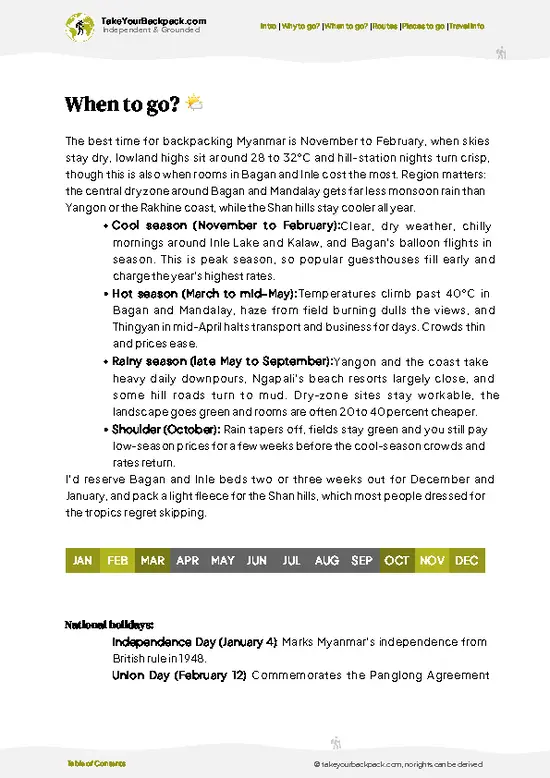
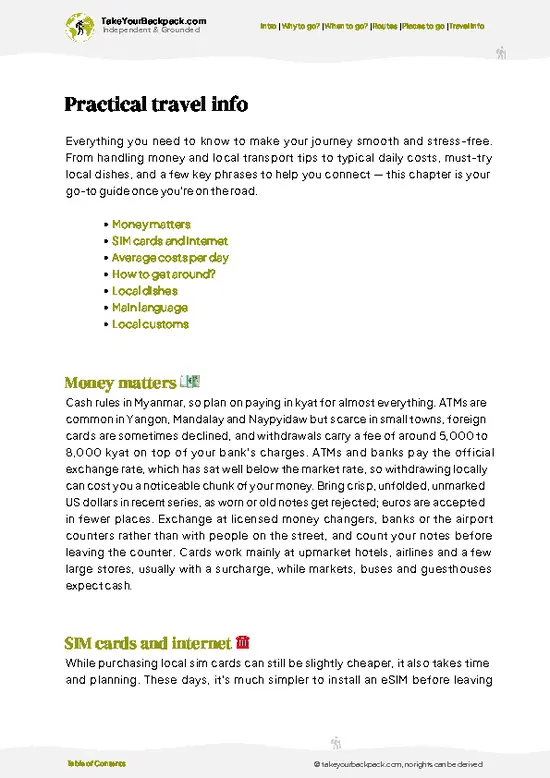
example page 0 from our offline Travel Guide for Myanmar
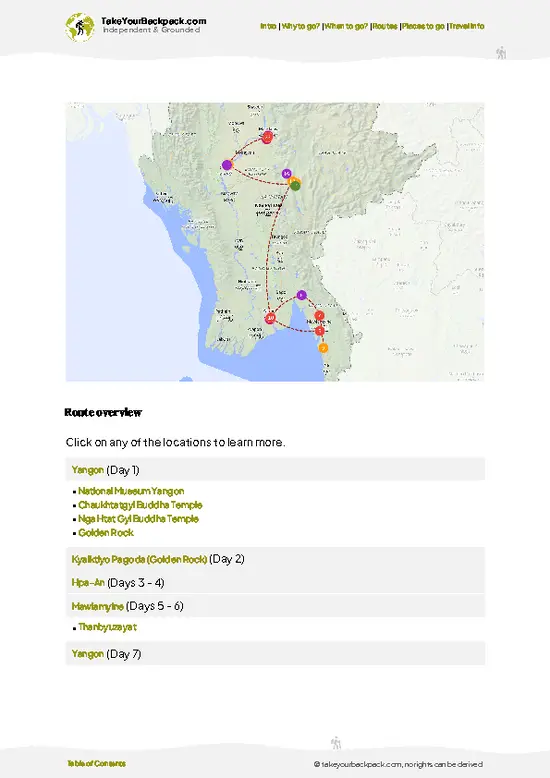
example page 1 from our offline Travel Guide for Myanmar
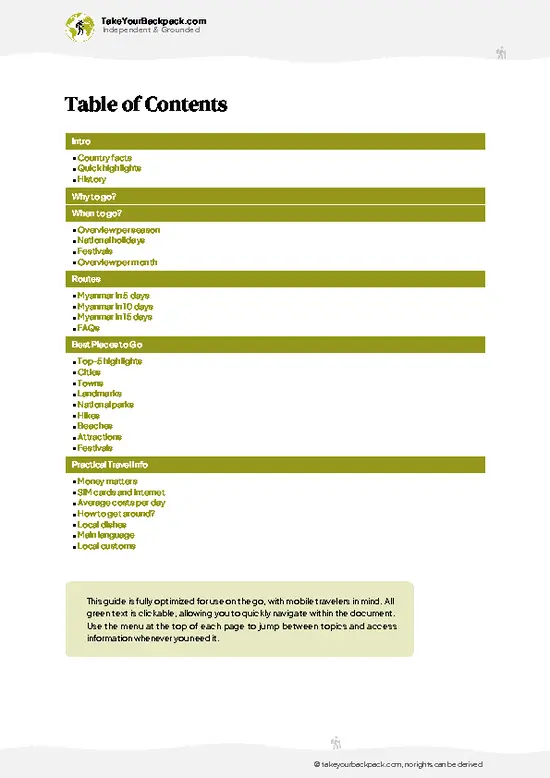
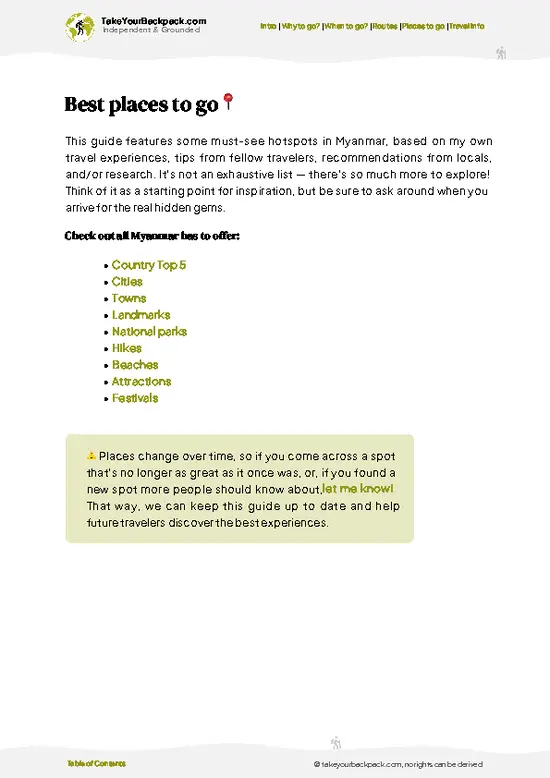
example page 2 from our offline Travel Guide for Myanmar
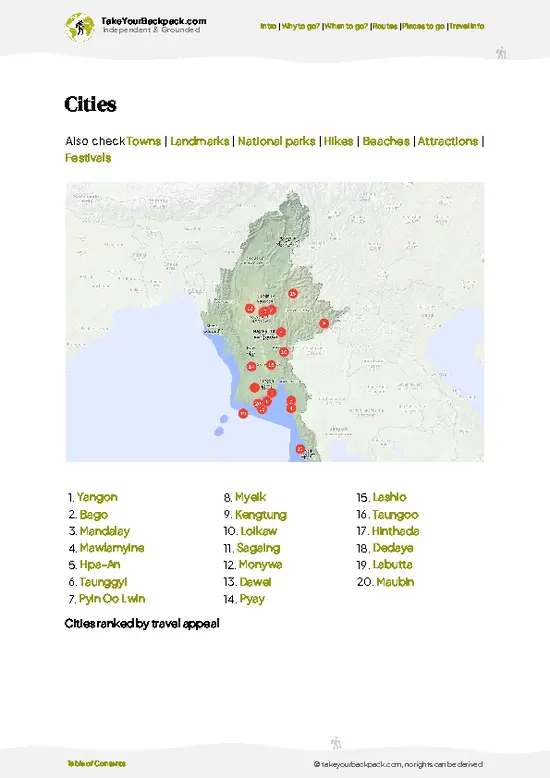
example page 3 from our offline Travel Guide for Myanmar
example page 4 from our offline Travel Guide for Myanmar
example page 5 from our offline Travel Guide for Myanmar
example page 6 from our offline Travel Guide for Myanmar
example page 7 from our offline Travel Guide for Myanmar
Loading the map 🌍
CLICK TO FILTER
cities
towns
landmarks
national parks
hikes
beaches
attractions
festivals
SHOW COUNTRY’S BESTSHOW ALL

✨ Why go?
Ranked #20 city in Myanmar
What makes this city worth visiting

Labutta serves as a gateway for backpackers exploring Myanmar’s untamed beauty. It’s not just a stop; it’s a launchpad for nearby hikes and beaches that reward your effort with breathtaking views. The small-scale hostels and guesthouses create a cozy, social atmosphere, perfect for solo travelers or small groups looking to swap stories over local food. Streets are walkable, inviting you to wander without a plan. Most travelers stay a couple of days, soaking in the laid-back vibe before heading out. If you appreciate a slower pace and genuine connections, Labutta might just be your kind of place.

💡 HighlightsTop highlights of Labutta

  • Labutta Main Market (the Town Bazaar) — The heartbeat of the town: early-morning fish, piles of fresh delta produce, cheap street snacks and endless chances to practice pointing and smiling. Great for photos and a real sense of daily life.
  • Labutta Ferry Jetty / Riverfront — Where boats come and go all day. Standing on the jetty at sunrise or sunset gives you a front-row view of river trade, sampan traffic and the slow rhythm that defines the delta.
  • Main Town Pagoda and Monastery Complex — The local religious centre where you’ll see monks in morning alms rounds, people praying, and simple temple architecture that’s central to community life. Quiet, reverent, very visitable.
  • Riverside Fish-landing and Processing Area — Watch fishermen unload catches, sellers sorting shrimp and fish drying
… read more 👉
  • Labutta Main Market (the Town Bazaar) — The heartbeat of the town: early-morning fish, piles of fresh delta produce, cheap street snacks and endless chances to practice pointing and smiling. Great for photos and a real sense of daily life.
  • Labutta Ferry Jetty / Riverfront — Where boats come and go all day. Standing on the jetty at sunrise or sunset gives you a front-row view of river trade, sampan traffic and the slow rhythm that defines the delta.
  • Main Town Pagoda and Monastery Complex — The local religious centre where you’ll see monks in morning alms rounds, people praying, and simple temple architecture that’s central to community life. Quiet, reverent, very visitable.
  • Riverside Fish-landing and Processing Area — Watch fishermen unload catches, sellers sorting shrimp and fish drying on racks. It’s raw, noisy and honest — a hands-on intro to how the delta feeds the country.
  • Local Boatyards and Wooden-boat Workshops — Small yards where boats are built and repaired by hand. You can watch craftsmen at work, learn about traditional joinery, and see the backbone of local transport up close.
  • Teahouses on Market Street — Tiny, open-front teashops where people meet, eat and gossip over tea and laphet (tea-leaf salad). They’re social hubs — the best place to hear local news and try cheap, tasty snacks.
  • Stilt-house Neighbourhoods and Canal Walks — A short walk through the wooden stilt quarters shows everyday delta life: kids playing, laundry on lines, small garden plots. It’s low-key but utterly revealing of how people live with water.
  • Nargis-era Rebuilding Sites and Community Projects — Visiting rebuilt neighbourhoods and NGO-supported projects gives context to the 2008 cyclone’s impact and shows community resilience and local recovery efforts. A sober but important visit.
  • Town Hall / Community Cultural Space — The place for local festivals, announcements and occasional performances. Catching a local event or market-day programme here is a good way to experience civic life beyond tourist spots.
  • Rice-mill and Paddy Traders Area — A short walk from the centre will usually lead you to the trading zones for rice and paddy. Watching the trade and milling processes connects you directly to the delta’s agricultural economy.
A few good day trips just outside Labutta: the mangroves and birdlife of Meinmahla Kyun Wildlife Sanctuary, the markets and riverfront of nearby Bogale, and the riverside town of Pyapon — Meinmahla Kyun is my personal favorite.
Spotted a mistake or missing something? Contact us.

🏘️ NeighborhoodsNeighborhood guide to Labutta

Labutta is a gateway to the Irrawaddy Delta, offering a unique blend of local culture and backpacker convenience.

Downtown Labutta: This bustling area is the heart of the town. You’ll find street vendors serving up delicious local fare, and the vibe is lively. It’s walkable, with easy access to transport options like shared taxis. Perfect for short stays, but the nightlife is limited to a few local bars.

North Labutta: Quieter and more residential, this neighborhood gives you a taste of everyday life. It’s less touristy, making it ideal for longer stays if you want to immerse yourself in the local rhythm. The streets are less crowded, and you can enjoy peaceful walks along the river.

South Labutta: This area is a bit more remote, but it offers stunning views of the delta. It’s best for … read more 👉
Labutta is a gateway to the Irrawaddy Delta, offering a unique blend of local culture and backpacker convenience.

Downtown Labutta: This bustling area is the heart of the town. You’ll find street vendors serving up delicious local fare, and the vibe is lively. It’s walkable, with easy access to transport options like shared taxis. Perfect for short stays, but the nightlife is limited to a few local bars.

North Labutta: Quieter and more residential, this neighborhood gives you a taste of everyday life. It’s less touristy, making it ideal for longer stays if you want to immerse yourself in the local rhythm. The streets are less crowded, and you can enjoy peaceful walks along the river.

South Labutta: This area is a bit more remote, but it offers stunning views of the delta. It’s best for those seeking tranquility and a slower pace. Transport options are fewer, so plan ahead if you want to explore further.

⌛️ 1 dayA smart one-day plan

Labutta, Myanmar, is a town that whispers stories of resilience and local culture. It’s not on every traveler’s radar, but that’s what makes it special. Start your morning with a stroll through the bustling market in the heart of town. The air is thick with the scent of fresh produce and spices, and the vibrant chatter of vendors creates a lively backdrop. Grab a bowl of mohinga from a street stall—this fish soup is a breakfast staple that warms you from the inside out.

In the afternoon, head to the nearby village of Kyaung Taung. It’s a short bike ride away, and the journey takes you through lush rice paddies and friendly smiles. Here, you can visit a local workshop where artisans craft traditional bamboo products. It’s a chance to see craftsmanship in action, far from the tourist traps. … read more 👉
Labutta, Myanmar, is a town that whispers stories of resilience and local culture. It’s not on every traveler’s radar, but that’s what makes it special. Start your morning with a stroll through the bustling market in the heart of town. The air is thick with the scent of fresh produce and spices, and the vibrant chatter of vendors creates a lively backdrop. Grab a bowl of mohinga from a street stall—this fish soup is a breakfast staple that warms you from the inside out.

In the afternoon, head to the nearby village of Kyaung Taung. It’s a short bike ride away, and the journey takes you through lush rice paddies and friendly smiles. Here, you can visit a local workshop where artisans craft traditional bamboo products. It’s a chance to see craftsmanship in action, far from the tourist traps.

As evening falls, return to Labutta and find a spot by the river. The sunset casts a golden hue over the water, and you can enjoy a simple dinner at a local eatery, savoring the flavors of Myanmar. This day isn’t just about seeing; it’s about feeling the pulse of a town that thrives quietly, away from the crowds.

🌤️ When to go?Weather, crowds, and seasonal trade-offs

  • Weather: Labutta’s monsoon season from May to October drenches the town with heavy rain, turning dirt roads into mud traps. The dry season, November to April, offers clearer skies and easier trekking conditions.
  • Temperature: Expect highs around 32-35°C (90-95°F) in the dry months, with nights cooling to 20-24°C (68-75°F). The monsoon months feel hotter and stickier, making outdoor activities less pleasant.
  • Daylight Hours: Roughly 11-12 hours year-round, but the dry season’s clearer skies mean more reliable light for early starts and late afternoon explorations.
  • Crowds: Labutta is off the beaten path, so crowds are minimal year-round. However, local festivals in the dry season bring a lively buzz worth timing your visit for.
  • Seasonal Activities: Dry months are best for river trips and
… read more 👉
  • Weather: Labutta’s monsoon season from May to October drenches the town with heavy rain, turning dirt roads into mud traps. The dry season, November to April, offers clearer skies and easier trekking conditions.
  • Temperature: Expect highs around 32-35°C (90-95°F) in the dry months, with nights cooling to 20-24°C (68-75°F). The monsoon months feel hotter and stickier, making outdoor activities less pleasant.
  • Daylight Hours: Roughly 11-12 hours year-round, but the dry season’s clearer skies mean more reliable light for early starts and late afternoon explorations.
  • Crowds: Labutta is off the beaten path, so crowds are minimal year-round. However, local festivals in the dry season bring a lively buzz worth timing your visit for.
  • Seasonal Activities: Dry months are best for river trips and village visits, while monsoon season floods the delta, creating a different, water-world vibe but limiting land access.
  • Price Fluctuations: Accommodation and transport costs dip slightly during the wet season due to fewer travelers, but the trade-off is tougher logistics and less predictable weather.
Pro-tip: Aim for late November to February—cooler, drier, and with the soft golden light that makes Labutta’s river scenes sing.


source: climatestotravel.comJANJanuary: excellent for travelingFEBFebruary: excellent for travelingMARMarch: highly recommended for travelingAPRApril: highly recommended for travelingMAYMay: fair for travelingJUNJune: fair for travelingJULJuly: fair for travelingAUGAugust: fair for travelingSEPSeptember: fair for travelingOCTOctober: fair for travelingNOVNovember: excellent for travelingDECDecember: excellent for traveling
when-to-go

✈️ The backpacker research shortcutMyanmar Travel Guide

An offline-friendly backpacking guide with optimized travel routes, ranked highlights, transport advice, and the best areas to stay.
example page 0 from our offline Travel Guide for Myanmar
example page 1 from our offline Travel Guide for Myanmar
example page 2 from our offline Travel Guide for Myanmar
example page 3 from our offline Travel Guide for Myanmar
example page 4 from our offline Travel Guide for Myanmar
example page 5 from our offline Travel Guide for Myanmar
example page 6 from our offline Travel Guide for Myanmar
example page 7 from our offline Travel Guide for Myanmar
The digital guide (377 pages) contains:
✅ 104 highlights, ranked by travel appeal
✅ Optimized 5, 10 & 15-day travel routes
✅ Cities, national parks, landmarks, beaches
✅ How to get around
✅ Offline-friendly for travel without Wi-Fi
👉 Click to see all 30+ guide features

📅 Plan smarter in minutes, not weeks
✅ Month by month travel advice
✅ Festivals & national holidays
✅ Budget expectations

🗺️ Go to the right places, skip the overrated ones
✅ Honest pros & cons of destinations
✅ Top hikes, parks & viewpoints
✅ Lesser-known places most travelers miss
✅ Clear “worth it vs skip it” guidance

🛏️ Travel smoothly without rookie mistakes
✅ Best areas to stay
✅ Transport systems explained simply
✅ Common scams & safety advice
✅ SIM cards, money & practical tips

🌍 Understand the country, not just visit it
✅ Culture & traditions
✅ 52 Essential phrases & customs
✅ Festivals worth planning around
✅ Traveler-friendly historical context
✅ Insights that make places more meaningful

📱 Built for real travel conditions
✅ Fully downloadable PDF
✅ Works completely offline
✅ Optimized for phone use
✅ Useful in remote areas & buses
✅ Everything in one place
Stop searching, start planning
Get instant access to your full guide. 30‑day money-back guarantee.
+ Add another guide for just

By proceeding you agree to our terms.
Sent to your inbox immediately after payment • 100% Secure Checkout
Best Backpacking Travel Advisor 2025 tourism awardBest Backpacking
Travel Advisor
2025
What others say about Take Your Backpack Guides:
⭐⭐⭐⭐⭐
Fantastic, amazing amount of information!
⭐⭐⭐⭐⭐
My goodness this is amazing, it's what I've been looking for hats off too you!
⭐⭐⭐⭐⭐
I think this is absolutely BRILLIANT
⭐⭐⭐⭐
Very complete and informative. It's still missing places, but I gotta to commend you
⭐⭐⭐⭐⭐
This is truly amazing, thank you, can't wait to explore it with my kids!
⭐⭐⭐⭐⭐
Awesome resource, thank you!
⭐⭐⭐⭐⭐
This is amazing! Can't wait to explore the ones I haven't seen
⭐⭐⭐⭐
I love this! Well done, great idea.
⭐⭐⭐⭐⭐
Thanks for taking the time to make this gem!
⭐⭐⭐⭐⭐
This might be the best website I've ever seen.
⭐⭐⭐⭐⭐
Congratulations, and thank you so much for your work; it's incredibly valuable.
⭐⭐⭐⭐
In all seriousness I think you did a great job pointing out the important spots
⭐⭐⭐⭐⭐
10/10 very good
⭐⭐⭐⭐⭐
As someone who's only just starting to visit regularly this is awesome, thank you.
⭐⭐⭐⭐
Thank you very much! I'm going to visit my dad, it's going to be very useful!
⭐⭐⭐⭐⭐
This is really cool! We'll be travelling for the first time and this definitely come in handy.
⭐⭐⭐⭐⭐
You are now our minister of culture, congratulations 👨‍💼
⭐⭐⭐⭐⭐
Just wanted to tell you that this is a pearl! Going to follow your recommendations.
⭐⭐⭐⭐⭐
This is so cool. I'll definitely be using the resource for my travels soon.
⭐⭐⭐⭐⭐
This is very impressive! Good work.
⭐⭐⭐⭐⭐
This is an amazing and informative site. Very well done!

🛏️ Where to stay?Choosing the right base

Labutta’s backpacker scene is modest but centered around the town’s main market area and the nearby riverfront streets. This zone hums with local life—the scent of fresh fish mingles with smoky street food stalls, and the chatter of vendors creates a lively backdrop. Staying here means you’re steps from affordable eateries and a handful of guesthouses where solo travelers often cross paths. It’s safe, with a steady flow of locals and visitors, so you won’t feel isolated or out of place. Other parts of Labutta drift into quieter residential zones or industrial edges, which lack social buzz and … read more 👉
Labutta’s backpacker scene is modest but centered around the town’s main market area and the nearby riverfront streets. This zone hums with local life—the scent of fresh fish mingles with smoky street food stalls, and the chatter of vendors creates a lively backdrop. Staying here means you’re steps from affordable eateries and a handful of guesthouses where solo travelers often cross paths. It’s safe, with a steady flow of locals and visitors, so you won’t feel isolated or out of place. Other parts of Labutta drift into quieter residential zones or industrial edges, which lack social buzz and convenient access. For a backpacker, the market-riverfront stretch offers the best mix of practicality and atmosphere to soak in daily rhythms without losing comfort.

🚌 Getting aroundMoving around without the hassle

Labutta moves at its own rhythm—less a clockwork town, more a pulse you feel in the air. The scent of river mud and drying fish hangs heavy, mixing with the chatter of vendors and the occasional honk of a motorbike. Here, schedules are loose suggestions, not ironclad rules. You’ll find that patience is your best companion, and a keen eye for local cues will save you from waiting too long or missing a ride. The town’s flow is a blend of slow river time and bursts of busy market energy, so syncing with that ebb makes every trip smoother.
  • Walking: The best way to soak in Labutta’s atmosphere. Streets are compact and mostly flat, making it easy to cover the town on foot in under an hour. Free, flexible, and perfect for spontaneous detours.
  • Motorbike Taxis: Available from dawn until dusk, these
… read more 👉
Labutta moves at its own rhythm—less a clockwork town, more a pulse you feel in the air. The scent of river mud and drying fish hangs heavy, mixing with the chatter of vendors and the occasional honk of a motorbike. Here, schedules are loose suggestions, not ironclad rules. You’ll find that patience is your best companion, and a keen eye for local cues will save you from waiting too long or missing a ride. The town’s flow is a blend of slow river time and bursts of busy market energy, so syncing with that ebb makes every trip smoother.
  • Walking: The best way to soak in Labutta’s atmosphere. Streets are compact and mostly flat, making it easy to cover the town on foot in under an hour. Free, flexible, and perfect for spontaneous detours.
  • Motorbike Taxis: Available from dawn until dusk, these dart through narrow lanes and crowded markets. Expect to pay around 1,000-2,000 kyat for short trips. They’re quick but hold on tight—the ride can be bumpy.
  • Shared Pickups: These open-bed trucks run irregularly between Labutta and nearby villages. They leave when full, so timing is unpredictable, but fares are low (about 2,000-3,000 kyat). Ideal if you’re not in a rush and want to travel like a local.
  • River Boats: The heartbeat of regional transit. Boats depart early morning and late afternoon, connecting Labutta to other delta towns. Tickets cost roughly 3,000-5,000 kyat. The ride is slow but scenic, with the smell of wet wood and river water filling the air.

👛 Costs (as of 15 October 2026)Typical daily expenses

Backpacking in Labutta, Myanmar, is a raw, off-the-beaten-path experience where costs stay low but the simplicity demands a bit of patience and local savvy. Here’s how your daily budget breaks down in this quiet riverside town.
  • Dorm Accommodation: Labutta doesn’t have a bustling hostel scene. Expect basic guesthouses rather than dorms, with prices around $5 to $10 per night. These places are no-frills—think simple wooden rooms, a fan, and maybe a shared bathroom. It’s about function over comfort, but it keeps you close to local life.
  • Meals: Street food and small local eateries dominate. A filling meal of rice, vegetables, and fish or chicken will cost about $1 to $2. Snacks like fresh fruit or fried snacks are even cheaper. If you want something more Western or packaged, prices rise but
… read more 👉
Backpacking in Labutta, Myanmar, is a raw, off-the-beaten-path experience where costs stay low but the simplicity demands a bit of patience and local savvy. Here’s how your daily budget breaks down in this quiet riverside town.
  • Dorm Accommodation: Labutta doesn’t have a bustling hostel scene. Expect basic guesthouses rather than dorms, with prices around $5 to $10 per night. These places are no-frills—think simple wooden rooms, a fan, and maybe a shared bathroom. It’s about function over comfort, but it keeps you close to local life.
  • Meals: Street food and small local eateries dominate. A filling meal of rice, vegetables, and fish or chicken will cost about $1 to $2. Snacks like fresh fruit or fried snacks are even cheaper. If you want something more Western or packaged, prices rise but rarely exceed $3 to $4 per meal.
  • Local Transport: Labutta’s main transport is motorbike taxis or shared trishaws. Short rides cost around $0.50 to $1. For longer trips or hiring a motorbike for the day, budget $5 to $10. The pace is slow, the roads dusty, but the views of the Irrawaddy delta make it worth the bump.
  • Basic Activities/Entry Fees: Labutta isn’t packed with tourist attractions, so entry fees are minimal or non-existent. Visiting local markets, temples, or wandering the riverbanks is free. If you hire a local guide or take a boat trip, expect to pay $10 to $15, which supports the community directly.
  • Miscellaneous Expenses: Bottled water, snacks, phone credit, and small tips add up to about $1 to $3 daily. Internet access can be patchy, so plan accordingly. Labutta’s charm is in its simplicity, so extras are minimal but useful.

All told, you’re looking at roughly $8 to $20 per day to keep things smooth and authentic in Labutta. It’s a place where the low cost matches the slow rhythm of life—no rush, no fuss, just the river’s steady flow and the scent of wet earth after rain. Keep your expectations grounded, and you’ll find the quiet rewards here well worth the modest outlay.
⚠️ Prices can change and everyone travels differently, so take this as a rough guide. Hope it helps you plan your adventure!

🚌 Day tripsEasy escapes and nearby places

Labutta, Myanmar, is a backpacker’s dream base for day trips, offering a blend of culture and nature that feels both accessible and rewarding.

Inle Lake Adventure
A boat ride on Inle Lake is a must. Glide past stilted villages and floating gardens, where locals fish using traditional techniques. The journey takes about two hours, but the sights are worth every minute. Expect to spend around $15 for a boat and lunch. Early mornings are best to catch the mist rising off the water, creating a magical atmosphere. Many first-timers underestimate the chill of the morning air; bring a light jacket.
👉 Explore Inle Lake

Bagan Temples
While a bit further afield, the ancient temples of Bagan are a treasure trove of history. It’s a four-hour bus ride, but the golden stupas at sunrise are a sight … read more 👉
Labutta, Myanmar, is a backpacker’s dream base for day trips, offering a blend of culture and nature that feels both accessible and rewarding.

Inle Lake Adventure
A boat ride on Inle Lake is a must. Glide past stilted villages and floating gardens, where locals fish using traditional techniques. The journey takes about two hours, but the sights are worth every minute. Expect to spend around $15 for a boat and lunch. Early mornings are best to catch the mist rising off the water, creating a magical atmosphere. Many first-timers underestimate the chill of the morning air; bring a light jacket.
👉 Explore Inle Lake

Bagan Temples
While a bit further afield, the ancient temples of Bagan are a treasure trove of history. It’s a four-hour bus ride, but the golden stupas at sunrise are a sight to behold. Budget around $10 for transport and entry fees. The dry season, from November to February, offers cooler temperatures for exploring. A common mistake is trying to see too many temples in one day; pick a few favorites and savor the experience.
👉 Explore Bagan

Ayeyarwady River Cruise
Take a leisurely cruise on the Ayeyarwady River. This trip offers stunning views of the riverbanks and local life. It’s about an hour’s journey to the dock, and a round trip costs around $8. Late afternoons provide the best light for photography. Many backpackers miss this experience, opting for bus rides instead; don’t skip the river’s charm.

🍲 FoodWhat to Eat & Drink

Labutta’s food scene is a playground for your taste buds if you’re ready to dive into authentic Burmese flavors. Think of Mohinga, a fish broth noodle soup that’s the city’s unofficial breakfast hero—rich, tangy, and layered with lemongrass and banana stems. Street stalls and bustling markets are your best bets for this and other local staples like Laphet Thoke, the fermented tea leaf salad that’s a punchy mix of bitter, sour, and crunchy textures.

Backpackers usually gather around these lively markets or simple roadside eateries where the air hums with sizzling grills and the chatter of locals. Drinking here is low-key—expect sweet Burmese tea served hot or iced, often with condensed milk, perfect for a midday pick-me-up. Sharing food is common, so don’t be shy about sampling from communal … read more 👉
Labutta’s food scene is a playground for your taste buds if you’re ready to dive into authentic Burmese flavors. Think of Mohinga, a fish broth noodle soup that’s the city’s unofficial breakfast hero—rich, tangy, and layered with lemongrass and banana stems. Street stalls and bustling markets are your best bets for this and other local staples like Laphet Thoke, the fermented tea leaf salad that’s a punchy mix of bitter, sour, and crunchy textures.

Backpackers usually gather around these lively markets or simple roadside eateries where the air hums with sizzling grills and the chatter of locals. Drinking here is low-key—expect sweet Burmese tea served hot or iced, often with condensed milk, perfect for a midday pick-me-up. Sharing food is common, so don’t be shy about sampling from communal plates. Just remember, eating with your right hand is the norm, and leaving a small amount on your plate signals you’re satisfied, not wasteful.

🛡️ SafetyTraveler Safety Guide

Labutta is generally safe, but staying aware is key. The bustling market areas can be a hotspot for pickpockets, so keep your belongings close and your wits sharper. Solo travelers should avoid wandering too far after dark; the streets can feel empty, and it’s best to stick to well-lit paths.

Watch for the occasional scam, like inflated prices from overly eager vendors. A friendly smile and a firm “no” usually do the trick. Embrace the local vibe, but trust your instincts, and you’ll navigate Labutta like a pro.

FAQFrequently asked questions about Labutta

2 to 3 days is sufficient to explore Labutta. This allows time to visit local markets, nearby villages, and the surrounding delta region. The pace is slow, so extra days are only needed if you want to explore more remote areas.
Yes, Labutta is generally safe for solo backpackers. The town is small and quiet with low crime rates, but standard precautions like avoiding isolated areas at night are advised. Interaction with locals is usually friendly and welcoming.
Labutta is known for its location in the Irrawaddy Delta and its role in agriculture and fishing. It is a key area for rice production and has extensive waterways used for transportation and fishing. The town also serves as a gateway to exploring the delta's rural lifestyle.
⚠️ Things can change over time, so always validate details locally before you go.

Other Burmese cities near Labutta

Explore more nearby:

  • Maubin—canal town, rice barges, delta bridges| 115 km away
  • Dedaye—rice mills, river crossings, rural delta| 124 km away
  • Yangon—Shwedagon Pagoda, teahouses, colonial downtown| 170 km away

💡 Not sure where to go next?
Create a personalized itinerary for Myanmar including Labutta and the places that fit your trip.

Generate my itinerary

👉 Discover all cities

Or checkout all Myanmar has to offer (think cities, towns, villages, national parks, hikes, beaches, festivals)
Country photo of Myanmar

We 💚 feedbackWhat to keep in mind

Labutta’s charm lies in its raw, unfiltered connection to the Irrawaddy Delta. You’ll breathe in the earthy scent of rice paddies and feel the pulse of local life. But be ready for the heat and limited amenities; this isn’t a cushy stop. Embrace the challenge, and the rewards will follow.

✈️ When did I visit Myanmar?
In November 2013 I backpacked through Myanmar, bringing a full stack of pristine dollar bills as they had no ATMs back then.

✍️ Help improve this page!
The information on this page is based on my own backpacking experience in Myanmar, supplemented with up-to-date research and feedback from other travelers. Travel details can change, so if you notice anything outdated or incomplete, feel free to let me know.


🙋‍♂️ Give feedback

👋 Meet the founderWho’s Behind Take Your Backpack?

Johan, backpacker and founder of TakeYourBackpackHi, I’m Johan (Netherlands 🇳🇱), the creator of TakeYourBackpack. Over the past 3 decades, I’ve backpacked through 90+ countries across six continents, gaining extensive experience with independent travel, long-term trips, and overland routes.

This site is built on a combination of firsthand travel experience and carefully curated insights from other backpackers. Many guides are based on places I’ve personally visited, while others bring together tips, observations, and practical advice shared by trusted travelers I’ve met along the way.

The goal is to provide realistic, experience-driven guidance — not generic itineraries — so you can explore destinations with better context, clearer expectations, and more confidence.