×

Myanmar🇲🇲 | citiesMuseChina border, trade hub, market town | things to do and best time to go

Explore PyayExplore Tamu

Backpacking in Muse
👀 For curious travelerscity ranked #28
By Johan Kruseman 🇳🇱 | Updated June 12, 2026

Muse used to be a scruffy, low-rise border town where backpackers were rare and most foreigners were traders or NGO staff; now it’s busier, more controlled, and feels like a functional checkpoint more than a destination. Sitting on Myanmar’s far northern border with China, it’s cheap, intense, and very local, with basic guesthouses, limited nightlife, and almost no backpacker scene. It’s less charming than Hsipaw or Lashio but fascinating if you like frontier economics, language mashups, and watching how a border really works.

Discover everything you want to know in the 📖 Myanmar Travel Guide.
Safety warning

The current risk level for Myanmar is high. Check the advice before going.


Get your Myanmar guide
110 ranked highlights, routes & tips, works offline (405 pages)
Loading the map 🌍
CLICK TO FILTER
cities
towns
landmarks
national parks
hikes
beaches
attractions
festivals
regions
SHOW COUNTRY’S BESTSHOW ALL

✨ Why go?
Ranked #28 city in Myanmar
Why Muse should be on your travel list

Backpackers flock to Muse for its unique blend of basecamp value and affordability. It’s a strategic stop on the way to China or inland Myanmar, making onward travel a breeze. The walkability of the city means you can easily explore local food stalls and vibrant nightlife without breaking the bank. Hostels here are not just cheap; they foster a sense of community, perfect for meeting fellow travelers. While Muse may not have the most famous highlights, it offers a solid mix of activities that make it a worthwhile stop, especially for those looking to stretch their travel budget.
Want to include Muse in your Myanmar route?
Create a personalized Myanmar itinerary that includes Muse and the places that fit your trip — based on your travel style, budget, and available time. Get your route in seconds.

Generate my trip

💡 HighlightsThe experiences that define the visit

  • Muse-Ruili Border Gate / Friendship Bridge — The single most vivid thing about Muse: the busy immigration/customs area and the bridge over the river. It’s not a “pretty” landmark, but walking the approaches gives you the clearest sense of why this town exists — nonstop trade, crowds, and that odd in-between feel of two countries pressed together.
  • Muse Border Market (the cross-border wholesale bazaar) — Rows of stalls selling everything from dried goods and Yunnan teas to cheap electronics and textiles. It’s where locals and Chinese traders meet; great for people-watching, bargain hunting, and sampling street food that blends Burmese and Yunnan flavors.
  • Shweli Riverfront and bridge viewpoints — The river is Muse’s natural spine. Walk the riverbank near the border bridges at sunset for simple
read more 👉
  • Muse-Ruili Border Gate / Friendship Bridge — The single most vivid thing about Muse: the busy immigration/customs area and the bridge over the river. It’s not a “pretty” landmark, but walking the approaches gives you the clearest sense of why this town exists — nonstop trade, crowds, and that odd in-between feel of two countries pressed together.
  • Muse Border Market (the cross-border wholesale bazaar) — Rows of stalls selling everything from dried goods and Yunnan teas to cheap electronics and textiles. It’s where locals and Chinese traders meet; great for people-watching, bargain hunting, and sampling street food that blends Burmese and Yunnan flavors.
  • Shweli Riverfront and bridge viewpoints — The river is Muse’s natural spine. Walk the riverbank near the border bridges at sunset for simple views, fishermen, and the cargo boats that move goods up and down the valley. It’s low-key but atmospheric.
  • Muse Central Market (Zay Cho) — The town’s everyday market: produce, dried fish, meats, household goods. If you want to see how locals shop and what people actually eat here, this is the place — noisy, smelly, and honest in a good way.
  • Yunnan-style food street / Chinese bakeries — Near the border you’ll find small eateries serving Yunnan noodles, dumplings, and breads that don’t taste like anything else in central Myanmar. Cheap, fast, and the most authentic cross-border cuisine in town.
  • Old trade warehouses and loading yards — The clustered warehouses and cargo yards along the main trade roads are industrial, but they’re where you can watch the logistics of cross-border trade up close — forklifts, stacks of crates, and the odd tea or timber convoy. A good spot for documentary-style photos.
  • Local pagoda cluster (central town pagodas) — Muse has small pagoda compounds tucked into town where locals come to pray and hang out. They’re quieter than major tourist stupas elsewhere, so you can observe authentic devotional life without the tourist stagecraft.
  • Night market along the border road — When the sun goes, hawkers set up for cheap dinners, tea shops spill onto the pavement, and traders swap stories. It’s where the town loosens up and you get the liveliest nighttime vibe in Muse.
  • Small specialty shops (tea, dried mushrooms, Chinese medicines) — Wander the side streets and you’ll find niche shops selling Yunnan tea cakes, dried local mushrooms, and herbal remedies. They say a lot about cross-border commerce and are fun to poke through even if you buy only a little.
  • Bus and truck terminals on Lashio Road — Not glamorous, but vital for travelers: these terminals are the hubs for onward travel, and they’re also social spaces where truckers, traders, and pilgrims meet. If you want to feel the pulse of movement out of Muse, stand here for an hour.
A few good day-trip options outside Muse are a short crossing into Ruili, China (visa permitting), exploring Shweli-valley market villages upriver, and the road down to Lashio if you’ve got a long day; my personal favorite for immediacy and contrast is stepping across to Ruili and soaking in the Chinese side of the border.
Spotted a mistake or missing something? Contact us.
🏘️ NeighborhoodsUnderstanding the local layout

Muse is a bustling border town that serves as a gateway to Myanmar and China, making it a unique stop for backpackers. Here’s how the neighborhoods stack up:

Downtown Muse: This area buzzes with local markets and street food stalls. It’s affordable and walkable, perfect for short stays. The nightlife is low-key, with a few bars catering to travelers.

Shwe Pyi Taw: A bit quieter, this neighborhood offers a more relaxed vibe. It’s slightly pricier but has better amenities. Ideal for longer stays, you’ll find cozy guesthouses and easy access to transport.

Border Zone: This area is all about convenience. It’s less touristy, making it cheaper. However, it can feel a bit chaotic. Great for those looking to cross into China quickly, but not the best for leisurely exploration.

⌛️ 1 dayWhat you can realistically do in a day

Muse, Myanmar, is a vibrant crossroads where cultures collide, offering a unique glimpse into the local life. Start your day with a stroll through the bustling market in the heart of the city. The aroma of fresh produce and spices fills the air, and you can grab a quick breakfast of rice noodles topped with savory broth from a street vendor.

In the afternoon, head to the serene Shwe Yaunghwe Pagoda, a bit off the typical tourist path. Its intricate architecture and peaceful atmosphere provide a perfect backdrop for reflection. Spend some time chatting with local monks; they often welcome curious travelers and share insights about their lives.

As the sun sets, make your way to the lively downtown area. Grab dinner at a family-run restaurant, where you can savor traditional dishes like mohinga. … read more 👉
Muse, Myanmar, is a vibrant crossroads where cultures collide, offering a unique glimpse into the local life. Start your day with a stroll through the bustling market in the heart of the city. The aroma of fresh produce and spices fills the air, and you can grab a quick breakfast of rice noodles topped with savory broth from a street vendor.

In the afternoon, head to the serene Shwe Yaunghwe Pagoda, a bit off the typical tourist path. Its intricate architecture and peaceful atmosphere provide a perfect backdrop for reflection. Spend some time chatting with local monks; they often welcome curious travelers and share insights about their lives.

As the sun sets, make your way to the lively downtown area. Grab dinner at a family-run restaurant, where you can savor traditional dishes like mohinga. The warmth of the locals and the flavors of the food will make you feel right at home. This day in Muse is not just about sights; it’s about connecting with the heart of Myanmar.
Turn your Muse visit into an Myanmar adventure
Build a complete Myanmar route with Muse, hidden gems, must-see destinations, and realistic travel times included.

Generate my trip

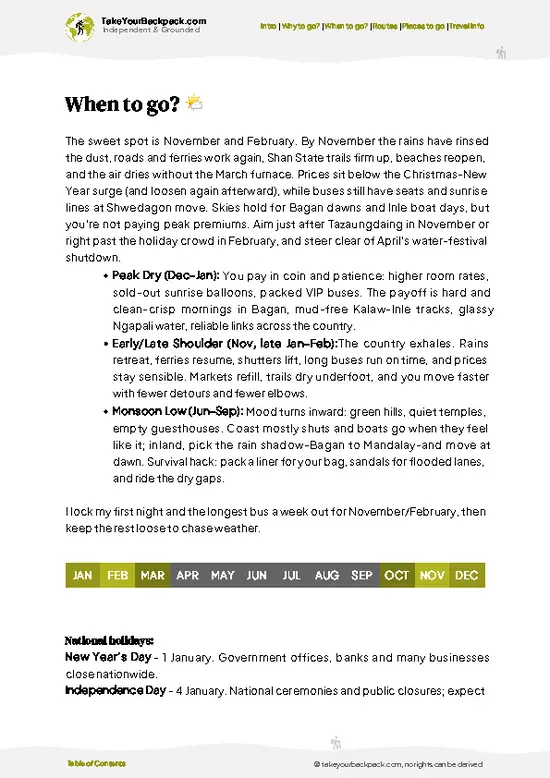
🌤️ When to go?Seasonal considerations and timing


  • Topic: Weather – The dry season from November to February is your best bet. Expect clear skies and minimal rain, perfect for trekking and exploring without mud or monsoon interruptions.

  • Topic: Temperature – Daytime highs hover around 25-30°C (77-86°F) in the dry season, cooling to 10-15°C (50-59°F) at night. Avoid the scorching hot months of April and May, where temps can spike above 35°C (95°F).

  • Topic: Daylight Hours – Around 11 to 12 hours of daylight year-round, but the dry season offers more consistent sunny mornings, ideal for early starts and long hikes.

  • Topic: Crowds – Peak tourist season aligns with the dry months, so expect more travelers and slightly higher prices, especially around Christmas and New Year.

  • Topic: Seasonal Activities – Festivals like the Taunggyi Balloon
read more 👉

  • Topic: Weather – The dry season from November to February is your best bet. Expect clear skies and minimal rain, perfect for trekking and exploring without mud or monsoon interruptions.

  • Topic: Temperature – Daytime highs hover around 25-30°C (77-86°F) in the dry season, cooling to 10-15°C (50-59°F) at night. Avoid the scorching hot months of April and May, where temps can spike above 35°C (95°F).

  • Topic: Daylight Hours – Around 11 to 12 hours of daylight year-round, but the dry season offers more consistent sunny mornings, ideal for early starts and long hikes.

  • Topic: Crowds – Peak tourist season aligns with the dry months, so expect more travelers and slightly higher prices, especially around Christmas and New Year.

  • Topic: Seasonal Activities – Festivals like the Taunggyi Balloon Festival in November add cultural depth but also bring crowds. Plan accordingly if you want to join or avoid the buzz.

  • Topic: Price Fluctuations – Accommodation and transport costs rise during the dry season’s peak. The rainy months offer bargains but come with travel hassles.


Pro-tip: Aim for the shoulder months of November or February to balance good weather, manageable crowds, and better deals—smart timing turns a trip from good to memorable.


source: climatestotravel.comJANJanuary: excellent for travelingFEBFebruary: excellent for travelingMARMarch: good for travelingAPRApril: fair for travelingMAYMay: fair for travelingJUNJune: below average for travelingJULJuly: below average for travelingAUGAugust: below average for travelingSEPSeptember: below average for travelingOCTOctober: fair for travelingNOVNovember: highly recommended for travelingDECDecember: excellent for traveling
when-to-go

✈️ The backpacker research shortcutMyanmar Travel Guide

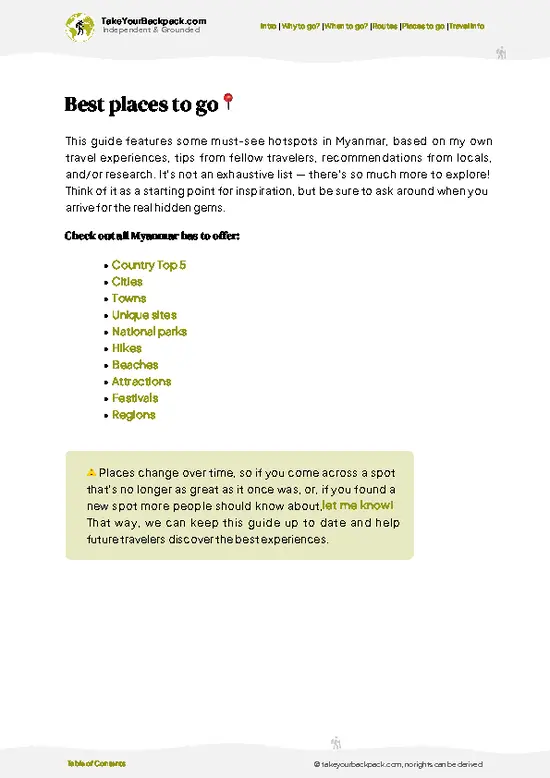
An offline-friendly backpacking guide with optimized travel routes, ranked highlights, transport advice, and the best areas to stay.
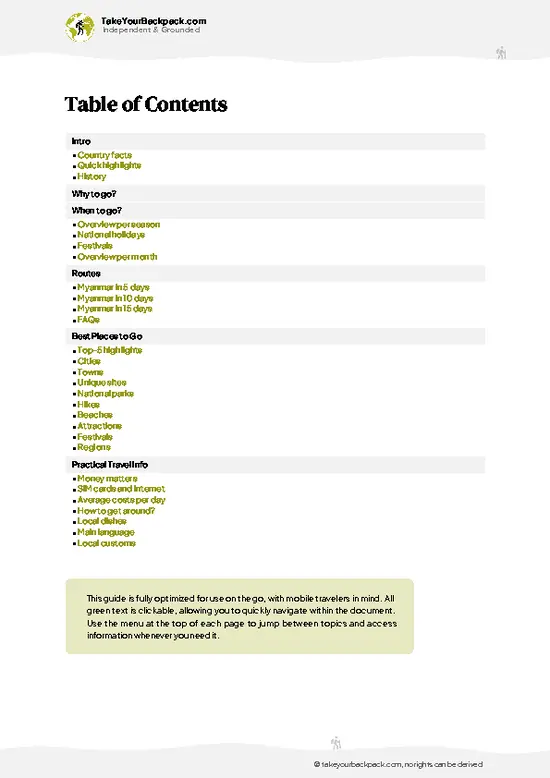
example page 0 from our offline Travel Guide for Myanmar
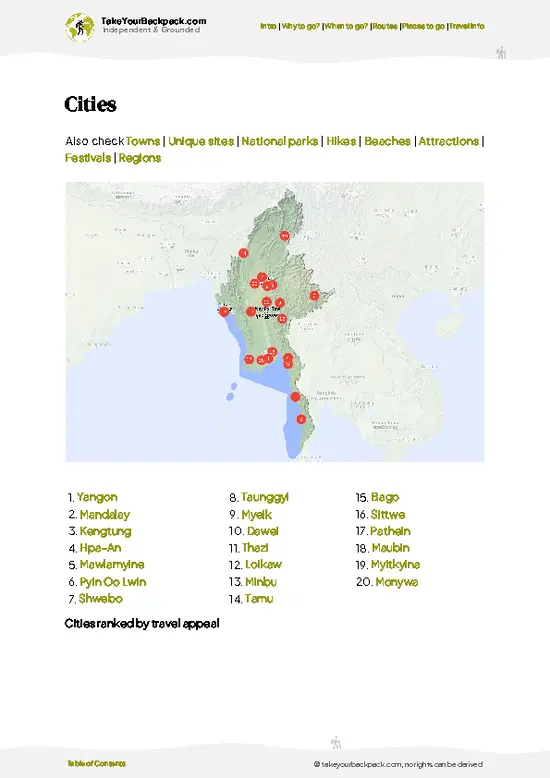
example page 1 from our offline Travel Guide for Myanmar
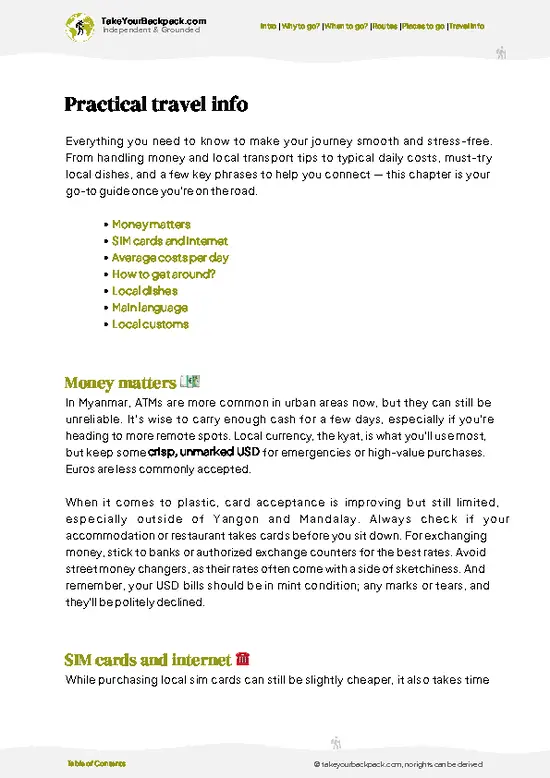
example page 2 from our offline Travel Guide for Myanmar
example page 3 from our offline Travel Guide for Myanmar
example page 4 from our offline Travel Guide for Myanmar
example page 5 from our offline Travel Guide for Myanmar
example page 6 from our offline Travel Guide for Myanmar
example page 7 from our offline Travel Guide for Myanmar
The digital guide (405 pages) contains:
110 highlights, ranked by travel appeal
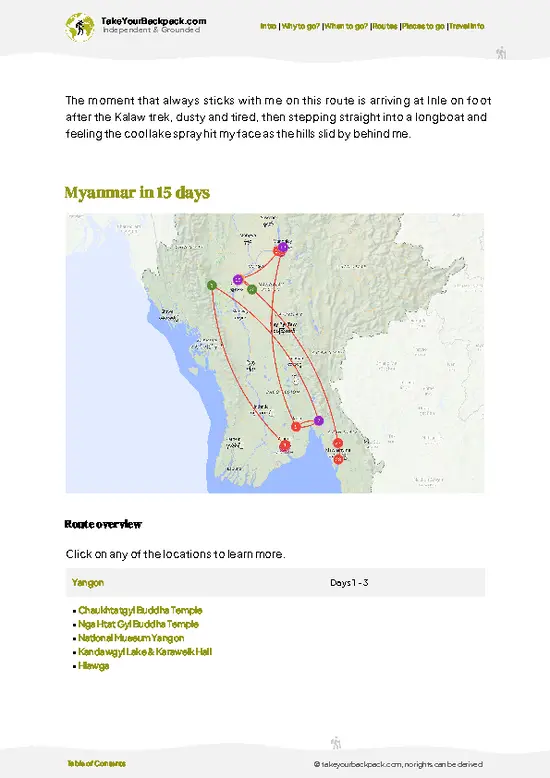
Optimized 5, 10 & 15-day travel routes
Cities, national parks, landmarks, beaches
How to get around
Offline-friendly for travel without Wi-Fi
👉 Click to see all 30+ guide features

📅 Plan smarter in minutes, not weeks
Month by month travel advice
Festivals & national holidays
Budget expectations

🗺️ Go to the right places, skip the overrated ones
Honest pros & cons of destinations
Top hikes, parks & viewpoints
Lesser-known places most travelers miss
Clear “worth it vs skip it” guidance

🛏️ Travel smoothly without rookie mistakes
Best areas to stay
Transport systems explained simply
Common scams & safety advice
SIM cards, money & practical tips

🌍 Understand the country, not just visit it
Culture & traditions
52 Essential phrases & customs
Festivals worth planning around
Traveler-friendly historical context
Insights that make places more meaningful

📱 Built for real travel conditions
Fully downloadable PDF
Works completely offline
Optimized for phone use
Useful in remote areas & buses
Everything in one place
Save weeks of stressful planning
Get instant access to your full guide. 30‑day money-back guarantee.


By proceeding you agree to our terms.
Sent to your inbox immediately after payment • 100% Secure Checkout
Best Backpacking Travel Advisor 2025 tourism awardBest Backpacking
Travel Advisor
2025
What others say about Take Your Backpack Guides:
⭐⭐⭐⭐⭐
Fantastic, amazing amount of information!
⭐⭐⭐⭐⭐
My goodness this is amazing, it's what I've been looking for hats off too you!
⭐⭐⭐⭐⭐
I think this is absolutely BRILLIANT
⭐⭐⭐⭐
Very complete and informative. It's still missing places, but I gotta to commend you
⭐⭐⭐⭐⭐
This is truly amazing, thank you, can't wait to explore it with my kids!
⭐⭐⭐⭐⭐
Awesome resource, thank you!
⭐⭐⭐⭐⭐
This is amazing! Can't wait to explore the ones I haven't seen
⭐⭐⭐⭐
I love this! Well done, great idea.
⭐⭐⭐⭐⭐
Thanks for taking the time to make this gem!
⭐⭐⭐⭐⭐
This might be the best website I've ever seen.
⭐⭐⭐⭐⭐
Congratulations, and thank you so much for your work; it's incredibly valuable.
⭐⭐⭐⭐
In all seriousness I think you did a great job pointing out the important spots
⭐⭐⭐⭐⭐
10/10 very good
⭐⭐⭐⭐⭐
As someone who's only just starting to visit regularly this is awesome, thank you.
⭐⭐⭐⭐
Thank you very much! I'm going to visit my dad, it's going to be very useful!
⭐⭐⭐⭐⭐
This is really cool! We'll be travelling for the first time and this definitely come in handy.
⭐⭐⭐⭐⭐
You are now our minister of culture, congratulations 👨‍💼
⭐⭐⭐⭐⭐
Just wanted to tell you that this is a pearl! Going to follow your recommendations.
⭐⭐⭐⭐⭐
This is so cool. I'll definitely be using the resource for my travels soon.
⭐⭐⭐⭐⭐
This is very impressive! Good work.
⭐⭐⭐⭐⭐
This is an amazing and informative site. Very well done!

🛏️ Where to stay?Best areas and accommodation options

In Muse, the best spot for backpackers is the area around the main market and the border road leading to China. This neighborhood strikes a balance between safety and social buzz, where budget travelers naturally converge. It’s not polished, but that’s the point—you’re in a working border town with a raw, authentic pulse. Hostels here are basic but plentiful, offering a chance to meet fellow adventurers without the inflated prices or tourist traps found closer to the city center. Compared to quieter residential zones, this area keeps you plugged into local life and the cross-border hustle, making … read more 👉
In Muse, the best spot for backpackers is the area around the main market and the border road leading to China. This neighborhood strikes a balance between safety and social buzz, where budget travelers naturally converge. It’s not polished, but that’s the point—you’re in a working border town with a raw, authentic pulse. Hostels here are basic but plentiful, offering a chance to meet fellow adventurers without the inflated prices or tourist traps found closer to the city center. Compared to quieter residential zones, this area keeps you plugged into local life and the cross-border hustle, making it the smartest base for solo travelers who want both connection and convenience.

🚌 Getting aroundHow to get from A to B

Muse moves like a jazz solo—sometimes tight and predictable, other times a wild riff that throws you off balance. The city’s pulse is a mix of clockwork precision and spontaneous bursts of energy, demanding you read the rhythm before you step in. If you want to win here, you need to understand the trade-offs between time, money, and comfort. Every choice nudges you closer to either a smooth ride or a chaotic scramble. Let’s break down your transit toolkit so you can play this city like a pro.


  • Walking: The cheapest and most flexible option, perfect for short hops or when you want to soak in the street-level vibe. No schedule, no cost, but expect slower pace and some uneven sidewalks.

  • City Bus: Runs from 5:30 AM to 11 PM, fares hover around $1.50. It’s slow during rush hours but covers
read more 👉
Muse moves like a jazz solo—sometimes tight and predictable, other times a wild riff that throws you off balance. The city’s pulse is a mix of clockwork precision and spontaneous bursts of energy, demanding you read the rhythm before you step in. If you want to win here, you need to understand the trade-offs between time, money, and comfort. Every choice nudges you closer to either a smooth ride or a chaotic scramble. Let’s break down your transit toolkit so you can play this city like a pro.


  • Walking: The cheapest and most flexible option, perfect for short hops or when you want to soak in the street-level vibe. No schedule, no cost, but expect slower pace and some uneven sidewalks.

  • City Bus: Runs from 5:30 AM to 11 PM, fares hover around $1.50. It’s slow during rush hours but covers most neighborhoods. Expect basic comfort and occasional crowding—your wallet will thank you.

  • Metro Line A: Operates 6 AM to midnight, $2 per ride. Fast and reliable, it slices through the city center with air-conditioned cars. Limited coverage outside downtown, so plan your last mile accordingly.

  • Shared E-Scooters: Available 24/7, pay by the minute (about $0.25/min). Great for short distances and avoiding traffic jams, but watch out for uneven pavement and occasional battery shortages.

  • Budget Taxi: Meter starts at $3, with $1 per kilometer. Faster door-to-door but pricier and subject to traffic snarls. Best when time is tight and comfort matters.

👛 Costs (as of 3 February 2026)Travel costs and budget guide for Muse

Backpacking in Muse, Myanmar, is a balancing act between modest costs and the occasional splurge for comfort or convenience. Here’s the breakdown of what you’re likely to spend daily, based on recent estimates:
  • Dorm Accommodation (High Season): Expect to pay around $6 to $10 per night. High season drives prices up as demand spikes, but you still get basic, clean dorm rooms with fan or limited AC options.
  • Dorm Accommodation (Off-Season): Prices drop to about $4 to $7. Off-season means fewer travelers, so you can negotiate or find quieter spots with similar standards.
  • Meals: Street food and local eateries dominate here. Budget around $3 to $6 per day if you stick to traditional Burmese dishes like mohinga or fried rice. Western-style meals or restaurants will push this higher.
  • Local Transport:
read more 👉
Backpacking in Muse, Myanmar, is a balancing act between modest costs and the occasional splurge for comfort or convenience. Here’s the breakdown of what you’re likely to spend daily, based on recent estimates:
  • Dorm Accommodation (High Season): Expect to pay around $6 to $10 per night. High season drives prices up as demand spikes, but you still get basic, clean dorm rooms with fan or limited AC options.
  • Dorm Accommodation (Off-Season): Prices drop to about $4 to $7. Off-season means fewer travelers, so you can negotiate or find quieter spots with similar standards.
  • Meals: Street food and local eateries dominate here. Budget around $3 to $6 per day if you stick to traditional Burmese dishes like mohinga or fried rice. Western-style meals or restaurants will push this higher.
  • Local Transport: Short tuk-tuk rides or motorbike taxis cost roughly $0.50 to $1.50 each trip. It’s cheap but factor in multiple rides if you’re hopping around town.
  • City Transport Pass: Muse doesn’t have a formal city transport pass system. Instead, budgeting for daily local transport rides is more practical.
  • Basic Activities/Entry Fees: Museums, temples, and local attractions typically charge between $1 and $3. Some sites might be free, but budget for a couple of paid entries if you want a fuller experience.
  • Miscellaneous Expenses: This covers bottled water, snacks, occasional coffee, or small souvenirs. Around $1 to $3 daily keeps you covered without surprises.

All told, a realistic daily budget for backpacking in Muse ranges from about $15 on the lean side to $25 if you lean into a bit more comfort or activity. This isn’t a place for luxury, but it rewards those who know where to spend smartly. Keep cash handy, as card payments are rare, and always have a buffer for unexpected transport or entry fees.
⚠️ Prices can change and everyone travels differently, so take this as a rough guide. Hope it helps you plan your adventure!

🚌 Day tripsEasy escapes and nearby places

Muse, Myanmar, is a strategic launchpad for day trips that blend adventure with cultural immersion. Here are some standout options that pack a punch without draining your wallet.

**Kyaing Tong**
A scenic ride of about two hours takes you to Kyaing Tong, where the hills cradle the town. This area is rich in ethnic diversity, and you can explore local markets and traditional villages. The highlight? Trekking to see the unique Akha and Lahu tribes, who offer a glimpse into their vibrant lifestyles. Budget around $10 for transport and snacks. The best time to visit is during the cooler months, from November to February. A common mistake? Skipping the early morning market, where the real local flavor comes alive.


**Pang Hseng**
Just an hour away, Pang Hseng is a hidden treasure for those … read more 👉
Muse, Myanmar, is a strategic launchpad for day trips that blend adventure with cultural immersion. Here are some standout options that pack a punch without draining your wallet.

**Kyaing Tong**
A scenic ride of about two hours takes you to Kyaing Tong, where the hills cradle the town. This area is rich in ethnic diversity, and you can explore local markets and traditional villages. The highlight? Trekking to see the unique Akha and Lahu tribes, who offer a glimpse into their vibrant lifestyles. Budget around $10 for transport and snacks. The best time to visit is during the cooler months, from November to February. A common mistake? Skipping the early morning market, where the real local flavor comes alive.


**Pang Hseng**
Just an hour away, Pang Hseng is a hidden treasure for those seeking tranquility. The lush landscapes and serene lakes are perfect for a day of hiking and picnicking. You can rent a bike for about $5 to explore the area at your own pace. Aim for the dry season, when trails are more accessible. Many first-timers overlook the local eateries, which serve delicious, authentic dishes at rock-bottom prices.


**Mong La**
A 90-minute journey leads you to Mong La, a town that feels like a different world. Known for its vibrant markets and eclectic mix of cultures, it’s a great spot to sample street food and shop for unique handicrafts. Expect to spend around $15 on transport and snacks. The best time to visit is during the dry season, but be mindful of the border regulations if you plan to venture further. A rookie mistake is not bargaining; it’s part of the experience!
Want to know what more Myanmar offers?
The Myanmar Travel Guide describes 110 highlights, from cities to national parks, from beaches to hikes

Get the Travel Guide -

🍲 FoodLocal Flavors for Backpackers

In Muse, **local cuisine** bursts with flavor. Don’t miss **Mohinga**, a savory fish soup with rice noodles, often enjoyed for breakfast. Street vendors serve it hot, with a side of crispy fritters that add crunch.

**Tea shops** are the heartbeat of the city. Sip on **Burmese tea**, a milky, sweet concoction that fuels conversations.

Eating here is casual; you’ll find locals sharing dishes at communal tables. Embrace the **sharing culture**—it’s a way to bond.

Street food is everywhere, from grilled skewers to spicy salads. Just follow the crowd; the best spots are often the busiest. Dive in, and let the flavors guide your adventure!

🛡️ SafetyScams, Hazards, and Annoyances

Muse is generally safe for backpackers, but a few situational awareness tips can enhance your experience. Stick to well-lit areas at night, especially if you’re solo; the streets can feel quiet, and a little caution goes a long way.

Watch for common scams, like inflated taxi fares or overly friendly locals offering unsolicited help—politely decline and stick to your plan. Everyday annoyances include occasional language barriers, so having a translation app handy can smooth interactions. Carry yourself confidently, and you’ll navigate Muse like a pro.

Other Burmese cities near Muse

Explore more nearby:

  • Lashio—northern hills, Chinese markets, train terminus| 118 km away
  • Myitkyina—Kachin State, Ayeyarwady headwaters, jade trade| 163 km away
  • Pyin Oo Lwin—botanical gardens, colonial mansions, cool climate| 262 km away

💡 Not sure where to go next?
Create a personalized itinerary for Myanmar including Muse and the places that fit your trip.

Generate my itinerary

👉 Discover all cities

Or checkout all Myanmar has to offer (think cities, towns, villages, national parks, hikes, beaches, festivals)
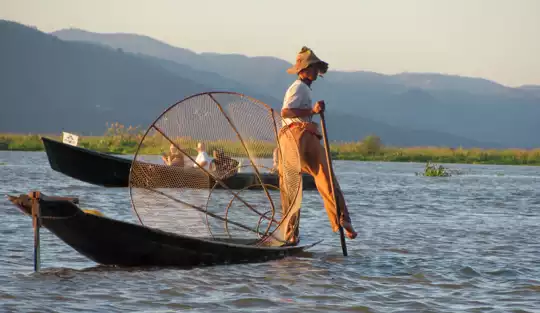
Country photo of Myanmar

We 💚 feedbackWhat to keep in mind

Muse is a fascinating crossroads of cultures, where you can sip tea with locals and soak in the vibrant street life. But be ready for limited amenities; it’s not a luxury destination. Embrace the simplicity, and you’ll find the real heart of Myanmar.

✈️ When did I visit Myanmar?
In November 2013 I backpacked through Myanmar, bringing a full stack of pristine dollar bills as they had no ATMs back then.

✍️ Help improve this page!
The information on this page is based on my own backpacking experience in Myanmar, supplemented with up-to-date research and feedback from other travelers. Travel details can change, so if you notice anything outdated or incomplete, feel free to let me know.


🙋‍♂️ Give feedback

👋 Meet the founderWho’s Behind Take Your Backpack?

Johan, backpacker and founder of TakeYourBackpackHi, I’m Johan (Netherlands 🇳🇱), the creator of TakeYourBackpack. Over the past decade, I’ve backpacked through 80+ countries across six continents, gaining extensive experience with independent travel, long-term trips, and overland routes.

This site is built on a combination of firsthand travel experience and carefully curated insights from other backpackers. Many guides are based on places I’ve personally visited, while others bring together tips, observations, and practical advice shared by trusted travelers I’ve met along the way.

The goal is to provide realistic, experience-driven guidance — not generic itineraries — so you can explore destinations with better context, clearer expectations, and more confidence.

Get full Myanmar guide •
Instant download • 110 highlights • Full Offline guide