×

Myanmar🇲🇲 | citiesPyayPyu ruins, riverbank town, ancient stupas | things to do and best time to go

Explore MinbuExplore Muse

Backpacking in Pyay
👌 Worth visitingcity ranked #21
By Johan Kruseman 🇳🇱 | Updated June 13, 2026

Everyone talks about Pyay for the UNESCO-listed Pyu Ancient Cities, but what actually matters on the ground is how slow and human the town feels between Yangon and Bagan, right on the Ayeyarwady. Pyay is low-key: a riverside promenade, Shwesandaw Pagoda glowing at dusk, a dusty museum that’s more charm than content. It’s cheap, safe-feeling, and easy enough to navigate, but thin on nightlife and other backpackers; compared with Bagan or Yangon, it’s quieter, more transitional than destination.

Discover everything you want to know in the 📖 Myanmar Travel Guide.
Safety warning

The current risk level for Myanmar is high. Check the advice before going.


Get your Myanmar guide
110 ranked highlights, routes & tips, works offline (405 pages)
Loading the map 🌍
CLICK TO FILTER
cities
towns
landmarks
national parks
hikes
beaches
attractions
festivals
regions
SHOW COUNTRY’S BESTSHOW ALL

✨ Why go?
Ranked #21 city in Myanmar
Reasons people choose to visit here

Backpackers flock to Pyay for its unique blend of basecamp value and local flavor. It’s a strategic stop on the way to more famous destinations, offering a chance to recharge without breaking the bank. The hostels here are friendly and affordable, perfect for meeting fellow travelers. You’ll find delicious street food that won’t dent your wallet, and the city’s walkability makes it easy to explore. While the nightlife is low-key, it has a charm that invites relaxation after a day of adventure. Plus, easy onward travel options mean you can seamlessly continue your journey. Pyay is ideal for those seeking a genuine experience without the tourist rush.
Want to include Pyay in your Myanmar route?
Create a personalized Myanmar itinerary that includes Pyay and the places that fit your trip — based on your travel style, budget, and available time. Get your route in seconds.

Generate my trip

💡 HighlightsTop highlights of Pyay

  • Shwesandaw Pagoda (Shwesandaw Hill) — The town’s most visible landmark: a hilltop stupa with steps, monkeys and sweeping views over the Irrawaddy at sunrise/sunset. It’s both a living pilgrimage site and the easiest place to sense Pyay’s rhythm.
  • Pyay Archaeological Museum — Small but essential: the museum houses artifacts from the Pyu period (ceramics, stone carvings, Buddha images) and gives real context to the ruins and relics you’ll see in the region.
  • Irrawaddy riverfront and Prome jetty — A working riverside where ferries, cargo dhows and fish-carrying boats come and go; great for watching river life, taking a short boat trip, and catching dramatic sunsets.
  • Myoma (Central) Market — A bustling, local market where you can try regional snacks, buy fresh produce and see everyday trading
read more 👉
  • Shwesandaw Pagoda (Shwesandaw Hill) — The town’s most visible landmark: a hilltop stupa with steps, monkeys and sweeping views over the Irrawaddy at sunrise/sunset. It’s both a living pilgrimage site and the easiest place to sense Pyay’s rhythm.
  • Pyay Archaeological Museum — Small but essential: the museum houses artifacts from the Pyu period (ceramics, stone carvings, Buddha images) and gives real context to the ruins and relics you’ll see in the region.
  • Irrawaddy riverfront and Prome jetty — A working riverside where ferries, cargo dhows and fish-carrying boats come and go; great for watching river life, taking a short boat trip, and catching dramatic sunsets.
  • Myoma (Central) Market — A bustling, local market where you can try regional snacks, buy fresh produce and see everyday trading in action—perfect for people-watching and cheap street food.
  • Old Prome colonial quarter (Strand Road area) — Walkable streets of faded colonial-era buildings, some shops and cafés; the architecture and layout tell the story of the town’s 19th-20th century past better than any guidebook paragraph.
  • Town monasteries cluster — A short wander between central monasteries reveals lacquered Buddhas, teak wood carving and monastic life. Quiet courtyards and mural-painted halls are especially rewarding in the early morning when novices are alms-walking.
  • Local tea-shop strip — Not a single landmark, but a string of honest teahouses where locals meet, play chess, and eat simple rice-and-curry plates—ideal for sampling Myanmar’s teashop culture without tourist frills.
  • Night market by the river/central area — Evenings bring a compact market selling grilled snacks, sweets and inexpensive clothing; good for a casual stroll after visiting the riverfront and a chance to try local treats.
  • Handicraft stalls and small workshops — Scattered around town you’ll find artisans selling lacquerware, woven textiles and handcrafted souvenirs; watching a small workshop at work gives a feel for local craftsmanship without the tourist prices.
  • Public parks and the city plaza — The modest municipal green spaces and plaza near the town center are where locals gather, exercise and sell snacks—great low-key spots to absorb daily life and observe local routines.
A few real day-trip highlights just outside Pyay: the ancient Pyu capital of Sri Ksetra (Taungdwingyi) for archaeology and ruins, the rural villages along the Irrawaddy for boat trips and village markets, and nearby pagoda clusters—Sri Ksetra is my personal favorite.
Spotted a mistake or missing something? Contact us.

🏘️ NeighborhoodsNeighborhood guide to Pyay

Pyay offers a unique blend of history and local life, making it a fascinating stop for backpackers. Here’s how the neighborhoods stack up:

City Center: This is the heartbeat of Pyay. It’s bustling, with street vendors and local shops. Costs are moderate, and you can find budget accommodations easily. Walkability is high, with most attractions within reach. Nightlife is low-key, perfect for winding down after a day of exploration. Ideal for short stays.

Shwe Pyi Thar: A quieter area, great for those seeking a more local vibe. It’s less touristy, which means lower prices and authentic experiences. While walkability is decent, you might need to rely on local transport for longer distances. Suitable for longer stays if you want to immerse yourself in daily life.

Near the Irrawaddy River: This … read more 👉
Pyay offers a unique blend of history and local life, making it a fascinating stop for backpackers. Here’s how the neighborhoods stack up:

City Center: This is the heartbeat of Pyay. It’s bustling, with street vendors and local shops. Costs are moderate, and you can find budget accommodations easily. Walkability is high, with most attractions within reach. Nightlife is low-key, perfect for winding down after a day of exploration. Ideal for short stays.

Shwe Pyi Thar: A quieter area, great for those seeking a more local vibe. It’s less touristy, which means lower prices and authentic experiences. While walkability is decent, you might need to rely on local transport for longer distances. Suitable for longer stays if you want to immerse yourself in daily life.

Near the Irrawaddy River: This area offers stunning views and a peaceful atmosphere. It’s a bit pricier but worth it for the scenery. Walkability is good, and you can enjoy riverside strolls. Perfect for a mix of relaxation and exploration, making it great for both short and longer visits.

⌛️ 1 dayHow to make the most of one day

Pyay, Myanmar, is a charming city that offers a blend of rich history and local culture, making it a delightful stop for any traveler. Start your day at the ancient Pyu city ruins of Sri Ksetra, where you can wander through the remnants of a civilization that thrived over a millennium ago. The early morning light casts a soft glow on the brick stupas, creating a serene atmosphere perfect for reflection.

After soaking in the history, head to the bustling local market in the heart of Pyay. Here, you can sample fresh fruits and local snacks while mingling with friendly vendors. Don’t miss the chance to try some mohinga, a traditional fish soup that’s a breakfast staple.

In the afternoon, take a leisurely stroll along the banks of the Irrawaddy River. The riverside promenade is a great spot … read more 👉
Pyay, Myanmar, is a charming city that offers a blend of rich history and local culture, making it a delightful stop for any traveler. Start your day at the ancient Pyu city ruins of Sri Ksetra, where you can wander through the remnants of a civilization that thrived over a millennium ago. The early morning light casts a soft glow on the brick stupas, creating a serene atmosphere perfect for reflection.

After soaking in the history, head to the bustling local market in the heart of Pyay. Here, you can sample fresh fruits and local snacks while mingling with friendly vendors. Don’t miss the chance to try some mohinga, a traditional fish soup that’s a breakfast staple.

In the afternoon, take a leisurely stroll along the banks of the Irrawaddy River. The riverside promenade is a great spot to relax and watch local life unfold. For a unique experience, visit the lesser-known Shwe Myat Mauk Pagoda, where you’ll find fewer tourists and a more authentic vibe.

As evening approaches, make your way to the vibrant night market. Grab some street food, like grilled skewers or fried snacks, and enjoy the lively atmosphere. Pyay may not be on everyone’s radar, but its blend of history, culture, and local charm makes it a rewarding stop.
Turn your Pyay visit into an Myanmar adventure
Build a complete Myanmar route with Pyay, hidden gems, must-see destinations, and realistic travel times included.

Generate my trip

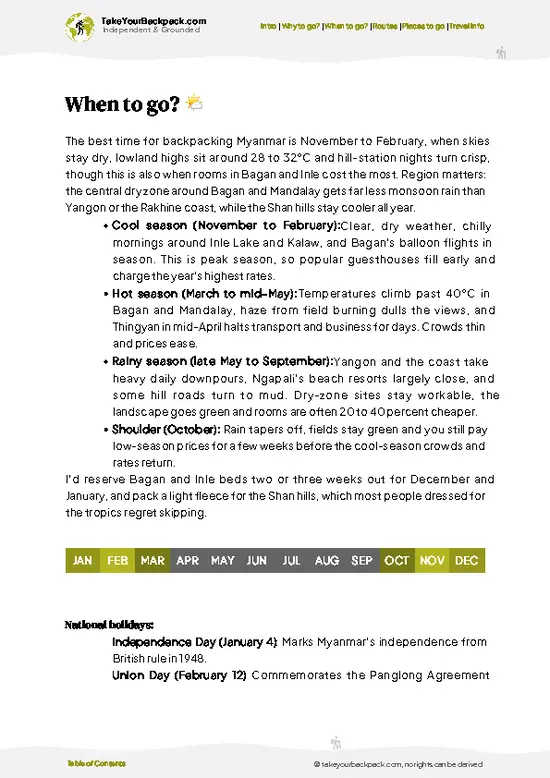
🌤️ When to go?Weather, crowds, and seasonal trade-offs


  • Weather: The dry season from November to February offers clear skies and minimal rain, perfect for trekking and exploring without mud or humidity.

  • Temperature: Expect comfortable days around 25-30°C (77-86°F) and cooler nights near 15-20°C (59-68°F), ideal for outdoor activities without overheating.

  • Daylight Hours: Roughly 11 to 12 hours of daylight during the dry season, giving you ample time to cover sights without rushing.

  • Crowds: Tourist numbers peak slightly in the dry season but remain manageable, so you get a lively atmosphere without feeling overwhelmed.

  • Seasonal Activities: Festivals like the Pyay Pagoda Festival in January add cultural depth, making timing your visit around events rewarding.

  • Price Fluctuations: Accommodation and transport costs rise modestly in peak dry months but
read more 👉

  • Weather: The dry season from November to February offers clear skies and minimal rain, perfect for trekking and exploring without mud or humidity.

  • Temperature: Expect comfortable days around 25-30°C (77-86°F) and cooler nights near 15-20°C (59-68°F), ideal for outdoor activities without overheating.

  • Daylight Hours: Roughly 11 to 12 hours of daylight during the dry season, giving you ample time to cover sights without rushing.

  • Crowds: Tourist numbers peak slightly in the dry season but remain manageable, so you get a lively atmosphere without feeling overwhelmed.

  • Seasonal Activities: Festivals like the Pyay Pagoda Festival in January add cultural depth, making timing your visit around events rewarding.

  • Price Fluctuations: Accommodation and transport costs rise modestly in peak dry months but still offer good value compared to Myanmar’s hotspots.


Pro-tip: Aim for late November to early December—weather is prime, crowds are moderate, and prices haven’t hit their peak yet.


source: climatestotravel.comJANJanuary: excellent for travelingFEBFebruary: excellent for travelingMARMarch: good for travelingAPRApril: fair for travelingMAYMay: below average for travelingJUNJune: below average for travelingJULJuly: below average for travelingAUGAugust: below average for travelingSEPSeptember: fair for travelingOCTOctober: good for travelingNOVNovember: highly recommended for travelingDECDecember: highly recommended for traveling
when-to-go

✈️ The backpacker research shortcutMyanmar Travel Guide

An offline-friendly backpacking guide with optimized travel routes, ranked highlights, transport advice, and the best areas to stay.
example page 0 from our offline Travel Guide for Myanmar
example page 1 from our offline Travel Guide for Myanmar
example page 2 from our offline Travel Guide for Myanmar
example page 3 from our offline Travel Guide for Myanmar
example page 4 from our offline Travel Guide for Myanmar
example page 5 from our offline Travel Guide for Myanmar
example page 6 from our offline Travel Guide for Myanmar
example page 7 from our offline Travel Guide for Myanmar
The digital guide (405 pages) contains:
110 highlights, ranked by travel appeal
Optimized 5, 10 & 15-day travel routes
Cities, national parks, landmarks, beaches
How to get around
Offline-friendly for travel without Wi-Fi
👉 Click to see all 30+ guide features

📅 Plan smarter in minutes, not weeks
Month by month travel advice
Festivals & national holidays
Budget expectations

🗺️ Go to the right places, skip the overrated ones
Honest pros & cons of destinations
Top hikes, parks & viewpoints
Lesser-known places most travelers miss
Clear “worth it vs skip it” guidance

🛏️ Travel smoothly without rookie mistakes
Best areas to stay
Transport systems explained simply
Common scams & safety advice
SIM cards, money & practical tips

🌍 Understand the country, not just visit it
Culture & traditions
52 Essential phrases & customs
Festivals worth planning around
Traveler-friendly historical context
Insights that make places more meaningful

📱 Built for real travel conditions
Fully downloadable PDF
Works completely offline
Optimized for phone use
Useful in remote areas & buses
Everything in one place
Save weeks of stressful planning
Get instant access to your full guide. 30‑day money-back guarantee.


By proceeding you agree to our terms.
Sent to your inbox immediately after payment • 100% Secure Checkout
Best Backpacking Travel Advisor 2025 tourism awardBest Backpacking
Travel Advisor
2025
What others say about Take Your Backpack Guides:
⭐⭐⭐⭐⭐
Fantastic, amazing amount of information!
⭐⭐⭐⭐⭐
My goodness this is amazing, it's what I've been looking for hats off too you!
⭐⭐⭐⭐⭐
I think this is absolutely BRILLIANT
⭐⭐⭐⭐
Very complete and informative. It's still missing places, but I gotta to commend you
⭐⭐⭐⭐⭐
This is truly amazing, thank you, can't wait to explore it with my kids!
⭐⭐⭐⭐⭐
Awesome resource, thank you!
⭐⭐⭐⭐⭐
This is amazing! Can't wait to explore the ones I haven't seen
⭐⭐⭐⭐
I love this! Well done, great idea.
⭐⭐⭐⭐⭐
Thanks for taking the time to make this gem!
⭐⭐⭐⭐⭐
This might be the best website I've ever seen.
⭐⭐⭐⭐⭐
Congratulations, and thank you so much for your work; it's incredibly valuable.
⭐⭐⭐⭐
In all seriousness I think you did a great job pointing out the important spots
⭐⭐⭐⭐⭐
10/10 very good
⭐⭐⭐⭐⭐
As someone who's only just starting to visit regularly this is awesome, thank you.
⭐⭐⭐⭐
Thank you very much! I'm going to visit my dad, it's going to be very useful!
⭐⭐⭐⭐⭐
This is really cool! We'll be travelling for the first time and this definitely come in handy.
⭐⭐⭐⭐⭐
You are now our minister of culture, congratulations 👨‍💼
⭐⭐⭐⭐⭐
Just wanted to tell you that this is a pearl! Going to follow your recommendations.
⭐⭐⭐⭐⭐
This is so cool. I'll definitely be using the resource for my travels soon.
⭐⭐⭐⭐⭐
This is very impressive! Good work.
⭐⭐⭐⭐⭐
This is an amazing and informative site. Very well done!

🛏️ Where to stay?Best areas to stay in Myanmar

In Pyay, the best spot for backpackers is the area around the city center, especially near the main market and along the riverfront. This zone balances safety with a lively, social atmosphere where budget travelers naturally converge. It’s compact enough to explore on foot, which saves time and money, and you’ll find several hostels and guesthouses catering to solo adventurers. Compared to the quieter outskirts or more residential neighborhoods, this central hub offers a pulse of local life without sacrificing comfort or convenience. It’s where you trade a bit of peace for connection and ease—perfect … read more 👉
In Pyay, the best spot for backpackers is the area around the city center, especially near the main market and along the riverfront. This zone balances safety with a lively, social atmosphere where budget travelers naturally converge. It’s compact enough to explore on foot, which saves time and money, and you’ll find several hostels and guesthouses catering to solo adventurers. Compared to the quieter outskirts or more residential neighborhoods, this central hub offers a pulse of local life without sacrificing comfort or convenience. It’s where you trade a bit of peace for connection and ease—perfect for making friends and diving into the city’s rhythm.

🚌 Getting aroundHow to get from A to B

Pyay moves at its own pace—neither frantic nor sluggish, but a steady rhythm that blends old-school routine with bursts of spontaneous hustle. Here, the clock isn’t king, but neither is chaos. You’ll find a city where schedules exist but bend around the flow of daily life, where locals know when to wait and when to push forward. As a budget traveler, mastering Pyay’s transit means reading this rhythm, balancing your time, money, and comfort like a chess player plotting several moves ahead.


  • Walking: The most reliable and cost-free way to absorb Pyay’s character. Streets are manageable on foot, but expect uneven sidewalks and occasional dust. Ideal for short hops and soaking in local life without spending a kyat.

  • Local Buses: Running roughly from 6:00 AM to 7:00 PM, fares hover around
read more 👉
Pyay moves at its own pace—neither frantic nor sluggish, but a steady rhythm that blends old-school routine with bursts of spontaneous hustle. Here, the clock isn’t king, but neither is chaos. You’ll find a city where schedules exist but bend around the flow of daily life, where locals know when to wait and when to push forward. As a budget traveler, mastering Pyay’s transit means reading this rhythm, balancing your time, money, and comfort like a chess player plotting several moves ahead.


  • Walking: The most reliable and cost-free way to absorb Pyay’s character. Streets are manageable on foot, but expect uneven sidewalks and occasional dust. Ideal for short hops and soaking in local life without spending a kyat.

  • Local Buses: Running roughly from 6:00 AM to 7:00 PM, fares hover around 200-500 kyat. They’re slow, often crowded, and not the cleanest, but unbeatable for budget and authentic immersion.

  • Shared Trishaws: These motorized three-wheelers dart through traffic with surprising agility. Expect to pay 1,000-1,500 kyat for short trips. Faster than walking or buses, but comfort is minimal and negotiating fares is part of the game.

  • Private Taxis: A step up in comfort and speed, with fares starting around 5,000 kyat. Not common for budget travelers but useful if you’re pressed for time or carrying heavy gear.

  • Long-Distance Buses: For trips outside Pyay, these depart early morning and late afternoon, costing 10,000-15,000 kyat depending on destination. They balance time and money but sacrifice comfort—expect basic seating and frequent stops.

👛 Costs (as of 3 February 2026)How expensive it really is

Backpacking in Pyay, Myanmar, offers a clear trade-off between simplicity and immersion, with costs that reflect the city’s modest pace and local lifestyle.
  • Dorm Accommodation (High Season): Expect to pay around $6 to $10 per night. High season sees a slight bump due to increased demand, but prices remain very reasonable compared to bigger cities.
  • Dorm Accommodation (Off-Season): Prices drop to about $4 to $7 per night. Fewer travelers mean better bargaining power and quieter hostels.
  • Meals: Street food and local eateries dominate here. Budget around $2 to $5 per meal. You can eat well on $6 to $12 daily if you stick to local dishes like mohinga or fried rice.
  • Local Transport: Short rides on motorbike taxis or local buses cost roughly $0.20 to $0.50 each. It’s cheap but expect basic conditions
read more 👉
Backpacking in Pyay, Myanmar, offers a clear trade-off between simplicity and immersion, with costs that reflect the city’s modest pace and local lifestyle.
  • Dorm Accommodation (High Season): Expect to pay around $6 to $10 per night. High season sees a slight bump due to increased demand, but prices remain very reasonable compared to bigger cities.
  • Dorm Accommodation (Off-Season): Prices drop to about $4 to $7 per night. Fewer travelers mean better bargaining power and quieter hostels.
  • Meals: Street food and local eateries dominate here. Budget around $2 to $5 per meal. You can eat well on $6 to $12 daily if you stick to local dishes like mohinga or fried rice.
  • Local Transport: Short rides on motorbike taxis or local buses cost roughly $0.20 to $0.50 each. It’s cheap but expect basic conditions and variable schedules.
  • City Transport Pass: Pyay doesn’t have a formal city transport pass system. Most travelers rely on individual rides or walking, which keeps costs low but requires time investment.
  • Basic Activities/Entry Fees: Visiting pagodas, museums, or local markets usually costs between $1 and $3. These small fees add up but offer authentic cultural insights.
  • Miscellaneous Expenses: Budget $1 to $3 for bottled water, snacks, or occasional treats. Internet cafes or SIM cards are cheap, around $1 to $2 for basic data packages.

Total daily costs for backpacking in Pyay typically range from $15 to $30, depending on your comfort level and how much you move around. The city rewards those who embrace its slower rhythm and local pace, trading off luxury for a genuine, low-cost experience that feels like stepping into everyday Myanmar life.


source: myanmar.travel
⚠️ Prices can change and everyone travels differently, so take this as a rough guide. Hope it helps you plan your adventure!

🚌 Day tripsExploring the surroundings

Pyay, Myanmar, is a backpacker’s dream base for day trips, offering a mix of culture, history, and stunning landscapes without breaking the bank.

**Bago**
Just a two-hour bus ride from Pyay, Bago is a treasure trove of ancient pagodas and vibrant local life. The Shwethalyaung Pagoda, with its massive reclining Buddha, is a must-see. Don’t miss the local market for a taste of authentic Burmese snacks. Budget around $5 for transport and snacks. The best time to visit is during the cooler months, from November to February. A common mistake is rushing through the sights; take your time to soak in the atmosphere.
👉 Explore Bago

**Kyaikhtiyo (Golden Rock)**
About three hours away, Kyaikhtiyo is famous for its precariously balanced Golden Rock. The journey involves a scenic truck ride followed … read more 👉
Pyay, Myanmar, is a backpacker’s dream base for day trips, offering a mix of culture, history, and stunning landscapes without breaking the bank.

**Bago**
Just a two-hour bus ride from Pyay, Bago is a treasure trove of ancient pagodas and vibrant local life. The Shwethalyaung Pagoda, with its massive reclining Buddha, is a must-see. Don’t miss the local market for a taste of authentic Burmese snacks. Budget around $5 for transport and snacks. The best time to visit is during the cooler months, from November to February. A common mistake is rushing through the sights; take your time to soak in the atmosphere.
👉 Explore Bago

**Kyaikhtiyo (Golden Rock)**
About three hours away, Kyaikhtiyo is famous for its precariously balanced Golden Rock. The journey involves a scenic truck ride followed by a short hike. This spiritual site is a pilgrimage for many locals, making it a unique cultural experience. Expect to spend around $10 for transport and entry fees. The best time to go is early morning to avoid the crowds. Many first-timers underestimate the hike; wear comfortable shoes!


**Thayekhittaya (Sri Kshetra)**
Just an hour from Pyay, this archaeological site is often overlooked but offers a glimpse into ancient Pyu civilization. Explore the ruins and enjoy the peaceful surroundings. Entry is free, and you can easily spend a few hours wandering. The dry season from November to March is ideal for visiting. A common pitfall is not bringing enough water; it can get hot!


**Mandalay**
Though a bit further at about four hours, Mandalay is worth the trip for its rich history and vibrant street life. Visit the Mandalay Hill for panoramic views and the Mahamuni Pagoda for its stunning Buddha statue. Budget around $15 for transport and snacks. The best time to visit is during the cooler months. Many backpackers underestimate the time needed to explore; plan for a full day!
👉 Explore Mandalay
Want to know what more Myanmar offers?
The Myanmar Travel Guide describes 110 highlights, from cities to national parks, from beaches to hikes

Get the Travel Guide -

🍲 FoodEating & Drinking in Pyay

In **Pyay**, the food scene is a delightful adventure. Start with **Mohinga**, a fragrant fish soup served with rice noodles, often enjoyed for breakfast. The **tea leaf salad** is another must-try, bursting with crunch and tang, showcasing the region’s unique flavors.

Street food stalls are your best bet for authentic bites. Picture yourself savoring **grilled skewers** or crispy **samosas** while mingling with locals. Markets buzz with energy, offering everything from fresh fruits to sweet treats like **shwe yin aye**, a coconut-based dessert that cools you down.

When it comes to drinks, don’t miss the local **tea shops**. Here, sipping tea is a social ritual. Expect to share stories over cups of strong, sweet tea, a perfect way to connect with the community. Embrace the casual vibe; it’s all about enjoying the moment.

🛡️ SafetyScams, Hazards, and Annoyances

In Pyay, safety is generally solid, but a few situational awareness tips can enhance your experience. Stick to well-lit areas at night, especially around the bus station and market, where activity can dwindle. Solo travelers should blend in; avoid drawing attention with flashy gear.

Common scams are rare, but be cautious of overly friendly locals offering unsolicited help—sometimes, it leads to a request for payment. Everyday annoyances include aggressive tuk-tuk drivers; negotiate fares upfront to avoid surprises. Carry yourself confidently, and you’ll navigate Pyay smoothly, enjoying its charm without unnecessary hassle.

Other Burmese cities near Pyay

Explore more nearby:

  • Taungoo—old city walls, teak forests, elephant camps| 124 km away
  • Hinthada—Irrawaddy delta, rice fields, market town| 134 km away
  • Magway—oil fields, Irrawaddy bluffs, golden pagodas| 150 km away

💡 Not sure where to go next?
Create a personalized itinerary for Myanmar including Pyay and the places that fit your trip.

Generate my itinerary

👉 Discover all cities

Or checkout all Myanmar has to offer (think cities, towns, villages, national parks, hikes, beaches, festivals)
Country photo of Myanmar

We 💚 feedbackIs it worth it?

Pyay offers a rare glimpse into Myanmar’s history with its ancient pagodas and the serene Irrawaddy River. You’ll feel the pulse of local life here. Just know that the infrastructure isn’t always up to par; expect some bumps in the road. Embrace the charm, but pack your patience.

✈️ When did I visit Myanmar?
In November 2013 I backpacked through Myanmar, bringing a full stack of pristine dollar bills as they had no ATMs back then.

✍️ Help improve this page!
The information on this page is based on my own backpacking experience in Myanmar, supplemented with up-to-date research and feedback from other travelers. Travel details can change, so if you notice anything outdated or incomplete, feel free to let me know.


🙋‍♂️ Give feedback

👋 Meet the founderWho’s Behind Take Your Backpack?

Johan, backpacker and founder of TakeYourBackpackHi, I’m Johan (Netherlands 🇳🇱), the creator of TakeYourBackpack. Over the past decade, I’ve backpacked through 80+ countries across six continents, gaining extensive experience with independent travel, long-term trips, and overland routes.

This site is built on a combination of firsthand travel experience and carefully curated insights from other backpackers. Many guides are based on places I’ve personally visited, while others bring together tips, observations, and practical advice shared by trusted travelers I’ve met along the way.

The goal is to provide realistic, experience-driven guidance — not generic itineraries — so you can explore destinations with better context, clearer expectations, and more confidence.

Get full Myanmar guide •
Instant download • 110 highlights • Full Offline guide