×

Myanmar🇲🇲 | attractionsU Bein Bridgeteakwood span, lakeside silhouettes, local crossings | things to do and best time to go

Explore Kyaiktiyo Pagoda (Golden Rock)Explore Ananda Temple

Backpacking in U Bein Bridge
🌟 Highlightattraction ranked #7
By Johan Kruseman 🇳🇱 | Updated June 4, 2026

Your sandals slap against teak planks, the wood warm from a day’s worth of sun and footsteps. A fisherman in a battered longyi glides past below, his paddle slicing the lake with a sound sharper than the chatter of selfie-hunters crowding the rails. This is U Bein Bridge, stretching across Taungthaman Lake just outside Mandalay, Myanmar’s old royal capital. Here’s the truth: U Bein is not some tranquil, lost-in-time relic. It’s a magnet for tour groups and phone-wielding influencers, especially at sunset, and you’ll pay more for a boat ride than you’d expect in rural Myanmar. But the bridge’s real magic isn’t in the photos—it’s in the pulse of local life: monks in saffron robes, kids skipping school, and the way the whole structure creaks with history. Compared to Bagan’s temples or Inle Lake’s floating gardens, U Bein is raw, chaotic, and utterly alive. If you want a postcard, look elsewhere. If you want to feel Myanmar’s heartbeat, walk the bridge at dawn.

Discover everything you want to know in the 📖 Myanmar Travel Guide.
Safety warning

The current risk level for Myanmar is high. Check the advice before going.


Get your Myanmar guide
110 ranked highlights, routes & tips, works offline (405 pages)
Loading the map 🌍
CLICK TO FILTER
cities
towns
landmarks
national parks
hikes
beaches
attractions
festivals
regions
SHOW COUNTRY’S BESTSHOW ALL

✨ Why go?
Ranked #7 attraction in Myanmar
The unique appeal for travelers

U Bein Bridge is not just another photo op plastered across Instagram feeds—it’s a raw slice of Myanmar’s soul. Yes, it’s crowded, especially at sunset, and yes, you’ll pay a small fee to cross, but that’s part of the deal. This isn’t a theme park; it’s the world’s longest teakwood bridge, built in the 1850s, still holding strong. Walking its uneven planks, you’re literally stepping through history, surrounded by locals going about their day—fishermen, monks, kids on scooters. The bridge’s iconic status isn’t hype; it’s a living, breathing artery connecting communities and stories. For backpackers, it’s a milestone on the route through Myanmar’s heartland, a place where the effort to get here pays off in spades. The adrenaline comes from balancing on those narrow beams, the reward is the quiet … read more 👉
U Bein Bridge is not just another photo op plastered across Instagram feeds—it’s a raw slice of Myanmar’s soul. Yes, it’s crowded, especially at sunset, and yes, you’ll pay a small fee to cross, but that’s part of the deal. This isn’t a theme park; it’s the world’s longest teakwood bridge, built in the 1850s, still holding strong. Walking its uneven planks, you’re literally stepping through history, surrounded by locals going about their day—fishermen, monks, kids on scooters. The bridge’s iconic status isn’t hype; it’s a living, breathing artery connecting communities and stories. For backpackers, it’s a milestone on the route through Myanmar’s heartland, a place where the effort to get here pays off in spades. The adrenaline comes from balancing on those narrow beams, the reward is the quiet moments when the crowds thin and the golden light hits just right. Skip it, and you miss a genuine encounter with a country that’s still unfolding beyond the tourist gloss.
Want to include U Bein Bridge in your Myanmar route?
Create a personalized Myanmar itinerary that includes U Bein Bridge and the places that fit your trip — based on your travel style, budget, and available time. Get your route in seconds.

Generate my trip

💡 HighlightsKey sights and experiences for travelers

1. Walking the Full Span at Sunrise
Forget the Instagram sunset shot for a second. The real magic is in the early morning, when the bridge is mostly empty except for local monks, fishermen, and the odd insomniac traveler. The teak planks creak underfoot, the air is cool, and you get a front-row seat to daily life on Taungthaman Lake. This is the only time you’ll feel the bridge belongs to you, not the selfie-stick brigade.


2. People-Watching: Monks, Market Vendors, and Schoolkids
U Bein Bridge isn’t just a photo op—it’s a living, breathing shortcut for hundreds of locals. You’ll see crimson-robed monks on their morning alms rounds, schoolchildren in crisp uniforms, and vendors balancing baskets of fruit on their heads. The bridge is a parade of Mandalay’s humanity, and the best entertainment … read more 👉
1. Walking the Full Span at Sunrise
Forget the Instagram sunset shot for a second. The real magic is in the early morning, when the bridge is mostly empty except for local monks, fishermen, and the odd insomniac traveler. The teak planks creak underfoot, the air is cool, and you get a front-row seat to daily life on Taungthaman Lake. This is the only time you’ll feel the bridge belongs to you, not the selfie-stick brigade.


2. People-Watching: Monks, Market Vendors, and Schoolkids
U Bein Bridge isn’t just a photo op—it’s a living, breathing shortcut for hundreds of locals. You’ll see crimson-robed monks on their morning alms rounds, schoolchildren in crisp uniforms, and vendors balancing baskets of fruit on their heads. The bridge is a parade of Mandalay’s humanity, and the best entertainment is just standing still and letting the world pass by.


3. Hiring a Rowboat for the Water-Level View
Yes, you’ll pay a bit more than the locals, and yes, the boatmen know exactly how to pose you for that classic shot. But here’s the kicker: from the water, the bridge’s 1.2 kilometers of weathered teak look like a procession of ancient sentinels. At sunset, the silhouettes are dramatic, but even midday, you get a sense of the bridge’s improbable, rickety grandeur. My personal favorite—there’s nothing like drifting under those spindly legs and realizing just how much history is holding you up.


4. Sampling Street Food at the Bridge’s Ends
Skip the overpriced tourist snacks in Mandalay proper. At either end of the bridge, you’ll find stalls selling grilled fish, tamarind flakes, and sticky rice cakes. The flavors are bold, the prices are local, and the vendors are quick with a joke or a story if you linger. Eating here is a crash course in Myanmar’s snack culture, minus the Instagram polish.


5. Watching the Fishermen’s Ballet
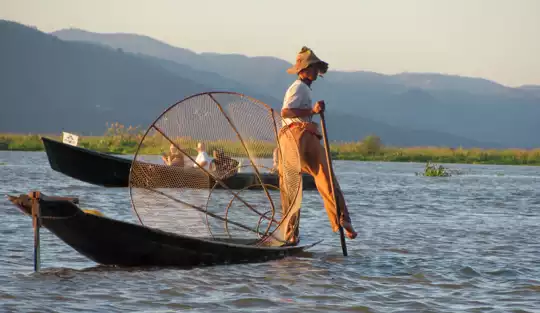
At dawn and dusk, fishermen wade into the shallows, casting nets with a choreography that’s part work, part performance art. No staged show—just real people making a living, silhouetted against the water. It’s hypnotic, and a reminder that the bridge is more than a backdrop; it’s the artery of a working community.
Spotted a mistake or missing something? Contact us.

Things to do near U Bein Bridge

Ratings based on Tripadvisor reviews. When you book through this link, you support our work at no extra cost to you.

🌤️ When to go?Weather, crowds, and seasonal trade-offs


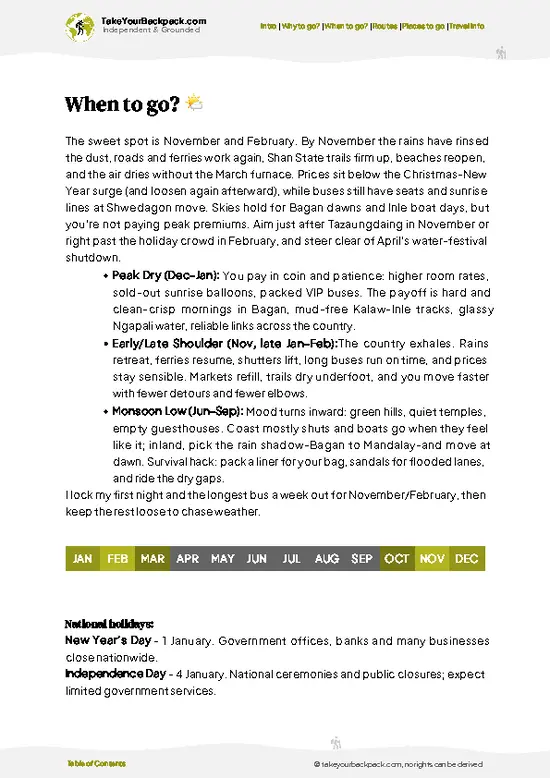
  • Topic: Weather – The dry season from November to February is your best bet. Expect clear skies and minimal rain, unlike the monsoon months of June to September when the bridge can be soggy and slippery.

  • Topic: Temperature – November to February brings cooler temps, hovering around 20-25°C (68-77°F). Avoid the scorching heat of March to May, where it can spike to 35°C (95°F) or more, making sunset views less enjoyable.

  • Topic: Daylight Hours – Daylight is fairly consistent year-round, about 11-12 hours. But the sun sets earlier in December and January, so plan your visit to catch the golden hour before dusk.

  • Topic: Crowds – Peak tourist season aligns with the dry, cooler months. Expect more visitors from November through February, especially around sunset. If you want fewer people,
read more 👉

  • Topic: Weather – The dry season from November to February is your best bet. Expect clear skies and minimal rain, unlike the monsoon months of June to September when the bridge can be soggy and slippery.

  • Topic: Temperature – November to February brings cooler temps, hovering around 20-25°C (68-77°F). Avoid the scorching heat of March to May, where it can spike to 35°C (95°F) or more, making sunset views less enjoyable.

  • Topic: Daylight Hours – Daylight is fairly consistent year-round, about 11-12 hours. But the sun sets earlier in December and January, so plan your visit to catch the golden hour before dusk.

  • Topic: Crowds – Peak tourist season aligns with the dry, cooler months. Expect more visitors from November through February, especially around sunset. If you want fewer people, shoulder months like October or March work better.

  • Topic: Seasonal Activities – The dry season allows locals to gather on the bridge for evening strolls and fishing, offering authentic interactions. Monsoon months see fewer locals and more empty, moody scenes but less vibrancy.

  • Topic: Price Fluctuations – Accommodation and transport costs rise during peak season (Nov-Feb). Booking ahead is crucial. Off-season offers better deals but comes with the risk of rain disrupting plans.


Pro-tip: Aim for late November or early December—cool, dry, and just before the crowds hit their peak. You’ll get the magic without the madness.


source: climatestotravel.comJANJanuary: excellent for travelingFEBFebruary: excellent for travelingMARMarch: good for travelingAPRApril: fair for travelingMAYMay: fair for travelingJUNJune: below average for travelingJULJuly: below average for travelingAUGAugust: below average for travelingSEPSeptember: below average for travelingOCTOctober: good for travelingNOVNovember: excellent for travelingDECDecember: excellent for traveling
when-to-go

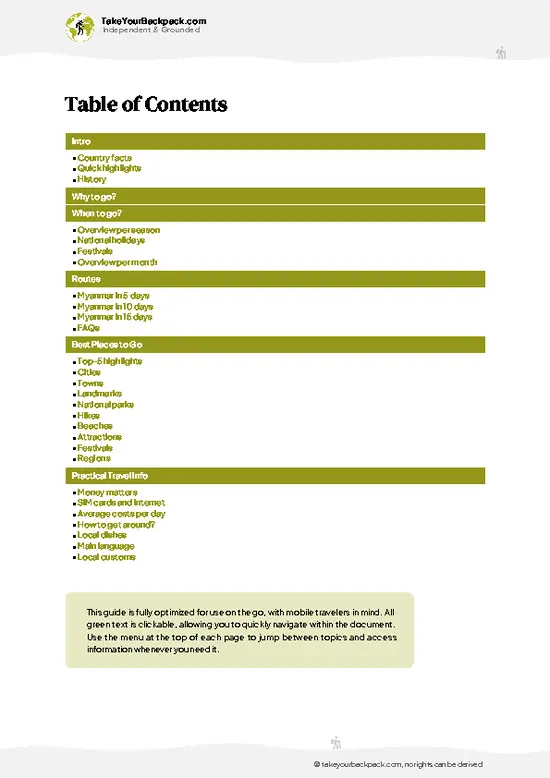
✈️ The backpacker research shortcutMyanmar Travel Guide

An offline-friendly backpacking guide with optimized travel routes, ranked highlights, transport advice, and the best areas to stay.
example page 0 from our offline Travel Guide for Myanmar
example page 1 from our offline Travel Guide for Myanmar
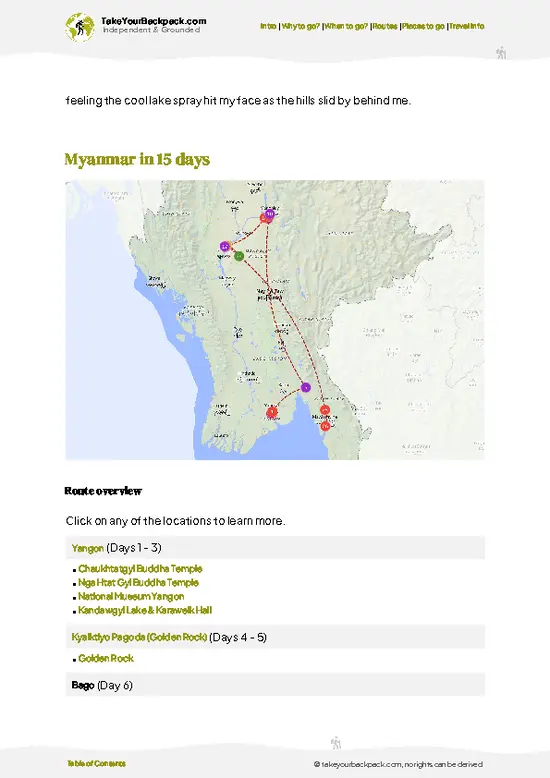
example page 2 from our offline Travel Guide for Myanmar
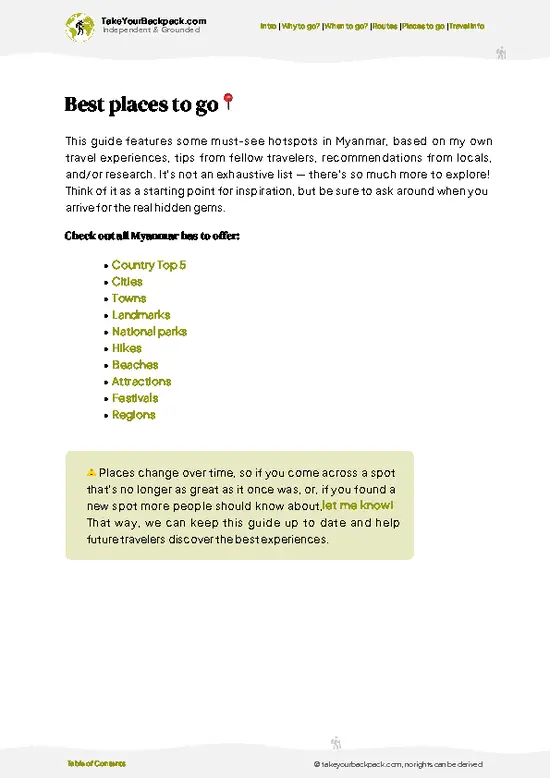
example page 3 from our offline Travel Guide for Myanmar
example page 4 from our offline Travel Guide for Myanmar
example page 5 from our offline Travel Guide for Myanmar
example page 6 from our offline Travel Guide for Myanmar
example page 7 from our offline Travel Guide for Myanmar
The digital guide (405 pages) contains:
110 highlights, ranked by travel appeal
Optimized 5, 10 & 15-day travel routes
Cities, national parks, landmarks, beaches
How to get around
Offline-friendly for travel without Wi-Fi
👉 Click to see all 30+ guide features

📅 Plan smarter in minutes, not weeks
Month by month travel advice
Festivals & national holidays
Budget expectations

🗺️ Go to the right places, skip the overrated ones
Honest pros & cons of destinations
Top hikes, parks & viewpoints
Lesser-known places most travelers miss
Clear “worth it vs skip it” guidance

🛏️ Travel smoothly without rookie mistakes
Best areas to stay
Transport systems explained simply
Common scams & safety advice
SIM cards, money & practical tips

🌍 Understand the country, not just visit it
Culture & traditions
52 Essential phrases & customs
Festivals worth planning around
Traveler-friendly historical context
Insights that make places more meaningful

📱 Built for real travel conditions
Fully downloadable PDF
Works completely offline
Optimized for phone use
Useful in remote areas & buses
Everything in one place
Save weeks of stressful planning
Get instant access to your full guide. 30‑day money-back guarantee.


By proceeding you agree to our terms.
Sent to your inbox immediately after payment • 100% Secure Checkout
Best Backpacking Travel Advisor 2025 tourism awardBest Backpacking
Travel Advisor
2025
What others say about Take Your Backpack Guides:
⭐⭐⭐⭐⭐
Fantastic, amazing amount of information!
⭐⭐⭐⭐⭐
My goodness this is amazing, it's what I've been looking for hats off too you!
⭐⭐⭐⭐⭐
I think this is absolutely BRILLIANT
⭐⭐⭐⭐
Very complete and informative. It's still missing places, but I gotta to commend you
⭐⭐⭐⭐⭐
This is truly amazing, thank you, can't wait to explore it with my kids!
⭐⭐⭐⭐⭐
Awesome resource, thank you!
⭐⭐⭐⭐⭐
This is amazing! Can't wait to explore the ones I haven't seen
⭐⭐⭐⭐
I love this! Well done, great idea.
⭐⭐⭐⭐⭐
Thanks for taking the time to make this gem!
⭐⭐⭐⭐⭐
This might be the best website I've ever seen.
⭐⭐⭐⭐⭐
Congratulations, and thank you so much for your work; it's incredibly valuable.
⭐⭐⭐⭐
In all seriousness I think you did a great job pointing out the important spots
⭐⭐⭐⭐⭐
10/10 very good
⭐⭐⭐⭐⭐
As someone who's only just starting to visit regularly this is awesome, thank you.
⭐⭐⭐⭐
Thank you very much! I'm going to visit my dad, it's going to be very useful!
⭐⭐⭐⭐⭐
This is really cool! We'll be travelling for the first time and this definitely come in handy.
⭐⭐⭐⭐⭐
You are now our minister of culture, congratulations 👨‍💼
⭐⭐⭐⭐⭐
Just wanted to tell you that this is a pearl! Going to follow your recommendations.
⭐⭐⭐⭐⭐
This is so cool. I'll definitely be using the resource for my travels soon.
⭐⭐⭐⭐⭐
This is very impressive! Good work.
⭐⭐⭐⭐⭐
This is an amazing and informative site. Very well done!

🛏️ Where to stay?Best areas and accommodation options

The ’U Bein Bridge’ scene is often sold as this serene, timeless snapshot of Myanmar, but let’s cut through the postcard-perfect hype. Yes, it’s crowded—especially at sunset when every tourist bus and local photographer converges. It’s not a quiet, solitary stroll; it’s a bustling, lively hub where vendors, monks, and tourists jostle for the best view. That said, the real magic isn’t just the bridge itself but the life pulsing around it: fishermen casting nets, kids darting between teak pillars, and the way the light fractures over the water.

For backpackers, the best places to stay are in the … read more 👉
The ’U Bein Bridge’ scene is often sold as this serene, timeless snapshot of Myanmar, but let’s cut through the postcard-perfect hype. Yes, it’s crowded—especially at sunset when every tourist bus and local photographer converges. It’s not a quiet, solitary stroll; it’s a bustling, lively hub where vendors, monks, and tourists jostle for the best view. That said, the real magic isn’t just the bridge itself but the life pulsing around it: fishermen casting nets, kids darting between teak pillars, and the way the light fractures over the water.

For backpackers, the best places to stay are in the nearby town of Amarapura. It’s a short bike or tuk-tuk ride from the bridge, which means you can dodge the sunset crush by arriving early or late. Amarapura offers a safe, laid-back vibe with plenty of guesthouses and small eateries where you’ll meet fellow travelers without the tourist trap feel of bigger cities. It’s social enough to swap stories but chill enough to recharge. Staying here puts you right in the thick of local life, with markets and temples that don’t get the same Instagram spotlight but deliver the authentic Myanmar experience.

👛 Costs (as of 25 January 2026)Typical daily expenses

Access to U Bein Bridge is free. Boat rides on Taungthaman Lake range from €3 to €15, depending on duration and type. Horse cart tours around the lake cost between €7 and €15. Transportation from Mandalay to the bridge by taxi is approximately €7 to €10.
⚠️ Prices can change and everyone travels differently, so take this as a rough guide. Hope it helps you plan your adventure!

Other Burmese attractions near U Bein Bridge

Explore more nearby:


💡 Not sure where to go next?
Create a personalized itinerary for Myanmar including U Bein Bridge and the places that fit your trip.

Generate my itinerary

👉 Discover all attractions

Or checkout all Myanmar has to offer (think cities, towns, villages, national parks, hikes, beaches, festivals)
Country photo of Myanmar

We 💚 feedbackIs it worth it?

U Bein Bridge is a spectacle, no doubt—walking its ancient teak planks at sunset feels like stepping into a living postcard. But don’t kid yourself: it’s packed with tourists and local vendors hawking souvenirs, which can dilute the vibe. Still, if you time it right and soak in the slow, rhythmic flow of daily life on the bridge, you’ll find a raw, human moment that no photo can capture.

✈️ When did I visit Myanmar?
In November 2013 I backpacked through Myanmar, bringing a full stack of pristine dollar bills as they had no ATMs back then.

✍️ Help improve this page!
The information on this page is based on my own backpacking experience in Myanmar, supplemented with up-to-date research and feedback from other travelers. Travel details can change, so if you notice anything outdated or incomplete, feel free to let me know.


🙋‍♂️ Give feedback

👋 Meet the founderWho’s Behind Take Your Backpack?

Johan, backpacker and founder of TakeYourBackpackHi, I’m Johan (Netherlands 🇳🇱), the creator of TakeYourBackpack. Over the past decade, I’ve backpacked through 80+ countries across six continents, gaining extensive experience with independent travel, long-term trips, and overland routes.

This site is built on a combination of firsthand travel experience and carefully curated insights from other backpackers. Many guides are based on places I’ve personally visited, while others bring together tips, observations, and practical advice shared by trusted travelers I’ve met along the way.

The goal is to provide realistic, experience-driven guidance — not generic itineraries — so you can explore destinations with better context, clearer expectations, and more confidence.

Get full Myanmar guide •
Instant download • 110 highlights • Full Offline guide