×

Myanmar🇲🇲 | attractionsKuthodaw Pagodamarble slabs, Buddhist scriptures, white stupas | things to do and best time to go

Explore Htilominlo TempleExplore Mandalay Palace

Backpacking in Kuthodaw Pagoda
👍 Recommendedattraction ranked #8
By Johan Kruseman 🇳🇱 | Updated June 2, 2026

Forget the Instagram myth: Kuthodaw Pagoda is not some serene, secret temple where you’ll meditate alone at sunrise. It’s right in the heart of Mandalay, Myanmar’s second city, and yes—there are tour groups, selfie sticks, and the occasional wedding shoot clogging the marble walkways. But here’s the real magic: you’re standing among 729 whitewashed stupas, each housing a slab of the world’s largest book. The scale is absurd, almost playful, and the history is dense enough to slow even the most jaded traveler. It’s cheap to enter, easy to reach by tuk-tuk, and the vibe is more local than you’d expect—families picnicking, monks chatting, kids darting between pagodas. Compared to Bagan’s postcard temples, Kuthodaw feels lived-in, less mystical but more human, and that’s its real draw.

Discover everything you want to know in the 📖 Myanmar Travel Guide.
Safety warning

The current risk level for Myanmar is high. Check the advice before going.


Get your Myanmar guide
110 ranked highlights, routes & tips, works offline (405 pages)
Loading the map 🌍
CLICK TO FILTER
cities
towns
landmarks
national parks
hikes
beaches
attractions
festivals
regions
SHOW COUNTRY’S BESTSHOW ALL

✨ Why go?
Ranked #8 attraction in Myanmar
The unique appeal for travelers

Kuthodaw Pagoda isn’t just another shiny stop on Myanmar’s tourist map—it’s the place where history hits you like a freight train. Sure, it’s famous for housing the world’s largest book, but that’s just the surface. What really hooks backpackers is the raw cultural weight packed into those 729 marble slabs, each etched with Buddhist scriptures. This isn’t a quick photo op; it’s a deep dive into centuries of devotion and craftsmanship that demands your attention. Yes, the site can get busy, especially midday, but the crowds thin out early morning or late afternoon, letting you soak in the quiet hum of monks chanting and the faint scent of incense. It’s a milestone on any Myanmar route because it connects you to the country’s spiritual backbone and offers a rare chance to witness living history … read more 👉
Kuthodaw Pagoda isn’t just another shiny stop on Myanmar’s tourist map—it’s the place where history hits you like a freight train. Sure, it’s famous for housing the world’s largest book, but that’s just the surface. What really hooks backpackers is the raw cultural weight packed into those 729 marble slabs, each etched with Buddhist scriptures. This isn’t a quick photo op; it’s a deep dive into centuries of devotion and craftsmanship that demands your attention. Yes, the site can get busy, especially midday, but the crowds thin out early morning or late afternoon, letting you soak in the quiet hum of monks chanting and the faint scent of incense. It’s a milestone on any Myanmar route because it connects you to the country’s spiritual backbone and offers a rare chance to witness living history without the usual tourist gloss. If you’re after something that’s more than just a pretty pagoda, Kuthodaw delivers on authenticity and awe.
Want to include Kuthodaw Pagoda in your Myanmar route?
Create a personalized Myanmar itinerary that includes Kuthodaw Pagoda and the places that fit your trip — based on your travel style, budget, and available time. Get your route in seconds.

Generate my trip

💡 HighlightsKey sights and experiences for travelers

The World’s Largest Book
Let’s get this out of the way: yes, you’ll see a lot of people snapping selfies in front of the white stupas. But the real headline here isn’t the Instagrammable geometry—it’s the fact that you’re standing inside the world’s largest book. Each of the 729 marble slabs, housed in its own mini-pagoda, is inscribed with Buddhist scriptures. This isn’t just a Guinness record; it’s a feat of devotion and logistics that dwarfs any coffee-table tome you’ve ever seen.


The Sea of White Stupas
From a distance, the rows of small, white shrines look almost like a chessboard built for giants. Up close, the repetition is hypnotic. It’s not just about the photo (though, yes, it’s wildly photogenic)—it’s the sense of scale and order, the way the sunlight bounces off the whitewash, … read more 👉
The World’s Largest Book
Let’s get this out of the way: yes, you’ll see a lot of people snapping selfies in front of the white stupas. But the real headline here isn’t the Instagrammable geometry—it’s the fact that you’re standing inside the world’s largest book. Each of the 729 marble slabs, housed in its own mini-pagoda, is inscribed with Buddhist scriptures. This isn’t just a Guinness record; it’s a feat of devotion and logistics that dwarfs any coffee-table tome you’ve ever seen.


The Sea of White Stupas
From a distance, the rows of small, white shrines look almost like a chessboard built for giants. Up close, the repetition is hypnotic. It’s not just about the photo (though, yes, it’s wildly photogenic)—it’s the sense of scale and order, the way the sunlight bounces off the whitewash, and the quiet that settles in the spaces between. If you want to feel small in the best possible way, walk the grid at sunrise before the tour buses roll in.


The Main Pagoda (Kuthodaw Stupa)
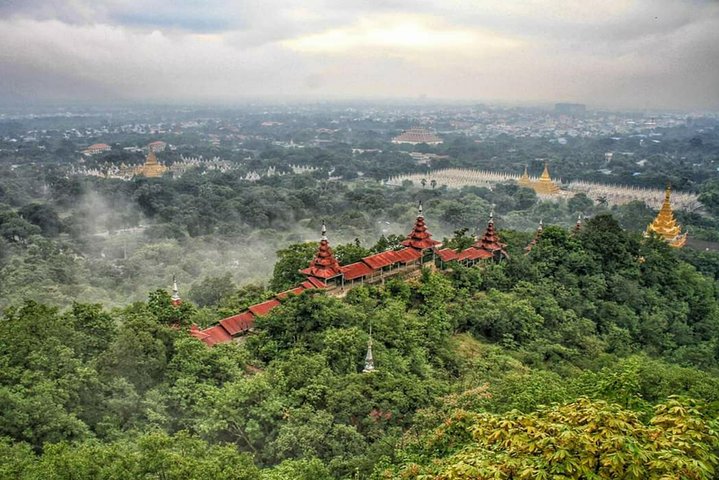
The gold stupa at the center is the anchor of the whole complex. It’s not the biggest or the oldest in Myanmar, but it’s the heart of the site. Locals come here to pray, light incense, and leave offerings. If you want to see the living, breathing side of Buddhism—kids playing, monks chanting, families picnicking—this is where it happens.


Inscription Reading (Personal Favorite)
Here’s where the magic happens for me: standing in front of a marble slab, tracing the ancient Pali script with your eyes, and realizing that every single one of these stones was carved by hand. You won’t read it unless you’re a scholar, but you’ll feel the weight of centuries. It’s humbling and oddly thrilling—proof that devotion can be monumental, literal, and deeply human.


Local Vendors and Snack Stalls
Skip the overpriced trinkets and go for the snacks. The vendors outside the gates sell everything from fresh coconut to sticky rice cakes. It’s not a curated food market—it’s real, it’s messy, and it’s where you’ll get a taste of Mandalay’s everyday life.
Spotted a mistake or missing something? Contact us.
Things to do around Kuthodaw Pagoda

Ratings based on Tripadvisor reviews. When you book through this link, you support our work at no extra cost to you.

🌤️ When to go?Choosing the right time of year


  • Weather: The dry season from November to February is your best bet. Expect clear skies and minimal rain, unlike the monsoon months of June to September when downpours can wash out your plans.

  • Temperature: November to February offers mild days around 25-30°C (77-86°F), perfect for wandering without melting. The hot season from March to May can push temps above 35°C (95°F), turning exploration into a sweat fest.

  • Daylight Hours: Roughly 11 to 12 hours of daylight year-round, but the dry season’s clearer skies make mornings and evenings feel longer and more inviting for temple visits.

  • Crowds: Peak tourist season aligns with the dry months, so expect more visitors at Kuthodaw Pagoda from November through February. If you want fewer people, shoulder months like October or March are quieter
read more 👉

  • Weather: The dry season from November to February is your best bet. Expect clear skies and minimal rain, unlike the monsoon months of June to September when downpours can wash out your plans.

  • Temperature: November to February offers mild days around 25-30°C (77-86°F), perfect for wandering without melting. The hot season from March to May can push temps above 35°C (95°F), turning exploration into a sweat fest.

  • Daylight Hours: Roughly 11 to 12 hours of daylight year-round, but the dry season’s clearer skies make mornings and evenings feel longer and more inviting for temple visits.

  • Crowds: Peak tourist season aligns with the dry months, so expect more visitors at Kuthodaw Pagoda from November through February. If you want fewer people, shoulder months like October or March are quieter but still manageable.

  • Seasonal Activities: The full moon festivals around November add cultural depth but also crowds. Visiting outside these times means fewer distractions and more space to soak in the atmosphere.

  • Price Fluctuations: Accommodation and flights spike during the dry season, especially December and January. Budget travelers might save by aiming for October or February when prices dip slightly.


Pro-tip: Hit Kuthodaw Pagoda early morning in the dry season to dodge crowds and catch the soft light that brings the marble inscriptions to life.


source: climatestotravel.comJANJanuary: excellent for travelingFEBFebruary: highly recommended for travelingMARMarch: good for travelingAPRApril: fair for travelingMAYMay: fair for travelingJUNJune: below average for travelingJULJuly: below average for travelingAUGAugust: below average for travelingSEPSeptember: below average for travelingOCTOctober: highly recommended for travelingNOVNovember: excellent for travelingDECDecember: excellent for traveling
when-to-go

✈️ The backpacker research shortcutMyanmar Travel Guide

An offline-friendly backpacking guide with optimized travel routes, ranked highlights, transport advice, and the best areas to stay.
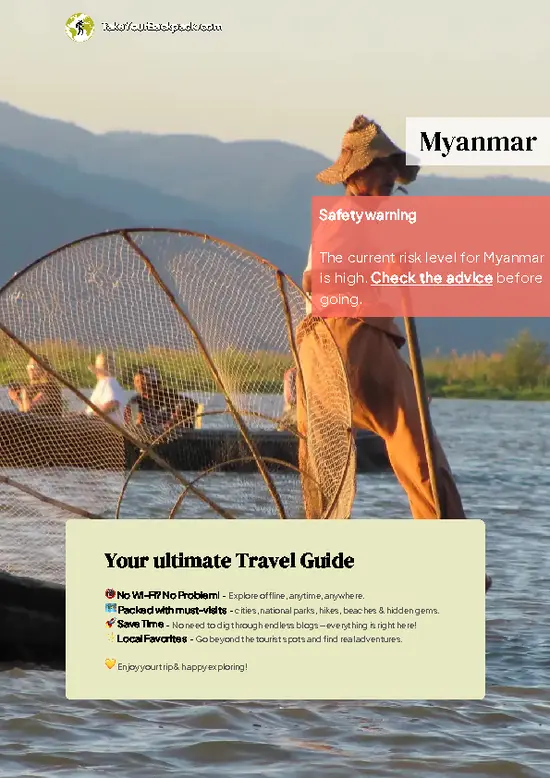
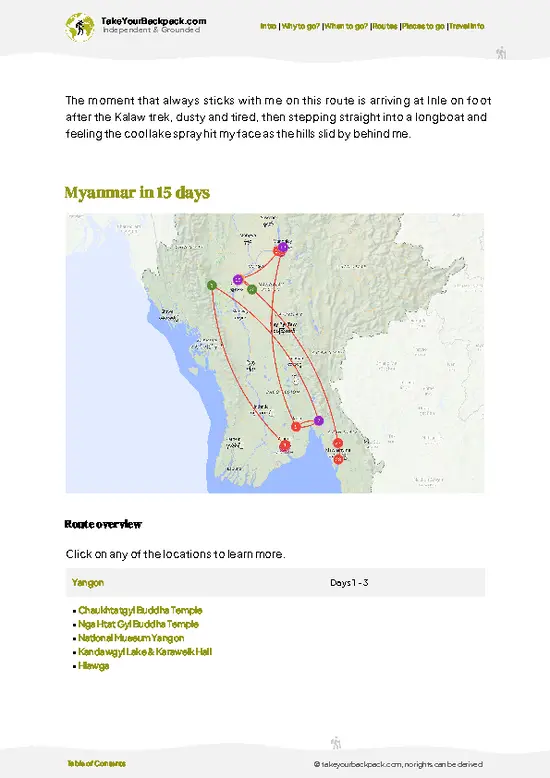
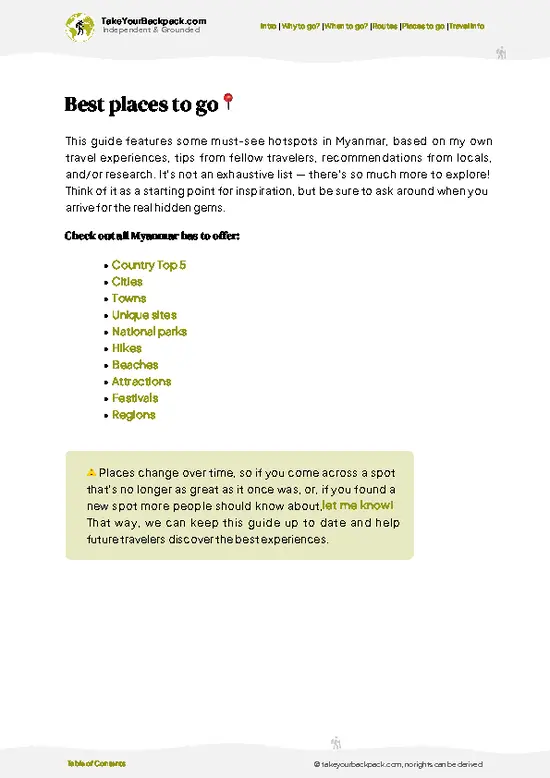
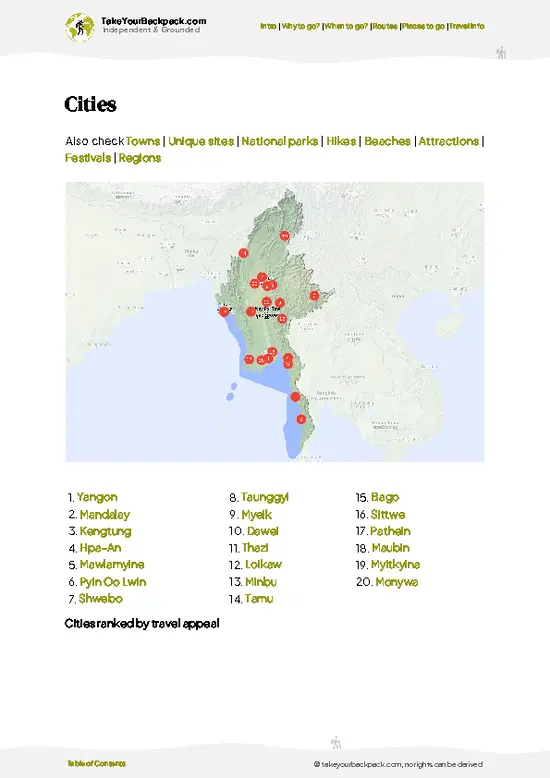
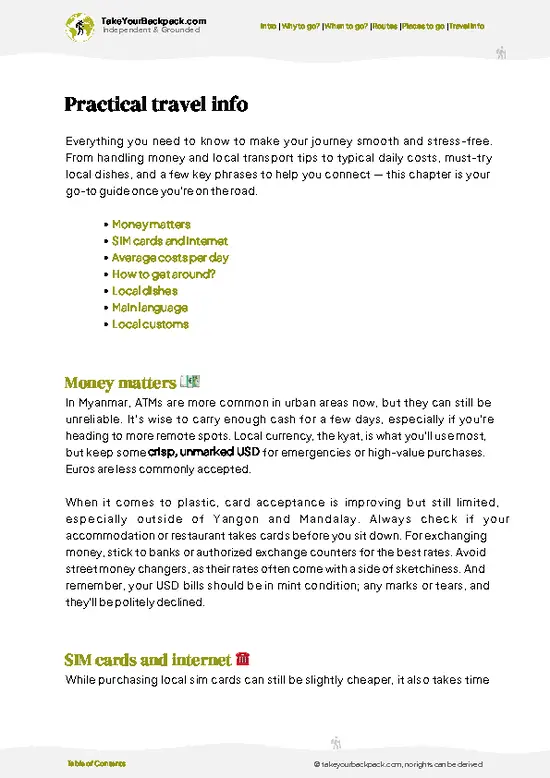
example page 0 from our offline Travel Guide for Myanmar
example page 1 from our offline Travel Guide for Myanmar
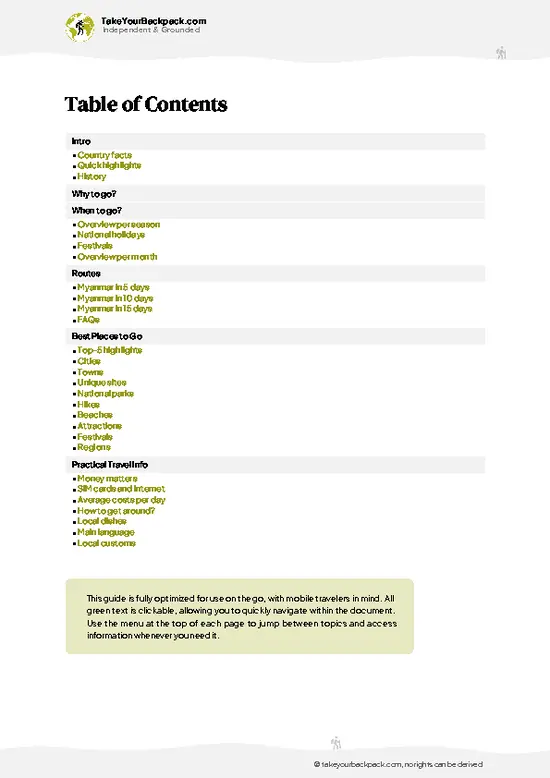
example page 2 from our offline Travel Guide for Myanmar
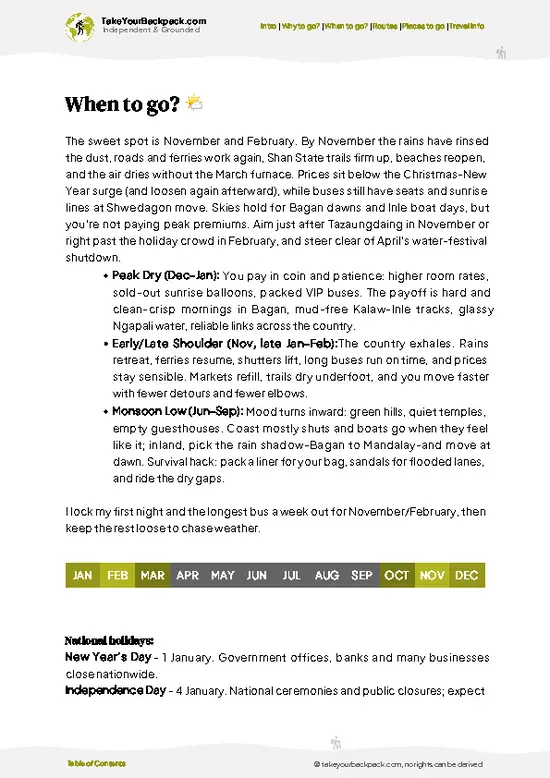
example page 3 from our offline Travel Guide for Myanmar
example page 4 from our offline Travel Guide for Myanmar
example page 5 from our offline Travel Guide for Myanmar
example page 6 from our offline Travel Guide for Myanmar
example page 7 from our offline Travel Guide for Myanmar
The digital guide (405 pages) contains:
110 highlights, ranked by travel appeal
Optimized 5, 10 & 15-day travel routes
Cities, national parks, landmarks, beaches
How to get around
Offline-friendly for travel without Wi-Fi
👉 Click to see all 30+ guide features

📅 Plan smarter in minutes, not weeks
Month by month travel advice
Festivals & national holidays
Budget expectations

🗺️ Go to the right places, skip the overrated ones
Honest pros & cons of destinations
Top hikes, parks & viewpoints
Lesser-known places most travelers miss
Clear “worth it vs skip it” guidance

🛏️ Travel smoothly without rookie mistakes
Best areas to stay
Transport systems explained simply
Common scams & safety advice
SIM cards, money & practical tips

🌍 Understand the country, not just visit it
Culture & traditions
52 Essential phrases & customs
Festivals worth planning around
Traveler-friendly historical context
Insights that make places more meaningful

📱 Built for real travel conditions
Fully downloadable PDF
Works completely offline
Optimized for phone use
Useful in remote areas & buses
Everything in one place
Save weeks of stressful planning
Get instant access to your full guide. 30‑day money-back guarantee.


By proceeding you agree to our terms.
Sent to your inbox immediately after payment • 100% Secure Checkout
Best Backpacking Travel Advisor 2025 tourism awardBest Backpacking
Travel Advisor
2025
What others say about Take Your Backpack Guides:
⭐⭐⭐⭐⭐
Fantastic, amazing amount of information!
⭐⭐⭐⭐⭐
My goodness this is amazing, it's what I've been looking for hats off too you!
⭐⭐⭐⭐⭐
I think this is absolutely BRILLIANT
⭐⭐⭐⭐
Very complete and informative. It's still missing places, but I gotta to commend you
⭐⭐⭐⭐⭐
This is truly amazing, thank you, can't wait to explore it with my kids!
⭐⭐⭐⭐⭐
Awesome resource, thank you!
⭐⭐⭐⭐⭐
This is amazing! Can't wait to explore the ones I haven't seen
⭐⭐⭐⭐
I love this! Well done, great idea.
⭐⭐⭐⭐⭐
Thanks for taking the time to make this gem!
⭐⭐⭐⭐⭐
This might be the best website I've ever seen.
⭐⭐⭐⭐⭐
Congratulations, and thank you so much for your work; it's incredibly valuable.
⭐⭐⭐⭐
In all seriousness I think you did a great job pointing out the important spots
⭐⭐⭐⭐⭐
10/10 very good
⭐⭐⭐⭐⭐
As someone who's only just starting to visit regularly this is awesome, thank you.
⭐⭐⭐⭐
Thank you very much! I'm going to visit my dad, it's going to be very useful!
⭐⭐⭐⭐⭐
This is really cool! We'll be travelling for the first time and this definitely come in handy.
⭐⭐⭐⭐⭐
You are now our minister of culture, congratulations 👨‍💼
⭐⭐⭐⭐⭐
Just wanted to tell you that this is a pearl! Going to follow your recommendations.
⭐⭐⭐⭐⭐
This is so cool. I'll definitely be using the resource for my travels soon.
⭐⭐⭐⭐⭐
This is very impressive! Good work.
⭐⭐⭐⭐⭐
This is an amazing and informative site. Very well done!

🛏️ Where to stay?Where staying makes the most sense

If you’re backpacking near Kuthodaw Pagoda, forget the postcard-perfect image of serene solitude. This spot draws crowds—locals, monks, tourists—especially around sunrise and sunset. It’s not a secret hideaway, and the area reflects that. But here’s the real deal: staying close means you’re in the thick of Mandalay’s pulse, where the city’s rhythm feels raw and alive.

The best zones for backpackers are the neighborhoods just west and northwest of the pagoda. These areas strike a balance between safety and social buzz. You’ll find guesthouses and budget stays packed with solo travelers and small … read more 👉
If you’re backpacking near Kuthodaw Pagoda, forget the postcard-perfect image of serene solitude. This spot draws crowds—locals, monks, tourists—especially around sunrise and sunset. It’s not a secret hideaway, and the area reflects that. But here’s the real deal: staying close means you’re in the thick of Mandalay’s pulse, where the city’s rhythm feels raw and alive.

The best zones for backpackers are the neighborhoods just west and northwest of the pagoda. These areas strike a balance between safety and social buzz. You’ll find guesthouses and budget stays packed with solo travelers and small groups, making it easy to swap stories or find a walking buddy. Streets here are lively but manageable, with local markets and street food stalls that don’t gouge your wallet.

It’s not luxury, and it’s not quiet. But if you want to experience Mandalay’s daily grind and spiritual heartbeat without the tourist bubble, this is where you want to be. The vibe is gritty, real, and surprisingly welcoming—exactly what backpacking should be.

👛 Costs (as of 23 January 2026)How expensive it really is

The entrance fee for Kuthodaw Pagoda is approximately USD5 per person. Additionally, there is a Mandalay Zone Fee of USD10, which covers multiple attractions in the area, including Kuthodaw Pagoda. ([anjmyanmar.com](https://anjmyanmar.com/entrance-fees/?utm_source=openai))
⚠️ Prices can change and everyone travels differently, so take this as a rough guide. Hope it helps you plan your adventure!

Other Burmese attractions near Kuthodaw Pagoda

Explore more nearby:


💡 Not sure where to go next?
Create a personalized itinerary for Myanmar including Kuthodaw Pagoda and the places that fit your trip.

Generate my itinerary

👉 Discover all attractions

Or checkout all Myanmar has to offer (think cities, towns, villages, national parks, hikes, beaches, festivals)
Country photo of Myanmar

We 💚 feedbackFinal thoughts on visiting Kuthodaw Pagoda

Kuthodaw Pagoda isn’t just another shiny temple on your Myanmar checklist—it’s the world’s largest book, carved in stone, and that alone demands a moment of awe. But brace yourself: the crowds can feel like a swarm, especially midday, which dulls the quiet reverence you might hope for. Go early, soak in the weight of history, and you’ll find a rare kind of peace that’s worth the hustle.

✈️ When did I visit Myanmar?
In November 2013 I backpacked through Myanmar, bringing a full stack of pristine dollar bills as they had no ATMs back then.

✍️ Help improve this page!
The information on this page is based on my own backpacking experience in Myanmar, supplemented with up-to-date research and feedback from other travelers. Travel details can change, so if you notice anything outdated or incomplete, feel free to let me know.


🙋‍♂️ Give feedback

👋 Meet the founderWho’s Behind Take Your Backpack?

Johan, backpacker and founder of TakeYourBackpackHi, I’m Johan (Netherlands 🇳🇱), the creator of TakeYourBackpack. Over the past decade, I’ve backpacked through 80+ countries across six continents, gaining extensive experience with independent travel, long-term trips, and overland routes.

This site is built on a combination of firsthand travel experience and carefully curated insights from other backpackers. Many guides are based on places I’ve personally visited, while others bring together tips, observations, and practical advice shared by trusted travelers I’ve met along the way.

The goal is to provide realistic, experience-driven guidance — not generic itineraries — so you can explore destinations with better context, clearer expectations, and more confidence.

Get full Myanmar guide •
Instant download • 110 highlights • Full Offline guide