v2.webp)
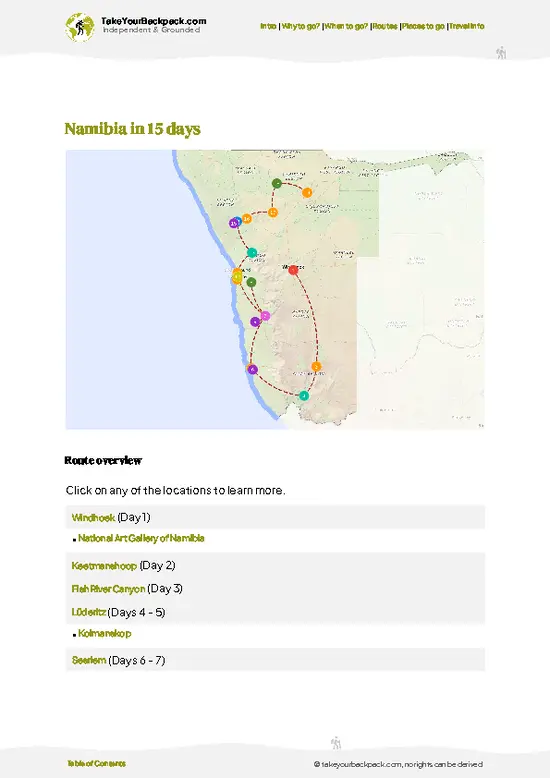
- White Lady Panel: The mountain’s best-known painting shows a pale, elongated procession of figures in a rock shelter. The central figure carries a bow and a cup. Early interpreters thought it showed a European woman, but the figure is generally read as a male San or a shaman. It is the reason most people come.
- Tsisab Ravine Walk: A sandy riverbed trail of roughly 40 minutes each way leads between huge granite boulders to the shelter. Expect dry heat, bouncing light and the occasional lizard flicking across hot stone.
- Königstein Summit: At 2,573 meters, this is Namibia’s highest point. Climbing it is a demanding multi-day route with little water, aimed at experienced hikers with a guide.
- Maack Shelter Area: Named for Reinhard Maack, who photographed the White Lady in 1917 and drew wider attention
- White Lady Panel: The mountain’s best-known painting shows a pale, elongated procession of figures in a rock shelter. The central figure carries a bow and a cup. Early interpreters thought it showed a European woman, but the figure is generally read as a male San or a shaman. It is the reason most people come.
- Tsisab Ravine Walk: A sandy riverbed trail of roughly 40 minutes each way leads between huge granite boulders to the shelter. Expect dry heat, bouncing light and the occasional lizard flicking across hot stone.
- Königstein Summit: At 2,573 meters, this is Namibia’s highest point. Climbing it is a demanding multi-day route with little water, aimed at experienced hikers with a guide.
- Maack Shelter Area: Named for Reinhard Maack, who photographed the White Lady in 1917 and drew wider attention to the mountain. The surrounding overhang gives you context on how the site came to be recorded.
- Other Gallery Panels: Beyond the White Lady, panels show oryx, giraffes, kudu and human figures in ochre and white pigment. Your guide will point out details that are easy to miss on the rock face, such as faded layers painted over older work.
- Numas Ravine: A quieter valley on the Brandberg massif with its own cluster of paintings and a more remote feel than the busy Tsisab gorge. It suits those who want fewer people and a longer walk.
- Brandberg Desert Views: The mountain’s red granite glows against the pale Namib plains, and desert-adapted elephants and other wildlife roam the surrounding dry riverbeds. Pull over on the gravel approach for photos.
Spotted a mistake or missing something? Contact us.

 Best Backpacking
.jpg) Hi, I’m Johan (Netherlands 🇳🇱), the creator of TakeYourBackpack. Over the past 3 decades, I’ve backpacked through 90+ countries across six continents, gaining extensive experience with independent travel, long-term trips, and overland routes.
Hi, I’m Johan (Netherlands 🇳🇱), the creator of TakeYourBackpack. Over the past 3 decades, I’ve backpacked through 90+ countries across six continents, gaining extensive experience with independent travel, long-term trips, and overland routes.