×

Namibia🇳🇦 | best landmarksYour Guide to the 6 Best landmarks in Namibia

Landmarks in Namibia are mostly landscapes, not buildings: dunes that glow orange at dawn, salt pans that crack underfoot, rock engravings baked in dry heat. The south and central coast offers red dunes and ghostly mining relics, with gravel roads and fine dust in your teeth. The north brings wildlife-rich pans and cooler, greener country, but distances stretch and park fees add up. The northwest is empty, wind-scoured and thinly signed. Independent travelers and backpackers face long gaps between towns, so access and cost shape the experience more than the sights themselves. Crowds thin fast once you leave the tarmac near Swakopmund and Sossusvlei.

By Johan Kruseman 🇳🇱 | Updated October 23, 2026
Explore the best national parks in Namibia

Why go?Understanding Their Importance

Namibia is the driest country in sub-Saharan Africa, and that aridity is what makes its landmarks so exposed and legible. With sparse vegetation and almost no cloud, rock strata, dune crests and ancient riverbeds stand bare under hard, low-angle light that turns copper and violet at the edges of the day. The country also has one of the lowest population densities on earth, roughly three people per square kilometer, so sites feel remote and uncrowded. Its human history leaves a different mark: San rock art tens of thousands of years old, Herero and Himba traditions, and a German colonial layer visible in coastal architecture and abandoned diamond-mining ghost towns.

Before choosing Namibia, know that sights sit far apart. Main roads are good, but most landmarks are reached by gravel that shreds … read more 👉
Namibia is the driest country in sub-Saharan Africa, and that aridity is what makes its landmarks so exposed and legible. With sparse vegetation and almost no cloud, rock strata, dune crests and ancient riverbeds stand bare under hard, low-angle light that turns copper and violet at the edges of the day. The country also has one of the lowest population densities on earth, roughly three people per square kilometer, so sites feel remote and uncrowded. Its human history leaves a different mark: San rock art tens of thousands of years old, Herero and Himba traditions, and a German colonial layer visible in coastal architecture and abandoned diamond-mining ghost towns.

Before choosing Namibia, know that sights sit far apart. Main roads are good, but most landmarks are reached by gravel that shreds tires and throws up dust that coats everything, and there is little public transport between them. Fuel stations can be 100 to 200 kilometers apart. Many top sites sit inside national parks or private concessions with entry fees, gate hours and permits, so plan around them. Mobile signal vanishes outside towns. The reward is silence so total you hear your own pulse, and night skies with almost no light pollution.
Why These Made the Cut
The list of best unique sites in Namibia is created based on history or culture, wow factor, atmosphere, quirks, and memorability. If you feel a unique site is missing in this list, please let us know.

When to go?Best Time to Visit Namibia for landmarks

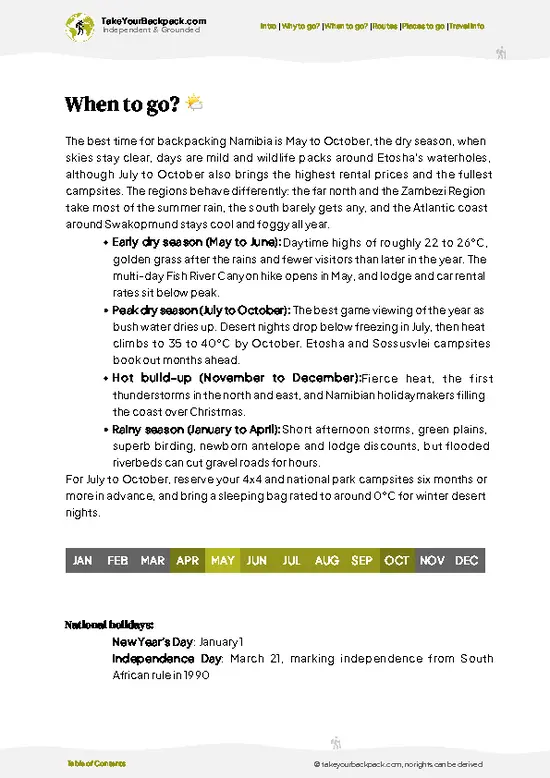
Best months for landmarks: The best months are May to September, the dry winter, when skies are clear, days run roughly 20 to 28°C inland and rain is close to absent. Gravel roads stay firm and dust is the main nuisance. Mornings on the desert and in the interior can drop to 0 to 5°C, so a warm layer matters at sunrise stops.
Shoulder seasons: October to November and April are the shoulder months. Heat builds to 30 to 38°C in the interior and the far north, light turns harsh by mid-morning, and afternoon walking becomes a slog. Crowds and lodge rates ease slightly, often 10 to 20 percent below peak, and you can still travel comfortably if you start at dawn.
Rainy season and regional differences: From December to March the rainy season brings thunderstorms, mostly in the north and east, with … read more 👉
Best months for landmarks: The best months are May to September, the dry winter, when skies are clear, days run roughly 20 to 28°C inland and rain is close to absent. Gravel roads stay firm and dust is the main nuisance. Mornings on the desert and in the interior can drop to 0 to 5°C, so a warm layer matters at sunrise stops.
Shoulder seasons: October to November and April are the shoulder months. Heat builds to 30 to 38°C in the interior and the far north, light turns harsh by mid-morning, and afternoon walking becomes a slog. Crowds and lodge rates ease slightly, often 10 to 20 percent below peak, and you can still travel comfortably if you start at dawn.
Rainy season and regional differences: From December to March the rainy season brings thunderstorms, mostly in the north and east, with the Caprivi Strip and Etosha region receiving the most, around 400 to 600 mm a year. Dry riverbeds can flood suddenly and cut gravel roads for hours or days. The southern desert gets under 100 mm. The coast stays cool at 15 to 22°C year-round, with thick fog that burns off by late morning, especially in winter. Peak pricing runs July to October, and camps and lodges near the major sights should be booked months ahead.

unique site hoppingTips for Visiting Multiple Destinations

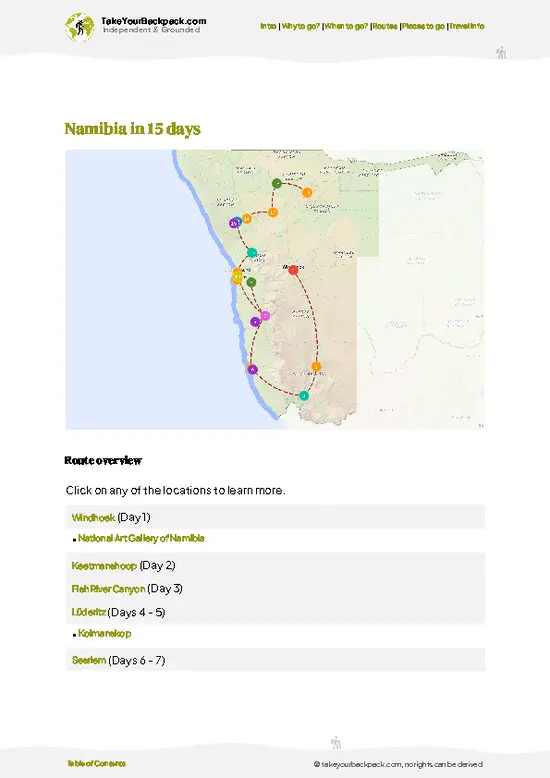
How many days to allow: A trip combining several landmarks in Namibia needs 10 to 16 days, because the distances are large and gravel slows everything down. Anything under 10 days forces you to choose one region.
Which regions cluster and which way to go: The classic loop starts and ends in Windhoek, where flights land and vehicles are rented. The central coast and southern desert group naturally, linked by Swakopmund and Walvis Bay. The north, around Etosha and the Kunene or Kavango regions, forms a second cluster. Heading south first, then up the coast and across to the north, lets you finish on the longest, flattest tarmac stretches. Reversing it works equally well if you prefer to see wildlife-heavy country first.
Time per stop and between regions: Allow one to two nights per major stop, … read more 👉
How many days to allow: A trip combining several landmarks in Namibia needs 10 to 16 days, because the distances are large and gravel slows everything down. Anything under 10 days forces you to choose one region.
Which regions cluster and which way to go: The classic loop starts and ends in Windhoek, where flights land and vehicles are rented. The central coast and southern desert group naturally, linked by Swakopmund and Walvis Bay. The north, around Etosha and the Kunene or Kavango regions, forms a second cluster. Heading south first, then up the coast and across to the north, lets you finish on the longest, flattest tarmac stretches. Reversing it works equally well if you prefer to see wildlife-heavy country first.
Time per stop and between regions: Allow one to two nights per major stop, and three if you want to walk or hike. Windhoek to Swakopmund takes about 4 hours, Windhoek to the southern dunes 5 to 6 hours, and Windhoek to Etosha around 5 hours. Coast to Etosha is 6 to 7 hours.
Planning mistakes: The common error is cramming too many long driving days back to back. Keep any single day under 5 to 6 hours of driving, and never plan to drive after dusk, when livestock and wildlife wander onto the road. Another mistake is trusting map estimates on gravel, which run slower than shown. Add 30 to 50 percent to the time.

The ListHighly Recommended landmarks of Namibia

1 Sossusvlei

Deadvlei skeletons, Big Daddy ridge, Dune 45 sunrise, Sesriem canyon

Climb razor-edged ridgelines at first light, then drop into a clay pan where blackened camelthorn trunks stand against rust-orange sand.

Namibia - Sossusvlei

2 Twyfelfontein

Pecked engravings, Lion Man slab, Dancing Kudu, red sandstone valley

Scramble through red boulders with a guide to slabs of engraved giraffes, rhinos and a lion with human paws, then visit nearby Organ Pipes.

namibia-unique-site-twyfelfontein
© Google |

3 Brandberg Mountain

White Lady panel, Tsisab Ravine, granite massif, guided rock art walk

Follow a sandy ravine between car-sized boulders to an overhang of ochre figures, with a guide pointing out faded layers beneath newer paint.

4 Epupa Falls

Kunene cascades, baobab above the gorge, makalani palms, Himba villages

Watch the Kunene fan into channels and drop about 37 meters, then walk the rim at dawn when spray throws rainbows across the gorge.

namibia-unique-site-epupa-falls
© Google |

5 Kolmanskop

Sand-filled houses, diamond-era ghost town, peeling pastel walls, hospital and hall

Wander roofless rooms floored in rippled dunes, then see the old hospital, ice factory and manager’s villa that once served a diamond colony.

6 Sandwich Harbour

Dunes meeting surf, lagoon flocks, 4x4 sand driving, seal colonies

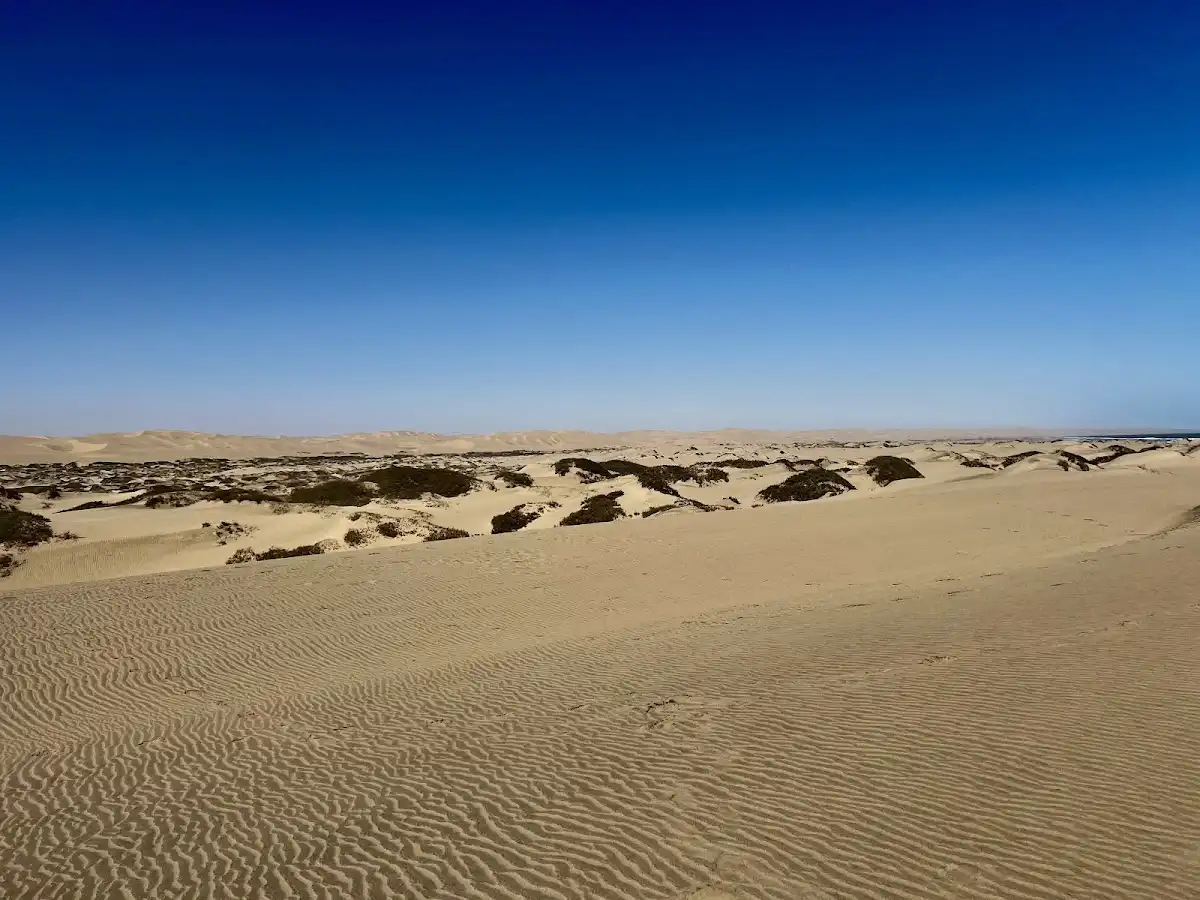
Ride the shoreline from Walvis Bay and climb dune crests above the Atlantic, with flamingos in the lagoon and jackal tracks along the tideline.

namibia-unique-site-sandwich-harbour
© Google |
Loading the map 🌍

Expert viewExpert Commentary on landmarks

How many landmarks to aim for: Aim for four to six major landmarks over two weeks. Namibia’s distances mean each one costs half a day or more in transit, and the best light is at sunrise and sunset, so cramming in more leaves you looking at the inside of a car. Fewer sites, seen at the right hour, beat a long checklist glimpsed through dust.
Choosing between kinds of landmarks: Namibia’s landmarks fall into desert landscapes, wildlife-linked sites, rock art and heritage, and colonial or mining relics. Backpackers on tight budgets should lean on desert and geological sights, which are mostly free or cost a modest gate fee. Wildlife and park-based sites cost more and often need your own vehicle. Heritage-minded travelers should put rock art and cultural sites first, as these usually come with … read more 👉
How many landmarks to aim for: Aim for four to six major landmarks over two weeks. Namibia’s distances mean each one costs half a day or more in transit, and the best light is at sunrise and sunset, so cramming in more leaves you looking at the inside of a car. Fewer sites, seen at the right hour, beat a long checklist glimpsed through dust.
Choosing between kinds of landmarks: Namibia’s landmarks fall into desert landscapes, wildlife-linked sites, rock art and heritage, and colonial or mining relics. Backpackers on tight budgets should lean on desert and geological sights, which are mostly free or cost a modest gate fee. Wildlife and park-based sites cost more and often need your own vehicle. Heritage-minded travelers should put rock art and cultural sites first, as these usually come with a local guide and a deeper story. Photographers should prioritize the dune and pan country, where light does the work.
What it costs: Budget US$50 to 90 a day as an independent traveler in Namibia, higher than most of Africa. That covers camping or a basic room (N$250 to 500 a night per person, about US$14 to 28), self-catered food, and a share of a rental car. Park and site entry typically runs N$150 to 600 (US$8 to 33) per person, plus a vehicle fee in many national parks. Local guides for heritage sites are usually N$100 to 300 (US$6 to 17). Fuel is a major cost, so split a vehicle among three or four people. Shuttles and tours cost more per person than a shared rental, but save you the driving risk.
Safety on the ground: The big risks are driving and heat, not crime. Gravel roads cause rollovers when drivers go above 80 km/h, so slow down and let tire pressure down a little. Carry at least 5 liters of water per person per day, a full spare tire, and refuel at every chance. Sun at midday is brutal, so walk at dawn. Many sites close their gates at sunset, and you should respect those hours.
Cultural considerations: Many landmarks sit on communal or sacred land. Ask before photographing people, especially in Himba and San communities, and expect to pay or tip for a visit. Stay on marked paths at rock art sites, never touch the engravings, and carry out all litter. Pay guides directly, in Namibian dollars, which are pegged to the South African rand and accepted alongside it.

✈️ The backpacker research shortcutNamibia Travel Guide

An offline-friendly backpacking guide with optimized travel routes, ranked highlights, transport advice, and the best areas to stay.
example page 0 from our offline Travel Guide for Namibia
example page 1 from our offline Travel Guide for Namibia
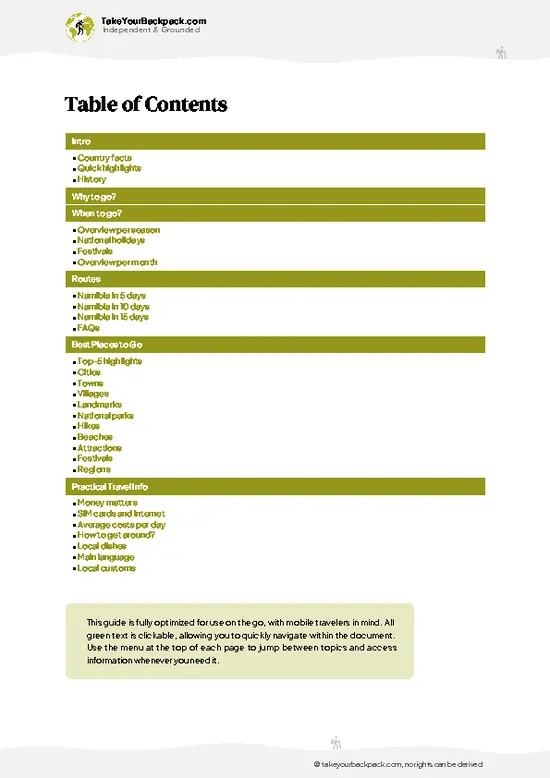
example page 2 from our offline Travel Guide for Namibia
example page 3 from our offline Travel Guide for Namibia
example page 4 from our offline Travel Guide for Namibia
example page 5 from our offline Travel Guide for Namibia
example page 6 from our offline Travel Guide for Namibia
example page 7 from our offline Travel Guide for Namibia
The digital guide (294 pages) contains:
✅ 71 highlights, ranked by travel appeal
✅ Optimized 5, 10 & 15-day travel routes
✅ Cities, national parks, landmarks, beaches
✅ How to get around
✅ Offline-friendly for travel without Wi-Fi
👉 Click to see all 30+ guide features

📅 Plan smarter in minutes, not weeks
✅ Month by month travel advice
✅ Festivals & national holidays
✅ Budget expectations

🗺️ Go to the right places, skip the overrated ones
✅ Honest pros & cons of destinations
✅ Top hikes, parks & viewpoints
✅ Lesser-known places most travelers miss
✅ Clear “worth it vs skip it” guidance

🛏️ Travel smoothly without rookie mistakes
✅ Best areas to stay
✅ Transport systems explained simply
✅ Common scams & safety advice
✅ SIM cards, money & practical tips

🌍 Understand the country, not just visit it
✅ Culture & traditions
✅ 52 Essential phrases & customs
✅ Festivals worth planning around
✅ Traveler-friendly historical context
✅ Insights that make places more meaningful

📱 Built for real travel conditions
✅ Fully downloadable PDF
✅ Works completely offline
✅ Optimized for phone use
✅ Useful in remote areas & buses
✅ Everything in one place
Stop searching, start planning
Get instant access to your full guide. 30‑day money-back guarantee.
+ Add another guide for just

By proceeding you agree to our terms.
Sent to your inbox immediately after payment • 100% Secure Checkout
Best Backpacking Travel Advisor 2025 tourism awardBest Backpacking
Travel Advisor
2025
What others say about Take Your Backpack Guides:
⭐⭐⭐⭐⭐
Fantastic, amazing amount of information!
⭐⭐⭐⭐⭐
My goodness this is amazing, it's what I've been looking for hats off too you!
⭐⭐⭐⭐⭐
I think this is absolutely BRILLIANT
⭐⭐⭐⭐
Very complete and informative. It's still missing places, but I gotta to commend you
⭐⭐⭐⭐⭐
This is truly amazing, thank you, can't wait to explore it with my kids!
⭐⭐⭐⭐⭐
Awesome resource, thank you!
⭐⭐⭐⭐⭐
This is amazing! Can't wait to explore the ones I haven't seen
⭐⭐⭐⭐
I love this! Well done, great idea.
⭐⭐⭐⭐⭐
Thanks for taking the time to make this gem!
⭐⭐⭐⭐⭐
This might be the best website I've ever seen.
⭐⭐⭐⭐⭐
Congratulations, and thank you so much for your work; it's incredibly valuable.
⭐⭐⭐⭐
In all seriousness I think you did a great job pointing out the important spots
⭐⭐⭐⭐⭐
10/10 very good
⭐⭐⭐⭐⭐
As someone who's only just starting to visit regularly this is awesome, thank you.
⭐⭐⭐⭐
Thank you very much! I'm going to visit my dad, it's going to be very useful!
⭐⭐⭐⭐⭐
This is really cool! We'll be travelling for the first time and this definitely come in handy.
⭐⭐⭐⭐⭐
You are now our minister of culture, congratulations 👨‍💼
⭐⭐⭐⭐⭐
Just wanted to tell you that this is a pearl! Going to follow your recommendations.
⭐⭐⭐⭐⭐
This is so cool. I'll definitely be using the resource for my travels soon.
⭐⭐⭐⭐⭐
This is very impressive! Good work.
⭐⭐⭐⭐⭐
This is an amazing and informative site. Very well done!

🛏️ Where to stay?Best Stay Options in Namibia

Namibia has a solid spread of hostels, backpacker lodges and campsites, with dorm beds typically around N$250 to 400 (US$14 to 22) and private rooms from about N$600 (US$33), and nearly every national park and rest stop has a campsite if you are traveling with a tent or rooftop rig. In Windhoek, Windhoek West has the most budget beds within walking distance of the center’s restaurants and bars, which is handy for your first night, though you should take a taxi after dark, while leafy Klein Windhoek is quieter and feels safer but leaves you more dependent on cabs. On the coast, the Swakopmund town center puts you near the beachfront, cafés and adventure-tour pickups with a mellow evening scene, … read more 👉
Namibia has a solid spread of hostels, backpacker lodges and campsites, with dorm beds typically around N$250 to 400 (US$14 to 22) and private rooms from about N$600 (US$33), and nearly every national park and rest stop has a campsite if you are traveling with a tent or rooftop rig. In Windhoek, Windhoek West has the most budget beds within walking distance of the center’s restaurants and bars, which is handy for your first night, though you should take a taxi after dark, while leafy Klein Windhoek is quieter and feels safer but leaves you more dependent on cabs. On the coast, the Swakopmund town center puts you near the beachfront, cafés and adventure-tour pickups with a mellow evening scene, and the more residential Vineta area to the north trades that convenience for calm streets and sea air.

If you enjoy meeting fellow travelers, consider choosing hostels with high ratings for atmosphere. On the other hand, if you prefer having your own space, a hotel might be a better option.

NamibiaWhere to Go Next

👋 Meet the founderWho’s Behind Take Your Backpack?

Johan, backpacker and founder of TakeYourBackpackHi, I’m Johan (Netherlands 🇳🇱), the creator of TakeYourBackpack. Over the past 3 decades, I’ve backpacked through 90+ countries across six continents, gaining extensive experience with independent travel, long-term trips, and overland routes.

This site is built on a combination of firsthand travel experience and carefully curated insights from other backpackers. Many guides are based on places I’ve personally visited, while others bring together tips, observations, and practical advice shared by trusted travelers I’ve met along the way.

The goal is to provide realistic, experience-driven guidance — not generic itineraries — so you can explore destinations with better context, clearer expectations, and more confidence.