×

Namibia🇳🇦 | landmarksTwyfelfonteinprehistoric rock engravings, sandstone outcrops, desert flora, UNESCO site | things to do and best time to go

Explore SossusvleiExplore Sesriem

Backpacking in Twyfelfontein
👍 Recommendedunique site ranked #4
By Johan Kruseman 🇳🇱 | Updated June 6, 2026

Everyone’s seen the rock art photos—those ochre giraffes and hunters splashed across Instagram, promising ancient mystery at Twyfelfontein. But here’s the truth: if you’re coming just for the photos, you’ll be elbow-to-elbow with tour groups, and the site’s strict rules mean you’ll snap your shots fast, then move on. The real magic isn’t the art itself—it’s standing in Namibia’s raw Damaraland, where the desert air hums with silence and you realize people have carved stories here for 6,000 years. Twyfelfontein isn’t cheap or easy to reach; you’ll bounce down gravel roads and pay for a guided tour (no solo wandering allowed). But the payoff is a sense of deep time, not just a checklist moment. The crowds thin out by late afternoon, and if you linger, you’ll catch the rocks glowing copper in the low sun—worth more than any filtered feed.

Discover everything you want to know in the 📖 Namibia Travel Guide.


Get your Namibia guide
79 ranked highlights, routes & tips, works offline (319 pages)
Loading the map 🌍
CLICK TO FILTER
cities
towns
villages
landmarks
national parks
hikes
beaches
attractions
festivals
regions
SHOW COUNTRY’S BESTSHOW ALL

✨ Why go?
Ranked #4 unique site in Namibia
What makes this unique site worth visiting

Twyfelfontein isn’t just another stop on the map; it’s a living canvas of ancient history. Sure, you’ll share the space with other travelers, but the rock engravings—over 2,000 of them—tell stories that have echoed for millennia. The effort-to-reward ratio here is solid. You’ll pay a modest entrance fee, and in return, you get a glimpse into the lives of the San people, their art etched into stone.

Accessibility is a breeze. It fits perfectly into a broader Namibian route, making it a natural pit stop between the stunning landscapes of Damaraland and the vastness of the Namib Desert. You can easily spend a few hours wandering the trails, soaking in the raw beauty of the surroundings.

What sets Twyfelfontein apart is its authenticity. It’s not just about the photos; it’s about feeling the … read more 👉
Twyfelfontein isn’t just another stop on the map; it’s a living canvas of ancient history. Sure, you’ll share the space with other travelers, but the rock engravings—over 2,000 of them—tell stories that have echoed for millennia. The effort-to-reward ratio here is solid. You’ll pay a modest entrance fee, and in return, you get a glimpse into the lives of the San people, their art etched into stone.

Accessibility is a breeze. It fits perfectly into a broader Namibian route, making it a natural pit stop between the stunning landscapes of Damaraland and the vastness of the Namib Desert. You can easily spend a few hours wandering the trails, soaking in the raw beauty of the surroundings.

What sets Twyfelfontein apart is its authenticity. It’s not just about the photos; it’s about feeling the weight of history beneath your feet. This isn’t a tourist trap; it’s a sacred space that invites you to connect with something greater. Make time for it. You won’t regret it.
Want to include Twyfelfontein in your Namibia route?
Create a personalized Namibia itinerary that includes Twyfelfontein and the places that fit your trip — based on your travel style, budget, and available time. Get your route in seconds.

Generate my trip

💡 HighlightsDon't-miss highlights and experiences

  • Ancient rock engravings (petroglyphs) — Twyfelfontein holds over 2,500 carved images on sandstone panels, some made thousands of years ago. The sheer density and variety make it one of Africa’s richest rock-art sites, not just pretty pictures but a record people left on the landscape.
  • Animal and hunting scenes — you’ll see detailed etchings of eland, giraffe, rhino, and hunting figures that aren’t just decorative; they hint at ritual meanings and past lifeways. Those animal motifs are unusually vivid and give real insight into how ancient people related to wildlife.
  • Open-air gallery and boardwalk trails — the site is presented along raised walkways with panels and viewing points, which means you get up close without destroying the art. It’s an easy, respectful way to explore and to photograph
read more 👉
  • Ancient rock engravings (petroglyphs) — Twyfelfontein holds over 2,500 carved images on sandstone panels, some made thousands of years ago. The sheer density and variety make it one of Africa’s richest rock-art sites, not just pretty pictures but a record people left on the landscape.
  • Animal and hunting scenes — you’ll see detailed etchings of eland, giraffe, rhino, and hunting figures that aren’t just decorative; they hint at ritual meanings and past lifeways. Those animal motifs are unusually vivid and give real insight into how ancient people related to wildlife.
  • Open-air gallery and boardwalk trails — the site is presented along raised walkways with panels and viewing points, which means you get up close without destroying the art. It’s an easy, respectful way to explore and to photograph the carvings under guidance.
  • Local guides and living cultural context — community guides (often from nearby Damara or San communities) explain symbols, stories, and conservation work. Their local knowledge turns static images into human stories — worth the small fee and great for supporting the community.
  • Organ Pipes (basalt columns) — a short drive away are striking vertical basalt columns formed by cooled lava; they look sculpted and show the area’s dramatic geological history. It’s a nice contrast to the sandstone panels and makes the visit feel like a mini geologist’s tour.
  • Burnt Mountain and the Petrified Forest — nearby odd-colored hills and fossilized tree trunks create a surreal backdrop that complements the rock art. The colors at dawn or dusk are especially weird and beautiful — bring a jacket, wind loves this place.
  • Sunrise/sunset light and photography — the low light throws long shadows into the engravings and brings out the rock’s textures, making for the best photos and a strangely intimate viewing experience. If you’re into pictures, plan a short wait for golden hour rather than rushing through.
Spotted a mistake or missing something? Contact us.

🌤️ When to go?When to go for the best experience


  • Weather: The dry season from May to October is your best bet. Expect clear skies and almost zero rain, which means dusty trails but no mud to slow you down. The wet season (November to April) brings sporadic downpours that can make roads tricky and obscure the rock art.

  • Temperature: Daytime temps in the dry season hover around 20-25°C (68-77°F), perfect for hiking without frying yourself. Nights can plunge below 5°C (41°F), so pack layers. The wet season heats up to 30°C+ (86°F+), with humidity that can sap your energy fast.

  • Daylight Hours: Roughly 10-12 hours year-round, but the dry season’s crisp mornings and long evenings give you more comfortable windows to explore without the harsh midday sun.

  • Crowds: Twyfelfontein isn’t exactly a tourist magnet, but the dry season draws more
read more 👉

  • Weather: The dry season from May to October is your best bet. Expect clear skies and almost zero rain, which means dusty trails but no mud to slow you down. The wet season (November to April) brings sporadic downpours that can make roads tricky and obscure the rock art.

  • Temperature: Daytime temps in the dry season hover around 20-25°C (68-77°F), perfect for hiking without frying yourself. Nights can plunge below 5°C (41°F), so pack layers. The wet season heats up to 30°C+ (86°F+), with humidity that can sap your energy fast.

  • Daylight Hours: Roughly 10-12 hours year-round, but the dry season’s crisp mornings and long evenings give you more comfortable windows to explore without the harsh midday sun.

  • Crowds: Twyfelfontein isn’t exactly a tourist magnet, but the dry season draws more visitors. If you want near solitude, aim for shoulder months like May or September. Peak winter (June-July) sees a slight bump from international tourists.

  • Seasonal Activities: Dry season is prime for spotting wildlife and exploring the rock engravings without interruptions. Wet season’s greenery is tempting but comes with fewer accessible trails and less predictable conditions.

  • Price Fluctuations: Accommodation and tours spike during the dry season, especially mid-year. Booking ahead can save you from last-minute price gouging. Wet season offers cheaper rates but fewer options and less reliable access.


Pro-tip: Visit in late May or early September to dodge crowds, enjoy mild weather, and snag better deals—perfect for soaking in Twyfelfontein’s raw, unfiltered magic without the hassle.


source: climatestotravel.comJANJanuary: fair for travelingFEBFebruary: fair for travelingMARMarch: fair for travelingAPRApril: good for travelingMAYMay: highly recommended for travelingJUNJune: highly recommended for travelingJULJuly: highly recommended for travelingAUGAugust: highly recommended for travelingSEPSeptember: highly recommended for travelingOCTOctober: good for travelingNOVNovember: fair for travelingDECDecember: fair for traveling
namibia-unique-site-twyfelfontein
© Google |

✈️ The backpacker research shortcutNamibia Travel Guide

An offline-friendly backpacking guide with optimized travel routes, ranked highlights, transport advice, and the best areas to stay.
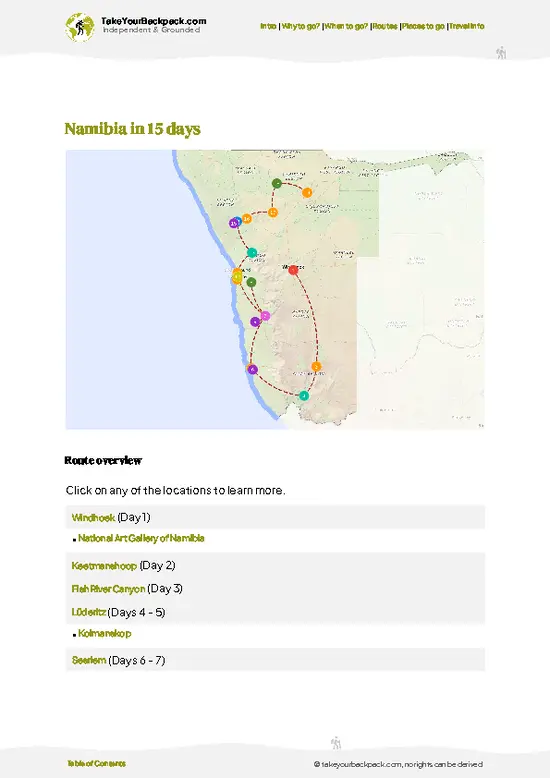
example page 0 from our offline Travel Guide for Namibia
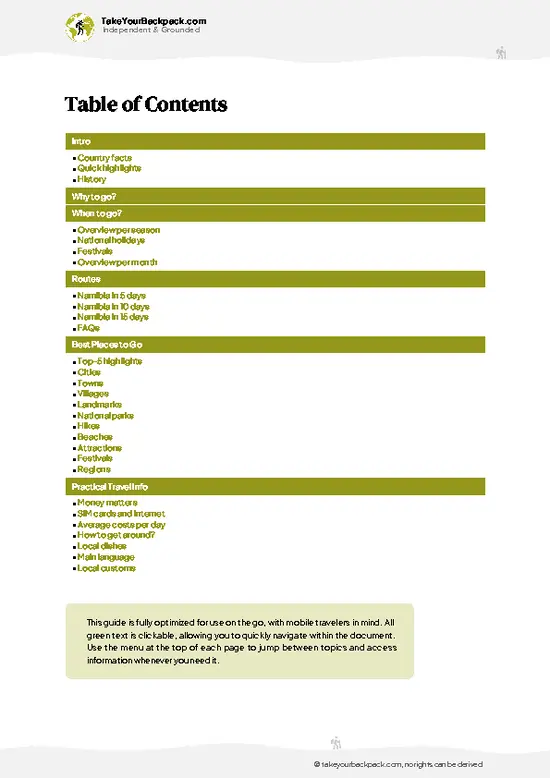
example page 1 from our offline Travel Guide for Namibia
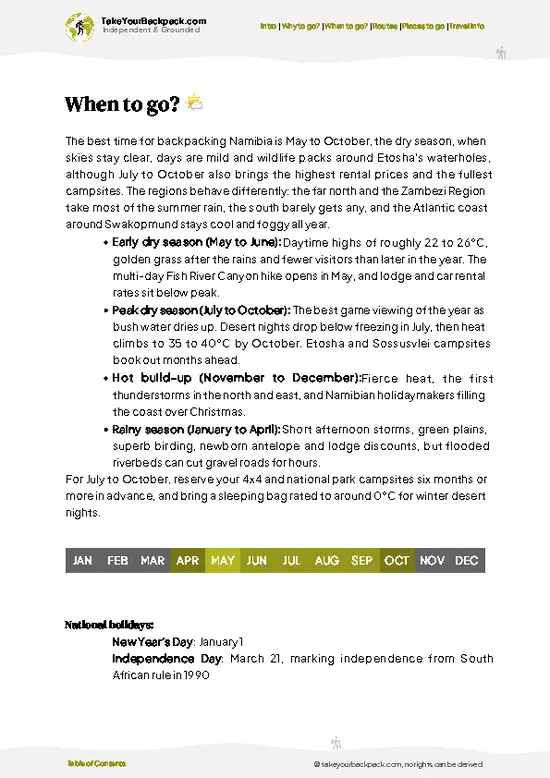
example page 2 from our offline Travel Guide for Namibia
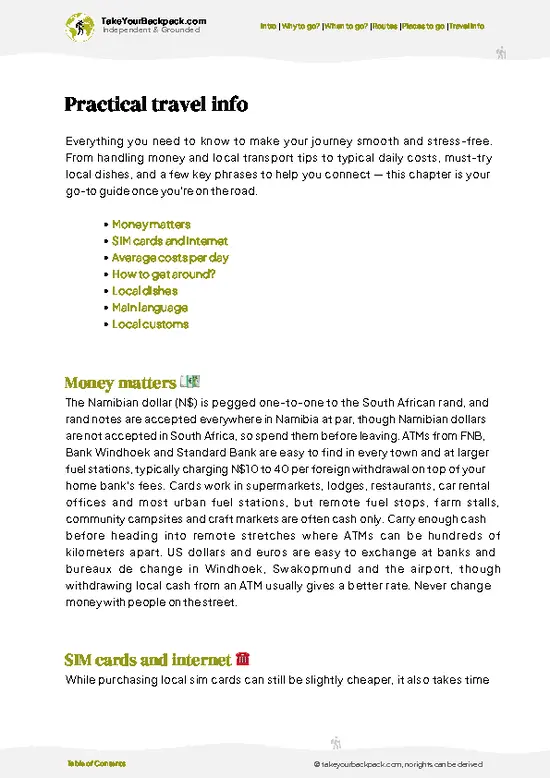
example page 3 from our offline Travel Guide for Namibia
example page 4 from our offline Travel Guide for Namibia
example page 5 from our offline Travel Guide for Namibia
example page 6 from our offline Travel Guide for Namibia
example page 7 from our offline Travel Guide for Namibia
The digital guide (319 pages) contains:
79 highlights, ranked by travel appeal
Optimized 5, 10 & 15-day travel routes
Cities, national parks, landmarks, beaches
How to get around
Offline-friendly for travel without Wi-Fi
👉 Click to see all 30+ guide features

📅 Plan smarter in minutes, not weeks
Month by month travel advice
Festivals & national holidays
Budget expectations

🗺️ Go to the right places, skip the overrated ones
Honest pros & cons of destinations
Top hikes, parks & viewpoints
Lesser-known places most travelers miss
Clear “worth it vs skip it” guidance

🛏️ Travel smoothly without rookie mistakes
Best areas to stay
Transport systems explained simply
Common scams & safety advice
SIM cards, money & practical tips

🌍 Understand the country, not just visit it
Culture & traditions
52 Essential phrases & customs
Festivals worth planning around
Traveler-friendly historical context
Insights that make places more meaningful

📱 Built for real travel conditions
Fully downloadable PDF
Works completely offline
Optimized for phone use
Useful in remote areas & buses
Everything in one place
Save weeks of stressful planning
Get instant access to your full guide. 30‑day money-back guarantee.


By proceeding you agree to our terms.
Sent to your inbox immediately after payment • 100% Secure Checkout
Best Backpacking Travel Advisor 2025 tourism awardBest Backpacking
Travel Advisor
2025
What others say about Take Your Backpack Guides:
⭐⭐⭐⭐⭐
Fantastic, amazing amount of information!
⭐⭐⭐⭐⭐
My goodness this is amazing, it's what I've been looking for hats off too you!
⭐⭐⭐⭐⭐
I think this is absolutely BRILLIANT
⭐⭐⭐⭐
Very complete and informative. It's still missing places, but I gotta to commend you
⭐⭐⭐⭐⭐
This is truly amazing, thank you, can't wait to explore it with my kids!
⭐⭐⭐⭐⭐
Awesome resource, thank you!
⭐⭐⭐⭐⭐
This is amazing! Can't wait to explore the ones I haven't seen
⭐⭐⭐⭐
I love this! Well done, great idea.
⭐⭐⭐⭐⭐
Thanks for taking the time to make this gem!
⭐⭐⭐⭐⭐
This might be the best website I've ever seen.
⭐⭐⭐⭐⭐
Congratulations, and thank you so much for your work; it's incredibly valuable.
⭐⭐⭐⭐
In all seriousness I think you did a great job pointing out the important spots
⭐⭐⭐⭐⭐
10/10 very good
⭐⭐⭐⭐⭐
As someone who's only just starting to visit regularly this is awesome, thank you.
⭐⭐⭐⭐
Thank you very much! I'm going to visit my dad, it's going to be very useful!
⭐⭐⭐⭐⭐
This is really cool! We'll be travelling for the first time and this definitely come in handy.
⭐⭐⭐⭐⭐
You are now our minister of culture, congratulations 👨‍💼
⭐⭐⭐⭐⭐
Just wanted to tell you that this is a pearl! Going to follow your recommendations.
⭐⭐⭐⭐⭐
This is so cool. I'll definitely be using the resource for my travels soon.
⭐⭐⭐⭐⭐
This is very impressive! Good work.
⭐⭐⭐⭐⭐
This is an amazing and informative site. Very well done!

🛏️ Where to stay?Where staying makes the most sense

Twyfelfontein is a treasure trove of ancient rock engravings, but let’s be real: it’s not just about the art. The area can get crowded, especially during peak season, and the costs can creep up if you’re not careful.

For backpackers, the best bet is to stay in the nearby town of Khorixas. It’s a hub for budget travelers, with a mix of guesthouses and campsites that offer a social vibe. You’ll find fellow adventurers swapping stories over a campfire, which is a huge plus if you’re solo.

Another option is to camp closer to the site itself. This gives you the chance to wake up to the stunning … read more 👉
Twyfelfontein is a treasure trove of ancient rock engravings, but let’s be real: it’s not just about the art. The area can get crowded, especially during peak season, and the costs can creep up if you’re not careful.

For backpackers, the best bet is to stay in the nearby town of Khorixas. It’s a hub for budget travelers, with a mix of guesthouses and campsites that offer a social vibe. You’ll find fellow adventurers swapping stories over a campfire, which is a huge plus if you’re solo.

Another option is to camp closer to the site itself. This gives you the chance to wake up to the stunning Namibian landscape and beat the crowds to the engravings. Just be prepared for the basics—think shared facilities and a more rugged experience.

Safety is generally good, but keep your wits about you, especially at night. Embrace the simplicity of the surroundings; it’s the raw beauty and the shared experiences that make this journey worthwhile. The real magic lies in the connections you make and the stories you’ll carry home.

👛 Costs (as of 11 January 2025)Travel costs and budget guide for Twyfelfontein

Visiting Twyfelfontein in Namibia isn’t just about the stunning rock engravings; it’s also about navigating the costs involved. Here’s a breakdown of what you can expect.
  • Entry Fees: Expect to pay around $5 to $10 USD for entry. This fee grants you access to the site and its fascinating history. It’s a small price for a glimpse into ancient artistry.
  • Guided Tours: If you want to dive deeper, guided tours range from $15 to $30 USD. Local guides bring the engravings to life with stories that you won’t find in any brochure. It’s worth the extra cash for that insider knowledge.
  • Accommodation: Options vary widely. Budget lodges start at about $30 USD per night, while mid-range accommodations can go up to $100 USD. For a unique experience, consider camping, which can be as low as $10 USD per night.
read more 👉
Visiting Twyfelfontein in Namibia isn’t just about the stunning rock engravings; it’s also about navigating the costs involved. Here’s a breakdown of what you can expect.
  • Entry Fees: Expect to pay around $5 to $10 USD for entry. This fee grants you access to the site and its fascinating history. It’s a small price for a glimpse into ancient artistry.
  • Guided Tours: If you want to dive deeper, guided tours range from $15 to $30 USD. Local guides bring the engravings to life with stories that you won’t find in any brochure. It’s worth the extra cash for that insider knowledge.
  • Accommodation: Options vary widely. Budget lodges start at about $30 USD per night, while mid-range accommodations can go up to $100 USD. For a unique experience, consider camping, which can be as low as $10 USD per night.
  • Food and Drink: Meals can cost anywhere from $5 to $20 USD, depending on whether you’re dining at a local eatery or a more upscale restaurant. Stocking up on snacks and water is a smart move, especially if you’re hiking around the site.
  • Transportation: If you’re driving, fuel prices hover around $1.20 USD per liter. If you’re relying on public transport, expect to pay around $10 to $20 USD for a shuttle or taxi from nearby towns.

Twyfelfontein is a treasure trove of history, but the costs can add up. Plan wisely, and you’ll find that the experience is worth every penny.
⚠️ Prices can change and everyone travels differently, so take this as a rough guide. Hope it helps you plan your adventure!

Other Namibian landmarks near Twyfelfontein

Explore more nearby:

  • Brandberg Mountain—granite massif, ancient rock art, arid landscapes, desert-adapted wildlife| 67 km away
  • Sandwich Harbour—coastal lagoon, towering sand dunes, tidal flats, migratory birds| 266 km away
  • Epupa Falls—cascading waterfalls, baobab trees, Himba villages, Kunene River| 414 km away

💡 Not sure where to go next?
Create a personalized itinerary for Namibia including Twyfelfontein and the places that fit your trip.

Generate my itinerary

👉 Discover all landmarks

Or checkout all Namibia has to offer (think cities, towns, villages, national parks, hikes, beaches, festivals)
Country photo of Namibia

We 💚 feedbackFinal thoughts on visiting Twyfelfontein

Twyfelfontein isn’t just about the rock engravings; it’s the raw energy of the landscape that hits you. Expect crowds, especially during peak season, but don’t let that deter you. The real magic lies in the quiet moments—like when the sun dips below the horizon, casting shadows that dance across ancient carvings. Just be prepared for the heat; it can be relentless. Embrace the stillness, and you’ll find a connection to something timeless.

✍️ Help improve this page!
The information on this page is based on in-depth research, insights shared by experienced travelers, and feedback from the local travel community in Namibia. While every effort is made to keep the information accurate and current, conditions can change — so if you spot anything incorrect or outdated, please get in touch.


🙋‍♂️ Give feedback

👋 Meet the founderWho’s Behind Take Your Backpack?

Johan, backpacker and founder of TakeYourBackpackHi, I’m Johan (Netherlands 🇳🇱), the creator of TakeYourBackpack. Over the past decade, I’ve backpacked through 80+ countries across six continents, gaining extensive experience with independent travel, long-term trips, and overland routes.

This site is built on a combination of firsthand travel experience and carefully curated insights from other backpackers. Many guides are based on places I’ve personally visited, while others bring together tips, observations, and practical advice shared by trusted travelers I’ve met along the way.

The goal is to provide realistic, experience-driven guidance — not generic itineraries — so you can explore destinations with better context, clearer expectations, and more confidence.

Get full Namibia guide •
Instant download • 79 highlights • Full Offline guide