
×

Namibia🇳🇦 | townsKeetmanshoopQuiver trees, dolerite blocks, rail-town stop | things to do and best time to go

Explore RunduExplore Outjo

Backpacking in Keetmanshoop
👍 Recommendedtown ranked #12
By Johan Kruseman 🇳🇱 | Updated October 22, 2026

Keetmanshoop suits self-drivers and overlanders who like big, empty country and need a practical halfway stop; anyone chasing nightlife, beaches or a lively hostel scene will find it thin. It sits in the south of Namibia, on the main road and rail line between the capital and the South African border. Streets are wide, dust-dry and quiet, with sandstone colonial buildings, a few cafés and the clank of wind pumps. Travelers are few and mostly passing through, so meeting others happens at the campsites and guesthouses. Evenings are slow. The town ends, fittingly, with a kokerboom (quiver tree) forest outside it, its gold-skinned trunks glowing at dusk.

Discover everything you want to know in the 📖 Namibia Travel Guide.


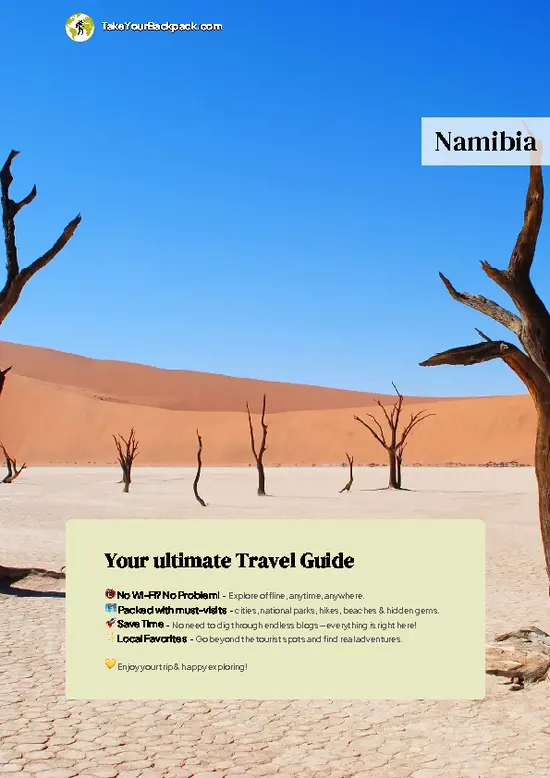
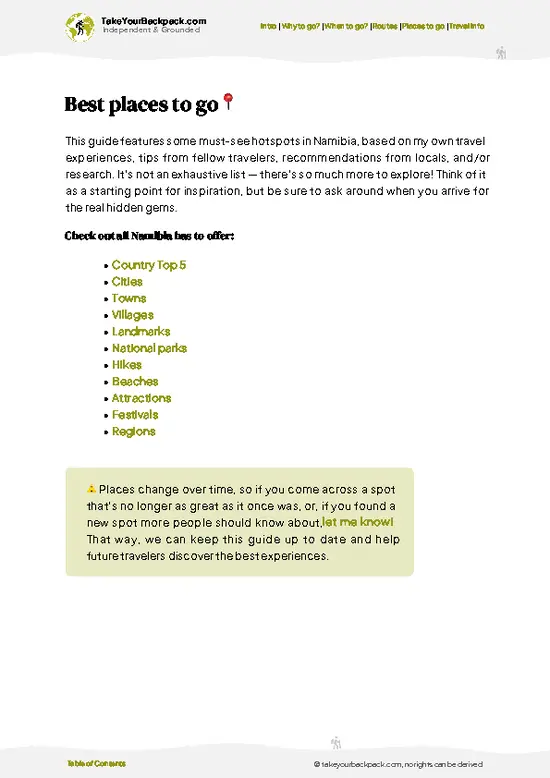
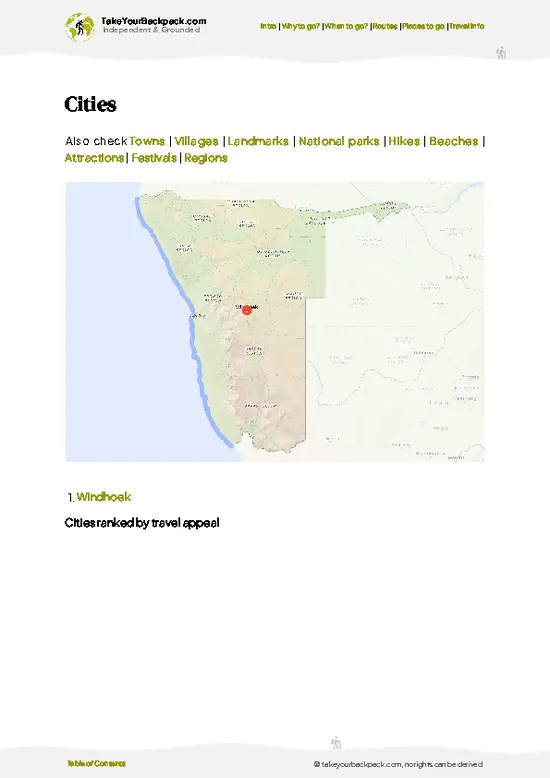
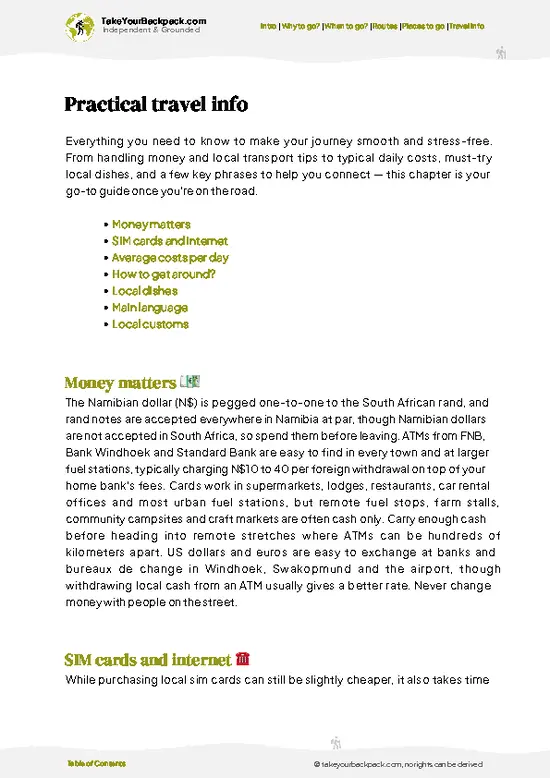
example page 0 from our offline Travel Guide for Namibia
example page 1 from our offline Travel Guide for Namibia
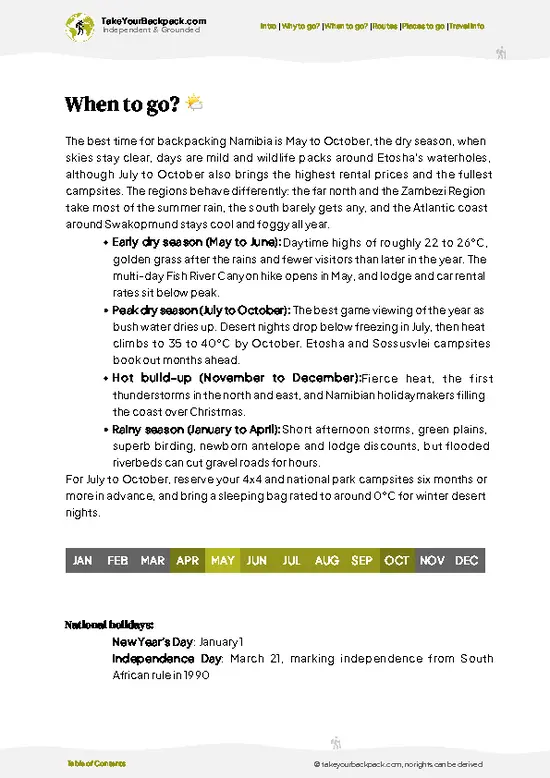
example page 2 from our offline Travel Guide for Namibia
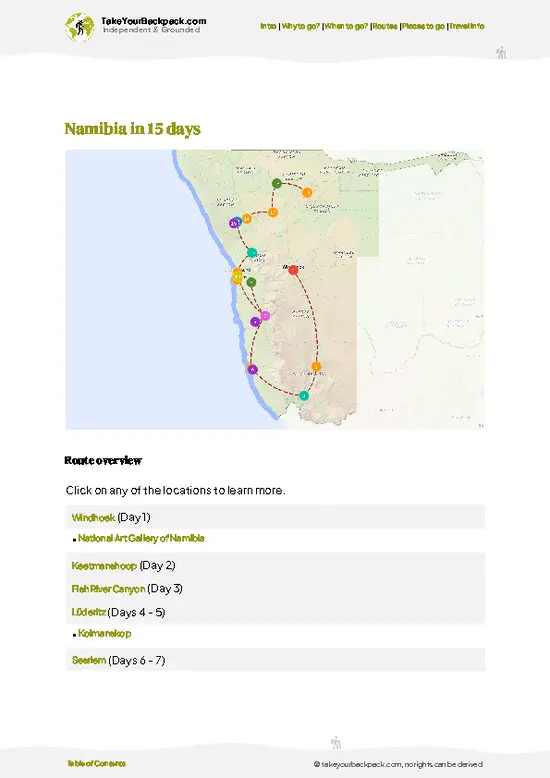
example page 3 from our offline Travel Guide for Namibia
example page 4 from our offline Travel Guide for Namibia
example page 5 from our offline Travel Guide for Namibia
example page 6 from our offline Travel Guide for Namibia
example page 7 from our offline Travel Guide for Namibia
Loading the map 🌍
CLICK TO FILTER
cities
towns
villages
landmarks
national parks
hikes
beaches
attractions
festivals
regions
SHOW COUNTRY’S BESTSHOW ALL

✨ Why go?
Ranked #12 town in Namibia
Why Keetmanshoop should be on your travel list

Keetmanshoop earns its place as the southern hub of Namibia, the place where you restock, sleep and then point the car toward bigger sights. Most people stay one night, two if they want to see the Quiver Tree Forest at both dusk and dawn. The nearby Giant’s Playground of stacked dolerite boulders and the huge Fish River Canyon within reach make it a sensible base for photographers and self-drive travelers. The pace is quiet. Guesthouses and farm-style campsites are small, owners chat freely, and meals are mostly meat-heavy and filling. Solo travelers will find it calm rather than social. Slow travelers and road-trippers get the most from it, while anyone without a vehicle will feel the long distances. Think of it as a smart pause, not a destination to linger in for a week.

💡 HighlightsPlaces and moments you shouldn't skip

  1. Quiver Tree Forest: Around 250 kokerbooms, some two to three centuries old, stand on a dolerite ridge northeast of town. Go near dusk or dawn for color and cooler air. Entry is about US$8 to 10 per person and a visit takes 1 to 2 hours.
  2. Giant’s Playground: Heaps of rounded dolerite blocks balance in improbable stacks beside the quiver trees. Late afternoon casts the best shadows. It is usually covered by the same ticket and needs about 1 hour.
  3. Old German Lutheran Mission Church: Built in 1895 from local stone, this is the oldest landmark in town and now a museum. Opening hours are weekdays in daytime. Entry is small, around US$1 to 2, and you need 30 to 45 minutes.
  4. Keetmanshoop Railway Station: A handsome 1908 building with a steam locomotive outside. It is easy to photograph in the morning light
… read more 👉
  1. Quiver Tree Forest: Around 250 kokerbooms, some two to three centuries old, stand on a dolerite ridge northeast of town. Go near dusk or dawn for color and cooler air. Entry is about US$8 to 10 per person and a visit takes 1 to 2 hours.
  2. Giant’s Playground: Heaps of rounded dolerite blocks balance in improbable stacks beside the quiver trees. Late afternoon casts the best shadows. It is usually covered by the same ticket and needs about 1 hour.
  3. Old German Lutheran Mission Church: Built in 1895 from local stone, this is the oldest landmark in town and now a museum. Opening hours are weekdays in daytime. Entry is small, around US$1 to 2, and you need 30 to 45 minutes.
  4. Keetmanshoop Railway Station: A handsome 1908 building with a steam locomotive outside. It is easy to photograph in the morning light and takes 15 to 20 minutes.
  5. Keetmanshoop Municipal Museum and Kaiserliche Post Office area: Walk the central streets for colonial facades and local history displays. Mornings are comfortable. Budget 45 minutes, with costs minimal.
Keetmanshoop’s railway station and the walk past its colonial facades are free, while the church museum costs only a dollar or two. Day trips reach the Fish River Canyon, the hot springs at Ai-Ais, and the ghost town of Kolmanskop near Lüderitz.
Spotted a mistake or missing something? Contact us.

🏘️ NeighborhoodsWhere things are and how it's laid out

Keetmanshoop is small enough that its areas blur into one another, but each has a distinct feel underfoot.
  • Central Keetmanshoop (Fifth Avenue and Hardap Street): Wide, flat streets lined with sandstone-colored colonial buildings, banks, supermarkets and takeaway counters selling fried chicken and kapana-style grilled meat. Midday heat bounces off the pavement, so you walk fast and duck into shade. You get groceries, cash and a cold drink within ten minutes on foot.
  • Old Rhenish Mission Church and Kaiserliche Post area: The 1895 stone church and the old German post office sit close together, with quiet pavement and the dry smell of dust and sun-baked stone. You get easy photographs and a sense of the town’s German colonial past in an hour.
  • Tsarisa and Tseiblaagte (outlying residential areas): Dusty
… read more 👉
Keetmanshoop is small enough that its areas blur into one another, but each has a distinct feel underfoot.
  • Central Keetmanshoop (Fifth Avenue and Hardap Street): Wide, flat streets lined with sandstone-colored colonial buildings, banks, supermarkets and takeaway counters selling fried chicken and kapana-style grilled meat. Midday heat bounces off the pavement, so you walk fast and duck into shade. You get groceries, cash and a cold drink within ten minutes on foot.
  • Old Rhenish Mission Church and Kaiserliche Post area: The 1895 stone church and the old German post office sit close together, with quiet pavement and the dry smell of dust and sun-baked stone. You get easy photographs and a sense of the town’s German colonial past in an hour.
  • Tsarisa and Tseiblaagte (outlying residential areas): Dusty township streets with spaza shops, braai smoke in the evenings and music from open doors. Walking here is fine in daylight but distances are long. You get cheap local food and everyday life, best with a local contact.
  • Edge of town toward Quiver Tree Forest: Gravel, open sky and the rattle of wind through gravel plains. You need a vehicle, and the reward is dark-silhouetted quiver trees at dusk.

⌛️ 1 day1-day itinerary for Keetmanshoop

7:00 AM, Quiver Tree Forest: Start here because the low light makes the trunks glow and the air is still cool. Wander the ridge for about an hour and a half, then drive back toward town.
9:30 AM, Giant’s Playground: Scramble among the dolerite stacks nearby, which are quieter at this hour. It is easy walking and good for photos.
11:00 AM, Old Lutheran Mission Church: Step into the town’s oldest building and read about the missionary era. It sits a short drive from the playground.
12:30 PM, Railway Station and central streets: Look at the steam locomotive, then stroll the sandstone buildings on foot. This is a corner many passers-through skip.
1:30 PM, Lunch: Pick a local café for a grilled meat plate or a pie, and sit out the midday heat.
4:00 PM, Rest and wander: Check the quiet side streets in … read more 👉
7:00 AM, Quiver Tree Forest: Start here because the low light makes the trunks glow and the air is still cool. Wander the ridge for about an hour and a half, then drive back toward town.
9:30 AM, Giant’s Playground: Scramble among the dolerite stacks nearby, which are quieter at this hour. It is easy walking and good for photos.
11:00 AM, Old Lutheran Mission Church: Step into the town’s oldest building and read about the missionary era. It sits a short drive from the playground.
12:30 PM, Railway Station and central streets: Look at the steam locomotive, then stroll the sandstone buildings on foot. This is a corner many passers-through skip.
1:30 PM, Lunch: Pick a local café for a grilled meat plate or a pie, and sit out the midday heat.
4:00 PM, Rest and wander: Check the quiet side streets in the softer light, then head out of town for one more sunset look at the kokerbooms.

🌤️ When to go?Best time to visit Keetmanshoop

  • Winter (May to August): Days run 18 to 24°C (64 to 75°F), but nights can fall to 0 to 5°C (32 to 41°F), with frost possible. Skies are clear, daylight is shorter at roughly 10.5 to 11 hours, and quiver trees glow against crisp air.
  • Summer (November to March): Highs commonly reach 33 to 38°C (91 to 100°F) and daylight stretches past 13 hours. Rain is scant and arrives in brief thunderstorms, mostly February and March.
  • Shoulder months (April, September, October): Warm days of 25 to 30°C (77 to 86°F) and cool nights suit walking and photography.
  • Crowds and prices: Keetmanshoop is a transit stop, so prices stay fairly steady, though rooms tighten around school holidays and the Fish River Canyon season from April to September.
Book your night here ahead if you plan to reach the canyon in winter.

source: climatestotravel.comJANJanuary: fair for travelingFEBFebruary: fair for travelingMARMarch: good for travelingAPRApril: good for travelingMAYMay: excellent for travelingJUNJune: excellent for travelingJULJuly: excellent for travelingAUGAugust: excellent for travelingSEPSeptember: excellent for travelingOCTOctober: good for travelingNOVNovember: fair for travelingDECDecember: fair for traveling
when-to-go

✈️ The backpacker research shortcutNamibia Travel Guide

An offline-friendly backpacking guide with optimized travel routes, ranked highlights, transport advice, and the best areas to stay.
example page 0 from our offline Travel Guide for Namibia
example page 1 from our offline Travel Guide for Namibia
example page 2 from our offline Travel Guide for Namibia
example page 3 from our offline Travel Guide for Namibia
example page 4 from our offline Travel Guide for Namibia
example page 5 from our offline Travel Guide for Namibia
example page 6 from our offline Travel Guide for Namibia
example page 7 from our offline Travel Guide for Namibia
The digital guide (294 pages) contains:
✅ 71 highlights, ranked by travel appeal
✅ Optimized 5, 10 & 15-day travel routes
✅ Cities, national parks, landmarks, beaches
✅ How to get around
✅ Offline-friendly for travel without Wi-Fi
👉 Click to see all 30+ guide features

📅 Plan smarter in minutes, not weeks
✅ Month by month travel advice
✅ Festivals & national holidays
✅ Budget expectations

🗺️ Go to the right places, skip the overrated ones
✅ Honest pros & cons of destinations
✅ Top hikes, parks & viewpoints
✅ Lesser-known places most travelers miss
✅ Clear “worth it vs skip it” guidance

🛏️ Travel smoothly without rookie mistakes
✅ Best areas to stay
✅ Transport systems explained simply
✅ Common scams & safety advice
✅ SIM cards, money & practical tips

🌍 Understand the country, not just visit it
✅ Culture & traditions
✅ 52 Essential phrases & customs
✅ Festivals worth planning around
✅ Traveler-friendly historical context
✅ Insights that make places more meaningful

📱 Built for real travel conditions
✅ Fully downloadable PDF
✅ Works completely offline
✅ Optimized for phone use
✅ Useful in remote areas & buses
✅ Everything in one place
Stop searching, start planning
Get instant access to your full guide. 30‑day money-back guarantee.
+ Add another guide for just

By proceeding you agree to our terms.
Sent to your inbox immediately after payment • 100% Secure Checkout
Best Backpacking Travel Advisor 2025 tourism awardBest Backpacking
Travel Advisor
2025
What others say about Take Your Backpack Guides:
⭐⭐⭐⭐⭐
Fantastic, amazing amount of information!
⭐⭐⭐⭐⭐
My goodness this is amazing, it's what I've been looking for hats off too you!
⭐⭐⭐⭐⭐
I think this is absolutely BRILLIANT
⭐⭐⭐⭐
Very complete and informative. It's still missing places, but I gotta to commend you
⭐⭐⭐⭐⭐
This is truly amazing, thank you, can't wait to explore it with my kids!
⭐⭐⭐⭐⭐
Awesome resource, thank you!
⭐⭐⭐⭐⭐
This is amazing! Can't wait to explore the ones I haven't seen
⭐⭐⭐⭐
I love this! Well done, great idea.
⭐⭐⭐⭐⭐
Thanks for taking the time to make this gem!
⭐⭐⭐⭐⭐
This might be the best website I've ever seen.
⭐⭐⭐⭐⭐
Congratulations, and thank you so much for your work; it's incredibly valuable.
⭐⭐⭐⭐
In all seriousness I think you did a great job pointing out the important spots
⭐⭐⭐⭐⭐
10/10 very good
⭐⭐⭐⭐⭐
As someone who's only just starting to visit regularly this is awesome, thank you.
⭐⭐⭐⭐
Thank you very much! I'm going to visit my dad, it's going to be very useful!
⭐⭐⭐⭐⭐
This is really cool! We'll be travelling for the first time and this definitely come in handy.
⭐⭐⭐⭐⭐
You are now our minister of culture, congratulations 👨‍💼
⭐⭐⭐⭐⭐
Just wanted to tell you that this is a pearl! Going to follow your recommendations.
⭐⭐⭐⭐⭐
This is so cool. I'll definitely be using the resource for my travels soon.
⭐⭐⭐⭐⭐
This is very impressive! Good work.
⭐⭐⭐⭐⭐
This is an amazing and informative site. Very well done!

🛏️ Where to stay?Choosing the right base

The best area for a budget bed in Keetmanshoop is the central grid around Fifth Avenue, where guesthouses, small lodges and a few backpacker-style rooms sit within a short walk of supermarkets, ATMs and the taxi rank. Dorm beds are scarce, so expect basic private rooms or campsites at about US$15 to 35, and book ahead in winter when canyon traffic fills the town.

A second option is the outer edge of town toward the B1 and Quiver Tree Forest, where farm-style guesthouses and campgrounds offer quiet, star-filled nights and space to park a rental car. Camping runs roughly US$8 to 15 a person. These … read more 👉
The best area for a budget bed in Keetmanshoop is the central grid around Fifth Avenue, where guesthouses, small lodges and a few backpacker-style rooms sit within a short walk of supermarkets, ATMs and the taxi rank. Dorm beds are scarce, so expect basic private rooms or campsites at about US$15 to 35, and book ahead in winter when canyon traffic fills the town.

A second option is the outer edge of town toward the B1 and Quiver Tree Forest, where farm-style guesthouses and campgrounds offer quiet, star-filled nights and space to park a rental car. Camping runs roughly US$8 to 15 a person. These spots need a car or a pre-arranged ride, and the evenings are very still.

Central streets are quiet and lightly policed after dark, yet walking between the center and outlying areas at night is best avoided. Most transport links, including the shared minibuses toward Windhoek and Lüderitz, leave from the center, which makes it the practical choice for early departures.

🚌 Getting aroundHow to get from A to B

A shared taxi ride within Keetmanshoop costs about US$0.80 to 1.20, paid in cash in Namibian dollars (rand is also accepted) directly to the driver. The town is flat and spread out, and traffic is light, though there is no city bus network to rely on.
  • Walking: The center is about 1.5 kilometers across, and you can cover banks, shops and the old mission church in an hour. Midday sun is fierce and shade is thin, so you get the best light and cooler air by walking early or toward dusk.
  • Local taxis: Shared taxis run set routes and fill up with commuters. Private cab hires cost roughly US$2 to 4 for a short trip, and the driver usually knows the guesthouses by name. You get quick door-to-door hops after dark.
  • Intercity minibuses and buses: Minibuses leave from the taxi rank to Windhoek (about 5 to
… read more 👉
A shared taxi ride within Keetmanshoop costs about US$0.80 to 1.20, paid in cash in Namibian dollars (rand is also accepted) directly to the driver. The town is flat and spread out, and traffic is light, though there is no city bus network to rely on.
  • Walking: The center is about 1.5 kilometers across, and you can cover banks, shops and the old mission church in an hour. Midday sun is fierce and shade is thin, so you get the best light and cooler air by walking early or toward dusk.
  • Local taxis: Shared taxis run set routes and fill up with commuters. Private cab hires cost roughly US$2 to 4 for a short trip, and the driver usually knows the guesthouses by name. You get quick door-to-door hops after dark.
  • Intercity minibuses and buses: Minibuses leave from the taxi rank to Windhoek (about 5 to 6 hours, US$15 to 25) and Lüderitz (about 4 hours, US$15 to 20) once full, mostly in the morning. Intercity coaches stop along the B1 and offer padded seats and air conditioning. You roll through dry, wide-open country with the horizon flattening for hours.
  • Hitchhiking and rental cars: Traffic on the B1 and the C-roads thins out fast, so hitching is slow and unreliable. Hiring a car from about US$40 to 70 a day gets you to Quiver Tree Forest (about 14 kilometers) and Fish River Canyon (about 2.5 to 3 hours away) on your own schedule, with gravel dust, big sky and plenty of silence.

👛 Costs (as of 22 October 2026)Travel costs and budget guide for Keetmanshoop

Keetmanshoop costs a backpacker about US$38 to 81 a day when you split time between basic rooms, local meals and the occasional taxi.
CategoryBudget RangeLocal Reality
Dorm accommodationUS$15 to 30Dorms are rare, so expect a basic guesthouse room or a campsite at about US$8 to 15. Rates rise modestly in high season, April to September.
MealsUS$10 to 18Takeaway chicken, pies and grilled meat cost US$3 to 6, while a sit-down grill or steak dinner runs US$10 to 15.
Local transportUS$3 to 8Shared taxis cost about US$1 each ride, and private cabs for short trips US$2 to 4.
Basic activities/entry feesUS$5 to 15Quiver Tree Forest costs about US$5 to 8, and Fish River Canyon about US$8 to 10.
Miscellaneous expensesUS$5 to 10Water, snacks, sunscreen and a SIM or data top-up.
Total Daily BudgetUS$38 to 81Roughly
… read more 👉
Keetmanshoop costs a backpacker about US$38 to 81 a day when you split time between basic rooms, local meals and the occasional taxi.
CategoryBudget RangeLocal Reality
Dorm accommodationUS$15 to 30Dorms are rare, so expect a basic guesthouse room or a campsite at about US$8 to 15. Rates rise modestly in high season, April to September.
MealsUS$10 to 18Takeaway chicken, pies and grilled meat cost US$3 to 6, while a sit-down grill or steak dinner runs US$10 to 15.
Local transportUS$3 to 8Shared taxis cost about US$1 each ride, and private cabs for short trips US$2 to 4.
Basic activities/entry feesUS$5 to 15Quiver Tree Forest costs about US$5 to 8, and Fish River Canyon about US$8 to 10.
Miscellaneous expensesUS$5 to 10Water, snacks, sunscreen and a SIM or data top-up.
Total Daily BudgetUS$38 to 81Roughly US$60 to 75 for a typical day.
Buy groceries at the central supermarkets and cook or picnic to cut meal costs by half.
⚠️ Prices can change and everyone travels differently, so take this as a rough guide. Hope it helps you plan your adventure!

🚌 Day tripsExploring the surroundings

Keetmanshoop works well as a base for short outings, but nearly everything requires your own wheels or a shared tour, since public transport to the sights is nonexistent.
Quiver Tree Forest and Giant’s Playground: Around 14 kilometers northeast, about 20 minutes by car, hundreds of quiver trees stand beside piles of dolerite blocks that look stacked by giants. Entry is about US$5 to 8, and a taxi round trip with waiting is roughly US$20 to 30. Go at dusk for low light, and note that first-timers often arrive at midday, when shade is almost absent.

Fish River Canyon: Africa’s largest canyon drops about 550 meters and stretches around 160 kilometers, and the main viewpoint is roughly 2.5 to 3 hours by road. Entry to the park is about US$8 to 10 per person. It makes a long day, so leave by 7 … read more 👉
Keetmanshoop works well as a base for short outings, but nearly everything requires your own wheels or a shared tour, since public transport to the sights is nonexistent.
Quiver Tree Forest and Giant’s Playground: Around 14 kilometers northeast, about 20 minutes by car, hundreds of quiver trees stand beside piles of dolerite blocks that look stacked by giants. Entry is about US$5 to 8, and a taxi round trip with waiting is roughly US$20 to 30. Go at dusk for low light, and note that first-timers often arrive at midday, when shade is almost absent.

Fish River Canyon: Africa’s largest canyon drops about 550 meters and stretches around 160 kilometers, and the main viewpoint is roughly 2.5 to 3 hours by road. Entry to the park is about US$8 to 10 per person. It makes a long day, so leave by 7 a.m., and note that the hiking trail is multi-day and permitted separately.
👉 Explore Fish River Canyon
Naute Dam: This dam lies about 40 kilometers southwest, around 40 minutes by car, with open water, birdlife and picnic spots on dry plains. Entry is a few dollars, and a visit works best in the cooler months when walking is comfortable.

Kokerboom Farm and Garas Park: Near the forest, Garas Park is a small rocky area with quiver trees and sculptures made from scrap. Fees are about US$3 to 5, and the visit is easy to combine with the forest.

🛡️ SafetyTraveler Safety Guide

Keetmanshoop is broadly safe for travelers, and most problems are minor opportunistic theft. Keep phones and cameras out of sight when walking around the taxi rank and busy supermarket areas, and carry only the cash you need. After dark, take a taxi rather than walking between the center and outlying townships, and avoid empty side streets. Solo travelers, including women, generally report few issues in the central area in daylight, though dress modestly and keep to well-lit streets at night. Scams are uncommon, but agree on a taxi price before you get in. The biggest everyday annoyance is the sun and distance, so carry water and sun protection, and fuel up before driving into the desert.

FAQCommon questions from travelers

Keetmanshoop is worth a short stop rather than a long stay, mainly for the Quiver Tree Forest about 14 kilometers away and as the gateway to Fish River Canyon, roughly 2.5 to 3 hours south. The old Rhenish mission church and German-era post office add an easy hour of sightseeing.
Keetmanshoop needs one night and two half days for most travelers, ideally arriving in the afternoon to see the quiver trees at dusk. Add another full day if you want Fish River Canyon, about 2.5 to 3 hours each way by car.
Keetmanshoop is not practical as a day trip from Windhoek, which is about 5 to 6 hours away by road, but it works as a long day from Lüderitz or the canyon area if you have a car. Most travelers stay at least one night, and rooms cost roughly US$15 to 35.
⚠️ Things can change over time, so always validate details locally before you go.

Other Namibian towns near Keetmanshoop

Explore more nearby:

  • Karasburg—Sandstone German buildings, spring-fed greenery, lamb chops| 171 km away
  • Mariental—Hardap Dam, Kalahari dunes, B1 halt| 217 km away
  • Oranjemund—Diamond company town, river mouth, cold surf| 276 km away

💡 Not sure where to go next?
Create a personalized itinerary for Namibia including Keetmanshoop and the places that fit your trip.

Generate my itinerary

👉 Discover all towns

Or checkout all Namibia has to offer (think cities, towns, villages, national parks, hikes, beaches, festivals)
Country photo of Namibia

We 💚 feedbackWhat to keep in mind

Pair Keetmanshoop with the Fish River Canyon and Ai-Ais to the south, or Lüderitz and Kolmanskop to the west, and treat the town as your fuel-and-sleep point. I would book one night, fill the tank twice and carry cash for small entry fees.

✍️ Help improve this page!
The information on this page is based on in-depth research, insights shared by experienced travelers, and feedback from the local travel community in Namibia. While every effort is made to keep the information accurate and current, conditions can change — so if you spot anything incorrect or outdated, please get in touch.


🙋‍♂️ Give feedback

👋 Meet the founderWho’s Behind Take Your Backpack?

Johan, backpacker and founder of TakeYourBackpackHi, I’m Johan (Netherlands 🇳🇱), the creator of TakeYourBackpack. Over the past 3 decades, I’ve backpacked through 90+ countries across six continents, gaining extensive experience with independent travel, long-term trips, and overland routes.

This site is built on a combination of firsthand travel experience and carefully curated insights from other backpackers. Many guides are based on places I’ve personally visited, while others bring together tips, observations, and practical advice shared by trusted travelers I’ve met along the way.

The goal is to provide realistic, experience-driven guidance — not generic itineraries — so you can explore destinations with better context, clearer expectations, and more confidence.