×

Namibia🇳🇦 | townsRunduKavango River, riverside markets, Angolan border, woodcarving stalls | things to do and best time to go

Explore TsumebExplore Keetmanshoop

Backpacking in Rundu
👍 Recommendedtown ranked #11
By Johan Kruseman 🇳🇱 | Updated June 11, 2026

You’re standing on the riverbank, the air thick with woodsmoke and the low, sweet scent of mangoes ripening in the heat. Across the Kavango, Angola’s green edge glows in the late sun. This is Rundu, northern Namibia’s border town—closer to Zambia than Windhoek, and a world away from the tourist gloss of Swakopmund. Rundu isn’t a destination for city thrills; it’s a practical, lived-in place, with a market that hums at sunrise and slows to a crawl by dusk. For backpackers, it’s a crossroads: a launchpad for river safaris, a rest stop en route to the Caprivi Strip, or a base for village visits. Buses and shared taxis connect you to the rest of Namibia, but you’ll need patience—nothing moves fast here. Hostels are few but friendly, and you’ll find more travelers swapping stories over beer than chasing nightlife. Costs are lower than in Etosha or Windhoek, but so is the pace. Rundu is less polished, more real—less about sights, more about the rhythm of the river and the feeling of being far from anywhere.

Discover everything you want to know in the 📖 Namibia Travel Guide.


Get your Namibia guide
79 ranked highlights, routes & tips, works offline (319 pages)
Loading the map 🌍
CLICK TO FILTER
cities
towns
villages
landmarks
national parks
hikes
beaches
attractions
festivals
regions
SHOW COUNTRY’S BESTSHOW ALL

✨ Why go?
Ranked #11 town in Namibia
What sets this place apart

Rundu serves as a gateway for backpackers exploring Namibia’s rich landscapes and cultures. Its convenience lies in proximity to stunning hikes along the Zambezi River and cultural experiences in nearby villages. The small-scale hostels and guesthouses create a cozy atmosphere, perfect for solo travelers or small groups seeking connection. Streets are walkable, inviting you to explore local markets where the scent of grilled meat mingles with spices. Most travelers stay briefly, often just a night or two, but those who linger find a friendly vibe that encourages sharing stories over a simple meal. Rundu is ideal for slow travelers looking to soak in the local culture without the rush, making it a meaningful stop on your journey.
Want to include Rundu in your Namibia route?
Create a personalized Namibia itinerary that includes Rundu and the places that fit your trip — based on your travel style, budget, and available time. Get your route in seconds.

Generate my trip

💡 HighlightsThe experiences that define the visit

  • Kavango Riverfront (Rundu waterfront) — the town’s heartbeat: wide river views, fishermen in dugout canoes, great sunset benches and the place most locals come to unwind. Even a short stroll here gives a real sense of life on the Okavango’s northern edge.
  • Rundu Open Market (Craft & Produce Market) — chaotic, colorful and honest: stalls selling fresh produce, smoked fish and the carved stools and masks people come to buy. It’s the best place to see daily commerce and pick up locally made souvenirs without a middleman.
  • Riverfront Woodcarvers’ Workshops — small open-air workshops where carvers work on Makalani- and hardwood sculptures. Watching someone shape a piece by hand and bargaining for it is one of those simple, memorable travel moments.
  • Mbunza traditional homestead area — a neighborhood
read more 👉
  • Kavango Riverfront (Rundu waterfront) — the town’s heartbeat: wide river views, fishermen in dugout canoes, great sunset benches and the place most locals come to unwind. Even a short stroll here gives a real sense of life on the Okavango’s northern edge.
  • Rundu Open Market (Craft & Produce Market) — chaotic, colorful and honest: stalls selling fresh produce, smoked fish and the carved stools and masks people come to buy. It’s the best place to see daily commerce and pick up locally made souvenirs without a middleman.
  • Riverfront Woodcarvers’ Workshops — small open-air workshops where carvers work on Makalani- and hardwood sculptures. Watching someone shape a piece by hand and bargaining for it is one of those simple, memorable travel moments.
  • Mbunza traditional homestead area — a neighborhood where you can still see traditional Kavango homesteads and, if you arrange it, meet families who’ll explain daily life, food and crafts. It’s direct cultural contact without the staged “tourist village” feel.
  • Rundu Community / Cultural Exhibits — modest, community-run displays and small collections (often found in municipal or church spaces) that showcase local dress, tools and the oral history of the Kavango people. Small museums here are about context, not polished halls.
  • Riverside boardwalks and sundowner spots — sections of the riverbank with simple wooden walkways, picnic spots and a couple of cafés where locals meet for tea and sunset views. Perfect for birding or just watching the river slow down.
  • Local craft shops and galleries — independent stalls and tiny galleries tucked into town selling Makalani jewelry, woven goods and contemporary Kavango art. Prices are reasonable and the makers are often a message away for background on pieces.
  • Rundu Country Club / social hubs — the local green space and clubhouse where you get a feel for town social life: weekend braais (barbecues), a round of golf, and easy conversation with residents — useful if you want to meet locals beyond market banter.
  • Mission churches and community centres — old mission buildings and active churches that double as social and historical anchors for Rundu. The architecture is simple but visiting a service or talk with a local elder gives real insight into the town’s modern history.
  • Rundu eateries and street food lanes — not a single landmark, but the cluster of small restaurants and street stalls where you’ll taste oshifima, kapana-style grilled meat and river fish. Eating where locals eat is one of the most authentic ways to experience Rundu.
Nearby day trips worth considering: Popa Falls and the Mahango area (Bwabwata National Park) to the east for wildlife and rapids, plus short river boat trips to the nearby Kavango islands and riverside villages.
Spotted a mistake or missing something? Contact us.

Things to do around Rundu

Ratings based on Tripadvisor reviews. When you book through this link, you support our work at no extra cost to you.

🏘️ NeighborhoodsWhere things are and how it's laid out

Rundu is a vibrant hub in Namibia, where the Zambezi River flows nearby, offering a unique blend of culture and adventure. Here’s how to navigate its neighborhoods:

Town Center: This is the heartbeat of Rundu. You’ll find local markets, shops, and eateries buzzing with life. It’s walkable, making it easy to explore on foot. Prices are reasonable, and the nightlife is lively, with bars and music venues. Perfect for short stays, but longer visits can feel repetitive.

Kasama: A quieter area, ideal for those seeking a more laid-back vibe. It’s less touristy, with cozy guesthouses and local cafes. The walkability is decent, but you might need a taxi for longer distances. Great for longer stays if you want to immerse yourself in local life.

Nkurenkuru: A bit further out, this area offers a more … read more 👉
Rundu is a vibrant hub in Namibia, where the Zambezi River flows nearby, offering a unique blend of culture and adventure. Here’s how to navigate its neighborhoods:

Town Center: This is the heartbeat of Rundu. You’ll find local markets, shops, and eateries buzzing with life. It’s walkable, making it easy to explore on foot. Prices are reasonable, and the nightlife is lively, with bars and music venues. Perfect for short stays, but longer visits can feel repetitive.

Kasama: A quieter area, ideal for those seeking a more laid-back vibe. It’s less touristy, with cozy guesthouses and local cafes. The walkability is decent, but you might need a taxi for longer distances. Great for longer stays if you want to immerse yourself in local life.

Nkurenkuru: A bit further out, this area offers a more rural experience. It’s less developed, but you’ll find stunning views and a genuine sense of community. Transport can be tricky, so plan ahead. Best for those looking to escape the hustle and dive into nature.

⌛️ 1 dayA smart one-day plan

Rundu, Namibia, is a vibrant town where the Zambezi River flows gently, offering a unique blend of culture and nature. It’s a place where you can feel the pulse of local life, away from the typical tourist trails.

Start your morning at the bustling Rundu Market. The air is thick with the scent of fresh produce and spices. Vendors call out, showcasing colorful fruits and handmade crafts. Grab a local breakfast of pap and meat stew from a street stall; it’s hearty and will fuel your adventures ahead.

In the afternoon, head to the nearby Ndonga Linena Conservancy. This spot is often overlooked but offers a chance to connect with nature. Walk along the riverbanks, where the sounds of birds and rustling leaves create a serene backdrop. Keep an eye out for hippos lounging in the water; their presence … read more 👉
Rundu, Namibia, is a vibrant town where the Zambezi River flows gently, offering a unique blend of culture and nature. It’s a place where you can feel the pulse of local life, away from the typical tourist trails.

Start your morning at the bustling Rundu Market. The air is thick with the scent of fresh produce and spices. Vendors call out, showcasing colorful fruits and handmade crafts. Grab a local breakfast of pap and meat stew from a street stall; it’s hearty and will fuel your adventures ahead.

In the afternoon, head to the nearby Ndonga Linena Conservancy. This spot is often overlooked but offers a chance to connect with nature. Walk along the riverbanks, where the sounds of birds and rustling leaves create a serene backdrop. Keep an eye out for hippos lounging in the water; their presence adds a thrill to your exploration.

As the sun begins to set, make your way to the riverfront. The golden light reflects off the water, creating a stunning view. Find a local eatery for dinner, where you can savor grilled fish caught fresh that day. Enjoy the relaxed atmosphere as you chat with locals, soaking in the warmth of Rundu’s community. This day will leave you with a deeper appreciation for Namibia’s hidden treasures.
Turn your Rundu visit into an Namibia adventure
Build a complete Namibia route with Rundu, hidden gems, must-see destinations, and realistic travel times included.

Generate my trip

🌤️ When to go?Choosing the right time of year


  • Weather: Rundu’s dry season from May to September offers clear skies and minimal rain, making trails and river activities more accessible. The wet season (October to April) brings heavy rains, turning dirt roads into mud traps and swelling the Kavango River.

  • Temperature: In the dry months, daytime highs hover around 25-30°C (77-86°F), with crisp, cool nights dropping to 10-15°C (50-59°F). The wet season heats up to 30-35°C (86-95°F), often sticky and humid, which can sap your energy on long hikes.

  • Daylight Hours: Rundu enjoys roughly 11-12 hours of daylight year-round, but the dry season’s clearer skies mean you get more usable light for exploring without the threat of sudden storms.

  • Crowds: Tourist numbers peak during the dry season, especially July and August, when visitors escape
read more 👉

  • Weather: Rundu’s dry season from May to September offers clear skies and minimal rain, making trails and river activities more accessible. The wet season (October to April) brings heavy rains, turning dirt roads into mud traps and swelling the Kavango River.

  • Temperature: In the dry months, daytime highs hover around 25-30°C (77-86°F), with crisp, cool nights dropping to 10-15°C (50-59°F). The wet season heats up to 30-35°C (86-95°F), often sticky and humid, which can sap your energy on long hikes.

  • Daylight Hours: Rundu enjoys roughly 11-12 hours of daylight year-round, but the dry season’s clearer skies mean you get more usable light for exploring without the threat of sudden storms.

  • Crowds: Tourist numbers peak during the dry season, especially July and August, when visitors escape colder southern Africa. This means busier campsites but also more social opportunities.

  • Seasonal Activities: Dry months are prime for boat trips on the Kavango River and game viewing in nearby reserves. Wet season transforms the landscape into a lush, green playground but limits access to some areas.

  • Price Fluctuations: Expect higher prices in the dry season due to demand. The wet season offers better deals on accommodation and tours but at the cost of some convenience and comfort.


Pro-tip: Aim for late dry season (August-September) to catch pleasant weather, thinner crowds, and better rates—a sweet spot where the river is still navigable and the landscape begins to green up.


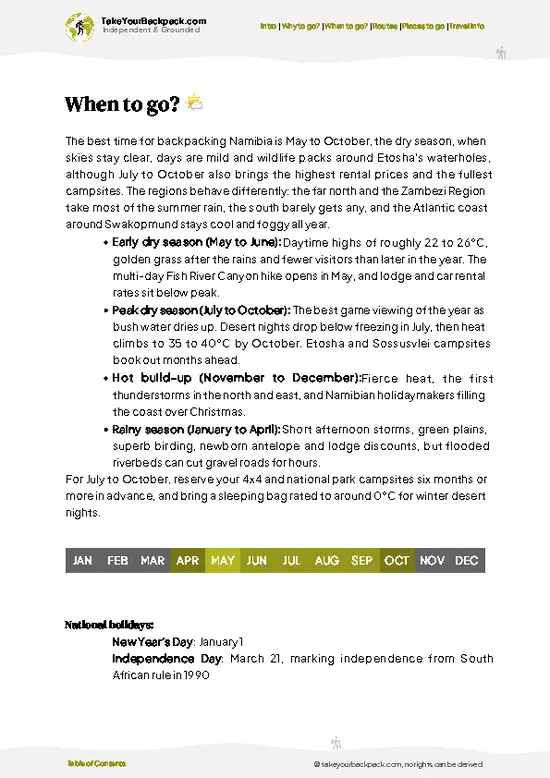
source: climatestotravel.comJANJanuary: fair for travelingFEBFebruary: fair for travelingMARMarch: fair for travelingAPRApril: fair for travelingMAYMay: highly recommended for travelingJUNJune: highly recommended for travelingJULJuly: excellent for travelingAUGAugust: excellent for travelingSEPSeptember: excellent for travelingOCTOctober: fair for travelingNOVNovember: fair for travelingDECDecember: fair for traveling
when-to-go

✈️ The backpacker research shortcutNamibia Travel Guide

An offline-friendly backpacking guide with optimized travel routes, ranked highlights, transport advice, and the best areas to stay.
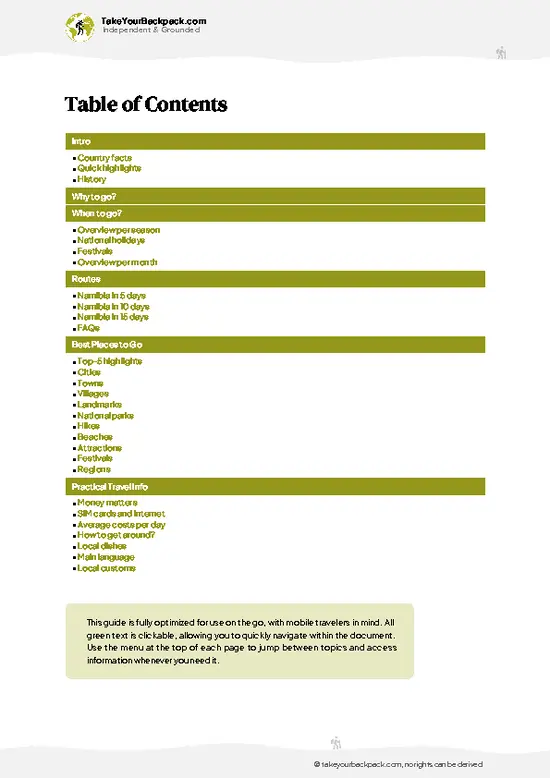
example page 0 from our offline Travel Guide for Namibia
example page 1 from our offline Travel Guide for Namibia
example page 2 from our offline Travel Guide for Namibia
example page 3 from our offline Travel Guide for Namibia
example page 4 from our offline Travel Guide for Namibia
example page 5 from our offline Travel Guide for Namibia
example page 6 from our offline Travel Guide for Namibia
example page 7 from our offline Travel Guide for Namibia
The digital guide (319 pages) contains:
79 highlights, ranked by travel appeal
Optimized 5, 10 & 15-day travel routes
Cities, national parks, landmarks, beaches
How to get around
Offline-friendly for travel without Wi-Fi
👉 Click to see all 30+ guide features

📅 Plan smarter in minutes, not weeks
Month by month travel advice
Festivals & national holidays
Budget expectations

🗺️ Go to the right places, skip the overrated ones
Honest pros & cons of destinations
Top hikes, parks & viewpoints
Lesser-known places most travelers miss
Clear “worth it vs skip it” guidance

🛏️ Travel smoothly without rookie mistakes
Best areas to stay
Transport systems explained simply
Common scams & safety advice
SIM cards, money & practical tips

🌍 Understand the country, not just visit it
Culture & traditions
52 Essential phrases & customs
Festivals worth planning around
Traveler-friendly historical context
Insights that make places more meaningful

📱 Built for real travel conditions
Fully downloadable PDF
Works completely offline
Optimized for phone use
Useful in remote areas & buses
Everything in one place
Save weeks of stressful planning
Get instant access to your full guide. 30‑day money-back guarantee.


By proceeding you agree to our terms.
Sent to your inbox immediately after payment • 100% Secure Checkout
Best Backpacking Travel Advisor 2025 tourism awardBest Backpacking
Travel Advisor
2025
What others say about Take Your Backpack Guides:
⭐⭐⭐⭐⭐
Fantastic, amazing amount of information!
⭐⭐⭐⭐⭐
My goodness this is amazing, it's what I've been looking for hats off too you!
⭐⭐⭐⭐⭐
I think this is absolutely BRILLIANT
⭐⭐⭐⭐
Very complete and informative. It's still missing places, but I gotta to commend you
⭐⭐⭐⭐⭐
This is truly amazing, thank you, can't wait to explore it with my kids!
⭐⭐⭐⭐⭐
Awesome resource, thank you!
⭐⭐⭐⭐⭐
This is amazing! Can't wait to explore the ones I haven't seen
⭐⭐⭐⭐
I love this! Well done, great idea.
⭐⭐⭐⭐⭐
Thanks for taking the time to make this gem!
⭐⭐⭐⭐⭐
This might be the best website I've ever seen.
⭐⭐⭐⭐⭐
Congratulations, and thank you so much for your work; it's incredibly valuable.
⭐⭐⭐⭐
In all seriousness I think you did a great job pointing out the important spots
⭐⭐⭐⭐⭐
10/10 very good
⭐⭐⭐⭐⭐
As someone who's only just starting to visit regularly this is awesome, thank you.
⭐⭐⭐⭐
Thank you very much! I'm going to visit my dad, it's going to be very useful!
⭐⭐⭐⭐⭐
This is really cool! We'll be travelling for the first time and this definitely come in handy.
⭐⭐⭐⭐⭐
You are now our minister of culture, congratulations 👨‍💼
⭐⭐⭐⭐⭐
Just wanted to tell you that this is a pearl! Going to follow your recommendations.
⭐⭐⭐⭐⭐
This is so cool. I'll definitely be using the resource for my travels soon.
⭐⭐⭐⭐⭐
This is very impressive! Good work.
⭐⭐⭐⭐⭐
This is an amazing and informative site. Very well done!

🛏️ Where to stay?Where staying makes the most sense

In Rundu, the best spot for backpackers is the area around the town center and the nearby riverside stretch. This zone pulses with local life—markets, street vendors, and small eateries where you can snag a cheap, hearty meal. It’s safe enough during daylight and early evening, which is when you want to be out soaking in the atmosphere anyway. The vibe here is casual and social, perfect for solo travelers looking to connect without the pretense of tourist traps.

Hostels and budget guesthouses cluster in this part, offering basic but clean accommodations that encourage mingling. Unlike the quieter … read more 👉
In Rundu, the best spot for backpackers is the area around the town center and the nearby riverside stretch. This zone pulses with local life—markets, street vendors, and small eateries where you can snag a cheap, hearty meal. It’s safe enough during daylight and early evening, which is when you want to be out soaking in the atmosphere anyway. The vibe here is casual and social, perfect for solo travelers looking to connect without the pretense of tourist traps.

Hostels and budget guesthouses cluster in this part, offering basic but clean accommodations that encourage mingling. Unlike the quieter residential neighborhoods farther from the center, this area hums with energy and easy access to transport options. Staying here means you’re steps from the Kavango River’s edge, where the light softens in the late afternoon, and the scent of wet earth and wood smoke drifts in the air—an authentic backdrop that makes the modest comforts feel like a gateway to the real Rundu.

🚌 Getting aroundMoving around without the hassle

Rundu moves at its own pace—neither frantic nor slow, but a steady rhythm that feels like the sun warming the red earth just right. The town’s pulse is set by the Okavango River, where fishermen’s boats drift lazily and markets buzz with a mix of local chatter and the scent of grilled fish. Time here isn’t dictated by strict timetables but by the flow of daily life, which means you’ll want to lean into a bit of flexibility. The streets aren’t crowded with honking cars; instead, you’ll find a blend of foot traffic, shared taxis, and the occasional motorbike weaving through. This isn’t a place where you race against the clock—it’s a place where understanding the local tempo unlocks smoother, more authentic travel.


  • Walking: The heart of Rundu is compact enough to explore on foot, especially
read more 👉
Rundu moves at its own pace—neither frantic nor slow, but a steady rhythm that feels like the sun warming the red earth just right. The town’s pulse is set by the Okavango River, where fishermen’s boats drift lazily and markets buzz with a mix of local chatter and the scent of grilled fish. Time here isn’t dictated by strict timetables but by the flow of daily life, which means you’ll want to lean into a bit of flexibility. The streets aren’t crowded with honking cars; instead, you’ll find a blend of foot traffic, shared taxis, and the occasional motorbike weaving through. This isn’t a place where you race against the clock—it’s a place where understanding the local tempo unlocks smoother, more authentic travel.


  • Walking: The heart of Rundu is compact enough to explore on foot, especially around the market and riverfront. Walking lets you soak in the dusty red soil underfoot and catch the aroma of street food stalls. It’s free, flexible, and perfect for short hops where you can pause to chat or snap photos.


  • Shared Minibus Taxis: These are the backbone of local transit, running from early morning (around 6 AM) until early evening (about 6 PM). Fares are cheap—usually just a few Namibian dollars—and minibuses follow loose routes rather than fixed stops, so flag one down anywhere along the road. They’re crowded and noisy but unbeatable for budget travelers who want to move like a local.


  • Motorbike Taxis (Okadas): For quicker, more flexible rides, motorbike taxis zip through traffic and can take you to places minibuses don’t reach easily. Expect to negotiate fares upfront; rides are affordable but less regulated. Helmets aren’t always standard, so hold on tight and enjoy the wind and the scent of the river.


  • Car Rentals: If you’re planning to explore beyond Rundu—like the nearby Mahango Game Park—renting a car is your best bet. Roads can be rough, so a 4x4 is ideal. Rentals start around mid-morning and return by sunset to avoid driving in the dark, when visibility drops and wildlife might cross unexpectedly.

👛 Costs (as of 19 January 2025)What things cost and how to budget

Backpacking in Rundu, Namibia, offers a raw, authentic experience with costs that reflect its remote, less-touristy vibe. Here’s what you can expect to spend day-to-day, broken down into practical categories:
  • Dorm Accommodation: Dorm beds in guesthouses or basic hostels typically run between $10 and $20 per night. These places are simple but clean, often with shared bathrooms and a chance to meet other travelers. Expect basic amenities and a quiet, laid-back atmosphere.
  • Meals: Local eateries and markets offer meals for around $3 to $7. You’ll find hearty, straightforward dishes—think grilled meats, maize porridge, and fresh vegetables. Western-style meals or dining at tourist-oriented spots can push closer to $10 or $12, but sticking to local joints keeps costs low and flavors genuine.
read more 👉
Backpacking in Rundu, Namibia, offers a raw, authentic experience with costs that reflect its remote, less-touristy vibe. Here’s what you can expect to spend day-to-day, broken down into practical categories:
  • Dorm Accommodation: Dorm beds in guesthouses or basic hostels typically run between $10 and $20 per night. These places are simple but clean, often with shared bathrooms and a chance to meet other travelers. Expect basic amenities and a quiet, laid-back atmosphere.
  • Meals: Local eateries and markets offer meals for around $3 to $7. You’ll find hearty, straightforward dishes—think grilled meats, maize porridge, and fresh vegetables. Western-style meals or dining at tourist-oriented spots can push closer to $10 or $12, but sticking to local joints keeps costs low and flavors genuine.
  • Local Transport: Getting around Rundu is mostly done by minibus taxis or shared rides, costing about $1 to $3 per trip within town. For longer trips or private hires, prices can rise to $10 or more, depending on distance. Walking is also a solid option in the compact town center, saving money and letting you soak in the street life.
  • Basic Activities/Entry Fees: Entry to local attractions like the Rundu Craft Market or nearby cultural sites usually costs between $2 and $5. Guided tours or river excursions on the Kavango River can range from $15 to $30, offering a deeper dive into the region’s natural and cultural richness.
  • Miscellaneous Expenses: This covers essentials like bottled water, snacks, or occasional internet access. Budget around $2 to $5 daily here. Keep in mind that some services, like ATM withdrawals, might carry fees, so plan accordingly.

All told, a realistic daily budget for backpacking in Rundu falls between $20 and $45. This range balances the basics with a few modest splurges, giving you enough flexibility to enjoy the town’s unique rhythms without breaking the bank.
⚠️ Prices can change and everyone travels differently, so take this as a rough guide. Hope it helps you plan your adventure!

🚌 Day tripsBest day trips from Rundu

Rundu, Namibia, is a backpacker’s launchpad for unforgettable day trips, blending adventure with local culture. The town’s laid-back vibe and strategic location make it easy to explore the surrounding wonders without the hassle of overnight gear.

Okavango River Cruise
A morning on the Okavango River is pure magic. Glide through the water, where the air is thick with the scent of wet earth and reeds. You’ll spot hippos lounging and birds flitting about, all while soaking in the tranquility. The trip takes about 30 minutes to reach the launch point, and a budget-friendly cruise can cost around $15. Early mornings are best to catch the sunrise and wildlife awakening. A common mistake? Forgetting sunscreen; the sun can be relentless even in the cooler months.


Caprivi Strip Explorationread more 👉
Rundu, Namibia, is a backpacker’s launchpad for unforgettable day trips, blending adventure with local culture. The town’s laid-back vibe and strategic location make it easy to explore the surrounding wonders without the hassle of overnight gear.

Okavango River Cruise
A morning on the Okavango River is pure magic. Glide through the water, where the air is thick with the scent of wet earth and reeds. You’ll spot hippos lounging and birds flitting about, all while soaking in the tranquility. The trip takes about 30 minutes to reach the launch point, and a budget-friendly cruise can cost around $15. Early mornings are best to catch the sunrise and wildlife awakening. A common mistake? Forgetting sunscreen; the sun can be relentless even in the cooler months.


Caprivi Strip Exploration
The Caprivi Strip is a vibrant stretch of land teeming with wildlife and culture. It’s about an hour’s drive from Rundu, and you can expect to spend around $20 on fuel and snacks. The best time to visit is during the dry season when animals congregate around water sources. You’ll encounter local villages, where the warmth of the people contrasts with the rugged landscape. Many first-timers underestimate the time needed to truly soak in the experience, so plan for a full day.
👉 Explore Caprivi Strip

Nkurenkuru Cultural Visit
Just an hour from Rundu, Nkurenkuru offers a deep dive into local traditions. Engage with the community, learn about their crafts, and savor traditional dishes. The journey costs about $10 for transport and a small fee for guided tours. Visit during the week to avoid crowds and get a more authentic experience. A common pitfall is rushing through; take your time to connect with the locals and appreciate their stories.
Want to know what more Namibia offers?
The Namibia Travel Guide describes 79 highlights, from cities to national parks, from beaches to hikes

Get the Travel Guide -

🛡️ SafetyScams, Hazards, and Annoyances

Rundu is generally safe, but like any place, awareness is key. Stick to well-lit areas at night; the riverfront can be serene but quiet, so avoid wandering alone after dark. When interacting with locals, be friendly but cautious—some may try to sell you trinkets or services that aren’t necessary.

Keep your belongings close, especially in busy markets where distractions can lead to pickpocketing. If you’re approached by someone asking for money, a polite smile and a firm “no” usually suffice. Embrace the local vibe, but trust your instincts; they’re your best guide in navigating this vibrant town.

Other Namibian towns near Rundu

Explore more nearby:

  • Tsumeb—mining heritage, green parks, museum collections, gateway to Etosha| 259 km away
  • Ondangwa—northern crossroads, airport access, local commerce, transport hub| 400 km away
  • Oshakati—northern business center, open-air markets, floodplain setting, urban sprawl| 429 km away

💡 Not sure where to go next?
Create a personalized itinerary for Namibia including Rundu and the places that fit your trip.

Generate my itinerary

👉 Discover all towns

Or checkout all Namibia has to offer (think cities, towns, villages, national parks, hikes, beaches, festivals)
Country photo of Namibia

We 💚 feedbackParting advice and final tips

Rundu pulses with a laid-back vibe that feels like a warm embrace. The best surprise? The local markets, bursting with color and the scent of spices. Just be ready for the heat; it can be relentless. Embrace the slow pace, and you’ll find the real magic in the connections you make.

✍️ Help improve this page!
The information on this page is based on in-depth research, insights shared by experienced travelers, and feedback from the local travel community in Namibia. While every effort is made to keep the information accurate and current, conditions can change — so if you spot anything incorrect or outdated, please get in touch.


🙋‍♂️ Give feedback

👋 Meet the founderWho’s Behind Take Your Backpack?

Johan, backpacker and founder of TakeYourBackpackHi, I’m Johan (Netherlands 🇳🇱), the creator of TakeYourBackpack. Over the past decade, I’ve backpacked through 80+ countries across six continents, gaining extensive experience with independent travel, long-term trips, and overland routes.

This site is built on a combination of firsthand travel experience and carefully curated insights from other backpackers. Many guides are based on places I’ve personally visited, while others bring together tips, observations, and practical advice shared by trusted travelers I’ve met along the way.

The goal is to provide realistic, experience-driven guidance — not generic itineraries — so you can explore destinations with better context, clearer expectations, and more confidence.

Get full Namibia guide •
Instant download • 79 highlights • Full Offline guide