×

Namibia🇳🇦 | townsTsumebmining heritage, green parks, museum collections, gateway to Etosha | things to do and best time to go

Explore Walvis BayExplore Rundu

Backpacking in Tsumeb
🏆 Top picktown ranked #6
By Johan Kruseman 🇳🇱 | Updated June 14, 2026

The first real fork in the road for travelers eyeing Tsumeb is this: do you treat it as a destination or a springboard? That choice matters because Tsumeb isn’t a showstopper on its own, but it’s the last real town before the wilds of Etosha National Park and the remote north. Tsumeb sits in northern Namibia, where the tar roads thin out and the air starts to taste like dust and copper. For backpackers, Tsumeb is a practical pause—think faded mining town with a few leafy streets, a couple of honest guesthouses, and a market that smells like fried vetkoek and engine oil. The town’s charm is subtle: a mining museum, a walkable center, and the kind of slow evenings where you’ll meet overlanders swapping stories at the hostel bar. It’s safer and less chaotic than Oshakati, but less scenic than Otjiwarongo. Buses and shared taxis make it accessible, but you’ll want your own wheels for real adventure. Costs are fair, nightlife is muted, and the real payoff is the sense of being on the edge of somewhere wilder.

Discover everything you want to know in the 📖 Namibia Travel Guide.


Get your Namibia guide
79 ranked highlights, routes & tips, works offline (319 pages)
Loading the map 🌍
CLICK TO FILTER
cities
towns
villages
landmarks
national parks
hikes
beaches
attractions
festivals
regions
SHOW COUNTRY’S BESTSHOW ALL

✨ Why go?
Ranked #6 town in Namibia
The unique appeal for travelers

Tsumeb serves as a gateway for backpackers exploring Namibia’s rugged beauty. Nestled between hikes and cultural sites, it’s a practical stopover that offers more than just a place to rest. The walkable streets invite you to wander, with small-scale hostels and guesthouses that feel like home. You’ll find friendly locals and fellow travelers sharing stories over hearty local food—think stews and freshly baked bread that warm you from the inside out.

Many backpackers linger here for a few days, soaking in the laid-back vibe, while others use it as a quick pit stop. It’s particularly appealing to slow travelers and hikers who appreciate the chance to recharge before tackling nearby trails or heading to the Etosha National Park. The atmosphere is more social than wild, making it perfect for … read more 👉
Tsumeb serves as a gateway for backpackers exploring Namibia’s rugged beauty. Nestled between hikes and cultural sites, it’s a practical stopover that offers more than just a place to rest. The walkable streets invite you to wander, with small-scale hostels and guesthouses that feel like home. You’ll find friendly locals and fellow travelers sharing stories over hearty local food—think stews and freshly baked bread that warm you from the inside out.

Many backpackers linger here for a few days, soaking in the laid-back vibe, while others use it as a quick pit stop. It’s particularly appealing to slow travelers and hikers who appreciate the chance to recharge before tackling nearby trails or heading to the Etosha National Park. The atmosphere is more social than wild, making it perfect for solo travelers or small groups looking to connect without the chaos of nightlife. Tsumeb is where the journey becomes as rewarding as the destination.
Want to include Tsumeb in your Namibia route?
Create a personalized Namibia itinerary that includes Tsumeb and the places that fit your trip — based on your travel style, budget, and available time. Get your route in seconds.

Generate my trip

💡 HighlightsWhat this place is best known for

  1. Tsumeb Museum — The best single place to get the town’s story: mining history, local ethnography and an impressive display of Tsumeb’s world-famous minerals. Small, compact and very walkable, it’s the place to start your visit.
  2. Tsumeb Mine headframe & viewing area — You can see where the town was born: the old mine works, slag heaps and headframe dominate the skyline. Even just standing on the perimeter and taking in the scale gives you a real sense of Tsumeb’s industrial past.
  3. Old railway station & preserved locomotive — A bit of transport history sits here: the station area and its heritage rolling stock are visible and make for good photos while you imagine the era when ore moved by rail across Namibia.
  4. Tsumeb Main Market — A lively, everyday slice of local life where you’ll find fresh
read more 👉
  1. Tsumeb Museum — The best single place to get the town’s story: mining history, local ethnography and an impressive display of Tsumeb’s world-famous minerals. Small, compact and very walkable, it’s the place to start your visit.
  2. Tsumeb Mine headframe & viewing area — You can see where the town was born: the old mine works, slag heaps and headframe dominate the skyline. Even just standing on the perimeter and taking in the scale gives you a real sense of Tsumeb’s industrial past.
  3. Old railway station & preserved locomotive — A bit of transport history sits here: the station area and its heritage rolling stock are visible and make for good photos while you imagine the era when ore moved by rail across Namibia.
  4. Tsumeb Main Market — A lively, everyday slice of local life where you’ll find fresh produce, snacks, basic crafts and friendly bargaining. Great for people-watching and picking up inexpensive souvenirs directly from artisans and vendors.
  5. Immanuel Lutheran Church — One of the town’s older churches; the building and the small adjacent cemetery reflect the German colonial era and the multi-cultural life that developed around mining. It’s worth a quiet walk-through.
  6. Tsumeb Golf Club — A surprisingly pleasant 9-hole course surrounded by termite mounds and acacia; good for a relaxed afternoon, a cool beer afterwards, and to meet locals away from the tourist trail.
  7. Town clock tower / civic square — The civic heart of Tsumeb: see period architecture, local noticeboards and the simple public spaces where town life unfolds. It’s small-town Namibia in a capsule and a convenient meeting point.
  8. Local craft shops & workshops — Several small, independent craft sellers and workshops in town make or sell woodwork, beaded goods and leather items. Visiting them supports local makers and gives a hands-on look at regional crafts.
  9. Tsumeb Recreation Park & municipal pool — A practical spot for cooling off, picnicking and seeing families at play. The pool and surrounding green space are a relaxed way to spend an afternoon and mingle with residents.
  10. Tsumeb Cemetery (historic graves) — The cemetery holds graves from different eras and communities; wandering respectfully through it gives a feel for the town’s layered past and the lives of miners, settlers and local families.
For day trips from Tsumeb try nearby Otjikoto and Guinas sinkhole lakes, and the southern entrances of Etosha National Park — all reachable as short excursions from town.
Spotted a mistake or missing something? Contact us.

🏘️ NeighborhoodsHow different areas shape the experience

Tsumeb, a charming town in Namibia, offers a unique blend of history and local culture, making it a worthwhile stop for backpackers. Here’s how to navigate its neighborhoods for the best experience.

Central Tsumeb: This is the heartbeat of the town. You’ll find local markets, shops, and eateries that serve authentic Namibian cuisine. The vibe is lively, especially during the day, with friendly locals and the scent of street food wafting through the air. It’s walkable, making it easy to explore on foot. Budget accommodations are available, perfect for short stays. Nightlife is low-key, with a few bars that close early.

Oshikoto Region: Just outside the town center, this area has a more residential feel. It’s quieter, ideal for those seeking a peaceful retreat after a day of exploration. The … read more 👉
Tsumeb, a charming town in Namibia, offers a unique blend of history and local culture, making it a worthwhile stop for backpackers. Here’s how to navigate its neighborhoods for the best experience.

Central Tsumeb: This is the heartbeat of the town. You’ll find local markets, shops, and eateries that serve authentic Namibian cuisine. The vibe is lively, especially during the day, with friendly locals and the scent of street food wafting through the air. It’s walkable, making it easy to explore on foot. Budget accommodations are available, perfect for short stays. Nightlife is low-key, with a few bars that close early.

Oshikoto Region: Just outside the town center, this area has a more residential feel. It’s quieter, ideal for those seeking a peaceful retreat after a day of exploration. The transport access is decent, with local taxis available. Accommodations here tend to be more spacious and suitable for longer stays, especially if you want to immerse yourself in local life.

Industrial Zone: While not a tourist hotspot, this area offers a glimpse into Tsumeb’s mining history. It’s less walkable and not particularly vibrant, but if you’re interested in the town’s industrial side, it’s worth a visit. Just be mindful of transport options, as they can be limited.

Each neighborhood has its own character, so choose based on what vibe you want to soak in.

⌛️ 1 dayWhat you can realistically do in a day

Tsumeb, Namibia, is a town steeped in mining history, where the echoes of the past mingle with the vibrant present. It’s a place where the air is tinged with the scent of earth and minerals, and the landscape is dotted with colorful buildings that tell stories of resilience and community.

Start your morning at the Tsumeb Museum, a small but rich repository of the town’s mining heritage. The exhibits are engaging, showcasing everything from ancient artifacts to the dazzling minerals that put Tsumeb on the map. Spend an hour here, soaking in the local history, and don’t miss the chance to chat with the friendly staff—they often have fascinating anecdotes that bring the displays to life.

Afterward, stroll through the nearby residential neighborhoods. The streets are lined with jacaranda trees, … read more 👉
Tsumeb, Namibia, is a town steeped in mining history, where the echoes of the past mingle with the vibrant present. It’s a place where the air is tinged with the scent of earth and minerals, and the landscape is dotted with colorful buildings that tell stories of resilience and community.

Start your morning at the Tsumeb Museum, a small but rich repository of the town’s mining heritage. The exhibits are engaging, showcasing everything from ancient artifacts to the dazzling minerals that put Tsumeb on the map. Spend an hour here, soaking in the local history, and don’t miss the chance to chat with the friendly staff—they often have fascinating anecdotes that bring the displays to life.

Afterward, stroll through the nearby residential neighborhoods. The streets are lined with jacaranda trees, their purple blooms creating a stunning canopy overhead. This is a great time to grab a coffee at a local café, where the aroma of freshly brewed beans fills the air. Engage with locals; they’re often eager to share their stories and recommendations.

In the afternoon, head to the Tsumeb Golf Club. Even if you’re not a golfer, the lush green fairways offer a peaceful escape. You can walk the grounds, enjoy the views, and perhaps even spot some local wildlife. If you’re feeling adventurous, consider a short drive to the nearby Otjikoto Lake. The crystal-clear waters are perfect for a refreshing dip, and the surrounding area is rich with birdlife.

As evening approaches, make your way to the town center. The local market comes alive with vendors selling handmade crafts and traditional foods. Try some biltong or kapana (street grilled meat) while you soak in the lively atmosphere.

End your day at a cozy guesthouse, where the warm hospitality will make you feel right at home. Tsumeb may not be on every tourist’s radar, but its charm lies in its authenticity and the connections you can forge. Each moment here is a step into a world that feels both timeless and alive.
Turn your Tsumeb visit into an Namibia adventure
Build a complete Namibia route with Tsumeb, hidden gems, must-see destinations, and realistic travel times included.

Generate my trip

🌤️ When to go?Best time to visit Tsumeb


  • Weather: Tsumeb’s dry season from May to October offers clear skies and minimal rain, perfect for trekking and exploring without mud or slippery trails. The wet season (November to April) brings sporadic showers that can turn roads to dust or mud, complicating travel.

  • Temperature: Daytime highs in the dry season hover around 22-28°C (72-82°F), with crisp mornings dipping to 5-10°C (41-50°F). This contrast means layering is key—cool mornings warm to comfortable afternoons. Wet season temps rise to 30°C (86°F) or more, with sticky humidity.

  • Daylight Hours: Around 11 to 12 hours of daylight year-round, but the dry season’s clearer skies make those hours feel brighter and longer, ideal for early starts and late finishes.

  • Crowds: Tourist numbers peak during the dry season, especially July
read more 👉

  • Weather: Tsumeb’s dry season from May to October offers clear skies and minimal rain, perfect for trekking and exploring without mud or slippery trails. The wet season (November to April) brings sporadic showers that can turn roads to dust or mud, complicating travel.

  • Temperature: Daytime highs in the dry season hover around 22-28°C (72-82°F), with crisp mornings dipping to 5-10°C (41-50°F). This contrast means layering is key—cool mornings warm to comfortable afternoons. Wet season temps rise to 30°C (86°F) or more, with sticky humidity.

  • Daylight Hours: Around 11 to 12 hours of daylight year-round, but the dry season’s clearer skies make those hours feel brighter and longer, ideal for early starts and late finishes.

  • Crowds: Tourist numbers peak during the dry season, especially July and August, when international travelers flock to Namibia. Tsumeb remains quieter than major hubs, but expect more local activity and guided tours then.

  • Seasonal Activities: Dry months favor hiking, wildlife spotting, and visiting the nearby Etosha National Park. The wet season brings lush landscapes and bird migrations but limits road access and some outdoor activities.

  • Price Fluctuations: Accommodation and tours cost more in the dry season’s peak months. Booking ahead secures better rates. The wet season offers lower prices but fewer options and less predictable conditions.


Pro-tip: Aim for late May or early September to catch dry, cool weather with fewer crowds and better prices—perfect for savoring Tsumeb’s rugged charm without the hassle.


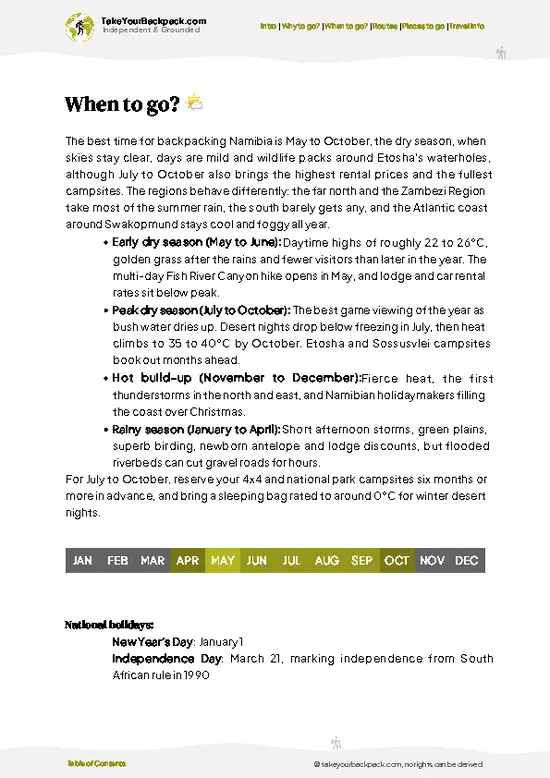
source: climatestotravel.comJANJanuary: fair for travelingFEBFebruary: fair for travelingMARMarch: fair for travelingAPRApril: good for travelingMAYMay: highly recommended for travelingJUNJune: highly recommended for travelingJULJuly: excellent for travelingAUGAugust: excellent for travelingSEPSeptember: highly recommended for travelingOCTOctober: highly recommended for travelingNOVNovember: fair for travelingDECDecember: fair for traveling
when-to-go

✈️ The backpacker research shortcutNamibia Travel Guide

An offline-friendly backpacking guide with optimized travel routes, ranked highlights, transport advice, and the best areas to stay.
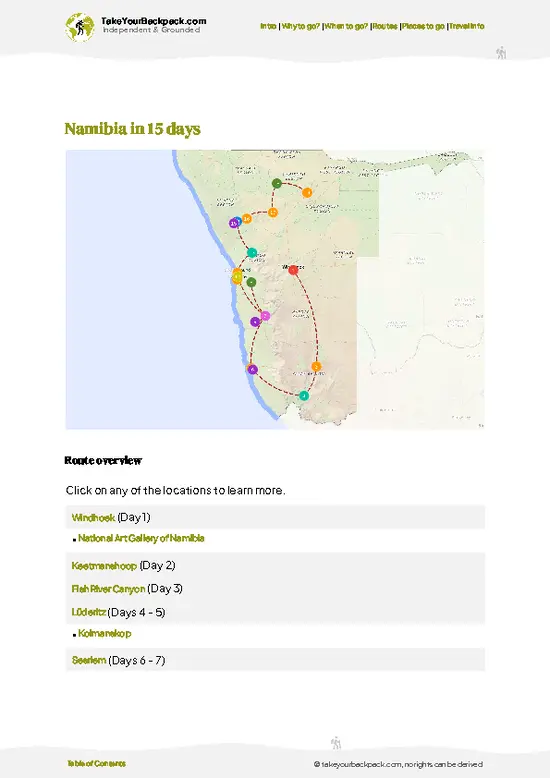
example page 0 from our offline Travel Guide for Namibia
example page 1 from our offline Travel Guide for Namibia
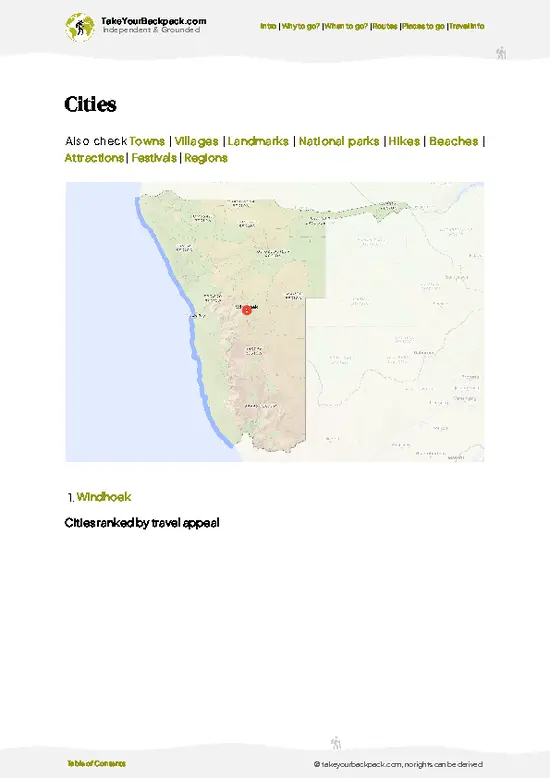
example page 2 from our offline Travel Guide for Namibia
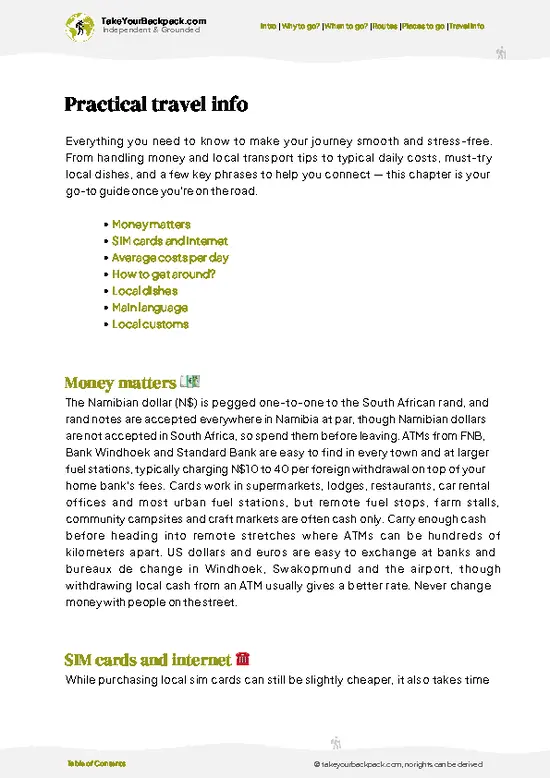
example page 3 from our offline Travel Guide for Namibia
example page 4 from our offline Travel Guide for Namibia
example page 5 from our offline Travel Guide for Namibia
example page 6 from our offline Travel Guide for Namibia
example page 7 from our offline Travel Guide for Namibia
The digital guide (319 pages) contains:
79 highlights, ranked by travel appeal
Optimized 5, 10 & 15-day travel routes
Cities, national parks, landmarks, beaches
How to get around
Offline-friendly for travel without Wi-Fi
👉 Click to see all 30+ guide features

📅 Plan smarter in minutes, not weeks
Month by month travel advice
Festivals & national holidays
Budget expectations

🗺️ Go to the right places, skip the overrated ones
Honest pros & cons of destinations
Top hikes, parks & viewpoints
Lesser-known places most travelers miss
Clear “worth it vs skip it” guidance

🛏️ Travel smoothly without rookie mistakes
Best areas to stay
Transport systems explained simply
Common scams & safety advice
SIM cards, money & practical tips

🌍 Understand the country, not just visit it
Culture & traditions
52 Essential phrases & customs
Festivals worth planning around
Traveler-friendly historical context
Insights that make places more meaningful

📱 Built for real travel conditions
Fully downloadable PDF
Works completely offline
Optimized for phone use
Useful in remote areas & buses
Everything in one place
Save weeks of stressful planning
Get instant access to your full guide. 30‑day money-back guarantee.


By proceeding you agree to our terms.
Sent to your inbox immediately after payment • 100% Secure Checkout
Best Backpacking Travel Advisor 2025 tourism awardBest Backpacking
Travel Advisor
2025
What others say about Take Your Backpack Guides:
⭐⭐⭐⭐⭐
Fantastic, amazing amount of information!
⭐⭐⭐⭐⭐
My goodness this is amazing, it's what I've been looking for hats off too you!
⭐⭐⭐⭐⭐
I think this is absolutely BRILLIANT
⭐⭐⭐⭐
Very complete and informative. It's still missing places, but I gotta to commend you
⭐⭐⭐⭐⭐
This is truly amazing, thank you, can't wait to explore it with my kids!
⭐⭐⭐⭐⭐
Awesome resource, thank you!
⭐⭐⭐⭐⭐
This is amazing! Can't wait to explore the ones I haven't seen
⭐⭐⭐⭐
I love this! Well done, great idea.
⭐⭐⭐⭐⭐
Thanks for taking the time to make this gem!
⭐⭐⭐⭐⭐
This might be the best website I've ever seen.
⭐⭐⭐⭐⭐
Congratulations, and thank you so much for your work; it's incredibly valuable.
⭐⭐⭐⭐
In all seriousness I think you did a great job pointing out the important spots
⭐⭐⭐⭐⭐
10/10 very good
⭐⭐⭐⭐⭐
As someone who's only just starting to visit regularly this is awesome, thank you.
⭐⭐⭐⭐
Thank you very much! I'm going to visit my dad, it's going to be very useful!
⭐⭐⭐⭐⭐
This is really cool! We'll be travelling for the first time and this definitely come in handy.
⭐⭐⭐⭐⭐
You are now our minister of culture, congratulations 👨‍💼
⭐⭐⭐⭐⭐
Just wanted to tell you that this is a pearl! Going to follow your recommendations.
⭐⭐⭐⭐⭐
This is so cool. I'll definitely be using the resource for my travels soon.
⭐⭐⭐⭐⭐
This is very impressive! Good work.
⭐⭐⭐⭐⭐
This is an amazing and informative site. Very well done!

🛏️ Where to stay?Where staying makes the most sense

The best spot for backpackers in Tsumeb is the area around the town center, especially near the main street where the pulse of local life hums steadily. This neighborhood strikes a rare balance: it’s safe enough to wander after dark, yet lively enough to meet fellow travelers and locals without feeling like a tourist bubble. The streets here catch the afternoon sun just right, warming the sidewalks and spilling golden light into the small cafés and markets where you can snag a cheap meal or a cold drink.

Hostels and guesthouses cluster in this zone, offering budget-friendly beds with a social … read more 👉
The best spot for backpackers in Tsumeb is the area around the town center, especially near the main street where the pulse of local life hums steadily. This neighborhood strikes a rare balance: it’s safe enough to wander after dark, yet lively enough to meet fellow travelers and locals without feeling like a tourist bubble. The streets here catch the afternoon sun just right, warming the sidewalks and spilling golden light into the small cafés and markets where you can snag a cheap meal or a cold drink.

Hostels and guesthouses cluster in this zone, offering budget-friendly beds with a social vibe that’s perfect for solo adventurers. You’ll find common rooms where conversations flow easily, often sparked by shared plans to explore the nearby Etosha National Park or the mining museum. Compared to the quieter residential outskirts, this central area keeps you plugged into the town’s rhythm without the noise or risk of less frequented neighborhoods.

Choosing to stay here means you’re not just avoiding sketchy spots—you’re stepping into a community hub where the local scent of grilled meat mingles with fresh earth, and where every evening feels like a chance to swap stories under a sky that’s vast and clear.

🚌 Getting aroundHow to get from A to B

Tsumeb moves at its own pace—neither frantic nor sluggish, but a steady rhythm that feels like the heartbeat of a mining town still proud of its roots. The sun casts a dry, golden light over the red dust streets, and the air carries a faint metallic tang from the nearby smelters. Here, schedules exist but they’re suggestions more than rules. You’ll find that the best way to get around is to blend a bit of patience with a keen eye for local cues—watch the flow of people, listen for the calls of minibus drivers, and don’t be surprised if a ride starts late or takes a detour. This isn’t a place where transit is about precision; it’s about reading the mood of the town and moving with it.


  • Walking: The heart of Tsumeb is compact enough to explore on foot. Streets are dusty but flat, and walking
read more 👉
Tsumeb moves at its own pace—neither frantic nor sluggish, but a steady rhythm that feels like the heartbeat of a mining town still proud of its roots. The sun casts a dry, golden light over the red dust streets, and the air carries a faint metallic tang from the nearby smelters. Here, schedules exist but they’re suggestions more than rules. You’ll find that the best way to get around is to blend a bit of patience with a keen eye for local cues—watch the flow of people, listen for the calls of minibus drivers, and don’t be surprised if a ride starts late or takes a detour. This isn’t a place where transit is about precision; it’s about reading the mood of the town and moving with it.


  • Walking: The heart of Tsumeb is compact enough to explore on foot. Streets are dusty but flat, and walking lets you soak in the scent of eucalyptus and the chatter from market stalls. It’s free, flexible, and perfect for spontaneous detours to local cafés or shops.


  • Minibus Taxis: These are the lifeblood of local transit, running from early morning around 6:30 AM until dusk, roughly 6 PM. Fares hover around 10-15 NAD (Namibian dollars), making them budget-friendly. They’re not the fastest, often stopping to pick up passengers mid-route, but they’re a direct window into daily life and a way to cover longer distances without breaking the bank.


  • Shared Taxis: Slightly more comfortable than minibuses, shared taxis operate on flexible schedules. They’re pricier—expect to pay about 30-50 NAD depending on distance—but they offer quicker trips to outlying areas like the nearby mining museum or the edge of the Etosha National Park. Negotiating the fare upfront is key; it’s part of the rhythm here.


  • Bicycle Rentals: If you want to stretch your legs beyond the town center, renting a bike is a smart move. The terrain is mostly flat with some gentle hills, and the dry air keeps things cool in the morning and evening. Rentals cost around 50-70 NAD per day, giving you freedom to explore at your own pace without relying on schedules or waiting for rides.


  • Hitchhiking: Common among locals and travelers alike, hitchhiking in Tsumeb is generally safe and often surprisingly efficient. The trade-off is unpredictability—you might wait a few minutes or half an hour—but it’s free and a chance to meet people who know the best routes and stories of the area.

👛 Costs (as of 18 January 2025)How expensive it really is

Backpacking in Tsumeb, Namibia, balances raw adventure with surprisingly manageable costs, making it a solid stop for independent travelers who want to stretch their budget without cutting corners.
  • Dorm Accommodation: Expect to pay around $10 to $20 per night for a bed in a basic guesthouse or hostel dorm. Options are limited but clean, often with shared bathrooms and a no-frills vibe. This is where you save but still get a safe, local atmosphere.
  • Meals: Local eateries serve hearty plates for $5 to $10. Think grilled meats, fresh bread, and simple sides—nothing fancy, but filling and authentic. If you shop at markets and cook yourself, you can drop this to about $3 to $6 daily.
  • Local Transport: Minibus taxis and shared rides are the norm, costing roughly $1 to $3 per trip within town or
read more 👉
Backpacking in Tsumeb, Namibia, balances raw adventure with surprisingly manageable costs, making it a solid stop for independent travelers who want to stretch their budget without cutting corners.
  • Dorm Accommodation: Expect to pay around $10 to $20 per night for a bed in a basic guesthouse or hostel dorm. Options are limited but clean, often with shared bathrooms and a no-frills vibe. This is where you save but still get a safe, local atmosphere.
  • Meals: Local eateries serve hearty plates for $5 to $10. Think grilled meats, fresh bread, and simple sides—nothing fancy, but filling and authentic. If you shop at markets and cook yourself, you can drop this to about $3 to $6 daily.
  • Local Transport: Minibus taxis and shared rides are the norm, costing roughly $1 to $3 per trip within town or to nearby spots. Walking is also practical given Tsumeb’s compact size, saving you money and letting you soak in the dry, dusty air and the scent of earth warmed by the sun.
  • Basic Activities/Entry Fees: Entry to local attractions like the Tsumeb Museum or nearby natural sites typically runs $2 to $5. Guided tours or special activities might push this higher, but casual exploration stays affordable.
  • Miscellaneous Expenses: Budget around $2 to $5 for essentials like water, snacks, or a local SIM card. These small purchases keep you comfortable and connected without breaking the bank.

All told, you’re looking at a daily spend between $20 and $40. This range covers the essentials without skimping on the experience—letting you focus on the sharp sunlight, the red dust underfoot, and the quiet hum of a town that feels like a gateway to Namibia’s wild heart.
⚠️ Prices can change and everyone travels differently, so take this as a rough guide. Hope it helps you plan your adventure!

🚌 Day tripsExploring the surroundings

Tsumeb, Namibia, is a backpacker’s dream hub, offering easy access to stunning landscapes and rich culture. Here are some day trips that make the most of your time in this vibrant town.

Etosha National Park
Just a couple of hours from Tsumeb, Etosha is a wildlife lover’s paradise. Picture yourself at a waterhole, watching elephants splash and lions lounge in the sun. The park is vast, so plan to spend the entire day exploring. Entry fees are around $10, and you can self-drive to save cash. The best time to visit is during the dry season (May to October) when animals congregate around water sources. A common rookie mistake? Underestimating the park’s size—bring plenty of water and snacks to keep your energy up.
👉 Explore Etosha National Park

Hoba Meteorite
Only about 40 kilometers from … read more 👉
Tsumeb, Namibia, is a backpacker’s dream hub, offering easy access to stunning landscapes and rich culture. Here are some day trips that make the most of your time in this vibrant town.

Etosha National Park
Just a couple of hours from Tsumeb, Etosha is a wildlife lover’s paradise. Picture yourself at a waterhole, watching elephants splash and lions lounge in the sun. The park is vast, so plan to spend the entire day exploring. Entry fees are around $10, and you can self-drive to save cash. The best time to visit is during the dry season (May to October) when animals congregate around water sources. A common rookie mistake? Underestimating the park’s size—bring plenty of water and snacks to keep your energy up.
👉 Explore Etosha National Park

Hoba Meteorite
Only about 40 kilometers from Tsumeb, the Hoba Meteorite is the largest known meteorite on Earth. It’s a quick trip, taking about 30 minutes by car. The site is free to visit, making it a budget-friendly option. The sheer size of the meteorite is awe-inspiring, and the surrounding area has a unique, arid beauty. Aim for early morning or late afternoon to avoid the heat and enjoy the golden light on the landscape. Many first-timers miss the small museum nearby, which offers fascinating insights into the meteorite’s history.


Twyfelfontein
A bit further afield, Twyfelfontein is about a two-hour drive. This UNESCO World Heritage site is famous for its ancient rock engravings. The guided tours cost around $5, and the experience is worth every cent. The rugged terrain and the stories etched into the rocks create a deep connection to the past. Visit in the cooler months (May to September) to avoid the scorching heat. A common oversight is not bringing a hat or sunscreen; the sun can be relentless out here.
👉 Explore Twyfelfontein

Waterberg Plateau
Roughly 90 minutes from Tsumeb, the Waterberg Plateau offers stunning views and hiking trails that cater to various skill levels. The entrance fee is about $10, and you can easily spend a day hiking and picnicking. The best time to go is during the cooler months, when the air is crisp and the skies are clear. Many backpackers overlook the shorter trails, thinking they need to tackle the longer ones for a good experience. Don’t miss the chance to enjoy the scenery without overexerting yourself.
👉 Explore Waterberg Plateau
Want to know what more Namibia offers?
The Namibia Travel Guide describes 79 highlights, from cities to national parks, from beaches to hikes

Get the Travel Guide -

🛡️ SafetyScams, Hazards, and Annoyances

Tsumeb is generally safe, but like any place, a little awareness goes a long way. Stick to well-lit areas at night, especially if you’re solo. The main streets are usually bustling, but quieter spots can feel a bit isolated after dark.

Keep an eye on your belongings, particularly in markets or crowded areas. While scams aren’t rampant, be cautious of overly friendly strangers who might offer unsolicited help. A polite but firm “no thanks” usually suffices.

Expect some everyday annoyances, like the occasional stray dog or a vendor who won’t take no for an answer. Just smile and walk away. Embrace the local rhythm, and you’ll find that most interactions are genuine. Carry yourself with confidence, and you’ll blend right in, enjoying Tsumeb’s charm without a hitch.

Other Namibian towns near Tsumeb

Explore more nearby:

  • Otjiwarongo—cheetah conservation, railway town, commercial center, savanna surrounds| 176 km away
  • Outjo—Etosha approach, small-town bakeries, fuel stop, local guesthouses| 190 km away
  • Ondangwa—northern crossroads, airport access, local commerce, transport hub| 237 km away

💡 Not sure where to go next?
Create a personalized itinerary for Namibia including Tsumeb and the places that fit your trip.

Generate my itinerary

👉 Discover all towns

Or checkout all Namibia has to offer (think cities, towns, villages, national parks, hikes, beaches, festivals)
Country photo of Namibia

We 💚 feedbackWhat to keep in mind

Tsumeb has a raw, unfiltered vibe that feels like a secret handshake among travelers. The best surprise? The local food scene—try the kapana (street-side grilled meat) for an explosion of flavor. Just be ready for the heat; it can be intense. Embrace the slow pace. It’s not about rushing through sights but soaking in the stories of the people and the land. That’s where the real magic happens.

✍️ Help improve this page!
The information on this page is based on in-depth research, insights shared by experienced travelers, and feedback from the local travel community in Namibia. While every effort is made to keep the information accurate and current, conditions can change — so if you spot anything incorrect or outdated, please get in touch.


🙋‍♂️ Give feedback

👋 Meet the founderWho’s Behind Take Your Backpack?

Johan, backpacker and founder of TakeYourBackpackHi, I’m Johan (Netherlands 🇳🇱), the creator of TakeYourBackpack. Over the past decade, I’ve backpacked through 80+ countries across six continents, gaining extensive experience with independent travel, long-term trips, and overland routes.

This site is built on a combination of firsthand travel experience and carefully curated insights from other backpackers. Many guides are based on places I’ve personally visited, while others bring together tips, observations, and practical advice shared by trusted travelers I’ve met along the way.

The goal is to provide realistic, experience-driven guidance — not generic itineraries — so you can explore destinations with better context, clearer expectations, and more confidence.

Get full Namibia guide •
Instant download • 79 highlights • Full Offline guide