×

Namibia🇳🇦 | national parksTsau ǁKhaeb National ParkKolmanskop ruins, Bogenfels Arch, Sperrgebiet, succulent gravel plains | things to do and best time to go

Explore Mangetti National ParkExplore Skeleton Coast

Backpacking in Tsau ǁKhaeb
🌟 Highlightnational park ranked #4
By Johan Kruseman 🇳🇱 | Updated October 22, 2026

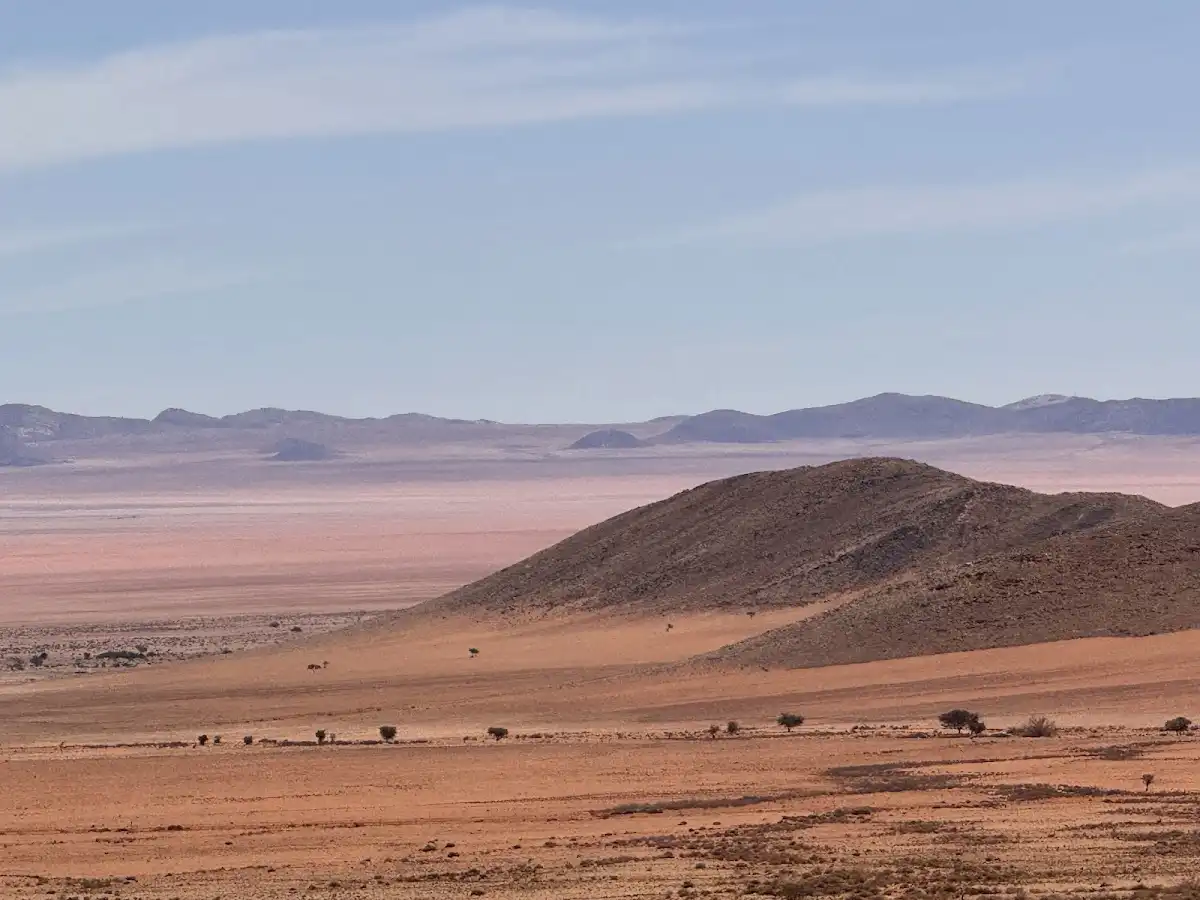
Inside the roofless rooms of Kolmanskop, wind-rippled sand lies knee-deep across old parquet floors, and the only sound is grit hissing against peeling wallpaper. This ghost town sits within Tsau ǁKhaeb National Park, in the far southwest of Namibia, just inland from Lüderitz. The park is the former Sperrgebiet, or “forbidden area,” a diamond zone sealed off for a century, so its fog-fed desert, succulent plants and empty coast are unusually intact. The trade-off is access. Most of the park is closed, there are no self-drive trails, and wandering off is not allowed. Expect cold sea mist, sandblasting gusts and almost no shade. Book a permit or guided tour in Lüderitz a day or two ahead so you are not turned away, and carry water and a windproof layer, since nothing is sold in the park.

Discover everything you want to know in the 📖 Namibia Travel Guide.


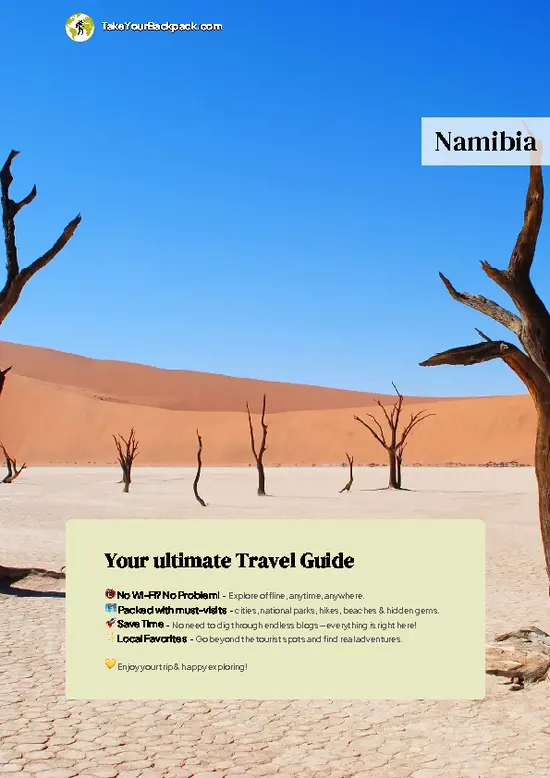
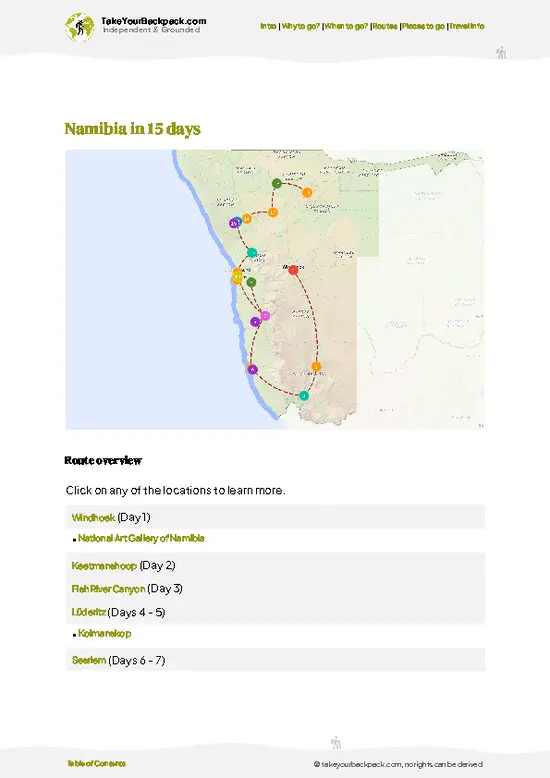
example page 0 from our offline Travel Guide for Namibia
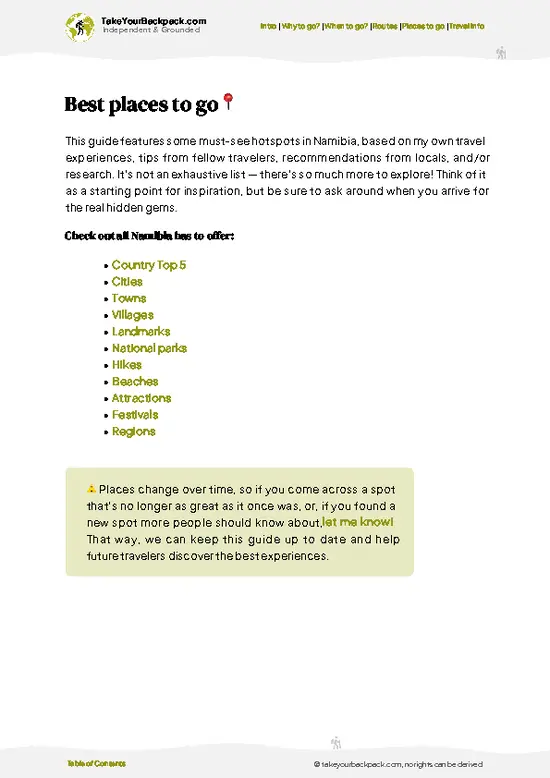
example page 1 from our offline Travel Guide for Namibia
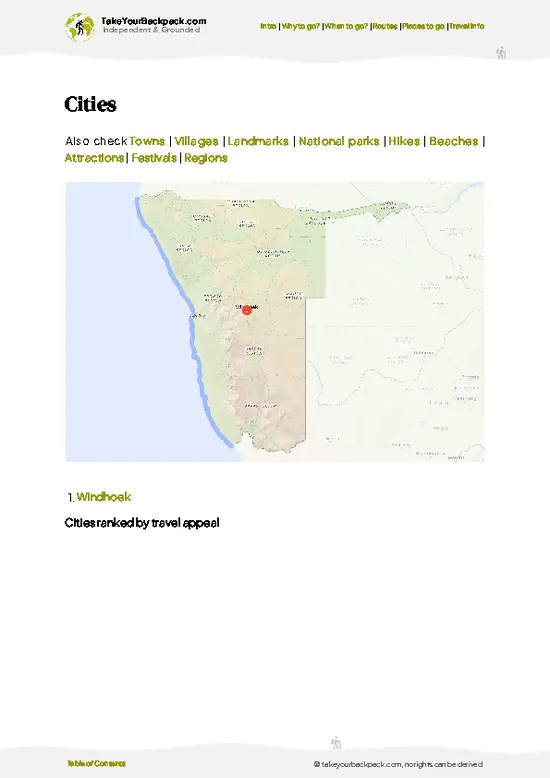
example page 2 from our offline Travel Guide for Namibia
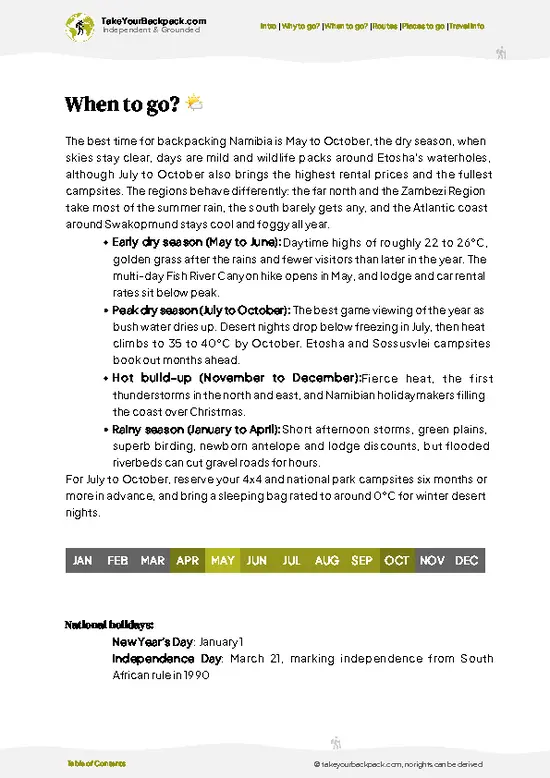
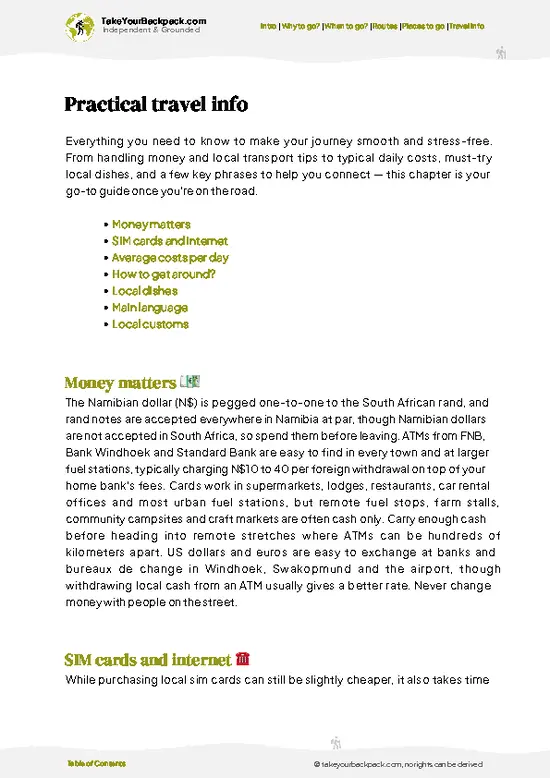
example page 3 from our offline Travel Guide for Namibia
example page 4 from our offline Travel Guide for Namibia
example page 5 from our offline Travel Guide for Namibia
example page 6 from our offline Travel Guide for Namibia
example page 7 from our offline Travel Guide for Namibia
Loading the map 🌍
CLICK TO FILTER
cities
towns
villages
landmarks
national parks
hikes
beaches
attractions
festivals
regions
SHOW COUNTRY’S BESTSHOW ALL

✨ Why go?
Ranked #4 national park in Namibia
Why visitors keep coming back

Tsau ǁKhaeb National Park, the former Sperrgebiet, draws backpackers who want a landscape that was sealed off for about a century and is now opening up. For decades the diamond zone kept everyone out, so the dunes, quartz plains and succulent-covered hills south of Lüderitz and around Aus feel unwalked. Access still runs through permits and a few approved routes, which is why this park suits self-guided travelers who like planning more than tours. Independent exploration here means a 4x4 or a guide-led arrangement, and I would sort that out before arriving.

The ghost town of Kolmanskop sits just outside the park's edge, with sand drifting through the doorways of old German-era houses. Inside the protected area, the Namib Desert's succulent Karoo is among the most plant-diverse arid regions … read more 👉
Tsau ǁKhaeb National Park, the former Sperrgebiet, draws backpackers who want a landscape that was sealed off for about a century and is now opening up. For decades the diamond zone kept everyone out, so the dunes, quartz plains and succulent-covered hills south of Lüderitz and around Aus feel unwalked. Access still runs through permits and a few approved routes, which is why this park suits self-guided travelers who like planning more than tours. Independent exploration here means a 4x4 or a guide-led arrangement, and I would sort that out before arriving.

The ghost town of Kolmanskop sits just outside the park's edge, with sand drifting through the doorways of old German-era houses. Inside the protected area, the Namib Desert's succulent Karoo is among the most plant-diverse arid regions on earth, and in the right season the ground is dotted with tiny flowering plants. Look for gemsbok, springbok and ostrich on the open flats, and the wild horses of the Namib near Aus in the neighboring zone. Camping around Aus is the budget base, with cooler nights and wide open sky. Expect wind, grit and long, empty gravel roads.

💡 HighlightsMust-see experiences and standout moments

  1. Kolmanskop Ghost Town: The park’s best-known sight. A German-built diamond settlement abandoned in the 1950s, with a casino, bowling alley, hospital and ice factory slowly filling with dunes. Entry costs roughly US$10, and the hour after opening has the best low light.
  2. Bogenfels Arch: A freestanding rock arch about 55 meters high, rising from the Atlantic shoreline. Reached only on guided permit tours, which cross open desert and old mining ground.
  3. Pomona Ghost Town: A smaller, more remote mining ruin on the gravel plains, with rusting machinery and wind-scoured buildings. It feels far lonelier than Kolmanskop.
  4. Elizabeth Bay: A former diamond-mining town on the coast, strung along a windy bay. It gives a clear picture of how industrial this wilderness once was.
  5. Succulent Karoo flora: Tiny lithops-type
… read more 👉
  1. Kolmanskop Ghost Town: The park’s best-known sight. A German-built diamond settlement abandoned in the 1950s, with a casino, bowling alley, hospital and ice factory slowly filling with dunes. Entry costs roughly US$10, and the hour after opening has the best low light.
  2. Bogenfels Arch: A freestanding rock arch about 55 meters high, rising from the Atlantic shoreline. Reached only on guided permit tours, which cross open desert and old mining ground.
  3. Pomona Ghost Town: A smaller, more remote mining ruin on the gravel plains, with rusting machinery and wind-scoured buildings. It feels far lonelier than Kolmanskop.
  4. Elizabeth Bay: A former diamond-mining town on the coast, strung along a windy bay. It gives a clear picture of how industrial this wilderness once was.
  5. Succulent Karoo flora: Tiny lithops-type stone plants, vygies and other succulents cling to quartz gravel. They are easy to miss unless a guide points them out, and they look best after fog.
  6. Coastal dunes and skeleton shoreline: Pale dunes meet cold surf, with whale bones and kelp tangles on the beach. Expect strong wind and a salty, cold-metal smell.
  7. Desert wildlife: Gemsbok, springbok and ostrich cross the plains, and jackals and brown hyenas patrol the coast at night. Sightings are chance encounters rather than promises.
Tsau ǁKhaeb National Park requires a permit for everything beyond the Kolmanskop visit, and Bogenfels and the mining sites must be booked ahead through a Lüderitz operator.
Spotted a mistake or missing something? Contact us.
🌤️ When to go?When to go for the best experience

May to September is the most comfortable window for Tsau ǁKhaeb National Park, the former Sperrgebiet in the Namib desert near Lüderitz and Aus (the park itself is largely closed to independent hiking, so most visits are guided or along its edges).
  • Cool Dry Season (May to September): Days reach 18 to 25°C (64 to 77°F), nights drop to 5 to 10°C (41 to 50°F). Daylight lasts about 11 hours. Cold Atlantic wind and fog hit the coast.
  • Hot Season (October to March): Inland highs reach 30 to 38°C (86 to 100°F), and midday walking is punishing. Daylight stretches to about 13.5 hours. Coastal areas stay cooler at 18 to 24°C (64 to 75°F).
  • Rain (February to April): Rain is scarce, under 100 mm a year, but brief storms can make gravel roads slick.
  • Crowds and Prices: Namibian school holidays (December to January,
… read more 👉
May to September is the most comfortable window for Tsau ǁKhaeb National Park, the former Sperrgebiet in the Namib desert near Lüderitz and Aus (the park itself is largely closed to independent hiking, so most visits are guided or along its edges).
  • Cool Dry Season (May to September): Days reach 18 to 25°C (64 to 77°F), nights drop to 5 to 10°C (41 to 50°F). Daylight lasts about 11 hours. Cold Atlantic wind and fog hit the coast.
  • Hot Season (October to March): Inland highs reach 30 to 38°C (86 to 100°F), and midday walking is punishing. Daylight stretches to about 13.5 hours. Coastal areas stay cooler at 18 to 24°C (64 to 75°F).
  • Rain (February to April): Rain is scarce, under 100 mm a year, but brief storms can make gravel roads slick.
  • Crowds and Prices: Namibian school holidays (December to January, and July to August) fill lodges around Lüderitz and Aus, with rates rising about 10 to 25 percent.
Book guided access and Aus beds a few weeks ahead for July and August.


source: climatestotravel.comJANJanuary: fair for travelingFEBFebruary: fair for travelingMARMarch: fair for travelingAPRApril: good for travelingMAYMay: excellent for travelingJUNJune: excellent for travelingJULJuly: excellent for travelingAUGAugust: excellent for travelingSEPSeptember: highly recommended for travelingOCTOctober: highly recommended for travelingNOVNovember: highly recommended for travelingDECDecember: good for traveling
namibia-national-park-tsau-khaeb-national-park
© Google |

✈️ The backpacker research shortcutNamibia Travel Guide

An offline-friendly backpacking guide with optimized travel routes, ranked highlights, transport advice, and the best areas to stay.
example page 0 from our offline Travel Guide for Namibia
example page 1 from our offline Travel Guide for Namibia
example page 2 from our offline Travel Guide for Namibia
example page 3 from our offline Travel Guide for Namibia
example page 4 from our offline Travel Guide for Namibia
example page 5 from our offline Travel Guide for Namibia
example page 6 from our offline Travel Guide for Namibia
example page 7 from our offline Travel Guide for Namibia
The digital guide (294 pages) contains:
✅ 71 highlights, ranked by travel appeal
✅ Optimized 5, 10 & 15-day travel routes
✅ Cities, national parks, landmarks, beaches
✅ How to get around
✅ Offline-friendly for travel without Wi-Fi
👉 Click to see all 30+ guide features

📅 Plan smarter in minutes, not weeks
✅ Month by month travel advice
✅ Festivals & national holidays
✅ Budget expectations

🗺️ Go to the right places, skip the overrated ones
✅ Honest pros & cons of destinations
✅ Top hikes, parks & viewpoints
✅ Lesser-known places most travelers miss
✅ Clear “worth it vs skip it” guidance

🛏️ Travel smoothly without rookie mistakes
✅ Best areas to stay
✅ Transport systems explained simply
✅ Common scams & safety advice
✅ SIM cards, money & practical tips

🌍 Understand the country, not just visit it
✅ Culture & traditions
✅ 52 Essential phrases & customs
✅ Festivals worth planning around
✅ Traveler-friendly historical context
✅ Insights that make places more meaningful

📱 Built for real travel conditions
✅ Fully downloadable PDF
✅ Works completely offline
✅ Optimized for phone use
✅ Useful in remote areas & buses
✅ Everything in one place
Stop searching, start planning
Get instant access to your full guide. 30‑day money-back guarantee.
+ Add another guide for just

By proceeding you agree to our terms.
Sent to your inbox immediately after payment • 100% Secure Checkout
Best Backpacking Travel Advisor 2025 tourism awardBest Backpacking
Travel Advisor
2025
What others say about Take Your Backpack Guides:
⭐⭐⭐⭐⭐
Fantastic, amazing amount of information!
⭐⭐⭐⭐⭐
My goodness this is amazing, it's what I've been looking for hats off too you!
⭐⭐⭐⭐⭐
I think this is absolutely BRILLIANT
⭐⭐⭐⭐
Very complete and informative. It's still missing places, but I gotta to commend you
⭐⭐⭐⭐⭐
This is truly amazing, thank you, can't wait to explore it with my kids!
⭐⭐⭐⭐⭐
Awesome resource, thank you!
⭐⭐⭐⭐⭐
This is amazing! Can't wait to explore the ones I haven't seen
⭐⭐⭐⭐
I love this! Well done, great idea.
⭐⭐⭐⭐⭐
Thanks for taking the time to make this gem!
⭐⭐⭐⭐⭐
This might be the best website I've ever seen.
⭐⭐⭐⭐⭐
Congratulations, and thank you so much for your work; it's incredibly valuable.
⭐⭐⭐⭐
In all seriousness I think you did a great job pointing out the important spots
⭐⭐⭐⭐⭐
10/10 very good
⭐⭐⭐⭐⭐
As someone who's only just starting to visit regularly this is awesome, thank you.
⭐⭐⭐⭐
Thank you very much! I'm going to visit my dad, it's going to be very useful!
⭐⭐⭐⭐⭐
This is really cool! We'll be travelling for the first time and this definitely come in handy.
⭐⭐⭐⭐⭐
You are now our minister of culture, congratulations 👨‍💼
⭐⭐⭐⭐⭐
Just wanted to tell you that this is a pearl! Going to follow your recommendations.
⭐⭐⭐⭐⭐
This is so cool. I'll definitely be using the resource for my travels soon.
⭐⭐⭐⭐⭐
This is very impressive! Good work.
⭐⭐⭐⭐⭐
This is an amazing and informative site. Very well done!

🛏️ Where to stay?Best areas and accommodation options

Aus is the best base for Tsau ǁKhaeb National Park, with Lüderitz as the alternative on the coast. No public accommodation or campsite exists inside the park, which was long a restricted diamond area, so you sleep outside its boundary.
Aus is a tiny village about 120 km east of Lüderitz on the B4. Options include Klein-Aus Vista, whose Desert Horse Campsite and Eagle’s Nest chalets sit among granite boulders, with camping from about US$12 to 20 per person and chalets from US$80 to 150. Aus Mountain Hotel and Bahnhof Hotel offer simple rooms in the village center. The area has short hiking trails … read more 👉
Aus is the best base for Tsau ǁKhaeb National Park, with Lüderitz as the alternative on the coast. No public accommodation or campsite exists inside the park, which was long a restricted diamond area, so you sleep outside its boundary.
Aus is a tiny village about 120 km east of Lüderitz on the B4. Options include Klein-Aus Vista, whose Desert Horse Campsite and Eagle’s Nest chalets sit among granite boulders, with camping from about US$12 to 20 per person and chalets from US$80 to 150. Aus Mountain Hotel and Bahnhof Hotel offer simple rooms in the village center. The area has short hiking trails and the wild desert horses of Garub are nearby.
Lüderitz is the larger town, with a handful of guesthouses and backpacker-style rooms. Dorms or budget rooms run roughly US$20 to 60 per night, and you will find restaurants, supermarkets, fuel and tour operators there. The town is where most guided trips into the park, and to Kolmanskop ghost town, are arranged.
For backpackers without a vehicle, Lüderitz has easier access to shops and tours, while Aus suits those with a car wanting quiet stargazing and trails.

👛 Costs (as of 22 October 2026)How expensive it really is

Expect to spend about US$75 per day around Tsau ǁKhaeb National Park, based on a budget traveler using Aus or Lüderitz as a base. Costs are paid in Namibian dollars or South African rand, and card payment works in towns but not in the field.
CategoryBudget RangeLocal Reality
Entrance and permitUS$10 to 25Access is controlled, so fees are usually bundled into a guided tour or permit arranged through a Lüderitz operator.
Accommodation (high season)US$15 to 40Camping near Aus runs US$12 to 20 per person, while budget rooms in Lüderitz cost more in school holidays.
Accommodation (low season)US$12 to 30Rates ease from May to September outside school breaks, and you can often bargain for longer stays.
Local transportUS$10 to 25Fuel is the main expense for a car. Minibuses between towns are rare, so tours
… read more 👉
Expect to spend about US$75 per day around Tsau ǁKhaeb National Park, based on a budget traveler using Aus or Lüderitz as a base. Costs are paid in Namibian dollars or South African rand, and card payment works in towns but not in the field.
CategoryBudget RangeLocal Reality
Entrance and permitUS$10 to 25Access is controlled, so fees are usually bundled into a guided tour or permit arranged through a Lüderitz operator.
Accommodation (high season)US$15 to 40Camping near Aus runs US$12 to 20 per person, while budget rooms in Lüderitz cost more in school holidays.
Accommodation (low season)US$12 to 30Rates ease from May to September outside school breaks, and you can often bargain for longer stays.
Local transportUS$10 to 25Fuel is the main expense for a car. Minibuses between towns are rare, so tours or shared rides fill the gap.
Food and suppliesUS$10 to 20Supermarkets in Lüderitz stock self-catering basics. Seafood meals cost US$8 to 15 in town.
Guided activityUS$5 to 15Add-on tours, such as Kolmanskop entry at around US$10 to 15, push this higher.
Total Daily BudgetUS$75Lower if you camp and cook, higher with a rental car.
⚠️ Prices can change and everyone travels differently, so take this as a rough guide. Hope it helps you plan your adventure!

🥾 TrailsDiscover Tsau ǁKhaeb's top trails and natural wonders

Tsau ǁKhaeb National Park has no network of marked hiking trails, because most of it remains a restricted diamond area. Walking happens in short, guided or permitted stretches, and the terrain is open desert: soft sand, wind-packed gravel and rocky coast with almost no shade.
  • Kolmanskop town walk: Start at the entrance building and follow the sandy lanes between the manager’s house, the hall and the hospital. Allow one to two hours, or longer for photography. Easy, though sand is heavy underfoot and wind can be sharp.
  • Bogenfels coastal walk: On a guided tour, you step out near the arch and walk
… read more 👉
Tsau ǁKhaeb National Park has no network of marked hiking trails, because most of it remains a restricted diamond area. Walking happens in short, guided or permitted stretches, and the terrain is open desert: soft sand, wind-packed gravel and rocky coast with almost no shade.
  • Kolmanskop town walk: Start at the entrance building and follow the sandy lanes between the manager’s house, the hall and the hospital. Allow one to two hours, or longer for photography. Easy, though sand is heavy underfoot and wind can be sharp.
  • Bogenfels coastal walk: On a guided tour, you step out near the arch and walk over rough shoreline and rocky ground for about an hour. Moderate, with uneven footing and strong wind off the sea.
  • Pomona and mine-site wanders: Guided stops among the ruins are short, usually under an hour, over flat gravel plains. Easy, but exposed to sun and gusts.
  • Plant-spotting loops: Guides lead slow strolls over quartz gravel to find stone-like succulents. These take 30 to 45 minutes and are easy but need careful steps.
Wildlife is sparse and subtle: gemsbok and springbok in the distance, small reptiles, and the odd jackal track near the coast. Fog is common in the morning, then gives way to bright, glaring light.
Getting there is simple only as far as Lüderitz, which has buses and shared transport from the interior; the park entrance for Kolmanskop is a short drive or taxi ride from town. Beyond that, you need a permit or a guided tour from a Lüderitz operator. Crowds are small, though Kolmanskop fills with photographers in the morning. An entrance fee applies at Kolmanskop, roughly US$10, and guided excursions into the wider park cost considerably more.
⚠️ Hiking info can sometimes be outdated or inaccurate. Before you hit the trail, check the latest conditions with locals. If you do spot anything that's off, I'd love to hear from you, so I can update it for fellow travelers.

🛡️ SafetyStaying Safe: What Travelers Should Know

Tsau ǁKhaeb National Park is remote desert, and the main hazards are heat, wind and isolation rather than wildlife. Access is controlled, so you generally enter only with a permit or an authorized guide, which keeps navigation and route choices simple for visitors.
Carry at least 4 liters of water per person per day, as there are no shops or taps in the park. Summer midday heat can top 35°C (95°F), so start walks early, wear a hat and use sunscreen. Cold coastal fog and wind can drop temperatures sharply, so keep a windproof layer handy.
Gravel and sand roads are corrugated and soft in patches. Drive slowly, carry two spares and tell someone your route, since mobile signal is patchy. Stay on marked tracks, as the area contains old mining zones and fragile ground. Wildlife such as oryx, springbok … read more 👉
Tsau ǁKhaeb National Park is remote desert, and the main hazards are heat, wind and isolation rather than wildlife. Access is controlled, so you generally enter only with a permit or an authorized guide, which keeps navigation and route choices simple for visitors.
Carry at least 4 liters of water per person per day, as there are no shops or taps in the park. Summer midday heat can top 35°C (95°F), so start walks early, wear a hat and use sunscreen. Cold coastal fog and wind can drop temperatures sharply, so keep a windproof layer handy.
Gravel and sand roads are corrugated and soft in patches. Drive slowly, carry two spares and tell someone your route, since mobile signal is patchy. Stay on marked tracks, as the area contains old mining zones and fragile ground. Wildlife such as oryx, springbok and the odd spotted hyena is shy, so keep your distance and never feed animals.

FAQCommon questions from travelers

Plan on 1 to 2 days for Tsau ǁKhaeb National Park, as access is limited to guided or permitted trips. A full day tour from Lüderitz covers the main desert and coastal viewpoints, and adding a night in Aus lets you see the Garub wild horses and Klein-Aus Vista trails.
Visiting Tsau ǁKhaeb National Park without a car is difficult but possible through guided tours from Lüderitz. Public transport is almost nonexistent, and the B4 road between Aus and Lüderitz is about 120 km, roughly 1.5 hours by vehicle. Shuttles and shared rides sometimes run, so ask your guesthouse in Lüderitz.
Yes, Tsau ǁKhaeb National Park requires a permit, and most visitors get access through a licensed operator. Expect to pay roughly US$10 to 25 per person, often bundled into a tour price, plus extra costs for Kolmanskop at about US$10 to 15. Arrange permits in Lüderitz or through the Namibia Wildlife Resorts offices in advance.
⚠️ Things can change over time, so always validate details locally before you go.

Other Namibian national parks near Tsau ǁKhaeb

Explore more nearby:


💡 Not sure where to go next?
Create a personalized itinerary for Namibia including Tsau ǁKhaeb and the places that fit your trip.

Generate my itinerary

👉 Discover all national parks

Or checkout all Namibia has to offer (think cities, towns, villages, national parks, hikes, beaches, festivals)
Country photo of Namibia

We 💚 feedbackFinal thoughts on exploring Tsau ǁKhaeb

Tsau ǁKhaeb National Park is a place people try to see in one rushed Kolmanskop stop, and then they leave without learning that the quiet interior exists. I would book a guided outing to Bogenfels or Pomona as well, and take a scarf for the sand, because the wind finds every gap in a jacket.

✍️ Help improve this page!
The information on this page is based on in-depth research, insights shared by experienced travelers, and feedback from the local travel community in Namibia. While every effort is made to keep the information accurate and current, conditions can change — so if you spot anything incorrect or outdated, please get in touch.


🙋‍♂️ Give feedback

👋 Meet the founderWho’s Behind Take Your Backpack?

Johan, backpacker and founder of TakeYourBackpackHi, I’m Johan (Netherlands 🇳🇱), the creator of TakeYourBackpack. Over the past 3 decades, I’ve backpacked through 90+ countries across six continents, gaining extensive experience with independent travel, long-term trips, and overland routes.

This site is built on a combination of firsthand travel experience and carefully curated insights from other backpackers. Many guides are based on places I’ve personally visited, while others bring together tips, observations, and practical advice shared by trusted travelers I’ve met along the way.

The goal is to provide realistic, experience-driven guidance — not generic itineraries — so you can explore destinations with better context, clearer expectations, and more confidence.