×

Nepal🇳🇵 | hikesTsum Valley Trekremote villages, Buddhist monasteries, Himalayan foothills | things to do and best time to go

Explore Upper Mustang TrekExplore Mardi Himal Trek

Backpacking in Tsum Valley Trek
👌 Worth visitinghike ranked #9
By Johan Kruseman 🇳🇱 | Updated June 8, 2026

You have to choose, before you lace your boots: do you want the comfort and teahouse buzz of Nepal’s big-name circuits, or are you willing to trade that for rougher trails and quieter monasteries in Tsum Valley? That choice matters, because once you turn off the Manaslu route and head into this side valley in northern Gorkha, near the Tibetan border, everything slows down and strips back. The Tsum Valley Trek runs around 10–14 days, not brutally steep but relentless enough that the altitude and long days bite. Buses and jeeps from Kathmandu get you to the trailhead with more dust than dignity. In return you get cliff-hugging gompas, wide stone villages, and a silence you’ll never find on Annapurna. Fewer comforts, more soul.

Discover everything you want to know in the 📖 Nepal Travel Guide.
Best time to go: March - May, September - November
Duration: 16 days
Distance: 160 kilometers
Total ascent: 3,000 meters


Get your Nepal guide
107 ranked highlights, routes & tips, works offline (402 pages)
Loading the map 🌍
CLICK TO FILTER
cities
towns
villages
landmarks
national parks
hikes
attractions
festivals
regions
SHOW COUNTRY’S BESTSHOW ALL

✨ Why go?
Ranked #9 hike in Nepal
Why Tsum Valley Trek should be on your travel list

The Tsum Valley Trek in Nepal is a magnet for backpackers craving both challenge and reward. You’ll find a scenery-to-effort ratio that’s hard to beat. Picture this: lush valleys, towering peaks, and ancient monasteries dotting the landscape. Each step feels earned, and the views? They’ll steal your breath away.

Getting there is a breeze. Public transport whisks you from Kathmandu to the trailhead, making it accessible without breaking the bank. The low cost of food and lodging means you can stretch your budget while indulging in local flavors.

Flexibility is key here. You can tailor your trek to fit your pace, whether you want to push hard or take it easy. This adaptability makes it a perfect fit for a longer backpacking route through the Himalayas.

Every uphill grind leads to a moment … read more 👉
The Tsum Valley Trek in Nepal is a magnet for backpackers craving both challenge and reward. You’ll find a scenery-to-effort ratio that’s hard to beat. Picture this: lush valleys, towering peaks, and ancient monasteries dotting the landscape. Each step feels earned, and the views? They’ll steal your breath away.

Getting there is a breeze. Public transport whisks you from Kathmandu to the trailhead, making it accessible without breaking the bank. The low cost of food and lodging means you can stretch your budget while indulging in local flavors.

Flexibility is key here. You can tailor your trek to fit your pace, whether you want to push hard or take it easy. This adaptability makes it a perfect fit for a longer backpacking route through the Himalayas.

Every uphill grind leads to a moment of pure bliss—like cracking open that first cold beer at the end of a long day, soaking in the sunset over the mountains. The Tsum Valley isn’t just a trek; it’s a journey that rewards every ounce of effort.
Want to include Tsum Valley Trek in your Nepal route?
Create a personalized Nepal itinerary that includes Tsum Valley Trek and the places that fit your trip — based on your travel style, budget, and available time. Get your route in seconds.

Generate my trip

💡 HighlightsTop highlights of Tsum Valley Trek

  1. Mu Gompa (Mu Monastery) — The spiritual heart of Tsum, a remote Nyingma monastery with faded murals, butter lamps and monks going about daily rituals. Visiting feels like stepping into a living history book — quiet, tactile and full of small sacred details you won’t find on busier treks.
  2. Chumling village and traditional Tsum settlements — Stone houses, mani walls, barley terraces and friendly tea-house kitchens where life still follows Tibetan seasonal rhythms. The valley’s restricted-area status keeps visitor numbers low, so the culture here feels preserved rather than packaged. (Personal favorite — best for slow evenings and real conversations.)
  3. Sacred caves and meditation sites — Scattered caves and tiny hermitages used by yogis for centuries, often adorned with prayer flags and simple
read more 👉
  1. Mu Gompa (Mu Monastery) — The spiritual heart of Tsum, a remote Nyingma monastery with faded murals, butter lamps and monks going about daily rituals. Visiting feels like stepping into a living history book — quiet, tactile and full of small sacred details you won’t find on busier treks.
  2. Chumling village and traditional Tsum settlements — Stone houses, mani walls, barley terraces and friendly tea-house kitchens where life still follows Tibetan seasonal rhythms. The valley’s restricted-area status keeps visitor numbers low, so the culture here feels preserved rather than packaged. (Personal favorite — best for slow evenings and real conversations.)
  3. Sacred caves and meditation sites — Scattered caves and tiny hermitages used by yogis for centuries, often adorned with prayer flags and simple offerings. They give the valley an eerie, intimate religious layer you can walk into — literally a place where landscape and devotion meet.
  4. Secluded high-valley viewpoints — Small, raw vantage points that open onto a ring of snowy ridges and glacier-fed streams; not the wide, manicured overlooks of popular trails, but rugged, up-close panoramas. The sense of remoteness — cliffs, river gorges and sudden high-altitude light — is what sets these views apart.
  5. Rhododendron forests and Himalayan wildlife — Thick rhodo corridors in spring, juniper-scented paths and a good chance to spot langurs, Himalayan tahr or fresh red panda tracks if you’re lucky. The biodiversity feels wilder here because the trail sees far fewer people than nearby circuits.
Spotted a mistake or missing something? Contact us.

Things to do around Tsum Valley Trek

Ratings based on Tripadvisor reviews. When you book through this link, you support our work at no extra cost to you.

🌤️ When to go?Weather, crowds, and seasonal trade-offs


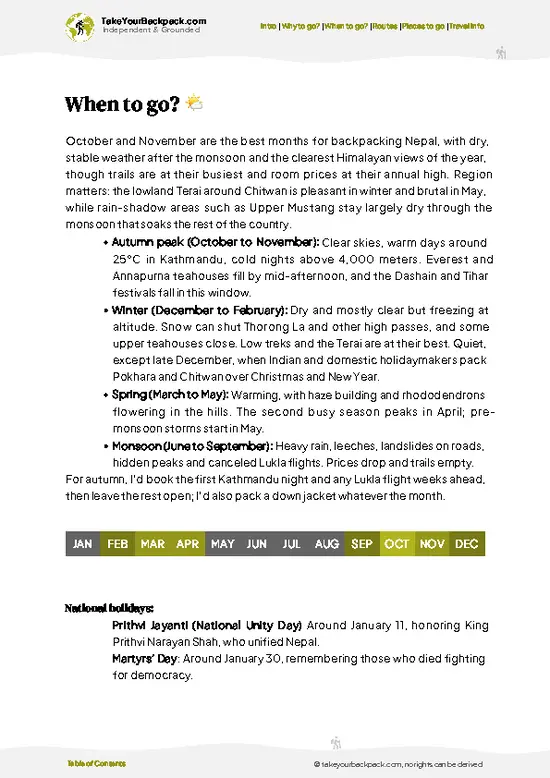
  • Weather: The best window is late September to November when the monsoon has cleared, leaving crisp air and dry trails. Avoid June to August—monsoon mud and leeches will slow you down and soak your gear.

  • Temperature: Daytime highs hover around 15-20°C (59-68°F) in autumn, perfect for trekking without overheating. Nights dip to near freezing, so pack layers. Spring (March-May) warms up to 20-25°C (68-77°F) but can bring unpredictable rain.

  • Daylight Hours: Autumn offers about 11-12 hours of daylight, enough to push hard and still catch the sunset from a ridge. Spring days stretch longer, but early starts are key to avoid afternoon clouds.

  • Crowds: Peak trekking season means more groups on the trail, especially October. If you crave solitude, aim for late September or early November when
read more 👉

  • Weather: The best window is late September to November when the monsoon has cleared, leaving crisp air and dry trails. Avoid June to August—monsoon mud and leeches will slow you down and soak your gear.

  • Temperature: Daytime highs hover around 15-20°C (59-68°F) in autumn, perfect for trekking without overheating. Nights dip to near freezing, so pack layers. Spring (March-May) warms up to 20-25°C (68-77°F) but can bring unpredictable rain.

  • Daylight Hours: Autumn offers about 11-12 hours of daylight, enough to push hard and still catch the sunset from a ridge. Spring days stretch longer, but early starts are key to avoid afternoon clouds.

  • Crowds: Peak trekking season means more groups on the trail, especially October. If you crave solitude, aim for late September or early November when the buzz thins but conditions stay solid.

  • Seasonal Activities: Autumn aligns with local festivals like Dashain, adding cultural color to your trek. Spring brings rhododendron blooms, painting the valley in fiery reds and pinks.

  • Price Fluctuations: Peak season drives up lodge rates and permits. Off-peak months offer better deals but brace for less predictable weather and some closed teahouses.


Pro-tip: Start your trek early in the season’s sweet spot—late September—to dodge crowds, lock in stable weather, and catch the valley’s raw energy before the tourist tide rises.


source: climatestotravel.comJANJanuary: fair for travelingFEBFebruary: fair for travelingMARMarch: good for travelingAPRApril: good for travelingMAYMay: good for travelingJUNJune: below average for travelingJULJuly: below average for travelingAUGAugust: below average for travelingSEPSeptember: highly recommended for travelingOCTOctober: excellent for travelingNOVNovember: highly recommended for travelingDECDecember: fair for traveling
when-to-go

✈️ The backpacker research shortcutNepal Travel Guide

An offline-friendly backpacking guide with optimized travel routes, ranked highlights, transport advice, and the best areas to stay.
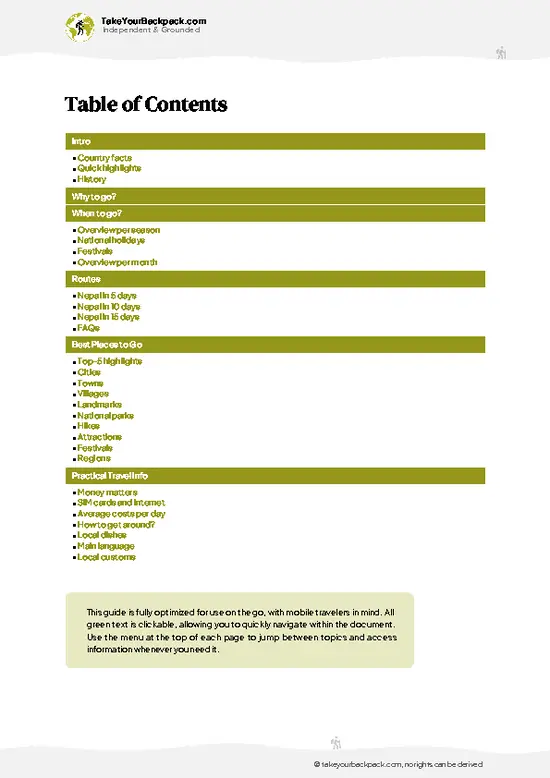
example page 0 from our offline Travel Guide for Nepal
example page 1 from our offline Travel Guide for Nepal
example page 2 from our offline Travel Guide for Nepal
example page 3 from our offline Travel Guide for Nepal
example page 4 from our offline Travel Guide for Nepal
example page 5 from our offline Travel Guide for Nepal
example page 6 from our offline Travel Guide for Nepal
example page 7 from our offline Travel Guide for Nepal
The digital guide (402 pages) contains:
107 highlights, ranked by travel appeal
Optimized 5, 10 & 15-day travel routes
Cities, national parks, landmarks, beaches
How to get around
Offline-friendly for travel without Wi-Fi
👉 Click to see all 30+ guide features

📅 Plan smarter in minutes, not weeks
Month by month travel advice
Festivals & national holidays
Budget expectations

🗺️ Go to the right places, skip the overrated ones
Honest pros & cons of destinations
Top hikes, parks & viewpoints
Lesser-known places most travelers miss
Clear “worth it vs skip it” guidance

🛏️ Travel smoothly without rookie mistakes
Best areas to stay
Transport systems explained simply
Common scams & safety advice
SIM cards, money & practical tips

🌍 Understand the country, not just visit it
Culture & traditions
52 Essential phrases & customs
Festivals worth planning around
Traveler-friendly historical context
Insights that make places more meaningful

📱 Built for real travel conditions
Fully downloadable PDF
Works completely offline
Optimized for phone use
Useful in remote areas & buses
Everything in one place
Save weeks of stressful planning
Get instant access to your full guide. 30‑day money-back guarantee.


By proceeding you agree to our terms.
Sent to your inbox immediately after payment • 100% Secure Checkout
Best Backpacking Travel Advisor 2025 tourism awardBest Backpacking
Travel Advisor
2025
What others say about Take Your Backpack Guides:
⭐⭐⭐⭐⭐
Fantastic, amazing amount of information!
⭐⭐⭐⭐⭐
My goodness this is amazing, it's what I've been looking for hats off too you!
⭐⭐⭐⭐⭐
I think this is absolutely BRILLIANT
⭐⭐⭐⭐
Very complete and informative. It's still missing places, but I gotta to commend you
⭐⭐⭐⭐⭐
This is truly amazing, thank you, can't wait to explore it with my kids!
⭐⭐⭐⭐⭐
Awesome resource, thank you!
⭐⭐⭐⭐⭐
This is amazing! Can't wait to explore the ones I haven't seen
⭐⭐⭐⭐
I love this! Well done, great idea.
⭐⭐⭐⭐⭐
Thanks for taking the time to make this gem!
⭐⭐⭐⭐⭐
This might be the best website I've ever seen.
⭐⭐⭐⭐⭐
Congratulations, and thank you so much for your work; it's incredibly valuable.
⭐⭐⭐⭐
In all seriousness I think you did a great job pointing out the important spots
⭐⭐⭐⭐⭐
10/10 very good
⭐⭐⭐⭐⭐
As someone who's only just starting to visit regularly this is awesome, thank you.
⭐⭐⭐⭐
Thank you very much! I'm going to visit my dad, it's going to be very useful!
⭐⭐⭐⭐⭐
This is really cool! We'll be travelling for the first time and this definitely come in handy.
⭐⭐⭐⭐⭐
You are now our minister of culture, congratulations 👨‍💼
⭐⭐⭐⭐⭐
Just wanted to tell you that this is a pearl! Going to follow your recommendations.
⭐⭐⭐⭐⭐
This is so cool. I'll definitely be using the resource for my travels soon.
⭐⭐⭐⭐⭐
This is very impressive! Good work.
⭐⭐⭐⭐⭐
This is an amazing and informative site. Very well done!

🛏️ Where to stay?How to pick the right area

If you enjoy meeting fellow travelers, consider choosing hostels with high ratings for atmosphere. On the other hand, if you prefer having your own space, a hotel might be a better option.

🥾 Hike detailsEverything you need to know before hiking Tsum Valley Trek

Total Distance: The Tsum Valley Trek covers approximately 160 kilometers (about 99 miles) round trip, depending on your specific route and any side trips you take.

Estimated Duration: Expect to spend around 14 to 18 days on this trek. This includes acclimatization days, as the altitude can hit over 5,000 meters (16,404 feet) in some areas.

Difficulty Level: This trek is generally considered moderate to challenging. It involves long days of hiking, some steep ascents, and high altitudes, so a decent level of fitness is recommended.

Starting Point: The trek begins in Arughat, which you can reach … read more 👉
Total Distance: The Tsum Valley Trek covers approximately 160 kilometers (about 99 miles) round trip, depending on your specific route and any side trips you take.

Estimated Duration: Expect to spend around 14 to 18 days on this trek. This includes acclimatization days, as the altitude can hit over 5,000 meters (16,404 feet) in some areas.

Difficulty Level: This trek is generally considered moderate to challenging. It involves long days of hiking, some steep ascents, and high altitudes, so a decent level of fitness is recommended.

Starting Point: The trek begins in Arughat, which you can reach by public transport from Kathmandu.
  • Bus or Jeep: Take a local bus or a shared jeep from Kathmandu to Arughat. The journey usually takes around 7-9 hours, depending on road conditions.

Major Landmarks Along the Route:
  • Chumling: A picturesque village that gives you a glimpse of Tibetan culture.
  • Chhekampar: Known for its stunning views and traditional houses.
  • Mu Gompa: A significant monastery, perfect for some quiet reflection.
  • Rachen Gompa: Another beautiful monastery that showcases the local Buddhist culture.

Type of Terrain and Scenery: The trail varies quite a bit:
  • Rocky Paths: You’ll encounter some rugged, rocky sections.
  • Forest Trails: There are stretches through lush forests, especially in lower elevations.
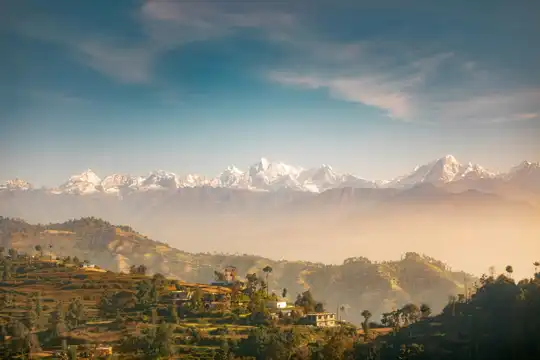
  • High Mountain Views: Expect breathtaking views of the Ganesh Himal and other peaks.

Typical Vegetation and Wildlife:
  • Vegetation: You’ll see a mix of pine forests, rhododendron, and terraced fields as you hike through different elevations.
  • Wildlife: Keep an eye out for Himalayan tahr, monkeys, and various bird species, especially in the lower sections.

The Tsum Valley Trek offers a unique blend of culture, stunning landscapes, and a chance to experience a less-traveled part of Nepal. Just pace yourself, stay hydrated, and soak it all in!
⚠️ Hiking info can sometimes be outdated or inaccurate. Before you hit the trail, check the latest conditions with locals. If you do spot anything that's off, I'd love to hear from you, so I can update it for fellow travelers.

🛡️ SafetyScams, Hazards, and Annoyances

The Tsum Valley Trek is a rewarding challenge, but it demands respect for its terrain and conditions. Weather can shift quickly; sunny mornings can turn into afternoon storms. Layer your clothing and pack a reliable rain jacket.

The trails are well-marked but can be steep and rocky. Watch your footing, especially on descents. Navigation is straightforward, but keep a map handy; it’s a good backup. River crossings are manageable, but be prepared for slippery stones.

Altitude can sneak up on you. Take it slow, hydrate, and listen to your body. Wildlife encounters are rare, but if you spot a yak or a goat, give them space.

Many first-timers underestimate the chill at night. A good sleeping bag is essential. Embrace the grit of the journey; every step brings you closer to the stunning views and the cold beer waiting at the end.

Other Nepali hikes near Tsum Valley Trek

Explore more nearby:

  • Helambu Trek—Sherpa settlements, terraced hillsides, short access from Kathmandu| 43 km away
  • Tamang Heritage Trail—Tamang villages, hot springs, cultural homestays| 44 km away
  • Langtang Valley—glacial valley, yak pastures, Tamang culture| 63 km away

💡 Not sure where to go next?
Create a personalized itinerary for Nepal including Tsum Valley Trek and the places that fit your trip.

Generate my itinerary

👉 Discover all hikes

Or checkout all Nepal has to offer (think cities, towns, villages, national parks, hikes, beaches, festivals)
Country photo of Nepal

We 💚 feedbackSumming up the experience

The Tsum Valley Trek is a raw slice of Nepal, where every step reveals ancient culture and breathtaking landscapes. You’ll feel the pulse of the local life, especially in the vibrant villages. But be ready for the altitude; it can hit hard. The reward? That moment when you crest a ridge and see the valley unfold below, making every labored breath worth it. It’s a challenge, but oh, what a payoff!

✈️ When did I visit Nepal?
Being a mountain lover, Nepal is one of my favorites. I visited it in November 2006, hiking the full Annapurna circuit as my highlight.

✍️ Help improve this page!
The information on this page is based on my own backpacking experience in Nepal, supplemented with up-to-date research and feedback from other travelers. Travel details can change, so if you notice anything outdated or incomplete, feel free to let me know.


🙋‍♂️ Give feedback

👋 Meet the founderWho’s Behind Take Your Backpack?

Johan, backpacker and founder of TakeYourBackpackHi, I’m Johan (Netherlands 🇳🇱), the creator of TakeYourBackpack. Over the past decade, I’ve backpacked through 80+ countries across six continents, gaining extensive experience with independent travel, long-term trips, and overland routes.

This site is built on a combination of firsthand travel experience and carefully curated insights from other backpackers. Many guides are based on places I’ve personally visited, while others bring together tips, observations, and practical advice shared by trusted travelers I’ve met along the way.

The goal is to provide realistic, experience-driven guidance — not generic itineraries — so you can explore destinations with better context, clearer expectations, and more confidence.

Get full Nepal guide •
Instant download • 107 highlights • Full Offline guide