×

Nepal🇳🇵 | regionsDolparemote valleys, high-altitude lakes, Tibetan villages | things to do and best time to go

Explore Koshi Tappu Wildlife ReserveExplore Kathmandu Valley

Backpacking in Dolpa
🌟 Highlightregion ranked #2
By Johan Kruseman 🇳🇱 | Updated June 18, 2026

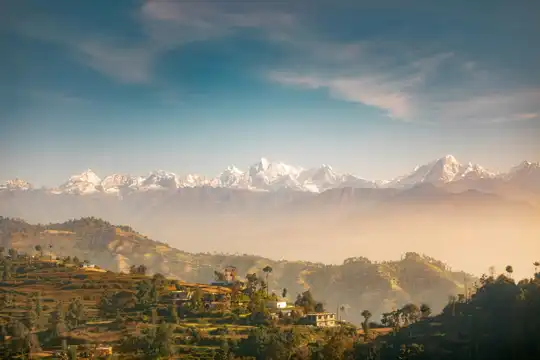
Your boots crunch on frost as a bell jingles somewhere in the dark, yak breath steaming in the beam of your headlamp while a woman in a wool cap presses a tin cup of salty butter tea into your hands. The air is thin, your fingers sting, and the only sound beyond the village is the river grinding over stone. This is Dolpa, way out in western Nepal, tucked beyond the main Himalayan trekking circus.

Dolpa is the place you go when you’re allergic to crowds and okay with earning every view. Trails cut through dry, high-altitude valleys into Shey Phoksundo National Park, where that electric-blue lake actually lives up to the photos. It’s wilder and more Tibetan-feeling than Annapurna or Everest, with fewer lodges, fewer menus, and more “my cousin has a room upstairs.” Transport is slow, flights are weather-ruined often, and costs creep up because everything is hauled in. But if you want raw, quiet, and stubbornly real, Dolpa is where Nepal stops performing for tourists and just is.

Discover everything you want to know in the 📖 Nepal Travel Guide.


Get your Nepal guide
107 ranked highlights, routes & tips, works offline (402 pages)
Loading the map 🌍
CLICK TO FILTER
cities
towns
villages
landmarks
national parks
hikes
attractions
festivals
regions
SHOW COUNTRY’S BESTSHOW ALL

✨ Why go?
Ranked #2 region in Nepal
Reasons people choose to visit here

In the heart of Nepal, Dolpa is a backpacker’s playground, offering a unique blend of landscapes and experiences that keep you rooted without the hassle of constant relocation. You can trek through stunning valleys, scale majestic peaks, and wander past ancient monasteries, all while soaking in the rich Tibetan culture.

The beauty of Dolpa lies in its transport flexibility. You can choose to hike or take a local jeep, making it easy to adapt your plans on the fly. This region is perfect for slow travel; you’re not just passing through but truly experiencing the rhythm of life here.

Imagine sipping tea with locals in a remote village, then hiking to a serene lake surrounded by towering mountains. Each day brings a new adventure, yet you’re not racing from one spot to another. You’re savoring … read more 👉
In the heart of Nepal, Dolpa is a backpacker’s playground, offering a unique blend of landscapes and experiences that keep you rooted without the hassle of constant relocation. You can trek through stunning valleys, scale majestic peaks, and wander past ancient monasteries, all while soaking in the rich Tibetan culture.

The beauty of Dolpa lies in its transport flexibility. You can choose to hike or take a local jeep, making it easy to adapt your plans on the fly. This region is perfect for slow travel; you’re not just passing through but truly experiencing the rhythm of life here.

Imagine sipping tea with locals in a remote village, then hiking to a serene lake surrounded by towering mountains. Each day brings a new adventure, yet you’re not racing from one spot to another. You’re savoring every moment.

The trade-off? You might spend a bit more time getting to know the land, but the high-value experiences you gain—like the friendships formed and the stories shared—are worth every second. In Dolpa, you’re not just a visitor; you’re part of the landscape.
Want to include Dolpa in your Nepal route?
Create a personalized Nepal itinerary that includes Dolpa and the places that fit your trip — based on your travel style, budget, and available time. Get your route in seconds.

Generate my trip

💡 HighlightsKey sights and experiences for travelers

  1. Shey Phoksundo Lake — The showpiece: a deep, turquoise high-altitude lake ringed by sheer cliffs and prayer flags. It’s remote, otherworldly and changes color with the light; the silence out there feels earned. (Personal favorite — sit on the rim at sunset and you’ll see why.)
  2. Ringmo Village — The tiny stone village that perches right at the lake’s edge, with stacked houses, mani walls and an intimate pace of life. It’s the best place to watch local routines — drying barley, herds coming home — that tourists rarely get to see up close.
  3. Shey Gompa (Shey Monastery) — A compact Bon/Tibetan monastery clinging to the hillside above the lake. The murals, prayer rooms and the preservation of Bon ritual make this more than a view stop; it’s a living spiritual center you can walk around and quietly
read more 👉
  1. Shey Phoksundo Lake — The showpiece: a deep, turquoise high-altitude lake ringed by sheer cliffs and prayer flags. It’s remote, otherworldly and changes color with the light; the silence out there feels earned. (Personal favorite — sit on the rim at sunset and you’ll see why.)
  2. Ringmo Village — The tiny stone village that perches right at the lake’s edge, with stacked houses, mani walls and an intimate pace of life. It’s the best place to watch local routines — drying barley, herds coming home — that tourists rarely get to see up close.
  3. Shey Gompa (Shey Monastery) — A compact Bon/Tibetan monastery clinging to the hillside above the lake. The murals, prayer rooms and the preservation of Bon ritual make this more than a view stop; it’s a living spiritual center you can walk around and quietly observe.
  4. Phoksundo Waterfall — The thundering drop where the lake’s outflow plunges into a deep gorge. It’s dramatic, photogenic and close enough to feel the mist — one of the most cinematic water features in Nepal’s highlands.
  5. Saldang — An old trans-Himalayan town that used to sit on the salt-trade route to Tibet. The stacked stone houses, fortlike clusters and chortens give a strong sense of history; wander the alleys and you’ll still find old caravan stables and local storytellers.
  6. Dho-Tarap Valley (Dho and Tarap villages) — A living museum of Tibetan agrarian life: flat terraces, high-walled stone houses, and mani walls that run for kilometers. The people here keep traditions and dress that are hard to find elsewhere in Nepal.
  7. Mangtang Plateau — Hidden gem. A high, windswept plateau beyond the usual circuits where yak pastures, nomadic camps and empty horizons dominate. Fewer trekkers go this far; the landscape and encounters with nomad families feel genuinely unique to Dolpa.
  8. Chharka Tangsong (Chharka Village) — Hidden gem. A remote village with raw, dramatic scenery and strong local character — great for anyone who likes off-grid walking, real homestays and meeting shepherding families who’ve barely changed their routines in generations.
  9. Sections of the Ancient Salt-Caravan Trails — Hidden gem. Walkable trail sections and abandoned caravan camps around Saldang and Tarap that once linked Nepal and Tibet. You can still trace the route, find old cairns and imagine the slog of yaks and traders — history you can stand on.
  10. Phoksundo Gorge and Riverside Cliffs — The steep canyon cut by the lake’s outflow, full of dramatic rock strata, small terraces and isolated cliffside shrines. It’s a raw piece of geology plus culture — quieter and more intimate than the main viewpoint by the lake.
Spotted a mistake or missing something? Contact us.

⌛️ 5 daysA smart one-week plan

Day 1: Juphal
The journey kicks off in Juphal, where your adventure begins with a flight from Nepalgunj. This isn’t just a transport choice; it’s a rite of passage. The flight offers a breathtaking view of the Himalayas, setting the tone for your trip. Once you land, the real fun starts. You’ll need to acclimatize, so take the day to explore the village. Chat with locals, sample the dal bhat, and soak in the atmosphere. This is your first taste of Dolpa’s charm.

Day 2: Dunai
From Juphal, it’s a short trek to Dunai, the district headquarters. The trail is well-marked, but the terrain can be rocky. This is where the transport system starts to dictate your pace. You’re on foot, and every step counts. The village is a hub for supplies and information, so stock up and chat with fellow trekkers. … read more 👉
Day 1: Juphal
The journey kicks off in Juphal, where your adventure begins with a flight from Nepalgunj. This isn’t just a transport choice; it’s a rite of passage. The flight offers a breathtaking view of the Himalayas, setting the tone for your trip. Once you land, the real fun starts. You’ll need to acclimatize, so take the day to explore the village. Chat with locals, sample the dal bhat, and soak in the atmosphere. This is your first taste of Dolpa’s charm.

Day 2: Dunai
From Juphal, it’s a short trek to Dunai, the district headquarters. The trail is well-marked, but the terrain can be rocky. This is where the transport system starts to dictate your pace. You’re on foot, and every step counts. The village is a hub for supplies and information, so stock up and chat with fellow trekkers. The vibe here is relaxed, and you’ll want to take your time absorbing it.

Day 3: Tarakot
The trek to Tarakot is a bit longer, but the scenery is worth every ounce of effort. You’ll pass through lush valleys and alongside the Thuli Bheri River. This is where you feel the isolation of Dolpa. The transport options dwindle, but that’s part of the allure. Embrace the simplicity. Tarakot’s ancient fort and the surrounding landscape offer a glimpse into the region’s history.

Day 4: Off-Path Reward - Bhijar
Take a detour to Bhijar, a less-traveled village that’s a treasure trove of culture. The locals are welcoming, and you’ll find unique handicrafts and stories that aren’t in the guidebooks. This is your chance to connect with the heart of Dolpa, away from the usual tourist routes.

Day 5: Phoksundo Lake
Finish strong with a trek to Phoksundo Lake. This is the crown jewel of Dolpa, and it’s a must-do. The turquoise waters against the backdrop of snow-capped peaks are jaw-dropping. Spend the day soaking it all in. This is the experience that justifies your entire trip.

If you can only choose one day, make it Day 5. Phoksundo Lake encapsulates the magic of Dolpa, and you’ll leave with memories that last a lifetime.
Turn your Dolpa visit into an Nepal adventure
Build a complete Nepal route with Dolpa, hidden gems, must-see destinations, and realistic travel times included.

Generate my trip

🌤️ When to go?Best time to visit Dolpa


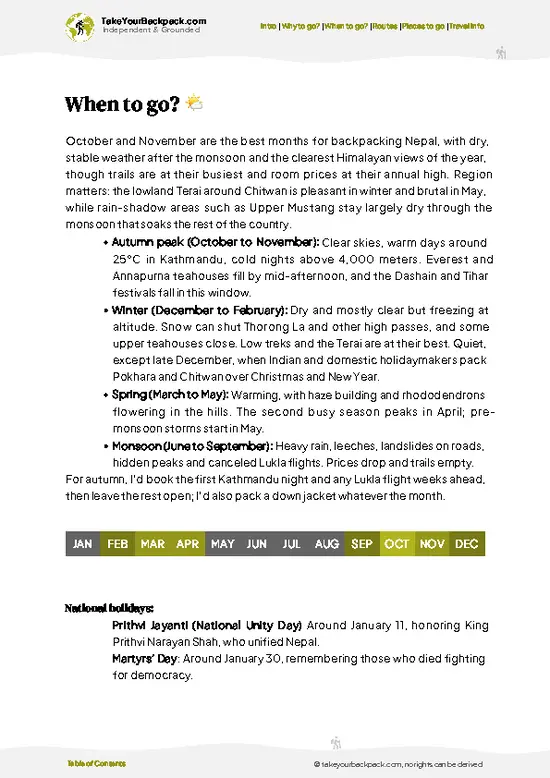
  • Weather: The best window is late September to early November. Clear skies dominate, and the monsoon has just retreated, leaving the air crisp and the trails manageable. Avoid the heavy rains of June to August—they turn paths into mud traps and cloud the views.

  • Temperature: Daytime temps hover around 15-20°C (59-68°F), perfect for trekking without overheating. Nights can dip below freezing, especially above 3,000 meters, so pack layers. Winter months bring harsher cold, not ideal unless you’re geared for it.

  • Daylight Hours: Autumn offers roughly 10-12 hours of daylight, enough to cover long distances without rushing. Spring (March to May) also has decent daylight but watch for the haze creeping in from lower valleys.

  • Crowds: Dolpa is off the beaten path, but autumn draws the most trekkers.
read more 👉

  • Weather: The best window is late September to early November. Clear skies dominate, and the monsoon has just retreated, leaving the air crisp and the trails manageable. Avoid the heavy rains of June to August—they turn paths into mud traps and cloud the views.

  • Temperature: Daytime temps hover around 15-20°C (59-68°F), perfect for trekking without overheating. Nights can dip below freezing, especially above 3,000 meters, so pack layers. Winter months bring harsher cold, not ideal unless you’re geared for it.

  • Daylight Hours: Autumn offers roughly 10-12 hours of daylight, enough to cover long distances without rushing. Spring (March to May) also has decent daylight but watch for the haze creeping in from lower valleys.

  • Crowds: Dolpa is off the beaten path, but autumn draws the most trekkers. You’ll find a few more faces on the trail, but nothing like Everest Base Camp. Winter and monsoon seasons see near solitude, though at the cost of comfort.

  • Seasonal Activities: Autumn aligns with local festivals like Lhosar, adding cultural spice to your trek. Spring bursts with rhododendron blooms, a visual treat if you can handle the pollen and occasional rain.

  • Price Fluctuations: Peak trekking season (autumn) nudges prices up for permits and lodges. Off-season means cheaper rates but fewer open teahouses and less reliable transport. Balance your budget with your tolerance for roughing it.


Pro-tip: Start your trek early in the morning during autumn to catch the golden hour lighting on the Himalayas—trust me, it’s the kind of moment that turns a good trip into a legendary one.


source: climatestotravel.comJANJanuary: fair for travelingFEBFebruary: fair for travelingMARMarch: good for travelingAPRApril: good for travelingMAYMay: good for travelingJUNJune: below average for travelingJULJuly: below average for travelingAUGAugust: below average for travelingSEPSeptember: highly recommended for travelingOCTOctober: excellent for travelingNOVNovember: excellent for travelingDECDecember: fair for traveling
when-to-go

✈️ The backpacker research shortcutNepal Travel Guide

An offline-friendly backpacking guide with optimized travel routes, ranked highlights, transport advice, and the best areas to stay.
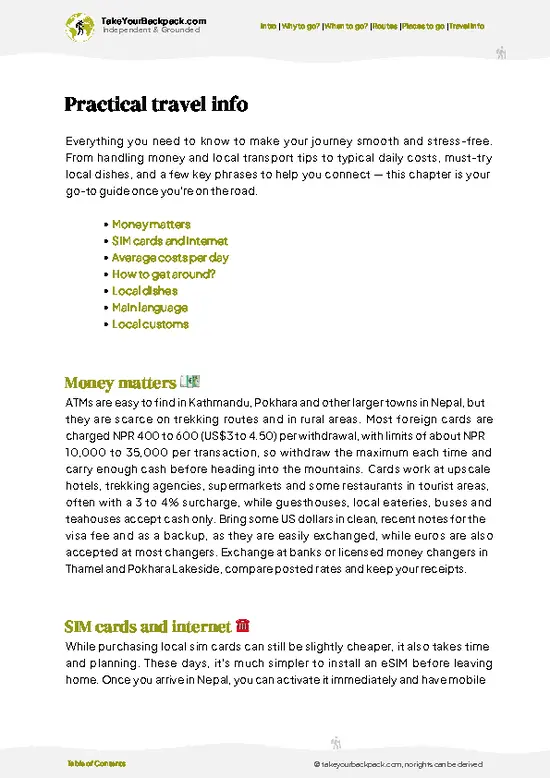
example page 0 from our offline Travel Guide for Nepal
example page 1 from our offline Travel Guide for Nepal
example page 2 from our offline Travel Guide for Nepal
example page 3 from our offline Travel Guide for Nepal
example page 4 from our offline Travel Guide for Nepal
example page 5 from our offline Travel Guide for Nepal
example page 6 from our offline Travel Guide for Nepal
example page 7 from our offline Travel Guide for Nepal
The digital guide (402 pages) contains:
107 highlights, ranked by travel appeal
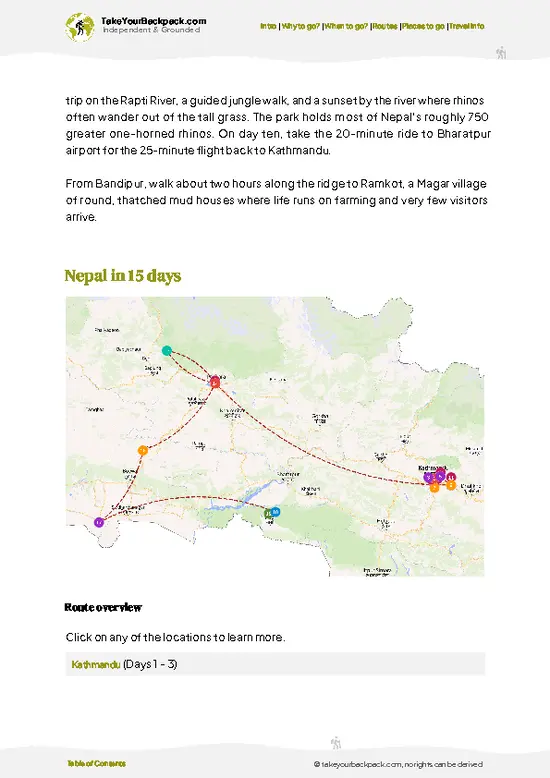
Optimized 5, 10 & 15-day travel routes
Cities, national parks, landmarks, beaches
How to get around
Offline-friendly for travel without Wi-Fi
👉 Click to see all 30+ guide features

📅 Plan smarter in minutes, not weeks
Month by month travel advice
Festivals & national holidays
Budget expectations

🗺️ Go to the right places, skip the overrated ones
Honest pros & cons of destinations
Top hikes, parks & viewpoints
Lesser-known places most travelers miss
Clear “worth it vs skip it” guidance

🛏️ Travel smoothly without rookie mistakes
Best areas to stay
Transport systems explained simply
Common scams & safety advice
SIM cards, money & practical tips

🌍 Understand the country, not just visit it
Culture & traditions
52 Essential phrases & customs
Festivals worth planning around
Traveler-friendly historical context
Insights that make places more meaningful

📱 Built for real travel conditions
Fully downloadable PDF
Works completely offline
Optimized for phone use
Useful in remote areas & buses
Everything in one place
Save weeks of stressful planning
Get instant access to your full guide. 30‑day money-back guarantee.


By proceeding you agree to our terms.
Sent to your inbox immediately after payment • 100% Secure Checkout
Best Backpacking Travel Advisor 2025 tourism awardBest Backpacking
Travel Advisor
2025
What others say about Take Your Backpack Guides:
⭐⭐⭐⭐⭐
Fantastic, amazing amount of information!
⭐⭐⭐⭐⭐
My goodness this is amazing, it's what I've been looking for hats off too you!
⭐⭐⭐⭐⭐
I think this is absolutely BRILLIANT
⭐⭐⭐⭐
Very complete and informative. It's still missing places, but I gotta to commend you
⭐⭐⭐⭐⭐
This is truly amazing, thank you, can't wait to explore it with my kids!
⭐⭐⭐⭐⭐
Awesome resource, thank you!
⭐⭐⭐⭐⭐
This is amazing! Can't wait to explore the ones I haven't seen
⭐⭐⭐⭐
I love this! Well done, great idea.
⭐⭐⭐⭐⭐
Thanks for taking the time to make this gem!
⭐⭐⭐⭐⭐
This might be the best website I've ever seen.
⭐⭐⭐⭐⭐
Congratulations, and thank you so much for your work; it's incredibly valuable.
⭐⭐⭐⭐
In all seriousness I think you did a great job pointing out the important spots
⭐⭐⭐⭐⭐
10/10 very good
⭐⭐⭐⭐⭐
As someone who's only just starting to visit regularly this is awesome, thank you.
⭐⭐⭐⭐
Thank you very much! I'm going to visit my dad, it's going to be very useful!
⭐⭐⭐⭐⭐
This is really cool! We'll be travelling for the first time and this definitely come in handy.
⭐⭐⭐⭐⭐
You are now our minister of culture, congratulations 👨‍💼
⭐⭐⭐⭐⭐
Just wanted to tell you that this is a pearl! Going to follow your recommendations.
⭐⭐⭐⭐⭐
This is so cool. I'll definitely be using the resource for my travels soon.
⭐⭐⭐⭐⭐
This is very impressive! Good work.
⭐⭐⭐⭐⭐
This is an amazing and informative site. Very well done!

🛏️ Where to stay?Choosing the right base

When you’re trekking through Dolpa, the choice of where to stay can shape your entire experience. Let’s break it down.

Juphal is your gateway. It’s where most treks begin and end, making it a hub for backpackers. The vibe is relaxed, with plenty of fellow travelers to swap stories over a cup of chai. You’ll find basic lodges that keep costs low, but the real treasure here is the community feel.

Then there’s Phoksundo Lake. Staying near this stunning lake is a must. The area is a bit pricier, but the views are worth every penny. You’ll meet other trekkers, and the atmosphere is electric with … read more 👉
When you’re trekking through Dolpa, the choice of where to stay can shape your entire experience. Let’s break it down.

Juphal is your gateway. It’s where most treks begin and end, making it a hub for backpackers. The vibe is relaxed, with plenty of fellow travelers to swap stories over a cup of chai. You’ll find basic lodges that keep costs low, but the real treasure here is the community feel.

Then there’s Phoksundo Lake. Staying near this stunning lake is a must. The area is a bit pricier, but the views are worth every penny. You’ll meet other trekkers, and the atmosphere is electric with adventure. Plus, the chance to camp under the stars is a memory you won’t forget.

Tarakot offers a slice of local life. It’s quieter, with fewer tourists, which means you can soak in the culture. The accommodations are simple, but the hospitality is warm. You’ll feel like you’re part of the village rather than just passing through.

Each of these spots has its own charm, balancing time, money, and comfort. Choose wisely, and you’ll find the high-value experiences that make Dolpa unforgettable.

🚌 Getting aroundMoving around without the hassle

In Dolpa, the rhythm of travel is less about rigid schedules and more about the pulse of the mountains. Picture this: you’re standing at a dusty crossroads, the air thick with the scent of pine and the distant echo of yak bells. Here, transport isn’t just a means to an end; it’s an adventure in itself. You’ll find that the flow of movement is dictated by the whims of weather and the spirit of the locals. Sometimes, you’ll hop on a bus that feels like a rolling party, while other times, you’ll be waiting for hours, wondering if the next ride will ever show. Embrace the chaos; it’s part of the charm.


  • Local Buses: These are your lifeline for budget travel. They run from Juphal to Dunai and beyond, typically starting around 7 AM and wrapping up by 4 PM. Expect to pay around NPR 300-500, depending
read more 👉
In Dolpa, the rhythm of travel is less about rigid schedules and more about the pulse of the mountains. Picture this: you’re standing at a dusty crossroads, the air thick with the scent of pine and the distant echo of yak bells. Here, transport isn’t just a means to an end; it’s an adventure in itself. You’ll find that the flow of movement is dictated by the whims of weather and the spirit of the locals. Sometimes, you’ll hop on a bus that feels like a rolling party, while other times, you’ll be waiting for hours, wondering if the next ride will ever show. Embrace the chaos; it’s part of the charm.


  • Local Buses: These are your lifeline for budget travel. They run from Juphal to Dunai and beyond, typically starting around 7 AM and wrapping up by 4 PM. Expect to pay around NPR 300-500, depending on the distance. Comfort? Think basic, but the views are worth every bump.


  • Jeep Shares: For a bit more speed and comfort, jeep shares are the way to go. They often leave when full, which can be a blessing or a curse. Prices range from NPR 1,000 to 2,500, depending on the route. You’ll get there faster, but be prepared to cozy up with fellow travelers.


  • Motorcycle Rentals: If you’re feeling adventurous, renting a motorcycle can be a game-changer. Prices hover around NPR 1,500 per day. Just make sure you’re comfortable with the terrain; it’s not for the faint-hearted. You’ll have the freedom to explore at your own pace, but fuel availability can be hit or miss.


  • Porter Services: For those trekking deeper into the region, hiring a porter can make your journey smoother. Rates vary, but expect to pay around NPR 1,500-2,000 per day. They’ll carry your gear, allowing you to soak in the scenery without the weight on your back.


  • Domestic Flights: If time is of the essence, consider a flight from Kathmandu to Juphal. Prices can be steep, around NPR 6,000-10,000, but it saves you days of travel. Just keep an eye on the weather; flights can be delayed or canceled.


Here’s a tactical tip: always check the local weather before planning your travel day. Conditions can change rapidly, affecting transport schedules. If you’re flexible, you’ll navigate Dolpa like a pro, soaking in the beauty without the stress.

🍲 FoodWhat to Eat & Drink

In **Dolpa**, food is a celebration of the rugged landscape and the rich culture. You’ll want to dive into **thukpa**, a hearty noodle soup that warms you from the inside out, especially after a long trek. The **momo**—steamed dumplings filled with spiced meat or veggies—are a must-try, often served with a fiery dipping sauce that packs a punch.

For drinks, don’t miss out on **chang**, a traditional fermented barley beverage. It’s slightly fizzy and has a unique flavor that’s both refreshing and a bit earthy. You’ll find it in local homes and small taverns, where the atmosphere is relaxed and welcoming.

When it comes to dining, embrace the local vibe. Head to bustling **markets** where vendors serve up street food that’s both delicious and affordable. Grab a seat at a communal table in … read more 👉
In **Dolpa**, food is a celebration of the rugged landscape and the rich culture. You’ll want to dive into **thukpa**, a hearty noodle soup that warms you from the inside out, especially after a long trek. The **momo**—steamed dumplings filled with spiced meat or veggies—are a must-try, often served with a fiery dipping sauce that packs a punch.

For drinks, don’t miss out on **chang**, a traditional fermented barley beverage. It’s slightly fizzy and has a unique flavor that’s both refreshing and a bit earthy. You’ll find it in local homes and small taverns, where the atmosphere is relaxed and welcoming.

When it comes to dining, embrace the local vibe. Head to bustling **markets** where vendors serve up street food that’s both delicious and affordable. Grab a seat at a communal table in a small café, where you can chat with locals over a steaming bowl of dal bhat, the quintessential Nepali meal of lentils and rice.

Etiquette is simple: eat with your right hand, and don’t be shy about sharing your food stories. Locals love to swap tales over meals, making every bite a shared experience. Enjoy the flavors, and let the warmth of Dolpa’s hospitality envelop you.

Other Nepali regions near Dolpa

Explore more nearby:

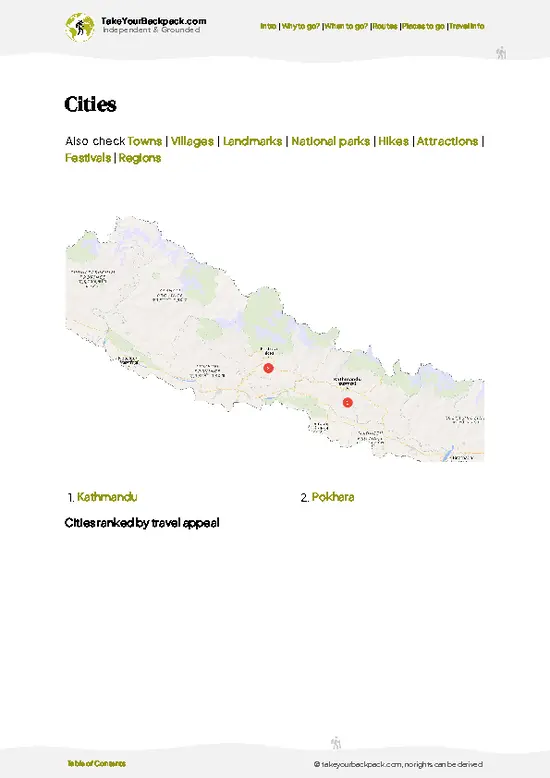
  • Rukum—mid-hill ridges, guerrilla trails, Magar settlements| 28 km away
  • Kathmandu Valley—temple squares, artisan workshops, urban sprawl| 333 km away

💡 Not sure where to go next?
Create a personalized itinerary for Nepal including Dolpa and the places that fit your trip.

Generate my itinerary

👉 Discover all regions

Or checkout all Nepal has to offer (think cities, towns, villages, national parks, hikes, beaches, festivals)
Country photo of Nepal

We 💚 feedbackSumming up the experience

Dolpa is a wild, untouched slice of Nepal that feels like stepping into another world. The landscapes are jaw-dropping, and the culture is rich with stories. But here’s the kicker: it’s remote. Getting there takes time and effort, and you’ll need to embrace some discomfort. If you’re willing to trade a bit of convenience for an authentic adventure, this place will reward you with memories that stick. Just know what you’re signing up for.

✈️ When did I visit Nepal?
Being a mountain lover, Nepal is one of my favorites. I visited it in November 2006, hiking the full Annapurna circuit as my highlight.

✍️ Help improve this page!
The information on this page is based on my own backpacking experience in Nepal, supplemented with up-to-date research and feedback from other travelers. Travel details can change, so if you notice anything outdated or incomplete, feel free to let me know.


🙋‍♂️ Give feedback

👋 Meet the founderWho’s Behind Take Your Backpack?

Johan, backpacker and founder of TakeYourBackpackHi, I’m Johan (Netherlands 🇳🇱), the creator of TakeYourBackpack. Over the past decade, I’ve backpacked through 80+ countries across six continents, gaining extensive experience with independent travel, long-term trips, and overland routes.

This site is built on a combination of firsthand travel experience and carefully curated insights from other backpackers. Many guides are based on places I’ve personally visited, while others bring together tips, observations, and practical advice shared by trusted travelers I’ve met along the way.

The goal is to provide realistic, experience-driven guidance — not generic itineraries — so you can explore destinations with better context, clearer expectations, and more confidence.

Get full Nepal guide •
Instant download • 107 highlights • Full Offline guide