×

Nepal🇳🇵 | citiesKathmandutemple squares, urban sprawl, backpacker districts | things to do and best time to go

Explore Dakshinkali TempleExplore Pokhara

Backpacking in Kathmandu
🏆 Top pickcity ranked #1
By Johan Kruseman 🇳🇱 | Updated June 14, 2026

You land in Kathmandu and hit your first real fork: do you burn two days and a chunk of cash recovering in Thamel’s cafés and gear shops, or do you blast straight out toward the mountains and “save” time and money at the cost of actually understanding where you just arrived? That choice matters, because Kathmandu is the control center of your whole Nepal trip. It sits in a bowl-shaped valley in central Nepal, the knot where buses, flights, permits, and trekking plans all tie together. The city is chaotic, dusty, and noisy, but Durbar Square at dusk, Swayambhunath’s monkeys, and the alleys of Patan feel like a live history lesson. It’s cheaper and grittier than Pokhara, busier and more social than quieter towns like Bhaktapur. Meeting other backpackers is almost automatic. Traffic and air quality are the main downsides; crime is relatively low, scams are mild, and the vibe is scruffy, spiritual, and slightly addictive.

Discover everything you want to know in the 📖 Nepal Travel Guide.


Get your Nepal guide
107 ranked highlights, routes & tips, works offline (402 pages)
Loading the map 🌍
CLICK TO FILTER
cities
towns
villages
landmarks
national parks
hikes
attractions
festivals
regions
SHOW COUNTRY’S BESTSHOW ALL

✨ Why go?
Ranked #1 city in Nepal
What makes this city worth visiting

Kathmandu is a backpacker’s hub that offers a unique blend of highlights and activities without overwhelming your schedule. It’s a city where you can easily spend a few days soaking in the culture or just a quick stopover before heading to the mountains. The walkability of the city makes it easy to explore on foot, allowing you to stumble upon local markets and street food stalls that serve up some of the best flavors in Nepal.

For those looking to stretch their budget, the hostel scene is vibrant and affordable, fostering a sense of community among travelers. You’ll find plenty of options that cater to different comfort levels, from basic dorms to more private accommodations.

As a basecamp for day trips, Kathmandu is unbeatable. You can easily access trekking routes or cultural sites, … read more 👉
Kathmandu is a backpacker’s hub that offers a unique blend of highlights and activities without overwhelming your schedule. It’s a city where you can easily spend a few days soaking in the culture or just a quick stopover before heading to the mountains. The walkability of the city makes it easy to explore on foot, allowing you to stumble upon local markets and street food stalls that serve up some of the best flavors in Nepal.

For those looking to stretch their budget, the hostel scene is vibrant and affordable, fostering a sense of community among travelers. You’ll find plenty of options that cater to different comfort levels, from basic dorms to more private accommodations.

As a basecamp for day trips, Kathmandu is unbeatable. You can easily access trekking routes or cultural sites, making it a strategic point in your journey. Plus, the nightlife offers a mix of laid-back bars and lively spots, perfect for unwinding after a day of exploration.

If you’re planning to move onward, the city’s transport links are straightforward, making it a practical choice for your backpacking route. Whether you linger or just pass through, Kathmandu has something to offer every traveler.
Want to include Kathmandu in your Nepal route?
Create a personalized Nepal itinerary that includes Kathmandu and the places that fit your trip — based on your travel style, budget, and available time. Get your route in seconds.

Generate my trip

💡 HighlightsPlaces and moments you shouldn't skip

  1. Swayambhunath (Monkey Temple) — Perched on a hill with stupas, prayer wheels and those bold monkeys, Swayambhu gives one of the best skyline views of Kathmandu and a layered dose of Buddhist and Newar culture. Bring cash for the small entry fee, wear decent shoulders/knees for the climb, and go late afternoon for light and fewer crowds.
  2. Boudhanath Stupa — Massive, peaceful and endlessly photogenic: you can do the full kora (circumambulation) with Tibetan monks, spin prayer wheels, sip butter tea, and watch a living Tibetan community in action. Best for sunrise or dusk when the stupa glows and gompas throw ritual chants into the air.
  3. Pashupatinath Temple — Nepal’s most important Shiva temple and a living, sometimes intense, place of Hindu rites — cremations on the Bagmati’s ghats are part
read more 👉
  1. Swayambhunath (Monkey Temple) — Perched on a hill with stupas, prayer wheels and those bold monkeys, Swayambhu gives one of the best skyline views of Kathmandu and a layered dose of Buddhist and Newar culture. Bring cash for the small entry fee, wear decent shoulders/knees for the climb, and go late afternoon for light and fewer crowds.
  2. Boudhanath Stupa — Massive, peaceful and endlessly photogenic: you can do the full kora (circumambulation) with Tibetan monks, spin prayer wheels, sip butter tea, and watch a living Tibetan community in action. Best for sunrise or dusk when the stupa glows and gompas throw ritual chants into the air.
  3. Pashupatinath Temple — Nepal’s most important Shiva temple and a living, sometimes intense, place of Hindu rites — cremations on the Bagmati’s ghats are part of life here. Respect the rules (some areas are off-limits to non-Hindus), come with curiosity and quiet; early morning and evening aartis are powerful to witness respectfully from the opposite bank.
  4. Kathmandu Durbar Square (Hanuman Dhoka & Kumari Ghar) — Royal courtyards, fine woodcarving and the home of the Living Goddess (Kumari) — this old palace core shows Kathmandu’s medieval Newar craftsmanship and festival energy. It’s also festival central: if you time it right you’ll see masked dances and chariot processions.
  5. Asan Bazaar — A chaotic, colorful market maze where locals buy spices, herbs, dried goods, textiles and festival supplies. Eat street snacks, push through narrow alleys, haggle a little — it’s one of the best places to feel the city’s pulse and watch everyday Kathmandu life unfold.
  6. Thamel — Yes, it’s touristy, but Thamel is where you sort trekking permits, buy gear, hear live music and try a dozen different momos at once. Walk the back lanes away from the main drag for cheaper food and more local flavor; it’s practical and sociable in equal measure.
  7. Garden of Dreams — A tidy neoclassical oasis tucked near Thamel — pay a small fee for a surprisingly serene escape from the city crush. Good for a slow tea, reading, or a quiet midday break between temples and markets.
  8. Nepal National Museum (Chhauni) — If you want historical context, this museum has archaeology, ethnography, old weapons and fine paubha paintings that explain the valley’s past far better than a walk-through can. Useful on a rainy day and for understanding what you’ve been seeing around town.
  9. Rani Pokhari & Maru Square — Rani Pokhari is the restored royal pond with a small island temple and pleasant reflections; nearby Maru is a tiny historic square with Maru Ganesh and old Newar streets. Together they’re a compact, local-flavored slice of Kathmandu architecture and daily life without big crowds.
  10. Indra Chowk and Kaal Bhairav — One of the valley’s oldest crossroads: you’ll find traditional metalworkers, old-school shops, the imposing stone face of Kaal Bhairav and lanes leading into Durbar areas. It’s especially alive during Indra Jatra and gives a rawer, less-touristy look at the city’s rituals and commerce.
A few great day trips just outside Kathmandu: Bhaktapur Durbar Square and Patan (Lalitpur) Durbar Square for classic Newar temples and pottery, and Nagarkot for Himalayan sunrise views — Nagarkot is my personal favorite.
Spotted a mistake or missing something? Contact us.

Things to do in Kathmandu

Ratings based on Tripadvisor reviews. When you book through this link, you support our work at no extra cost to you.

🏘️ NeighborhoodsHow different areas shape the experience

Kathmandu is a vibrant maze of neighborhoods, each offering unique experiences for backpackers. Understanding these areas will help you maximize your time, money, and comfort.

Thamel: This is the backpacker hub. Expect a lively atmosphere filled with shops, restaurants, and travel agencies. Prices are higher here, but the convenience is unmatched. Walkability is excellent, making it easy to explore on foot. Nightlife thrives with bars and live music, but it can get noisy. Ideal for short stays, especially if you want to dive into the local scene quickly.

Patan: Just a short ride from Kathmandu, Patan offers a quieter vibe with rich cultural heritage. The streets are less chaotic, and you’ll find stunning temples and art galleries. Costs are slightly lower than Thamel, and it’s very walkable. … read more 👉
Kathmandu is a vibrant maze of neighborhoods, each offering unique experiences for backpackers. Understanding these areas will help you maximize your time, money, and comfort.

Thamel: This is the backpacker hub. Expect a lively atmosphere filled with shops, restaurants, and travel agencies. Prices are higher here, but the convenience is unmatched. Walkability is excellent, making it easy to explore on foot. Nightlife thrives with bars and live music, but it can get noisy. Ideal for short stays, especially if you want to dive into the local scene quickly.

Patan: Just a short ride from Kathmandu, Patan offers a quieter vibe with rich cultural heritage. The streets are less chaotic, and you’ll find stunning temples and art galleries. Costs are slightly lower than Thamel, and it’s very walkable. Perfect for longer stays if you want a more relaxed pace while still being close to the action.

Boudhanath: Home to one of the largest stupas in Nepal, this area is more serene. It’s a spiritual hub, attracting those seeking a quieter experience. Prices can vary, but you can find budget-friendly guesthouses. Walkability is decent, though you might need transport for other attractions. Great for a longer stay if you want to immerse yourself in local culture and spirituality.

Bhaktapur: A bit further out, this ancient city is a UNESCO World Heritage site. It’s quieter and feels like stepping back in time. Costs can be lower, especially for food. Walkability is excellent, but you’ll need to plan transport for Kathmandu. Ideal for those wanting a longer stay to soak in history and avoid the hustle.

Each neighborhood offers a different flavor of Kathmandu, allowing you to choose based on what you value most.

⌛️ 1 dayWhat you can realistically do in a day

Kathmandu is a vibrant tapestry of ancient temples, bustling markets, and rich culture, all set against the backdrop of the majestic Himalayas. It’s a city where every corner tells a story, and every street is alive with the hum of life. Spending a day here is like diving into a colorful painting, where you can choose your own adventure.

Start your morning in the Thamel neighborhood, the heart of Kathmandu’s backpacker scene. Grab a cup of rich, aromatic Nepali coffee at a local café. The energy here is infectious, with travelers and locals mingling. After your caffeine fix, wander over to the nearby Garden of Dreams. This serene oasis feels like a secret escape from the city’s chaos. Take a moment to breathe in the lush greenery and enjoy the tranquility before diving back into the hustle. … read more 👉
Kathmandu is a vibrant tapestry of ancient temples, bustling markets, and rich culture, all set against the backdrop of the majestic Himalayas. It’s a city where every corner tells a story, and every street is alive with the hum of life. Spending a day here is like diving into a colorful painting, where you can choose your own adventure.

Start your morning in the Thamel neighborhood, the heart of Kathmandu’s backpacker scene. Grab a cup of rich, aromatic Nepali coffee at a local café. The energy here is infectious, with travelers and locals mingling. After your caffeine fix, wander over to the nearby Garden of Dreams. This serene oasis feels like a secret escape from the city’s chaos. Take a moment to breathe in the lush greenery and enjoy the tranquility before diving back into the hustle.

As the sun climbs higher, make your way to the iconic Swayambhunath Stupa, also known as the Monkey Temple. The climb up the 365 steps is worth every bead of sweat. The panoramic views of the city are breathtaking, and the stupa itself is a mesmerizing blend of spirituality and artistry. Spend some time observing the prayer flags fluttering in the wind and the monkeys playfully interacting with visitors.

In the afternoon, head to the less-trodden streets of Patan, just a short ride away. This neighborhood is rich in history and boasts stunning architecture. Visit the Patan Durbar Square, where you can marvel at the intricate carvings and perhaps catch a glimpse of local artisans at work. Don’t miss the opportunity to explore a small, tucked-away café that serves traditional Newari cuisine. The flavors here are a revelation.

As evening approaches, return to Thamel for dinner. Choose a rooftop restaurant where you can enjoy a meal while watching the sunset paint the sky. Try some momos (Nepali dumplings) and a local beer. The atmosphere is lively, filled with laughter and stories shared among travelers.

Your day in Kathmandu may be short, but it’s packed with experiences that resonate long after you leave. Each moment is a chance to connect with the city’s soul, making your journey not just a visit, but a memory etched in time.
Turn your Kathmandu visit into an Nepal adventure
Build a complete Nepal route with Kathmandu, hidden gems, must-see destinations, and realistic travel times included.

Generate my trip

🌤️ When to go?Weather, crowds, and seasonal trade-offs


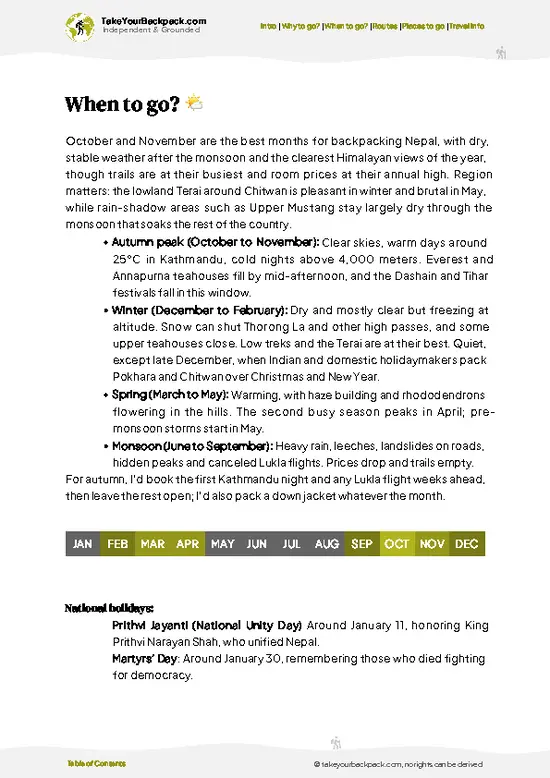
  • Topic: Weather – The best window is late September to November. Post-monsoon, the air clears, and the skies sharpen. Temperatures hover around 15-25°C (59-77°F), perfect for trekking without overheating or freezing.

  • Topic: Temperature – Spring (March to May) offers mild warmth, 12-22°C (54-72°F), but expect occasional rain. Winter (December to February) drops to 2-15°C (36-59°F), crisp but manageable if you pack layers.

  • Topic: Daylight Hours – Around the equinoxes, daylight stretches to about 12 hours, giving you ample time for exploration and trekking. Winter days shorten to roughly 10 hours, limiting late-afternoon adventures.

  • Topic: Crowds – Peak trekking season (autumn) means more tourists, especially on popular trails. Spring sees moderate crowds, while winter and monsoon seasons
read more 👉

  • Topic: Weather – The best window is late September to November. Post-monsoon, the air clears, and the skies sharpen. Temperatures hover around 15-25°C (59-77°F), perfect for trekking without overheating or freezing.

  • Topic: Temperature – Spring (March to May) offers mild warmth, 12-22°C (54-72°F), but expect occasional rain. Winter (December to February) drops to 2-15°C (36-59°F), crisp but manageable if you pack layers.

  • Topic: Daylight Hours – Around the equinoxes, daylight stretches to about 12 hours, giving you ample time for exploration and trekking. Winter days shorten to roughly 10 hours, limiting late-afternoon adventures.

  • Topic: Crowds – Peak trekking season (autumn) means more tourists, especially on popular trails. Spring sees moderate crowds, while winter and monsoon seasons are quieter but less predictable.

  • Topic: Seasonal Activities – Autumn hosts major festivals like Dashain and Tihar, adding cultural depth but also local travel congestion. Spring brings rhododendron blooms, a visual treat on trails.

  • Topic: Price Fluctuations – High season (autumn) drives up accommodation and guide fees. Off-season (monsoon and winter) offers bargains but at the cost of weather reliability and some closed services.


Pro-tip: Aim for late autumn if you want crisp air, clear views, and cultural buzz—just book early to dodge the price spike and crowd crush.


source: climatestotravel.comJANJanuary: good for travelingFEBFebruary: good for travelingMARMarch: highly recommended for travelingAPRApril: highly recommended for travelingMAYMay: good for travelingJUNJune: fair for travelingJULJuly: below average for travelingAUGAugust: below average for travelingSEPSeptember: highly recommended for travelingOCTOctober: excellent for travelingNOVNovember: excellent for travelingDECDecember: good for traveling
when-to-go

✈️ The backpacker research shortcutNepal Travel Guide

An offline-friendly backpacking guide with optimized travel routes, ranked highlights, transport advice, and the best areas to stay.
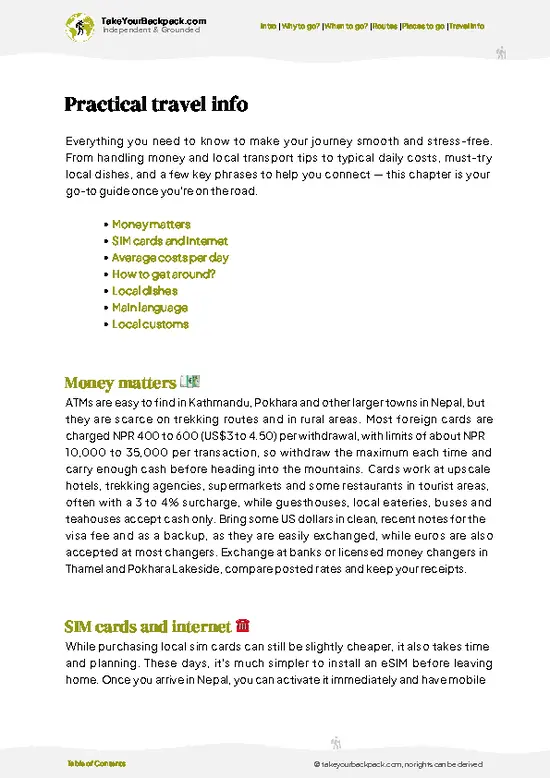
example page 0 from our offline Travel Guide for Nepal
example page 1 from our offline Travel Guide for Nepal
example page 2 from our offline Travel Guide for Nepal
example page 3 from our offline Travel Guide for Nepal
example page 4 from our offline Travel Guide for Nepal
example page 5 from our offline Travel Guide for Nepal
example page 6 from our offline Travel Guide for Nepal
example page 7 from our offline Travel Guide for Nepal
The digital guide (402 pages) contains:
107 highlights, ranked by travel appeal
Optimized 5, 10 & 15-day travel routes
Cities, national parks, landmarks, beaches
How to get around
Offline-friendly for travel without Wi-Fi
👉 Click to see all 30+ guide features

📅 Plan smarter in minutes, not weeks
Month by month travel advice
Festivals & national holidays
Budget expectations

🗺️ Go to the right places, skip the overrated ones
Honest pros & cons of destinations
Top hikes, parks & viewpoints
Lesser-known places most travelers miss
Clear “worth it vs skip it” guidance

🛏️ Travel smoothly without rookie mistakes
Best areas to stay
Transport systems explained simply
Common scams & safety advice
SIM cards, money & practical tips

🌍 Understand the country, not just visit it
Culture & traditions
52 Essential phrases & customs
Festivals worth planning around
Traveler-friendly historical context
Insights that make places more meaningful

📱 Built for real travel conditions
Fully downloadable PDF
Works completely offline
Optimized for phone use
Useful in remote areas & buses
Everything in one place
Save weeks of stressful planning
Get instant access to your full guide. 30‑day money-back guarantee.


By proceeding you agree to our terms.
Sent to your inbox immediately after payment • 100% Secure Checkout
Best Backpacking Travel Advisor 2025 tourism awardBest Backpacking
Travel Advisor
2025
What others say about Take Your Backpack Guides:
⭐⭐⭐⭐⭐
Fantastic, amazing amount of information!
⭐⭐⭐⭐⭐
My goodness this is amazing, it's what I've been looking for hats off too you!
⭐⭐⭐⭐⭐
I think this is absolutely BRILLIANT
⭐⭐⭐⭐
Very complete and informative. It's still missing places, but I gotta to commend you
⭐⭐⭐⭐⭐
This is truly amazing, thank you, can't wait to explore it with my kids!
⭐⭐⭐⭐⭐
Awesome resource, thank you!
⭐⭐⭐⭐⭐
This is amazing! Can't wait to explore the ones I haven't seen
⭐⭐⭐⭐
I love this! Well done, great idea.
⭐⭐⭐⭐⭐
Thanks for taking the time to make this gem!
⭐⭐⭐⭐⭐
This might be the best website I've ever seen.
⭐⭐⭐⭐⭐
Congratulations, and thank you so much for your work; it's incredibly valuable.
⭐⭐⭐⭐
In all seriousness I think you did a great job pointing out the important spots
⭐⭐⭐⭐⭐
10/10 very good
⭐⭐⭐⭐⭐
As someone who's only just starting to visit regularly this is awesome, thank you.
⭐⭐⭐⭐
Thank you very much! I'm going to visit my dad, it's going to be very useful!
⭐⭐⭐⭐⭐
This is really cool! We'll be travelling for the first time and this definitely come in handy.
⭐⭐⭐⭐⭐
You are now our minister of culture, congratulations 👨‍💼
⭐⭐⭐⭐⭐
Just wanted to tell you that this is a pearl! Going to follow your recommendations.
⭐⭐⭐⭐⭐
This is so cool. I'll definitely be using the resource for my travels soon.
⭐⭐⭐⭐⭐
This is very impressive! Good work.
⭐⭐⭐⭐⭐
This is an amazing and informative site. Very well done!

🛏️ Where to stay?How to pick the right area

Kathmandu’s backpacker scene centers around Thamel, a compact neighborhood that’s the city’s unofficial base camp for budget travelers. It’s where you’ll find the highest concentration of hostels, guesthouses, and eateries catering to solo adventurers and groups alike. The vibe here is lively, with streets buzzing day and night, offering a constant stream of fellow travelers to swap stories with or join for a trek prep session. Safety-wise, Thamel is well-patrolled and tourist-friendly, though it’s wise to stay alert in crowded spots and avoid late-night wandering alone.

If you want a bit more … read more 👉
Kathmandu’s backpacker scene centers around Thamel, a compact neighborhood that’s the city’s unofficial base camp for budget travelers. It’s where you’ll find the highest concentration of hostels, guesthouses, and eateries catering to solo adventurers and groups alike. The vibe here is lively, with streets buzzing day and night, offering a constant stream of fellow travelers to swap stories with or join for a trek prep session. Safety-wise, Thamel is well-patrolled and tourist-friendly, though it’s wise to stay alert in crowded spots and avoid late-night wandering alone.

If you want a bit more breathing room without losing the social pulse, Lazimpat sits just a short walk from Thamel. It’s quieter, with fewer hostels but still enough budget options to keep you connected. The area leans a little more upscale, so expect a trade-off: less noise and chaos, but slightly higher prices and fewer backpacker hangouts. It’s a solid choice if you want to recharge between Kathmandu’s sensory overloads.

Avoid areas like New Road or the Old City for first-timers on a budget. They’re less geared toward backpackers, with fewer affordable hostels and a more local, less social atmosphere. In Kathmandu, your choice boils down to the classic trade-off: Thamel for maximum social energy and budget options, Lazimpat for calm with a touch of comfort. Both keep you close to the pulse of the city without sacrificing safety or access.

🚌 Getting aroundHow to get around Kathmandu

Kathmandu moves to a rhythm that’s part ancient pulse, part modern scramble. It’s not a city where you’ll find neat timetables or predictable flows. Instead, it’s a dance of honking horns, bargaining voices, and the occasional sacred bell. The streets are a living organism, shifting between chaos and order depending on the hour and your patience. Here, time is elastic—sometimes it stretches endlessly in traffic jams, other times it snaps tight when you catch a lucky ride. Understanding how to navigate this flow is your secret weapon. You’re not just moving through space; you’re playing a strategic game of trade-offs between time, money, and comfort.


  • Walking: The purest way to absorb Kathmandu’s vibe. Free, obviously, but slow—expect to cover 3-4 km per hour depending on crowds and terrain.
read more 👉
Kathmandu moves to a rhythm that’s part ancient pulse, part modern scramble. It’s not a city where you’ll find neat timetables or predictable flows. Instead, it’s a dance of honking horns, bargaining voices, and the occasional sacred bell. The streets are a living organism, shifting between chaos and order depending on the hour and your patience. Here, time is elastic—sometimes it stretches endlessly in traffic jams, other times it snaps tight when you catch a lucky ride. Understanding how to navigate this flow is your secret weapon. You’re not just moving through space; you’re playing a strategic game of trade-offs between time, money, and comfort.


  • Walking: The purest way to absorb Kathmandu’s vibe. Free, obviously, but slow—expect to cover 3-4 km per hour depending on crowds and terrain. Walking lets you slip into alleys and soak in street life, but it’s not for long hauls or midday heat.


  • Local Microbuses: The budget warrior’s choice. Fares hover around 20-30 NPR (about 15-25 cents), making them unbeatable for cost. They run roughly from 6 AM to 9 PM but don’t expect strict schedules—buses leave when full. Prepare for cramped, noisy rides with frequent stops. Speed varies wildly; rush hour can turn a 15-minute trip into an hour-long ordeal.


  • Tuk-Tuks: The flexible middle ground. Tuk-tuks are everywhere, and you can negotiate fares—typically 100-300 NPR for short to medium distances. They’re faster than microbuses and more comfortable, but prices spike if you’re not bargaining hard or traveling at night. Tuk-tuks don’t run on fixed routes, so they’re great for door-to-door trips but less predictable in traffic jams.


  • Tempos (Three-Wheelers): A step up from tuk-tuks in size and speed, tempos serve fixed routes and cost around 30-50 NPR. They’re less cramped than microbuses but still noisy and bumpy. Tempos run from early morning until about 8 PM, but like microbuses, they wait until full before departing, so timing is flexible but uncertain.


  • Taxi Cabs: The comfort option for those willing to spend. Metered taxis exist but are rare; most operate on negotiated fares starting around 500 NPR for short trips. They offer air conditioning and a smoother ride, saving you time and hassle, especially during peak hours or late at night. However, they’re the most expensive option and can be hard to flag down without pre-booking.


Mastering Kathmandu’s transit is about reading the city’s tempo and choosing your battles. Walk when you want immersion and zero cost. Grab a microbus or tempo if you’re strapped for cash and can handle unpredictability. Tuk-tuks offer a nimble balance, while taxis buy you comfort and speed at a premium. Each choice is a trade-off—your job is to pick the one that wins your game of time, money, and comfort.

👛 Costs (as of 19 February 2026)What things cost and how to budget

Backpacking in Kathmandu means balancing your budget with the city’s unique pace and charm. Here’s how your daily expenses typically stack up, so you can decide where to invest your time and money for the best experience.
  • Dorm Accommodation (High Season): Expect to pay around $6 to $10 per night for a bed in a clean, basic dorm. High season (October to December, February to April) pushes prices up slightly due to demand, especially in popular guesthouses near Thamel.
  • Dorm Accommodation (Off-Season): From May to September, prices drop to about $4 to $7. Rainy season means fewer tourists, so you can snag better deals but be ready for occasional power cuts and humidity.
  • Meals: Street food and local eateries offer filling meals for $1 to $3. A typical dal bhat set (lentils, rice, vegetables)
read more 👉
Backpacking in Kathmandu means balancing your budget with the city’s unique pace and charm. Here’s how your daily expenses typically stack up, so you can decide where to invest your time and money for the best experience.
  • Dorm Accommodation (High Season): Expect to pay around $6 to $10 per night for a bed in a clean, basic dorm. High season (October to December, February to April) pushes prices up slightly due to demand, especially in popular guesthouses near Thamel.
  • Dorm Accommodation (Off-Season): From May to September, prices drop to about $4 to $7. Rainy season means fewer tourists, so you can snag better deals but be ready for occasional power cuts and humidity.
  • Meals: Street food and local eateries offer filling meals for $1 to $3. A typical dal bhat set (lentils, rice, vegetables) runs about $2. Western-style cafes or restaurants catering to tourists will cost $4 to $7 per meal.
  • Local Transport: Microbuses and shared tempos cost around $0.20 to $0.50 per ride within the city. Taxis start at $2 for short trips but negotiate fares upfront to avoid surprises.
  • City Transport Pass: Kathmandu doesn’t have a formal city transport pass system, so budgeting for individual rides is necessary. If you plan heavy travel, expect to spend around $2 to $4 daily on transport.
  • Basic Activities/Entry Fees: Many temples and cultural sites charge entry fees between $1 and $5. The Pashupatinath Temple and Boudhanath Stupa are free to enter but donations are appreciated. Guided tours or trekking permits add to costs but aren’t daily expenses.
  • Miscellaneous Expenses: Bottled water costs about $0.50, internet cafes or SIM cards with data plans run $1 to $3 per day, and occasional snacks or small souvenirs add another $1 to $2.

Add it all up, and you’re looking at roughly $10 to $20 per day for a no-frills backpacking experience in Kathmandu. Push towards the higher end if you want more comfort or plan to visit paid attractions regularly. This city rewards those who know where to spend smartly—skip overpriced tourist traps and invest in local food and cultural spots for the richest experience.


source: welcomenepal.com
⚠️ Prices can change and everyone travels differently, so take this as a rough guide. Hope it helps you plan your adventure!

🚌 Day tripsShort trips worth adding

Kathmandu is a fantastic launchpad for day trips that blend adventure, culture, and stunning landscapes. Here’s how to make the most of your time while keeping costs low and experiences high.

**Nagarkot Sunrise Trek**
Just a short drive from Kathmandu, Nagarkot offers breathtaking views of the Himalayas, especially at sunrise. The trek itself is manageable, taking about 2-3 hours from the village to the viewpoint. You’ll want to leave early—around 4 AM—to catch the sun peeking over the peaks. Expect to spend around $10 for transportation and snacks. The best time to visit is during the fall (September to November) or spring (March to May) when the skies are clear. A common mistake? Underestimating the chill in the morning; layers are essential!
👉 Explore Nagarkot

**Bhaktapur Durbar Square** … read more 👉
Kathmandu is a fantastic launchpad for day trips that blend adventure, culture, and stunning landscapes. Here’s how to make the most of your time while keeping costs low and experiences high.

**Nagarkot Sunrise Trek**
Just a short drive from Kathmandu, Nagarkot offers breathtaking views of the Himalayas, especially at sunrise. The trek itself is manageable, taking about 2-3 hours from the village to the viewpoint. You’ll want to leave early—around 4 AM—to catch the sun peeking over the peaks. Expect to spend around $10 for transportation and snacks. The best time to visit is during the fall (September to November) or spring (March to May) when the skies are clear. A common mistake? Underestimating the chill in the morning; layers are essential!
👉 Explore Nagarkot

**Bhaktapur Durbar Square**
A UNESCO World Heritage site, Bhaktapur is a medieval city that feels like stepping back in time. It’s about an hour’s bus ride from Kathmandu and costs around $3 for the bus and $15 for the entrance fee. Spend the day wandering through ancient temples, sampling the famous king curd (juju dhau), and soaking in the vibrant local culture. The best time to visit is early morning to avoid crowds. Many first-timers miss the hidden alleys filled with artisan workshops—don’t just stick to the main square!
👉 Explore Bhaktapur

**Patan and the Golden Temple**
Patan, just a quick 30-minute ride from Kathmandu, is known for its rich history and stunning architecture. The entrance fee to the Patan Durbar Square is about $5. You can easily spend a few hours exploring the square, visiting the Golden Temple, and enjoying local eateries. The best time to go is during the weekdays when it’s less crowded. A common oversight is not allowing enough time to explore the surrounding neighborhoods, which are filled with local life and art.
👉 Explore Patan

**Chandragiri Hills**
For a quick escape into nature, head to Chandragiri Hills. A cable car ride takes you up in about 10 minutes, costing around $10 round trip. The panoramic views of the Kathmandu Valley and the Himalayas are stunning, especially at sunset. Plan for a half-day trip, and bring a picnic to enjoy at the top. The best time is during the dry season, but avoid weekends when it gets crowded. Many first-timers forget to check the weather; a clear day makes all the difference!


These day trips not only enrich your Kathmandu experience but also allow you to balance time, money, and comfort effectively. Choose wisely, and you’ll walk away with memories that last a lifetime.
Want to know what more Nepal offers?
The Nepal Travel Guide describes 107 highlights, from cities to national parks, from beaches to hikes

Get the Travel Guide -

🍲 FoodEating & Drinking in Kathmandu

In **Kathmandu**, food is a vibrant tapestry of flavors and aromas that beckons you to dive in. Start with **dal bhat**, a staple that’s more than just a meal; it’s a ritual. This lentil soup served with rice and a side of pickles is the heart of Nepali cuisine. Pair it with **momo**, those delightful dumplings filled with spiced meat or veggies, and you’ll understand why locals can’t get enough.

Street food is where the magic happens. Wander through the bustling markets, and you’ll find vendors frying up **sel roti**, a sweet, crispy rice doughnut that’s perfect for snacking. The air is thick with the scent of spices and frying oil, pulling you toward the next stall. Don’t miss out on **chow mein** or **pani puri**; they’re quick, cheap, and packed with flavor.

When it comes to drinks, … read more 👉
In **Kathmandu**, food is a vibrant tapestry of flavors and aromas that beckons you to dive in. Start with **dal bhat**, a staple that’s more than just a meal; it’s a ritual. This lentil soup served with rice and a side of pickles is the heart of Nepali cuisine. Pair it with **momo**, those delightful dumplings filled with spiced meat or veggies, and you’ll understand why locals can’t get enough.

Street food is where the magic happens. Wander through the bustling markets, and you’ll find vendors frying up **sel roti**, a sweet, crispy rice doughnut that’s perfect for snacking. The air is thick with the scent of spices and frying oil, pulling you toward the next stall. Don’t miss out on **chow mein** or **pani puri**; they’re quick, cheap, and packed with flavor.

When it comes to drinks, **chai** is a must. Sip on this spiced tea while chatting with locals, and you’ll feel the warmth of their hospitality. In the evenings, the bars come alive with laughter and chatter. Try a local **beer** or a shot of **raksi**, a potent rice liquor that’s often shared among friends.

Etiquette is simple: share your food and drinks. It’s a way to bond, and you’ll find that the best experiences often come from these communal moments. Embrace the chaos, savor the flavors, and let Kathmandu’s culinary scene sweep you off your feet.

🛡️ SafetySafety Tips and Common Scams in Kathmandu

Kathmandu is generally safe for backpackers, but a few areas and situations warrant extra awareness. Thamel, the bustling heart of tourism, can feel overwhelming. Keep your belongings close; petty theft can happen in crowded spots.

If you’re traveling solo, especially at night, stick to well-lit streets and avoid wandering too far from the main areas. The locals are friendly, but a confident demeanor goes a long way.

Scams do exist, often disguised as friendly advice. Be cautious of overly eager guides offering unsolicited help or inflated prices for tours. Always confirm prices upfront, whether for taxis or meals.

Annoyances like aggressive street vendors can test your patience. A polite but firm “no, thank you” usually does the trick.

Overall, stay aware, trust your instincts, and … read more 👉
Kathmandu is generally safe for backpackers, but a few areas and situations warrant extra awareness. Thamel, the bustling heart of tourism, can feel overwhelming. Keep your belongings close; petty theft can happen in crowded spots.

If you’re traveling solo, especially at night, stick to well-lit streets and avoid wandering too far from the main areas. The locals are friendly, but a confident demeanor goes a long way.

Scams do exist, often disguised as friendly advice. Be cautious of overly eager guides offering unsolicited help or inflated prices for tours. Always confirm prices upfront, whether for taxis or meals.

Annoyances like aggressive street vendors can test your patience. A polite but firm “no, thank you” usually does the trick.

Overall, stay aware, trust your instincts, and you’ll navigate Kathmandu’s vibrant chaos just fine. Embrace the experience; it’s part of the adventure.

Other Nepali cities near Kathmandu

Explore more nearby:

  • Hetauda—industrial hub, hill passes, market crossroads| 42 km away
  • Sindhupalchok—river canyons, hillside villages, earthquake memorials| 44 km away
  • Dolakha—mountain hamlets, ancient shrines, terraced slopes| 84 km away

💡 Not sure where to go next?
Create a personalized itinerary for Nepal including Kathmandu and the places that fit your trip.

Generate my itinerary

👉 Discover all cities

Or checkout all Nepal has to offer (think cities, towns, villages, national parks, hikes, beaches, festivals)
Country photo of Nepal

We 💚 feedbackWhat to keep in mind

Kathmandu is a sensory overload in the best way. The chaotic streets, the aroma of spices, and the vibrant culture pull you in. You’ll find yourself lost in the magic of Durbar Square or haggling in Thamel. But be ready for the hustle; the noise and crowds can be overwhelming. It’s a trade-off: you gain rich experiences but sacrifice some comfort. Embrace it, and you’ll leave with stories that linger long after you’ve returned home.

✈️ When did I visit Nepal?
Being a mountain lover, Nepal is one of my favorites. I visited it in November 2006, hiking the full Annapurna circuit as my highlight.

✍️ Help improve this page!
The information on this page is based on my own backpacking experience in Nepal, supplemented with up-to-date research and feedback from other travelers. Travel details can change, so if you notice anything outdated or incomplete, feel free to let me know.


🙋‍♂️ Give feedback

👋 Meet the founderWho’s Behind Take Your Backpack?

Johan, backpacker and founder of TakeYourBackpackHi, I’m Johan (Netherlands 🇳🇱), the creator of TakeYourBackpack. Over the past decade, I’ve backpacked through 80+ countries across six continents, gaining extensive experience with independent travel, long-term trips, and overland routes.

This site is built on a combination of firsthand travel experience and carefully curated insights from other backpackers. Many guides are based on places I’ve personally visited, while others bring together tips, observations, and practical advice shared by trusted travelers I’ve met along the way.

The goal is to provide realistic, experience-driven guidance — not generic itineraries — so you can explore destinations with better context, clearer expectations, and more confidence.

Get full Nepal guide •
Instant download • 107 highlights • Full Offline guide