×

Nepal🇳🇵 | townsSankhuStone gateways, medieval squares, festival processions | things to do and best time to go

Explore PharpingExplore Manang

Backpacking in Sankhu
👌 Worth visitingtown ranked #17
By Johan Kruseman 🇳🇱 | Updated September 4, 2026

Incense smoke curls past your face as a bell rings somewhere deeper in the courtyard, and a kid in a school uniform weaves through marigold sellers, brushing your backpack with a quick, automatic “sorry.” This is Sankhu, a small Newar town on the northeastern edge of the Kathmandu Valley, past Bhaktapur and just before the hills start to feel serious. For backpackers, it’s a quiet, slightly scruffy base more than a headline act: old lanes, half-restored temples, and the trail toward Nagarkot and Shivapuri on its doorstep. You get here by rattling local bus or shared jeep from Kathmandu, then mostly walk; the core is compact, but expect dust, uneven stone, and the occasional goat traffic jam. Nights are slow, with a couple of simple guesthouses and teahouse-style eateries instead of hostels and bar crawls, so you trade easy social life for early mornings and cheap, filling plates of dal bhat. Compared with Thamel’s chaos or Bhaktapur’s polished heritage vibe, Sankhu feels more lived-in and less curated, safe but conservative, better for hikers and culture nerds who like being the only foreigner on the street than for anyone chasing nightlife or café-hopping.

Discover everything you want to know in the 📖 Nepal Travel Guide.


Get your Nepal guide
97 ranked highlights, routes & tips, works offline (362 pages)
Loading the map 🌍
CLICK TO FILTER
cities
towns
villages
landmarks
national parks
hikes
attractions
festivals
regions
SHOW COUNTRY’S BESTSHOW ALL

✨ Why go?
Ranked #17 town in Nepal
What makes this town worth visiting

Sankhu is a gateway for backpackers seeking a blend of culture and nature. Its walkable streets are lined with small-scale guesthouses that offer a cozy, intimate vibe, perfect for solo travelers or small groups. You can grab a plate of dal bhat from a local eatery, where the aroma of spices fills the air, creating a genuine taste of Nepal.

The town serves as a launchpad for nearby hikes, like the stunning trails to Nagarkot or Bhaktapur, making it ideal for those who want to explore without the hustle of larger cities. Most travelers stay a couple of days, soaking in the friendly atmosphere and connecting with fellow adventurers. It’s not a party hub; instead, it’s a place for slow travel, where you can recharge before heading to your next destination. If you appreciate a quieter, more authentic experience, Sankhu is your spot.
Want to include Sankhu in your Nepal route?
Create a personalized Nepal itinerary that includes Sankhu and the places that fit your trip — based on your travel style, budget, and available time. Get your route in seconds.

Generate my trip

💡 HighlightsMust-see experiences and standout moments

  • Bajrayogini Temple (Vajrayogini) — Sankhu’s centerpiece: an ancient pagoda shrine to the tantric deity Vajrayogini, loaded with woodcarving, devotional activity and a strong sense of living history. Pilgrims and locals keep the rituals alive, so it’s more than a photo op.
  • Sankhu Bazaar / Main Square — the old market spine where daily life happens: carved shopfronts, narrow alleys, street food stalls and vendors selling ritual items. Great for watching craftsmen, catching the rhythm of the town, or a cheap snack break.
  • Newar Bahals and Courtyards — a cluster of small Buddhist monastery-courtyards (bahals) dotted through town. Quiet, intimate, and packed with prayer wheels, mani stones and local ritual practice — perfect for slow exploration.
  • Stone Spouts and Community Ponds (dhunge dhara
read more 👉
  • Bajrayogini Temple (Vajrayogini) — Sankhu’s centerpiece: an ancient pagoda shrine to the tantric deity Vajrayogini, loaded with woodcarving, devotional activity and a strong sense of living history. Pilgrims and locals keep the rituals alive, so it’s more than a photo op.
  • Sankhu Bazaar / Main Square — the old market spine where daily life happens: carved shopfronts, narrow alleys, street food stalls and vendors selling ritual items. Great for watching craftsmen, catching the rhythm of the town, or a cheap snack break.
  • Newar Bahals and Courtyards — a cluster of small Buddhist monastery-courtyards (bahals) dotted through town. Quiet, intimate, and packed with prayer wheels, mani stones and local ritual practice — perfect for slow exploration.
  • Stone Spouts and Community Ponds (dhunge dhara & pokhari) — historic water taps and ponds still used in rituals and daily life; the carved spouts and communal washing/ritual areas give a tactile window into traditional Newar urban hygiene and design.
  • Carved Wooden Windows and Doorways — Sankhu’s houses wear their craftsmanship on the outside: ornate windows, lintels and doorframes that tell local stories in wood. Good for anyone who loves small details and architecture up close.
  • Patis and Resthouses — long wooden resthouses where locals meet and travelers can sit in the shade. They’re social hubs and excellent places for people-watching, catching a local conversation, or sheltering from a sudden rain.
  • Small Neighborhood Shrines (Ganesh, Bhairav, local deities) — scattered tiny temples and outdoor shrines with daily offerings and vibrant ritual life. They’re low-key but culturally rich — visit respectfully and you’ll see faith lived at street level.
  • The Bajrayogini Jatra Route and Chariot Squares — even when there’s no festival, the chariot squares, procession routes and carved platforms are meaningful: they show how public ritual space is woven into the town’s fabric and are best experienced with a local story or two.
  • Short Hill Trail & Small Stupas Above Town — a quick climb from the town center leads to tiny stupas and viewpoints that give a neat perspective on Sankhu set in the eastern rim of the valley. Good for a sunrise/sunset stretch and a breather from the alleys.
  • Community Heritage Corners (local storytellers / small displays) — informal spots where elders, priests or community volunteers keep manuscripts, photos and oral histories. They’re not glossy museums, but you’ll leave with context and real stories that don’t appear on signboards.
A few close day-trip highlights outside Sankhu: the ancient Changu Narayan temple (my personal favorite for its wood-and-stone carvings), historic Bhaktapur Durbar Square, and the sunrise/viewpoint town of Nagarkot — all easily reached from Sankhu in a day.
Spotted a mistake or missing something? Contact us.

Things to do near Sankhu

Ratings based on Tripadvisor reviews. When you book through this link, you support our work at no extra cost to you.

🏘️ NeighborhoodsUnderstanding the local layout

Sankhu, a charming town on the outskirts of Kathmandu, offers a blend of culture and tranquility that’s perfect for backpackers seeking an authentic experience.

Old Sankhu: This area is the heart of the town, where you’ll find ancient temples and local markets. The vibe is lively yet laid-back, making it ideal for short stays. Streets are narrow and walkable, filled with the scent of spices and the sound of locals chatting. Budget-friendly guesthouses abound, but nightlife is minimal—perfect for those who prefer quiet evenings.

New Sankhu: A bit more modern, this neighborhood offers a mix of local eateries and shops. It’s slightly busier, with more transport options to Kathmandu. If you’re planning a longer stay, this area provides a good balance of convenience and local flavor. The atmosphere … read more 👉
Sankhu, a charming town on the outskirts of Kathmandu, offers a blend of culture and tranquility that’s perfect for backpackers seeking an authentic experience.

Old Sankhu: This area is the heart of the town, where you’ll find ancient temples and local markets. The vibe is lively yet laid-back, making it ideal for short stays. Streets are narrow and walkable, filled with the scent of spices and the sound of locals chatting. Budget-friendly guesthouses abound, but nightlife is minimal—perfect for those who prefer quiet evenings.

New Sankhu: A bit more modern, this neighborhood offers a mix of local eateries and shops. It’s slightly busier, with more transport options to Kathmandu. If you’re planning a longer stay, this area provides a good balance of convenience and local flavor. The atmosphere is friendly, and you can easily find a cozy café to unwind after a day of exploring.

Rural Outskirts: Venture a bit further, and you’ll find the peaceful outskirts. This area is less touristy, offering a genuine glimpse into local life. It’s great for longer stays if you want to immerse yourself in the culture. The trails leading into the hills are perfect for day hikes, and the fresh air is invigorating. Just be prepared for limited transport options back to the town center.

⌛️ 1 dayHow to make the most of one day

Sankhu, a charming town on the outskirts of Kathmandu, offers a glimpse into authentic Nepali life, far from the usual tourist trails. The air is filled with the scent of spices and the distant sound of temple bells, creating an atmosphere that feels both sacred and vibrant.

Start your morning with a stroll through the narrow lanes of the old town. The sun filters through the ancient buildings, casting playful shadows. Stop by a local tea shop for a cup of masala chai; the warmth will prepare you for the day ahead. Afterward, head to the iconic Sankhu Durbar Square, where the intricately carved wooden windows and stone sculptures tell stories of centuries past. Spend some time soaking in the details; it’s a perfect spot for photography.

In the afternoon, make your way to the less-visited … read more 👉
Sankhu, a charming town on the outskirts of Kathmandu, offers a glimpse into authentic Nepali life, far from the usual tourist trails. The air is filled with the scent of spices and the distant sound of temple bells, creating an atmosphere that feels both sacred and vibrant.

Start your morning with a stroll through the narrow lanes of the old town. The sun filters through the ancient buildings, casting playful shadows. Stop by a local tea shop for a cup of masala chai; the warmth will prepare you for the day ahead. Afterward, head to the iconic Sankhu Durbar Square, where the intricately carved wooden windows and stone sculptures tell stories of centuries past. Spend some time soaking in the details; it’s a perfect spot for photography.

In the afternoon, make your way to the less-visited Bhairabsthan Temple. This hidden gem is a short walk from the main square and offers a serene atmosphere. The temple is dedicated to Bhairab, a fierce manifestation of Shiva, and the energy here is palpable. Take a moment to sit and reflect; the locals often come here to pray, adding to the authenticity of the experience.

As evening approaches, wander through the bustling local market. The vibrant colors of fresh produce and handmade crafts create a sensory feast. Grab a bite at a nearby eatery—try the momos, a local favorite.

End your day by watching the sunset from the nearby hills. The golden light over the valley is a reward for your exploration, making every step worthwhile. In Sankhu, every moment is a connection to the heart of Nepal.
Turn your Sankhu visit into an Nepal adventure
Build a complete Nepal route with Sankhu, hidden gems, must-see destinations, and realistic travel times included.

Generate my trip

🌤️ When to go?Choosing the right time of year


  • Weather: Sankhu’s best weather hits in autumn (September to November) and spring (March to May). Expect clear skies and mild temperatures, perfect for wandering ancient streets without the monsoon’s damp chill or winter’s sharp bite.

  • Temperature: Daytime highs hover around 20-25°C (68-77°F) in these seasons, dropping to 10-15°C (50-59°F) at night—comfortable for hiking and exploring without overheating or freezing.

  • Daylight Hours: Around 11-12 hours of daylight in spring and autumn means you get ample time to soak in the town’s atmosphere without rushing.

  • Crowds: Autumn draws more visitors due to festivals and clear skies, so expect livelier streets but also higher prices. Spring is quieter, offering a more intimate experience.

  • Seasonal Activities: Autumn hosts vibrant local festivals
read more 👉

  • Weather: Sankhu’s best weather hits in autumn (September to November) and spring (March to May). Expect clear skies and mild temperatures, perfect for wandering ancient streets without the monsoon’s damp chill or winter’s sharp bite.

  • Temperature: Daytime highs hover around 20-25°C (68-77°F) in these seasons, dropping to 10-15°C (50-59°F) at night—comfortable for hiking and exploring without overheating or freezing.

  • Daylight Hours: Around 11-12 hours of daylight in spring and autumn means you get ample time to soak in the town’s atmosphere without rushing.

  • Crowds: Autumn draws more visitors due to festivals and clear skies, so expect livelier streets but also higher prices. Spring is quieter, offering a more intimate experience.

  • Seasonal Activities: Autumn hosts vibrant local festivals like Indra Jatra nearby, enriching your visit with cultural depth. Spring brings blooming rhododendrons, adding color to your hikes.

  • Price Fluctuations: Peak seasons push up accommodation and food costs by 20-30%. Off-season (monsoon and winter) offers bargains but at the expense of weather and accessibility.


Pro-tip: Aim for late October or early April—when the air is crisp, the light soft, and the town hums with life but hasn’t yet tipped into tourist overload.


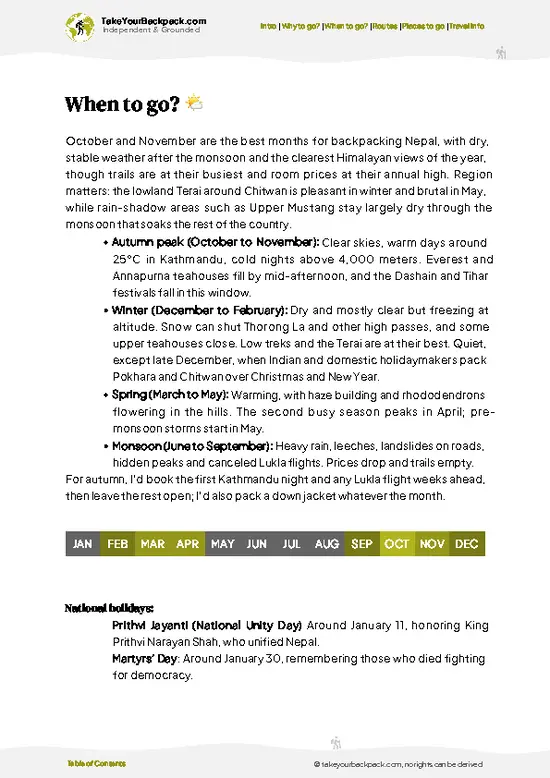
source: climatestotravel.comJANJanuary: fair for travelingFEBFebruary: good for travelingMARMarch: highly recommended for travelingAPRApril: excellent for travelingMAYMay: highly recommended for travelingJUNJune: below average for travelingJULJuly: below average for travelingAUGAugust: below average for travelingSEPSeptember: excellent for travelingOCTOctober: excellent for travelingNOVNovember: highly recommended for travelingDECDecember: fair for traveling
nepal-city-sankhu
© Google |

✈️ The backpacker research shortcutNepal Travel Guide

An offline-friendly backpacking guide with optimized travel routes, ranked highlights, transport advice, and the best areas to stay.
example page 0 from our offline Travel Guide for Nepal
example page 1 from our offline Travel Guide for Nepal
example page 2 from our offline Travel Guide for Nepal
example page 3 from our offline Travel Guide for Nepal
example page 4 from our offline Travel Guide for Nepal
example page 5 from our offline Travel Guide for Nepal
example page 6 from our offline Travel Guide for Nepal
example page 7 from our offline Travel Guide for Nepal
The digital guide (362 pages) contains:
97 highlights, ranked by travel appeal
Optimized 5, 10 & 15-day travel routes
Cities, national parks, landmarks, beaches
How to get around
Offline-friendly for travel without Wi-Fi
👉 Click to see all 30+ guide features

📅 Plan smarter in minutes, not weeks
Month by month travel advice
Festivals & national holidays
Budget expectations

🗺️ Go to the right places, skip the overrated ones
Honest pros & cons of destinations
Top hikes, parks & viewpoints
Lesser-known places most travelers miss
Clear “worth it vs skip it” guidance

🛏️ Travel smoothly without rookie mistakes
Best areas to stay
Transport systems explained simply
Common scams & safety advice
SIM cards, money & practical tips

🌍 Understand the country, not just visit it
Culture & traditions
52 Essential phrases & customs
Festivals worth planning around
Traveler-friendly historical context
Insights that make places more meaningful

📱 Built for real travel conditions
Fully downloadable PDF
Works completely offline
Optimized for phone use
Useful in remote areas & buses
Everything in one place
Save weeks of stressful planning
Get instant access to your full guide. 30‑day money-back guarantee.
+ Add another guide for just US$7.80

By proceeding you agree to our terms.
Sent to your inbox immediately after payment • 100% Secure Checkout
Best Backpacking Travel Advisor 2025 tourism awardBest Backpacking
Travel Advisor
2025
What others say about Take Your Backpack Guides:
⭐⭐⭐⭐⭐
Fantastic, amazing amount of information!
⭐⭐⭐⭐⭐
My goodness this is amazing, it's what I've been looking for hats off too you!
⭐⭐⭐⭐⭐
I think this is absolutely BRILLIANT
⭐⭐⭐⭐
Very complete and informative. It's still missing places, but I gotta to commend you
⭐⭐⭐⭐⭐
This is truly amazing, thank you, can't wait to explore it with my kids!
⭐⭐⭐⭐⭐
Awesome resource, thank you!
⭐⭐⭐⭐⭐
This is amazing! Can't wait to explore the ones I haven't seen
⭐⭐⭐⭐
I love this! Well done, great idea.
⭐⭐⭐⭐⭐
Thanks for taking the time to make this gem!
⭐⭐⭐⭐⭐
This might be the best website I've ever seen.
⭐⭐⭐⭐⭐
Congratulations, and thank you so much for your work; it's incredibly valuable.
⭐⭐⭐⭐
In all seriousness I think you did a great job pointing out the important spots
⭐⭐⭐⭐⭐
10/10 very good
⭐⭐⭐⭐⭐
As someone who's only just starting to visit regularly this is awesome, thank you.
⭐⭐⭐⭐
Thank you very much! I'm going to visit my dad, it's going to be very useful!
⭐⭐⭐⭐⭐
This is really cool! We'll be travelling for the first time and this definitely come in handy.
⭐⭐⭐⭐⭐
You are now our minister of culture, congratulations 👨‍💼
⭐⭐⭐⭐⭐
Just wanted to tell you that this is a pearl! Going to follow your recommendations.
⭐⭐⭐⭐⭐
This is so cool. I'll definitely be using the resource for my travels soon.
⭐⭐⭐⭐⭐
This is very impressive! Good work.
⭐⭐⭐⭐⭐
This is an amazing and informative site. Very well done!

🛏️ Where to stay?Best areas and accommodation options

Sankhu’s heart for backpackers beats strongest around the old town square, where narrow lanes hum with local life and the scent of incense mingles with fresh bread from small bakeries. This area is a natural magnet for solo travelers and budget adventurers because it’s compact, safe, and buzzing just enough to spark conversation without overwhelming. Hostels here tend to be small, family-run, offering a cozy base where you can swap stories over chai in shared courtyards. Compared to the quieter outskirts, staying near the square means you’re steps from temples, markets, and the pulse of daily … read more 👉
Sankhu’s heart for backpackers beats strongest around the old town square, where narrow lanes hum with local life and the scent of incense mingles with fresh bread from small bakeries. This area is a natural magnet for solo travelers and budget adventurers because it’s compact, safe, and buzzing just enough to spark conversation without overwhelming. Hostels here tend to be small, family-run, offering a cozy base where you can swap stories over chai in shared courtyards. Compared to the quieter outskirts, staying near the square means you’re steps from temples, markets, and the pulse of daily rituals—perfect for soaking in Sankhu’s rhythm without needing a guide. It’s the kind of place where the light softens in the late afternoon, inviting you to linger and connect.

🚌 Getting aroundHow to get around Sankhu

Sankhu moves at its own rhythm—less a clock-driven town, more a place where the day unfolds with the slow, deliberate pace of smoke curling from incense sticks. The streets don’t rush you; they invite you to slow down, to listen to the chatter of locals bargaining over fresh vegetables or the distant clang of temple bells. Here, transit isn’t about strict timetables but about catching the right moment, the right vehicle, and the right vibe. It’s a dance between patience and intuition, where knowing when to hop on a shared jeep or when to simply walk can turn a frustrating wait into a chance to soak in the scent of damp earth and marigold garlands.


  • Walking: The best way to absorb Sankhu’s atmosphere. The town is compact, and wandering on foot lets you catch the scent of wood smoke and the
read more 👉
Sankhu moves at its own rhythm—less a clock-driven town, more a place where the day unfolds with the slow, deliberate pace of smoke curling from incense sticks. The streets don’t rush you; they invite you to slow down, to listen to the chatter of locals bargaining over fresh vegetables or the distant clang of temple bells. Here, transit isn’t about strict timetables but about catching the right moment, the right vehicle, and the right vibe. It’s a dance between patience and intuition, where knowing when to hop on a shared jeep or when to simply walk can turn a frustrating wait into a chance to soak in the scent of damp earth and marigold garlands.


  • Walking: The best way to absorb Sankhu’s atmosphere. The town is compact, and wandering on foot lets you catch the scent of wood smoke and the texture of ancient brick walls. No cost, just time—perfect for budget travelers who want to move at their own pace.

  • Shared Jeep: Runs roughly from 6 AM to 6 PM, fares hover around 50 NPR. These jeeps are the lifeline to nearby towns like Bhaktapur and Kathmandu. They’re cramped but fast, and the windows frame the hills rolling by like a moving postcard.

  • Local Bus: Slower and cheaper than jeeps, about 30 NPR, starting early morning until dusk. Buses follow a looser schedule, so expect some waiting. They’re a good choice if you’re not in a rush and want to blend in with locals.

  • Rickshaw: Ideal for short hops within Sankhu or to nearby spots. Prices vary but usually under 100 NPR. Rickshaws offer a breezy, open-air ride, perfect for catching the town’s scents and sounds without the effort of walking.

👛 Costs (as of 4 September 2026)What things cost and how to budget

Backpacking in Sankhu, Nepal, offers a quiet, authentic experience away from the tourist throngs, but knowing the daily costs helps you navigate the town without surprises.
  • Dorm Accommodation: Expect to pay around $5 to $10 USD per night for a basic dorm bed. These are simple guesthouses with shared bathrooms, often with a view of the surrounding hills. The rooms are modest but clean, and the quiet evenings here make the modest price feel like a steal.
  • Meals: Local eateries serve hearty Nepali meals for $2 to $5 USD. Dal bhat (lentils and rice) is the staple and filling, while momos (dumplings) run about $1 to $2 for a plate. If you want a bit more variety or a Western-style coffee, expect to pay closer to $3 to $6 per meal.
  • Local Transport: Sankhu is small enough to explore mostly on foot,
read more 👉
Backpacking in Sankhu, Nepal, offers a quiet, authentic experience away from the tourist throngs, but knowing the daily costs helps you navigate the town without surprises.
  • Dorm Accommodation: Expect to pay around $5 to $10 USD per night for a basic dorm bed. These are simple guesthouses with shared bathrooms, often with a view of the surrounding hills. The rooms are modest but clean, and the quiet evenings here make the modest price feel like a steal.
  • Meals: Local eateries serve hearty Nepali meals for $2 to $5 USD. Dal bhat (lentils and rice) is the staple and filling, while momos (dumplings) run about $1 to $2 for a plate. If you want a bit more variety or a Western-style coffee, expect to pay closer to $3 to $6 per meal.
  • Local Transport: Sankhu is small enough to explore mostly on foot, but if you need a local bus or shared jeep to nearby spots, budget $1 to $3 USD per trip. The roads are narrow and bumpy, so these rides are short but can be an adventure in themselves.
  • Basic Activities/Entry Fees: Most cultural sites and temples in Sankhu have nominal entry fees, usually under $1 USD. If you hire a local guide for a half-day walk or cultural tour, expect to pay around $10 to $15 USD, which supports the community and enriches your experience.
  • Miscellaneous Expenses: Bottled water, snacks, or small souvenirs will add another $1 to $3 USD daily. Internet cafes or SIM cards for data are affordable, around $1 to $2 per day for basic use.

All told, you’re looking at roughly $10 to $25 USD per day to live comfortably in Sankhu without cutting corners. The town’s slow pace and simple lifestyle mean your money stretches further here than in Kathmandu, making it a great spot to recharge and soak in local culture without the usual tourist price tags.


source: welcomenepal.com
⚠️ Prices can change and everyone travels differently, so take this as a rough guide. Hope it helps you plan your adventure!

🚌 Day tripsWhere to go beyond the main area

Sankhu, Nepal, is a backpacker’s dream base, offering a blend of culture, nature, and adventure just a stone’s throw away.

Bhaktapur Durbar Square
Just a 30-minute bus ride from Sankhu, Bhaktapur is a UNESCO World Heritage site that feels like stepping back in time. The intricate woodwork and ancient temples are a feast for the eyes, while the aroma of freshly baked king curd (juju dhau) wafts through the air. Aim to visit early in the morning to beat the crowds and soak in the serene atmosphere. Expect to spend around $5 for entry and snacks. A common mistake? Rushing through without taking time to enjoy a leisurely stroll through the narrow alleys.
👉 Explore Bhaktapur Durbar Square

Nagarkot Sunrise
For a breathtaking sunrise, head to Nagarkot, about an hour’s drive from Sankhu. … read more 👉
Sankhu, Nepal, is a backpacker’s dream base, offering a blend of culture, nature, and adventure just a stone’s throw away.

Bhaktapur Durbar Square
Just a 30-minute bus ride from Sankhu, Bhaktapur is a UNESCO World Heritage site that feels like stepping back in time. The intricate woodwork and ancient temples are a feast for the eyes, while the aroma of freshly baked king curd (juju dhau) wafts through the air. Aim to visit early in the morning to beat the crowds and soak in the serene atmosphere. Expect to spend around $5 for entry and snacks. A common mistake? Rushing through without taking time to enjoy a leisurely stroll through the narrow alleys.
👉 Explore Bhaktapur Durbar Square

Nagarkot Sunrise
For a breathtaking sunrise, head to Nagarkot, about an hour’s drive from Sankhu. The early morning chill is invigorating as you watch the sun paint the Himalayas in hues of orange and pink. The drive costs around $10, and you can grab a local breakfast for another $3. The best time to go is between October and March when the skies are clear. Many first-timers miss the chance to hike a bit further to the viewpoint; don’t just settle for the first spot.


Changu Narayan Temple
A short 20-minute ride will take you to Changu Narayan, the oldest Hindu temple in the Kathmandu Valley. The temple’s intricate carvings and peaceful surroundings make it a perfect spot for reflection. Entry is about $1, and you can enjoy a simple meal from a nearby stall for a couple of bucks. Visit in the late afternoon to catch the golden light filtering through the trees. A common oversight is not exploring the surrounding village, which offers a glimpse into local life.


Gosaikunda Trek (Day Hike)
For the more adventurous, a day hike to Gosaikunda is a rewarding challenge. It takes about 6-7 hours to reach the first lake, with stunning views of the Langtang range along the way. The trek can be done for around $15 if you pack your own lunch. Late spring or early autumn is ideal for clear skies. Many underestimate the trail’s difficulty; be prepared with good shoes and plenty of water.
Want to know what more Nepal offers?
The Nepal Travel Guide describes 97 highlights, from cities to national parks, from beaches to hikes

Get the Travel Guide -

🛡️ SafetyScams, Hazards, and Annoyances

Sankhu is generally safe, but a few practical tips can enhance your experience. Stay aware in crowded areas, especially near markets where pickpockets might lurk. If you’re wandering solo, stick to well-lit streets after dark; the charm of the town is best enjoyed in daylight, anyway.

Watch for common scams, like overly friendly locals offering guided tours that lead to inflated prices. Trust your instincts; if something feels off, it probably is. Carry a small amount of cash for local vendors, as many don’t accept cards.

Embrace the atmosphere, but keep your belongings close. A little vigilance goes a long way in making your adventure smooth and enjoyable.

FAQCommon questions from travelers

Yes, Sankhu is worth visiting for its rich Newari culture, ancient temples, and traditional architecture. It offers a quieter, less touristy experience compared to Kathmandu. The town is especially vibrant during the annual Sankhu Jatra festival in April.
One to two days are sufficient to explore Sankhu thoroughly. This allows time to visit key sites like the Vajrayogini Temple, the old town squares, and local markets without rushing.
Yes, Sankhu can be visited as a day trip from Kathmandu, which is about 16 kilometers away. The journey takes around 45 minutes by car or local bus, making it convenient for a quick cultural excursion.
⚠️ Things can change over time, so always validate details locally before you go.

Other Nepali towns near Sankhu

Explore more nearby:

  • Bhaktapur—Pagoda squares, pottery lanes, medieval courtyards| 7 km away
  • Dhulikhel—Sunrise viewpoints, hillside lodges, Buddhist stupas| 15 km away
  • Patan—artisan quarters, medieval courtyards, Buddhist stupas| 16 km away

💡 Not sure where to go next?
Create a personalized itinerary for Nepal including Sankhu and the places that fit your trip.

Generate my itinerary

👉 Discover all towns

Or checkout all Nepal has to offer (think cities, towns, villages, national parks, hikes, beaches, festivals)
Country photo of Nepal

We 💚 feedbackKey takeaways before you go

Sankhu is a breath of fresh air, where the scent of incense mingles with the chatter of locals. You’ll find authentic culture in every corner, from the vibrant markets to the ancient temples. But be ready for the reality check: the roads can be rough, and the infrastructure isn’t always tourist-friendly. Embrace the bumps; they lead to genuine experiences that make the journey worthwhile.

✈️ When did I visit Nepal?
Being a mountain lover, Nepal is one of my favorites. I visited it in November 2006, hiking the full Annapurna circuit as my highlight.

✍️ Help improve this page!
The information on this page is based on my own backpacking experience in Nepal, supplemented with up-to-date research and feedback from other travelers. Travel details can change, so if you notice anything outdated or incomplete, feel free to let me know.


🙋‍♂️ Give feedback

👋 Meet the founderWho’s Behind Take Your Backpack?

Johan, backpacker and founder of TakeYourBackpackHi, I’m Johan (Netherlands 🇳🇱), the creator of TakeYourBackpack. Over the past decade, I’ve backpacked through 80+ countries across six continents, gaining extensive experience with independent travel, long-term trips, and overland routes.

This site is built on a combination of firsthand travel experience and carefully curated insights from other backpackers. Many guides are based on places I’ve personally visited, while others bring together tips, observations, and practical advice shared by trusted travelers I’ve met along the way.

The goal is to provide realistic, experience-driven guidance — not generic itineraries — so you can explore destinations with better context, clearer expectations, and more confidence.

Get full Nepal guide •
Instant download • 97 highlights • Full Offline guide