×

Nepal🇳🇵 | townsManangGlacial valleys, yak pastures, Annapurna circuit stop | things to do and best time to go

Explore SankhuExplore Mustang

Backpacking in Manang
🌟 Highlighttown ranked #4
By Johan Kruseman 🇳🇱 | Updated June 15, 2026

Most people online sell Manang as a cozy rest town; the surprise is that it actually feels thin and high and slightly harsh, like a frontier outpost where your body is the main project. Manang sits in the upper Marsyangdi Valley of Nepal’s Annapurna region, a long day or two’s walk beyond Chame on the classic Annapurna Circuit. It works best as an acclimatization base and launchpad: side trips to Ice Lake, the viewpoint above Gangapurna Lake, or a yak-cheese-fueled wander through the old stone alleys. The upside is big-mountain drama, decent bakeries, gear shops, and an easy, walkable layout where you’ll meet other trekkers without trying. The downside: it’s pricier than lower villages, dusty, often windy, and very much a trekking bubble. Compared with quieter Braga or Ngawal, Manang is busier, more practical than soulful, but exactly where your circuit starts to feel serious.

Discover everything you want to know in the 📖 Nepal Travel Guide.


Get your Nepal guide
107 ranked highlights, routes & tips, works offline (404 pages)
Loading the map 🌍
CLICK TO FILTER
cities
towns
villages
landmarks
national parks
hikes
attractions
festivals
regions
SHOW COUNTRY’S BESTSHOW ALL

✨ Why go?
Ranked #4 town in Nepal
Why visitors keep coming back

Manang is a backpacker’s hub nestled in the Annapurna Circuit, serving as a crucial waypoint for those seeking adventure. The town’s convenience is undeniable; it’s the launchpad for stunning hikes like the Gangapurna Glacier and Tilicho Lake, making it a favorite for hikers and slow travelers. You can stroll through its walkable streets, where the scent of fresh momos wafts from local eateries, inviting you to savor authentic flavors.

Accommodations range from cozy guesthouses to small-scale hostels, fostering a friendly social atmosphere that encourages connection among solo travelers and small groups. While some backpackers might only pause for a night, many linger for a few days to soak in the cultural richness and recharge before tackling higher altitudes. The vibe is relaxed, not a … read more 👉
Manang is a backpacker’s hub nestled in the Annapurna Circuit, serving as a crucial waypoint for those seeking adventure. The town’s convenience is undeniable; it’s the launchpad for stunning hikes like the Gangapurna Glacier and Tilicho Lake, making it a favorite for hikers and slow travelers. You can stroll through its walkable streets, where the scent of fresh momos wafts from local eateries, inviting you to savor authentic flavors.

Accommodations range from cozy guesthouses to small-scale hostels, fostering a friendly social atmosphere that encourages connection among solo travelers and small groups. While some backpackers might only pause for a night, many linger for a few days to soak in the cultural richness and recharge before tackling higher altitudes. The vibe is relaxed, not a party scene, making it perfect for those who appreciate a quiet retreat after a day of exploration. If you’re looking for a place that balances adventure with community, Manang is worth your time.
Want to include Manang in your Nepal route?
Create a personalized Nepal itinerary that includes Manang and the places that fit your trip — based on your travel style, budget, and available time. Get your route in seconds.

Generate my trip

💡 HighlightsTop highlights of Manang

  • Manang Gompa (Main Monastery) — The heart of town: a working gompa with colorful thangkas, prayer wheels, and monks going about daily rituals. Visiting gives a clear picture of local Tibetan-Buddhist life and a quiet spot to absorb the valley’s spiritual atmosphere.
  • Gangapurna Lake — A short uphill hike from the bazaar leads to this glassy glacial lake tucked beneath Gangapurna and Annapurna peaks. It’s photogenic, peaceful, and a great intro to glacier-landscapes without leaving the village area.
  • ACAP (Annapurna Conservation Area Project) Information Centre — Small exhibits, maps, and conservation notes that explain wildlife, local ecology, and trekking rules for the region. Good place to ask practical questions and learn how locals are protecting the valley.
  • HRA Clinic and Advice Post
read more 👉
  • Manang Gompa (Main Monastery) — The heart of town: a working gompa with colorful thangkas, prayer wheels, and monks going about daily rituals. Visiting gives a clear picture of local Tibetan-Buddhist life and a quiet spot to absorb the valley’s spiritual atmosphere.
  • Gangapurna Lake — A short uphill hike from the bazaar leads to this glassy glacial lake tucked beneath Gangapurna and Annapurna peaks. It’s photogenic, peaceful, and a great intro to glacier-landscapes without leaving the village area.
  • ACAP (Annapurna Conservation Area Project) Information Centre — Small exhibits, maps, and conservation notes that explain wildlife, local ecology, and trekking rules for the region. Good place to ask practical questions and learn how locals are protecting the valley.
  • HRA Clinic and Advice Post — The Himalayan Rescue Association’s Manang post is where trekkers get altitude advice, basic checks, and trustworthy tips about acclimatization. Useful visit for health peace-of-mind and to learn how altitude sickness is managed locally.
  • Old Manang Settlement and Alleyways — Wander the narrow lanes lined with traditional stone-and-mud houses, wooden balconies and drying barley on rooftops. The walk is low-key but rich: you’ll see daily life, storage rooms, and age-old building styles that define Manang.
  • Mani Walls, Chortens and Prayer Flags — Mani walls and clustered chortens frame key approaches to town; spinning prayer wheels and passing pilgrims makes these simple structures feel alive. They’re tiny cultural classrooms—symbols stamped in stone and prayer cloths.
  • Local Yak-Cheese Workshops — Small family-run sheds where yak milk is processed into cheese and chhurpi; many welcome visitors who want to see (and taste) traditional methods. It’s one of the most tangible ways to see pastoral life and mountain foodways up close.
  • Teahouse Street and Trekker Cafés — The social hub: family-run teahouses where you can try thukpa, fried bread, rooftop tea and swap route notes with other trekkers. Real travel value here comes from conversation with locals and other hikers, not just the food.
  • Manang Community Museum / Heritage Display — A small, community-run collection of photos, old tools, clothing and oral histories that trace how Manang changed with trekkers and trade. It’s not a grand museum, but it’s honest and full of local stories you won’t find in guidebooks.
  • Ridge Viewpoint above the Bazaar — A fifteen- to thirty-minute scramble from the main street takes you to a viewpoint with sweeping views of Annapurna II, Gangapurna and the glacier apron. Best for sunrise or late afternoon light when the whole range goes gold.
A few easy day-trip highlights just outside Manang: Braga village and its old monastery, the traditional settlement of Khangsar (half-day walks), and the longer hike up to Tilicho Lake (can be done as a long day for fit trekkers or as an overnight); my personal favorite is the short walk to Braga Monastery — it’s quiet, photogenic and full of real local ritual.
Spotted a mistake or missing something? Contact us.

Things to do near Manang

Ratings based on Tripadvisor reviews. When you book through this link, you support our work at no extra cost to you.

🏘️ NeighborhoodsUnderstanding the local layout

Manang is a vibrant hub for trekkers, offering a mix of culture, comfort, and adventure. Each area has its own character, catering to different needs and preferences.

Upper Manang: This area is where the action is. You’ll find cozy guesthouses and lively cafes, perfect for unwinding after a long trek. The vibe is energetic, with fellow backpackers sharing stories over steaming cups of chai. Walkability is excellent; everything is within a short stroll. Prices are moderate, making it suitable for both short and longer stays. The nightlife is low-key, but you can find a few spots to enjoy a drink and connect with other travelers.

Lower Manang: A quieter alternative, Lower Manang offers a more laid-back atmosphere. It’s ideal for those seeking solitude or a peaceful retreat. The guesthouses … read more 👉
Manang is a vibrant hub for trekkers, offering a mix of culture, comfort, and adventure. Each area has its own character, catering to different needs and preferences.

Upper Manang: This area is where the action is. You’ll find cozy guesthouses and lively cafes, perfect for unwinding after a long trek. The vibe is energetic, with fellow backpackers sharing stories over steaming cups of chai. Walkability is excellent; everything is within a short stroll. Prices are moderate, making it suitable for both short and longer stays. The nightlife is low-key, but you can find a few spots to enjoy a drink and connect with other travelers.

Lower Manang: A quieter alternative, Lower Manang offers a more laid-back atmosphere. It’s ideal for those seeking solitude or a peaceful retreat. The guesthouses here are slightly cheaper, and the views are breathtaking. While it’s a bit further from the main action, the tranquility makes it worth it. Perfect for longer stays, you can soak in the surroundings without the hustle.

Manang Town Center: This is the heart of the community. It’s bustling with shops, bakeries, and local eateries. The transport access is solid, with options for local buses and shared taxis. The vibe is a blend of local life and tourist energy. It’s great for short stays, as you can easily explore the surrounding areas while enjoying the conveniences of town.

⌛️ 1 dayA smart one-day plan

Manang, perched at 3,540 meters in the Annapurna region, is a tapestry of rugged beauty and rich culture. The air is crisp, laced with the scent of pine and the distant sound of rushing rivers. This town is a gateway for trekkers but holds its own charm beyond the trails.

Start your morning with a warm cup of chai at the Yak Donald’s café. The cozy atmosphere, filled with the chatter of fellow travelers, sets the tone for the day. After fueling up, take a stroll through the narrow streets of Manang, where traditional stone houses stand against a backdrop of towering peaks. Don’t miss the old monastery, a short walk from the main square. The intricate murals inside tell stories of the region’s Buddhist heritage, and the stillness here invites reflection.

In the afternoon, venture to the less-trodden … read more 👉
Manang, perched at 3,540 meters in the Annapurna region, is a tapestry of rugged beauty and rich culture. The air is crisp, laced with the scent of pine and the distant sound of rushing rivers. This town is a gateway for trekkers but holds its own charm beyond the trails.

Start your morning with a warm cup of chai at the Yak Donald’s café. The cozy atmosphere, filled with the chatter of fellow travelers, sets the tone for the day. After fueling up, take a stroll through the narrow streets of Manang, where traditional stone houses stand against a backdrop of towering peaks. Don’t miss the old monastery, a short walk from the main square. The intricate murals inside tell stories of the region’s Buddhist heritage, and the stillness here invites reflection.

In the afternoon, venture to the less-trodden path leading to the village of Braga, just a 30-minute hike away. The trail is dotted with wildflowers, and the views of the Annapurna range are breathtaking. Braga’s monastery, perched on a cliff, offers a serene escape and a chance to connect with local monks. Their warm smiles and simple wisdom can be a highlight of your day.

As evening approaches, return to Manang and explore the local shops. Pick up some handmade woolen goods as souvenirs. For dinner, head to the Moonlight Restaurant. The hearty dal bhat here is a must-try, and the ambiance, with flickering candles and laughter, wraps you in warmth after a long day.

By the time you settle in for the night, you’ll feel the pulse of Manang—a blend of adventure, culture, and community that makes every step worthwhile.
Turn your Manang visit into an Nepal adventure
Build a complete Nepal route with Manang, hidden gems, must-see destinations, and realistic travel times included.

Generate my trip

🌤️ When to go?Seasonal considerations and timing


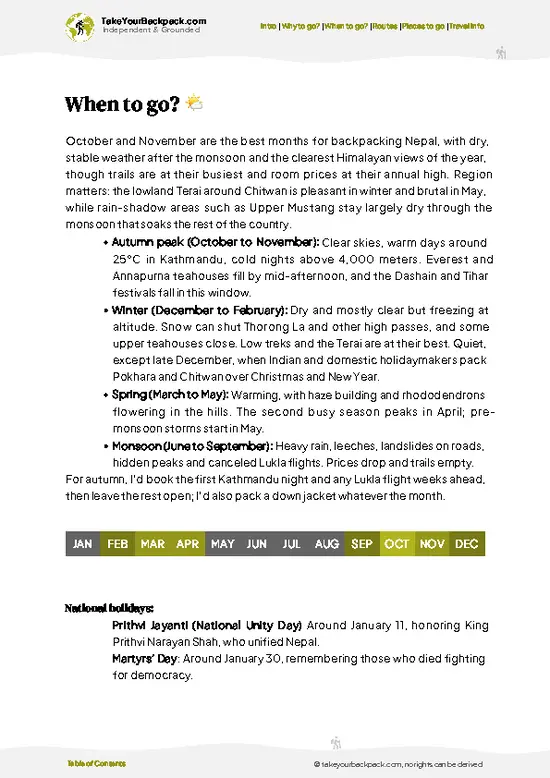
  • Weather: Manang’s best weather falls in two windows: late spring (mid-April to early June) and autumn (late September to November). These periods dodge the monsoon’s heavy rains and the harsh winter cold, offering clear skies and stable trails.

  • Temperature: Spring days hover around 10-15°C (50-59°F), warming enough to shed layers but nights still dip near freezing. Autumn is cooler, with daytime highs around 5-10°C (41-50°F) and crisp, chilly evenings that demand solid insulation.

  • Daylight Hours: Spring and autumn provide roughly 10-12 hours of daylight, enough to start early and finish hikes comfortably before dusk, crucial in a high-altitude place where darkness falls fast.

  • Crowds: Peak trekking seasons in spring and autumn mean more hikers, but Manang’s vastness absorbs the foot
read more 👉

  • Weather: Manang’s best weather falls in two windows: late spring (mid-April to early June) and autumn (late September to November). These periods dodge the monsoon’s heavy rains and the harsh winter cold, offering clear skies and stable trails.

  • Temperature: Spring days hover around 10-15°C (50-59°F), warming enough to shed layers but nights still dip near freezing. Autumn is cooler, with daytime highs around 5-10°C (41-50°F) and crisp, chilly evenings that demand solid insulation.

  • Daylight Hours: Spring and autumn provide roughly 10-12 hours of daylight, enough to start early and finish hikes comfortably before dusk, crucial in a high-altitude place where darkness falls fast.

  • Crowds: Peak trekking seasons in spring and autumn mean more hikers, but Manang’s vastness absorbs the foot traffic better than tighter valleys. Winter and monsoon see fewer visitors, offering solitude but tougher conditions.

  • Seasonal Activities: Spring bursts with rhododendron blooms coloring the landscape, while autumn offers clear mountain views and local festivals like Tiji, adding cultural depth to your trek.

  • Price Fluctuations: Expect higher prices for lodges and permits during peak seasons due to demand. Off-season rates drop, but so do services and accessibility.


Pro-tip: Aim for early autumn to catch crisp air, vivid mountain panoramas, and manageable crowds—this combo turns the tough trek into a sensory reward.


source: climatestotravel.comJANJanuary: fair for travelingFEBFebruary: fair for travelingMARMarch: good for travelingAPRApril: excellent for travelingMAYMay: excellent for travelingJUNJune: good for travelingJULJuly: below average for travelingAUGAugust: below average for travelingSEPSeptember: highly recommended for travelingOCTOctober: excellent for travelingNOVNovember: excellent for travelingDECDecember: fair for traveling
when-to-go

✈️ The backpacker research shortcutNepal Travel Guide

An offline-friendly backpacking guide with optimized travel routes, ranked highlights, transport advice, and the best areas to stay.
example page 0 from our offline Travel Guide for Nepal
example page 1 from our offline Travel Guide for Nepal
example page 2 from our offline Travel Guide for Nepal
example page 3 from our offline Travel Guide for Nepal
example page 4 from our offline Travel Guide for Nepal
example page 5 from our offline Travel Guide for Nepal
example page 6 from our offline Travel Guide for Nepal
example page 7 from our offline Travel Guide for Nepal
The digital guide (404 pages) contains:
107 highlights, ranked by travel appeal
Optimized 5, 10 & 15-day travel routes
Cities, national parks, landmarks, beaches
How to get around
Offline-friendly for travel without Wi-Fi
👉 Click to see all 30+ guide features

📅 Plan smarter in minutes, not weeks
Month by month travel advice
Festivals & national holidays
Budget expectations

🗺️ Go to the right places, skip the overrated ones
Honest pros & cons of destinations
Top hikes, parks & viewpoints
Lesser-known places most travelers miss
Clear “worth it vs skip it” guidance

🛏️ Travel smoothly without rookie mistakes
Best areas to stay
Transport systems explained simply
Common scams & safety advice
SIM cards, money & practical tips

🌍 Understand the country, not just visit it
Culture & traditions
52 Essential phrases & customs
Festivals worth planning around
Traveler-friendly historical context
Insights that make places more meaningful

📱 Built for real travel conditions
Fully downloadable PDF
Works completely offline
Optimized for phone use
Useful in remote areas & buses
Everything in one place
Save weeks of stressful planning
Get instant access to your full guide. 30‑day money-back guarantee.


By proceeding you agree to our terms.
Sent to your inbox immediately after payment • 100% Secure Checkout
Best Backpacking Travel Advisor 2025 tourism awardBest Backpacking
Travel Advisor
2025
What others say about Take Your Backpack Guides:
⭐⭐⭐⭐⭐
Fantastic, amazing amount of information!
⭐⭐⭐⭐⭐
My goodness this is amazing, it's what I've been looking for hats off too you!
⭐⭐⭐⭐⭐
I think this is absolutely BRILLIANT
⭐⭐⭐⭐
Very complete and informative. It's still missing places, but I gotta to commend you
⭐⭐⭐⭐⭐
This is truly amazing, thank you, can't wait to explore it with my kids!
⭐⭐⭐⭐⭐
Awesome resource, thank you!
⭐⭐⭐⭐⭐
This is amazing! Can't wait to explore the ones I haven't seen
⭐⭐⭐⭐
I love this! Well done, great idea.
⭐⭐⭐⭐⭐
Thanks for taking the time to make this gem!
⭐⭐⭐⭐⭐
This might be the best website I've ever seen.
⭐⭐⭐⭐⭐
Congratulations, and thank you so much for your work; it's incredibly valuable.
⭐⭐⭐⭐
In all seriousness I think you did a great job pointing out the important spots
⭐⭐⭐⭐⭐
10/10 very good
⭐⭐⭐⭐⭐
As someone who's only just starting to visit regularly this is awesome, thank you.
⭐⭐⭐⭐
Thank you very much! I'm going to visit my dad, it's going to be very useful!
⭐⭐⭐⭐⭐
This is really cool! We'll be travelling for the first time and this definitely come in handy.
⭐⭐⭐⭐⭐
You are now our minister of culture, congratulations 👨‍💼
⭐⭐⭐⭐⭐
Just wanted to tell you that this is a pearl! Going to follow your recommendations.
⭐⭐⭐⭐⭐
This is so cool. I'll definitely be using the resource for my travels soon.
⭐⭐⭐⭐⭐
This is very impressive! Good work.
⭐⭐⭐⭐⭐
This is an amazing and informative site. Very well done!

🛏️ Where to stay?Where staying makes the most sense

Manang’s heart for backpackers beats strongest around the main village center, where the trail’s pulse is steady and the vibe is a mix of rugged camaraderie and quiet mountain reflection. This cluster of lodges and teahouses hugs the main street, a dusty ribbon lined with prayer flags fluttering in the cold breeze. It’s the place to be if you want to swap stories over a steaming cup of yak butter tea or share a meal with fellow trekkers who’ve just come down from the high passes. The air here carries the scent of wood smoke and dried herbs, grounding you in the Himalayan rhythm.

Compared to the … read more 👉
Manang’s heart for backpackers beats strongest around the main village center, where the trail’s pulse is steady and the vibe is a mix of rugged camaraderie and quiet mountain reflection. This cluster of lodges and teahouses hugs the main street, a dusty ribbon lined with prayer flags fluttering in the cold breeze. It’s the place to be if you want to swap stories over a steaming cup of yak butter tea or share a meal with fellow trekkers who’ve just come down from the high passes. The air here carries the scent of wood smoke and dried herbs, grounding you in the Himalayan rhythm.

Compared to the outskirts, where lodges are sparse and the silence can feel isolating, the village center offers a safer, more social atmosphere. You’ll find budget-friendly hostels and guesthouses packed close enough to catch the warmth of a communal fire, yet spaced to avoid feeling cramped. This area is your best bet for meeting solo travelers and tapping into the local trekking network without sacrificing the peace you came for. The light here shifts quickly—from sharp, clear mornings to golden afternoons—making every moment outside your door a chance to soak in the mountain’s raw, earned beauty.

🚌 Getting aroundMoving around without the hassle

Manang moves at its own rhythm—slow, deliberate, and shaped by the altitude and the rugged landscape. The air is thin and crisp, carrying the faint scent of pine and yak butter lamps. Here, time isn’t dictated by clocks but by the sun’s arc and the steady pace of trekkers and locals alike. The town’s narrow paths wind between stone houses, and the occasional clang of a prayer bell punctuates the quiet. You won’t find rigid schedules or bustling traffic; instead, you navigate a flow that’s part intuition, part patience. Understanding this flow is your ticket to moving through Manang like a local, not just a visitor.


  • Walking: The lifeblood of Manang travel. Paths are well-trodden but uneven, so sturdy boots are a must. Walking lets you soak in the crisp mountain air and sudden bursts of
read more 👉
Manang moves at its own rhythm—slow, deliberate, and shaped by the altitude and the rugged landscape. The air is thin and crisp, carrying the faint scent of pine and yak butter lamps. Here, time isn’t dictated by clocks but by the sun’s arc and the steady pace of trekkers and locals alike. The town’s narrow paths wind between stone houses, and the occasional clang of a prayer bell punctuates the quiet. You won’t find rigid schedules or bustling traffic; instead, you navigate a flow that’s part intuition, part patience. Understanding this flow is your ticket to moving through Manang like a local, not just a visitor.


  • Walking: The lifeblood of Manang travel. Paths are well-trodden but uneven, so sturdy boots are a must. Walking lets you soak in the crisp mountain air and sudden bursts of rhododendron blooms. It’s free, flexible, and the only way to truly absorb the town’s atmosphere.


  • Shared Jeep: Runs between Besisahar and Manang, but expect departures to be irregular—often leaving only when full. The ride takes about 6-7 hours, winding through hairpin bends with breathtaking views. Tickets cost roughly NPR 1,500-2,000 ($12-16). It’s bumpy and cramped but the fastest motorized option for budget travelers.


  • Local Bus: Cheaper than jeeps, around NPR 1,000 ($8), but slower and less comfortable. Buses leave early morning, around 6-7 AM, and may stop frequently for passengers or livestock. If you’re not in a rush and want to experience local life, this is your ride.


  • Porter or Mule Caravan: Not a transit option per se, but essential if you’re carrying heavy gear or supplies. Hiring a porter or mule caravan from lower villages ensures you can move efficiently without burning out. Prices vary, but expect around NPR 1,000-1,500 per day for a porter.


  • Motorbike Rental: Rare and not widely recommended due to rough terrain and altitude, but some adventurous travelers rent motorbikes in nearby towns. If you choose this, be prepared for slow speeds, limited fuel availability, and unpredictable weather.

👛 Costs (as of 22 February 2026)Money, prices, and spending tips

Backpacking in Manang, Nepal, means stepping into a high-altitude world where every dollar stretches differently than in the lowlands. The costs reflect the remote location and the steady stream of trekkers passing through, but there’s a clear pattern to what you’ll spend daily.
  • Dorm Accommodation: Expect to pay around $5 to $10 per night for a bed in a basic teahouse dorm. These rooms are simple—thin mattresses, shared bathrooms, and often a wood stove for warmth. It’s not luxury, but it’s enough to rest after a day of trekking.
  • Meals: Food here is surprisingly affordable but limited by altitude. Dal bhat, the staple, costs about $3 to $5 per meal. Western dishes like pasta or pancakes run a bit higher, around $5 to $7. Fresh vegetables are scarce, so expect a lot of lentils, rice, and
read more 👉
Backpacking in Manang, Nepal, means stepping into a high-altitude world where every dollar stretches differently than in the lowlands. The costs reflect the remote location and the steady stream of trekkers passing through, but there’s a clear pattern to what you’ll spend daily.
  • Dorm Accommodation: Expect to pay around $5 to $10 per night for a bed in a basic teahouse dorm. These rooms are simple—thin mattresses, shared bathrooms, and often a wood stove for warmth. It’s not luxury, but it’s enough to rest after a day of trekking.
  • Meals: Food here is surprisingly affordable but limited by altitude. Dal bhat, the staple, costs about $3 to $5 per meal. Western dishes like pasta or pancakes run a bit higher, around $5 to $7. Fresh vegetables are scarce, so expect a lot of lentils, rice, and potatoes, which fill you up but keep the menu repetitive.
  • Local Transport: Manang is mostly a trekking hub, so local transport is minimal. If you need to move around town or to nearby spots, walking is your best bet. Occasionally, you might find a jeep ride for $5 to $10, but these are rare and mostly for emergencies or supplies.
  • Basic Activities/Entry Fees: Trekking itself is the main activity, and there’s no entry fee for trails. However, you’ll need a TIMS card and Annapurna Conservation Area Permit, which cost around $20 to $30 total, usually paid at the start of the trek, not daily. Guided tours or special activities like cultural visits can add $10 to $20 per day if you choose.
  • Miscellaneous Expenses: This covers bottled water, snacks, charging devices, and occasional gear rentals. Bottled water is pricey here, about $1.50 to $2 per liter, so many trekkers carry purification tablets or filters to save money. Budget around $3 to $5 daily for these extras.

Altogether, a realistic daily budget for backpacking in Manang lands between $15 and $30. This range covers the essentials without cutting corners on warmth or food. The remote setting means prices are higher than in Kathmandu, but the payoff is the crisp mountain air and the quiet rhythm of a trekking town that feels like a halfway point to something bigger.


source: welcomenepal.com
⚠️ Prices can change and everyone travels differently, so take this as a rough guide. Hope it helps you plan your adventure!

🚌 Day tripsBest day trips from Manang

Manang, nestled in the Annapurna region, is a backpacker’s dream base for day trips that blend adventure with breathtaking scenery. The charm of this town lies in its high-altitude serenity and the surrounding peaks that seem to whisper tales of ancient trails. Here are some must-do day trips that will elevate your experience.

Gangapurna Lake
A short trek from Manang, Gangapurna Lake is a stunning turquoise gem framed by towering peaks. The hike takes about 2-3 hours, and the trail is well-marked but steep in sections. Bring a packed lunch to savor by the lake, where the air is crisp and the reflections of the mountains dance on the water’s surface. Budget around $5 for snacks and drinks. The best time to visit is during the spring and autumn months when the skies are clear. A common mistake … read more 👉
Manang, nestled in the Annapurna region, is a backpacker’s dream base for day trips that blend adventure with breathtaking scenery. The charm of this town lies in its high-altitude serenity and the surrounding peaks that seem to whisper tales of ancient trails. Here are some must-do day trips that will elevate your experience.

Gangapurna Lake
A short trek from Manang, Gangapurna Lake is a stunning turquoise gem framed by towering peaks. The hike takes about 2-3 hours, and the trail is well-marked but steep in sections. Bring a packed lunch to savor by the lake, where the air is crisp and the reflections of the mountains dance on the water’s surface. Budget around $5 for snacks and drinks. The best time to visit is during the spring and autumn months when the skies are clear. A common mistake is underestimating the altitude; take it slow and enjoy the journey.


Braga Monastery
Just a 30-minute walk from Manang, Braga Monastery offers a glimpse into the spiritual heart of the region. The monastery, with its intricate murals and serene atmosphere, is a perfect spot for reflection. Spend an hour or two exploring the grounds and chatting with the monks, who are often welcoming. This trip is free, but consider donating to the monastery. Early morning visits are ideal to catch the monks in prayer. Many first-timers rush through; take your time to absorb the tranquility.


Ice Lake
For a more challenging trek, head to Ice Lake, about 4-5 hours from Manang. The trail winds through lush forests and rocky terrain, rewarding you with panoramic views of the Annapurna range. Bring plenty of water and snacks, as this hike can be strenuous. Expect to spend around $10 for food and drinks. Late spring is the best time to see the lake at its most vibrant. A common pitfall is not starting early enough; the afternoon clouds can obscure the views.


Thorong Phedi
This trek, taking about 3-4 hours, leads you to Thorong Phedi, the base camp for the Thorong La Pass. The route is scenic, with wildflowers and grazing yaks dotting the landscape. It’s a great way to acclimatize while enjoying the stunning vistas. Budget around $5 for snacks. The best time is pre-monsoon, when the weather is stable. Many hikers underestimate the return trip; plan for a leisurely pace to soak it all in.
Want to know what more Nepal offers?
The Nepal Travel Guide describes 107 highlights, from cities to national parks, from beaches to hikes

Get the Travel Guide -

🛡️ SafetyScams, Hazards, and Annoyances

Manang is generally safe, but a few practical tips can enhance your experience. The main street is lively during the day, filled with trekkers and locals, but it quiets down at night. If you’re solo, stick to well-lit areas and avoid wandering too far after dark.

Be aware of your surroundings, especially near popular tea houses and shops. While most locals are friendly, some may try to upsell you on tours or gear. Trust your instincts; if something feels off, it probably is.

Common annoyances include the occasional stray dog or a persistent vendor. A polite but firm “no, thank you” usually does the trick. Carry yourself with confidence, and you’ll blend in seamlessly, enjoying the rich atmosphere without unnecessary stress.

Other Nepali towns near Manang

Explore more nearby:

  • Jomsom—wind-swept valley, apple orchards, Kali Gandaki river| 27 km away
  • Mustang—Wind-carved canyons, cave monasteries, walled Lo Manthang| 40 km away
  • Bandipur—Pedestrian main street, restored Newari houses, hilltop views| 92 km away

💡 Not sure where to go next?
Create a personalized itinerary for Nepal including Manang and the places that fit your trip.

Generate my itinerary

👉 Discover all towns

Or checkout all Nepal has to offer (think cities, towns, villages, national parks, hikes, beaches, festivals)
Country photo of Nepal

We 💚 feedbackFinal thoughts on visiting Manang

Manang is a slice of heaven, with its crisp mountain air and the hum of local life. The views? They’ll steal your breath—literally and figuratively. But be ready for altitude sickness; it’s no joke. Take your time acclimatizing. Embrace the slow pace. The payoff is worth it; you’ll find a deeper connection to the landscape and the people. Just remember, the journey is as vital as the destination.

✈️ When did I visit Nepal?
Being a mountain lover, Nepal is one of my favorites. I visited it in November 2006, hiking the full Annapurna circuit as my highlight.

✍️ Help improve this page!
The information on this page is based on my own backpacking experience in Nepal, supplemented with up-to-date research and feedback from other travelers. Travel details can change, so if you notice anything outdated or incomplete, feel free to let me know.


🙋‍♂️ Give feedback

👋 Meet the founderWho’s Behind Take Your Backpack?

Johan, backpacker and founder of TakeYourBackpackHi, I’m Johan (Netherlands 🇳🇱), the creator of TakeYourBackpack. Over the past decade, I’ve backpacked through 80+ countries across six continents, gaining extensive experience with independent travel, long-term trips, and overland routes.

This site is built on a combination of firsthand travel experience and carefully curated insights from other backpackers. Many guides are based on places I’ve personally visited, while others bring together tips, observations, and practical advice shared by trusted travelers I’ve met along the way.

The goal is to provide realistic, experience-driven guidance — not generic itineraries — so you can explore destinations with better context, clearer expectations, and more confidence.

Get full Nepal guide •
Instant download • 107 highlights • Full Offline guide