×

Nepal🇳🇵 | best townsThe Must-See 10 towns in Nepal

Nepal’s towns split into three personalities, and picking the right one shapes your whole trip. The Kathmandu Valley packs medieval Newar brick towns into a short bus ride, with temple squares, woodcarving and the most visitors. The Pokhara and mid-hill belt trades history for lakes, paragliding and an easy backpacker scene with cheap rooms. Up the trekking corridors, mountain towns turn into stone-lane staging posts where trails begin and prices climb with altitude. In the Terai lowlands, jungle gateways run hotter, quieter and cheaper. Pack a flexible plan, hop on local buses, and start exploring.

By Johan Kruseman 🇳🇱 | Updated October 20, 2026
Explore the best villages in Nepal

Why go?What Makes Them Special

Nepal makes towns that no flat country can copy. Geography did the work: steep ridges and deep gorges forced settlements onto trade routes, saddles and river terraces, so towns grew as gateways between the Indian plains, the hills and Tibet. The result is a country where a town’s function (market, pilgrimage stop, trailhead, border post) shapes its look and feel.

Culture adds the layers. Newar builders left carved timber windows, brick courtyards and living temple squares. Hindu and Buddhist practice share space, so festivals, rituals and butter-lamp rooms are part of daily life, not staged shows. Tibetan-influenced highland towns bring prayer flags, mani walls and monasteries.

Know the limits before you commit. Roads are slow, landslide-prone in monsoon, and distances that look short on … read more 👉
Nepal makes towns that no flat country can copy. Geography did the work: steep ridges and deep gorges forced settlements onto trade routes, saddles and river terraces, so towns grew as gateways between the Indian plains, the hills and Tibet. The result is a country where a town’s function (market, pilgrimage stop, trailhead, border post) shapes its look and feel.

Culture adds the layers. Newar builders left carved timber windows, brick courtyards and living temple squares. Hindu and Buddhist practice share space, so festivals, rituals and butter-lamp rooms are part of daily life, not staged shows. Tibetan-influenced highland towns bring prayer flags, mani walls and monasteries.

Know the limits before you commit. Roads are slow, landslide-prone in monsoon, and distances that look short on a map can take hours. The 2015 earthquake damaged historic cores, and restoration continues, so scaffolding still appears in some squares. Power cuts are less common than before, but hot water and wifi remain uneven outside tourist centers. Most foreigners pay a separate entry fee to heritage squares. Accept the rough edges, and the reward is towns with real working life, found without the polish of better-organized countries.
Evaluating the Top Choices
The list of best towns in Nepal is created based on charm, local culture, atmosphere, hidden gems, and visitor appeal. If you feel a town is missing in this list, please let us know.

When to go?Seasonal Guide to Visiting

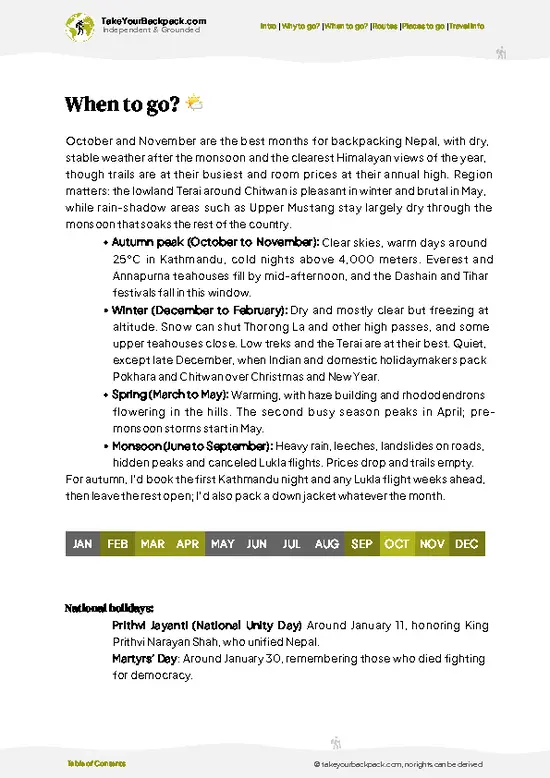
Best months for towns: October to November and March to April are the best months for towns in Nepal, because skies are clear, days are dry and mountain views open up. In the Kathmandu Valley and Pokhara, autumn days sit around 20 to 27°C with cool nights of 8 to 14°C. Spring runs warmer, up to 30°C, with rhododendrons flowering on the hills.

Shoulder and low seasons: December to February is cold but bright. Valley nights drop to 2 to 5°C, and hotels rarely have heating, so a warm sleeping layer matters. Highland towns above 2,500 meters can fall well below freezing, and some lodges close. Pokhara stays milder, with daytime highs around 18 to 22°C.

June to September brings the monsoon, with 1,400 to 2,000 mm of rain falling mostly in those months in the valley and far more around Pokhara, … read more 👉
Best months for towns: October to November and March to April are the best months for towns in Nepal, because skies are clear, days are dry and mountain views open up. In the Kathmandu Valley and Pokhara, autumn days sit around 20 to 27°C with cool nights of 8 to 14°C. Spring runs warmer, up to 30°C, with rhododendrons flowering on the hills.

Shoulder and low seasons: December to February is cold but bright. Valley nights drop to 2 to 5°C, and hotels rarely have heating, so a warm sleeping layer matters. Highland towns above 2,500 meters can fall well below freezing, and some lodges close. Pokhara stays milder, with daytime highs around 18 to 22°C.

June to September brings the monsoon, with 1,400 to 2,000 mm of rain falling mostly in those months in the valley and far more around Pokhara, which is one of the wettest places in the country. Roads slide, flights cancel and views hide in cloud. Rooms drop 30 to 50 percent, though, and the hills turn emerald. The Terai is brutally hot in May and June, often above 38°C.

Dashain (usually October) and Tihar (usually November) lift prices and fill buses, and many shops shut for several days. Book transport early, then enjoy the festival energy.

town hoppingHow to Combine towns Into One Trip

How long to allow: A trip combining several towns in Nepal needs 10 to 16 days, and 12 to 14 gives you breathing room. Nepal’s roads are slow, so the number of stops matters less than the hours between them.

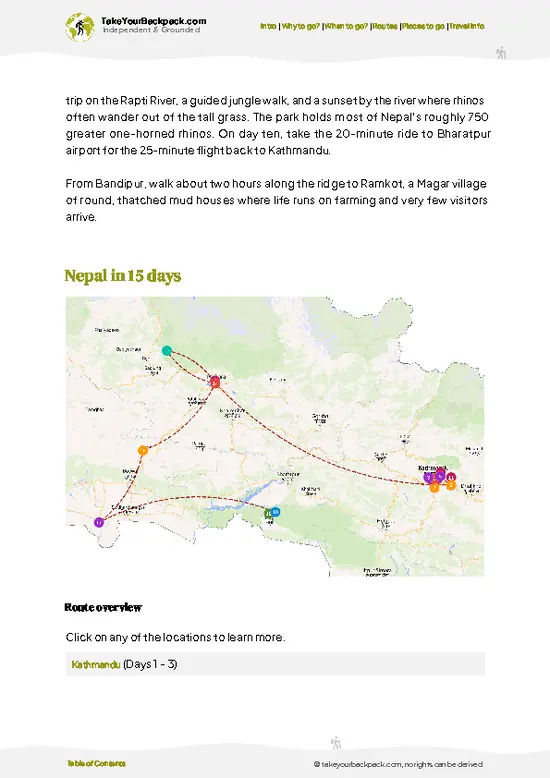
Direction and clusters: Start in the Kathmandu Valley, where towns sit 30 to 90 minutes apart and a base lets you day-trip. Then head west to the Pokhara area, a 6 to 8 hour tourist bus ride on the Prithvi Highway, or a 25 to 30 minute flight. From Pokhara, hill towns and trailheads are 1 to 4 hours away. Continue south to the Terai via Bharatpur or Butwal, 4 to 7 hours depending on the leg, and loop back by flight or an overnight bus. This west-then-south order avoids doubling back over the same winding highway.

Time per stop and common mistakes: Give valley towns 1 to 2 nights each, … read more 👉
How long to allow: A trip combining several towns in Nepal needs 10 to 16 days, and 12 to 14 gives you breathing room. Nepal’s roads are slow, so the number of stops matters less than the hours between them.

Direction and clusters: Start in the Kathmandu Valley, where towns sit 30 to 90 minutes apart and a base lets you day-trip. Then head west to the Pokhara area, a 6 to 8 hour tourist bus ride on the Prithvi Highway, or a 25 to 30 minute flight. From Pokhara, hill towns and trailheads are 1 to 4 hours away. Continue south to the Terai via Bharatpur or Butwal, 4 to 7 hours depending on the leg, and loop back by flight or an overnight bus. This west-then-south order avoids doubling back over the same winding highway.

Time per stop and common mistakes: Give valley towns 1 to 2 nights each, Pokhara 3 to 4 and lowland jungle gateways 2 to 3. Mountain trail towns need extra days to acclimatize.

The classic mistake is packing in too many stops and spending the trip on buses. Choose two or three regions and go deep. Another is trusting map distances: add 50 percent to any estimate. Travelers also schedule tight flight connections in monsoon or winter, when mountain flights cancel. Leave a buffer day before international departures.

The ListThe Best towns of Nepal

1 Bhaktapur

Pagoda squares, pottery lanes, medieval courtyards

Step into a city where artisans shape clay and wood, and every alley reveals layers of Newar architecture and ritual.

nepal-city-bhaktapur
© Google |

2 Patan

artisan quarters, medieval courtyards, Buddhist stupas

Wander through a city known for intricate woodwork and stone carvings, with quiet lanes revealing centuries-old artistic traditions.

3 Bandipur

Pedestrian main street, restored Newari houses, hilltop views

Stroll along a traffic-free ridge, where stone-paved lanes and mountain panoramas create a setting for slow exploration.

nepal-city-bandipur
© Google |

4 Manang

Glacial valleys, yak pastures, Annapurna circuit stop

Acclimatize among high cliffs and turquoise lakes, sharing trails with herders and trekkers preparing for the Thorong La pass.

5 Jomsom

wind-swept valley, apple orchards, Kali Gandaki river

Experience a stark Himalayan landscape where dry riverbeds, mountain winds, and apple groves shape daily life and trekking logistics.

6 Taplejung

Kanchenjunga foothills, tea gardens, remote trailheads

Start multi-day treks from a market town where mountain views and changing weather set the pace for every journey.

7 Tansen

Palpa Durbar, winding alleys, artisan workshops

Climb steep streets to discover metalwork studios and panoramic viewpoints overlooking the southern hills.

8 Nagarkot

hilltop ridge, panoramic sunrise, Himalayan views

Wake early for shifting colors over distant peaks, then hike forested paths or relax in simple lodges perched above terraced farmland.

9 Dhulikhel

Sunrise viewpoints, hillside lodges, Buddhist stupas

Wake to clear mountain horizons, then follow trails past shrines and villages scattered along the rim of the Kathmandu Valley.

10 Ilam

Tea estates, rolling hills, misty mornings

Wake to cool air and green slopes, then walk through plantations where tea pickers shape the landscape and daily life.

nepal-city-ilam
© Google |

11 Panauti

River confluence, brick temples, festival grounds

Cross ancient bridges to reach a town where sacred rivers meet and annual gatherings fill the streets with color.

nepal-city-panauti
© Google |

12 Gorkha

hilltop palace, royal heritage, mountain vistas

Climb to a historic stronghold overlooking valleys, where the birthplace of Nepal’s unification offers sweeping views and local legend.

nepal-city-gorkha
© Google |

13 Kirtipur

Ancient fort walls, temple clusters, university campus

Wander through a hilltop town where student life and centuries-old shrines coexist above the sprawl of Kathmandu.

nepal-city-kirtipur
© Google |

14 Daman

Panoramic ridges, rhododendron forests, distant Himalayan views

Wake early for sunrise over the world’s highest peaks, then wander quiet trails through forests and hillside villages shaped by mountain weather.

15 Pharping

Buddhist monasteries, sacred caves, prayer flag hills

Visit meditation sites tucked into forested slopes, join pilgrims at ancient shrines, and watch monks gather for evening chants.

16 Kakani

Strawberry farms, pine forests, picnic terraces

Escape to cool hills above Kathmandu, sampling local produce and walking through woods with distant views of Ganesh Himal.

17 Sankhu

Stone gateways, medieval squares, festival processions

Trace the outlines of a walled town where centuries-old rituals and seasonal gatherings still shape the local calendar.

nepal-city-sankhu
© Google |

18 Bhairahawa

border crossing, Buddhist pilgrimage, Terai plains

Experience a crossroads town where Indian influences meet Nepali daily life, with easy access to Lumbini and regional transport links.

19 Kakarbhitta

Eastern border post, tea transport, highway junction

Cross into Nepal’s far east, where trucks and travelers pass through a town shaped by trade and cross-border movement.

20 Inaruwa

Terai market, sugarcane fields, local temples

Experience daily life in a town surrounded by farmland, with small shrines and busy markets at the heart of the community.

21 Rajbiraj

planned grid, Maithili culture, border proximity

Stroll orderly streets in a city influenced by Indian town planning, with local traditions visible in daily routines and festivals.

Think you know Nepal?

Prove you’re a true local — uncover 11 lesser-known towns in Nepal that locals tend to keep to themselves.
Loading the map 🌍

Expert viewExpert Commentary on towns

How many towns to visit: Plan on four to six towns in two weeks. Nepal’s buses grind along switchbacks at 25 to 40 km/h, so each extra stop costs half a day. At this pace you still have time to wander alleys at dawn, sit through a tea stop with locals and not feel like cargo. Past six, you see bus windows more than markets.

Choosing by travel style: History and photography fans should lead with Newar towns, where brick courtyards, carved struts and temple steps give you morning light and noisy bazaars. Social travelers and first-timers fit best in the lakeside hill town type, with easy bookings, bars, hiking agencies and plenty of other backpackers. Trekkers should pick a trail-gateway town for permits, gear and acclimatization, and soak in the first stone-flagged lanes with views to snow … read more 👉
How many towns to visit: Plan on four to six towns in two weeks. Nepal’s buses grind along switchbacks at 25 to 40 km/h, so each extra stop costs half a day. At this pace you still have time to wander alleys at dawn, sit through a tea stop with locals and not feel like cargo. Past six, you see bus windows more than markets.

Choosing by travel style: History and photography fans should lead with Newar towns, where brick courtyards, carved struts and temple steps give you morning light and noisy bazaars. Social travelers and first-timers fit best in the lakeside hill town type, with easy bookings, bars, hiking agencies and plenty of other backpackers. Trekkers should pick a trail-gateway town for permits, gear and acclimatization, and soak in the first stone-flagged lanes with views to snow peaks. Wildlife seekers need a Terai base, where you swap boots for jeep seats and rickshaws and gain rhino and tiger-habitat access.

What it costs: Budget US$20 to 35 a day on the standard trail: dorms or simple rooms for US$5 to 12, dal bhat for US$2 to 4 (often with free refills), local buses US$2 to 8 per leg. Tourist buses between major hubs run US$8 to 15. Midrange travelers should expect US$40 to 70. Heritage squares charge foreigners roughly NPR 1,000 to 2,000 (about US$8 to 15) each, so a valley loop adds up. Licensed day guides cost about US$25 to 40. Trail towns cost more the higher you go, as supplies arrive by porter or mule.

Safety and etiquette: Towns here are generally safe, with petty theft and taxi overcharging the main nuisances. Agree on fares before you ride, or insist on the meter. Traffic is the real hazard, so watch for motorbikes in narrow lanes. Tap water is not safe, so carry a filter bottle and avoid ice in cheaper places. Dress modestly, remove shoes and hats at temples, walk clockwise around stupas and shrines, and keep leather out of some Hindu sites. Ask before photographing people or rituals. Use only the right hand to pass or receive items, and never point feet at altars. Strong air pollution in the valley during dry months suits a mask. Carry cash, since ATMs fail and fees run around NPR 500 per withdrawal. Done well, you get open doors, steaming milk tea and invitations into courtyards.

✈️ The backpacker research shortcutNepal Travel Guide

An offline-friendly backpacking guide with optimized travel routes, ranked highlights, transport advice, and the best areas to stay.
example page 0 from our offline Travel Guide for Nepal
example page 1 from our offline Travel Guide for Nepal
example page 2 from our offline Travel Guide for Nepal
example page 3 from our offline Travel Guide for Nepal
example page 4 from our offline Travel Guide for Nepal
example page 5 from our offline Travel Guide for Nepal
example page 6 from our offline Travel Guide for Nepal
example page 7 from our offline Travel Guide for Nepal
The digital guide (337 pages) contains:
✅ 90 highlights, ranked by travel appeal
✅ Optimized 5, 10 & 15-day travel routes
✅ Cities, national parks, landmarks, beaches
✅ How to get around
✅ Offline-friendly for travel without Wi-Fi
👉 Click to see all 30+ guide features

📅 Plan smarter in minutes, not weeks
✅ Month by month travel advice
✅ Festivals & national holidays
✅ Budget expectations

🗺️ Go to the right places, skip the overrated ones
✅ Honest pros & cons of destinations
✅ Top hikes, parks & viewpoints
✅ Lesser-known places most travelers miss
✅ Clear “worth it vs skip it” guidance

🛏️ Travel smoothly without rookie mistakes
✅ Best areas to stay
✅ Transport systems explained simply
✅ Common scams & safety advice
✅ SIM cards, money & practical tips

🌍 Understand the country, not just visit it
✅ Culture & traditions
✅ 52 Essential phrases & customs
✅ Festivals worth planning around
✅ Traveler-friendly historical context
✅ Insights that make places more meaningful

📱 Built for real travel conditions
✅ Fully downloadable PDF
✅ Works completely offline
✅ Optimized for phone use
✅ Useful in remote areas & buses
✅ Everything in one place
Stop searching, start planning
Get instant access to your full guide. 30‑day money-back guarantee.
+ Add another guide for just

By proceeding you agree to our terms.
Sent to your inbox immediately after payment • 100% Secure Checkout
Best Backpacking Travel Advisor 2025 tourism awardBest Backpacking
Travel Advisor
2025
What others say about Take Your Backpack Guides:
⭐⭐⭐⭐⭐
Fantastic, amazing amount of information!
⭐⭐⭐⭐⭐
My goodness this is amazing, it's what I've been looking for hats off too you!
⭐⭐⭐⭐⭐
I think this is absolutely BRILLIANT
⭐⭐⭐⭐
Very complete and informative. It's still missing places, but I gotta to commend you
⭐⭐⭐⭐⭐
This is truly amazing, thank you, can't wait to explore it with my kids!
⭐⭐⭐⭐⭐
Awesome resource, thank you!
⭐⭐⭐⭐⭐
This is amazing! Can't wait to explore the ones I haven't seen
⭐⭐⭐⭐
I love this! Well done, great idea.
⭐⭐⭐⭐⭐
Thanks for taking the time to make this gem!
⭐⭐⭐⭐⭐
This might be the best website I've ever seen.
⭐⭐⭐⭐⭐
Congratulations, and thank you so much for your work; it's incredibly valuable.
⭐⭐⭐⭐
In all seriousness I think you did a great job pointing out the important spots
⭐⭐⭐⭐⭐
10/10 very good
⭐⭐⭐⭐⭐
As someone who's only just starting to visit regularly this is awesome, thank you.
⭐⭐⭐⭐
Thank you very much! I'm going to visit my dad, it's going to be very useful!
⭐⭐⭐⭐⭐
This is really cool! We'll be travelling for the first time and this definitely come in handy.
⭐⭐⭐⭐⭐
You are now our minister of culture, congratulations 👨‍💼
⭐⭐⭐⭐⭐
Just wanted to tell you that this is a pearl! Going to follow your recommendations.
⭐⭐⭐⭐⭐
This is so cool. I'll definitely be using the resource for my travels soon.
⭐⭐⭐⭐⭐
This is very impressive! Good work.
⭐⭐⭐⭐⭐
This is an amazing and informative site. Very well done!

🛏️ Where to stay?Best Stay Options in Nepal

Nepal has plenty of hostels and budget guesthouses, with dorm beds typically NPR 700 to 1,300 (about US$5 to 10) and basic private rooms from around NPR 1,300 to 2,700 (US$10 to 20). In Kathmandu, Thamel has by far the most choice, the bars and the trekking shops, but it is loud and traffic-choked until late, while Patan (around Jhamsikhel and the old Durbar Square lanes) and Boudha are calmer and safe but need a taxi to reach Thamel’s nightlife. In Pokhara, Lakeside packs in cheap rooms, cafés and live-music bars within walking distance of the water, and the quieter northern end around Khahare is better if you want sleep and lake views over late-night noise.

If you enjoy meeting fellow travelers, … read more 👉
Nepal has plenty of hostels and budget guesthouses, with dorm beds typically NPR 700 to 1,300 (about US$5 to 10) and basic private rooms from around NPR 1,300 to 2,700 (US$10 to 20). In Kathmandu, Thamel has by far the most choice, the bars and the trekking shops, but it is loud and traffic-choked until late, while Patan (around Jhamsikhel and the old Durbar Square lanes) and Boudha are calmer and safe but need a taxi to reach Thamel’s nightlife. In Pokhara, Lakeside packs in cheap rooms, cafés and live-music bars within walking distance of the water, and the quieter northern end around Khahare is better if you want sleep and lake views over late-night noise.

If you enjoy meeting fellow travelers, consider choosing hostels with high ratings for atmosphere. On the other hand, if you prefer having your own space, a hotel might be a better option.

NepalWhere to Go Next

👋 Meet the founderWho’s Behind Take Your Backpack?

Johan, backpacker and founder of TakeYourBackpackHi, I’m Johan (Netherlands 🇳🇱), the creator of TakeYourBackpack. Over the past 3 decades, I’ve backpacked through 90+ countries across six continents, gaining extensive experience with independent travel, long-term trips, and overland routes.

This site is built on a combination of firsthand travel experience and carefully curated insights from other backpackers. Many guides are based on places I’ve personally visited, while others bring together tips, observations, and practical advice shared by trusted travelers I’ve met along the way.

The goal is to provide realistic, experience-driven guidance — not generic itineraries — so you can explore destinations with better context, clearer expectations, and more confidence.