×

Nepal🇳🇵 | attractionsSwayambhunathhilltop stupa, prayer flags, panoramic city views | things to do and best time to go

Explore Pashupatinath Temple ComplexExplore Lumbini Sacred Garden and Maya Devi Temple

Backpacking in Swayambhunath
🏆 Top pickattraction ranked #1
By Johan Kruseman 🇳🇱 | Updated June 10, 2026

Everyone’s seen the photos: Swayambhunath’s white dome, golden spire, and those all-seeing Buddha eyes, perched above Kathmandu like a spiritual lighthouse. But if you’re coming just for the Instagram shot, you’re missing the real point. The magic isn’t in the selfie—it’s in the collision of chaos and calm that hits you the moment you start up those monkey-patrolled stairs. Swayambhunath sits on a hilltop in the western part of Kathmandu, Nepal, and it’s as much a living crossroads as a monument. Yes, it’s crowded—especially after 9 a.m., when tour buses and school groups swarm the steps. And yes, the entry fee for foreigners is higher than you’d expect for a Buddhist site (bring small bills). But the payoff is wild: prayer flags snapping in the wind, incense thick enough to taste, and a 360-degree view that makes the city feel both infinite and intimate. Compared to Everest Base Camp or Pashupatinath, Swayambhunath is less about adrenaline and more about atmosphere. It’s not quiet, but it’s electric—equal parts pilgrimage, street market, and monkey circus. I’ve lost count of how many times I’ve gone back, and every time, it’s the energy—not the architecture—that sticks with me.

Discover everything you want to know in the 📖 Nepal Travel Guide.


Get your Nepal guide
107 ranked highlights, routes & tips, works offline (402 pages)
Loading the map 🌍
CLICK TO FILTER
cities
towns
villages
landmarks
national parks
hikes
attractions
festivals
regions
SHOW COUNTRY’S BESTSHOW ALL

✨ Why go?
Ranked #1 attraction in Nepal
What makes it a must-see attraction

Swayambhunath, often called the Monkey Temple, is one of those places where the Instagram gloss meets raw reality—and the reality is worth every sweaty step. Yes, it’s crowded. Yes, the climb up the 365 steps can feel like a chore after a long day of trekking or city wandering. But here’s the kicker: this isn’t just a photo op. It’s a living, breathing symbol of Nepal’s spiritual heartbeat. The stupa’s all-seeing eyes aren’t just decoration; they represent centuries of Buddhist wisdom watching over Kathmandu.

Backpackers make time for Swayambhunath because it’s a milestone, a checkpoint on the Nepal route that signals you’re diving deep into the country’s soul. The mix of ancient prayer wheels, fluttering prayer flags, and mischievous monkeys creates an atmosphere that’s both chaotic and … read more 👉
Swayambhunath, often called the Monkey Temple, is one of those places where the Instagram gloss meets raw reality—and the reality is worth every sweaty step. Yes, it’s crowded. Yes, the climb up the 365 steps can feel like a chore after a long day of trekking or city wandering. But here’s the kicker: this isn’t just a photo op. It’s a living, breathing symbol of Nepal’s spiritual heartbeat. The stupa’s all-seeing eyes aren’t just decoration; they represent centuries of Buddhist wisdom watching over Kathmandu.

Backpackers make time for Swayambhunath because it’s a milestone, a checkpoint on the Nepal route that signals you’re diving deep into the country’s soul. The mix of ancient prayer wheels, fluttering prayer flags, and mischievous monkeys creates an atmosphere that’s both chaotic and calming. It’s a place where history isn’t locked behind glass but spills into the streets, where monks chant and locals spin wheels in a rhythm that’s been going for over 1,500 years.

If you’re after adrenaline, the climb and the panoramic views of Kathmandu Valley deliver. But the real reward is the sense of connection—to history, culture, and a spiritual tradition that’s as alive today as it was a millennium ago. Skip it, and you miss a core chapter of Nepal’s story.
Want to include Swayambhunath in your Nepal route?
Create a personalized Nepal itinerary that includes Swayambhunath and the places that fit your trip — based on your travel style, budget, and available time. Get your route in seconds.

Generate my trip

💡 HighlightsPlaces and moments you shouldn't skip

The Main Stupa and Its All-Seeing Eyes
Let’s get real: you’ll never have this place to yourself. The main stupa is a magnet for every tour group, selfie stick, and pigeon in Kathmandu. But there’s a reason for the crowds. The stupa’s white dome and gilded spire, crowned by those iconic Buddha eyes, radiate a kind of cosmic calm that Instagram can’t touch. The eyes aren’t just decoration—they’re a silent, unblinking reminder that you’re being watched, not judged. Walk a slow kora (circumambulation) with the locals and monks. The prayer wheels clack, the incense bites your nose, and the city’s chaos falls away for a moment. This is the heart of Swayambhunath, and it’s worth elbowing through the crowds for.


The Monkey Mob
Yes, Swayambhunath is nicknamed the “Monkey Temple,” and yes, the monkeys … read more 👉
The Main Stupa and Its All-Seeing Eyes
Let’s get real: you’ll never have this place to yourself. The main stupa is a magnet for every tour group, selfie stick, and pigeon in Kathmandu. But there’s a reason for the crowds. The stupa’s white dome and gilded spire, crowned by those iconic Buddha eyes, radiate a kind of cosmic calm that Instagram can’t touch. The eyes aren’t just decoration—they’re a silent, unblinking reminder that you’re being watched, not judged. Walk a slow kora (circumambulation) with the locals and monks. The prayer wheels clack, the incense bites your nose, and the city’s chaos falls away for a moment. This is the heart of Swayambhunath, and it’s worth elbowing through the crowds for.


The Monkey Mob
Yes, Swayambhunath is nicknamed the “Monkey Temple,” and yes, the monkeys are everywhere—bold, scrappy, and occasionally plotting to steal your snacks. They’re not cute background extras; they’re the real, chaotic spirit of the place. Watch them leap between prayer flags, squabble over offerings, and occasionally mug a tourist. It’s pure, unscripted entertainment. Just keep your food zipped up and your wits about you.


The 365-Step Staircase
Forget the tuk-tuk shortcut. The real pilgrimage is the climb up the ancient stone staircase on the east side. Each step is a negotiation with your lungs and your ego, especially if you’re not acclimatized. But as you climb, the city falls away and the air sharpens. The reward isn’t just the view—it’s the sense of arrival, earned the hard way. The climb is a rite of passage, and the best way to shake off any illusions that enlightenment comes easy.


Panoramic Kathmandu Valley Views
Here’s the payoff: from the top, Kathmandu sprawls below you in all its dusty, chaotic glory. On a clear day, you get a 360-degree sweep of the valley, with the Himalayas lurking on the horizon if you’re lucky. It’s not a postcard-perfect scene—expect haze, laundry lines, and the city’s relentless sprawl. But it’s honest, and it’s epic in its own way. This is my personal favorite—there’s nothing like standing above the city, wind in your face, feeling the pulse of Nepal beneath your boots.


Hidden Shrines and Secret Corners
Most visitors swarm the main stupa and leave. Don’t. Wander the back paths and you’ll find shrines crusted with butter lamps, ancient chaityas, and prayer wheels that haven’t seen a tourist’s hand in days. There’s a small museum, a forested nunnery, and courtyards where locals come to gossip and pray. This is where Swayambhunath drops the performance and lets you in on its quieter, weirder side. If you want a moment of real connection, skip the crowds and get lost back here.
Spotted a mistake or missing something? Contact us.

Things to do around Swayambhunath

Ratings based on Tripadvisor reviews. When you book through this link, you support our work at no extra cost to you.

🌤️ When to go?Best time to visit Swayambhunath


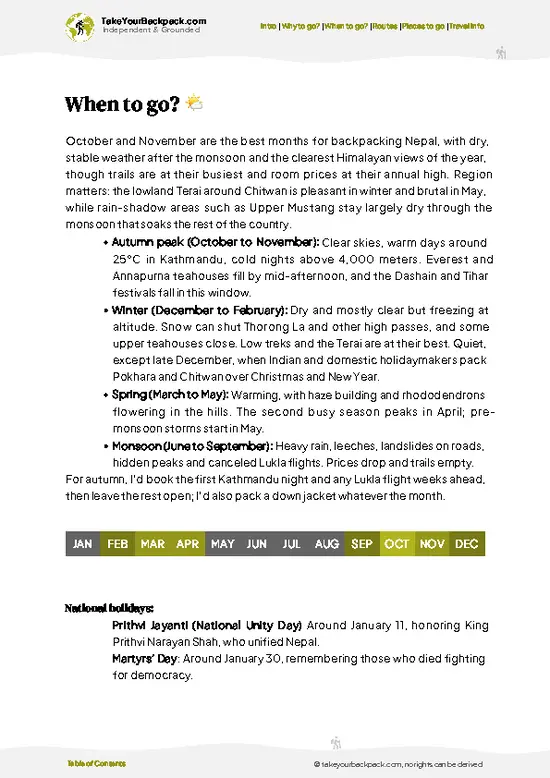
  • Weather: The best weather hits from October to December and February to April. October and November bring clear skies and crisp air, perfect for exploring the hilltop stupa without sweating buckets. March and April warm up nicely but stay dry enough to avoid mud and drizzle.

  • Temperature: In peak season, daytime temps hover around 20-25°C (68-77°F), comfortable for wandering. Winter months (December-January) can dip to 5°C (41°F) at night, so pack layers. Summer monsoon months (June-August) spike humidity and temps to 30°C+ (86°F+), making the climb sticky and slippery.

  • Daylight Hours: From October to April, you get roughly 10-12 hours of daylight, enough to catch sunrise or sunset views without rushing. Monsoon months shorten daylight and often cloud out those epic vistas.

  • Crowds:
read more 👉

  • Weather: The best weather hits from October to December and February to April. October and November bring clear skies and crisp air, perfect for exploring the hilltop stupa without sweating buckets. March and April warm up nicely but stay dry enough to avoid mud and drizzle.

  • Temperature: In peak season, daytime temps hover around 20-25°C (68-77°F), comfortable for wandering. Winter months (December-January) can dip to 5°C (41°F) at night, so pack layers. Summer monsoon months (June-August) spike humidity and temps to 30°C+ (86°F+), making the climb sticky and slippery.

  • Daylight Hours: From October to April, you get roughly 10-12 hours of daylight, enough to catch sunrise or sunset views without rushing. Monsoon months shorten daylight and often cloud out those epic vistas.

  • Crowds: Peak tourist season (October-November) means throngs of pilgrims and tourists jostling for the best photo spots. If you want fewer people, aim for the shoulder months like February or early April, when the weather is still solid but the crowds thin.

  • Seasonal Activities: The biggest festivals—like Buddha Jayanti in April—bring vibrant ceremonies but also packed crowds and higher prices. If you want cultural immersion without the crush, avoid major holidays.

  • Price Fluctuations: Accommodation and guide fees spike during peak season (October-November) and festival times. Off-season (May-September) sees discounts but comes with the risk of rain and limited services.


Pro-tip: Visit Swayambhunath in late October or early November for the sweet spot of clear skies, manageable crowds, and fair prices—just avoid weekends if you want some breathing room.


source: climatestotravel.comJANJanuary: good for travelingFEBFebruary: highly recommended for travelingMARMarch: highly recommended for travelingAPRApril: highly recommended for travelingMAYMay: fair for travelingJUNJune: below average for travelingJULJuly: below average for travelingAUGAugust: below average for travelingSEPSeptember: fair for travelingOCTOctober: excellent for travelingNOVNovember: excellent for travelingDECDecember: good for traveling
when-to-go

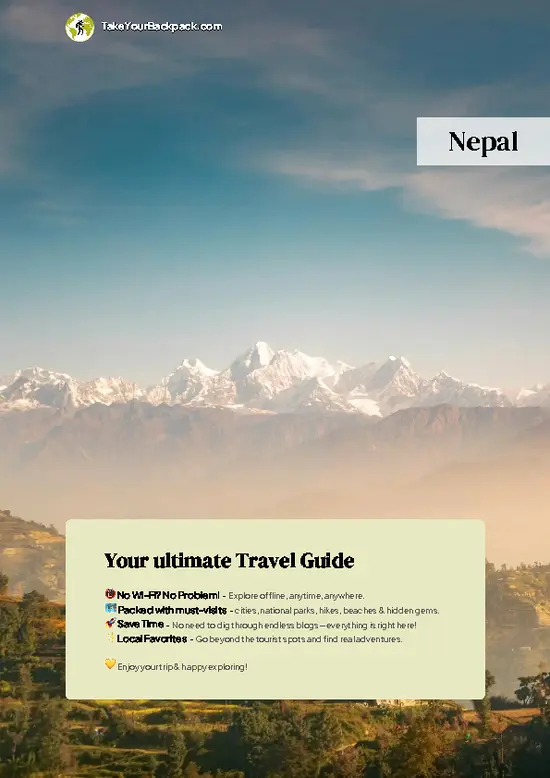
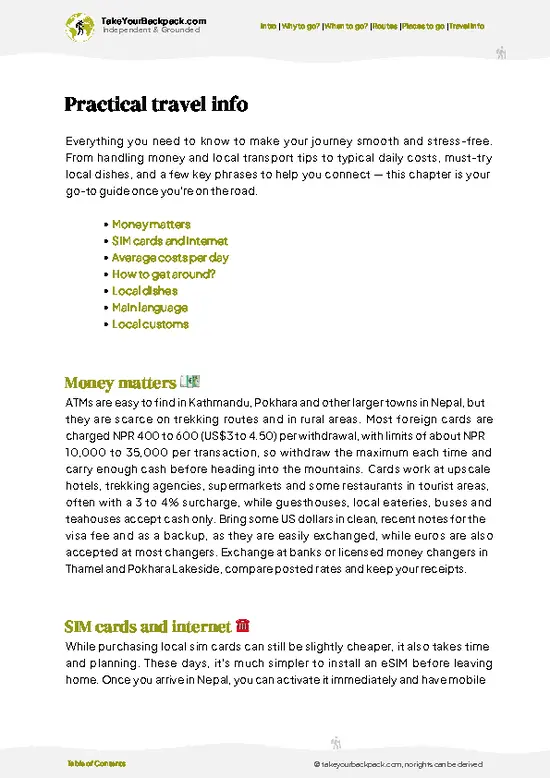
✈️ The backpacker research shortcutNepal Travel Guide

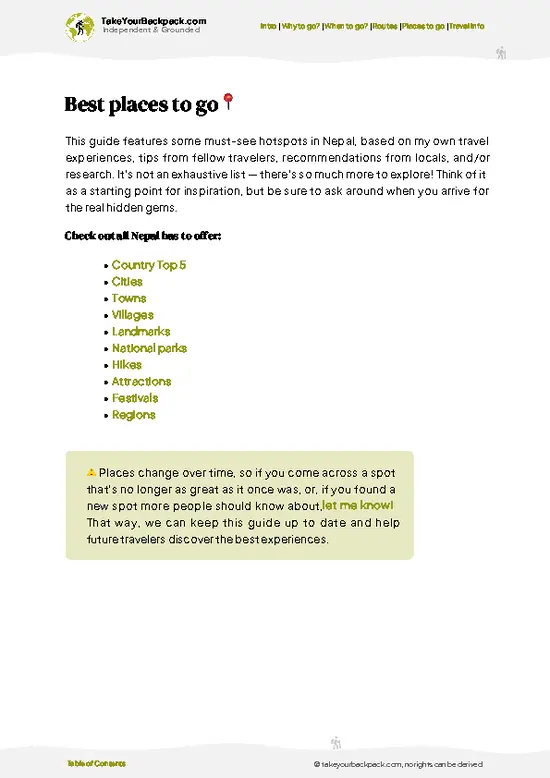
An offline-friendly backpacking guide with optimized travel routes, ranked highlights, transport advice, and the best areas to stay.
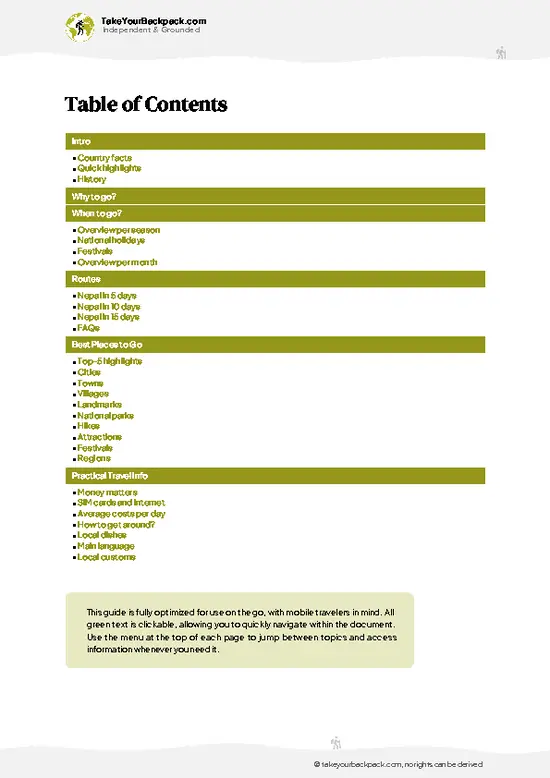
example page 0 from our offline Travel Guide for Nepal
example page 1 from our offline Travel Guide for Nepal
example page 2 from our offline Travel Guide for Nepal
example page 3 from our offline Travel Guide for Nepal
example page 4 from our offline Travel Guide for Nepal
example page 5 from our offline Travel Guide for Nepal
example page 6 from our offline Travel Guide for Nepal
example page 7 from our offline Travel Guide for Nepal
The digital guide (402 pages) contains:
107 highlights, ranked by travel appeal
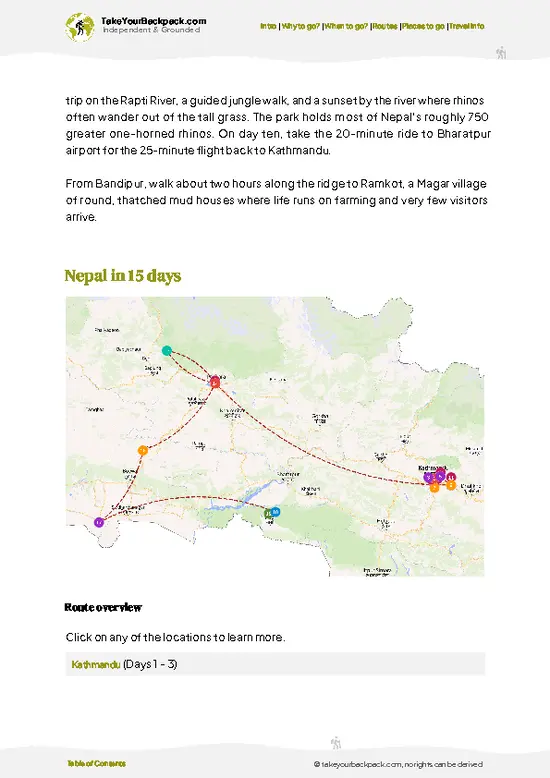
Optimized 5, 10 & 15-day travel routes
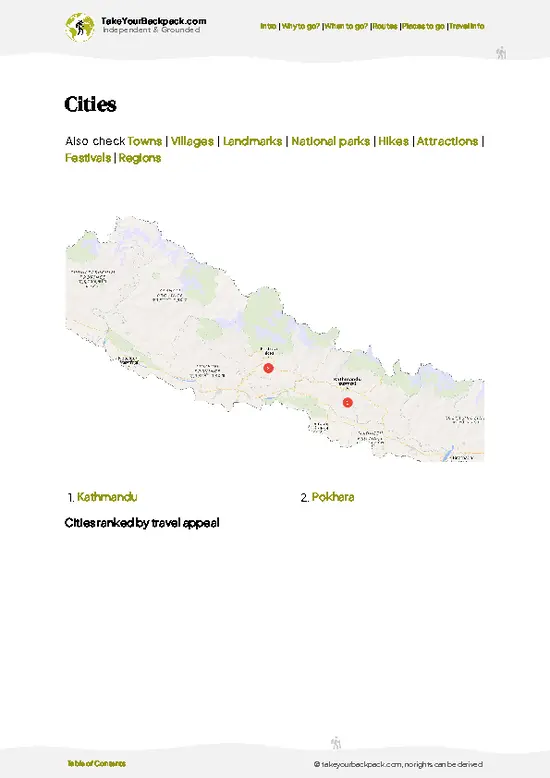
Cities, national parks, landmarks, beaches
How to get around
Offline-friendly for travel without Wi-Fi
👉 Click to see all 30+ guide features

📅 Plan smarter in minutes, not weeks
Month by month travel advice
Festivals & national holidays
Budget expectations

🗺️ Go to the right places, skip the overrated ones
Honest pros & cons of destinations
Top hikes, parks & viewpoints
Lesser-known places most travelers miss
Clear “worth it vs skip it” guidance

🛏️ Travel smoothly without rookie mistakes
Best areas to stay
Transport systems explained simply
Common scams & safety advice
SIM cards, money & practical tips

🌍 Understand the country, not just visit it
Culture & traditions
52 Essential phrases & customs
Festivals worth planning around
Traveler-friendly historical context
Insights that make places more meaningful

📱 Built for real travel conditions
Fully downloadable PDF
Works completely offline
Optimized for phone use
Useful in remote areas & buses
Everything in one place
Save weeks of stressful planning
Get instant access to your full guide. 30‑day money-back guarantee.


By proceeding you agree to our terms.
Sent to your inbox immediately after payment • 100% Secure Checkout
Best Backpacking Travel Advisor 2025 tourism awardBest Backpacking
Travel Advisor
2025
What others say about Take Your Backpack Guides:
⭐⭐⭐⭐⭐
Fantastic, amazing amount of information!
⭐⭐⭐⭐⭐
My goodness this is amazing, it's what I've been looking for hats off too you!
⭐⭐⭐⭐⭐
I think this is absolutely BRILLIANT
⭐⭐⭐⭐
Very complete and informative. It's still missing places, but I gotta to commend you
⭐⭐⭐⭐⭐
This is truly amazing, thank you, can't wait to explore it with my kids!
⭐⭐⭐⭐⭐
Awesome resource, thank you!
⭐⭐⭐⭐⭐
This is amazing! Can't wait to explore the ones I haven't seen
⭐⭐⭐⭐
I love this! Well done, great idea.
⭐⭐⭐⭐⭐
Thanks for taking the time to make this gem!
⭐⭐⭐⭐⭐
This might be the best website I've ever seen.
⭐⭐⭐⭐⭐
Congratulations, and thank you so much for your work; it's incredibly valuable.
⭐⭐⭐⭐
In all seriousness I think you did a great job pointing out the important spots
⭐⭐⭐⭐⭐
10/10 very good
⭐⭐⭐⭐⭐
As someone who's only just starting to visit regularly this is awesome, thank you.
⭐⭐⭐⭐
Thank you very much! I'm going to visit my dad, it's going to be very useful!
⭐⭐⭐⭐⭐
This is really cool! We'll be travelling for the first time and this definitely come in handy.
⭐⭐⭐⭐⭐
You are now our minister of culture, congratulations 👨‍💼
⭐⭐⭐⭐⭐
Just wanted to tell you that this is a pearl! Going to follow your recommendations.
⭐⭐⭐⭐⭐
This is so cool. I'll definitely be using the resource for my travels soon.
⭐⭐⭐⭐⭐
This is very impressive! Good work.
⭐⭐⭐⭐⭐
This is an amazing and informative site. Very well done!

🛏️ Where to stay?Where staying makes the most sense

Swayambhunath, the so-called “Monkey Temple,” is one of Kathmandu’s most iconic spots, but let’s cut through the tourist hype. Yes, it’s crowded, especially mid-morning and late afternoon when tour buses roll in. The selfie sticks and souvenir hawkers can get overwhelming. But here’s the real deal: the magic isn’t just the stupa itself—it’s the vibe of the neighborhoods nearby where backpackers actually hang out.

If you want to be close to Swayambhunath without getting swallowed by tourist traps, focus on the areas around Thamel and the quieter edges of Lazimpat. Thamel is the backpacker hub … read more 👉
Swayambhunath, the so-called “Monkey Temple,” is one of Kathmandu’s most iconic spots, but let’s cut through the tourist hype. Yes, it’s crowded, especially mid-morning and late afternoon when tour buses roll in. The selfie sticks and souvenir hawkers can get overwhelming. But here’s the real deal: the magic isn’t just the stupa itself—it’s the vibe of the neighborhoods nearby where backpackers actually hang out.

If you want to be close to Swayambhunath without getting swallowed by tourist traps, focus on the areas around Thamel and the quieter edges of Lazimpat. Thamel is the backpacker hub for a reason: it’s safe, buzzing with fellow travelers, and packed with budget guesthouses, cafes, and bars where you can swap stories over cheap chai or a cold beer. It’s a social magnet, perfect if you’re solo and want to meet people without sacrificing convenience.

Lazimpat, just a short walk or a quick rickshaw ride from Swayambhunath, offers a quieter, more local feel. It’s less touristy but still safe and accessible, with guesthouses that won’t break the bank. You get a better sense of Kathmandu’s daily rhythm here—street vendors, local eateries, and fewer crowds.

Skip the immediate temple perimeter for lodging. It’s noisy, touristy, and overpriced. Instead, base yourself where you can recharge, connect, and then hit Swayambhunath early or late to dodge the worst of the crowds. That’s where the real experience lives.

👛 Costs (as of 15 February 2026)Money, prices, and spending tips

As of 2024, the entrance fee for Swayambhunath Stupa is NPR 200 (approximately €1.50) for foreign nationals, NPR 50 (approximately €0.40) for SAARC nationals, and free for Nepali citizens. Children below 10 years old can enter for free. Additional costs may include transportation to the site, which varies depending on the mode of travel, and optional purchases such as souvenirs or offerings.

source: ntb.gov.np
⚠️ Prices can change and everyone travels differently, so take this as a rough guide. Hope it helps you plan your adventure!

Other Nepali attractions near Swayambhunath

Explore more nearby:


💡 Not sure where to go next?
Create a personalized itinerary for Nepal including Swayambhunath and the places that fit your trip.

Generate my itinerary

👉 Discover all attractions

Or checkout all Nepal has to offer (think cities, towns, villages, national parks, hikes, beaches, festivals)
Country photo of Nepal

We 💚 feedbackKey takeaways before you go

Swayambhunath is a sensory overload in the best way—monks chanting, prayer wheels spinning, and a panoramic city view that hits different at sunrise. But don’t kid yourself: it’s packed, especially midday, and the constant buzz can drain your vibe if you’re chasing quiet reflection. Still, if you lean into the chaos, you’ll find a pulse here that’s raw and real, a glimpse into Kathmandu’s spiritual heartbeat that no postcard can capture.

✈️ When did I visit Nepal?
Being a mountain lover, Nepal is one of my favorites. I visited it in November 2006, hiking the full Annapurna circuit as my highlight.

✍️ Help improve this page!
The information on this page is based on my own backpacking experience in Nepal, supplemented with up-to-date research and feedback from other travelers. Travel details can change, so if you notice anything outdated or incomplete, feel free to let me know.


🙋‍♂️ Give feedback

👋 Meet the founderWho’s Behind Take Your Backpack?

Johan, backpacker and founder of TakeYourBackpackHi, I’m Johan (Netherlands 🇳🇱), the creator of TakeYourBackpack. Over the past decade, I’ve backpacked through 80+ countries across six continents, gaining extensive experience with independent travel, long-term trips, and overland routes.

This site is built on a combination of firsthand travel experience and carefully curated insights from other backpackers. Many guides are based on places I’ve personally visited, while others bring together tips, observations, and practical advice shared by trusted travelers I’ve met along the way.

The goal is to provide realistic, experience-driven guidance — not generic itineraries — so you can explore destinations with better context, clearer expectations, and more confidence.

Get full Nepal guide •
Instant download • 107 highlights • Full Offline guide