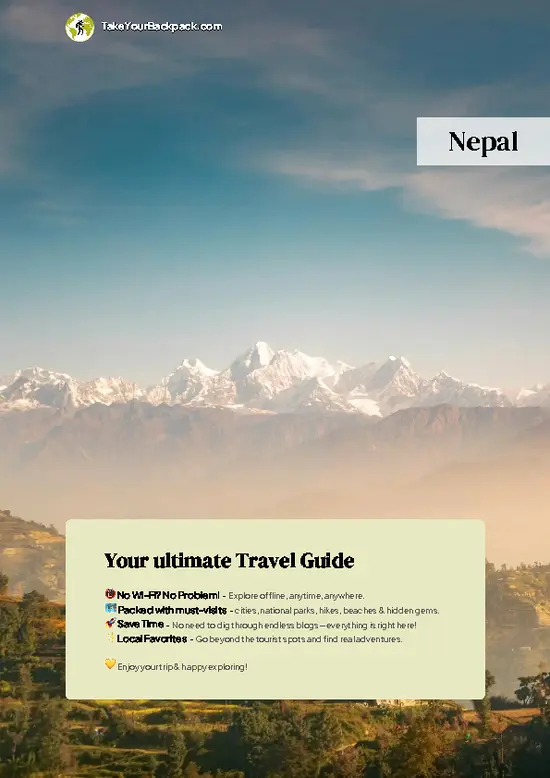
Nepal stacks extremes into a small footprint. The country drops from about 70 meters in the southern Terai to 8,849 meters at Everest's summit within roughly 200 kilometers, so
jungle, farmland, alpine valleys and glaciers sit within a few days of each other. That vertical compression explains why one trip can swing from rhino grassland to a snow pass.
Culture runs just as deep. Hinduism and Buddhism overlap here, and
Newar craftsmanship in the Kathmandu Valley, Tibetan-influenced highland communities and living festivals keep sacred sites active rather than preserved. Many temples and stupas are working places of worship, so the atmosphere is incense, bells and daily offerings, not a museum hush.
Know the limits before you commit.
Infrastructure is stretched: mountain roads are rough, landslides …
read more 👉Nepal stacks extremes into a small footprint. The country drops from about 70 meters in the southern Terai to 8,849 meters at Everest's summit within roughly 200 kilometers, so jungle, farmland, alpine valleys and glaciers sit within a few days of each other. That vertical compression explains why one trip can swing from rhino grassland to a snow pass.
Culture runs just as deep. Hinduism and Buddhism overlap here, and Newar craftsmanship in the Kathmandu Valley, Tibetan-influenced highland communities and living festivals keep sacred sites active rather than preserved. Many temples and stupas are working places of worship, so the atmosphere is incense, bells and daily offerings, not a museum hush.
Know the limits before you commit. Infrastructure is stretched: mountain roads are rough, landslides block routes in monsoon, flights to Himalayan airstrips cancel in bad weather, and the 2015 earthquake left some monuments still under restoration or scaffolded. Distances look short on a map but travel slowly, so plan fewer stops than you think. Trekking areas require permits, and many routes need a registered system or guide arrangement. Altitude is the real hazard in the high regions, so build in acclimatization time. Come ready for flexibility, and the country pays you back in scale and variety few places match.
Evaluating the Top Choices
The list of best attractions in Nepal is created based on cultural significance or entertainment value. If you feel a attraction is missing in this list, please let us know.
v2.webp)
 Best Backpacking
.jpg) Hi, I’m Johan (Netherlands 🇳🇱), the creator of TakeYourBackpack. Over the past 3 decades, I’ve backpacked through 90+ countries across six continents, gaining extensive experience with independent travel, long-term trips, and overland routes.
Hi, I’m Johan (Netherlands 🇳🇱), the creator of TakeYourBackpack. Over the past 3 decades, I’ve backpacked through 90+ countries across six continents, gaining extensive experience with independent travel, long-term trips, and overland routes.