×

The Netherlands🇳🇱 | citiesRotterdamMarkthal, Cube Houses, Delfshaven, harbor architecture | things to do and best time to go

Explore MaastrichtExplore Utrecht

Backpacking in Rotterdam
🏆 Top pickcity ranked #2
By Johan Kruseman 🇳🇱 | Updated October 16, 2026

Rotterdam is the Dutch city that online summaries call ugly and then fail to price: dorm beds often run noticeably below Amsterdam’s, while the same fast trains put you in Amsterdam or The Hague within about 40 minutes. It sits in South Holland, in the west of the Netherlands, on the Nieuwe Maas, which explains the pattern. The 1940 bombing cleared the center, so the city rebuilt in glass, steel and experiments, and rents stayed lower than in the canal cities. I tapped my bank card on the reader at Beurs metro station, heard the short double beep, and skipped the ticket machine entirely. You can do the same, and checking out at the end of the ride matters. It suits curious, design-minded travelers who like space and food markets. It suits canal-postcard seekers less. Choose it over Amsterdam for cheaper beds and fewer crowds, and over Utrecht or Delft if you want scale rather than old gables.

Discover everything you want to know in the 📖 The Netherlands Travel Guide.


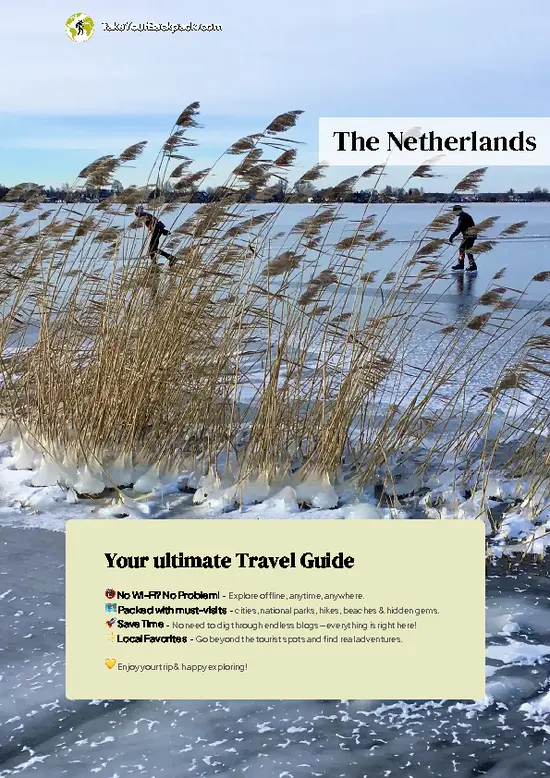
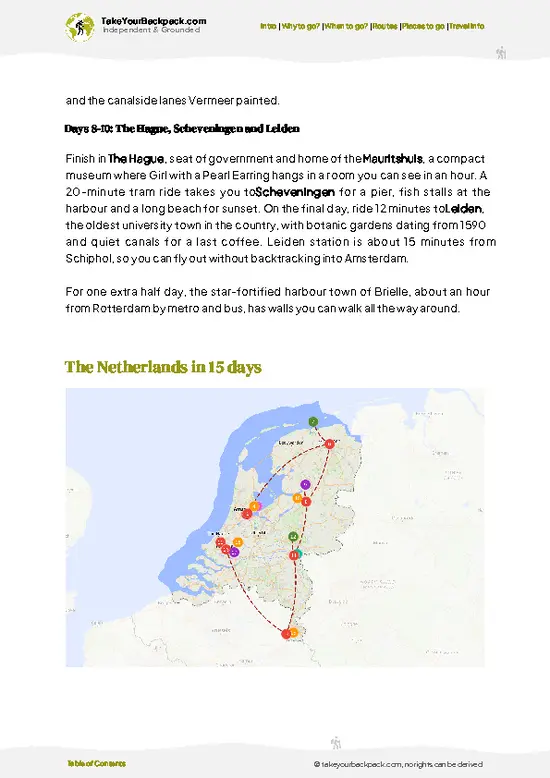
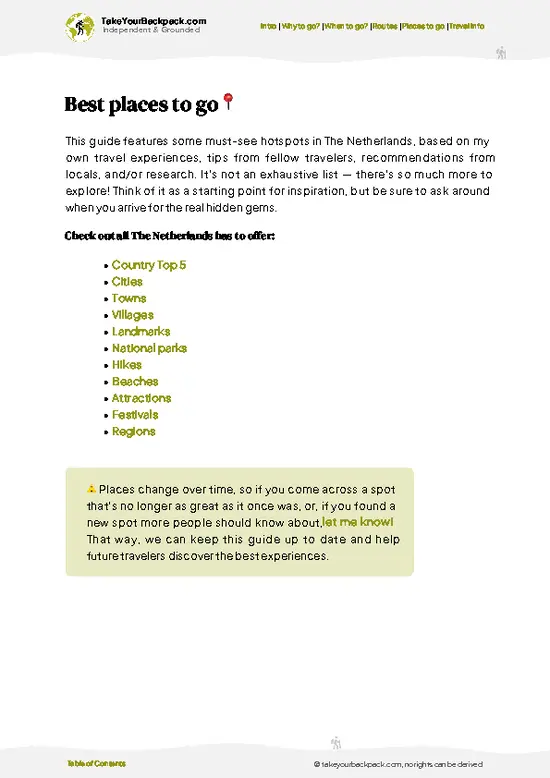
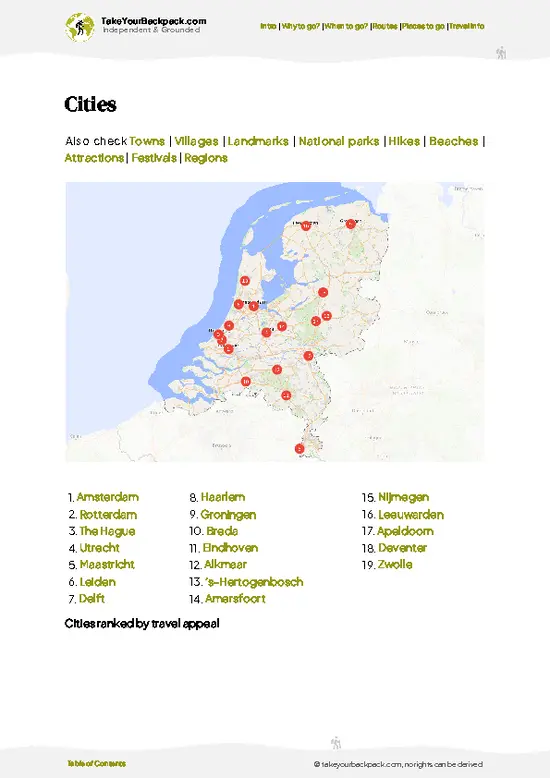
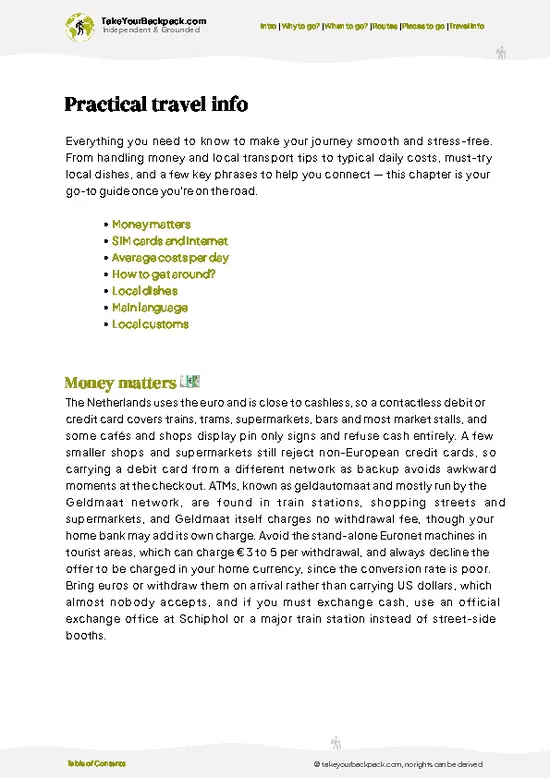
example page 0 from our offline Travel Guide for Netherlands
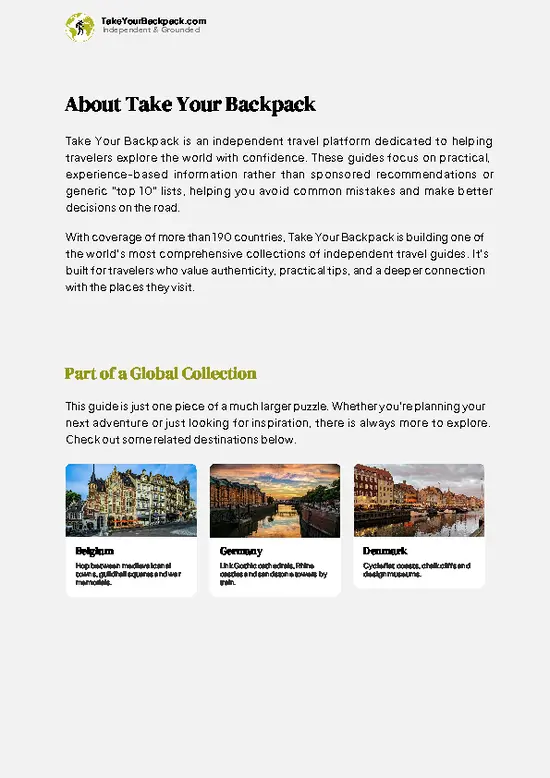
example page 1 from our offline Travel Guide for Netherlands
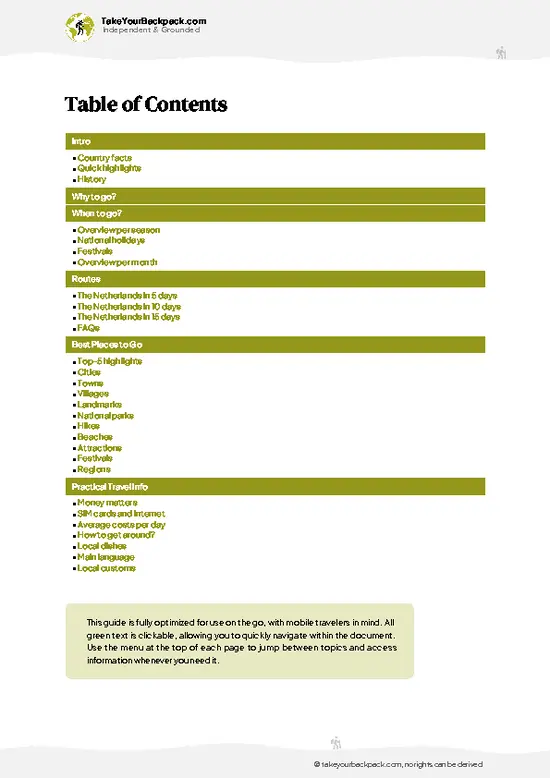
example page 2 from our offline Travel Guide for Netherlands
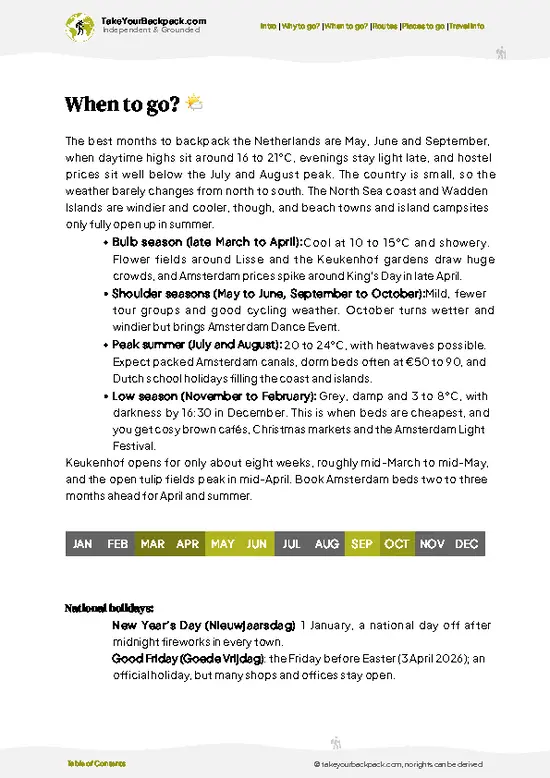
example page 3 from our offline Travel Guide for Netherlands
example page 4 from our offline Travel Guide for Netherlands
example page 5 from our offline Travel Guide for Netherlands
example page 6 from our offline Travel Guide for Netherlands
example page 7 from our offline Travel Guide for Netherlands
Loading the map 🌍
CLICK TO FILTER
cities
towns
villages
landmarks
national parks
hikes
beaches
attractions
festivals
regions
SHOW COUNTRY’S BESTSHOW ALL

✨ Why go?
Ranked #2 city in The Netherlands
Why visitors keep coming back

Rotterdam works as a backpacker base because the city is flat, compact in its middle and wired into the national rail grid. Rotterdam Centraal connects directly to Amsterdam, The Hague, Utrecht and Brussels (roughly 80 minutes by fast train), so you can sleep here and still change cities without repacking. Hostels and budget hotels cluster around the station, the Oude Haven and the Witte de Withstraat area, and dorm beds at roughly €30 to 50 usually beat Amsterdam by a clear margin in summer. The food scene leans on the city’s mix of Surinamese, Indonesian, Turkish and Moroccan communities, so a filling meal can cost €8 to 14 rather than tourist prices. Nightlife is real but spread out, with bars and clubs on the Witte de Withstraat and around Nieuwe Binnenweg, which means fewer stag groups … read more 👉
Rotterdam works as a backpacker base because the city is flat, compact in its middle and wired into the national rail grid. Rotterdam Centraal connects directly to Amsterdam, The Hague, Utrecht and Brussels (roughly 80 minutes by fast train), so you can sleep here and still change cities without repacking. Hostels and budget hotels cluster around the station, the Oude Haven and the Witte de Withstraat area, and dorm beds at roughly €30 to 50 usually beat Amsterdam by a clear margin in summer. The food scene leans on the city’s mix of Surinamese, Indonesian, Turkish and Moroccan communities, so a filling meal can cost €8 to 14 rather than tourist prices. Nightlife is real but spread out, with bars and clubs on the Witte de Withstraat and around Nieuwe Binnenweg, which means fewer stag groups than in the capital. Give it two nights if you like architecture and food. As a short stop, it can feel scattered and unfocused, because the sights sit along the river rather than in one old core.

💡 HighlightsMust-see experiences and standout moments

  1. Markthal: A horseshoe-shaped market hall with a huge painted ceiling of fruit and flowers, about 40 m high, and food stalls at ground level. Go on a weekday morning or before noon for fewer crowds. Entry is free, snacks cost €5 to 12, and an hour is enough.
  2. Kijk-Kubus Cube Houses: Yellow, tilted cube homes by architect Piet Blom, built in the 1970s and 1980s. One is open as a show house, so you can see how the angled walls work. It costs about €3 to 5 and takes 20 to 30 minutes. Daytime suits photos.
  3. Depot Boijmans Van Beuningen: A mirrored, bowl-shaped art storage building where you see the museum’s collection behind the scenes. Tickets are around €20 to 22. Allow 2 to 3 hours, and book a timed slot in advance. The rooftop is open and has views over the city and the park.
  4. Euromast: A 185 m tower
… read more 👉
  1. Markthal: A horseshoe-shaped market hall with a huge painted ceiling of fruit and flowers, about 40 m high, and food stalls at ground level. Go on a weekday morning or before noon for fewer crowds. Entry is free, snacks cost €5 to 12, and an hour is enough.
  2. Kijk-Kubus Cube Houses: Yellow, tilted cube homes by architect Piet Blom, built in the 1970s and 1980s. One is open as a show house, so you can see how the angled walls work. It costs about €3 to 5 and takes 20 to 30 minutes. Daytime suits photos.
  3. Depot Boijmans Van Beuningen: A mirrored, bowl-shaped art storage building where you see the museum’s collection behind the scenes. Tickets are around €20 to 22. Allow 2 to 3 hours, and book a timed slot in advance. The rooftop is open and has views over the city and the park.
  4. Euromast: A 185 m tower with a viewing deck at about 100 m and a bar and restaurant. Go near sunset on a clear day. Tickets run about €13 to 16, and you need 1 to 1.5 hours including the lift queue.
  5. Delfshaven: One of the few districts that survived the 1940 bombing, with canals, a windmill and the church linked to the Pilgrim Fathers’ departure in 1620. It is free to wander, best in the afternoon, and takes 1.5 to 2 hours. Brewery terraces make a sensible coffee or beer stop.
  6. Katendrecht and Fenix Food Factory: A former port and red-light district, now home to restaurants, street art and a warehouse food hall by the water. Visit on a weekend afternoon or evening. Entry is free, meals cost €10 to 18, and you should plan 2 hours.
  7. Maritime Museum: Rotterdam’s port history through ship models, harbor equipment and a floating exhibit in the old harbor. It costs around €10 to 14, takes 1.5 to 2 hours, and works well on a rainy morning.
Day trips from the city work easily by train: Delft with its canals and pottery, The Hague with its museums and beach at Scheveningen, Kinderdijk with its 19 windmills, and Gouda for cheese and its town hall. If you only get one first-visit highlight, make it the Markthal, because it combines architecture, food and the city’s character in one free, quick stop.
Spotted a mistake or missing something? Contact us.

Things to do in Rotterdam

Ratings based on Tripadvisor reviews. When you book through this link, you support our work at no extra cost to you.

🏘️ NeighborhoodsUnderstanding the local layout

Rotterdam was rebuilt after the 1940 bombing, so its districts are spread out and modern, and each one has a distinct job. Knowing that pattern saves you from wandering the wrong way.
  • Centrum: Around Markthal, the Cube Houses and Blaak station, this is the postwar showpiece. Walking it takes an afternoon and costs nothing. Markthal stalls are pricey for lunch, so grab a snack there and eat a proper meal elsewhere. Quiet by 7 p.m. outside the bars on Witte de Withstraat.
  • Witte de Withstraat and Nieuwe Binnenweg: Bars, galleries and cheap eats run along a strip of about 1.5 km. Evenings are loud and mixed, with pubs, Surinamese roti shops and late-night shawarma. Best value for a night out, and a 10-minute walk from the center.
  • Delfshaven: One of the few areas that survived the war, with 17th-century
… read more 👉
Rotterdam was rebuilt after the 1940 bombing, so its districts are spread out and modern, and each one has a distinct job. Knowing that pattern saves you from wandering the wrong way.
  • Centrum: Around Markthal, the Cube Houses and Blaak station, this is the postwar showpiece. Walking it takes an afternoon and costs nothing. Markthal stalls are pricey for lunch, so grab a snack there and eat a proper meal elsewhere. Quiet by 7 p.m. outside the bars on Witte de Withstraat.
  • Witte de Withstraat and Nieuwe Binnenweg: Bars, galleries and cheap eats run along a strip of about 1.5 km. Evenings are loud and mixed, with pubs, Surinamese roti shops and late-night shawarma. Best value for a night out, and a 10-minute walk from the center.
  • Delfshaven: One of the few areas that survived the war, with 17th-century canals and brewery taprooms. Reach it by metro in 10 minutes or tram. Go for a half-day, since the area is compact and quiet at night.
  • Kop van Zuid and Katendrecht: Across the Erasmus Bridge, this is the skyline district. Katendrecht, once the old harbor quarter, now has food halls and a warehouse-style Fenix Food Factory. Take the Water Taxi or the Waterbus for a scenic ride, though the bridge walk is free and takes 15 minutes.
  • Kralingen: A leafy student area by a lake, with cafés and grocery shops at student prices. Calm, good for running or a bike ride, and reached by metro in 10 minutes.

⌛️ 1 dayA smart one-day plan

Rotterdam rewards a day on foot and by metro, because its sights sit along a loose line from the station to the river and out to the old harbor.

8:30 AM, Rotterdam Centraal: Start with coffee and a look at the angular station hall, then walk 15 minutes south along the Hoogstraat toward the old center. It is a quick way to see how modern the city looks.

9:30 AM, Markthal: Look up at the painted ceiling, then eat breakfast from the stalls. Stroopwafels, Dutch cheese and Turkish pastries are all on offer, and arriving before the lunch rush matters.

10:45 AM, Cube Houses: Cross the street, climb through the show house and note how the tilted walls cut usable floor space. Allow half an hour.

12:00 PM, Oude Haven and Erasmusbrug: Walk to the old harbor, then cross the bridge to the south bank … read more 👉
Rotterdam rewards a day on foot and by metro, because its sights sit along a loose line from the station to the river and out to the old harbor.

8:30 AM, Rotterdam Centraal: Start with coffee and a look at the angular station hall, then walk 15 minutes south along the Hoogstraat toward the old center. It is a quick way to see how modern the city looks.

9:30 AM, Markthal: Look up at the painted ceiling, then eat breakfast from the stalls. Stroopwafels, Dutch cheese and Turkish pastries are all on offer, and arriving before the lunch rush matters.

10:45 AM, Cube Houses: Cross the street, climb through the show house and note how the tilted walls cut usable floor space. Allow half an hour.

12:00 PM, Oude Haven and Erasmusbrug: Walk to the old harbor, then cross the bridge to the south bank for river views and a cheap lunch near Kop van Zuid, about €8 to 12.

2:00 PM, Katendrecht: Off the main tourist track, this former port quarter has street art, small cafes and old warehouses. Walk from the bridge or take the metro to Wilhelminaplein. Browse Deliplein and stop at Fenix Food Factory.

4:30 PM, Delfshaven: Take the metro from Wilhelminaplein toward Beurs, change as needed and ride to Delfshaven. Walk the canal, the windmill and the Pilgrim church, then have a beer at a harbor-side brewery.

7:00 PM, Witte de Withstraat: Return by metro to Eendrachtsplein or Beurs and finish with dinner on this street, where restaurants and bars stay open late and prices stay moderate, around €12 to 18.

🌤️ When to go?Choosing the right time of year

May to September gives the best mix of mild weather and long days for a Rotterdam trip.
  • Spring (April to May): 6 to 17°C (43 to 63°F), with tulip season in nearby fields and daylight stretching to about 9 p.m. by May. Showers are frequent but short. Prices are moderate.
  • Summer (June to August): 15 to 23°C (59 to 73°F), with light until 10 p.m. in June. Terraces fill, and events like the North Sea Jazz Festival (usually July) and the harbor festivities push hostel prices to their yearly high. Heat spikes above 30°C (86°F) happen but rarely last.
  • Autumn (September to October): 9 to 19°C (48 to 66°F), fewer crowds, and cheaper beds. Rain increases, so pack a shell.
  • Winter (November to March): 1 to 7°C (34 to 45°F), with only 8 hours of light in December. Museums are quiet and rates are lowest, though
… read more 👉
May to September gives the best mix of mild weather and long days for a Rotterdam trip.
  • Spring (April to May): 6 to 17°C (43 to 63°F), with tulip season in nearby fields and daylight stretching to about 9 p.m. by May. Showers are frequent but short. Prices are moderate.
  • Summer (June to August): 15 to 23°C (59 to 73°F), with light until 10 p.m. in June. Terraces fill, and events like the North Sea Jazz Festival (usually July) and the harbor festivities push hostel prices to their yearly high. Heat spikes above 30°C (86°F) happen but rarely last.
  • Autumn (September to October): 9 to 19°C (48 to 66°F), fewer crowds, and cheaper beds. Rain increases, so pack a shell.
  • Winter (November to March): 1 to 7°C (34 to 45°F), with only 8 hours of light in December. Museums are quiet and rates are lowest, though wind off the river bites. Christmas markets liven up December.
Book summer weekends at least a few weeks ahead, since beds disappear fast during festivals.


source: climatestotravel.comJANJanuary: fair for travelingFEBFebruary: fair for travelingMARMarch: good for travelingAPRApril: highly recommended for travelingMAYMay: excellent for travelingJUNJune: excellent for travelingJULJuly: highly recommended for travelingAUGAugust: highly recommended for travelingSEPSeptember: excellent for travelingOCTOctober: highly recommended for travelingNOVNovember: good for travelingDECDecember: fair for traveling
netherlands-city-rotterdam v1
© Google |

✈️ The backpacker research shortcutThe Netherlands Travel Guide

An offline-friendly backpacking guide with optimized travel routes, ranked highlights, transport advice, and the best areas to stay.
example page 0 from our offline Travel Guide for Netherlands
example page 1 from our offline Travel Guide for Netherlands
example page 2 from our offline Travel Guide for Netherlands
example page 3 from our offline Travel Guide for Netherlands
example page 4 from our offline Travel Guide for Netherlands
example page 5 from our offline Travel Guide for Netherlands
example page 6 from our offline Travel Guide for Netherlands
example page 7 from our offline Travel Guide for Netherlands
The digital guide (373 pages) contains:
✅ 127 highlights, ranked by travel appeal
✅ Optimized 5, 10 & 15-day travel routes
✅ Cities, national parks, landmarks, beaches
✅ How to get around
✅ Offline-friendly for travel without Wi-Fi
👉 Click to see all 30+ guide features

📅 Plan smarter in minutes, not weeks
✅ Month by month travel advice
✅ Festivals & national holidays
✅ Budget expectations

🗺️ Go to the right places, skip the overrated ones
✅ Honest pros & cons of destinations
✅ Top hikes, parks & viewpoints
✅ Lesser-known places most travelers miss
✅ Clear “worth it vs skip it” guidance

🛏️ Travel smoothly without rookie mistakes
✅ Best areas to stay
✅ Transport systems explained simply
✅ Common scams & safety advice
✅ SIM cards, money & practical tips

🌍 Understand the country, not just visit it
✅ Culture & traditions
✅ 52 Essential phrases & customs
✅ Festivals worth planning around
✅ Traveler-friendly historical context
✅ Insights that make places more meaningful

📱 Built for real travel conditions
✅ Fully downloadable PDF
✅ Works completely offline
✅ Optimized for phone use
✅ Useful in remote areas & buses
✅ Everything in one place
Stop searching, start planning
Get instant access to your full guide. 30‑day money-back guarantee.
+ Add another guide for just

By proceeding you agree to our terms.
Sent to your inbox immediately after payment • 100% Secure Checkout
Best Backpacking Travel Advisor 2025 tourism awardBest Backpacking
Travel Advisor
2025
What others say about Take Your Backpack Guides:
⭐⭐⭐⭐⭐
Fantastic, amazing amount of information!
⭐⭐⭐⭐⭐
My goodness this is amazing, it's what I've been looking for hats off too you!
⭐⭐⭐⭐⭐
I think this is absolutely BRILLIANT
⭐⭐⭐⭐
Very complete and informative. It's still missing places, but I gotta to commend you
⭐⭐⭐⭐⭐
This is truly amazing, thank you, can't wait to explore it with my kids!
⭐⭐⭐⭐⭐
Awesome resource, thank you!
⭐⭐⭐⭐⭐
This is amazing! Can't wait to explore the ones I haven't seen
⭐⭐⭐⭐
I love this! Well done, great idea.
⭐⭐⭐⭐⭐
Thanks for taking the time to make this gem!
⭐⭐⭐⭐⭐
This might be the best website I've ever seen.
⭐⭐⭐⭐⭐
Congratulations, and thank you so much for your work; it's incredibly valuable.
⭐⭐⭐⭐
In all seriousness I think you did a great job pointing out the important spots
⭐⭐⭐⭐⭐
10/10 very good
⭐⭐⭐⭐⭐
As someone who's only just starting to visit regularly this is awesome, thank you.
⭐⭐⭐⭐
Thank you very much! I'm going to visit my dad, it's going to be very useful!
⭐⭐⭐⭐⭐
This is really cool! We'll be travelling for the first time and this definitely come in handy.
⭐⭐⭐⭐⭐
You are now our minister of culture, congratulations 👨‍💼
⭐⭐⭐⭐⭐
Just wanted to tell you that this is a pearl! Going to follow your recommendations.
⭐⭐⭐⭐⭐
This is so cool. I'll definitely be using the resource for my travels soon.
⭐⭐⭐⭐⭐
This is very impressive! Good work.
⭐⭐⭐⭐⭐
This is an amazing and informative site. Very well done!

🛏️ Where to stay?Choosing the right base

Centrum, especially around Rotterdam Centraal and the Blaak area, is the most practical place for a budget bed. Hostels and budget rooms cluster here, with beds from about €30 to 50 in dorms, and the train station gives direct links to Amsterdam, The Hague and Schiphol airport. Metro and tram lines also converge here, so you rarely need to change more than once.
Nights are mostly safe, with well-lit streets and regular trams until about midnight. The main noise comes from areas close to the station and bars, so request a room away from the street or bring earplugs on weekends.
The Witte de Withstraat … read more 👉
Centrum, especially around Rotterdam Centraal and the Blaak area, is the most practical place for a budget bed. Hostels and budget rooms cluster here, with beds from about €30 to 50 in dorms, and the train station gives direct links to Amsterdam, The Hague and Schiphol airport. Metro and tram lines also converge here, so you rarely need to change more than once.
Nights are mostly safe, with well-lit streets and regular trams until about midnight. The main noise comes from areas close to the station and bars, so request a room away from the street or bring earplugs on weekends.
The Witte de Withstraat and Nieuwe Binnenweg area, a short walk west of the center, is the second option. Beds are a little cheaper, and you are within a minute or two of late-night food and bars, so it suits travelers who want to be out late. The downside is weekend noise until 3 or 4 a.m., which makes light sleepers better off in the quieter blocks away from the main strip.
Kralingen is quieter and good for longer stays, but budget beds are scarce there. Book 3 to 4 weeks ahead in summer.

🚌 Getting aroundHow to get around Rotterdam

A single ride on Rotterdam’s metro, tram or bus costs about €1.08 plus a distance fee of roughly €0.20 to 0.25 per km when you check in and out with a contactless bank card or an OV-chipkaart, so a typical city hop lands at €2 to 4. The system is run by RET and works as one network.
The center is compact and flat, but sights stretch across the river, so most backpackers mix walking, bikes and one transit mode. Traffic is calm, trams run frequently, and delays are rare.
  • Walking: Free and the best choice inside the center. Markthal, Blaak and Witte de Withstraat sit within 15 to 20 minutes of each other, so you rarely need to pay for anything shorter.
  • Metro and tram: The five-line metro (A to E) and about a dozen tram lines run from roughly 5 a.m. to about midnight, with night buses on busier routes.
… read more 👉
A single ride on Rotterdam’s metro, tram or bus costs about €1.08 plus a distance fee of roughly €0.20 to 0.25 per km when you check in and out with a contactless bank card or an OV-chipkaart, so a typical city hop lands at €2 to 4. The system is run by RET and works as one network.
The center is compact and flat, but sights stretch across the river, so most backpackers mix walking, bikes and one transit mode. Traffic is calm, trams run frequently, and delays are rare.
  • Walking: Free and the best choice inside the center. Markthal, Blaak and Witte de Withstraat sit within 15 to 20 minutes of each other, so you rarely need to pay for anything shorter.
  • Metro and tram: The five-line metro (A to E) and about a dozen tram lines run from roughly 5 a.m. to about midnight, with night buses on busier routes. Tap in and out with a bank card, and for 3 or more rides a day, a day ticket (about €9 to 10) pays back quickly. This is the best value for covering Delfshaven, Kralingen and the Zuid area.
  • Bike: Rental runs about €12 to 15 per day, and the city has wide cycle lanes. The ride from Centrum to Kralingen takes about 15 minutes, faster than transit. Lock it every time, since theft is the main risk. This gives the most freedom for the money.
  • Water Taxi and Waterbus: Single rides cost roughly €5 to 7 for water taxi and a bit less for the Waterbus line to Kinderdijk. They are slower and pricier, but the river view of the Erasmus Bridge is worth doing once.
  • Train: Rotterdam Centraal links to Delft in 15 minutes, The Hague in 25 and Amsterdam in 40 to 50. Fares are €5 to 20 depending on the route, and off-peak travel is cheaper.
For most travelers, the bank card plus a bike for longer legs gives the best balance of cost, speed and comfort.

👛 Costs (as of 16 October 2026)Money, prices, and spending tips

Backpacking in Rotterdam costs about €80 to 120 a day, which is cheaper than Amsterdam but still pricey by European standards. Dorm beds and eating out take most of the budget.
CategoryBudget RangeLocal Reality
Dorm accommodation (high season)€35 to 60Summer and festival weekends push prices up.
Dorm accommodation (off-season)€25 to 40Winter midweek is cheapest.
Meals€20 to 35Supermarket breakfast, a roti or shawarma lunch, and a casual dinner.
Local transport€3 to 8Metro and tram rides with a contactless bank card, charged by distance.
City transport pass€9 to 10RET day ticket, worth it with 3 or more rides.
Basic activities/entry fees€0 to 20Many sights are free outside, museums are €10 to 20.
Miscellaneous€5 to 15Craft beer, coffee and a bike rental for about €12 to 15.
Total Daily Budget€80 to
… read more 👉
Backpacking in Rotterdam costs about €80 to 120 a day, which is cheaper than Amsterdam but still pricey by European standards. Dorm beds and eating out take most of the budget.
CategoryBudget RangeLocal Reality
Dorm accommodation (high season)€35 to 60Summer and festival weekends push prices up.
Dorm accommodation (off-season)€25 to 40Winter midweek is cheapest.
Meals€20 to 35Supermarket breakfast, a roti or shawarma lunch, and a casual dinner.
Local transport€3 to 8Metro and tram rides with a contactless bank card, charged by distance.
City transport pass€9 to 10RET day ticket, worth it with 3 or more rides.
Basic activities/entry fees€0 to 20Many sights are free outside, museums are €10 to 20.
Miscellaneous€5 to 15Craft beer, coffee and a bike rental for about €12 to 15.
Total Daily Budget€80 to 120Lower end if you cook and walk, higher in summer.
Buy groceries at supermarkets and cook in your hostel kitchen to save around €10 to 15 a day.


source: holland.com
⚠️ Prices can change and everyone travels differently, so take this as a rough guide. Hope it helps you plan your adventure!

🚌 Day tripsEasy escapes and nearby places

Rotterdam’s central rail hub makes day trips easy, with most destinations 15 to 60 minutes away and returns running until late at night.Delft: Delft’s canals, Vermeer history and blue-and-white pottery are a 15-minute train ride away, with fares around €4 to 5 each way. Walking the center takes half a day. Many first-timers skip the Nieuwe Kerk tower climb, but the view is worth the €5 to 7. Spring to early autumn is best.
👉 Explore DelftThe Hague: Trains take 25 minutes and cost about €6 to 7 each way. The Mauritshuis, the Peace Palace exterior and the Scheveningen beach tram make a tidy day, with a total budget of roughly €30 to 40 including a museum entry. Go on a dry day, and avoid arriving at Den Haag Centraal expecting the beach to be walkable. It is a 20-minute tram ride.
👉 Explore The … read more 👉
Rotterdam’s central rail hub makes day trips easy, with most destinations 15 to 60 minutes away and returns running until late at night.Delft: Delft’s canals, Vermeer history and blue-and-white pottery are a 15-minute train ride away, with fares around €4 to 5 each way. Walking the center takes half a day. Many first-timers skip the Nieuwe Kerk tower climb, but the view is worth the €5 to 7. Spring to early autumn is best.
👉 Explore DelftThe Hague: Trains take 25 minutes and cost about €6 to 7 each way. The Mauritshuis, the Peace Palace exterior and the Scheveningen beach tram make a tidy day, with a total budget of roughly €30 to 40 including a museum entry. Go on a dry day, and avoid arriving at Den Haag Centraal expecting the beach to be walkable. It is a 20-minute tram ride.
👉 Explore The HagueKinderdijk: This UNESCO-listed set of 19 windmills sits about 45 minutes away by Waterbus or by metro plus bus. A round trip costs roughly €10 to 15, plus about €10 to 20 for the visitor center and mill entry. Late spring and summer are best, since some mills operate on selected days only. Bring a bike if you want to cover the whole polder.
👉 Explore KinderdijkGouda: The cheese market operates on Thursday mornings from April to August, and the town is 25 minutes by train for about €7 to 8. Come before 11 a.m. to see it properly. Many people arrive after the main trading ends and miss it.
👉 Explore Gouda

🍲 FoodLocal Flavors for Backpackers

Rotterdam’s food scene is shaped by its port and its migrants, so you get far more than stroopwafels. Try bitterballen, crispy fried beef croquettes served with mustard, and the haring (raw herring) sold from fish stands, eaten with onions and pickles. Surinamese roti and Indonesian rijsttafel are the cheap, filling local staples, and a roti plate runs about €10 to 14.
For casual eating, the Markthal has a mix of stalls with a lot of variety, though prices are higher than at the open-air Binnenrotte market on Tuesdays and Saturdays. Katendrecht and Witte de Withstraat offer street food, shawarma and cheap late-night spots.
For drinks, local craft beer is the main draw, with taprooms around Delfshaven and the center. A pint is usually €5 to 7. Order at the bar, and tipping is small, with rounding … read more 👉
Rotterdam’s food scene is shaped by its port and its migrants, so you get far more than stroopwafels. Try bitterballen, crispy fried beef croquettes served with mustard, and the haring (raw herring) sold from fish stands, eaten with onions and pickles. Surinamese roti and Indonesian rijsttafel are the cheap, filling local staples, and a roti plate runs about €10 to 14.
For casual eating, the Markthal has a mix of stalls with a lot of variety, though prices are higher than at the open-air Binnenrotte market on Tuesdays and Saturdays. Katendrecht and Witte de Withstraat offer street food, shawarma and cheap late-night spots.
For drinks, local craft beer is the main draw, with taprooms around Delfshaven and the center. A pint is usually €5 to 7. Order at the bar, and tipping is small, with rounding up enough. Dutch lunch is early and light, while dinner is often from 6 p.m., so kitchens may close by 9 or 10 p.m.

🛡️ SafetyTraveler Safety Guide

Rotterdam is a safe city, and common sense is enough for most visitors. The main issue is bike and pickpocket theft, particularly around Centraal station, Markthal and busy trams. Keep your bag zipped in front, and do not leave a phone on a café table. Lock your bike with two locks, one through the frame, since stolen bikes are the city’s most common crime against visitors.
Solo travelers, including women, usually walk at night without trouble. The area around Centraal, the Nieuwe Binnenweg late at night, and some streets near the Zuid stations can feel rowdy on weekends, so stay on lit routes and use trams. Cyclists move fast and quietly, so look both ways before stepping into a bike lane. Drug offers on the street are an everyday annoyance and a firm no is enough. Emergency number is 112.

FAQCommon questions from travelers

Two days is the practical minimum for Rotterdam, and three suits you if you want day trips. One day covers the Markthal, the Cube Houses and Delfshaven at a fast pace. A second day allows time for Depot Boijmans Van Beuningen (about 2 to 3 hours) and Katendrecht. Add a third for Delft (roughly 15 minutes by train) or Kinderdijk.
Yes, Rotterdam is generally safe for solo backpackers, with violent crime against visitors rare. The main risks are bicycle and phone theft, so lock your bike and keep valuables out of back pockets, especially around Rotterdam Centraal, crowded markets and on trams. Late-night walks are fine in areas like Witte de Withstraat and the city center, but take extra care in quieter industrial parts. The emergency number is 112, and public transport runs late, with night buses after the metro stops.
Rotterdam is known for its modern architecture, rebuilt after the 1940 bombing, and for Europe’s largest seaport by cargo. Visitors come for the Markthal, the Cube Houses, the Erasmusbrug bridge and Depot Boijmans Van Beuningen. It is also known for its multicultural food scene and for Delfshaven, the district where the Pilgrim Fathers set off in 1620. Expect a working city with a direct, informal character rather than a canal-house old town.
⚠️ Things can change over time, so always validate details locally before you go.

Other Dutch cities near Rotterdam

Explore more nearby:

  • Delft—Blue pottery, Vermeer, Oude Delft canal, central position| 13 km away
  • The Hague—Binnenhof, Peace Palace, Mauritshuis, Scheveningen pier| 21 km away
  • Leiden—Student canals, Naturalis, antiquities, near Schiphol| 27 km away

💡 Not sure where to go next?
Create a personalized itinerary for The Netherlands including Rotterdam and the places that fit your trip.

Generate my itinerary

👉 Discover all cities

Or checkout all The Netherlands has to offer (think cities, towns, villages, national parks, hikes, beaches, festivals)
Country photo of The Netherlands

We 💚 feedbackParting advice and final tips

The mistake to avoid is judging Rotterdam from the station and the glass towers, then leaving after a coffee. Its character hides in the neighborhoods: Delfshaven, Katendrecht, the market stalls and the harbor edges. Give it at least one full day with the metro, a decent pair of shoes and some curiosity. It won’t give you canal-house charm, and it won’t pretend to. It offers something rawer and cheaper.

✈️ When did I visit The Netherlands?
Netherlands is my home base, so whenever I don’t travel, you can find me in this tiny spot on the globe. When friends from abroad visit me, it’s the time to actually explore my own country as a traveler.

✍️ Help improve this page!
The information on this page is based on my own backpacking experience in The Netherlands, supplemented with up-to-date research and feedback from other travelers. Travel details can change, so if you notice anything outdated or incomplete, feel free to let me know.


🙋‍♂️ Give feedback

👋 Meet the founderWho’s Behind Take Your Backpack?

Johan, backpacker and founder of TakeYourBackpackHi, I’m Johan (Netherlands 🇳🇱), the creator of TakeYourBackpack. Over the past 3 decades, I’ve backpacked through 90+ countries across six continents, gaining extensive experience with independent travel, long-term trips, and overland routes.

This site is built on a combination of firsthand travel experience and carefully curated insights from other backpackers. Many guides are based on places I’ve personally visited, while others bring together tips, observations, and practical advice shared by trusted travelers I’ve met along the way.

The goal is to provide realistic, experience-driven guidance — not generic itineraries — so you can explore destinations with better context, clearer expectations, and more confidence.