×

The Netherlands🇳🇱 | beachesTerschellingThirty-kilometer shoreline, paal markers, wadlopen, dune sunsets | things to do and best time to go

Explore ScheveningenExplore Zandvoort

Backpacking in Terschelling
👍 Recommendedbeach ranked #4
By Johan Kruseman 🇳🇱 | Updated October 3, 2026

Terschelling beach is a 30 km string of North Sea shoreline running along the island’s entire north side, so the dunes, not a single resort strip, are the real structure here. The island sits in the Wadden Sea, between Vlieland and Ameland, reached by ferry from Harlingen in Friesland. Compared with crowded Zandvoort or Scheveningen, this is quiet: you can walk 20 minutes from a paal (beach pole) and lose everyone. Sand is clean and wide, the water is cold and shallow with real currents, and surf is modest. Snorkeling is poor. The tradeoff is cost, since ferry fares and island lodging add up, and bike rental is the only sensible transport. West Terschelling has the cheap bakeries and hostels. A bike-shop owner once told me, “Pick a paal number and remember it, the dunes all look the same.” He was right. Skip the village beach, and make the far paals the must.

Discover everything you want to know in the 📖 The Netherlands Travel Guide.


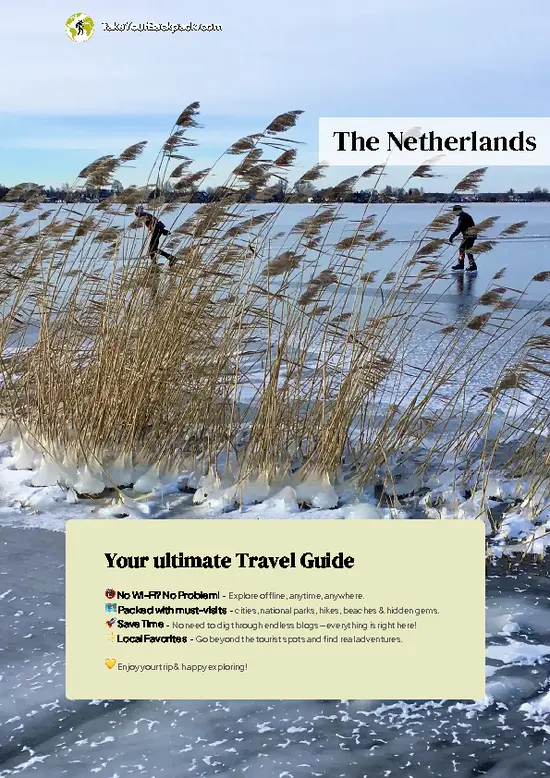
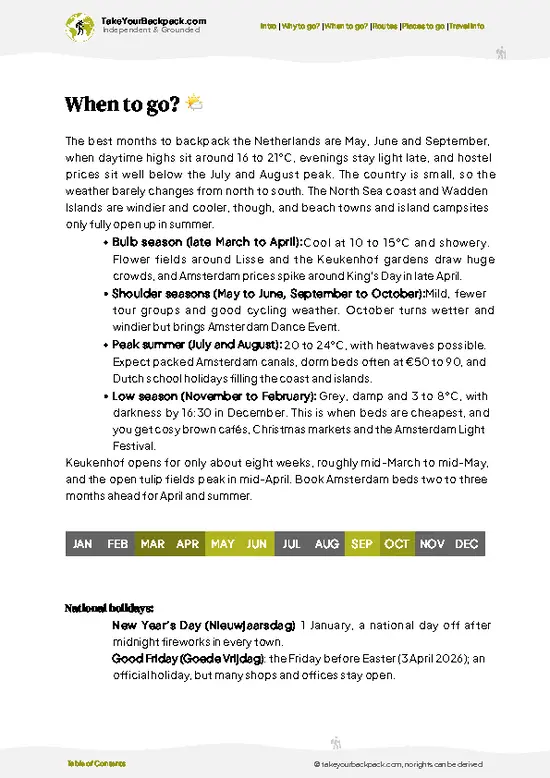
example page 0 from our offline Travel Guide for Netherlands
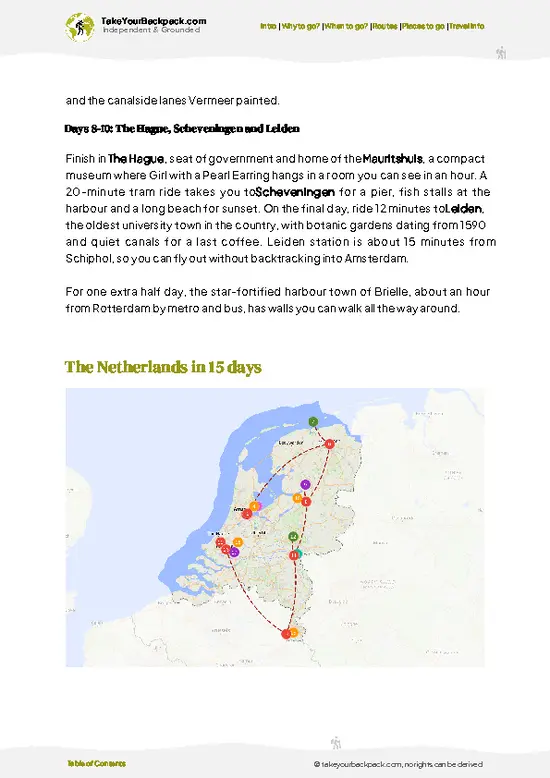
example page 1 from our offline Travel Guide for Netherlands
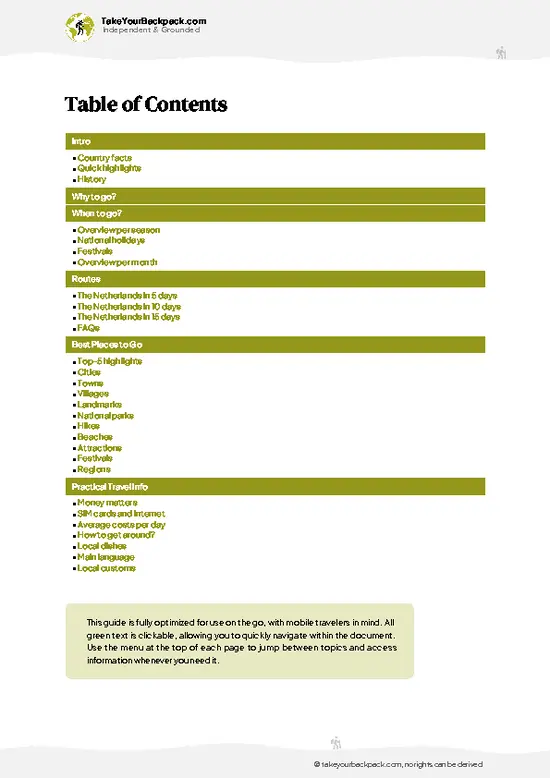
example page 2 from our offline Travel Guide for Netherlands
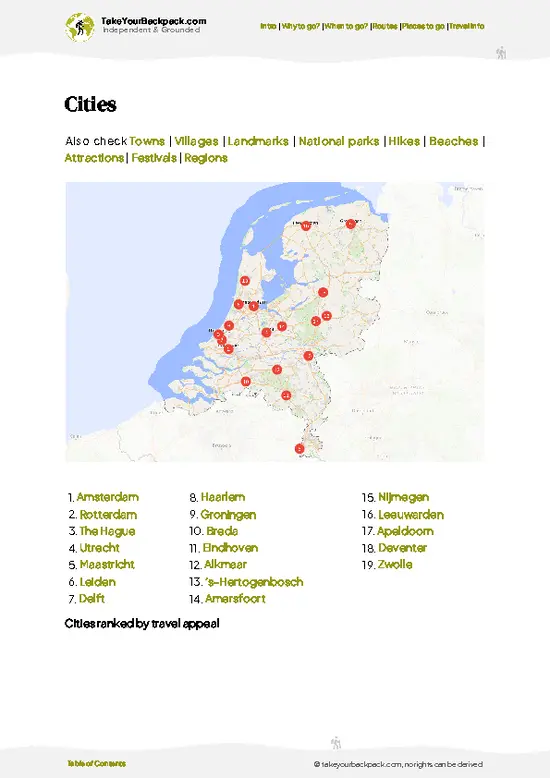
example page 3 from our offline Travel Guide for Netherlands
example page 4 from our offline Travel Guide for Netherlands
example page 5 from our offline Travel Guide for Netherlands
example page 6 from our offline Travel Guide for Netherlands
example page 7 from our offline Travel Guide for Netherlands
Loading the map 🌍
CLICK TO FILTER
cities
towns
villages
landmarks
national parks
hikes
beaches
attractions
festivals
regions
SHOW COUNTRY’S BESTSHOW ALL

✨ Why go?
Ranked #4 beach in The Netherlands
The unique appeal for travelers

Backpackers stop here because Terschelling works as a slow, car-free pause between the mainland and the other Wadden islands. The island is small enough that a rented bike covers everything, and a cycle path threads the 30 km of beach and dune so you can pick your own stretch of sand rather than fight for one. That freedom matters in July, when mainland beaches fill. The second reason is cost control once you arrive. Ferries are the big expense, but after that, supermarkets in West Terschelling, hostels, campsites and a bike at roughly €10 to 15 a day keep spending low. Camping is the budget move. The third reason is the island hopping route. The Harlingen ferry links to Terschelling in about 2 hours on the slow boat, and from here you can continue by boat to Vlieland, then loop back. Come … read more 👉
Backpackers stop here because Terschelling works as a slow, car-free pause between the mainland and the other Wadden islands. The island is small enough that a rented bike covers everything, and a cycle path threads the 30 km of beach and dune so you can pick your own stretch of sand rather than fight for one. That freedom matters in July, when mainland beaches fill. The second reason is cost control once you arrive. Ferries are the big expense, but after that, supermarkets in West Terschelling, hostels, campsites and a bike at roughly €10 to 15 a day keep spending low. Camping is the budget move. The third reason is the island hopping route. The Harlingen ferry links to Terschelling in about 2 hours on the slow boat, and from here you can continue by boat to Vlieland, then loop back. Come for empty sand and wide skies, and for the rhythm of ferry times, tides and bike rides that organizes your days.

💡 HighlightsThe experiences that define the visit

  1. Cycle to the paal markers. Beach poles are numbered along the north coast, and riding the dune path lets you choose a quiet stretch far from the village. The higher numbers toward the east feel emptier.
  2. Mudflat walking (wadlopen). Guided walks cross the exposed Wadden Sea floor at low tide, barefoot and muddy. Guides read the tides, so book one rather than try it alone.
  3. Swim and paddle in summer. The North Sea is cold and has currents, so stay near lifeguarded sections in July and August and keep it short. Shallow shorelines suit wading.
  4. Sunset on the dunes. The beach faces north and west, so evening light falls long over the sand. Bring a thermos and sit high in the dunes with the wind at your back.
  5. Beachcombing and shell hunting. Storms leave shells, driftwood and, now and then, odd items from
… read more 👉
  1. Cycle to the paal markers. Beach poles are numbered along the north coast, and riding the dune path lets you choose a quiet stretch far from the village. The higher numbers toward the east feel emptier.
  2. Mudflat walking (wadlopen). Guided walks cross the exposed Wadden Sea floor at low tide, barefoot and muddy. Guides read the tides, so book one rather than try it alone.
  3. Swim and paddle in summer. The North Sea is cold and has currents, so stay near lifeguarded sections in July and August and keep it short. Shallow shorelines suit wading.
  4. Sunset on the dunes. The beach faces north and west, so evening light falls long over the sand. Bring a thermos and sit high in the dunes with the wind at your back.
  5. Beachcombing and shell hunting. Storms leave shells, driftwood and, now and then, odd items from the sea. The island’s famous cranberry history and wreck tales add a story to each find.
Allow a full day for the cycling and beach combined, plus a half day for a mudflat walk.
Spotted a mistake or missing something? Contact us.

Things to do near Terschelling

Ratings based on Tripadvisor reviews. When you book through this link, you support our work at no extra cost to you.

🌤️ When to go?Best time to visit Terschelling

  • Summer (June to August): Late June to August is the best window for swimming and beach days, with highs of 18 to 21°C (64 to 70°F), water around 16 to 18°C (61 to 64°F), and light until about 22:00. Ferries and bike paths fill up, and accommodation prices peak.
  • Shoulder Season (May and September): Highs run 14 to 18°C (57 to 64°F) with long days and far fewer people. Rates drop noticeably, and September often brings stable weather.
  • Autumn Events (October and November): Cranberry harvest and the Oerol-free quiet make it relaxed, but highs fall to 8 to 13°C (46 to 55°F) with wind and rain.
  • Winter (December to March): Temperatures hover at 2 to 6°C (36 to 43°F), daylight lasts about 8 hours, and storms are common. Beach walks are empty and dramatic, and some businesses close.
Book the ferry from … read more 👉
  • Summer (June to August): Late June to August is the best window for swimming and beach days, with highs of 18 to 21°C (64 to 70°F), water around 16 to 18°C (61 to 64°F), and light until about 22:00. Ferries and bike paths fill up, and accommodation prices peak.
  • Shoulder Season (May and September): Highs run 14 to 18°C (57 to 64°F) with long days and far fewer people. Rates drop noticeably, and September often brings stable weather.
  • Autumn Events (October and November): Cranberry harvest and the Oerol-free quiet make it relaxed, but highs fall to 8 to 13°C (46 to 55°F) with wind and rain.
  • Winter (December to March): Temperatures hover at 2 to 6°C (36 to 43°F), daylight lasts about 8 hours, and storms are common. Beach walks are empty and dramatic, and some businesses close.
Book the ferry from Harlingen early for June and July weekends, and aim for mid-June if you want Oerol festival energy.


source: climatestotravel.comJANJanuary: below average for travelingFEBFebruary: below average for travelingMARMarch: fair for travelingAPRApril: good for travelingMAYMay: highly recommended for travelingJUNJune: excellent for travelingJULJuly: excellent for travelingAUGAugust: excellent for travelingSEPSeptember: highly recommended for travelingOCTOctober: good for travelingNOVNovember: fair for travelingDECDecember: below average for traveling
when-to-go

✈️ The backpacker research shortcutThe Netherlands Travel Guide

An offline-friendly backpacking guide with optimized travel routes, ranked highlights, transport advice, and the best areas to stay.
example page 0 from our offline Travel Guide for Netherlands
example page 1 from our offline Travel Guide for Netherlands
example page 2 from our offline Travel Guide for Netherlands
example page 3 from our offline Travel Guide for Netherlands
example page 4 from our offline Travel Guide for Netherlands
example page 5 from our offline Travel Guide for Netherlands
example page 6 from our offline Travel Guide for Netherlands
example page 7 from our offline Travel Guide for Netherlands
The digital guide (373 pages) contains:
✅ 127 highlights, ranked by travel appeal
✅ Optimized 5, 10 & 15-day travel routes
✅ Cities, national parks, landmarks, beaches
✅ How to get around
✅ Offline-friendly for travel without Wi-Fi
👉 Click to see all 30+ guide features

📅 Plan smarter in minutes, not weeks
✅ Month by month travel advice
✅ Festivals & national holidays
✅ Budget expectations

🗺️ Go to the right places, skip the overrated ones
✅ Honest pros & cons of destinations
✅ Top hikes, parks & viewpoints
✅ Lesser-known places most travelers miss
✅ Clear “worth it vs skip it” guidance

🛏️ Travel smoothly without rookie mistakes
✅ Best areas to stay
✅ Transport systems explained simply
✅ Common scams & safety advice
✅ SIM cards, money & practical tips

🌍 Understand the country, not just visit it
✅ Culture & traditions
✅ 52 Essential phrases & customs
✅ Festivals worth planning around
✅ Traveler-friendly historical context
✅ Insights that make places more meaningful

📱 Built for real travel conditions
✅ Fully downloadable PDF
✅ Works completely offline
✅ Optimized for phone use
✅ Useful in remote areas & buses
✅ Everything in one place
Stop searching, start planning
Get instant access to your full guide. 30‑day money-back guarantee.
+ Add another guide for just

By proceeding you agree to our terms.
Sent to your inbox immediately after payment • 100% Secure Checkout
Best Backpacking Travel Advisor 2025 tourism awardBest Backpacking
Travel Advisor
2025
What others say about Take Your Backpack Guides:
⭐⭐⭐⭐⭐
Fantastic, amazing amount of information!
⭐⭐⭐⭐⭐
My goodness this is amazing, it's what I've been looking for hats off too you!
⭐⭐⭐⭐⭐
I think this is absolutely BRILLIANT
⭐⭐⭐⭐
Very complete and informative. It's still missing places, but I gotta to commend you
⭐⭐⭐⭐⭐
This is truly amazing, thank you, can't wait to explore it with my kids!
⭐⭐⭐⭐⭐
Awesome resource, thank you!
⭐⭐⭐⭐⭐
This is amazing! Can't wait to explore the ones I haven't seen
⭐⭐⭐⭐
I love this! Well done, great idea.
⭐⭐⭐⭐⭐
Thanks for taking the time to make this gem!
⭐⭐⭐⭐⭐
This might be the best website I've ever seen.
⭐⭐⭐⭐⭐
Congratulations, and thank you so much for your work; it's incredibly valuable.
⭐⭐⭐⭐
In all seriousness I think you did a great job pointing out the important spots
⭐⭐⭐⭐⭐
10/10 very good
⭐⭐⭐⭐⭐
As someone who's only just starting to visit regularly this is awesome, thank you.
⭐⭐⭐⭐
Thank you very much! I'm going to visit my dad, it's going to be very useful!
⭐⭐⭐⭐⭐
This is really cool! We'll be travelling for the first time and this definitely come in handy.
⭐⭐⭐⭐⭐
You are now our minister of culture, congratulations 👨‍💼
⭐⭐⭐⭐⭐
Just wanted to tell you that this is a pearl! Going to follow your recommendations.
⭐⭐⭐⭐⭐
This is so cool. I'll definitely be using the resource for my travels soon.
⭐⭐⭐⭐⭐
This is very impressive! Good work.
⭐⭐⭐⭐⭐
This is an amazing and informative site. Very well done!

🛏️ Where to stay?Best areas and accommodation options

West-Terschelling is the best base for backpackers, because the ferry docks there and it holds the island’s most lively cluster of cafés, bike rentals, supermarkets and budget beds. From the harbor you can cycle across the dunes to the North Sea beach in roughly 15 to 25 minutes, and you never need a car.

The village is also where you will meet other travelers. Evenings center on the harbor and the short main street, so solo visitors fall into conversation easily over a beer or a plate of fries. Hostel-style beds and simple rooms cluster here, and shared options are the cheapest way to stay in … read more 👉
West-Terschelling is the best base for backpackers, because the ferry docks there and it holds the island’s most lively cluster of cafés, bike rentals, supermarkets and budget beds. From the harbor you can cycle across the dunes to the North Sea beach in roughly 15 to 25 minutes, and you never need a car.

The village is also where you will meet other travelers. Evenings center on the harbor and the short main street, so solo visitors fall into conversation easily over a beer or a plate of fries. Hostel-style beds and simple rooms cluster here, and shared options are the cheapest way to stay in a place where summer rooms can run well above US$100.

For quieter nights, look at the dune edge between West-Terschelling and Midsland aan Zee. Midsland aan Zee puts you almost directly on the beach, with beach pavilions and sunset walks, though it has fewer shops and a calmer pulse. Campsites sit in the dunes and forests along the island’s middle stretch and are the best value if you carry a tent, with pitches typically costing US$20 to 40. Reserve in July and August, since the island fills fast and walk-in options thin out.

🛡️ SafetyTraveler Safety Guide

Terschelling’s North Sea beach is wide, sandy and generally easy, with lifeguards posted at the main beach access points in summer. The water is cold and the tidal flow along the shore can be noticeable, so swim near the staffed sections and read the flags. Rip currents form near gaps in the sandbars, especially on windy days, and the safe response is to swim parallel to shore rather than fight them. Waves are usually moderate, but the surf grows rough after westerly storms. Jellyfish appear in late summer and are usually harmless, and there is no real hazard from sharks or reefs. The sun is stronger than the cool breeze suggests, so sunscreen matters, and weather can swing from clear to rainy within an hour. At low tide the beach stretches very far, so keep an eye on the incoming water if … read more 👉
Terschelling’s North Sea beach is wide, sandy and generally easy, with lifeguards posted at the main beach access points in summer. The water is cold and the tidal flow along the shore can be noticeable, so swim near the staffed sections and read the flags. Rip currents form near gaps in the sandbars, especially on windy days, and the safe response is to swim parallel to shore rather than fight them. Waves are usually moderate, but the surf grows rough after westerly storms. Jellyfish appear in late summer and are usually harmless, and there is no real hazard from sharks or reefs. The sun is stronger than the cool breeze suggests, so sunscreen matters, and weather can swing from clear to rainy within an hour. At low tide the beach stretches very far, so keep an eye on the incoming water if you walk out to sandbanks. The island is very safe, and bikes are normally locked rather than stolen, though use a lock anyway.

FAQTraveler FAQ

Take the ferry from Harlingen to West Terschelling, which takes about 2 hours on the slow boat and about 45 minutes on the fast catamaran. Trains run from Amsterdam to Harlingen Haven in roughly 2.5 hours with a change. Once on the island, rent a bike (about €10 to 15 a day) or catch the bus, then ride 2 to 5 km to the beach.
Swimming is fine in summer, but the water stays cold and currents can be strong, so stay near lifeguarded sections in July and August. Surf is weak and inconsistent, so surfers usually go to Zandvoort or Texel instead. Snorkeling is poor because visibility is low and the bottom is sand. A wetsuit helps for swims outside the warmest weeks.
Yes, the beach itself is free and open year-round with no entry fee. Your real costs are the ferry from Harlingen, roughly €25 to 40 return per adult depending on the boat, and a bike rental at about €10 to 15 a day. A few lifeguarded or beach-club areas in summer may charge for showers or parking, but walking on the sand costs nothing.
⚠️ Things can change over time, so always validate details locally before you go.

Other Dutch beaches near Terschelling

Explore more nearby:

  • Ameland—Low-tide flats, dune-road cycling, driftwood and shells, star-filled nights| 34 km away
  • Zandvoort—Empty mornings, beginner surf, Zuid-Kennemerland dunes, Circuit Zandvoort| 124 km away
  • Noordwijk—Numbered shore poles, bulb-field bike rides, Space Expo, boulevard sunsets| 139 km away

💡 Not sure where to go next?
Create a personalized itinerary for The Netherlands including Terschelling and the places that fit your trip.

Generate my itinerary

👉 Discover all beaches

Or checkout all The Netherlands has to offer (think cities, towns, villages, national parks, hikes, beaches, festivals)
Country photo of The Netherlands

We 💚 feedbackIs it worth it?

Terschelling beach suits cyclists, campers and anyone who likes long walks over crowds. If you want nightlife, surf or reefs, go elsewhere. Come for a night or two, rent a bike, and pick a distant paal. Check ferry times before you plan anything, because they run your schedule.

✈️ When did I visit The Netherlands?
Netherlands is my home base, so whenever I don’t travel, you can find me in this tiny spot on the globe. When friends from abroad visit me, it’s the time to actually explore my own country as a traveler.

✍️ Help improve this page!
The information on this page is based on my own backpacking experience in The Netherlands, supplemented with up-to-date research and feedback from other travelers. Travel details can change, so if you notice anything outdated or incomplete, feel free to let me know.


🙋‍♂️ Give feedback

👋 Meet the founderWho’s Behind Take Your Backpack?

Johan, backpacker and founder of TakeYourBackpackHi, I’m Johan (Netherlands 🇳🇱), the creator of TakeYourBackpack. Over the past 3 decades, I’ve backpacked through 90+ countries across six continents, gaining extensive experience with independent travel, long-term trips, and overland routes.

This site is built on a combination of firsthand travel experience and carefully curated insights from other backpackers. Many guides are based on places I’ve personally visited, while others bring together tips, observations, and practical advice shared by trusted travelers I’ve met along the way.

The goal is to provide realistic, experience-driven guidance — not generic itineraries — so you can explore destinations with better context, clearer expectations, and more confidence.