×

New Caledonia🇳🇨 | best national parksDiscover the 6 Best national parks Across New Caledonia

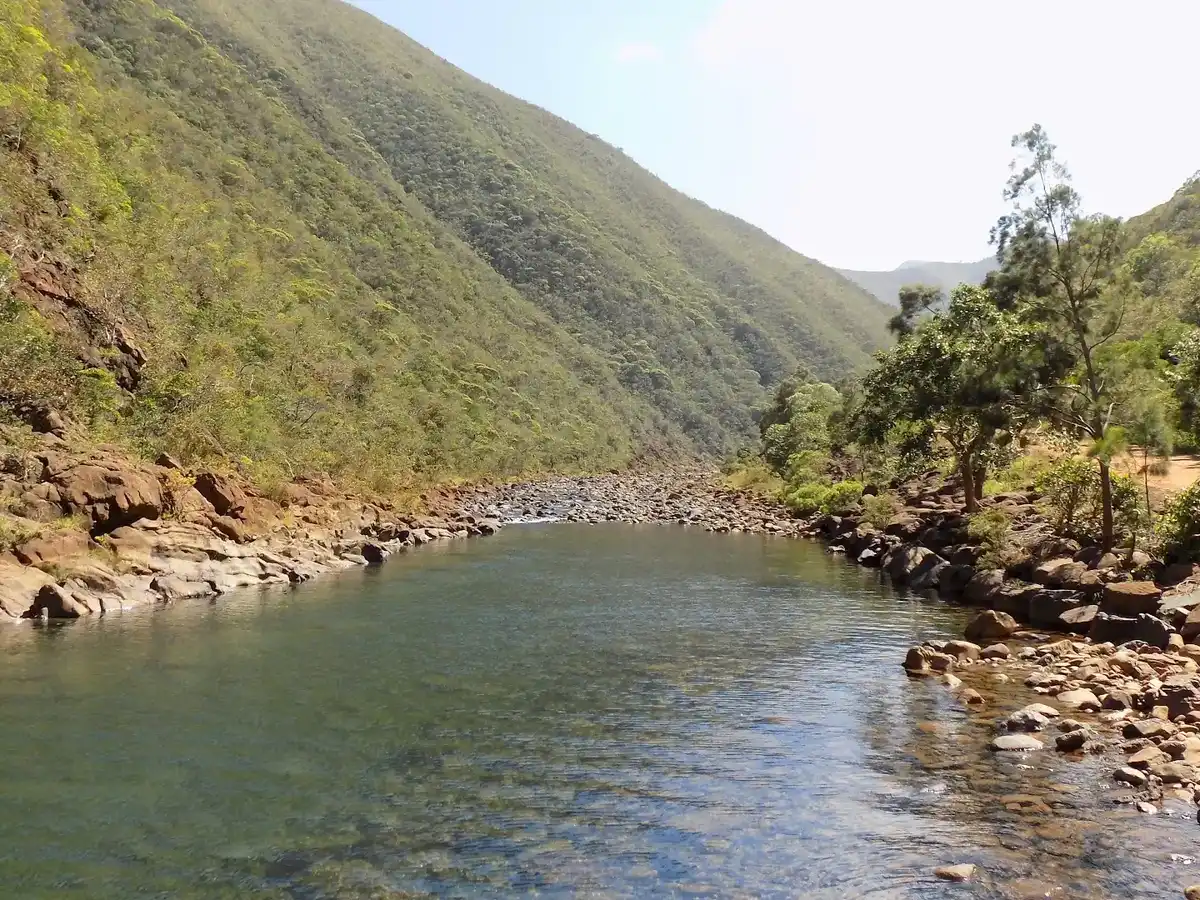
National parks in New Caledonia are mostly provincial or territorial reserves, not one national system. Expect red nickel soil that stains boots, niaouli bark, damp rainforest and cicadas. The South Province is closest to Nouméa, easiest to reach and busiest on weekends. The north and the islands are quieter and pricier to reach. Independent travelers need a rental car for most parks.

By Johan Kruseman 🇳🇱 | Updated October 18, 2026
Explore the best hikes in New Caledonia

Why go?Key Factors That Shape the Experience

New Caledonia suits park-going because roughly three quarters of its plant species grow nowhere else, a result of long isolation and ultramafic nickel-rich soils that few plants tolerate. The result is dense, odd forest and scrub, the bright red earth, and birds like the flightless kagu. Land here is also Kanak customary land, so many wild areas belong to clans and tribes, and access can depend on local consent. Infrastructure is thin outside the south. Most parks have marked trails, picnic shelters and basic camping, but few shops, and public buses rarely reach trailheads. Prices follow French levels, so food, car hire and lodging cost more than elsewhere in the Pacific. Come for endemic nature and self-reliance, not for polished visitor centers.
Our Approach to Ranking
The list of best national parks in New Caledonia is created based on landscapes, wildlife, adventure opportunities, facilities, and overall experience. If you feel a national park is missing in this list, please let us know.

When to go?Timing Your Visit for the Best Experience

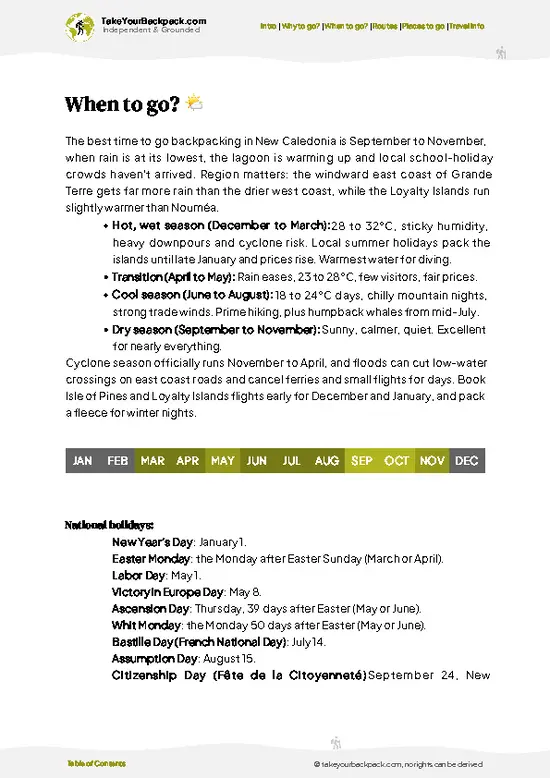
Best months for national parks: The best months are September to November, when days sit around 24 to 28°C, rain is low and trails are firm underfoot. The dry, clear light makes the forest ridges sharp and the lagoon colors strong. April to June is a good shoulder season, with cooler air near 22 to 26°C and fewer river crossings in spate.Seasons and pitfalls: The hot, humid season runs December to March, with 30°C days, heavy air, mosquitoes and the cyclone risk, mostly January to March. The wetter east coast of Grande Terre can receive over 2,000 mm a year, against roughly 1,000 mm around Nouméa, so mud and swollen creeks are likely there. July and August bring cool nights (about 17 to 20°C), plus French school holidays, when rental cars, ferries and island lodging fill and cost more. Book … read more 👉
Best months for national parks: The best months are September to November, when days sit around 24 to 28°C, rain is low and trails are firm underfoot. The dry, clear light makes the forest ridges sharp and the lagoon colors strong. April to June is a good shoulder season, with cooler air near 22 to 26°C and fewer river crossings in spate.Seasons and pitfalls: The hot, humid season runs December to March, with 30°C days, heavy air, mosquitoes and the cyclone risk, mostly January to March. The wetter east coast of Grande Terre can receive over 2,000 mm a year, against roughly 1,000 mm around Nouméa, so mud and swollen creeks are likely there. July and August bring cool nights (about 17 to 20°C), plus French school holidays, when rental cars, ferries and island lodging fill and cost more. Book those early. Mid-December to January is the other busy stretch.

national park hoppingPlanning Your Route Efficiently

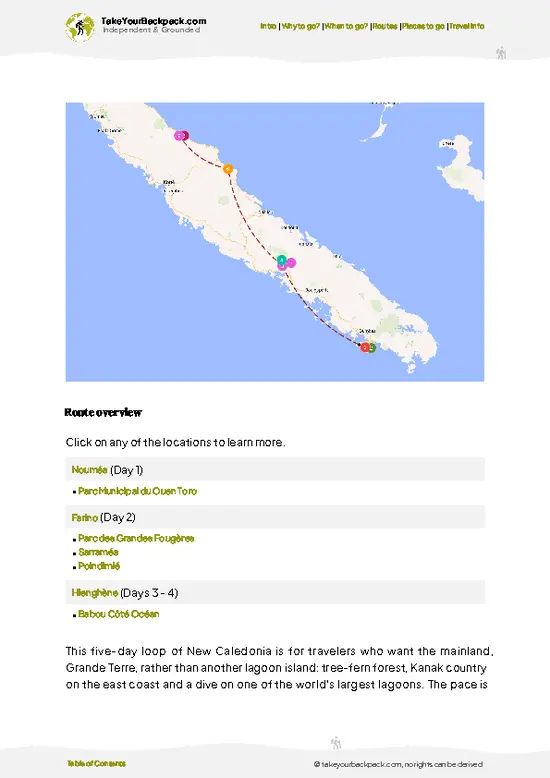
How many days to plan: A trip linking several national parks in New Caledonia needs 7 to 12 days, since distances are small but roads are slow and winding.Regions and direction: Start in the Nouméa and South Province cluster, where parks sit 1 to 2 hours by road from the capital and one hub covers several. Then head north up the west coast toward Koné (about 3 hours), where the road is drier and flatter, and finish on the wetter east coast (Hienghène is around 5 hours from Nouméa). Add an island leg last, by 20 to 45 minute flights or ferry from Nouméa to the Isle of Pines or Loyalty Islands. Allow half to one full day per stop, and two for a longer trail.Common mistakes: Travelers often cram too many stops in, ignoring road times and sunset around 5:30 to 6:30 pm. Drive in daylight, split … read more 👉
How many days to plan: A trip linking several national parks in New Caledonia needs 7 to 12 days, since distances are small but roads are slow and winding.Regions and direction: Start in the Nouméa and South Province cluster, where parks sit 1 to 2 hours by road from the capital and one hub covers several. Then head north up the west coast toward Koné (about 3 hours), where the road is drier and flatter, and finish on the wetter east coast (Hienghène is around 5 hours from Nouméa). Add an island leg last, by 20 to 45 minute flights or ferry from Nouméa to the Isle of Pines or Loyalty Islands. Allow half to one full day per stop, and two for a longer trail.Common mistakes: Travelers often cram too many stops in, ignoring road times and sunset around 5:30 to 6:30 pm. Drive in daylight, split long legs with a night in a town, and keep a buffer day before flights.

The ListTop national parks of New Caledonia

1 Parc des Grandes Fougères

Tree ferns, kagu calls, short loops

Listen for the kagu’s bark beneath arching tree ferns on short, muddy loops in cool mountain rainforest above Farino and Sarraméa.

new-caledonia-national-park-parc-des-grandes-fougeres
© Google | Jean Paul Beaudeau

2 Blue River Provincial Park

Giant kauri, drowned forest, cagou calls, river crossings

Walk flat forest and maquis trails to a towering kauri, stand-dead trees in still water, and clear river fords where cagous call at dawn.

new-caledonia-national-park-blue-river-provincial-park
© Google |

3 Parc provincial de la Dumbéa

Cold river pools, upper valley rainforest, ultramafic rock

Walk a shaded valley of tree ferns and mossy trunks to clear, cold basins on the Dumbéa River, suited to swimming at low water.

new-caledonia-national-park-parc-provincial-de-la-dumbea
© Google | Yumph

4 Great South Lagoon

Reef passes, Prony Bay, humpback season, red-dirt tracks

Snorkel coral patches in the turquoise lagoon, paddle a mangrove-fringed bay with penal-era ruins, and soak in a warm creek near the shore.

new-caledonia-national-park-great-south-lagoon
© Google |

5 Monts Koghis

Tree ferns, ridge road, summit lookouts, araucaria

Drive a short climb above Nouméa, then follow muddy, rooty trails past tall ferns to lookouts over the lagoon and reef line.

new-caledonia-national-park-monts-koghis
© Google | David Guivant

6 Parc Municipal du Ouen Toro

Hilltop panorama, WWII guns, sunrise ridge, dry forest

Climb the steep hill above Anse Vata at first light, pass rusted coastal guns, and watch the lagoon turn shades of turquoise.

new-caledonia-national-park-parc-municipal-du-ouen-toro
© Google |
Loading the map 🌍

Expert viewPro Tips for Exploring the Best

How many parks to visit: Two to four parks is the right number for most backpackers. The trails are long, the drives are slow, and a single park rewards a full day more than three rushed ones. Pick one forest or mountain park, one coastal or lagoon-edge area and, if time allows, one in the north or on the islands.Which kind suits you: Short-trip travelers should prioritize South Province parks, which have marked trails, toilets and picnic tables. They cost the least to reach. Hikers wanting solitude should head to the north and east, where tracks are rougher and signs are sparse. Beach-focused travelers should treat the islands as a separate, pricier option, since lodging and transfers add up.What it costs: Plan on 8,000 to 14,000 XPF a day (US$75 to 130) for budget travel, because France-level … read more 👉
How many parks to visit: Two to four parks is the right number for most backpackers. The trails are long, the drives are slow, and a single park rewards a full day more than three rushed ones. Pick one forest or mountain park, one coastal or lagoon-edge area and, if time allows, one in the north or on the islands.Which kind suits you: Short-trip travelers should prioritize South Province parks, which have marked trails, toilets and picnic tables. They cost the least to reach. Hikers wanting solitude should head to the north and east, where tracks are rougher and signs are sparse. Beach-focused travelers should treat the islands as a separate, pricier option, since lodging and transfers add up.What it costs: Plan on 8,000 to 14,000 XPF a day (US$75 to 130) for budget travel, because France-level prices apply. Park entry usually runs about 300 to 1,000 XPF (US$3 to 10), camping around 1,500 to 3,500 XPF (US$14 to 32) per tent, and a rental car 6,000 to 9,000 XPF (US$55 to 85) a day. Buses rarely reach trailheads, so a car, shared where possible, saves money. Guided walks with Kanak guides cost more, often 5,000 to 12,000 XPF (US$45 to 110), and are worth it for plant knowledge and access. Self-catering from supermarkets in Nouméa cuts food costs sharply.Safety and culture: Rivers rise fast after rain, and creek crossings that were ankle deep can turn dangerous within hours. Check conditions before setting out and carry more water than the humid air suggests. Mosquitoes carry dengue, so cover up at dusk. Do not swim where signs warn of sharks or strong currents. Wash boots and gear, because invasive species and the little fire ant threaten fragile ecosystems.

Much land is customary Kanak land. Experienced travelers ask permission, greet people at tribal gates and offer a small gift, usually a length of cloth and a modest sum, as the coutume. Never take plants, stones or shells, and skip sacred sites unless invited.

✈️ The backpacker research shortcutNew Caledonia Travel Guide

An offline-friendly backpacking guide with optimized travel routes, ranked highlights, transport advice, and the best areas to stay.
example page 0 from our offline Travel Guide for New Caledonia
example page 1 from our offline Travel Guide for New Caledonia
example page 2 from our offline Travel Guide for New Caledonia
example page 3 from our offline Travel Guide for New Caledonia
example page 4 from our offline Travel Guide for New Caledonia
example page 5 from our offline Travel Guide for New Caledonia
example page 6 from our offline Travel Guide for New Caledonia
example page 7 from our offline Travel Guide for New Caledonia
The digital guide (158 pages) contains:
✅ 42 highlights, ranked by travel appeal
✅ Optimized 2, 3 & 5-day travel routes
✅ Cities, national parks, landmarks, beaches
✅ How to get around
✅ Offline-friendly for travel without Wi-Fi
👉 Click to see all 30+ guide features

📅 Plan smarter in minutes, not weeks
✅ Month by month travel advice
✅ Festivals & national holidays
✅ Budget expectations

🗺️ Go to the right places, skip the overrated ones
✅ Honest pros & cons of destinations
✅ Top hikes, parks & viewpoints
✅ Lesser-known places most travelers miss
✅ Clear “worth it vs skip it” guidance

🛏️ Travel smoothly without rookie mistakes
✅ Best areas to stay
✅ Transport systems explained simply
✅ Common scams & safety advice
✅ SIM cards, money & practical tips

🌍 Understand the country, not just visit it
✅ Culture & traditions
✅ 52 Essential phrases & customs
✅ Festivals worth planning around
✅ Traveler-friendly historical context
✅ Insights that make places more meaningful

📱 Built for real travel conditions
✅ Fully downloadable PDF
✅ Works completely offline
✅ Optimized for phone use
✅ Useful in remote areas & buses
✅ Everything in one place
Stop searching, start planning
Get instant access to your full guide. 30‑day money-back guarantee.
+ Add another guide for just

By proceeding you agree to our terms.
Sent to your inbox immediately after payment • 100% Secure Checkout
Best Backpacking Travel Advisor 2025 tourism awardBest Backpacking
Travel Advisor
2025
What others say about Take Your Backpack Guides:
⭐⭐⭐⭐⭐
Fantastic, amazing amount of information!
⭐⭐⭐⭐⭐
My goodness this is amazing, it's what I've been looking for hats off too you!
⭐⭐⭐⭐⭐
I think this is absolutely BRILLIANT
⭐⭐⭐⭐
Very complete and informative. It's still missing places, but I gotta to commend you
⭐⭐⭐⭐⭐
This is truly amazing, thank you, can't wait to explore it with my kids!
⭐⭐⭐⭐⭐
Awesome resource, thank you!
⭐⭐⭐⭐⭐
This is amazing! Can't wait to explore the ones I haven't seen
⭐⭐⭐⭐
I love this! Well done, great idea.
⭐⭐⭐⭐⭐
Thanks for taking the time to make this gem!
⭐⭐⭐⭐⭐
This might be the best website I've ever seen.
⭐⭐⭐⭐⭐
Congratulations, and thank you so much for your work; it's incredibly valuable.
⭐⭐⭐⭐
In all seriousness I think you did a great job pointing out the important spots
⭐⭐⭐⭐⭐
10/10 very good
⭐⭐⭐⭐⭐
As someone who's only just starting to visit regularly this is awesome, thank you.
⭐⭐⭐⭐
Thank you very much! I'm going to visit my dad, it's going to be very useful!
⭐⭐⭐⭐⭐
This is really cool! We'll be travelling for the first time and this definitely come in handy.
⭐⭐⭐⭐⭐
You are now our minister of culture, congratulations 👨‍💼
⭐⭐⭐⭐⭐
Just wanted to tell you that this is a pearl! Going to follow your recommendations.
⭐⭐⭐⭐⭐
This is so cool. I'll definitely be using the resource for my travels soon.
⭐⭐⭐⭐⭐
This is very impressive! Good work.
⭐⭐⭐⭐⭐
This is an amazing and informative site. Very well done!

🛏️ Where to stay?Top Places to Consider Staying

But budget beds in New Caledonia are scarce: Nouméa has only a handful of hostels and dorms (roughly 3,000 to 4,500 XPF, about €25 to €38, a night), while outside the capital the budget options are campgrounds, rural gîtes and tribal homestays. In Nouméa, the Centre-ville and the hill above it sit closest to the bus hub, markets and museums, but the streets empty out after dark, whereas Baie des Citrons and Anse Vata put you on the beach with the city’s bars and restaurants, at higher prices and with weekend noise. Quieter Orphelinat sits in between, a walk from both the center and the bays. On Île des Pins, the Loyalty Islands and the northern Grande Terre, book tribal stays and campsites ahead, … read more 👉
But budget beds in New Caledonia are scarce: Nouméa has only a handful of hostels and dorms (roughly 3,000 to 4,500 XPF, about €25 to €38, a night), while outside the capital the budget options are campgrounds, rural gîtes and tribal homestays. In Nouméa, the Centre-ville and the hill above it sit closest to the bus hub, markets and museums, but the streets empty out after dark, whereas Baie des Citrons and Anse Vata put you on the beach with the city’s bars and restaurants, at higher prices and with weekend noise. Quieter Orphelinat sits in between, a walk from both the center and the bays. On Île des Pins, the Loyalty Islands and the northern Grande Terre, book tribal stays and campsites ahead, since many take reservations only by phone.

If you enjoy meeting fellow travelers, consider choosing hostels with high ratings for atmosphere. On the other hand, if you prefer having your own space, a hotel might be a better option.

New CaledoniaMore Places Across New Caledonia

👋 Meet the founderWho’s Behind Take Your Backpack?

Johan, backpacker and founder of TakeYourBackpackHi, I’m Johan (Netherlands 🇳🇱), the creator of TakeYourBackpack. Over the past 3 decades, I’ve backpacked through 90+ countries across six continents, gaining extensive experience with independent travel, long-term trips, and overland routes.

This site is built on a combination of firsthand travel experience and carefully curated insights from other backpackers. Many guides are based on places I’ve personally visited, while others bring together tips, observations, and practical advice shared by trusted travelers I’ve met along the way.

The goal is to provide realistic, experience-driven guidance — not generic itineraries — so you can explore destinations with better context, clearer expectations, and more confidence.