v2.webp)
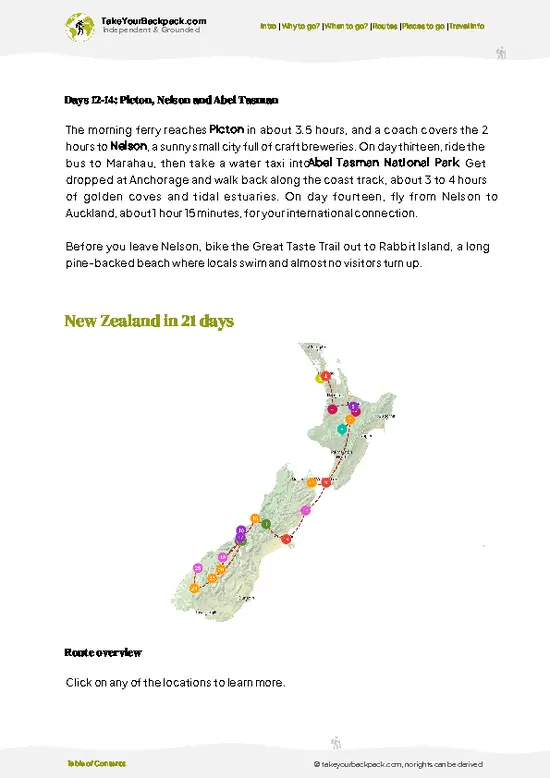
- Whanganui River Gorge: Sheer, fern-covered walls rise on both banks, and waterfalls drip straight into the river. It is the reason people book the trip.
- Bridge to Nowhere: A concrete bridge stranded in native forest, built for a farming settlement that failed. You reach it by a short walk from Mangapurua Landing, and it is a strangely quiet place to eat lunch.
- Tieke Marae: A working Maori community where paddlers can stay overnight. A welcome with a short ceremony and a meal gives context to a river the local iwi consider an ancestor.
- John Coull Hut and campsite: A well-placed overnight stop with river access, good for swimming and watching the evening light slide down the cliffs.
- Pipiriki finish and the Whanganui River Road: The paddle ends at a small riverside settlement, with the road winding
- Whanganui River Gorge: Sheer, fern-covered walls rise on both banks, and waterfalls drip straight into the river. It is the reason people book the trip.
- Bridge to Nowhere: A concrete bridge stranded in native forest, built for a farming settlement that failed. You reach it by a short walk from Mangapurua Landing, and it is a strangely quiet place to eat lunch.
- Tieke Marae: A working Maori community where paddlers can stay overnight. A welcome with a short ceremony and a meal gives context to a river the local iwi consider an ancestor.
- John Coull Hut and campsite: A well-placed overnight stop with river access, good for swimming and watching the evening light slide down the cliffs.
- Pipiriki finish and the Whanganui River Road: The paddle ends at a small riverside settlement, with the road winding on towards Jerusalem and Atene for those who want more. The sense of arrival after days of gorge is real.
Spotted a mistake or missing something? Contact us.


 Best Backpacking
.jpg) Hi, I’m Johan (Netherlands 🇳🇱), the creator of TakeYourBackpack. Over the past 3 decades, I’ve backpacked through 90+ countries across six continents, gaining extensive experience with independent travel, long-term trips, and overland routes.
Hi, I’m Johan (Netherlands 🇳🇱), the creator of TakeYourBackpack. Over the past 3 decades, I’ve backpacked through 90+ countries across six continents, gaining extensive experience with independent travel, long-term trips, and overland routes.