×
Tongariro Alpine Crossing

New Zealand🇳🇿 | hikesTongariro Alpine Crossingactive volcanoes, emerald lakes, volcanic craters, exposed ridges | things to do and best time to go

Explore Te Araroa TrailExplore Whanganui Journey

Backpacking in Tongariro Alpine Crossing
🏆 Top pickhike ranked #2
By Johan Kruseman 🇳🇱 | Updated May 23, 2026

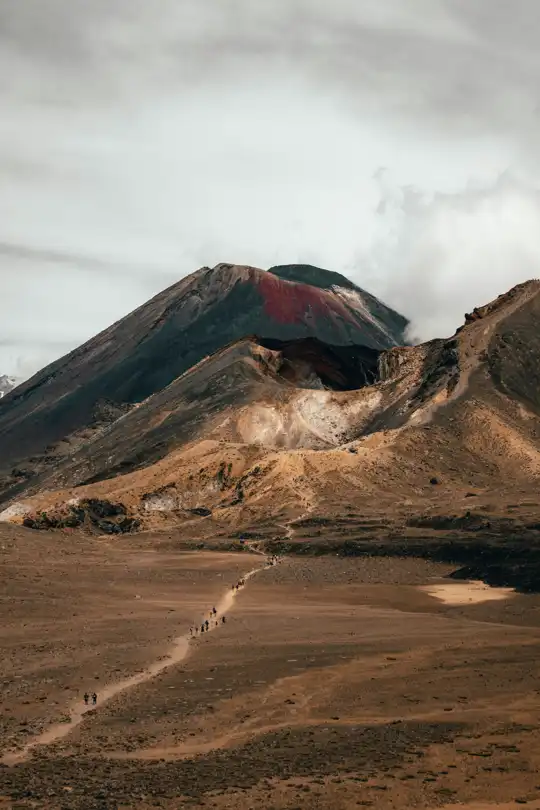
You only realize after you hike it that Tongariro’s biggest perk is how “epic” it feels for how logistically simple it is: one long day, no camping, shuttle in the morning, beer that afternoon. The Tongariro Alpine Crossing cuts across an active volcanic plateau in Tongariro National Park, smack in the middle of New Zealand’s North Island, between Taupō and the ski town of Tūrangi. It’s about 19–20 km, and you earn every meter: long, exposed climbs, loose scree, and wind that can slap the breath out of you, but also red craters, turquoise lakes that look fake, and wide views across the Central Plateau that feel bigger than most multi-day hikes. Public shuttles from nearby towns make access almost too easy, which is why it’s crowded and can feel like a moving queue compared with quieter local tracks like Tama Lakes or the Round the Mountain.

Discover everything you want to know in the 📖 New Zealand Travel Guide.
Best time to go: October - May
Duration: 6 to 8 hours
Distance: 19.4 kilometers
Total ascent: 800 meters
Loading the map 🌍
CLICK TO FILTER
cities
towns
villages
landmarks
national parks
hikes
beaches
attractions
festivals
regions
SHOW COUNTRY’S BESTSHOW ALL

✨ Why go?
Ranked #2 hike in New Zealand
What sets this place apart

The Tongariro Alpine Crossing is a magnet for backpackers, and for good reason. This hike packs a punch with its scenery-to-effort ratio that feels almost unfair. You’ll traverse volcanic landscapes, vibrant emerald lakes, and craggy ridges that make every step worthwhile. The public transport access is a game-changer; hop on a bus from nearby towns like Taupo or National Park Village, and you’re on your way without the hassle of a car.

Cost? Minimal. The trail is free, and you can grab a packed lunch from local shops to keep your wallet happy. The flexible distances allow you to tailor your experience—tackle the full 19.4 kilometers or turn back early if you’re feeling the burn.

This hike fits seamlessly into a longer backpacking route through New Zealand. It’s a perfect pit stop between … read more 👉
The Tongariro Alpine Crossing is a magnet for backpackers, and for good reason. This hike packs a punch with its scenery-to-effort ratio that feels almost unfair. You’ll traverse volcanic landscapes, vibrant emerald lakes, and craggy ridges that make every step worthwhile. The public transport access is a game-changer; hop on a bus from nearby towns like Taupo or National Park Village, and you’re on your way without the hassle of a car.

Cost? Minimal. The trail is free, and you can grab a packed lunch from local shops to keep your wallet happy. The flexible distances allow you to tailor your experience—tackle the full 19.4 kilometers or turn back early if you’re feeling the burn.

This hike fits seamlessly into a longer backpacking route through New Zealand. It’s a perfect pit stop between the North Island’s highlights. The moment you reach the summit and gaze down at the otherworldly terrain, you’ll feel that sweet rush of accomplishment. And when you finally crack open that first cold beer at the end, you’ll know every step was worth it.
Want to include Tongariro Alpine Crossing in your New Zealand route?
Create a personalized New Zealand itinerary that includes Tongariro Alpine Crossing and the places that fit your trip — based on your travel style, budget, and available time. Get your route in seconds.

Generate my trip

💡 HighlightsKey sights and experiences for travelers

  1. Red Crater — A truly otherworldly ridge of oxidised volcanic rock that feels like hiking on Mars; the colors and steam vents are dramatic, and the ridge walk around the crater offers some of the Crossing’s most exposed, panoramic views.
  2. Emerald Lakes — Three intensely coloured pools whose greens and blues come from dissolved minerals; they sit in a stark, wind-swept bowl and make for an unbeatable photo stop (but don’t swim — the water is acidic).
  3. Blue Lake (Te Wai-whakaata-o-te-Rangihiroa) — A small, mirror-like lake with deep cultural significance to local Māori; it’s strikingly clear and beautiful, and visitors are asked to treat it as tapu — no swimming or drinking.
  4. Mount Ngauruhoe — The perfectly conical volcanic cone that dominates the skyline (famous as “Mount Doom” in The Lord
read more 👉
  1. Red Crater — A truly otherworldly ridge of oxidised volcanic rock that feels like hiking on Mars; the colors and steam vents are dramatic, and the ridge walk around the crater offers some of the Crossing’s most exposed, panoramic views.
  2. Emerald Lakes — Three intensely coloured pools whose greens and blues come from dissolved minerals; they sit in a stark, wind-swept bowl and make for an unbeatable photo stop (but don’t swim — the water is acidic).
  3. Blue Lake (Te Wai-whakaata-o-te-Rangihiroa) — A small, mirror-like lake with deep cultural significance to local Māori; it’s strikingly clear and beautiful, and visitors are asked to treat it as tapu — no swimming or drinking.
  4. Mount Ngauruhoe — The perfectly conical volcanic cone that dominates the skyline (famous as “Mount Doom” in The Lord of the Rings); whether you’re into geology, film locations, or just dramatic scenery, it’s an iconic backdrop you won’t forget.
  5. South/Central Crater & Ketetahi panorama — The vast, bleak crater flats give the Crossing its lunar, no-frills vibe, then the Ketetahi viewpoint near the end opens up wide views across the volcanic plateau and surrounding mountain ranges — a great payoff for the long slog.
Spotted a mistake or missing something? Contact us.

Things to do around Tongariro Alpine Crossing

Ratings based on Tripadvisor reviews. When you book through this link, you support our work at no extra cost to you.

🌤️ When to go?Best time to hike the Tongariro Alpine Crossing


  • Topic: Weather – The Crossing demands clear skies. Summer (December to February) offers the most stable weather, but sudden shifts can still slam you with wind and rain. Winter months bring snow and ice, turning the trail into a technical climb, not a stroll.

  • Topic: Temperature – Summer highs hover around 20°C (68°F), perfect for sweating it out without freezing. Winter temperatures often dip below 0°C (32°F), making layers and crampons mandatory.

  • Topic: Daylight Hours – Long summer days stretch up to 15 hours, giving you a generous window to tackle the 19.4 km trek without rushing. Winter shrinks daylight to about 9 hours, forcing an earlier start and faster pace.

  • Topic: Crowds – Peak season means shoulder-to-shoulder hikers, especially on weekends and holidays. Early spring and
read more 👉

  • Topic: Weather – The Crossing demands clear skies. Summer (December to February) offers the most stable weather, but sudden shifts can still slam you with wind and rain. Winter months bring snow and ice, turning the trail into a technical climb, not a stroll.

  • Topic: Temperature – Summer highs hover around 20°C (68°F), perfect for sweating it out without freezing. Winter temperatures often dip below 0°C (32°F), making layers and crampons mandatory.

  • Topic: Daylight Hours – Long summer days stretch up to 15 hours, giving you a generous window to tackle the 19.4 km trek without rushing. Winter shrinks daylight to about 9 hours, forcing an earlier start and faster pace.

  • Topic: Crowds – Peak season means shoulder-to-shoulder hikers, especially on weekends and holidays. Early spring and late autumn thin the crowds but hike with a weather wildcard.

  • Topic: Seasonal Activities – Summer lets you focus on the Crossing itself; winter opens up nearby ski fields but closes the trail to casual hikers.

  • Topic: Price Fluctuations – Accommodation and transport costs spike in summer. Shoulder seasons offer better deals but come with trade-offs in weather and daylight.


Pro-tip: Aim for late spring or early autumn—less crowd, manageable weather, and daylight that still lets you savor every volcanic vista without the crush.


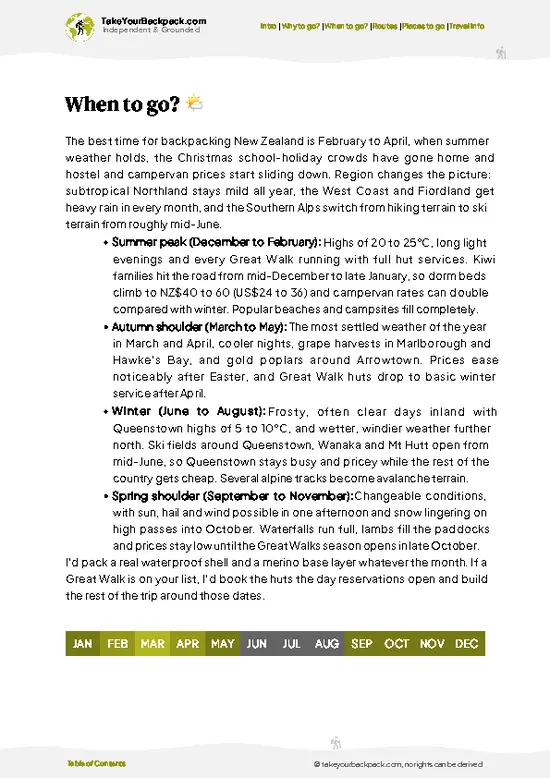
source: climatestotravel.comJANJanuary: excellent for travelingFEBFebruary: excellent for travelingMARMarch: highly recommended for travelingAPRApril: highly recommended for travelingMAYMay: good for travelingJUNJune: fair for travelingJULJuly: below average for travelingAUGAugust: below average for travelingSEPSeptember: fair for travelingOCTOctober: highly recommended for travelingNOVNovember: highly recommended for travelingDECDecember: excellent for traveling
New Zealand - the Tongariro Alpine Crossing

✈️ The backpacker research shortcutNew Zealand Travel Guide

An offline-friendly backpacking guide with optimized travel routes, ranked highlights, transport advice, and the best areas to stay.
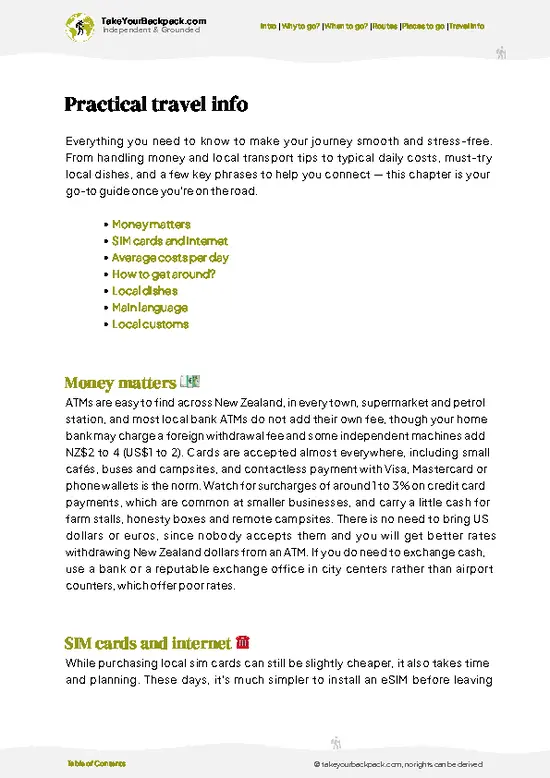
example page 0 from our offline Travel Guide for New Zealand
example page 1 from our offline Travel Guide for New Zealand
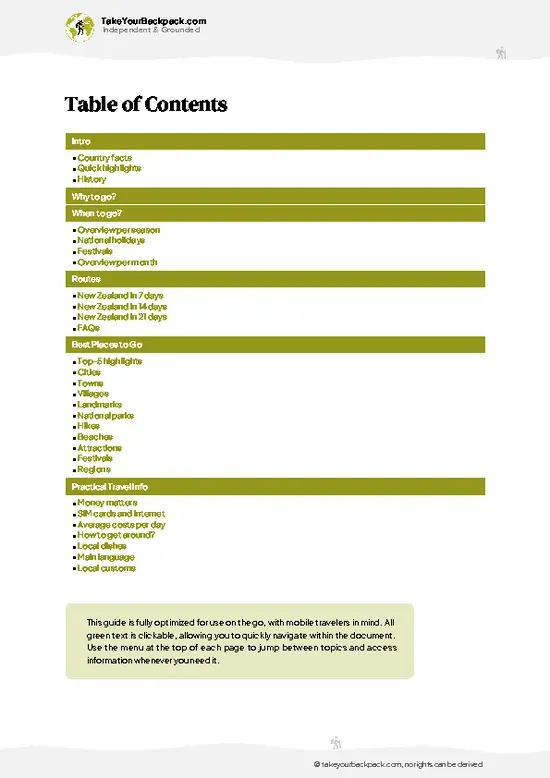
example page 2 from our offline Travel Guide for New Zealand
example page 3 from our offline Travel Guide for New Zealand
example page 4 from our offline Travel Guide for New Zealand
example page 5 from our offline Travel Guide for New Zealand
example page 6 from our offline Travel Guide for New Zealand
example page 7 from our offline Travel Guide for New Zealand
The digital guide (412 pages) contains:
113 highlights, ranked by travel appeal
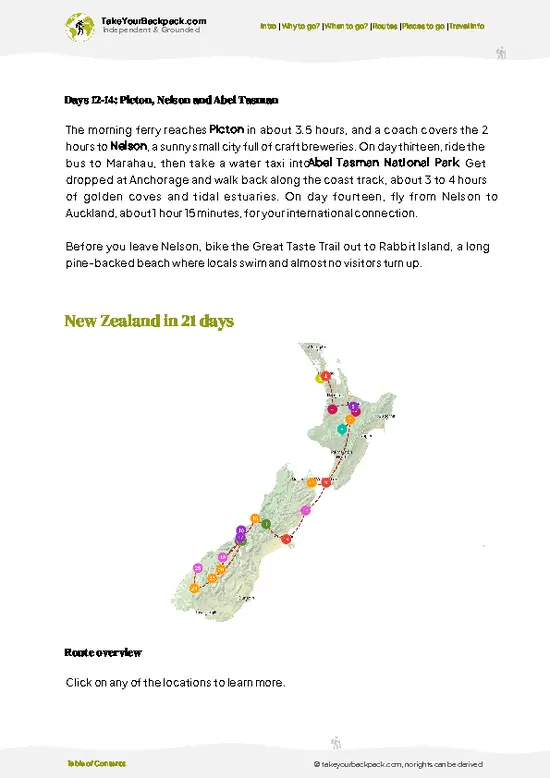
Optimized 7, 14 & 21-day travel routes
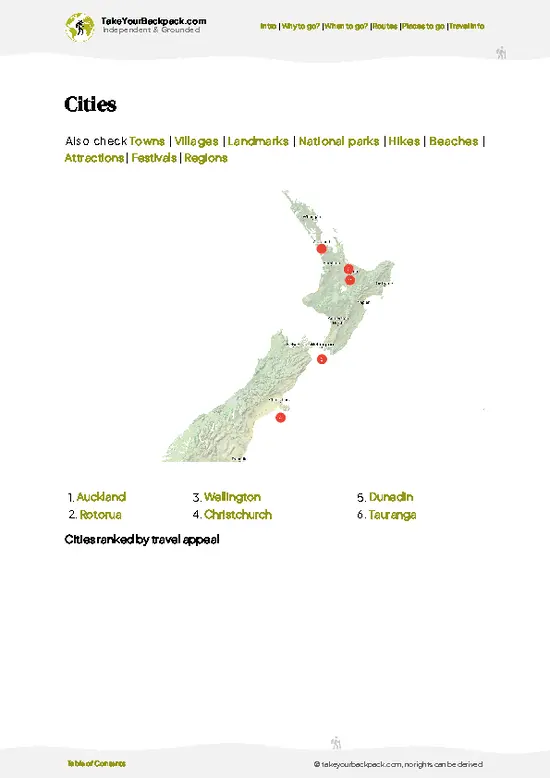
Cities, national parks, landmarks, beaches
How to get around
Offline-friendly for travel without Wi-Fi
👉 Click to see all 30+ guide features

📅 Plan smarter in minutes, not weeks
Month by month travel advice
Festivals & national holidays
Budget expectations

🗺️ Go to the right places, skip the overrated ones
Honest pros & cons of destinations
Top hikes, parks & viewpoints
Lesser-known places most travelers miss
Clear “worth it vs skip it” guidance

🛏️ Travel smoothly without rookie mistakes
Best areas to stay
Transport systems explained simply
Common scams & safety advice
SIM cards, money & practical tips

🌍 Understand the country, not just visit it
Culture & traditions
Local customs
Festivals worth planning around
Traveler-friendly historical context
Insights that make places more meaningful

📱 Built for real travel conditions
Fully downloadable PDF
Works completely offline
Optimized for phone use
Useful in remote areas & buses
Everything in one place
Save weeks of stressful planning
Get instant access to your full guide. 30‑day money-back guarantee.


By proceeding you agree to our terms.
Sent to your inbox immediately after payment • 100% Secure Checkout
Best Backpacking Travel Advisor 2025 tourism awardBest Backpacking
Travel Advisor
2025
What others say about Take Your Backpack Guides:
⭐⭐⭐⭐⭐
Fantastic, amazing amount of information!
⭐⭐⭐⭐⭐
My goodness this is amazing, it's what I've been looking for hats off too you!
⭐⭐⭐⭐⭐
I think this is absolutely BRILLIANT
⭐⭐⭐⭐
Very complete and informative. It's still missing places, but I gotta to commend you
⭐⭐⭐⭐⭐
This is truly amazing, thank you, can't wait to explore it with my kids!
⭐⭐⭐⭐⭐
Awesome resource, thank you!
⭐⭐⭐⭐⭐
This is amazing! Can't wait to explore the ones I haven't seen
⭐⭐⭐⭐
I love this! Well done, great idea.
⭐⭐⭐⭐⭐
Thanks for taking the time to make this gem!
⭐⭐⭐⭐⭐
This might be the best website I've ever seen.
⭐⭐⭐⭐⭐
Congratulations, and thank you so much for your work; it's incredibly valuable.
⭐⭐⭐⭐
In all seriousness I think you did a great job pointing out the important spots
⭐⭐⭐⭐⭐
10/10 very good
⭐⭐⭐⭐⭐
As someone who's only just starting to visit regularly this is awesome, thank you.
⭐⭐⭐⭐
Thank you very much! I'm going to visit my dad, it's going to be very useful!
⭐⭐⭐⭐⭐
This is really cool! We'll be travelling for the first time and this definitely come in handy.
⭐⭐⭐⭐⭐
You are now our minister of culture, congratulations 👨‍💼
⭐⭐⭐⭐⭐
Just wanted to tell you that this is a pearl! Going to follow your recommendations.
⭐⭐⭐⭐⭐
This is so cool. I'll definitely be using the resource for my travels soon.
⭐⭐⭐⭐⭐
This is very impressive! Good work.
⭐⭐⭐⭐⭐
This is an amazing and informative site. Very well done!

🛏️ Where to stay?Best areas to stay in New Zealand

If you enjoy meeting fellow travelers, consider choosing hostels with high ratings for atmosphere. On the other hand, if you prefer having your own space, a hotel might be a better option.

🥾 Hike detailsEverything you need to know before hiking Tongariro Alpine Crossing

Total Distance: 19.4 kilometers (about 12 miles) one way. It’s a solid trek, so be ready for a good workout.

Estimated Duration: Most hikers take around 7 to 9 hours to complete the crossing. This can vary based on your fitness level and how many breaks you take to soak in the views.

Difficulty Level: Moderate to challenging. There are steep sections, especially the climb up to the Red Crater, and the weather can change quickly, so be prepared.

Starting Point: The trail begins at the Mangatepopo Car Park.
  • Public Transport: You can catch a bus from Taupo or National Park Village. Several companies
read more 👉
Total Distance: 19.4 kilometers (about 12 miles) one way. It’s a solid trek, so be ready for a good workout.

Estimated Duration: Most hikers take around 7 to 9 hours to complete the crossing. This can vary based on your fitness level and how many breaks you take to soak in the views.

Difficulty Level: Moderate to challenging. There are steep sections, especially the climb up to the Red Crater, and the weather can change quickly, so be prepared.

Starting Point: The trail begins at the Mangatepopo Car Park.
  • Public Transport: You can catch a bus from Taupo or National Park Village. Several companies run services to the car park, but make sure to check the schedules in advance, as they can vary seasonally.

Major Landmarks Along the Route:
  • Mount Ngauruhoe: This iconic volcano is often referred to as ”Mount Doom” by fans of the Lord of the Rings. You can choose to summit it if you’re feeling adventurous, but it adds extra time and effort.
  • Red Crater: The highest point on the trail, offering stunning views and a colorful landscape of volcanic rock.
  • Emerald Lakes: These vibrant, turquoise lakes are a highlight and a great spot for a break. The contrast with the surrounding terrain is breathtaking.
  • Blue Lake: A bit more subdued than the Emerald Lakes, but still a picturesque spot to enjoy the beauty of the area.

Type of Terrain and Scenery: Expect a mix of rocky paths, steep climbs, and some well-maintained sections. The scenery shifts dramatically throughout the hike, from alpine meadows to volcanic landscapes. You’ll see craters, lava fields, and stunning mountain views.

Typical Vegetation and Wildlife:
  • Vegetation: The lower areas are dotted with tussock grass and alpine shrubs, while higher elevations feature hardy plants adapted to the volcanic soil.
  • Wildlife: Keep an eye out for native birds like the Kiwi and the Takahe, though they can be elusive. The area is also home to various insects and lizards, but larger mammals are rare.

Overall, the Tongariro Alpine Crossing offers a unique blend of natural beauty and physical challenge. Just remember to check the weather, wear good shoes, and pack plenty of water and snacks. Happy hiking!
⚠️ Hiking info can sometimes be outdated or inaccurate. Before you hit the trail, check the latest conditions with locals. If you do spot anything that's off, I'd love to hear from you, so I can update it for fellow travelers.

🛡️ SafetyScams, Hazards, and Annoyances

The Tongariro Alpine Crossing is a stunning trek, but it demands respect. Weather can shift in an instant. One moment, you’re basking in sunshine; the next, clouds roll in, bringing wind and rain. Dress in layers and pack a waterproof jacket.

The terrain is a mix of rocky paths and steep ascents. Footing can be tricky, especially on the descent. Take your time; rushing leads to slips. Navigation is straightforward, but keep an eye on trail markers.

Wildlife is part of the experience. You might spot a kea or a tui, but don’t feed them. They’re curious but can be aggressive.

Many first-timers underestimate the altitude. Hydrate well and pace yourself, especially on the climb to Red Crater. Start early to avoid the crowds and enjoy the tranquility. The reward? A breathtaking view of emerald … read more 👉
The Tongariro Alpine Crossing is a stunning trek, but it demands respect. Weather can shift in an instant. One moment, you’re basking in sunshine; the next, clouds roll in, bringing wind and rain. Dress in layers and pack a waterproof jacket.

The terrain is a mix of rocky paths and steep ascents. Footing can be tricky, especially on the descent. Take your time; rushing leads to slips. Navigation is straightforward, but keep an eye on trail markers.

Wildlife is part of the experience. You might spot a kea or a tui, but don’t feed them. They’re curious but can be aggressive.

Many first-timers underestimate the altitude. Hydrate well and pace yourself, especially on the climb to Red Crater. Start early to avoid the crowds and enjoy the tranquility. The reward? A breathtaking view of emerald lakes and the satisfaction of conquering a challenging yet manageable hike.

Other New Zealander hikes near Tongariro Alpine Crossing

Explore more nearby:

  • Whanganui Journey—multi-day river paddle, remote campsites, Māori heritage, forested gorges| 52 km away
  • Queen Charlotte Track—Marlborough Sounds, coastal ridgelines, private lodges, native forest| 268 km away
  • Abel Tasman Coast Track—golden beaches, tidal crossings, turquoise bays, coastal forest| 298 km away

💡 Not sure where to go next?
Create a personalized itinerary for New Zealand including Tongariro Alpine Crossing and the places that fit your trip.

Generate my itinerary

👉 Discover all hikes

Or checkout all New Zealand has to offer (think cities, towns, villages, national parks, hikes, beaches, festivals)
Country photo of New Zealand

We 💚 feedbackWhat to keep in mind

The Tongariro Alpine Crossing is a wild ride through volcanic landscapes that’ll leave you breathless—literally and figuratively. The emerald lakes and rugged peaks are a feast for the eyes, making every uphill grunt worth it. But be ready for the weather to turn on a dime; it can go from sunny to stormy in minutes. Pack layers and embrace the unpredictability. The reward? A cold beer at the end, savoring the day’s adventure.

✈️ When did I visit New Zealand?
All the way back in high school I have been visiting the Northern Island of New Zealand (1993).

✍️ Help improve this page!
The information on this page is based on my own backpacking experience in New Zealand, supplemented with up-to-date research and feedback from other travelers. Travel details can change, so if you notice anything outdated or incomplete, feel free to let me know.


🙋‍♂️ Give feedback

👋 Meet the founderWho’s Behind Take Your Backpack?

Johan, backpacker and founder of TakeYourBackpackHi, I’m Johan (Netherlands 🇳🇱), the creator of TakeYourBackpack. Over the past decade, I’ve backpacked through 80+ countries across six continents, gaining extensive experience with independent travel, long-term trips, and overland routes.

This site is built on a combination of firsthand travel experience and carefully curated insights from other backpackers. Many guides are based on places I’ve personally visited, while others bring together tips, observations, and practical advice shared by trusted travelers I’ve met along the way.

The goal is to provide realistic, experience-driven guidance — not generic itineraries — so you can explore destinations with better context, clearer expectations, and more confidence.

Get full country guide •
Instant download • 113 highlights • Full Offline guide