
×

New Zealand🇳🇿 | attractionsAoraki Mackenzie International Dark Sky ReserveMt John observatory, Tekapo night soak, Milky Way over the lakeshore chapel, Gold-tier dark sky | things to do and best time to go

Explore Otago MuseumExplore Rainbow’s End

Backpacking in Aoraki Mackenzie International Dark Sky Reserve
🏆 Top pickattraction ranked #2
By Johan Kruseman 🇳🇱 | Updated October 15, 2026

The reserve’s darkness is protected by lighting rules that cover the whole Mackenzie Basin, so even the roadside near Lake Tekapo is dimmed on purpose. It sits in the South Island of New Zealand, inland from Timaru, centered on Tekapo village and reaching toward Aoraki/Mount Cook. Covering about 4,300 square kilometers, it was graded Gold tier, and the logic is simple: high, dry, thinly populated country means few clouds and almost no glow. That is also why booking a tour for a clear window beats gambling on one night. I drove in from the west on the Lindis Pass route, stopped at a roadside pull-out where a farmer’s ute idled with its lights off, and he waved me past without a word, which told me the dark here is a shared habit. Experienced travelers stay two nights, since cloud can erase one. A first day could mean a lakeside walk by the Church of the Good Shepherd, an early dinner, then a late-evening session with a guide.

Discover everything you want to know in the 📖 New Zealand Travel Guide.


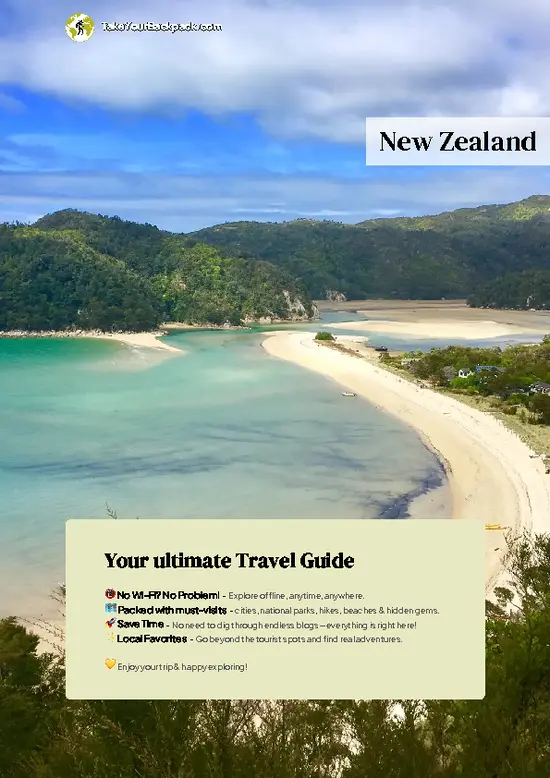
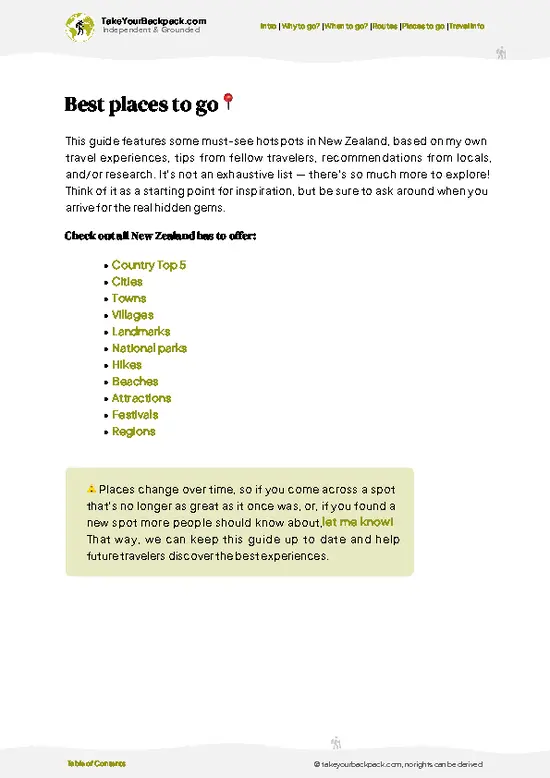
example page 0 from our offline Travel Guide for New Zealand
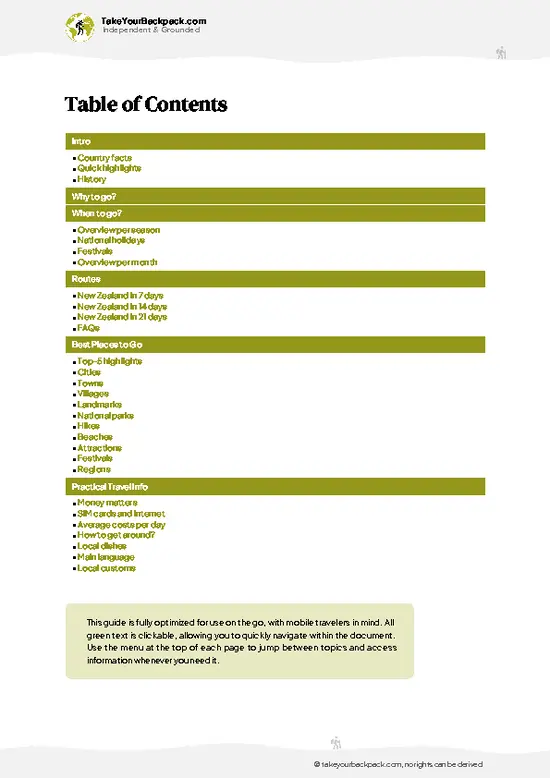
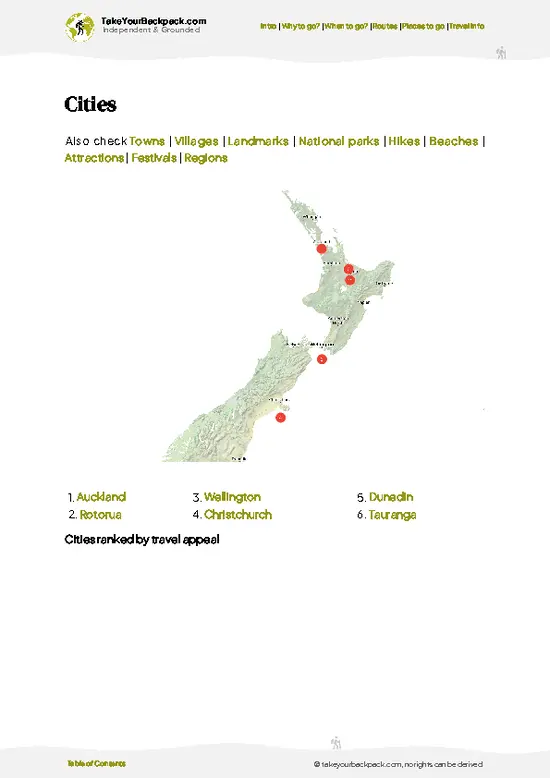
example page 1 from our offline Travel Guide for New Zealand
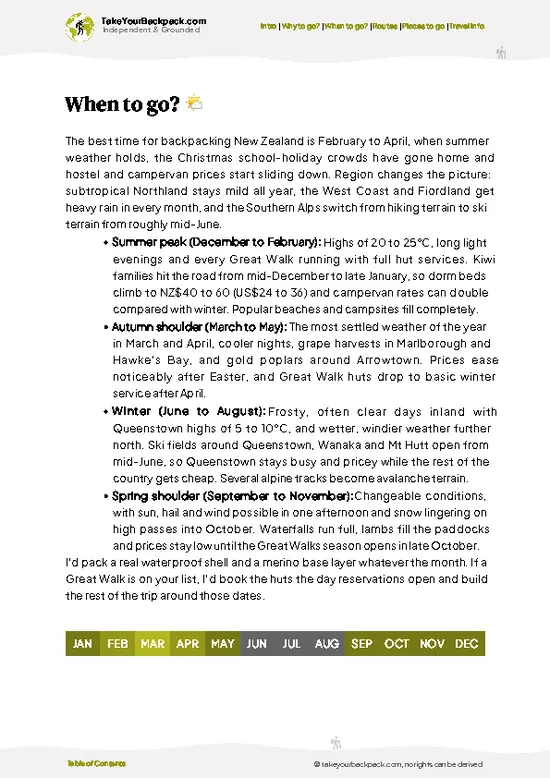
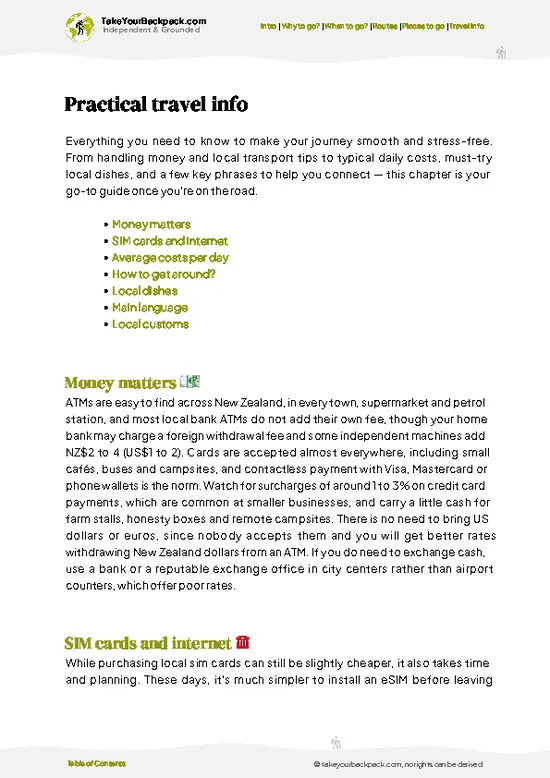
example page 2 from our offline Travel Guide for New Zealand
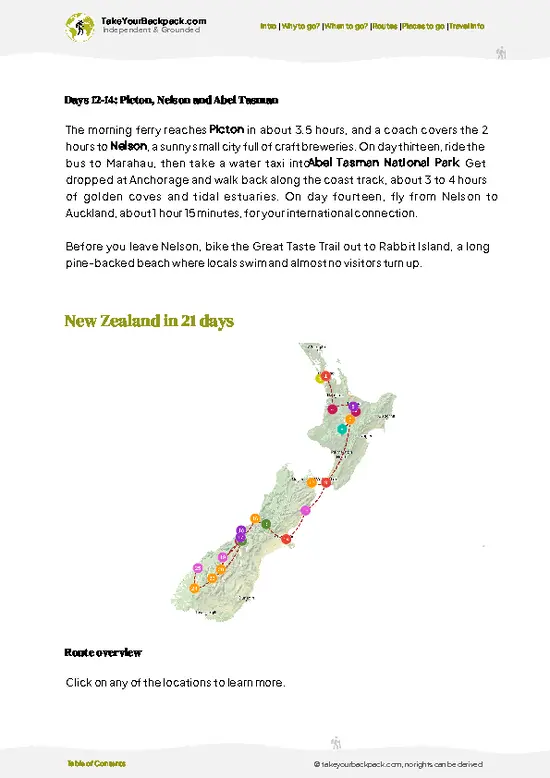
example page 3 from our offline Travel Guide for New Zealand
example page 4 from our offline Travel Guide for New Zealand
example page 5 from our offline Travel Guide for New Zealand
example page 6 from our offline Travel Guide for New Zealand
example page 7 from our offline Travel Guide for New Zealand
Loading the map 🌍
CLICK TO FILTER
cities
towns
villages
landmarks
national parks
hikes
beaches
attractions
festivals
regions
SHOW COUNTRY’S BESTSHOW ALL

✨ Why go?
Ranked #2 attraction in New Zealand
Why visitors keep coming back

Start with the sky itself. The Aoraki Mackenzie International Dark Sky Reserve covers roughly 4,300 square kilometers around Lake Tekapo, Aoraki/Mount Cook and the Mackenzie Basin, and it is one of the largest reserves of its kind on the planet. Gold-tier status means the Milky Way casts a faint shadow on clear nights, and the Magellanic Clouds sit clearly above the horizon, a view northern hemisphere travelers simply never get at home.

The second reason is how little effort it takes. Dry air, high altitude and very few towns keep the light pollution low, so a decent night needs no trek, only a clear forecast and a warm layer. Lake Tekapo village runs guided telescope sessions at Mt John Observatory, where you look at planets, star clusters and nebulae through serious instruments, with a … read more 👉
Start with the sky itself. The Aoraki Mackenzie International Dark Sky Reserve covers roughly 4,300 square kilometers around Lake Tekapo, Aoraki/Mount Cook and the Mackenzie Basin, and it is one of the largest reserves of its kind on the planet. Gold-tier status means the Milky Way casts a faint shadow on clear nights, and the Magellanic Clouds sit clearly above the horizon, a view northern hemisphere travelers simply never get at home.

The second reason is how little effort it takes. Dry air, high altitude and very few towns keep the light pollution low, so a decent night needs no trek, only a clear forecast and a warm layer. Lake Tekapo village runs guided telescope sessions at Mt John Observatory, where you look at planets, star clusters and nebulae through serious instruments, with a guide who points out the Southern Cross and the pointers without the jargon. Tour spots are limited, so book ahead.

For a New Zealand route, this is a natural overnight between Christchurch and Queenstown or Wanaka. The milky turquoise water of Lake Tekapo and the little Church of the Good Shepherd sit in the foreground by day, and then the whole sky takes over after dark. Plan two nights if you can, because clouds can wipe out one evening.

💡 HighlightsKey sights and experiences for travelers

  1. Mt John Observatory and Astro Cafe: The summit of Mt John, above Tekapo, is the reserve’s best-known viewpoint, with a working university observatory and a glass-fronted cafe with 360-degree views. Walk or drive up by day for the lake panorama.
  2. Dark Sky Project guided tours: Run from the village, these take you up to the summit by bus for telescope sessions led by guides who explain Māori and scientific views of the sky. Book ahead, as clear nights sell out.
  3. Tekapo Springs night soak: Hot pools beside the lake let you float and look up at stars in the evening. It is a gentler way to enjoy the dark, and a good fallback when you want to stay warm.
  4. Church of the Good Shepherd: This small stone chapel on the lakeshore has an altar window framing the water and mountains. At night it is a favorite
… read more 👉
  1. Mt John Observatory and Astro Cafe: The summit of Mt John, above Tekapo, is the reserve’s best-known viewpoint, with a working university observatory and a glass-fronted cafe with 360-degree views. Walk or drive up by day for the lake panorama.
  2. Dark Sky Project guided tours: Run from the village, these take you up to the summit by bus for telescope sessions led by guides who explain Māori and scientific views of the sky. Book ahead, as clear nights sell out.
  3. Tekapo Springs night soak: Hot pools beside the lake let you float and look up at stars in the evening. It is a gentler way to enjoy the dark, and a good fallback when you want to stay warm.
  4. Church of the Good Shepherd: This small stone chapel on the lakeshore has an altar window framing the water and mountains. At night it is a favorite foreground for Milky Way photographs, so bring a tripod and keep to a respectful distance.
  5. Lake Tekapo lakefront walk: A flat path along the shore passes the Collie Dog statue and lupin patches in season. The water color comes from glacial rock flour, and it is at its brightest in sun.
  6. Self-guided stargazing at the lakeshore: Away from the village lights, a red torch and a star app are enough to find the Southern Cross and the Clouds. Dress warmly and let your eyes adjust for twenty minutes.
  7. Aoraki/Mount Cook Village stargazing: At the head of Lake Pukaki’s road, the highest peaks make a dramatic dark backdrop. Trails near the Hooker Valley reward you with a quiet night sky.
The lakefront walk and the Church of the Good Shepherd fit easily into one late afternoon, leaving you ready for a guided session after dark.
Spotted a mistake or missing something? Contact us.

Things to do around Aoraki Mackenzie International Dark Sky Reserve

Ratings based on Tripadvisor reviews. When you book through this link, you support our work at no extra cost to you.

🌤️ When to go?Seasonal considerations and timing

  • Winter (June to August): Winter gives the longest, darkest nights, with full darkness by about 6 pm, and the crispest skies. Highs run 5 to 10°C (41 to 50°F), nights drop to -5°C to 0°C (23 to 32°F), so bring serious layers. Frost is routine and the Southern Alps are snow-capped.
  • Summer (December to February): Days are warm at 18 to 24°C (64 to 75°F), but it stays light until about 9:30 pm, so tours start late and run into the night. Crowds and accommodation prices peak around Christmas and January.
  • Autumn and Spring: Nights are cold at 0 to 5°C (32 to 41°F), with earlier darkness than summer and fewer visitors. Beds and tour slots are easier to book.
  • Moon Phase: New moon weeks give the richest Milky Way views, while a full moon washes out faint stars. Clear nights are common here, since the
… read more 👉
  • Winter (June to August): Winter gives the longest, darkest nights, with full darkness by about 6 pm, and the crispest skies. Highs run 5 to 10°C (41 to 50°F), nights drop to -5°C to 0°C (23 to 32°F), so bring serious layers. Frost is routine and the Southern Alps are snow-capped.
  • Summer (December to February): Days are warm at 18 to 24°C (64 to 75°F), but it stays light until about 9:30 pm, so tours start late and run into the night. Crowds and accommodation prices peak around Christmas and January.
  • Autumn and Spring: Nights are cold at 0 to 5°C (32 to 41°F), with earlier darkness than summer and fewer visitors. Beds and tour slots are easier to book.
  • Moon Phase: New moon weeks give the richest Milky Way views, while a full moon washes out faint stars. Clear nights are common here, since the area is one of the driest in the South Island.
Book your tour for the first nights of a multi-night stay, so cloud has a backup night.


source: climatestotravel.comJANJanuary: fair for travelingFEBFebruary: fair for travelingMARMarch: good for travelingAPRApril: highly recommended for travelingMAYMay: excellent for travelingJUNJune: excellent for travelingJULJuly: excellent for travelingAUGAugust: excellent for travelingSEPSeptember: highly recommended for travelingOCTOctober: good for travelingNOVNovember: good for travelingDECDecember: fair for traveling
new-zealand-attraction-aoraki-mackenzie-international-dark-sky-reserve v1
© Google |

✈️ The backpacker research shortcutNew Zealand Travel Guide

An offline-friendly backpacking guide with optimized travel routes, ranked highlights, transport advice, and the best areas to stay.
example page 0 from our offline Travel Guide for New Zealand
example page 1 from our offline Travel Guide for New Zealand
example page 2 from our offline Travel Guide for New Zealand
example page 3 from our offline Travel Guide for New Zealand
example page 4 from our offline Travel Guide for New Zealand
example page 5 from our offline Travel Guide for New Zealand
example page 6 from our offline Travel Guide for New Zealand
example page 7 from our offline Travel Guide for New Zealand
The digital guide (327 pages) contains:
✅ 110 highlights, ranked by travel appeal
✅ Optimized 7, 14 & 21-day travel routes
✅ Cities, national parks, landmarks, beaches
✅ How to get around
✅ Offline-friendly for travel without Wi-Fi
👉 Click to see all 30+ guide features

📅 Plan smarter in minutes, not weeks
✅ Month by month travel advice
✅ Festivals & national holidays
✅ Budget expectations

🗺️ Go to the right places, skip the overrated ones
✅ Honest pros & cons of destinations
✅ Top hikes, parks & viewpoints
✅ Lesser-known places most travelers miss
✅ Clear “worth it vs skip it” guidance

🛏️ Travel smoothly without rookie mistakes
✅ Best areas to stay
✅ Transport systems explained simply
✅ Common scams & safety advice
✅ SIM cards, money & practical tips

🌍 Understand the country, not just visit it
✅ Culture & traditions
✅ Local customs
✅ Festivals worth planning around
✅ Traveler-friendly historical context
✅ Insights that make places more meaningful

📱 Built for real travel conditions
✅ Fully downloadable PDF
✅ Works completely offline
✅ Optimized for phone use
✅ Useful in remote areas & buses
✅ Everything in one place
Stop searching, start planning
Get instant access to your full guide. 30‑day money-back guarantee.
+ Add another guide for just

By proceeding you agree to our terms.
Sent to your inbox immediately after payment • 100% Secure Checkout
Best Backpacking Travel Advisor 2025 tourism awardBest Backpacking
Travel Advisor
2025
What others say about Take Your Backpack Guides:
⭐⭐⭐⭐⭐
Fantastic, amazing amount of information!
⭐⭐⭐⭐⭐
My goodness this is amazing, it's what I've been looking for hats off too you!
⭐⭐⭐⭐⭐
I think this is absolutely BRILLIANT
⭐⭐⭐⭐
Very complete and informative. It's still missing places, but I gotta to commend you
⭐⭐⭐⭐⭐
This is truly amazing, thank you, can't wait to explore it with my kids!
⭐⭐⭐⭐⭐
Awesome resource, thank you!
⭐⭐⭐⭐⭐
This is amazing! Can't wait to explore the ones I haven't seen
⭐⭐⭐⭐
I love this! Well done, great idea.
⭐⭐⭐⭐⭐
Thanks for taking the time to make this gem!
⭐⭐⭐⭐⭐
This might be the best website I've ever seen.
⭐⭐⭐⭐⭐
Congratulations, and thank you so much for your work; it's incredibly valuable.
⭐⭐⭐⭐
In all seriousness I think you did a great job pointing out the important spots
⭐⭐⭐⭐⭐
10/10 very good
⭐⭐⭐⭐⭐
As someone who's only just starting to visit regularly this is awesome, thank you.
⭐⭐⭐⭐
Thank you very much! I'm going to visit my dad, it's going to be very useful!
⭐⭐⭐⭐⭐
This is really cool! We'll be travelling for the first time and this definitely come in handy.
⭐⭐⭐⭐⭐
You are now our minister of culture, congratulations 👨‍💼
⭐⭐⭐⭐⭐
Just wanted to tell you that this is a pearl! Going to follow your recommendations.
⭐⭐⭐⭐⭐
This is so cool. I'll definitely be using the resource for my travels soon.
⭐⭐⭐⭐⭐
This is very impressive! Good work.
⭐⭐⭐⭐⭐
This is an amazing and informative site. Very well done!

🛏️ Where to stay?Where staying makes the most sense

Lake Tekapo village is the place to stay, about 1 hour 15 minutes by road from Aoraki Mount Cook Village, and it sits right at the heart of the reserve. Most stargazing tours leave from here, so you can walk to pickup points and avoid driving back on cold, dark roads. The village is small, with a lakefront strip, a supermarket, a few cafes and a handful of budget lodgings, including dorm-style hostels and holiday parks with cheap cabins and tent sites. Solo travelers meet easily in shared kitchens and common rooms, and the main street is safe to walk after dark. Streetlights are shielded to protect … read more 👉
Lake Tekapo village is the place to stay, about 1 hour 15 minutes by road from Aoraki Mount Cook Village, and it sits right at the heart of the reserve. Most stargazing tours leave from here, so you can walk to pickup points and avoid driving back on cold, dark roads. The village is small, with a lakefront strip, a supermarket, a few cafes and a handful of budget lodgings, including dorm-style hostels and holiday parks with cheap cabins and tent sites. Solo travelers meet easily in shared kitchens and common rooms, and the main street is safe to walk after dark. Streetlights are shielded to protect the night sky, so carry a headlamp with a red-light setting.

Twizel, around 45 minutes south, is the cheaper alternative. It has more budget beds, a bigger grocery store and a laid-back local feel, though you will need a car or shuttle to reach Tekapo tours.

Aoraki Mount Cook Village suits hikers who want trail access at dawn. Beds there are limited and book out early in summer, so reserve well ahead. Fuel up and shop in Tekapo or Twizel first, because choices in the national park are minimal.

👛 Costs (as of 15 October 2026)How expensive it really is

A realistic backpacker budget around Aoraki Mackenzie International Dark Sky Reserve runs about US$95 to 120 a day in high season, and stargazing itself is the cheapest part of the trip.
CategoryBudget RangeLocal Reality
Dorm bed, high season (Dec to Feb)US$25 to 40Beds in Twizel, Lake Tekapo and Mount Cook Village fill weeks ahead in summer. Mount Cook Village is the priciest.
Dorm bed, low season (Jun to Aug)US$18 to 30Easier to book, though ski-season weekends near Tekapo still sell out.
Self-catered foodUS$15 to 25Stock up at supermarkets in Twizel or Fairlie. Prices are higher at village stores and cafes around the lake.
Eating out (one meal)US$12 to 22Pies and cafe lunches are the cheapest option. Restaurant mains at Tekapo are noticeably more.
Free stargazingUS$0Dark skies along the lake
… read more 👉
A realistic backpacker budget around Aoraki Mackenzie International Dark Sky Reserve runs about US$95 to 120 a day in high season, and stargazing itself is the cheapest part of the trip.
CategoryBudget RangeLocal Reality
Dorm bed, high season (Dec to Feb)US$25 to 40Beds in Twizel, Lake Tekapo and Mount Cook Village fill weeks ahead in summer. Mount Cook Village is the priciest.
Dorm bed, low season (Jun to Aug)US$18 to 30Easier to book, though ski-season weekends near Tekapo still sell out.
Self-catered foodUS$15 to 25Stock up at supermarkets in Twizel or Fairlie. Prices are higher at village stores and cafes around the lake.
Eating out (one meal)US$12 to 22Pies and cafe lunches are the cheapest option. Restaurant mains at Tekapo are noticeably more.
Free stargazingUS$0Dark skies along the lake shore, the Tekapo lakefront and the Hooker Valley road cost nothing. Red torches only, as lights are restricted.
Guided stargazing tourUS$65 to 110Evening tours near Tekapo and Mount Cook run roughly 1.5 to 2 hours. Cancelled with no fee if cloud covers the sky, depending on the operator.
Hot poolsUS$25 to 45Soaking under the stars at Tekapo Springs is a popular add-on. Price varies by session.
TransportUS$15 to 35Public buses are limited, so most travelers use a rental car or shared van. Fuel for a day trip between Tekapo and Mount Cook is around US$15 to 25 for a small car.
Walks and national park accessUS$0Hooker Valley Track and Tasman Glacier viewpoints have no entry fee. Glacier boat trips cost extra.
Total Daily BudgetUS$95 to 120Dorm bed, self-catered food, one cafe meal, transport and a free night of stargazing. Add a tour or hot pools if you want.
⚠️ Prices can change and everyone travels differently, so take this as a rough guide. Hope it helps you plan your adventure!

FAQCommon questions from travelers

Plan on one to two nights. A guided tour lasts about 1.5 to 2 hours, and a second night gives you cloud cover insurance. Add a day for the Church of the Good Shepherd and the walk up Mount John, which takes about 45 minutes.
Yes for most travelers, especially if you book a guided session. Tours cost about NZ$60 to 160 and include telescopes plus an astronomer who points out the Southern Cross, Magellanic Clouds and planets. Free roadside viewing near Lake Tekapo is a decent backup, but you will not see the detail without a guide.
Drive or take a bus to Lake Tekapo, which is about 3.5 hours from Christchurch (230 km) and 2.5 hours from Queenstown. InterCity buses run daily on both routes, with fares around NZ$40 to 80. Tours collect guests from the village, and Aoraki Mount Cook Village is roughly 1 hour 15 minutes farther by road.
⚠️ Things can change over time, so always validate details locally before you go.

Other New Zealander attractions near Aoraki Mackenzie International Dark Sky Reserve

Explore more nearby:

  • International Antarctic Centre—Hägglund ride, minus 18°C storm room, little blue penguins, Antarctic huskies| 194 km away
  • Canterbury Museum—Antarctic expedition gear, Victorian lane replica, giant moa skeleton, paua shell kitchen| 201 km away
  • Otago Museum—Free-flying butterflies, moa skeleton, floor-to-ceiling taxidermy, planetarium dome| 254 km away

💡 Not sure where to go next?
Create a personalized itinerary for New Zealand including Aoraki Mackenzie International Dark Sky Reserve and the places that fit your trip.

Generate my itinerary

👉 Discover all attractions

Or checkout all New Zealand has to offer (think cities, towns, villages, national parks, hikes, beaches, festivals)
Country photo of New Zealand

We 💚 feedbackWhat to keep in mind

Pair Tekapo with Aoraki/Mount Cook on a Christchurch to Queenstown run, giving it two nights so one clear sky is likely. I would book a guided session first, then spend the spare night with a red torch at the lakeshore. Skip a full moon if you can.

✈️ When did I visit New Zealand?
All the way back in high school I have been visiting the North Island of New Zealand (1993).

✍️ Help improve this page!
The information on this page is based on my own backpacking experience in New Zealand, supplemented with up-to-date research and feedback from other travelers. Travel details can change, so if you notice anything outdated or incomplete, feel free to let me know.


🙋‍♂️ Give feedback

👋 Meet the founderWho’s Behind Take Your Backpack?

Johan, backpacker and founder of TakeYourBackpackHi, I’m Johan (Netherlands 🇳🇱), the creator of TakeYourBackpack. Over the past 3 decades, I’ve backpacked through 90+ countries across six continents, gaining extensive experience with independent travel, long-term trips, and overland routes.

This site is built on a combination of firsthand travel experience and carefully curated insights from other backpackers. Many guides are based on places I’ve personally visited, while others bring together tips, observations, and practical advice shared by trusted travelers I’ve met along the way.

The goal is to provide realistic, experience-driven guidance — not generic itineraries — so you can explore destinations with better context, clearer expectations, and more confidence.