×

New Zealand🇳🇿 | citiesChristchurchQuake memorials, Avon punts, cardboard cathedral, South Island gateway | things to do and best time to go

Explore AucklandExplore Wellington

Backpacking in Christchurch
👍 Recommendedcity ranked #4
By Johan Kruseman 🇳🇱 | Updated October 16, 2026

Christchurch has no big mountain on its doorstep, yet it is the main gateway to the South Island, and its airport is where many backpackers pick up campervans and cars. The city sits on the Canterbury Plains on the east coast of New Zealand’s South Island. When I asked a hostel owner whether to hire a car or ride the TranzAlpine, she shrugged and said, “Train one way, bus back, you’ll see more.” She was right, since the train costs more and takes a fixed day, but the scenery pays for it, while driving is cheaper for groups yet means parking and fatigue. Christchurch suits people who like flat, bikeable streets, street art and rebuilding stories, and it bores anyone chasing nightlife. Unlike Queenstown, it is calm and affordable, with no adrenaline circus.

Discover everything you want to know in the 📖 New Zealand Travel Guide.


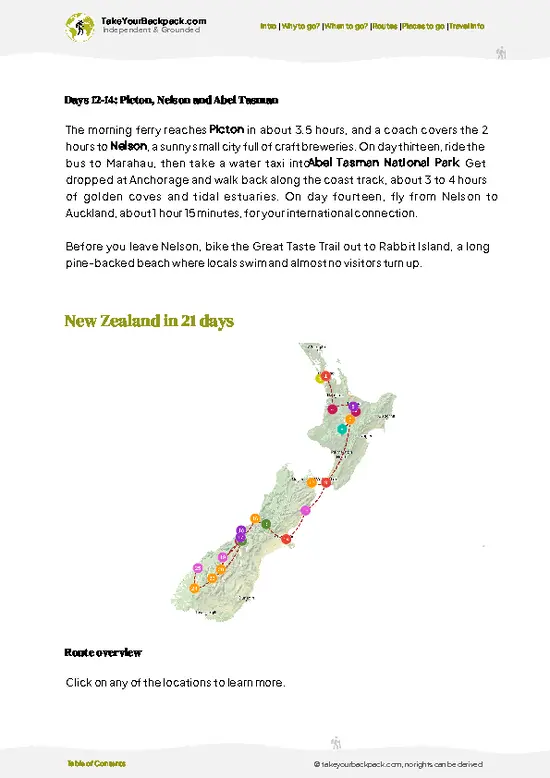
example page 0 from our offline Travel Guide for New Zealand
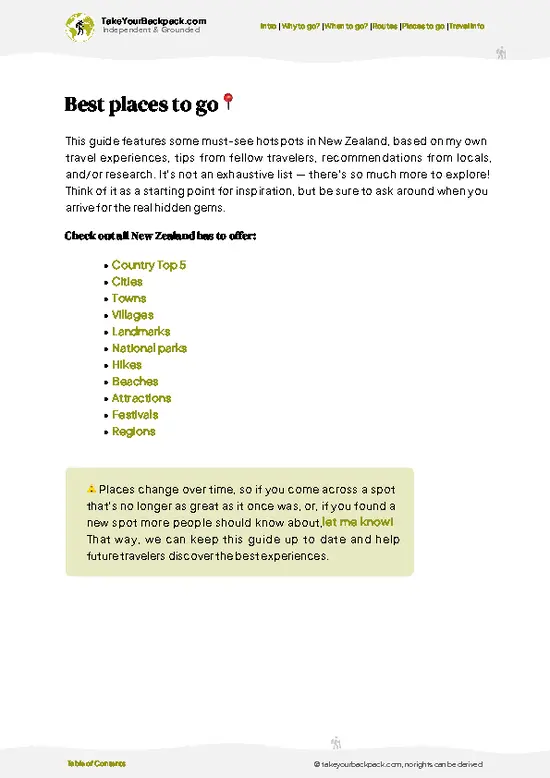
example page 1 from our offline Travel Guide for New Zealand
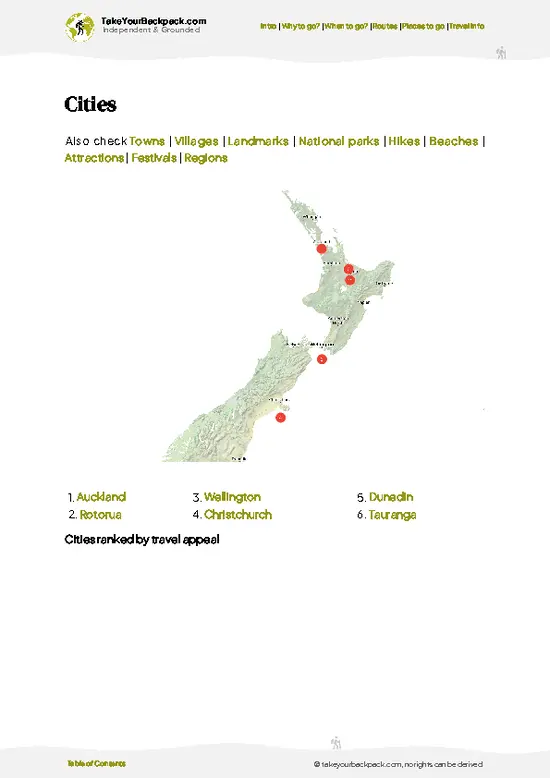
example page 2 from our offline Travel Guide for New Zealand
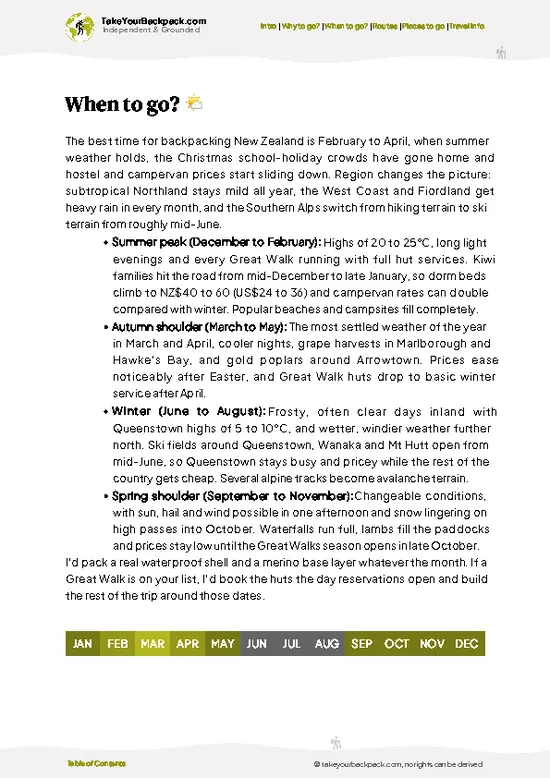
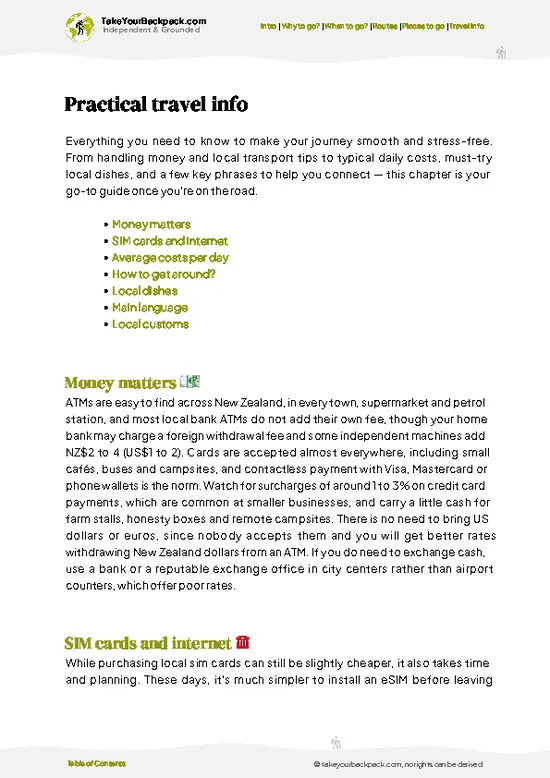
example page 3 from our offline Travel Guide for New Zealand
example page 4 from our offline Travel Guide for New Zealand
example page 5 from our offline Travel Guide for New Zealand
example page 6 from our offline Travel Guide for New Zealand
example page 7 from our offline Travel Guide for New Zealand
Loading the map 🌍
CLICK TO FILTER
cities
towns
villages
landmarks
national parks
hikes
beaches
attractions
festivals
regions
SHOW COUNTRY’S BESTSHOW ALL

✨ Why go?
Ranked #4 city in New Zealand
Reasons people choose to visit here

Christchurch works best as a practical hinge in a South Island loop. Flights and long-distance buses arrive here, so you can sort a rental, a campervan or a bus pass in a city with plenty of competition and fair prices. The layout helps too: the flat grid center is easy on foot, and bikes and the old tram cover the rest. The rebuild after the 2011 earthquake has turned empty lots into murals, container cafes and pop-up gardens, which gives the center an unfinished, inventive feel you won’t get in Dunedin. Hostels are plentiful and mostly central, and the Riverside Market is a good place to eat well without a restaurant bill. The Port Hills and the coast sit close, so you can mix city time with hills and beaches. Two or three nights is plenty. Stay longer only if you want to use it as a base for the Banks Peninsula and the Southern Alps.

💡 HighlightsThe experiences that define the visit

  1. Quake City (Canterbury Museum exhibit area) and Cardboard Cathedral: The Transitional Cathedral by architect Shigeru Ban uses cardboard tubes and sits near the damaged ChristChurch Cathedral. Entry is by donation or a small fee (about NZ$5 to 10). Allow 30 to 45 minutes, best in the morning when it is quiet.
  2. 185 Empty Chairs: A quiet memorial of white-painted chairs for each person who died in the 2011 earthquake. It is free, open all day, and takes 15 minutes. Visit early or at dusk.
  3. Christchurch Botanic Gardens: Rose gardens, conservatories and big old trees on a bend of the Avon River. Free to enter, with a small fee for some attractions. Plan 1 to 2 hours, best on a sunny afternoon.
  4. Punting on the Avon: Boatmen in Edwardian dress pole you along the river through the gardens. Expect NZ$35
… read more 👉
  1. Quake City (Canterbury Museum exhibit area) and Cardboard Cathedral: The Transitional Cathedral by architect Shigeru Ban uses cardboard tubes and sits near the damaged ChristChurch Cathedral. Entry is by donation or a small fee (about NZ$5 to 10). Allow 30 to 45 minutes, best in the morning when it is quiet.
  2. 185 Empty Chairs: A quiet memorial of white-painted chairs for each person who died in the 2011 earthquake. It is free, open all day, and takes 15 minutes. Visit early or at dusk.
  3. Christchurch Botanic Gardens: Rose gardens, conservatories and big old trees on a bend of the Avon River. Free to enter, with a small fee for some attractions. Plan 1 to 2 hours, best on a sunny afternoon.
  4. Punting on the Avon: Boatmen in Edwardian dress pole you along the river through the gardens. Expect NZ$35 to 40 for about 30 minutes, best in the morning.
  5. Riverside Market: A covered food hall with local produce, cheese, coffee and cheap lunches. Free to browse and open most days. Allow an hour, and go before midday for the best selection.
  6. Canterbury Museum Pop-Up: The Rolleston Avenue building is closed for redevelopment until about 2029, so collection highlights are shown at 66 Gloucester Street. Allow 1 hour.
  7. New Regent Street: A pastel Spanish Mission style street with cafes, built in the early 1930s. Free, takes 20 to 30 minutes, nice in the late afternoon. The vintage tram runs here.
  8. Sumner Beach: A coastal suburb reached by bus, with surf, a rock arch and a lively cafe strip. Free, allow 2 to 3 hours, best in the afternoon.
The memorial and the Cardboard Cathedral combine well in a single morning, followed by the museum and the botanic gardens after lunch. Close to the city, you can explore Lyttelton, Akaroa on Banks Peninsula, Kaikoura and Hanmer Springs as day trips.
Spotted a mistake or missing something? Contact us.

Things to do in Christchurch

Ratings based on Tripadvisor reviews. When you book through this link, you support our work at no extra cost to you.

🏘️ NeighborhoodsNeighborhood guide to Christchurch

Christchurch is flat and compact, so the sensible way to choose an area is by what you can reach on foot and what a bus ride would cost you in time.
  • Central City (Cathedral Square and around): The rebuilt grid is the best value for a short stay because almost everything sits within a 20-minute walk. Expect street art, shipping-container-era remnants, the Quake City museum and the Riverside Market food hall. Quiet after 9pm on weeknights except around the bars.
  • Victoria Street and Riccarton Road corridor: Victoria Street is a cafe strip a 10-minute walk north-west of the square. Riccarton Road is longer, with cheap Asian eateries near the university, and a bus is worth it past the first kilometer.
  • Addington: A short walk south-west of the center, with a Saturday market, craft breweries and live
… read more 👉
Christchurch is flat and compact, so the sensible way to choose an area is by what you can reach on foot and what a bus ride would cost you in time.
  • Central City (Cathedral Square and around): The rebuilt grid is the best value for a short stay because almost everything sits within a 20-minute walk. Expect street art, shipping-container-era remnants, the Quake City museum and the Riverside Market food hall. Quiet after 9pm on weeknights except around the bars.
  • Victoria Street and Riccarton Road corridor: Victoria Street is a cafe strip a 10-minute walk north-west of the square. Riccarton Road is longer, with cheap Asian eateries near the university, and a bus is worth it past the first kilometer.
  • Addington: A short walk south-west of the center, with a Saturday market, craft breweries and live music. It is quieter by day, livelier on gig nights, and walkable from the center in about 25 minutes.
  • Riccarton and Hagley Park: The park and Botanic Gardens are free and ten minutes from the center on foot. Riccarton House and its Saturday market sit just beyond, reached by a short bus ride.
  • Sumner and New Brighton: Beach suburbs on the east coast, about 25 to 30 minutes by bus. Sumner has surf, cafes and a relaxed village feel and is the better pick of the two. New Brighton has a long pier and is plainer.

⌛️ 1 dayHow to make the most of one day

8:00 AM: Riverside Market. Start with coffee and breakfast among local producers, then stroll to the Avon River, five minutes away, which sets the tone for the day.
9:30 AM: 185 Empty Chairs. Walk north along the river to this quiet memorial, then continue on foot to the nearby Cardboard Cathedral, which is both architecture and recovery history.
11:00 AM: Quake City and the central rebuild. Wander the center to see the damaged cathedral fenced off, the murals and the pop-up gardens. The exhibit gives context you need before the streets make sense.
12:30 PM: New Regent Street. Lunch in a café in this pastel Spanish Mission street, then board the heritage tram if you like.
2:00 PM: Botanic Gardens. Cross to the gardens, where you can walk among roses or hire a punt on the Avon.
4:30 PM: Addington … read more 👉
8:00 AM: Riverside Market. Start with coffee and breakfast among local producers, then stroll to the Avon River, five minutes away, which sets the tone for the day.
9:30 AM: 185 Empty Chairs. Walk north along the river to this quiet memorial, then continue on foot to the nearby Cardboard Cathedral, which is both architecture and recovery history.
11:00 AM: Quake City and the central rebuild. Wander the center to see the damaged cathedral fenced off, the murals and the pop-up gardens. The exhibit gives context you need before the streets make sense.
12:30 PM: New Regent Street. Lunch in a café in this pastel Spanish Mission street, then board the heritage tram if you like.
2:00 PM: Botanic Gardens. Cross to the gardens, where you can walk among roses or hire a punt on the Avon.
4:30 PM: Addington lanes. For something off the usual path, take a bus or bike to Addington, where converted industrial spaces host small breweries, a community market and street art that most visitors never see.
7:00 PM: Dinner in the city. Head back to the center for an evening meal in the laneways, which suit a relaxed finish.

🌤️ When to go?Weather, crowds, and seasonal trade-offs

  • Summer (December to February): Highs reach 22 to 24°C (72 to 75°F), with up to 15 hours of daylight and dry, often breezy days. Hostel beds and rental cars cost the most, and Hanmer Springs and Akaroa fill up.
  • Autumn (March to May): Highs run 14 to 20°C (57 to 68°F), skies are mostly clear, and prices ease. Leaves in Hagley Park turn gold in April.
  • Winter (June to August): Highs sit at 10 to 12°C (50 to 54°F) with frosty mornings near 0°C (32°F) and about 9 hours of daylight. Beds are cheapest, and nearby ski fields open from about June.
  • Spring (September to November): Highs climb from 14 to 19°C (57 to 66°F), with changeable weather and a daffodil and blossom display in the parks. Crowds stay thin until December.
Book Christchurch beds at least a few weeks ahead for January, since the city is the gateway to the South Island.

source: climatestotravel.comJANJanuary: excellent for travelingFEBFebruary: excellent for travelingMARMarch: highly recommended for travelingAPRApril: highly recommended for travelingMAYMay: good for travelingJUNJune: fair for travelingJULJuly: fair for travelingAUGAugust: fair for travelingSEPSeptember: good for travelingOCTOctober: highly recommended for travelingNOVNovember: highly recommended for travelingDECDecember: excellent for traveling
when-to-go

✈️ The backpacker research shortcutNew Zealand Travel Guide

An offline-friendly backpacking guide with optimized travel routes, ranked highlights, transport advice, and the best areas to stay.
example page 0 from our offline Travel Guide for New Zealand
example page 1 from our offline Travel Guide for New Zealand
example page 2 from our offline Travel Guide for New Zealand
example page 3 from our offline Travel Guide for New Zealand
example page 4 from our offline Travel Guide for New Zealand
example page 5 from our offline Travel Guide for New Zealand
example page 6 from our offline Travel Guide for New Zealand
example page 7 from our offline Travel Guide for New Zealand
The digital guide (327 pages) contains:
✅ 110 highlights, ranked by travel appeal
✅ Optimized 7, 14 & 21-day travel routes
✅ Cities, national parks, landmarks, beaches
✅ How to get around
✅ Offline-friendly for travel without Wi-Fi
👉 Click to see all 30+ guide features

📅 Plan smarter in minutes, not weeks
✅ Month by month travel advice
✅ Festivals & national holidays
✅ Budget expectations

🗺️ Go to the right places, skip the overrated ones
✅ Honest pros & cons of destinations
✅ Top hikes, parks & viewpoints
✅ Lesser-known places most travelers miss
✅ Clear “worth it vs skip it” guidance

🛏️ Travel smoothly without rookie mistakes
✅ Best areas to stay
✅ Transport systems explained simply
✅ Common scams & safety advice
✅ SIM cards, money & practical tips

🌍 Understand the country, not just visit it
✅ Culture & traditions
✅ Local customs
✅ Festivals worth planning around
✅ Traveler-friendly historical context
✅ Insights that make places more meaningful

📱 Built for real travel conditions
✅ Fully downloadable PDF
✅ Works completely offline
✅ Optimized for phone use
✅ Useful in remote areas & buses
✅ Everything in one place
Stop searching, start planning
Get instant access to your full guide. 30‑day money-back guarantee.
+ Add another guide for just

By proceeding you agree to our terms.
Sent to your inbox immediately after payment • 100% Secure Checkout
Best Backpacking Travel Advisor 2025 tourism awardBest Backpacking
Travel Advisor
2025
What others say about Take Your Backpack Guides:
⭐⭐⭐⭐⭐
Fantastic, amazing amount of information!
⭐⭐⭐⭐⭐
My goodness this is amazing, it's what I've been looking for hats off too you!
⭐⭐⭐⭐⭐
I think this is absolutely BRILLIANT
⭐⭐⭐⭐
Very complete and informative. It's still missing places, but I gotta to commend you
⭐⭐⭐⭐⭐
This is truly amazing, thank you, can't wait to explore it with my kids!
⭐⭐⭐⭐⭐
Awesome resource, thank you!
⭐⭐⭐⭐⭐
This is amazing! Can't wait to explore the ones I haven't seen
⭐⭐⭐⭐
I love this! Well done, great idea.
⭐⭐⭐⭐⭐
Thanks for taking the time to make this gem!
⭐⭐⭐⭐⭐
This might be the best website I've ever seen.
⭐⭐⭐⭐⭐
Congratulations, and thank you so much for your work; it's incredibly valuable.
⭐⭐⭐⭐
In all seriousness I think you did a great job pointing out the important spots
⭐⭐⭐⭐⭐
10/10 very good
⭐⭐⭐⭐⭐
As someone who's only just starting to visit regularly this is awesome, thank you.
⭐⭐⭐⭐
Thank you very much! I'm going to visit my dad, it's going to be very useful!
⭐⭐⭐⭐⭐
This is really cool! We'll be travelling for the first time and this definitely come in handy.
⭐⭐⭐⭐⭐
You are now our minister of culture, congratulations 👨‍💼
⭐⭐⭐⭐⭐
Just wanted to tell you that this is a pearl! Going to follow your recommendations.
⭐⭐⭐⭐⭐
This is so cool. I'll definitely be using the resource for my travels soon.
⭐⭐⭐⭐⭐
This is very impressive! Good work.
⭐⭐⭐⭐⭐
This is an amazing and informative site. Very well done!

🛏️ Where to stay?Where staying makes the most sense

The Central City inside the four avenues is the best base for a budget bed, with a concentration of hostels within a 10 to 15 minute walk of the Bus Interchange and the main sights. Dorms there run about NZ$32 to 50, and you can skip daily transit costs altogether. Nights are calm and well lit, and noise comes mainly from bars along the Terrace and on Tuam and Manchester Streets. A room on a higher floor or away from the Terrace is quieter.
Addington, south-west of the center, is the alternative if you prefer something quieter and more residential. It sits beside the train station, which suits … read more 👉
The Central City inside the four avenues is the best base for a budget bed, with a concentration of hostels within a 10 to 15 minute walk of the Bus Interchange and the main sights. Dorms there run about NZ$32 to 50, and you can skip daily transit costs altogether. Nights are calm and well lit, and noise comes mainly from bars along the Terrace and on Tuam and Manchester Streets. A room on a higher floor or away from the Terrace is quieter.
Addington, south-west of the center, is the alternative if you prefer something quieter and more residential. It sits beside the train station, which suits TranzAlpine arrivals and early departures, and it is a 25-minute walk or a short bus ride to the center. Beds are fewer, but the area has cafes, breweries and easy parking for campervan travelers.
If you are arriving late or leaving at dawn, being near the Bus Interchange or the station saves a taxi fare. Book ahead for January and February, when the central hostels fill early.

🚌 Getting aroundHow to get around Christchurch

From the Christchurch Railway Station in Addington, the Metro bus into the center takes about 15 minutes, while the Bus Interchange on Tuam Street sits right in the city grid, so most arrivals by coach can walk to a hostel. Rail passengers on the TranzAlpine usually take the bus or a short taxi. Overall the city is flat, uncongested by international standards, and easy to move around.
  • Walking: Free and the best option inside the four avenues, where the main sights are within about 20 minutes of each other. Riding a bus for those distances costs more than the time it saves.
  • Metro buses: A Metrocard fare is about NZ$2 per trip (US$1.20) with a cap per day, and cash is more expensive at about NZ$3.50 to 4. Buses are reliable, with most routes running from around 6am to 10pm or 11pm. This is the
… read more 👉
From the Christchurch Railway Station in Addington, the Metro bus into the center takes about 15 minutes, while the Bus Interchange on Tuam Street sits right in the city grid, so most arrivals by coach can walk to a hostel. Rail passengers on the TranzAlpine usually take the bus or a short taxi. Overall the city is flat, uncongested by international standards, and easy to move around.
  • Walking: Free and the best option inside the four avenues, where the main sights are within about 20 minutes of each other. Riding a bus for those distances costs more than the time it saves.
  • Metro buses: A Metrocard fare is about NZ$2 per trip (US$1.20) with a cap per day, and cash is more expensive at about NZ$3.50 to 4. Buses are reliable, with most routes running from around 6am to 10pm or 11pm. This is the best value for Sumner, Riccarton and the airport.
  • Bicycle and e-scooter: The flat terrain and cycleways make a bike practical, and hire runs about NZ$30 to 40 a day. Scooters cost a few cents a minute, add up quickly on longer trips, and are fine for hops across town.
  • Taxi and rideshare: A ride from the airport to the center is about NZ$40 to 55 (US$25 to 33). Splitting between three or four people makes this comparable to the bus, which costs about NZ$4 to 5 and takes 30 to 40 minutes.
  • Rental car or campervan: From about NZ$50 to 90 a day, this is the best way to reach Akaroa and Arthur’s Pass on your own timetable. Parking in the center costs NZ$4 to 6 an hour, so leave it at the hostel when sightseeing in town.

👛 Costs (as of 16 October 2026)Money, prices, and spending tips

A backpacker in Christchurch spends about US$85 a day in high season, with dorm beds, self-catered meals and a few paid sights. Everything is paid in New Zealand dollars, but the figures here are in US dollars.
CategoryBudget RangeLocal Reality
Dorm accommodation (high season, Dec to Feb)US$24 to 36Beds in 4 to 8 bed dorms fill fast around the New Year, so book ahead.
Dorm accommodation (off-season, Jun to Aug)US$18 to 28Prices drop in winter, and some hostels offer weekly deals.
MealsUS$22 to 35Supermarket cooking runs about US$10 to 15 a day. A café lunch is US$10 to 15 and a pub meal US$16 to 24.
Local transportUS$3 to 8Metro buses use a Metrocard, with adult fares of roughly US$1.70 to 2.70 per ride depending on zones. The city center is flat and easy to walk.
City transport passUS$0 to 6No
… read more 👉
A backpacker in Christchurch spends about US$85 a day in high season, with dorm beds, self-catered meals and a few paid sights. Everything is paid in New Zealand dollars, but the figures here are in US dollars.
CategoryBudget RangeLocal Reality
Dorm accommodation (high season, Dec to Feb)US$24 to 36Beds in 4 to 8 bed dorms fill fast around the New Year, so book ahead.
Dorm accommodation (off-season, Jun to Aug)US$18 to 28Prices drop in winter, and some hostels offer weekly deals.
MealsUS$22 to 35Supermarket cooking runs about US$10 to 15 a day. A café lunch is US$10 to 15 and a pub meal US$16 to 24.
Local transportUS$3 to 8Metro buses use a Metrocard, with adult fares of roughly US$1.70 to 2.70 per ride depending on zones. The city center is flat and easy to walk.
City transport passUS$0 to 6No tourist pass is needed. Metrocard fares are capped per day, so heavy riders pay little extra.
Basic activities and entry feesUS$0 to 18The Botanic Gardens, Hagley Park and the street art are free. The Quake City exhibition and the gondola cost more.
MiscellaneousUS$5 to 10Laundry, a pint of local beer (US$5 to 7) and SIM data.
Total Daily BudgetUS$85Based on a US$30 high-season dorm bed, US$28 food, US$5 transport, US$12 activities and US$10 extras.
Shop at the big supermarkets rather than the corner dairies and cook in the hostel kitchen, which can save you US$15 or more a day.
⚠️ Prices can change and everyone travels differently, so take this as a rough guide. Hope it helps you plan your adventure!

🚌 Day tripsShort trips worth adding

Christchurch works very well as a day-trip base, because the main attractions lie within two hours by road and most return the same evening. A rental car gives the most freedom, though shuttles and tours cover the popular spots.
Akaroa:
A French-flavored harbor village on the Banks Peninsula, about 1.5 hours each way by road. The shuttle costs around NZ$60 to 90 return, and a dolphin cruise adds roughly NZ$90 to 100. The winding drive is half the appeal, so sit on the left side going out. Many first-timers underestimate the time and leave too little for the village itself, so start by 8am.
👉 Explore Akaroa
Hanmer Springs:
Hot pools and forest walks about 1.5 to 2 hours north. Entry to the thermal pools is around NZ$35 to 40, and shuttles cost about NZ$60 to 80 return. It is best in cool months, … read more 👉
Christchurch works very well as a day-trip base, because the main attractions lie within two hours by road and most return the same evening. A rental car gives the most freedom, though shuttles and tours cover the popular spots.
Akaroa:
A French-flavored harbor village on the Banks Peninsula, about 1.5 hours each way by road. The shuttle costs around NZ$60 to 90 return, and a dolphin cruise adds roughly NZ$90 to 100. The winding drive is half the appeal, so sit on the left side going out. Many first-timers underestimate the time and leave too little for the village itself, so start by 8am.
👉 Explore Akaroa
Hanmer Springs:
Hot pools and forest walks about 1.5 to 2 hours north. Entry to the thermal pools is around NZ$35 to 40, and shuttles cost about NZ$60 to 80 return. It is best in cool months, when steam hangs over the water, though mid-week visits avoid weekend crowds.

Kaikoura:
Seals, crayfish and whale watching on the coast, about 2.5 to 3 hours each way. Tours are NZ$150 or more, so this is a splurge day, and besides the bus or car, the seasonal Coastal Pacific train runs from September to April. Booking whale watching early matters because cancellations in rough seas are common.

Arthur’s Pass:
Alpine passes and short walks such as Devil’s Punchbowl Falls, about 2 hours by road or the TranzAlpine train. Walks are free, and a return train ticket costs roughly NZ$200 or more. Summer and autumn give the best weather, and the kea parrots may steal your lunch.

🍲 FoodLocal Cuisine & Drinks

Canterbury is farming country, so lamb, venison, salmon from nearby fish farms and fresh Akaroa seafood all show up here in ways they do not elsewhere. Whitebait fritters appear in season, and blue cod and chips is a straightforward local lunch.
The Riverside Market food hall in the center is the easiest place to sample local cheese, pies, coffee and pastries under one roof. On Saturdays, the Riccarton Market and Addington Market offer street food and baked goods at modest prices. A meat pie from a bakery costs NZ$5 to 7 and is the cheapest hot meal.
The craft beer scene is strong, with Addington breweries and taprooms serving Canterbury hops. Many of the city’s bars were built in the shipping-container and laneway spaces after the earthquakes, and Victoria Street and the C1 Espresso area are … read more 👉
Canterbury is farming country, so lamb, venison, salmon from nearby fish farms and fresh Akaroa seafood all show up here in ways they do not elsewhere. Whitebait fritters appear in season, and blue cod and chips is a straightforward local lunch.
The Riverside Market food hall in the center is the easiest place to sample local cheese, pies, coffee and pastries under one roof. On Saturdays, the Riccarton Market and Addington Market offer street food and baked goods at modest prices. A meat pie from a bakery costs NZ$5 to 7 and is the cheapest hot meal.
The craft beer scene is strong, with Addington breweries and taprooms serving Canterbury hops. Many of the city’s bars were built in the shipping-container and laneway spaces after the earthquakes, and Victoria Street and the C1 Espresso area are good for coffee. Most places close fairly early, so plan dinner before 9pm.

🛡️ SafetyStaying Safe: What Travelers Should Know

Christchurch is very safe, and the usual problems are petty. Car break-ins at trailheads and in the Port Hills and Akaroa car parks are the most common issue, so take your valuables with you and leave nothing visible. In the center, bag theft from hostel common rooms and cafe tables happens occasionally, so keep your things close and use a locker.
Solo travelers, women included, generally walk around the center comfortably at night. Stay on well-lit streets, and be a little more alert around the bar strips on Friday and Saturday nights, where drunk behavior can get rowdy. Cycling at night requires lights, and the police do check.
The city sits on an earthquake zone, so learn the basic drill: drop, cover and hold. Sun is stronger than it feels, so apply sunscreen even on cool days.

FAQFrequently asked questions about Christchurch

Two to three days covers Christchurch well. One day is enough for the central sights, Quake City, Riverside Market and Hagley Park, and a second adds Sumner or the Port Hills gondola. Add a third for Akaroa, about 1.5 hours away, or Hanmer Springs.
Yes, Christchurch is among the safest cities for solo backpackers in New Zealand. The center is easy to walk at night, though you should stay on lit streets around weekend bar areas. The main risk is car break-ins at trailhead car parks, so carry valuables and leave nothing visible. Emergency services answer on 111.
Christchurch is known as the Garden City for Hagley Park and the Botanic Gardens, both free to enter. It is also known for its rebuilding after the 2010 and 2011 earthquakes, seen in Quake City and the Cardboard Cathedral. It is the gateway to the South Island, with the TranzAlpine train to Arthur’s Pass and Akaroa about 1.5 hours away.
⚠️ Things can change over time, so always validate details locally before you go.

Other New Zealander cities near Christchurch

Explore more nearby:

  • Wellington—Te Papa, cable car, Cuba Street, windy waterfront| 305 km away
  • Dunedin—Tiled station, 35 percent grade, albatross colony, brewery tours| 311 km away
  • Rotorua—Pōhutu Geyser, steam parks, hāngī evenings, crater lakes| 671 km away

💡 Not sure where to go next?
Create a personalized itinerary for New Zealand including Christchurch and the places that fit your trip.

Generate my itinerary

👉 Discover all cities

Or checkout all New Zealand has to offer (think cities, towns, villages, national parks, hikes, beaches, festivals)
Country photo of New Zealand

We 💚 feedbackKey takeaways before you go

Many travelers treat Christchurch as a car pickup and leave within hours, which means missing the best of it. Give it a full day on foot or by bike, and start at the memorial before the cafes. I would skip the guided city bus tours and stay flexible.

✈️ When did I visit New Zealand?
All the way back in high school I have been visiting the North Island of New Zealand (1993).

✍️ Help improve this page!
The information on this page is based on my own backpacking experience in New Zealand, supplemented with up-to-date research and feedback from other travelers. Travel details can change, so if you notice anything outdated or incomplete, feel free to let me know.


🙋‍♂️ Give feedback

👋 Meet the founderWho’s Behind Take Your Backpack?

Johan, backpacker and founder of TakeYourBackpackHi, I’m Johan (Netherlands 🇳🇱), the creator of TakeYourBackpack. Over the past 3 decades, I’ve backpacked through 90+ countries across six continents, gaining extensive experience with independent travel, long-term trips, and overland routes.

This site is built on a combination of firsthand travel experience and carefully curated insights from other backpackers. Many guides are based on places I’ve personally visited, while others bring together tips, observations, and practical advice shared by trusted travelers I’ve met along the way.

The goal is to provide realistic, experience-driven guidance — not generic itineraries — so you can explore destinations with better context, clearer expectations, and more confidence.