
×
Museum of New Zealand Te Papa Tongarewa

New Zealand🇳🇿 | attractionsMuseum of New Zealand Te Papa TongarewaColossal squid, waterfront marae, Weta giants, earthquake house | things to do and best time to go

Explore KaikōuraExplore Auckland War Memorial Museum

Backpacking in Museum of New Zealand Te Papa Tongarewa
🏆 Top pickattraction ranked #1
By Johan Kruseman 🇳🇱 | Updated October 15, 2026

Te Papa is famous for its colossal squid, the largest specimen ever recovered intact, but the quieter reason to come is that it is the clearest single-afternoon briefing on Māori and Pākehā New Zealand you will get anywhere. It sits on the Wellington waterfront, in New Zealand’s capital, a short walk from the cruise terminal and the main bars on Cuba Street. Entry is free for New Zealanders, which explains the weekend and school-holiday crush on the lower floors, while international visitors aged 16 and over pay NZ$35 for a 48-hour ticket. I picked up the free floor map at the entrance and started on level four, the marae and Māori galleries, before the school groups reached the squid. That order works because the upper floors empty first and the noise builds from the bottom. Up in Kelburn, the Wellington Cable Car Museum is a small, single-subject stop, whereas Te Papa spans earthquakes, art, Pacific cultures and natural history under one roof, and you need hours rather than minutes.

Discover everything you want to know in the 📖 New Zealand Travel Guide.


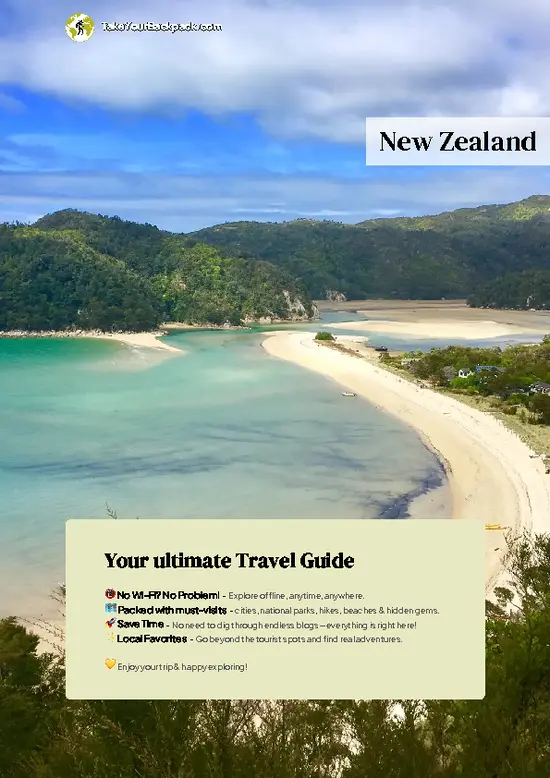
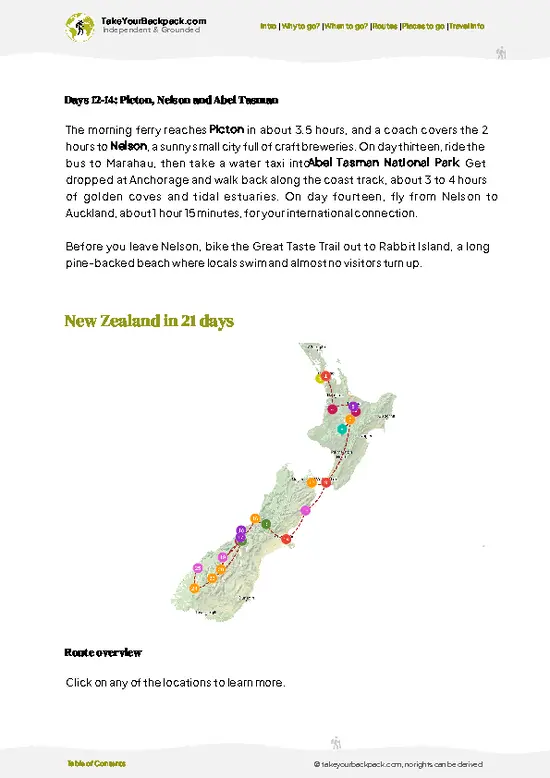
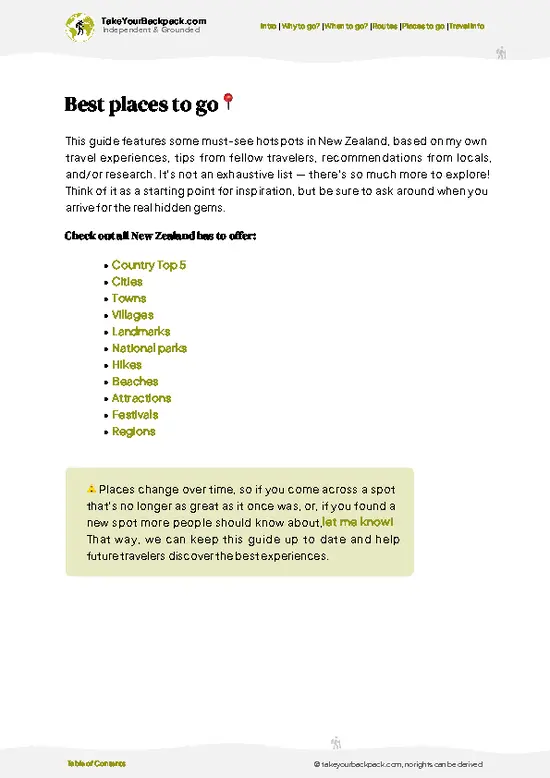
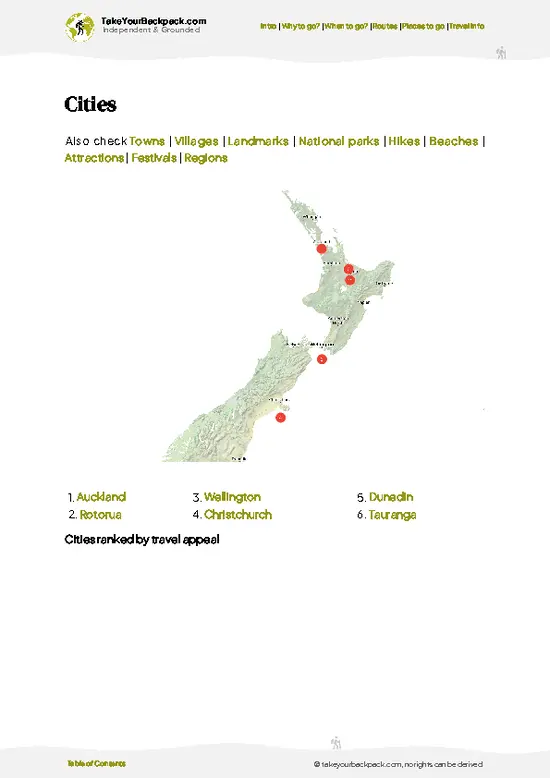
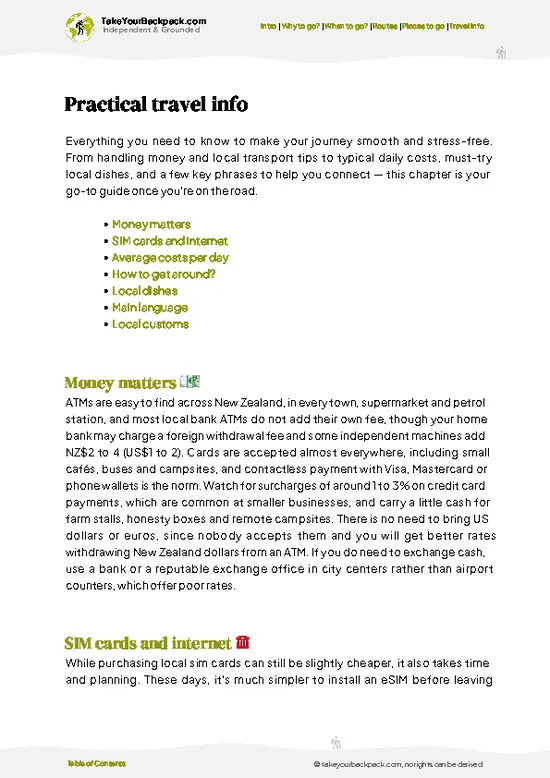
example page 0 from our offline Travel Guide for New Zealand
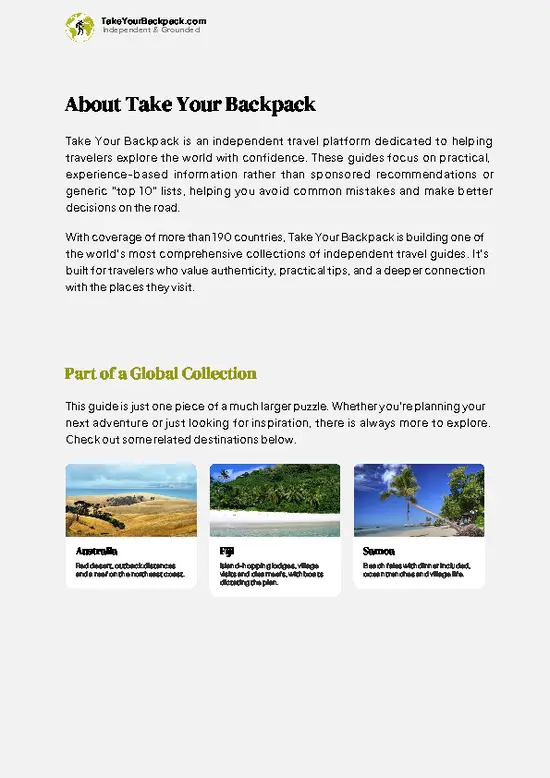
example page 1 from our offline Travel Guide for New Zealand
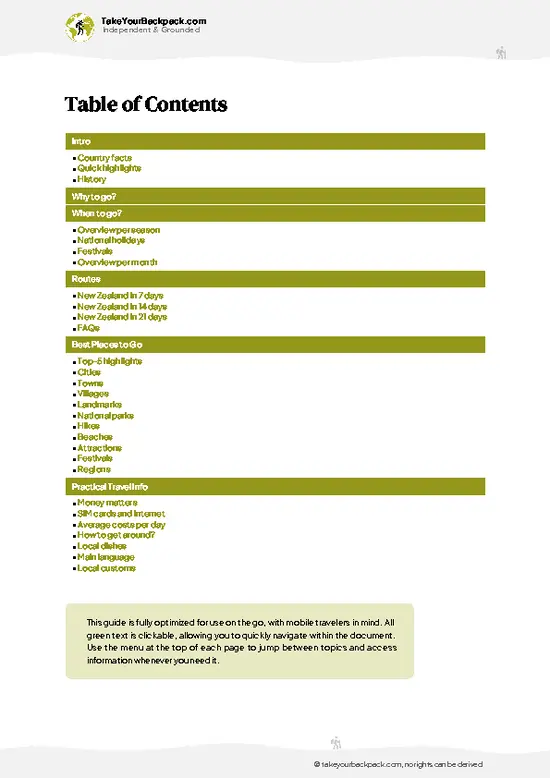
example page 2 from our offline Travel Guide for New Zealand
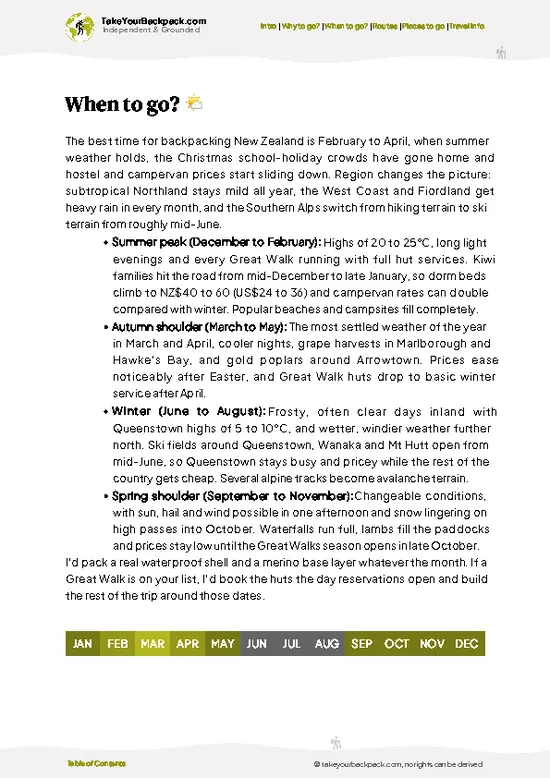
example page 3 from our offline Travel Guide for New Zealand
example page 4 from our offline Travel Guide for New Zealand
example page 5 from our offline Travel Guide for New Zealand
example page 6 from our offline Travel Guide for New Zealand
example page 7 from our offline Travel Guide for New Zealand
Loading the map 🌍
CLICK TO FILTER
cities
towns
villages
landmarks
national parks
hikes
beaches
attractions
festivals
regions
SHOW COUNTRY’S BESTSHOW ALL

✨ Why go?
Ranked #1 attraction in New Zealand
Reasons people choose to visit here

Go because Te Papa explains the country you are about to hike through. Te Hono ki Hawaiki, the carved meeting house (marae) on level four, is a working cultural space rather than a display case, and it gives the Māori place names on every trail sign and bus route a meaning. Reading them afterward changes how the landscape feels. The second reason is the bicultural story told in the Treaty of Waitangi exhibition, which sets out the 1840 agreement and its disputed translations. Few backpackers arrive knowing why it still dominates national debate, and half an hour here makes conversations in hostels and on ferries far easier to follow. The practical case is strong too. Entry is free for New Zealanders (international visitors pay NZ$35), the building is warm and dry on a gale day, and it sits … read more 👉
Go because Te Papa explains the country you are about to hike through. Te Hono ki Hawaiki, the carved meeting house (marae) on level four, is a working cultural space rather than a display case, and it gives the Māori place names on every trail sign and bus route a meaning. Reading them afterward changes how the landscape feels. The second reason is the bicultural story told in the Treaty of Waitangi exhibition, which sets out the 1840 agreement and its disputed translations. Few backpackers arrive knowing why it still dominates national debate, and half an hour here makes conversations in hostels and on ferries far easier to follow. The practical case is strong too. Entry is free for New Zealanders (international visitors pay NZ$35), the building is warm and dry on a gale day, and it sits on the waterfront a short walk from the city center, so it fits a layover easily.

💡 HighlightsMust-see experiences and standout moments

  1. Colossal Squid: The museum’s best-known resident, caught in the Ross Sea in 2007. It is preserved in a tank, and its eyes are the size of dinner plates, among the largest of any animal.
  2. Te Hono ki Hawaiki: A carved meeting house on level four, built by Māori carvers for the museum. Visitors see how a marae is organized and why protocol matters.
  3. Gallipoli: The Scale of Our War: Giant, hyper-real figures of New Zealand soldiers made by Weta Workshop. The detail in skin and uniform makes the scale hard to shrug off. It is included in museum entry.
  4. Te Taiao Nature: A walk-through of native forest, volcano and earthquake displays. A simulated quake house lets you feel what shaking in Wellington is like.
  5. Treaty of Waitangi exhibition (Signs of a Nation): Explanations of the 1840 treaty and how Māori
… read more 👉
  1. Colossal Squid: The museum’s best-known resident, caught in the Ross Sea in 2007. It is preserved in a tank, and its eyes are the size of dinner plates, among the largest of any animal.
  2. Te Hono ki Hawaiki: A carved meeting house on level four, built by Māori carvers for the museum. Visitors see how a marae is organized and why protocol matters.
  3. Gallipoli: The Scale of Our War: Giant, hyper-real figures of New Zealand soldiers made by Weta Workshop. The detail in skin and uniform makes the scale hard to shrug off. It is included in museum entry.
  4. Te Taiao Nature: A walk-through of native forest, volcano and earthquake displays. A simulated quake house lets you feel what shaking in Wellington is like.
  5. Treaty of Waitangi exhibition (Signs of a Nation): Explanations of the 1840 treaty and how Māori and English versions differ.
  6. Toi Art: The art galleries, with Māori, Pacific and colonial-era works. Rotating shows keep it fresh.
  7. Bush City and Te Papa’s outdoor terrace: A living outdoor landscape of native plants, plus a terrace with harbor views, a good place to sit down and plan your next stop.
If time is short, skip the art galleries and spend your hour on the squid, the marae and the Treaty exhibition.
Spotted a mistake or missing something? Contact us.

Things to do around Museum of New Zealand Te Papa Tongarewa

Ratings based on Tripadvisor reviews. When you book through this link, you support our work at no extra cost to you.

🌤️ When to go?Seasonal considerations and timing

Weekday mornings outside school holidays give you the quietest galleries at Te Papa, and the museum is open daily from 10am to 6pm.
  • Summer (Dec to Feb): Highs of 20 to 23°C (68 to 73°F) and daylight until about 9pm make the waterfront walk outside easy. Cruise ships and school holidays push the crowds up in January, and hostel beds cost more.
  • Autumn (Mar to May): 14 to 19°C (57 to 66°F), calmer air and lighter queues. Wellington is often at its most settled in March and April.
  • Winter (Jun to Aug): 6 to 12°C (43 to 54°F), with daylight from about 7:30am to 5pm. Southerly gales and rain make a museum day an easy call, and beds are cheapest.
  • Spring (Sep to Nov): 11 to 17°C (52 to 63°F) and changeable, often windy. Late September and early October holidays bring families.
  • Special events: Matariki in
… read more 👉
Weekday mornings outside school holidays give you the quietest galleries at Te Papa, and the museum is open daily from 10am to 6pm.
  • Summer (Dec to Feb): Highs of 20 to 23°C (68 to 73°F) and daylight until about 9pm make the waterfront walk outside easy. Cruise ships and school holidays push the crowds up in January, and hostel beds cost more.
  • Autumn (Mar to May): 14 to 19°C (57 to 66°F), calmer air and lighter queues. Wellington is often at its most settled in March and April.
  • Winter (Jun to Aug): 6 to 12°C (43 to 54°F), with daylight from about 7:30am to 5pm. Southerly gales and rain make a museum day an easy call, and beds are cheapest.
  • Spring (Sep to Nov): 11 to 17°C (52 to 63°F) and changeable, often windy. Late September and early October holidays bring families.
  • Special events: Matariki in June or July brings extra programming and busier floors.
Wellington weather flips within hours, so keep the museum as your wet-or-windy backup and plan your coastal walks around the forecast.


source: climatestotravel.comJANJanuary: highly recommended for travelingFEBFebruary: highly recommended for travelingMARMarch: excellent for travelingAPRApril: excellent for travelingMAYMay: good for travelingJUNJune: fair for travelingJULJuly: fair for travelingAUGAugust: fair for travelingSEPSeptember: good for travelingOCTOctober: excellent for travelingNOVNovember: excellent for travelingDECDecember: highly recommended for traveling
New Zealand - Museum of New Zealand Te Papa Tongarewa

✈️ The backpacker research shortcutNew Zealand Travel Guide

An offline-friendly backpacking guide with optimized travel routes, ranked highlights, transport advice, and the best areas to stay.
example page 0 from our offline Travel Guide for New Zealand
example page 1 from our offline Travel Guide for New Zealand
example page 2 from our offline Travel Guide for New Zealand
example page 3 from our offline Travel Guide for New Zealand
example page 4 from our offline Travel Guide for New Zealand
example page 5 from our offline Travel Guide for New Zealand
example page 6 from our offline Travel Guide for New Zealand
example page 7 from our offline Travel Guide for New Zealand
The digital guide (327 pages) contains:
✅ 110 highlights, ranked by travel appeal
✅ Optimized 7, 14 & 21-day travel routes
✅ Cities, national parks, landmarks, beaches
✅ How to get around
✅ Offline-friendly for travel without Wi-Fi
👉 Click to see all 30+ guide features

📅 Plan smarter in minutes, not weeks
✅ Month by month travel advice
✅ Festivals & national holidays
✅ Budget expectations

🗺️ Go to the right places, skip the overrated ones
✅ Honest pros & cons of destinations
✅ Top hikes, parks & viewpoints
✅ Lesser-known places most travelers miss
✅ Clear “worth it vs skip it” guidance

🛏️ Travel smoothly without rookie mistakes
✅ Best areas to stay
✅ Transport systems explained simply
✅ Common scams & safety advice
✅ SIM cards, money & practical tips

🌍 Understand the country, not just visit it
✅ Culture & traditions
✅ Local customs
✅ Festivals worth planning around
✅ Traveler-friendly historical context
✅ Insights that make places more meaningful

📱 Built for real travel conditions
✅ Fully downloadable PDF
✅ Works completely offline
✅ Optimized for phone use
✅ Useful in remote areas & buses
✅ Everything in one place
Stop searching, start planning
Get instant access to your full guide. 30‑day money-back guarantee.
+ Add another guide for just

By proceeding you agree to our terms.
Sent to your inbox immediately after payment • 100% Secure Checkout
Best Backpacking Travel Advisor 2025 tourism awardBest Backpacking
Travel Advisor
2025
What others say about Take Your Backpack Guides:
⭐⭐⭐⭐⭐
Fantastic, amazing amount of information!
⭐⭐⭐⭐⭐
My goodness this is amazing, it's what I've been looking for hats off too you!
⭐⭐⭐⭐⭐
I think this is absolutely BRILLIANT
⭐⭐⭐⭐
Very complete and informative. It's still missing places, but I gotta to commend you
⭐⭐⭐⭐⭐
This is truly amazing, thank you, can't wait to explore it with my kids!
⭐⭐⭐⭐⭐
Awesome resource, thank you!
⭐⭐⭐⭐⭐
This is amazing! Can't wait to explore the ones I haven't seen
⭐⭐⭐⭐
I love this! Well done, great idea.
⭐⭐⭐⭐⭐
Thanks for taking the time to make this gem!
⭐⭐⭐⭐⭐
This might be the best website I've ever seen.
⭐⭐⭐⭐⭐
Congratulations, and thank you so much for your work; it's incredibly valuable.
⭐⭐⭐⭐
In all seriousness I think you did a great job pointing out the important spots
⭐⭐⭐⭐⭐
10/10 very good
⭐⭐⭐⭐⭐
As someone who's only just starting to visit regularly this is awesome, thank you.
⭐⭐⭐⭐
Thank you very much! I'm going to visit my dad, it's going to be very useful!
⭐⭐⭐⭐⭐
This is really cool! We'll be travelling for the first time and this definitely come in handy.
⭐⭐⭐⭐⭐
You are now our minister of culture, congratulations 👨‍💼
⭐⭐⭐⭐⭐
Just wanted to tell you that this is a pearl! Going to follow your recommendations.
⭐⭐⭐⭐⭐
This is so cool. I'll definitely be using the resource for my travels soon.
⭐⭐⭐⭐⭐
This is very impressive! Good work.
⭐⭐⭐⭐⭐
This is an amazing and informative site. Very well done!

🛏️ Where to stay?Where staying makes the most sense

Te Aro and the Central Business District put you within a 5 to 15 minute walk of Te Papa on the waterfront, and they are where most budget travelers sleep.
Courtenay Place and the lower Cuba Street area are the social heart. Hostels cluster here, along with cheap eateries, bars, live music venues and late-night food, so it is easy to meet other travelers. The walk back along Wakefield Street or the waterfront is flat and well lit, and the streets stay lively into the evening. Courtenay Place gets rowdy on Friday and Saturday nights, so ask for a room away from the street if you want sleep.
The lower … read more 👉
Te Aro and the Central Business District put you within a 5 to 15 minute walk of Te Papa on the waterfront, and they are where most budget travelers sleep.
Courtenay Place and the lower Cuba Street area are the social heart. Hostels cluster here, along with cheap eateries, bars, live music venues and late-night food, so it is easy to meet other travelers. The walk back along Wakefield Street or the waterfront is flat and well lit, and the streets stay lively into the evening. Courtenay Place gets rowdy on Friday and Saturday nights, so ask for a room away from the street if you want sleep.
The lower CBD around Lambton Quay and Willis Street is quieter at night, with business-oriented buildings and a few hostels. It suits solo travelers who prefer calm evenings, and the train station and the airport bus are close by for onward trips.
Mount Victoria is a residential hillside 15 to 20 minutes from the museum on foot, with guesthouses and homestays. It is safe and peaceful, and works well if you are staying a week or more.
Book ahead for January, long weekends and summer rugby or concert dates, when central dorms fill early. Wellington is compact, so any of these areas lets you skip transport to reach the museum.

👛 Costs (as of 15 October 2026)Typical daily expenses

A day around Te Papa runs about US$78 for an international visitor in high season, and most of that is the entry ticket and a bed. Entry is free for New Zealanders, while international visitors aged 16 and over pay about US$21, and travelers pay in New Zealand dollars. Wellington is compact, so the museum is an easy walk from most budget beds.
CategoryBudget RangeLocal Reality
Entry ticketUS$21International visitors aged 16 and over pay this for the permanent galleries. Many of the permanent exhibitions are free for everyone, but the international fee is what applies at the door.
Special exhibitionsUS$0 to 18Major touring exhibitions carry a separate ticket and change through the year. Skip them if money is tight, as the permanent floors fill a full day.
Accommodation (high season)US$25 to 40Dorm
… read more 👉
A day around Te Papa runs about US$78 for an international visitor in high season, and most of that is the entry ticket and a bed. Entry is free for New Zealanders, while international visitors aged 16 and over pay about US$21, and travelers pay in New Zealand dollars. Wellington is compact, so the museum is an easy walk from most budget beds.
CategoryBudget RangeLocal Reality
Entry ticketUS$21International visitors aged 16 and over pay this for the permanent galleries. Many of the permanent exhibitions are free for everyone, but the international fee is what applies at the door.
Special exhibitionsUS$0 to 18Major touring exhibitions carry a separate ticket and change through the year. Skip them if money is tight, as the permanent floors fill a full day.
Accommodation (high season)US$25 to 40Dorm beds in central Wellington cost the most from December to February. Off-season dorms drop to roughly US$20 to 30.
FoodUS$15 to 25The museum cafes are pricey. Cheaper options are the supermarkets and the food courts and cafes along Cuba Street, a 15 to 20 minute walk away.
Local transportUS$0 to 4Most hostels are walkable to the waterfront. A Snapper card bus fare in the city is about US$1.50 to 3 per trip.
Lockers and extrasUS$0 to 3Bag storage is limited, so travel light. Audio guides and guided tours cost extra and are optional.
Total Daily BudgetUS$78Based on entry, a high-season dorm bed, modest food and a little transport. The total falls to roughly US$55 to 60 for a visitor eligible for free entry.


source: tepapa.govt.nz
⚠️ Prices can change and everyone travels differently, so take this as a rough guide. Hope it helps you plan your adventure!

FAQCommon questions from travelers

Plan 2 to 3 hours for the highlights, and a full 4 to 5 hours if you want to cover all six floors. Gallipoli: The Scale of Our War and the Te Taiao Nature exhibition with its colossal squid are the most popular stops. Opening hours are 10am to 6pm daily, so arriving at 10am gives you a calm start.
Yes. Entry is free for New Zealanders, and international visitors aged 16 and over pay NZD 35 for a ticket valid for 48 hours. The free galleries include Toi Art, Mana Whenua and Te Taiao Nature, which alone fill half a day.
Te Papa is on Cable Street on the Wellington waterfront, a 10 to 15 minute walk from the railway station or Courtenay Place. Buses from the central city stop nearby for around NZD 2 to 3.50 with a Snapper card. From Wellington Airport, the airport bus takes about 30 minutes to the city, and a taxi costs roughly NZD 30 to 40.
⚠️ Things can change over time, so always validate details locally before you go.

Other New Zealander attractions near Museum of New Zealand Te Papa Tongarewa

Explore more nearby:


💡 Not sure where to go next?
Create a personalized itinerary for New Zealand including Museum of New Zealand Te Papa Tongarewa and the places that fit your trip.

Generate my itinerary

👉 Discover all attractions

Or checkout all New Zealand has to offer (think cities, towns, villages, national parks, hikes, beaches, festivals)
Country photo of New Zealand

We 💚 feedbackIs it worth it?

Give Te Papa a half day, about three to four hours, and you will leave with more than a checklist. One hour is enough for the squid and the marae, but you will feel rushed. If you have a full free afternoon, I would split it with a coffee on the terrace and return for the Treaty exhibition once the crowds thin.

✈️ When did I visit New Zealand?
All the way back in high school I have been visiting the North Island of New Zealand (1993).

✍️ Help improve this page!
The information on this page is based on my own backpacking experience in New Zealand, supplemented with up-to-date research and feedback from other travelers. Travel details can change, so if you notice anything outdated or incomplete, feel free to let me know.


🙋‍♂️ Give feedback

👋 Meet the founderWho’s Behind Take Your Backpack?

Johan, backpacker and founder of TakeYourBackpackHi, I’m Johan (Netherlands 🇳🇱), the creator of TakeYourBackpack. Over the past 3 decades, I’ve backpacked through 90+ countries across six continents, gaining extensive experience with independent travel, long-term trips, and overland routes.

This site is built on a combination of firsthand travel experience and carefully curated insights from other backpackers. Many guides are based on places I’ve personally visited, while others bring together tips, observations, and practical advice shared by trusted travelers I’ve met along the way.

The goal is to provide realistic, experience-driven guidance — not generic itineraries — so you can explore destinations with better context, clearer expectations, and more confidence.