×

New Zealand🇳🇿 | attractionsZealandia Te Māra a TānePredator-proof fence, night kiwi tour, kākā feeders, 30 km of forest tracks | things to do and best time to go

Explore Rainbow’s EndExplore Castlepoint Beach

Backpacking in Zealandia Te Māra a Tāne
🌟 Highlightattraction ranked #6
By Johan Kruseman 🇳🇱 | Updated October 15, 2026

The perimeter fence is the whole point: its fine mesh curves inward at the top and extends underground, which is why little spotted kiwi, tuatara and takahē can live here without stoats or rats. The sanctuary sits in Karori, a short ride west of central Wellington, New Zealand’s capital. I took the free shuttle from the city and, as the driver pulled up at the gate, a saddleback called from a tree beside the car park before I had even bought a ticket. Be clear-eyed about it: entry is pricey, the day tour costs more, and school groups and weekend families fill the main track. What you pay for is a restoration project, and the density of birdlife shows it. Plan to arrive when it opens, walk the valley loop, then book a night tour if you want kiwi.

Discover everything you want to know in the 📖 New Zealand Travel Guide.


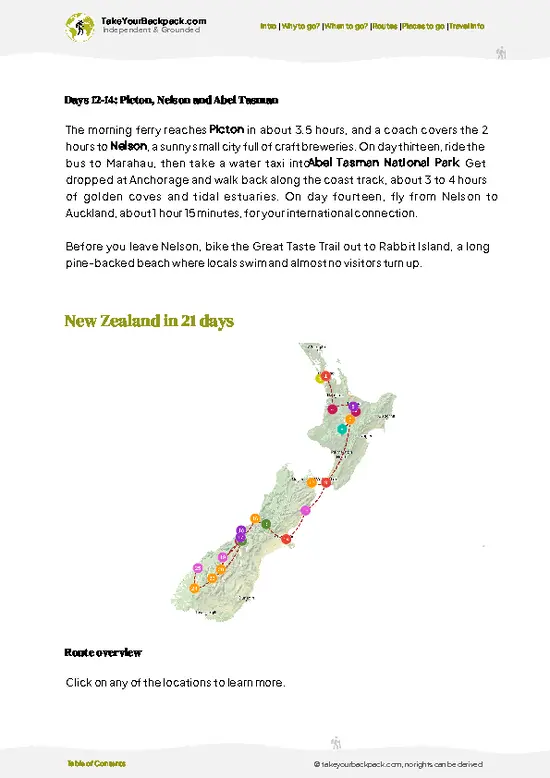
example page 0 from our offline Travel Guide for New Zealand
example page 1 from our offline Travel Guide for New Zealand
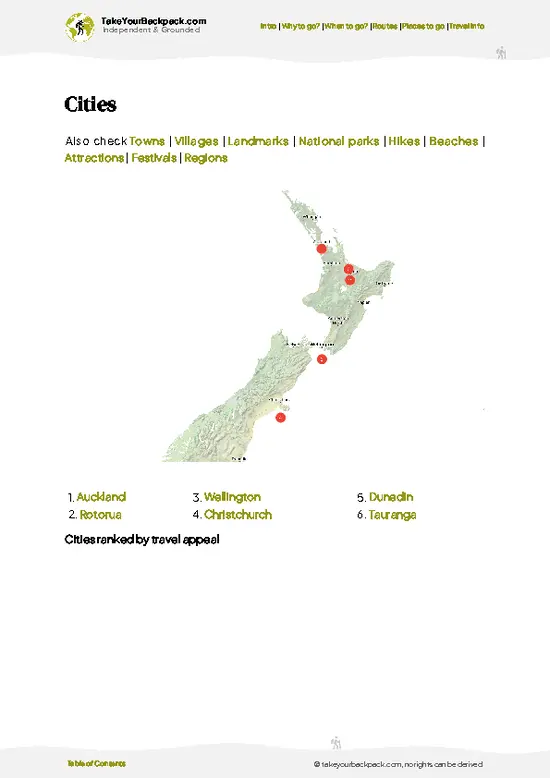
example page 2 from our offline Travel Guide for New Zealand
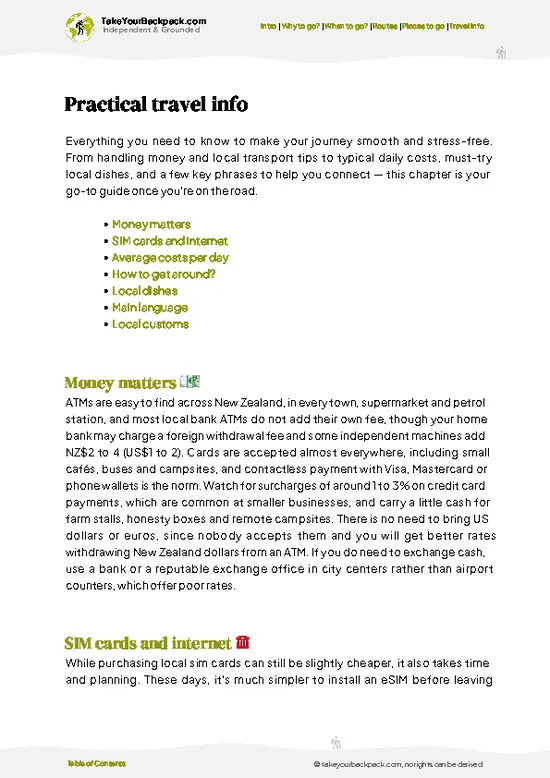
example page 3 from our offline Travel Guide for New Zealand
example page 4 from our offline Travel Guide for New Zealand
example page 5 from our offline Travel Guide for New Zealand
example page 6 from our offline Travel Guide for New Zealand
example page 7 from our offline Travel Guide for New Zealand
Loading the map 🌍
CLICK TO FILTER
cities
towns
villages
landmarks
national parks
hikes
beaches
attractions
festivals
regions
SHOW COUNTRY’S BESTSHOW ALL

✨ Why go?
Ranked #6 attraction in New Zealand
The unique appeal for travelers

Zealandia is the one place where you can see how New Zealand sounded before mammals arrived. The valley is surrounded by a predator-exclusion fence about 8.6 kilometers long, and inside it more than 20 native bird species have been reintroduced, many of them extinct on the nearby mainland for a century or more. Hearing a tui, bellbird and kākā overlapping at the same feeder is a quick lesson in why conservation here matters.
It also makes a smart milestone for a North Island route. Wellington has museums and coffee, yet few places show you the wildlife that the rest of your trip mostly talks about. If you will hike elsewhere and rarely see anything but sparrows, this is where you meet takahē, tuatara and the rare hihi at close range. The effort is small, since the entrance is a short hop from … read more 👉
Zealandia is the one place where you can see how New Zealand sounded before mammals arrived. The valley is surrounded by a predator-exclusion fence about 8.6 kilometers long, and inside it more than 20 native bird species have been reintroduced, many of them extinct on the nearby mainland for a century or more. Hearing a tui, bellbird and kākā overlapping at the same feeder is a quick lesson in why conservation here matters.
It also makes a smart milestone for a North Island route. Wellington has museums and coffee, yet few places show you the wildlife that the rest of your trip mostly talks about. If you will hike elsewhere and rarely see anything but sparrows, this is where you meet takahē, tuatara and the rare hihi at close range. The effort is small, since the entrance is a short hop from the capital, and the guided options give real context about what is being protected.

💡 HighlightsWhat this place is best known for

  1. Valley Loop and Lake Track Network: Over 30 kilometers of tracks run through regenerating forest, and the main loop circles the upper reservoir with the best odds of seeing birds without a guide.
  2. Night Tour: After dark, guides lead small groups with red-filtered lights to spot little spotted kiwi, tuatara, glowworms and geckos. It is the most reliable way to see a wild kiwi in the capital.
  3. Kākā Feeders: Noisy, olive-brown parrots swoop in for sugar water. They are bold, loud and entertaining to watch from a bench.
  4. Takahē: These plump, blue-green flightless birds were once thought extinct and now graze on grassy clearings in the sanctuary.
  5. Tuatara Spotting: These spiky reptiles are the last survivors of an ancient lineage. They bask on rocks and logs near marked sites.
  6. Hihi Feeding Stations: The
… read more 👉
  1. Valley Loop and Lake Track Network: Over 30 kilometers of tracks run through regenerating forest, and the main loop circles the upper reservoir with the best odds of seeing birds without a guide.
  2. Night Tour: After dark, guides lead small groups with red-filtered lights to spot little spotted kiwi, tuatara, glowworms and geckos. It is the most reliable way to see a wild kiwi in the capital.
  3. Kākā Feeders: Noisy, olive-brown parrots swoop in for sugar water. They are bold, loud and entertaining to watch from a bench.
  4. Takahē: These plump, blue-green flightless birds were once thought extinct and now graze on grassy clearings in the sanctuary.
  5. Tuatara Spotting: These spiky reptiles are the last survivors of an ancient lineage. They bask on rocks and logs near marked sites.
  6. Hihi Feeding Stations: The tiny stitchbird, among the rarest forest birds in the country, comes in for nectar, so stand still and wait.
  7. Exhibition and Wildlife Displays: A well-made interactive space covers 500 years of ecological change, from before human arrival to the building of the fence.
  8. Lower Dam Views: Look across the lower dam and valley to see how the forest has recolonized the hills above the city.
Most visitors walk straight past the fence itself near the entry, where a cutaway section shows the buried mesh skirt that stops burrowing pests.
Spotted a mistake or missing something? Contact us.

Things to do around Zealandia Te Māra a Tāne

Ratings based on Tripadvisor reviews. When you book through this link, you support our work at no extra cost to you.

🌤️ When to go?Best time to visit Zealandia Te Māra a Tāne

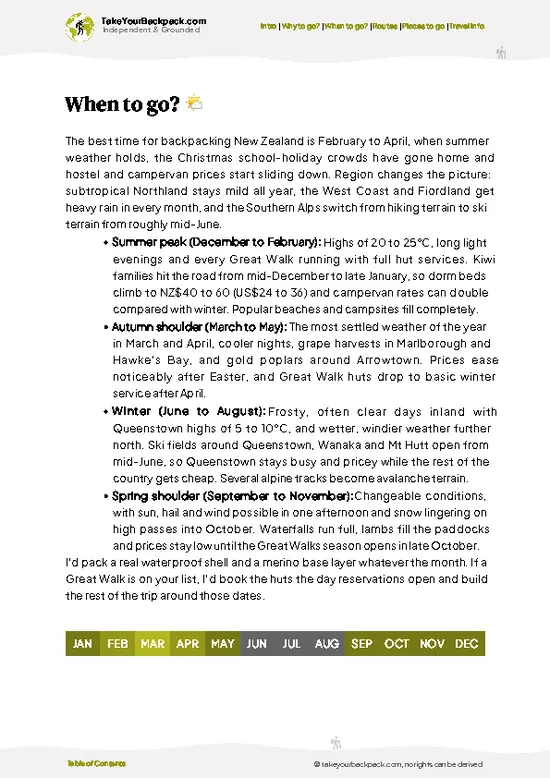
Zealandia is open daily year-round, and the birds are active in every month, so timing comes down to weather, daylight and whether you want the night tour.
  • Summer (Dec to Feb): Highs of 20 to 23°C (68 to 73°F), with long light until about 9 pm. Weekends and school holidays are busiest, and Wellington accommodation costs the most.
  • Autumn (Mar to May): Highs of 14 to 19°C (57 to 66°F), calmer winds and quieter trails. Good for spotting kākā feeding near the feeders.
  • Winter (Jun to Aug): Highs of 11 to 13°C (52 to 55°F), lows near 6°C (43°F), and daylight of roughly 9 hours. Crowds thin, beds are cheaper, and early dusk makes the night tour start sooner.
  • Spring (Sep to Nov): Highs of 14 to 18°C (57 to 64°F), with changeable weather. Birds are nesting and singing loudly, so mornings are lively.
Book … read more 👉
Zealandia is open daily year-round, and the birds are active in every month, so timing comes down to weather, daylight and whether you want the night tour.
  • Summer (Dec to Feb): Highs of 20 to 23°C (68 to 73°F), with long light until about 9 pm. Weekends and school holidays are busiest, and Wellington accommodation costs the most.
  • Autumn (Mar to May): Highs of 14 to 19°C (57 to 66°F), calmer winds and quieter trails. Good for spotting kākā feeding near the feeders.
  • Winter (Jun to Aug): Highs of 11 to 13°C (52 to 55°F), lows near 6°C (43°F), and daylight of roughly 9 hours. Crowds thin, beds are cheaper, and early dusk makes the night tour start sooner.
  • Spring (Sep to Nov): Highs of 14 to 18°C (57 to 64°F), with changeable weather. Birds are nesting and singing loudly, so mornings are lively.
Book the night tour a few days ahead in summer, and bring a rain jacket in any month.


source: climatestotravel.comJANJanuary: highly recommended for travelingFEBFebruary: highly recommended for travelingMARMarch: excellent for travelingAPRApril: excellent for travelingMAYMay: good for travelingJUNJune: fair for travelingJULJuly: fair for travelingAUGAugust: fair for travelingSEPSeptember: highly recommended for travelingOCTOctober: excellent for travelingNOVNovember: excellent for travelingDECDecember: highly recommended for traveling
new-zealand-attraction-zealandia-te-mara-a-tane
© Google |

✈️ The backpacker research shortcutNew Zealand Travel Guide

An offline-friendly backpacking guide with optimized travel routes, ranked highlights, transport advice, and the best areas to stay.
example page 0 from our offline Travel Guide for New Zealand
example page 1 from our offline Travel Guide for New Zealand
example page 2 from our offline Travel Guide for New Zealand
example page 3 from our offline Travel Guide for New Zealand
example page 4 from our offline Travel Guide for New Zealand
example page 5 from our offline Travel Guide for New Zealand
example page 6 from our offline Travel Guide for New Zealand
example page 7 from our offline Travel Guide for New Zealand
The digital guide (327 pages) contains:
✅ 110 highlights, ranked by travel appeal
✅ Optimized 7, 14 & 21-day travel routes
✅ Cities, national parks, landmarks, beaches
✅ How to get around
✅ Offline-friendly for travel without Wi-Fi
👉 Click to see all 30+ guide features

📅 Plan smarter in minutes, not weeks
✅ Month by month travel advice
✅ Festivals & national holidays
✅ Budget expectations

🗺️ Go to the right places, skip the overrated ones
✅ Honest pros & cons of destinations
✅ Top hikes, parks & viewpoints
✅ Lesser-known places most travelers miss
✅ Clear “worth it vs skip it” guidance

🛏️ Travel smoothly without rookie mistakes
✅ Best areas to stay
✅ Transport systems explained simply
✅ Common scams & safety advice
✅ SIM cards, money & practical tips

🌍 Understand the country, not just visit it
✅ Culture & traditions
✅ Local customs
✅ Festivals worth planning around
✅ Traveler-friendly historical context
✅ Insights that make places more meaningful

📱 Built for real travel conditions
✅ Fully downloadable PDF
✅ Works completely offline
✅ Optimized for phone use
✅ Useful in remote areas & buses
✅ Everything in one place
Stop searching, start planning
Get instant access to your full guide. 30‑day money-back guarantee.
+ Add another guide for just

By proceeding you agree to our terms.
Sent to your inbox immediately after payment • 100% Secure Checkout
Best Backpacking Travel Advisor 2025 tourism awardBest Backpacking
Travel Advisor
2025
What others say about Take Your Backpack Guides:
⭐⭐⭐⭐⭐
Fantastic, amazing amount of information!
⭐⭐⭐⭐⭐
My goodness this is amazing, it's what I've been looking for hats off too you!
⭐⭐⭐⭐⭐
I think this is absolutely BRILLIANT
⭐⭐⭐⭐
Very complete and informative. It's still missing places, but I gotta to commend you
⭐⭐⭐⭐⭐
This is truly amazing, thank you, can't wait to explore it with my kids!
⭐⭐⭐⭐⭐
Awesome resource, thank you!
⭐⭐⭐⭐⭐
This is amazing! Can't wait to explore the ones I haven't seen
⭐⭐⭐⭐
I love this! Well done, great idea.
⭐⭐⭐⭐⭐
Thanks for taking the time to make this gem!
⭐⭐⭐⭐⭐
This might be the best website I've ever seen.
⭐⭐⭐⭐⭐
Congratulations, and thank you so much for your work; it's incredibly valuable.
⭐⭐⭐⭐
In all seriousness I think you did a great job pointing out the important spots
⭐⭐⭐⭐⭐
10/10 very good
⭐⭐⭐⭐⭐
As someone who's only just starting to visit regularly this is awesome, thank you.
⭐⭐⭐⭐
Thank you very much! I'm going to visit my dad, it's going to be very useful!
⭐⭐⭐⭐⭐
This is really cool! We'll be travelling for the first time and this definitely come in handy.
⭐⭐⭐⭐⭐
You are now our minister of culture, congratulations 👨‍💼
⭐⭐⭐⭐⭐
Just wanted to tell you that this is a pearl! Going to follow your recommendations.
⭐⭐⭐⭐⭐
This is so cool. I'll definitely be using the resource for my travels soon.
⭐⭐⭐⭐⭐
This is very impressive! Good work.
⭐⭐⭐⭐⭐
This is an amazing and informative site. Very well done!

🛏️ Where to stay?Best areas and accommodation options

Wellington’s central city, around Cuba Street and Te Aro, is the best base, because hostels, bars and cheap eats sit within walking distance of each other and the buses to the sanctuary.
Te Aro and Cuba Street: This is where most backpackers end up. The dorms are social, the cafés are good, and you can meet people for a group trip out to Zealandia. It is safe, though the streets get rowdy late on weekends.
Lambton Quay and the waterfront: Quieter after dark and handy for the train station, the ferry terminal and the airport bus. It suits solo travelers who want an easy night.
Kelburn and Aro Valley: … read more 👉
Wellington’s central city, around Cuba Street and Te Aro, is the best base, because hostels, bars and cheap eats sit within walking distance of each other and the buses to the sanctuary.
Te Aro and Cuba Street: This is where most backpackers end up. The dorms are social, the cafés are good, and you can meet people for a group trip out to Zealandia. It is safe, though the streets get rowdy late on weekends.
Lambton Quay and the waterfront: Quieter after dark and handy for the train station, the ferry terminal and the airport bus. It suits solo travelers who want an easy night.
Kelburn and Aro Valley: The closest suburbs to the sanctuary, with a student feel, cheap cafés and a few guesthouses and private rooms. Staying here means a short walk or a quick ride to the gate, though nightlife is limited.
Karori: Mostly residential, with a few homestays and motels. It is the nearest to the entrance, but the social scene is thin, so I would only pick it if you have a car.
For meeting other travelers, I would pick Te Aro and ride out in the morning.

👛 Costs (as of 15 October 2026)What things cost and how to budget

Expect to spend about US$95 a day at Zealandia Te Māra a Tāne in Wellington, with the daytime entry ticket making up US$24 to 30 of that.
CategoryBudget RangeLocal Reality
Daytime entry (adult)US$24 to 30Ticket is valid for the day. Booking online is simplest, and the fee supports the predator-proof fence and conservation work.
Guided tourUS$20 to 35 extraThe one-hour or two-hour guided tours add to entry. Tours help you spot the more elusive birds such as the little spotted kiwi, takahē and tuatara.
Night tourUS$55 to 70Offers the best chance to see wild kiwi. The tour runs after dark and bookings fill fast.
Accommodation (high season)US$25 to 40A hostel dorm bed in central Wellington. Rates in summer, December to February, sit at the top of the range.
Accommodation (low season)US$18 to 30Dorms
… read more 👉
Expect to spend about US$95 a day at Zealandia Te Māra a Tāne in Wellington, with the daytime entry ticket making up US$24 to 30 of that.
CategoryBudget RangeLocal Reality
Daytime entry (adult)US$24 to 30Ticket is valid for the day. Booking online is simplest, and the fee supports the predator-proof fence and conservation work.
Guided tourUS$20 to 35 extraThe one-hour or two-hour guided tours add to entry. Tours help you spot the more elusive birds such as the little spotted kiwi, takahē and tuatara.
Night tourUS$55 to 70Offers the best chance to see wild kiwi. The tour runs after dark and bookings fill fast.
Accommodation (high season)US$25 to 40A hostel dorm bed in central Wellington. Rates in summer, December to February, sit at the top of the range.
Accommodation (low season)US$18 to 30Dorms are cheaper from June to August.
TransportUS$3 to 8A bus from the city center runs to the sanctuary, with a Snapper card or contactless payment giving the lowest fare. A free shuttle sometimes links the center and the sanctuary, and a taxi or rideshare costs US$12 to 20.
Food and drinkUS$18 to 28Café meals inside the visitor center cost more than supermarket picnic food. Bring a sandwich from the city if you plan to stay all day.
Total Daily BudgetUS$95Entry US$27, dorm bed US$35 (high season), transport US$6, food US$23, plus a small allowance for extras such as a guided tour discount or a souvenir.
⚠️ Prices can change and everyone travels differently, so take this as a rough guide. Hope it helps you plan your adventure!

FAQTraveler FAQ

Plan on 3 to 4 hours for the main trails, or a full day if you want to walk the outer loops and sit at the feeders. The night tour runs roughly 2.5 hours after dusk and is a separate booking. Most visitors do the valley floor in about 2 hours, but the upper-dam trails add another 1 to 2 hours.
Yes for most travelers, because the NZD 25 to 30 adult ticket gets you close to wild kākā, tūī, takahē and tuatara in a predator-fenced valley, which you will not see so easily elsewhere in the capital. The night tour costs more but gives a chance to spot kiwi, which are almost impossible to see in the wild otherwise. If you only want a walk, the free Wellington town belt trails are a cheaper option.
From central Wellington it is a 10 to 15 minute drive, or a 20 to 30 minute bus ride on the city route to Karori, followed by a short walk. A free shuttle has also run from the city, so check its schedule. Taxis or rideshares cost about NZD 20 to 30 each way, and cycling from town takes around 25 to 30 minutes uphill.
⚠️ Things can change over time, so always validate details locally before you go.

Other New Zealander attractions near Zealandia Te Māra a Tāne

Explore more nearby:


💡 Not sure where to go next?
Create a personalized itinerary for New Zealand including Zealandia Te Māra a Tāne and the places that fit your trip.

Generate my itinerary

👉 Discover all attractions

Or checkout all New Zealand has to offer (think cities, towns, villages, national parks, hikes, beaches, festivals)
Country photo of New Zealand

We 💚 feedbackSumming up the experience

Most first-timers rush to the feeders and miss the quieter upper valley, where the forest is thicker and birds forage without an audience. I would book the night tour and then spend the next morning walking the far tracks slowly. Bring a layer and binoculars, since the best sightings reward patience.

✈️ When did I visit New Zealand?
All the way back in high school I have been visiting the North Island of New Zealand (1993).

✍️ Help improve this page!
The information on this page is based on my own backpacking experience in New Zealand, supplemented with up-to-date research and feedback from other travelers. Travel details can change, so if you notice anything outdated or incomplete, feel free to let me know.


🙋‍♂️ Give feedback

👋 Meet the founderWho’s Behind Take Your Backpack?

Johan, backpacker and founder of TakeYourBackpackHi, I’m Johan (Netherlands 🇳🇱), the creator of TakeYourBackpack. Over the past 3 decades, I’ve backpacked through 90+ countries across six continents, gaining extensive experience with independent travel, long-term trips, and overland routes.

This site is built on a combination of firsthand travel experience and carefully curated insights from other backpackers. Many guides are based on places I’ve personally visited, while others bring together tips, observations, and practical advice shared by trusted travelers I’ve met along the way.

The goal is to provide realistic, experience-driven guidance — not generic itineraries — so you can explore destinations with better context, clearer expectations, and more confidence.