×

Nicaragua🇳🇮 | citiesChinandegaSugar cane plain, Mercado Central, Santa Ana church, painted cemetery | things to do and best time to go

Explore MatagalpaExplore Rivas

Backpacking in Chinandega
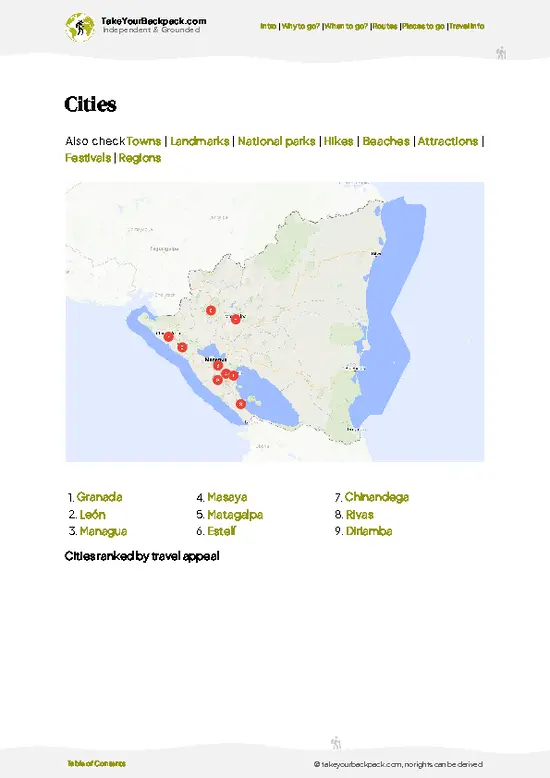
👌 Worth visitingcity ranked #7
By Johan Kruseman 🇳🇱 | Updated October 20, 2026

Chinandega suits backpackers who like working towns with no tourist polish: volcano climbers, surfers heading to the coast, and anyone happy to eat where the locals do. If you want colonial prettiness, hostels with a social scene or a long list of sights, you will find it thin, and the heat flattens the afternoons. The city sits in the northwest of Nicaragua, on a flat plain of sugar cane and peanut fields. I had a cold fresco de cacao from a street cart by the Parque Central for about US$0.50, thick and gritty, with the sound of tuk-tuks and a church bell behind it. Spend a morning at the market and the old church, skip the rest, and treat the city as a hinge. Carry small bills for buses and the market.

Discover everything you want to know in the 📖 Nicaragua Travel Guide.


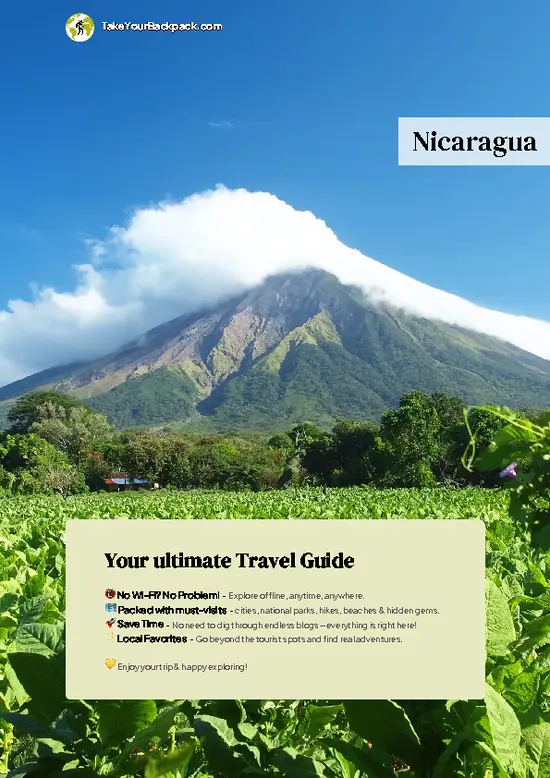
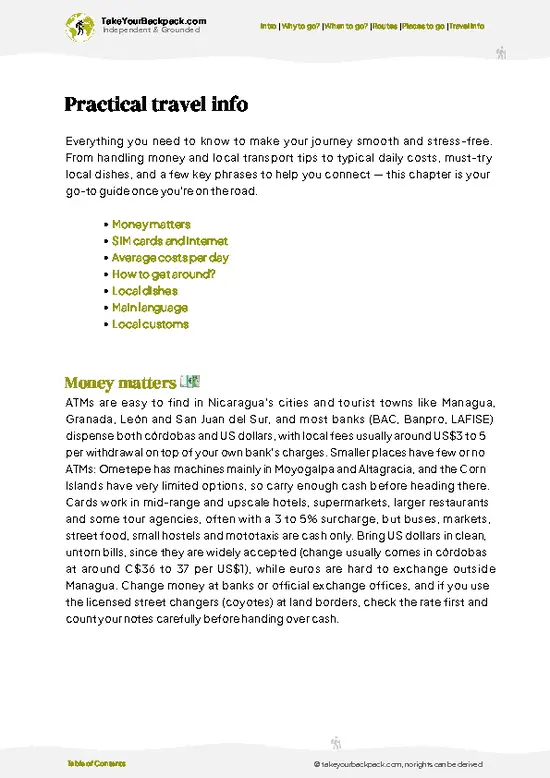
example page 0 from our offline Travel Guide for Nicaragua
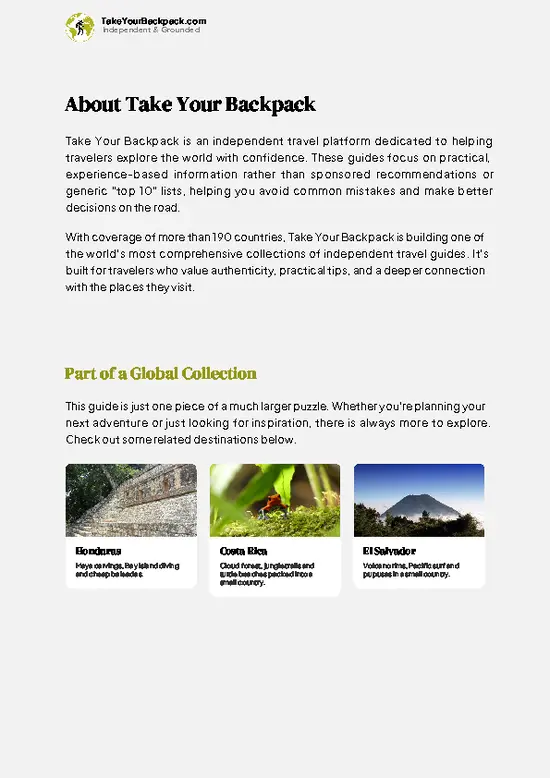
example page 1 from our offline Travel Guide for Nicaragua
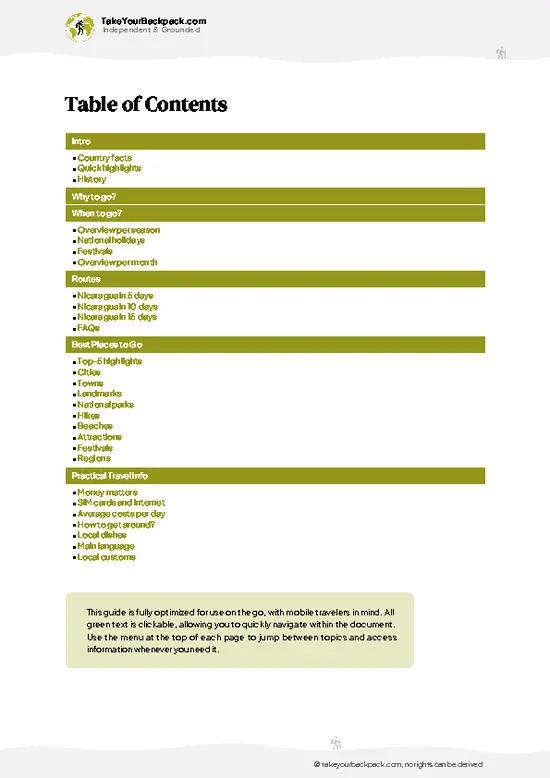
example page 2 from our offline Travel Guide for Nicaragua
example page 3 from our offline Travel Guide for Nicaragua
example page 4 from our offline Travel Guide for Nicaragua
example page 5 from our offline Travel Guide for Nicaragua
example page 6 from our offline Travel Guide for Nicaragua
example page 7 from our offline Travel Guide for Nicaragua
Loading the map 🌍
CLICK TO FILTER
cities
towns
landmarks
national parks
hikes
beaches
attractions
festivals
regions
SHOW COUNTRY’S BESTSHOW ALL

✨ Why go?
Ranked #7 city in Nicaragua
What makes it a must-see city

Chinandega earns its place on a route as a working crossroads rather than a destination. It is the last big town before the Honduras border at Guasaule and the main jumping-off point for the Cosiguina peninsula and the Pacific beaches, so it saves you from long single-leg days on the road. You will find a handful of simple, affordable guesthouses and a few good places for a big, cheap meal, which is what you need before or after a volcano hike. The center is flat and walkable, with a market that is chaotic in the best way, and almost no tourist crowd, so you get a real sense of daily life in the northwest. Nightlife is mostly a few bars and street food, not a scene. Plan one night, maybe two if you are heading to the coast the next day. It is a smart stop for practical travelers, not for anyone hunting for a long city stay.

💡 HighlightsThe experiences that define the visit

  1. Iglesia de Santa Ana: a white colonial-era church with a plain, broad facade facing the main plaza, the city’s best-known landmark. Go in the cooler early morning. Free, 20 to 30 minutes.
  2. Parque Central Rubén Darío: the shaded plaza where locals sit, with vendors selling fruit and cold drinks. It is liveliest at dusk. Free, 30 to 45 minutes.
  3. Mercado Central: a dense market of produce, spices, cheap clothing and food stalls. Arrive before 10 am when it is busiest and coolest. Eating costs US$2 to 4. Allow 1 hour.
  4. Cementerio de Chinandega: a large cemetery with brightly painted tombs and mausoleums, quietly photogenic and a local view of life and memory. Visit in the morning. Free, 30 to 45 minutes.
  5. Iglesia El Calvario: a smaller church at the edge of the center, quieter than Santa Ana, with a more
… read more 👉
  1. Iglesia de Santa Ana: a white colonial-era church with a plain, broad facade facing the main plaza, the city’s best-known landmark. Go in the cooler early morning. Free, 20 to 30 minutes.
  2. Parque Central Rubén Darío: the shaded plaza where locals sit, with vendors selling fruit and cold drinks. It is liveliest at dusk. Free, 30 to 45 minutes.
  3. Mercado Central: a dense market of produce, spices, cheap clothing and food stalls. Arrive before 10 am when it is busiest and coolest. Eating costs US$2 to 4. Allow 1 hour.
  4. Cementerio de Chinandega: a large cemetery with brightly painted tombs and mausoleums, quietly photogenic and a local view of life and memory. Visit in the morning. Free, 30 to 45 minutes.
  5. Iglesia El Calvario: a smaller church at the edge of the center, quieter than Santa Ana, with a more modest, local feel. Free, 15 to 20 minutes, late afternoon is pleasant.
  6. Parque Cultural y Casa de la Cultura: a small cultural space with local art and events when it is open; check at the door for what is on. Small donation or free, 30 minutes.
Chinandega is close to the Cosiguina volcano and its crater lake, the Pacific beaches at Jiquilillo and Padre Ramos estuary, and the cone of San Cristóbal, the tallest volcano in the country, which all work well as day trips. Start with the market in the morning, because it is at its best before the heat and you can eat there too.
Spotted a mistake or missing something? Contact us.

Things to do near Chinandega

Ratings based on Tripadvisor reviews. When you book through this link, you support our work at no extra cost to you.

🏘️ NeighborhoodsKey areas and districts to know

Chinandega is a flat, hot grid of streets, and the areas below are the ones that matter for a day or two on foot.
  • Parque Central and the cathedral area: The heart of town and the only part worth wandering slowly. Shade trees, shoeshiners, the Santa Ana church facade and the clang of buses nearby. Eat and people-watch here; everything is a short walk.
  • Mercado Central: Loud, sweaty and the best hour you can spend. Expect raw meat counters, piles of cashews and plantains, and fried smells drifting from comedor stalls. Go in the morning before the heat peaks. Watch your bag in the crush.
  • Avenida Somoza strip (Calle Real): A long commercial stretch with pharmacies, ATMs, phone shops and fast-food joints. Useful for errands, dull for wandering, so don’t linger.
  • El Calvario area: A quieter residential
… read more 👉
Chinandega is a flat, hot grid of streets, and the areas below are the ones that matter for a day or two on foot.
  • Parque Central and the cathedral area: The heart of town and the only part worth wandering slowly. Shade trees, shoeshiners, the Santa Ana church facade and the clang of buses nearby. Eat and people-watch here; everything is a short walk.
  • Mercado Central: Loud, sweaty and the best hour you can spend. Expect raw meat counters, piles of cashews and plantains, and fried smells drifting from comedor stalls. Go in the morning before the heat peaks. Watch your bag in the crush.
  • Avenida Somoza strip (Calle Real): A long commercial stretch with pharmacies, ATMs, phone shops and fast-food joints. Useful for errands, dull for wandering, so don’t linger.
  • El Calvario area: A quieter residential zone with an old colonial church and low houses. Pleasant at dusk when neighbors sit out on the sidewalk, but little to do. Skip it if time is short.
  • Terminal districts: The bus terminals sit on the edges, dusty and chaotic, with diesel fumes and shouting ayudantes. You pass through, you don’t explore. Nightlife is mild everywhere, mostly a beer at a plaza-side bar.

⌛️ 1 dayA smart one-day plan

8:00 AM: Mercado Central Start here, because it is the one stop not to skip. Walk the aisles for fruit, spices and a cheap breakfast of gallo pinto or a fresh tortilla with cheese at a counter stall. The noise and smell are the real draw. Allow about an hour, then walk a few blocks to the plaza.

9:30 AM: Parque Central and Iglesia de Santa Ana The church faces the plaza, and the morning is cool enough to step inside and sit. Buy a cold drink from a vendor and watch the town start its day. From here a short walk leads to the quieter streets.

11:00 AM: Iglesia El Calvario A smaller, calmer church away from the main crowds. Take a few minutes here, then head to a lunch spot for a large, simple plate, since the heat builds fast.

1:00 PM: Rest Return to your guesthouse or find a shaded café … read more 👉
8:00 AM: Mercado Central Start here, because it is the one stop not to skip. Walk the aisles for fruit, spices and a cheap breakfast of gallo pinto or a fresh tortilla with cheese at a counter stall. The noise and smell are the real draw. Allow about an hour, then walk a few blocks to the plaza.

9:30 AM: Parque Central and Iglesia de Santa Ana The church faces the plaza, and the morning is cool enough to step inside and sit. Buy a cold drink from a vendor and watch the town start its day. From here a short walk leads to the quieter streets.

11:00 AM: Iglesia El Calvario A smaller, calmer church away from the main crowds. Take a few minutes here, then head to a lunch spot for a large, simple plate, since the heat builds fast.

1:00 PM: Rest Return to your guesthouse or find a shaded café for a few hours. Midday is not the time to walk the city.

4:00 PM: Cementerio de Chinandega This is the stop off the usual path. The painted tombs, flowers and long shadows make it a thoughtful, photogenic place in the late light. Go quietly and keep photos respectful. Walk or take a short tuk-tuk ride.

6:00 PM: Parque Central at dusk Finish where the town gathers, with street food, fresco and families on the benches. Choose a grilled meat plate or a quesillo and let the evening come to you.

🌤️ When to go?When to go for the best experience

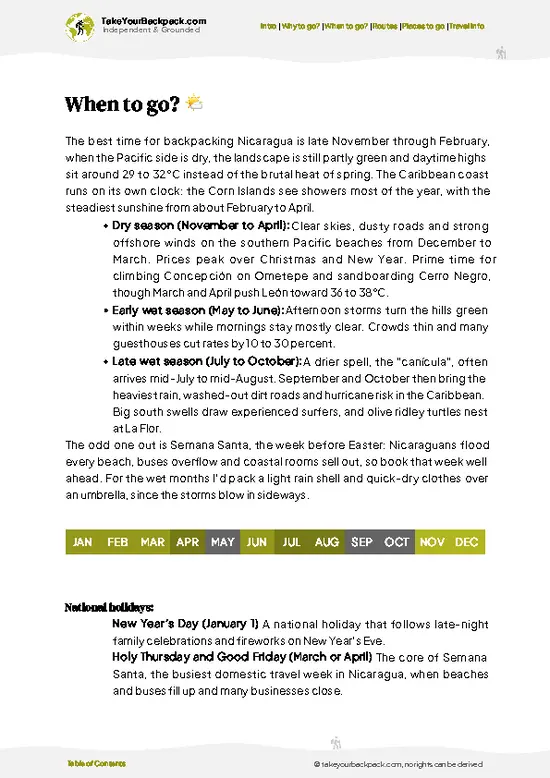
November to April is the easiest window for Chinandega, with dry, sunny days and almost no rain.
  • Dry Season (Nov to Apr): Highs of 33 to 37°C (91 to 99°F), peaking in March and April when the air turns thick and dusty. Cane-burning smoke can hang over the plains. Daylight lasts about 11 to 12 hours. Prices stay steady since few tourists stop here.
  • Wet Season (May to Oct): Highs of 31 to 34°C (88 to 93°F), with storms most afternoons and heavy downpours in September and October. Mornings are usually clear, the fields turn green and the heat feels less brutal. Roads to the coast can get muddy.
  • Festivals: Fiestas of Santa Ana in late July bring parades, music and packed buses.
Plan outdoor trips for early morning and use the afternoon heat for a long lunch.

source: climatestotravel.comJANJanuary: excellent for travelingFEBFebruary: excellent for travelingMARMarch: excellent for travelingAPRApril: highly recommended for travelingMAYMay: fair for travelingJUNJune: fair for travelingJULJuly: fair for travelingAUGAugust: fair for travelingSEPSeptember: fair for travelingOCTOctober: fair for travelingNOVNovember: highly recommended for travelingDECDecember: excellent for traveling
when-to-go

✈️ The backpacker research shortcutNicaragua Travel Guide

An offline-friendly backpacking guide with optimized travel routes, ranked highlights, transport advice, and the best areas to stay.
example page 0 from our offline Travel Guide for Nicaragua
example page 1 from our offline Travel Guide for Nicaragua
example page 2 from our offline Travel Guide for Nicaragua
example page 3 from our offline Travel Guide for Nicaragua
example page 4 from our offline Travel Guide for Nicaragua
example page 5 from our offline Travel Guide for Nicaragua
example page 6 from our offline Travel Guide for Nicaragua
example page 7 from our offline Travel Guide for Nicaragua
The digital guide (256 pages) contains:
✅ 77 highlights, ranked by travel appeal
✅ Optimized 5, 10 & 15-day travel routes
✅ Cities, national parks, landmarks, beaches
✅ How to get around
✅ Offline-friendly for travel without Wi-Fi
👉 Click to see all 30+ guide features

📅 Plan smarter in minutes, not weeks
✅ Month by month travel advice
✅ Festivals & national holidays
✅ Budget expectations

🗺️ Go to the right places, skip the overrated ones
✅ Honest pros & cons of destinations
✅ Top hikes, parks & viewpoints
✅ Lesser-known places most travelers miss
✅ Clear “worth it vs skip it” guidance

🛏️ Travel smoothly without rookie mistakes
✅ Best areas to stay
✅ Transport systems explained simply
✅ Common scams & safety advice
✅ SIM cards, money & practical tips

🌍 Understand the country, not just visit it
✅ Culture & traditions
✅ 52 Essential phrases & customs
✅ Festivals worth planning around
✅ Traveler-friendly historical context
✅ Insights that make places more meaningful

📱 Built for real travel conditions
✅ Fully downloadable PDF
✅ Works completely offline
✅ Optimized for phone use
✅ Useful in remote areas & buses
✅ Everything in one place
Stop searching, start planning
Get instant access to your full guide. 30‑day money-back guarantee.
+ Add another guide for just

By proceeding you agree to our terms.
Sent to your inbox immediately after payment • 100% Secure Checkout
Best Backpacking Travel Advisor 2025 tourism awardBest Backpacking
Travel Advisor
2025
What others say about Take Your Backpack Guides:
⭐⭐⭐⭐⭐
Fantastic, amazing amount of information!
⭐⭐⭐⭐⭐
My goodness this is amazing, it's what I've been looking for hats off too you!
⭐⭐⭐⭐⭐
I think this is absolutely BRILLIANT
⭐⭐⭐⭐
Very complete and informative. It's still missing places, but I gotta to commend you
⭐⭐⭐⭐⭐
This is truly amazing, thank you, can't wait to explore it with my kids!
⭐⭐⭐⭐⭐
Awesome resource, thank you!
⭐⭐⭐⭐⭐
This is amazing! Can't wait to explore the ones I haven't seen
⭐⭐⭐⭐
I love this! Well done, great idea.
⭐⭐⭐⭐⭐
Thanks for taking the time to make this gem!
⭐⭐⭐⭐⭐
This might be the best website I've ever seen.
⭐⭐⭐⭐⭐
Congratulations, and thank you so much for your work; it's incredibly valuable.
⭐⭐⭐⭐
In all seriousness I think you did a great job pointing out the important spots
⭐⭐⭐⭐⭐
10/10 very good
⭐⭐⭐⭐⭐
As someone who's only just starting to visit regularly this is awesome, thank you.
⭐⭐⭐⭐
Thank you very much! I'm going to visit my dad, it's going to be very useful!
⭐⭐⭐⭐⭐
This is really cool! We'll be travelling for the first time and this definitely come in handy.
⭐⭐⭐⭐⭐
You are now our minister of culture, congratulations 👨‍💼
⭐⭐⭐⭐⭐
Just wanted to tell you that this is a pearl! Going to follow your recommendations.
⭐⭐⭐⭐⭐
This is so cool. I'll definitely be using the resource for my travels soon.
⭐⭐⭐⭐⭐
This is very impressive! Good work.
⭐⭐⭐⭐⭐
This is an amazing and informative site. Very well done!

🛏️ Where to stay?Where staying makes the most sense

The central area around Parque Central is the best place to sleep in Chinandega. Budget beds here are mostly basic guesthouses and small hotels with fans or air conditioning, since proper backpacker hostels are scarce. Rooms for one or two people cost roughly US$15 to 35, and a dorm bed, where one exists, is about US$8 to 12. Everything you need is a short walk away, and the main bus terminals are a short, cheap taxi ride. At night the center is lively enough that the streets feel watched, though it quiets after 9 pm. Noise comes mostly from motorbikes and roosters at dawn, so ask for a back room. … read more 👉
The central area around Parque Central is the best place to sleep in Chinandega. Budget beds here are mostly basic guesthouses and small hotels with fans or air conditioning, since proper backpacker hostels are scarce. Rooms for one or two people cost roughly US$15 to 35, and a dorm bed, where one exists, is about US$8 to 12. Everything you need is a short walk away, and the main bus terminals are a short, cheap taxi ride. At night the center is lively enough that the streets feel watched, though it quiets after 9 pm. Noise comes mostly from motorbikes and roosters at dawn, so ask for a back room. A second option is the strip along the main avenue toward the highway, which has slightly newer places with parking and stronger air conditioning, but less atmosphere and more traffic. If you want hostel life and a surf crowd, many travelers sleep in León or on the coast and visit Chinandega only for a day.

🚌 Getting aroundGetting around like a local

Chinandega’s central grid is flat and walkable in about 20 minutes end to end, but the heat and the terminals on the edges are where walking stops making sense. Traffic is a constant mix of bicycles, motos and chicken buses, and the horn is the local language. Public transport is cheap and frequent, though never polished.
  • Walking: Free and best for the park, cathedral and market. Go early or after 4 pm, because midday sun on concrete is punishing.
  • Caponera (motorcycle or pedal cart taxi): The three-wheeled taxis cost about US$0.50 to 1 per person within town. Cheap, breezy and bumpy; agree the fare first.
  • Taxi: Standard cars cost about US$1 to 2 for short rides across town and US$3 to 5 to the bus terminals or edges. Shared rides are common. Worth it at night.
  • Local buses: Old converted school
… read more 👉
Chinandega’s central grid is flat and walkable in about 20 minutes end to end, but the heat and the terminals on the edges are where walking stops making sense. Traffic is a constant mix of bicycles, motos and chicken buses, and the horn is the local language. Public transport is cheap and frequent, though never polished.
  • Walking: Free and best for the park, cathedral and market. Go early or after 4 pm, because midday sun on concrete is punishing.
  • Caponera (motorcycle or pedal cart taxi): The three-wheeled taxis cost about US$0.50 to 1 per person within town. Cheap, breezy and bumpy; agree the fare first.
  • Taxi: Standard cars cost about US$1 to 2 for short rides across town and US$3 to 5 to the bus terminals or edges. Shared rides are common. Worth it at night.
  • Local buses: Old converted school buses to Corinto, Chichigalpa, Posoltega and León run roughly from 5 am to 6 pm. Fares range from US$0.40 to 2, and the seats are tight and loud with vendors. Express minibuses to León (about 1 hour, US$2 to 3) are faster and a better choice.
  • Bicycle: Rentals are rare, but locals cycle everywhere, and a bike suits the flat grid if you find one.
Border traffic to Honduras and El Guasaule uses the same routes, so mornings are busiest.

👛 Costs (as of 20 October 2026)Travel costs and budget guide for Chinandega

Chinandega costs about US$32 to 40 a day for a backpacker, with a total here of US$36 in high season.
CategoryBudget RangeLocal Reality
Dorm accommodation (high season)US$10 to 15Dorms are scarce, so most pay for a basic private room; US$15 to 20 is common.
Dorm accommodation (off-season)US$8 to 12Rooms are easy to bargain down in the wet months.
MealsUS$6 to 10Market plates run US$2 to 4, and a restaurant dinner US$5 to 8.
Local transportUS$2 to 4Buses cost US$0.40 to 2, and caponeras US$0.50 to 1.
City transport passNot availableYou pay per ride in cash.
Basic activities and entry feesUS$3 to 8Most sights are free, and mangrove boat trips cost US$15 to 30.
MiscellaneousUS$2 to 4Water, snacks and a beer at US$1 to 2.
Total Daily BudgetUS$36High-season total with a US$15 bed.
Eat your biggest meal at … read more 👉
Chinandega costs about US$32 to 40 a day for a backpacker, with a total here of US$36 in high season.
CategoryBudget RangeLocal Reality
Dorm accommodation (high season)US$10 to 15Dorms are scarce, so most pay for a basic private room; US$15 to 20 is common.
Dorm accommodation (off-season)US$8 to 12Rooms are easy to bargain down in the wet months.
MealsUS$6 to 10Market plates run US$2 to 4, and a restaurant dinner US$5 to 8.
Local transportUS$2 to 4Buses cost US$0.40 to 2, and caponeras US$0.50 to 1.
City transport passNot availableYou pay per ride in cash.
Basic activities and entry feesUS$3 to 8Most sights are free, and mangrove boat trips cost US$15 to 30.
MiscellaneousUS$2 to 4Water, snacks and a beer at US$1 to 2.
Total Daily BudgetUS$36High-season total with a US$15 bed.
Eat your biggest meal at the market at lunch, when plates are cheapest and freshest. Pay in córdobas for the best rates, though US dollars are accepted in some places.


source: visitnicaragua.us
⚠️ Prices can change and everyone travels differently, so take this as a rough guide. Hope it helps you plan your adventure!

🚌 Day tripsExploring the surroundings

Chinandega works well as a base for volcanoes, beaches and coast, all within about 90 minutes by bus or shared ride.Cosigüina Volcano: The remote peninsula has a crater lake, jungle and views across the Gulf of Fonseca to Honduras and El Salvador. Count three hours each way by bus then a lift, and about US$30 to 60 with guide and transport. Go November to April and set off before dawn; many arrive late and miss the hike window.
👉 Explore Cosigüina VolcanoJiquilillo Beach: A long, quiet strip of black sand and mangrove, about 1.5 to 2 hours by bus via El Viejo. Budget US$5 to 10 for transport and lunch, and more if you rent a kayak. Visit in the dry season for calm water. Don’t arrive late, as the last bus back leaves in mid-afternoon.
Padre Ramos Estuary: Boat trips wind through mangroves with … read more 👉
Chinandega works well as a base for volcanoes, beaches and coast, all within about 90 minutes by bus or shared ride.Cosigüina Volcano: The remote peninsula has a crater lake, jungle and views across the Gulf of Fonseca to Honduras and El Salvador. Count three hours each way by bus then a lift, and about US$30 to 60 with guide and transport. Go November to April and set off before dawn; many arrive late and miss the hike window.
👉 Explore Cosigüina VolcanoJiquilillo Beach: A long, quiet strip of black sand and mangrove, about 1.5 to 2 hours by bus via El Viejo. Budget US$5 to 10 for transport and lunch, and more if you rent a kayak. Visit in the dry season for calm water. Don’t arrive late, as the last bus back leaves in mid-afternoon.
Padre Ramos Estuary: Boat trips wind through mangroves with birds and crabs. It takes about 2 hours from town, and guided outings run US$15 to 30. Best from November to April.
Corinto: Nicaragua’s main port is a short bus ride away, about 30 to 40 minutes and US$1 to 2. The seafront is rough but real, with fried fish and cargo ships. Go in the morning and keep it to a half day.

🍲 FoodWhat to Eat & Drink

Chinandega sits in cashew and sugarcane country, so look for cashews sold roasted by the bag and sweets made from them in the market. The area is also known for quesillo, a tortilla wrapped around soft cheese, pickled onion and cream, sold from street stands for about US$1 to 2. Seafood from the nearby coast is a real draw, with whole fried fish, shrimp and ceviche served at casual spots in Corinto and on the Jiquilillo road. For drinks, try refrescos of cacao, tamarind or jocote in plastic bags, and Flor de Caña rum, which is made in nearby Chichigalpa. Most backpackers eat at the Mercado Central comedores, where a plate of rice, beans and grilled meat runs US$2 to 4, or at plaza-side stalls in the evening, when grills smoke and plastic chairs fill the sidewalk.

🛡️ SafetySafety Tips and Common Scams in Chinandega

Chinandega is generally calm for backpackers, and most problems are petty. Pickpockets and bag snatchers work the Mercado Central and crowded buses, so carry only what you need, keep your phone in a front pocket and hold your daypack in front on chicken buses. After dark the streets away from the plaza empty quickly, and a taxi for US$1 to 2 beats walking alone, especially for women traveling solo. Taxi and caponera drivers may quote higher fares to foreigners, so agree the price before you climb in. Heat is the more common hazard: drink bottled water, wear a hat and avoid midday walking. Border-area touts near El Guasaule can be pushy, so ignore offers of help with paperwork.

FAQFrequently asked questions about Chinandega

Two days is enough for Chinandega itself, covering the Parque Central, the cathedral and Mercado Central. Add one or two days for day trips to Jiquilillo beach (1.5 to 2 hours), Corinto (30 to 40 minutes) or the Cosigüina Volcano (about 3 hours each way). Most travelers pass through in a day en route to Honduras or León.
Chinandega is considered fairly safe for solo backpackers, with petty theft the main concern. Watch your bag at Mercado Central and on crowded buses, and take a taxi for US$1 to 2 after dark rather than walking quiet streets. Agree fares in advance with caponera drivers and carry only the cash you need.
Chinandega is known for its sugarcane and cashew farming, its heat and its position as a gateway to the Honduran border at El Guasaule. Flor de Caña rum is made in nearby Chichigalpa, and Corinto is the country’s main port, 30 to 40 minutes away. The coast beyond, including Jiquilillo and the Cosigüina Volcano, draws most visitors.
⚠️ Things can change over time, so always validate details locally before you go.

Other Nicaraguan cities near Chinandega

Explore more nearby:

  • León—Cerro Negro boarding, rooftop cathedral, Darío house, Sandinista museum| 34 km away
  • Estelí—Cigar factories, revolution murals, pine highlands, Salto Estanzuela| 97 km away
  • Managua—Quake-ruined cathedral, Malecón, Tiscapa crater, transit hub| 112 km away

💡 Not sure where to go next?
Create a personalized itinerary for Nicaragua including Chinandega and the places that fit your trip.

Generate my itinerary

👉 Discover all cities

Or checkout all Nicaragua has to offer (think cities, towns, villages, national parks, hikes, beaches, festivals)
Country photo of Nicaragua

We 💚 feedbackWhat to keep in mind

Chinandega works best as a one-night link between the Honduras border and the Pacific coast, paired with a volcano or beach stop at Cosiguina or Jiquilillo. I would arrive early, eat in the market, and leave the next morning. It is not a place to linger, and that is fine.

✈️ When did I visit Nicaragua?
Nicaragua I visited during my half year trip through South and Central America back in 2003

✍️ Help improve this page!
The information on this page is based on my own backpacking experience in Nicaragua, supplemented with up-to-date research and feedback from other travelers. Travel details can change, so if you notice anything outdated or incomplete, feel free to let me know.


🙋‍♂️ Give feedback

👋 Meet the founderWho’s Behind Take Your Backpack?

Johan, backpacker and founder of TakeYourBackpackHi, I’m Johan (Netherlands 🇳🇱), the creator of TakeYourBackpack. Over the past 3 decades, I’ve backpacked through 90+ countries across six continents, gaining extensive experience with independent travel, long-term trips, and overland routes.

This site is built on a combination of firsthand travel experience and carefully curated insights from other backpackers. Many guides are based on places I’ve personally visited, while others bring together tips, observations, and practical advice shared by trusted travelers I’ve met along the way.

The goal is to provide realistic, experience-driven guidance — not generic itineraries — so you can explore destinations with better context, clearer expectations, and more confidence.