×

Nicaragua🇳🇮 | citiesMatagalpaCoffee highlands, cloud forest, Sandinista birthplace, Selva Negra | things to do and best time to go

Explore EstelíExplore Chinandega

Backpacking in Matagalpa
👍 Recommendedcity ranked #5
By Johan Kruseman 🇳🇱 | Updated October 20, 2026

The woman at the stall in the Mercado de Matagalpa slid a plastic cup of cold pinolillo across the counter, cacao and toasted corn gritty at the bottom, while a chicken bus idled outside and blasted its horn. I drank it standing up, as locals do, and you should copy that. Matagalpa sits in the northern highlands of Nicaragua, in coffee country, and it works best as a base for farms and cloud forest rather than as a sightseeing city. The cathedral and the market are worth an hour or two each. The traffic, exhaust and concrete sprawl are not worth lingering over, so keep your time in town short. Hostels are few and the nightlife is quiet. Carry cash in córdobas before you arrive, because ATMs here can run dry on weekends.

Discover everything you want to know in the 📖 Nicaragua Travel Guide.


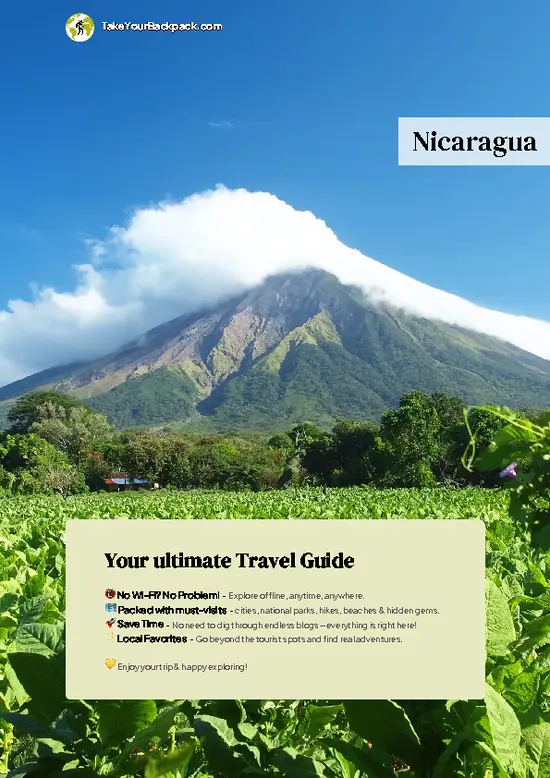
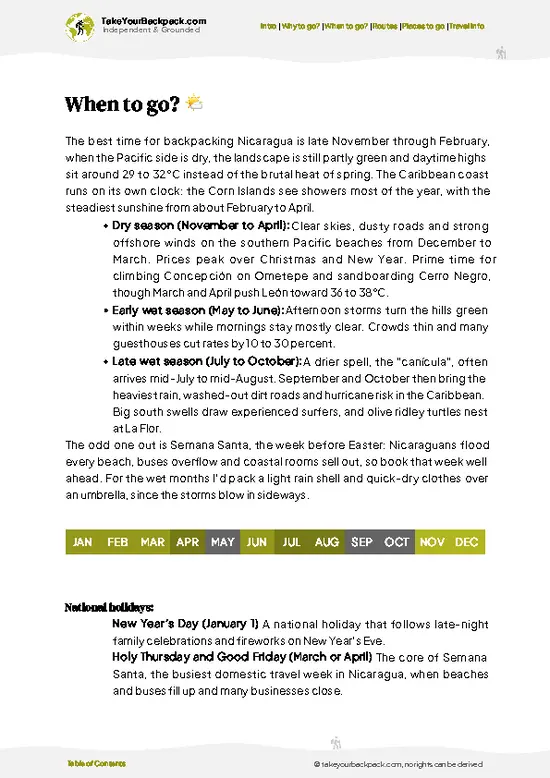
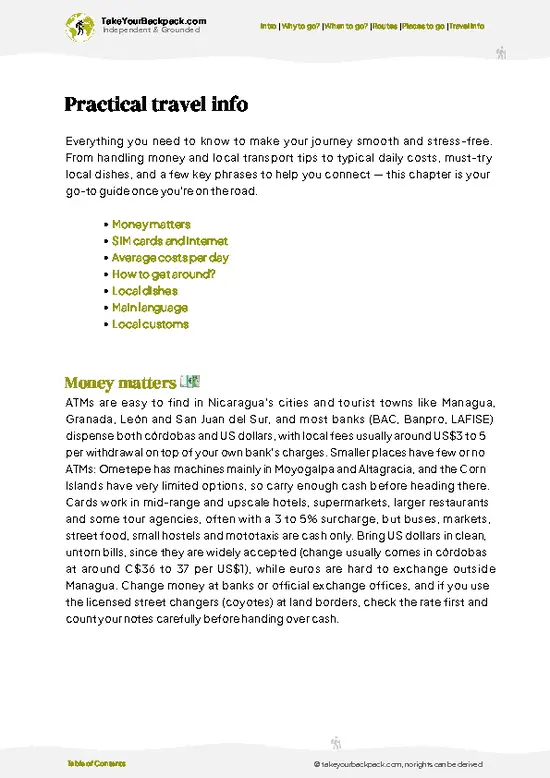
example page 0 from our offline Travel Guide for Nicaragua
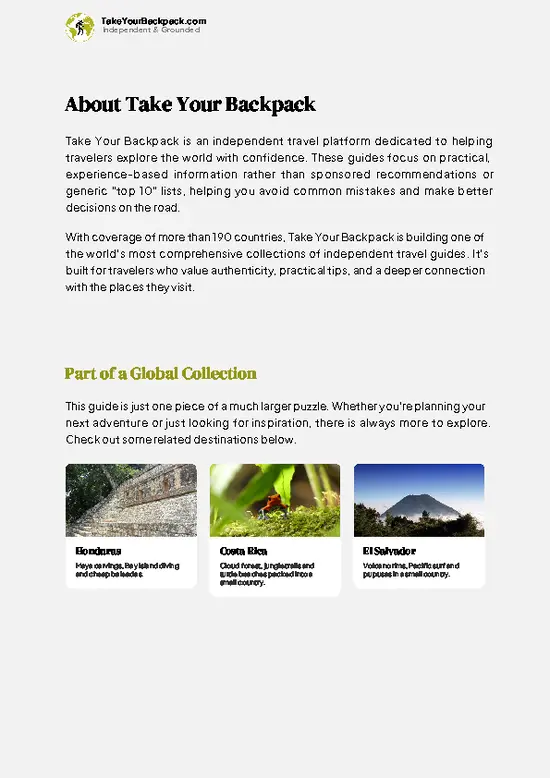
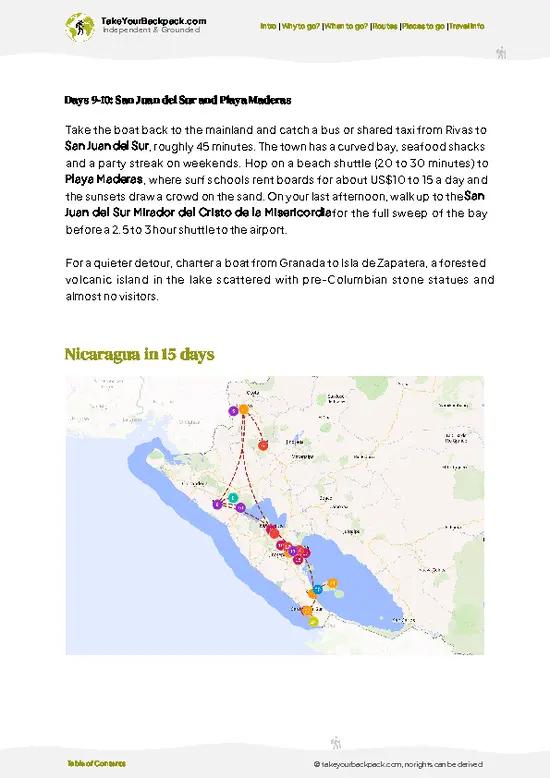
example page 1 from our offline Travel Guide for Nicaragua
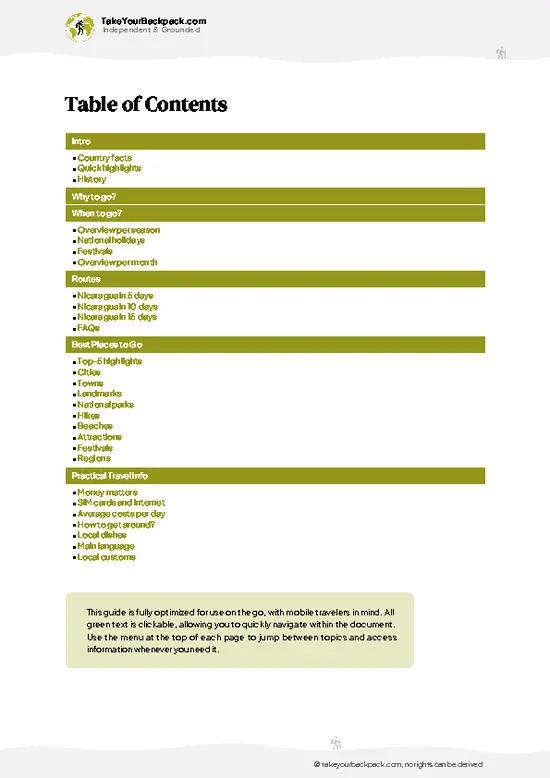
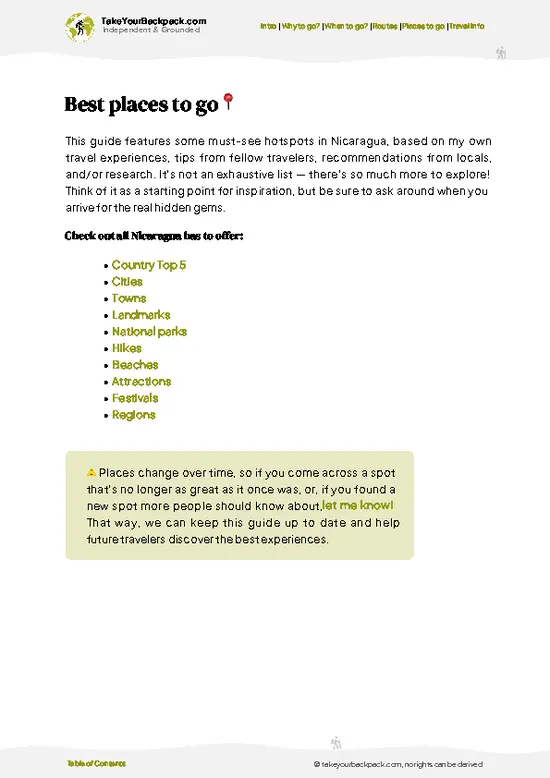
example page 2 from our offline Travel Guide for Nicaragua
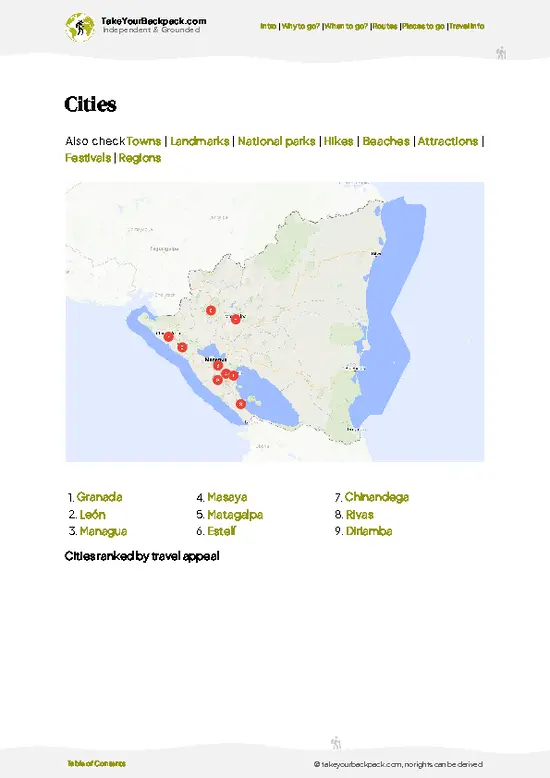
example page 3 from our offline Travel Guide for Nicaragua
example page 4 from our offline Travel Guide for Nicaragua
example page 5 from our offline Travel Guide for Nicaragua
example page 6 from our offline Travel Guide for Nicaragua
example page 7 from our offline Travel Guide for Nicaragua
Loading the map 🌍
CLICK TO FILTER
cities
towns
landmarks
national parks
hikes
beaches
attractions
festivals
regions
SHOW COUNTRY’S BESTSHOW ALL

✨ Why go?
Ranked #5 city in Nicaragua
What makes it a must-see city

Matagalpa earns a place on a northern Nicaragua route because it puts you in the middle of the country’s best coffee land without the cost of a resort. Most people come for the farms and the cloud forest, then use the town as a place to wash laundry, eat and sleep before moving on. Hostel options are limited, but the few that exist run coffee farm tours and guided hikes and are good for meeting other travelers. The center is compact, so you can cover the cathedral, central park and market on foot in a morning, which leaves your afternoons free. Onward travel is easy, with frequent minibuses to Jinotega, Estelí and Managua. The town itself has little nightlife, so if you want bars and a beach scene, go elsewhere. If you like early starts and mud on your boots, a few nights here will suit you well.

💡 HighlightsTop highlights of Matagalpa

  1. Catedral de San Pedro: The yellow-and-white cathedral on the central park is the town’s best-known landmark, with a calm interior that contrasts with the traffic outside. Free entry, 15 to 30 minutes. Go in the morning, when the doors are usually open.
  2. Parque Darío: The central plaza is where families, shoeshiners and students gather under the trees. Free, and 30 minutes is enough. Early evening is the liveliest time.
  3. Casa Museo Comandante Carlos Fonseca: This is the birthplace of the Sandinista movement’s founder, with photos and documents on the revolution. Entry is by small donation, roughly US$1 to 2. Allow 30 to 45 minutes and visit on a weekday morning.
  4. Mercado de Matagalpa: Crowded aisles sell produce, tortillas, cheese and cheap fried food, with stalls selling local coffee. Free to enter,
… read more 👉
  1. Catedral de San Pedro: The yellow-and-white cathedral on the central park is the town’s best-known landmark, with a calm interior that contrasts with the traffic outside. Free entry, 15 to 30 minutes. Go in the morning, when the doors are usually open.
  2. Parque Darío: The central plaza is where families, shoeshiners and students gather under the trees. Free, and 30 minutes is enough. Early evening is the liveliest time.
  3. Casa Museo Comandante Carlos Fonseca: This is the birthplace of the Sandinista movement’s founder, with photos and documents on the revolution. Entry is by small donation, roughly US$1 to 2. Allow 30 to 45 minutes and visit on a weekday morning.
  4. Mercado de Matagalpa: Crowded aisles sell produce, tortillas, cheese and cheap fried food, with stalls selling local coffee. Free to enter, with meals around US$2 to 4. Allow one hour, and go in the morning when stock is freshest.
  5. Selva Negra Ecolodge is a working coffee estate with cloud forest trails, a small lake and birdlife, reached by road from town. Day entry is about US$5 to 8, trails take 2 to 4 hours, and the early morning is best for birds.
  6. Museo del Café: A small museum explaining how coffee is grown, processed and exported in the region. Entry is about US$2 to 4, and you need about an hour. Go on a weekday, when it is quietest.
  7. Cerro Apante Nature Reserve: A hill on the edge of town with forest trails and views over the valley. Entry is about US$2 to 3, the hike takes 2 to 3 hours, and early morning is best before clouds build.
Matagalpa also works as a base for day trips to Jinotega, the Cerro El Arenal reserve, Tisey and the coffee villages near Selva Negra. Selva Negra is worth booking ahead if you want a guided tour or a room.
Spotted a mistake or missing something? Contact us.

Things to do near Matagalpa

Ratings based on Tripadvisor reviews. When you book through this link, you support our work at no extra cost to you.

🏘️ NeighborhoodsWhere things are and how it's laid out

Matagalpa is a long, narrow city strung along one river valley, and nearly everything a backpacker wants sits within a 15 minute walk of the cathedral.
  • Centro: Spend most of your time here. Parque Rubén Darío and the twin-towered cathedral anchor a grid of narrow streets where tin-roofed stalls sell fried cheese, coffee beans and secondhand sneakers. Mornings smell of roasting coffee and diesel. Expect honking, loudspeakers and uneven sidewalks that need your eyes on the ground.
  • Barrio Guanuca and the river edge: Worth an hour, not a day. You cross the Río Grande de Matagalpa on a bridge, and the stretch beside it is gritty, with laundry on fences and the occasional ripe whiff of the water. The payoff is seeing how locals actually live.
  • Calle Central strip to the north: Quieter and greener, with
… read more 👉
Matagalpa is a long, narrow city strung along one river valley, and nearly everything a backpacker wants sits within a 15 minute walk of the cathedral.
  • Centro: Spend most of your time here. Parque Rubén Darío and the twin-towered cathedral anchor a grid of narrow streets where tin-roofed stalls sell fried cheese, coffee beans and secondhand sneakers. Mornings smell of roasting coffee and diesel. Expect honking, loudspeakers and uneven sidewalks that need your eyes on the ground.
  • Barrio Guanuca and the river edge: Worth an hour, not a day. You cross the Río Grande de Matagalpa on a bridge, and the stretch beside it is gritty, with laundry on fences and the occasional ripe whiff of the water. The payoff is seeing how locals actually live.
  • Calle Central strip to the north: Quieter and greener, with cafés, a few bars with live guitar and cooler evening air. This is the better place for a beer after dark, and it is easy to walk.
  • Selva Negra road and the hills: Not walkable from town. Cloud forest, coffee farms and the smell of wet leaves reward a day out, but skip trying it on foot.

⌛️ 1 day1-day itinerary for Matagalpa

7:30 AM: Parque Darío and the cathedral. Start at the central park while the air is cool and the shoeshiners are setting up. Walk into the Catedral de San Pedro for a quiet look before the traffic builds. It is the easiest orientation point in town.
9:00 AM: Mercado de Matagalpa. Walk a few blocks to the market for breakfast, with gallo pinto, cheese and strong coffee at one of the stalls. Browse the produce aisles and look for local honey and roasted beans to take home.
11:00 AM: Casa Museo Comandante Carlos Fonseca. A short walk takes you to the birthplace of the Sandinista founder. It is small, but it gives useful context on the region’s politics.
12:30 PM: Lunch. Eat a plate of grilled meat or soup at a family-run comedor near the center. Order the set lunch, which is the best value.
2:00 … read more 👉
7:30 AM: Parque Darío and the cathedral. Start at the central park while the air is cool and the shoeshiners are setting up. Walk into the Catedral de San Pedro for a quiet look before the traffic builds. It is the easiest orientation point in town.
9:00 AM: Mercado de Matagalpa. Walk a few blocks to the market for breakfast, with gallo pinto, cheese and strong coffee at one of the stalls. Browse the produce aisles and look for local honey and roasted beans to take home.
11:00 AM: Casa Museo Comandante Carlos Fonseca. A short walk takes you to the birthplace of the Sandinista founder. It is small, but it gives useful context on the region’s politics.
12:30 PM: Lunch. Eat a plate of grilled meat or soup at a family-run comedor near the center. Order the set lunch, which is the best value.
2:00 PM: Museo del Café. Walk or take a short taxi ride to learn how local beans are grown and processed. It helps you appreciate the coffee you will drink afterward.
4:00 PM: Cerro Apante. Skip the busy streets and go up to the reserve, a corner of Matagalpa most visitors never reach. The forest trails are quiet, and the viewpoint looks over the valley as the afternoon softens. Take a taxi to the entrance and walk down if you have energy.
6:30 PM: Dinner back in the center. Finish with a plate of nacatamal or a cold drink in the park, watching families settle onto the benches.

🌤️ When to go?Choosing the right time of year

Matagalpa sits at about 700 meters, so it stays milder than the Pacific lowlands, and December to April is the easiest window for hiking and coffee farm visits.
  • Dry Season (December to April): Days run 24 to 29°C (75 to 84°F), nights drop to 16 to 19°C (61 to 66°F), and the hills turn brown by March. This is also coffee harvest time, roughly November to February, so farms are busy and lively.
  • Green Season (May to October): Expect 22 to 27°C (72 to 81°F), with afternoon downpours and misty mornings. Trails get muddy, but the cloud forest is lush, crowds thin out and beds are easy to find.
  • Holidays: Christmas, Semana Santa and the late-August San Ramón festivities fill buses and nudge prices up. Daylight is about 11 to 12 hours year-round.
Go in the first half of the dry season for green hills with reliable weather.

source: climatestotravel.comJANJanuary: highly recommended for travelingFEBFebruary: highly recommended for travelingMARMarch: highly recommended for travelingAPRApril: highly recommended for travelingMAYMay: fair for travelingJUNJune: fair for travelingJULJuly: fair for travelingAUGAugust: fair for travelingSEPSeptember: fair for travelingOCTOctober: fair for travelingNOVNovember: good for travelingDECDecember: highly recommended for traveling
when-to-go

✈️ The backpacker research shortcutNicaragua Travel Guide

An offline-friendly backpacking guide with optimized travel routes, ranked highlights, transport advice, and the best areas to stay.
example page 0 from our offline Travel Guide for Nicaragua
example page 1 from our offline Travel Guide for Nicaragua
example page 2 from our offline Travel Guide for Nicaragua
example page 3 from our offline Travel Guide for Nicaragua
example page 4 from our offline Travel Guide for Nicaragua
example page 5 from our offline Travel Guide for Nicaragua
example page 6 from our offline Travel Guide for Nicaragua
example page 7 from our offline Travel Guide for Nicaragua
The digital guide (256 pages) contains:
✅ 77 highlights, ranked by travel appeal
✅ Optimized 5, 10 & 15-day travel routes
✅ Cities, national parks, landmarks, beaches
✅ How to get around
✅ Offline-friendly for travel without Wi-Fi
👉 Click to see all 30+ guide features

📅 Plan smarter in minutes, not weeks
✅ Month by month travel advice
✅ Festivals & national holidays
✅ Budget expectations

🗺️ Go to the right places, skip the overrated ones
✅ Honest pros & cons of destinations
✅ Top hikes, parks & viewpoints
✅ Lesser-known places most travelers miss
✅ Clear “worth it vs skip it” guidance

🛏️ Travel smoothly without rookie mistakes
✅ Best areas to stay
✅ Transport systems explained simply
✅ Common scams & safety advice
✅ SIM cards, money & practical tips

🌍 Understand the country, not just visit it
✅ Culture & traditions
✅ 52 Essential phrases & customs
✅ Festivals worth planning around
✅ Traveler-friendly historical context
✅ Insights that make places more meaningful

📱 Built for real travel conditions
✅ Fully downloadable PDF
✅ Works completely offline
✅ Optimized for phone use
✅ Useful in remote areas & buses
✅ Everything in one place
Stop searching, start planning
Get instant access to your full guide. 30‑day money-back guarantee.
+ Add another guide for just

By proceeding you agree to our terms.
Sent to your inbox immediately after payment • 100% Secure Checkout
Best Backpacking Travel Advisor 2025 tourism awardBest Backpacking
Travel Advisor
2025
What others say about Take Your Backpack Guides:
⭐⭐⭐⭐⭐
Fantastic, amazing amount of information!
⭐⭐⭐⭐⭐
My goodness this is amazing, it's what I've been looking for hats off too you!
⭐⭐⭐⭐⭐
I think this is absolutely BRILLIANT
⭐⭐⭐⭐
Very complete and informative. It's still missing places, but I gotta to commend you
⭐⭐⭐⭐⭐
This is truly amazing, thank you, can't wait to explore it with my kids!
⭐⭐⭐⭐⭐
Awesome resource, thank you!
⭐⭐⭐⭐⭐
This is amazing! Can't wait to explore the ones I haven't seen
⭐⭐⭐⭐
I love this! Well done, great idea.
⭐⭐⭐⭐⭐
Thanks for taking the time to make this gem!
⭐⭐⭐⭐⭐
This might be the best website I've ever seen.
⭐⭐⭐⭐⭐
Congratulations, and thank you so much for your work; it's incredibly valuable.
⭐⭐⭐⭐
In all seriousness I think you did a great job pointing out the important spots
⭐⭐⭐⭐⭐
10/10 very good
⭐⭐⭐⭐⭐
As someone who's only just starting to visit regularly this is awesome, thank you.
⭐⭐⭐⭐
Thank you very much! I'm going to visit my dad, it's going to be very useful!
⭐⭐⭐⭐⭐
This is really cool! We'll be travelling for the first time and this definitely come in handy.
⭐⭐⭐⭐⭐
You are now our minister of culture, congratulations 👨‍💼
⭐⭐⭐⭐⭐
Just wanted to tell you that this is a pearl! Going to follow your recommendations.
⭐⭐⭐⭐⭐
This is so cool. I'll definitely be using the resource for my travels soon.
⭐⭐⭐⭐⭐
This is very impressive! Good work.
⭐⭐⭐⭐⭐
This is an amazing and informative site. Very well done!

🛏️ Where to stay?Best areas and accommodation options

The center, within a few blocks of Parque Rubén Darío, is the best area for a budget bed, with hostels and cheap guesthouses, plus taxis and the bus terminals a short ride away. Dorms are limited in number, so private rooms for two often cost about the same per person. Book ahead in the harvest months and holiday weeks.
The center is walkable, has restaurants and shops close by, and feels fine in the evening on main streets. The downside is noise: horns, market loudspeakers and early trucks start before dawn, so bring earplugs and ask for a room away from the street.
The quieter northern edge of … read more 👉
The center, within a few blocks of Parque Rubén Darío, is the best area for a budget bed, with hostels and cheap guesthouses, plus taxis and the bus terminals a short ride away. Dorms are limited in number, so private rooms for two often cost about the same per person. Book ahead in the harvest months and holiday weeks.
The center is walkable, has restaurants and shops close by, and feels fine in the evening on main streets. The downside is noise: horns, market loudspeakers and early trucks start before dawn, so bring earplugs and ask for a room away from the street.
The quieter northern edge of town, along the upper Calle Central and toward the residential hillsides, is the second option. It suits travelers who want cooler air, birdsong and less traffic, and a short taxi ride gets you to the center. Choices are fewer and some places are small family-run guesthouses, so a message in advance helps. For farm stays and cloud forest lodging outside town you need your own transport, so keep those for a night away rather than a base.

🚌 Getting aroundHow to get from A to B

Matagalpa punishes anyone who boards the first bus that stops for them, because the slow, crammed chicken buses and the faster express minibuses leave from different terminals for the same destinations, and picking wrong can add an hour or more to a trip. The center is compact and flat enough to cross on foot, while the surrounding hills need wheels. Traffic jams around the market and the main avenue, and the air carries diesel and grilled corn in equal measure.
  • Walking: Best for the center. You can reach the cathedral, market, parks and most cafés in 15 minutes. Watch for broken sidewalks and cars that ignore crossings.
  • Taxis: Shared taxis run set routes inside town for about US$0.30 to 0.60 a seat, and they stop wherever you flag them. A private ride costs US$1.50 to 3. Agree the fare first,
… read more 👉
Matagalpa punishes anyone who boards the first bus that stops for them, because the slow, crammed chicken buses and the faster express minibuses leave from different terminals for the same destinations, and picking wrong can add an hour or more to a trip. The center is compact and flat enough to cross on foot, while the surrounding hills need wheels. Traffic jams around the market and the main avenue, and the air carries diesel and grilled corn in equal measure.
  • Walking: Best for the center. You can reach the cathedral, market, parks and most cafés in 15 minutes. Watch for broken sidewalks and cars that ignore crossings.
  • Taxis: Shared taxis run set routes inside town for about US$0.30 to 0.60 a seat, and they stop wherever you flag them. A private ride costs US$1.50 to 3. Agree the fare first, as there are no meters.
  • Local buses: Old school buses reach the outer barrios and nearby villages for US$0.30 to 1. They are loud, packed and often hot, but the cheapest option by far. Services thin out after about 6 pm.
  • Express minibuses: The sensible choice to Managua (2.5 to 3 hours, US$3 to 4), Estelí (about 1.5 hours, US$2 to 3) and Jinotega (about 1.5 hours, US$2). They leave when full, so mornings are best. Worth the extra dollar over slow buses.
  • Hired pickups or tuk-tuk style rides: For farms and Selva Negra, a pickup or taxi for the day costs about US$25 to 40 split among passengers. Skip it if you can fill the seats with other travelers.

👛 Costs (as of 20 October 2026)Typical daily expenses

Matagalpa costs backpackers about US$34 a day in high season, and it is one of the cheaper bases in Nicaragua. The table below shows realistic ranges.
CategoryBudget RangeLocal Reality
Dorm (high season)US$10 to 14Limited dorms; private rooms near US$20 to 25 for two
Dorm (off-season)US$8 to 11Easy to negotiate
MealsUS$8 to 12Market plates US$2 to 4, café meals US$5 to 8
Local transportUS$2 to 4Shared taxis and local buses
City transport passNot availablePay per ride
Basic activities/entry feesUS$5 to 8Farms and reserves charge US$5 to 10
MiscellaneousUS$3 to 5Water, coffee, a beer
Total Daily BudgetUS$34Based on high-season dorm, mid-range of other rows
Eat your main meal at the market at lunchtime and share pickup costs to farms and Selva Negra to keep the budget low.

source: visitnicaragua.us
⚠️ Prices can change and everyone travels differently, so take this as a rough guide. Hope it helps you plan your adventure!

🚌 Day tripsWhere to go beyond the main area

Matagalpa works well as a base for the surrounding hills, and most trips are easy by morning bus or shared pickup.
Selva Negra: A working coffee estate with cloud forest trails, about 30 to 40 minutes north by bus or taxi. Expect mist, howler monkeys and cool air. Entry runs about US$5 to 10, and with transport a day costs around US$15 to 25. Go early, and don’t arrive without checking the last bus back, which first-timers often miss.
👉 Explore Selva Negra
Cerro Apante: A pine and cloud forest reserve above town with a steep hike to a viewpoint over the valley. It is 20 to 30 minutes away, and the walk costs under US$5 with a taxi. Choose a clear morning, since afternoon cloud blocks the view.

Jinotega: A coffee town about 1.5 hours north, with a quieter feel and access to Lake Apanás. The minibus … read more 👉
Matagalpa works well as a base for the surrounding hills, and most trips are easy by morning bus or shared pickup.
Selva Negra: A working coffee estate with cloud forest trails, about 30 to 40 minutes north by bus or taxi. Expect mist, howler monkeys and cool air. Entry runs about US$5 to 10, and with transport a day costs around US$15 to 25. Go early, and don’t arrive without checking the last bus back, which first-timers often miss.
👉 Explore Selva Negra
Cerro Apante: A pine and cloud forest reserve above town with a steep hike to a viewpoint over the valley. It is 20 to 30 minutes away, and the walk costs under US$5 with a taxi. Choose a clear morning, since afternoon cloud blocks the view.

Jinotega: A coffee town about 1.5 hours north, with a quieter feel and access to Lake Apanás. The minibus costs US$2 and a return day is about US$10 to 15. Leave by 8 am to avoid a rushed return.

Sébaco and Valle de Sébaco: A hot, flat farming valley about 45 minutes south, known for onions and its market. The bus costs under US$2 each way. It is more of a local look than a sightseeing stop, so keep it to a morning.

🍲 FoodLocal Cuisine & Drinks

Matagalpa is coffee country, so start with a cup of locally grown coffee, often strong, dark and poured in small cafés that roast on site. The cooler highland air also supports cuajada (fresh, salty white cheese) and quesillo, sold from roadside stalls wrapped in a warm tortilla with pickled onion and cream. Look for sopa de mondongo and hearty beef stews on weekends, as well as freshly pressed tortillas with grilled meat from street carts after dark.
For cheap meals, the central market and the fondas around it serve a plate of rice, beans, plantain and meat for about US$2 to 4. Evening street stalls near the park sell grilled meat, fried plantains and sweet corn drinks like pinolillo and chicha for under US$1.50. Bakeries sell rosquillas, crunchy corn-cheese rings that pair well with coffee. … read more 👉
Matagalpa is coffee country, so start with a cup of locally grown coffee, often strong, dark and poured in small cafés that roast on site. The cooler highland air also supports cuajada (fresh, salty white cheese) and quesillo, sold from roadside stalls wrapped in a warm tortilla with pickled onion and cream. Look for sopa de mondongo and hearty beef stews on weekends, as well as freshly pressed tortillas with grilled meat from street carts after dark.
For cheap meals, the central market and the fondas around it serve a plate of rice, beans, plantain and meat for about US$2 to 4. Evening street stalls near the park sell grilled meat, fried plantains and sweet corn drinks like pinolillo and chicha for under US$1.50. Bakeries sell rosquillas, crunchy corn-cheese rings that pair well with coffee.
For an evening beer, cafés and small bars along the northern Calle Central have a relaxed, guitar-and-conversation vibe. Cold Toña or Victoria costs about US$1.50 to 2.50.

🛡️ SafetyScams, Hazards, and Annoyances

Matagalpa is broadly safe for backpackers, and most problems are petty. Pickpocketing and bag snatching happen in the crowded market and around the bus terminals, so carry a small day bag in front and leave your passport in your room. Main streets around the park are fine in the evening, but poorly lit side streets and the riverbank are best avoided after dark; take a taxi instead of walking, even for a few blocks. Solo travelers, including women, generally report no trouble, though catcalls happen and a firm no works. Taxis have no meters, so settle the fare first to avoid overcharging. Hiking the hills near town is safer with a guide or a group, and checking local conditions after heavy rain helps with muddy trails and landslides. Keep a little cash handy for small bills.

FAQFrequently asked questions about Matagalpa

Two to three days is enough for Matagalpa. One day covers the center, the market and the cathedral, while a second goes to Selva Negra (about 30 to 40 minutes away) or Cerro Apante for hiking. Add a third day if you want a coffee farm tour or a trip to Jinotega, about 1.5 hours north.
Matagalpa is generally safe for solo backpackers, with petty theft the main concern. Keep valuables hidden in the market and near bus terminals, and take a taxi (about US$1.50 to 3) after dark rather than walking side streets or the riverbank. Women traveling alone report few problems beyond catcalls, and hiking is better with a guide or group.
Matagalpa is known for coffee, with farms in the surrounding hills producing some of Nicaragua’s best beans. The cloud forest of Selva Negra and the Cerro Apante reserve draw hikers, and the town is the birthplace of poet Rubén Darío’s era neighbors and the home of a lively central market. It sits at about 700 meters, so the climate is cooler than the lowlands.
⚠️ Things can change over time, so always validate details locally before you go.

Other Nicaraguan cities near Matagalpa

Explore more nearby:

  • Estelí—Cigar factories, revolution murals, pine highlands, Salto Estanzuela| 52 km away
  • Managua—Quake-ruined cathedral, Malecón, Tiscapa crater, transit hub| 97 km away
  • Masaya—Smoking crater, artisan market, Thursday verbena, hammock weavers| 108 km away

💡 Not sure where to go next?
Create a personalized itinerary for Nicaragua including Matagalpa and the places that fit your trip.

Generate my itinerary

👉 Discover all cities

Or checkout all Nicaragua has to offer (think cities, towns, villages, national parks, hikes, beaches, festivals)
Country photo of Nicaragua

We 💚 feedbackFinal thoughts on visiting Matagalpa

Matagalpa suits travelers who like coffee, birdwatching and slow mornings more than nightlife. It is a practical stopover, not a destination to rush through or cram into one day. I would give it two or three nights, spend one of them at a farm, and bring a rain jacket.

✈️ When did I visit Nicaragua?
Nicaragua I visited during my half year trip through South and Central America back in 2003

✍️ Help improve this page!
The information on this page is based on my own backpacking experience in Nicaragua, supplemented with up-to-date research and feedback from other travelers. Travel details can change, so if you notice anything outdated or incomplete, feel free to let me know.


🙋‍♂️ Give feedback

👋 Meet the founderWho’s Behind Take Your Backpack?

Johan, backpacker and founder of TakeYourBackpackHi, I’m Johan (Netherlands 🇳🇱), the creator of TakeYourBackpack. Over the past 3 decades, I’ve backpacked through 90+ countries across six continents, gaining extensive experience with independent travel, long-term trips, and overland routes.

This site is built on a combination of firsthand travel experience and carefully curated insights from other backpackers. Many guides are based on places I’ve personally visited, while others bring together tips, observations, and practical advice shared by trusted travelers I’ve met along the way.

The goal is to provide realistic, experience-driven guidance — not generic itineraries — so you can explore destinations with better context, clearer expectations, and more confidence.