×

Nicaragua🇳🇮 | citiesGranadaMustard cathedral, La Calzada, lakeshore, Choco Museo | things to do and best time to go

Explore San Juan del SurExplore León

Backpacking in Granada
🏆 Top pickcity ranked #1
By Johan Kruseman 🇳🇱 | Updated October 22, 2026

Granada is small enough that you can leave your bags at the hostel and cover every main sight on foot, and that is the smart way to do it. The city sits on the northwest shore of Lake Nicaragua, in the southwest of Nicaragua, and its colonial grid is flat and easy to read. Streets are painted mustard, salmon and turquoise, and by late afternoon the cobbles smell of horse, frying plantain and wood smoke. My mistake was climbing into a horse carriage without naming a price, because drivers quote high at the end, not the start. Experienced travelers agree the fare first or just walk. Mosquito-heavy dusk by the lake is also why locals sit on doorstep chairs instead of the shore. The trade-off is a polished, tourist-focused center with higher prices. Compared with León, Granada is tidier and more relaxed, while León is rougher and more student-driven.

Discover everything you want to know in the 📖 Nicaragua Travel Guide.


example page 0 from our offline Travel Guide for Nicaragua
example page 1 from our offline Travel Guide for Nicaragua
example page 2 from our offline Travel Guide for Nicaragua
example page 3 from our offline Travel Guide for Nicaragua
example page 4 from our offline Travel Guide for Nicaragua
example page 5 from our offline Travel Guide for Nicaragua
example page 6 from our offline Travel Guide for Nicaragua
example page 7 from our offline Travel Guide for Nicaragua
Loading the map 🌍
CLICK TO FILTER
cities
towns
landmarks
national parks
hikes
beaches
attractions
festivals
regions
SHOW COUNTRY’S BESTSHOW ALL

✨ Why go?
Ranked #1 city in Nicaragua
What sets this place apart

Granada works for backpackers because so much sits within a dozen blocks of the plaza, which means you can drop your pack, skip taxis altogether and still see most of the old town in a day. Hostels here run from cheap dorms with pools to quiet courtyard houses, and the social scene is easy: you meet people at breakfast and are booking a tour together by lunch. The real draw is the position. Granada is a launch point for the volcano, lagoon and lake trips around it, so a few nights here can anchor a week without repacking. Shared shuttles leave for the Pacific beaches, Ometepe, Costa Rica and the capital, and that makes Granada a natural link in a Nicaragua loop alongside León and San Juan del Sur. For nightlife, the strip of bars along Calle La Calzada stays lively and easy to walk home from. … read more 👉
Granada works for backpackers because so much sits within a dozen blocks of the plaza, which means you can drop your pack, skip taxis altogether and still see most of the old town in a day. Hostels here run from cheap dorms with pools to quiet courtyard houses, and the social scene is easy: you meet people at breakfast and are booking a tour together by lunch. The real draw is the position. Granada is a launch point for the volcano, lagoon and lake trips around it, so a few nights here can anchor a week without repacking. Shared shuttles leave for the Pacific beaches, Ometepe, Costa Rica and the capital, and that makes Granada a natural link in a Nicaragua loop alongside León and San Juan del Sur. For nightlife, the strip of bars along Calle La Calzada stays lively and easy to walk home from. Food is a step up in price from elsewhere in the country, and the Mercado Municipal remains the smarter place to eat if you want local plates. Expect a short stop of two or three nights, longer if you use it as a base.

💡 HighlightsPlaces and moments you shouldn't skip

  1. Catedral de Granada: The mustard-yellow cathedral on Parque Central is the image most people search for. Inside it is spare and cool, and the exterior glows best in late afternoon. Entry is free, and 20 to 30 minutes is plenty.
  2. Iglesia de la Merced bell tower: Climb the narrow stairs for a view over terracotta roofs, the cathedral dome and the lake beyond. Go early morning or just before dusk. Entry is about US$1 to 2, and it takes 30 minutes.
  3. Convento y Museo San Francisco: One of the oldest religious buildings in the city, it houses basalt statues carved by pre-Columbian peoples from Zapatera Island, plus local art and old photos. Mornings are quietest. Tickets run about US$3 to 5, and you need 1 to 1.5 hours.
  4. Calle La Calzada: A pedestrian street running from the plaza toward the lake, lined
… read more 👉
  1. Catedral de Granada: The mustard-yellow cathedral on Parque Central is the image most people search for. Inside it is spare and cool, and the exterior glows best in late afternoon. Entry is free, and 20 to 30 minutes is plenty.
  2. Iglesia de la Merced bell tower: Climb the narrow stairs for a view over terracotta roofs, the cathedral dome and the lake beyond. Go early morning or just before dusk. Entry is about US$1 to 2, and it takes 30 minutes.
  3. Convento y Museo San Francisco: One of the oldest religious buildings in the city, it houses basalt statues carved by pre-Columbian peoples from Zapatera Island, plus local art and old photos. Mornings are quietest. Tickets run about US$3 to 5, and you need 1 to 1.5 hours.
  4. Calle La Calzada: A pedestrian street running from the plaza toward the lake, lined with restaurants, bars and musicians. It is most atmospheric from early evening. It is free, and an hour or two with dinner is typical.
  5. Fortaleza La Pólvora: A small 1748 fortress built to defend against pirate raids, with thick stone walls and a rooftop view. Go on a morning when it is quiet. Entry is about US$2 to 3, and 45 minutes is enough.
  6. Choco Museo: A hands-on cacao workshop where you roast, grind and make chocolate from local beans. Mornings usually have the most space. Workshops cost about US$20 to 30, and take 1.5 to 2 hours.
  7. Lakeshore at Puerto Asese: A quiet spot on the shore where fishing boats come and go and families gather on weekends. Go late afternoon. It is free to wander, and an hour is enough.
  8. Mercado Municipal: The everyday market where locals buy produce, herbs and cheap meals. Go before noon for the best selection. Plan on US$2 to 4 for a plate and 45 minutes to look around.
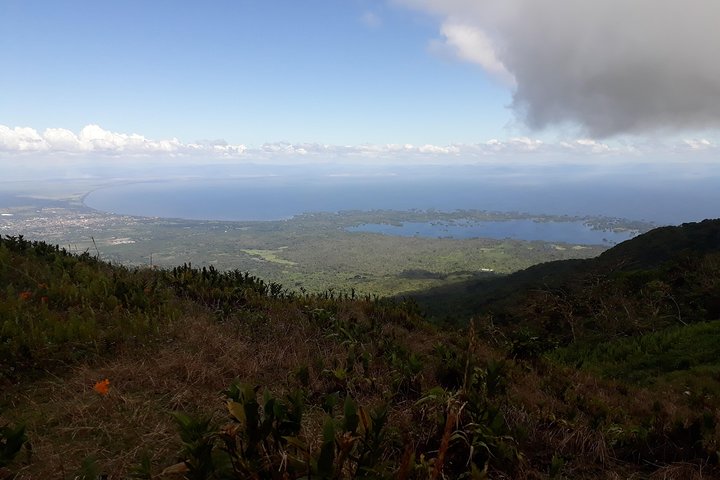
From Granada, easy day trips include Laguna de Apoyo for swimming, Volcán Mombacho for cloud forest walks, Las Isletas for kayaking among small islands, and Masaya Volcano and the Catarina viewpoint.
The Iglesia de la Merced tower and the Convento San Francisco sit a few blocks apart, so they pair well in one morning.
Spotted a mistake or missing something? Contact us.

Things to do in Granada

Ratings based on Tripadvisor reviews. When you book through this link, you support our work at no extra cost to you.

🏘️ NeighborhoodsHow different areas shape the experience

Granada’s tourist core is small enough to cover on foot in a morning, but each pocket has its own rhythm, and picking the right one for the right hour saves you sweat and wasted steps.
  • Parque Central and the cathedral area: Ochre and yellow colonial facades ring the plaza, horse hooves clack on stone, and the smell of grilled meat drifts from vendors by late afternoon. Go early or after 4 pm, since midday sun on the open plaza is brutal and vendors press hardest then. Fully walkable.
  • Calle La Calzada: The pedestrian street running east from the plaza toward the lake is lined with open-air restaurants and bars, with live guitar and clinking glasses after dark. Prices drop noticeably if you walk a block or two off it, which is what locals and seasoned travelers do. Flat and easy on foot.
  • Lakefront
… read more 👉
Granada’s tourist core is small enough to cover on foot in a morning, but each pocket has its own rhythm, and picking the right one for the right hour saves you sweat and wasted steps.
  • Parque Central and the cathedral area: Ochre and yellow colonial facades ring the plaza, horse hooves clack on stone, and the smell of grilled meat drifts from vendors by late afternoon. Go early or after 4 pm, since midday sun on the open plaza is brutal and vendors press hardest then. Fully walkable.
  • Calle La Calzada: The pedestrian street running east from the plaza toward the lake is lined with open-air restaurants and bars, with live guitar and clinking glasses after dark. Prices drop noticeably if you walk a block or two off it, which is what locals and seasoned travelers do. Flat and easy on foot.
  • Lakefront (Puerto Asese road and the Malecón): Lake Nicaragua laps at the shore here, with a breeze that is the best air conditioning in town. Families gather on weekends, and the water itself is murky, so skip swimming. The Malecón is walkable from the center in about 20 minutes, but take a taxi back after dark.
  • Barrio Xalteva: Residential and noticeably quieter, with a restored church, roosters, and tiny corner shops selling fritanga plates for less than the center. It is the better area for a real feel of daily life. Walk it by day.
  • Market area (south of the center): Loud, hot, and crowded, with fruit stacks, plastic buckets, and cheap lunches. Go before noon, carry only small cash, and leave the daypack behind.

⌛️ 1 dayA smart one-day plan

8:00 AM, Iglesia de la Merced: Start with the bell tower while the light is soft and the plaza is quiet. The view over rooftops, the cathedral dome and the lake explains the whole layout of the city in five minutes. Walk two blocks to the next stop.
9:30 AM, Convento y Museo San Francisco: Look at the basalt statues from Zapatera Island in the courtyard and gallery. They give context that the colonial buildings alone do not. Allow about an hour, then walk toward the main square.
11:00 AM, Parque Central and Catedral: Sit with a fresh fruit drink from a kiosk and watch vendors and carriage drivers. Step into the cathedral for a few minutes of cool quiet.
12:30 PM, Mercado Municipal: This is the stop most backpackers skip. Eat a plate of gallo pinto or grilled meat at a stall among shoppers and … read more 👉
8:00 AM, Iglesia de la Merced: Start with the bell tower while the light is soft and the plaza is quiet. The view over rooftops, the cathedral dome and the lake explains the whole layout of the city in five minutes. Walk two blocks to the next stop.
9:30 AM, Convento y Museo San Francisco: Look at the basalt statues from Zapatera Island in the courtyard and gallery. They give context that the colonial buildings alone do not. Allow about an hour, then walk toward the main square.
11:00 AM, Parque Central and Catedral: Sit with a fresh fruit drink from a kiosk and watch vendors and carriage drivers. Step into the cathedral for a few minutes of cool quiet.
12:30 PM, Mercado Municipal: This is the stop most backpackers skip. Eat a plate of gallo pinto or grilled meat at a stall among shoppers and produce stacks. It is a short walk from the center, so go on foot.
2:00 PM, Xalteva neighborhood: Wander the residential streets around the Iglesia de Xalteva. You will see doorway rocking chairs, small corner shops and kids playing, with almost no other visitors. Then continue toward the fortress.
3:30 PM, Fortaleza La Pólvora: Climb the walls for views and look at the old defensive stonework. It is small, so 45 minutes is plenty. Walk back toward the plaza afterward.
5:00 PM, Lakeshore: Head to the water at Puerto Asese or the lakefront nearby and watch boats and families as the sky changes color. Keep insect repellent handy.
7:00 PM, Calle La Calzada: Finish with dinner at an outdoor table and live music. Walk back to your hostel through the lit streets of the center.

🌤️ When to go?Seasonal considerations and timing

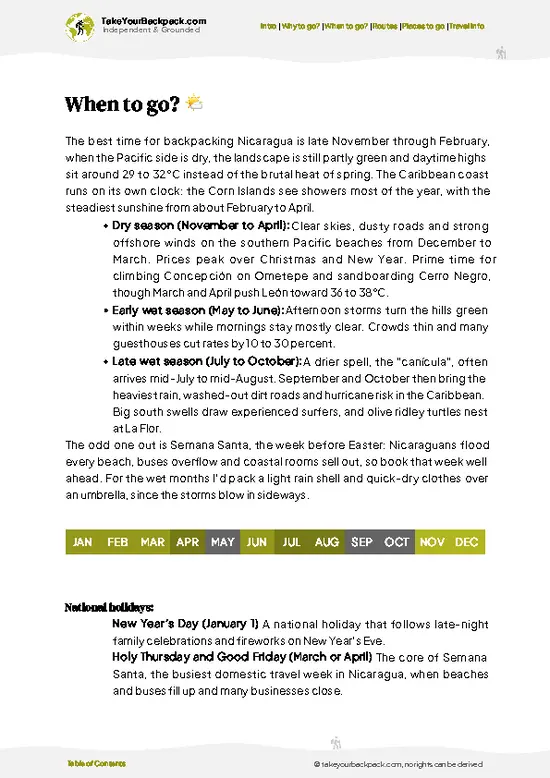
Granada is driest and most comfortable from December through April, though it is also hot, with highs of 30 to 35°C (86 to 95°F) and nights around 22 to 24°C (72 to 75°F).
  • Dry Season (December to April): Sunny days, dusty roads, and the busiest streets, especially around Christmas and Semana Santa, when beds fill and prices rise by 20 to 40 percent. March and April are the hottest.
  • Green Season (May to October): Expect afternoon downpours, usually starting around 2 or 3 pm, with mornings often clear. Highs sit near 30 to 32°C (86 to 90°F), landscapes turn lush, and hostels discount. September and October are the wettest.
  • Daylight: Days run close to 11 to 12 hours all year, so you plan around heat rather than seasons.
  • Festivals: Semana Santa brings processions and sawdust carpets.
Book ahead for … read more 👉
Granada is driest and most comfortable from December through April, though it is also hot, with highs of 30 to 35°C (86 to 95°F) and nights around 22 to 24°C (72 to 75°F).
  • Dry Season (December to April): Sunny days, dusty roads, and the busiest streets, especially around Christmas and Semana Santa, when beds fill and prices rise by 20 to 40 percent. March and April are the hottest.
  • Green Season (May to October): Expect afternoon downpours, usually starting around 2 or 3 pm, with mornings often clear. Highs sit near 30 to 32°C (86 to 90°F), landscapes turn lush, and hostels discount. September and October are the wettest.
  • Daylight: Days run close to 11 to 12 hours all year, so you plan around heat rather than seasons.
  • Festivals: Semana Santa brings processions and sawdust carpets.
Book ahead for Semana Santa and sightsee before 11 am any time of year.


source: climatestotravel.comJANJanuary: highly recommended for travelingFEBFebruary: highly recommended for travelingMARMarch: excellent for travelingAPRApril: excellent for travelingMAYMay: good for travelingJUNJune: fair for travelingJULJuly: fair for travelingAUGAugust: fair for travelingSEPSeptember: fair for travelingOCTOctober: good for travelingNOVNovember: highly recommended for travelingDECDecember: highly recommended for traveling
nicaragua-city-granada
© Google |

✈️ The backpacker research shortcutNicaragua Travel Guide

An offline-friendly backpacking guide with optimized travel routes, ranked highlights, transport advice, and the best areas to stay.
example page 0 from our offline Travel Guide for Nicaragua
example page 1 from our offline Travel Guide for Nicaragua
example page 2 from our offline Travel Guide for Nicaragua
example page 3 from our offline Travel Guide for Nicaragua
example page 4 from our offline Travel Guide for Nicaragua
example page 5 from our offline Travel Guide for Nicaragua
example page 6 from our offline Travel Guide for Nicaragua
example page 7 from our offline Travel Guide for Nicaragua
The digital guide (256 pages) contains:
✅ 71 highlights, ranked by travel appeal
✅ Optimized 5, 10 & 15-day travel routes
✅ Cities, national parks, landmarks, beaches
✅ How to get around
✅ Offline-friendly for travel without Wi-Fi
👉 Click to see all 30+ guide features

📅 Plan smarter in minutes, not weeks
✅ Month by month travel advice
✅ Festivals & national holidays
✅ Budget expectations

🗺️ Go to the right places, skip the overrated ones
✅ Honest pros & cons of destinations
✅ Top hikes, parks & viewpoints
✅ Lesser-known places most travelers miss
✅ Clear “worth it vs skip it” guidance

🛏️ Travel smoothly without rookie mistakes
✅ Best areas to stay
✅ Transport systems explained simply
✅ Common scams & safety advice
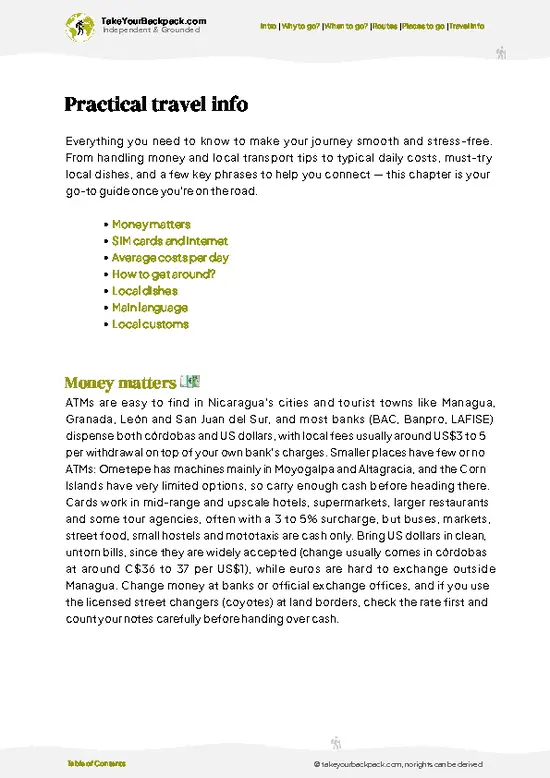
✅ SIM cards, money & practical tips

🌍 Understand the country, not just visit it
✅ Culture & traditions
✅ 52 Essential phrases & customs
✅ Festivals worth planning around
✅ Traveler-friendly historical context
✅ Insights that make places more meaningful

📱 Built for real travel conditions
✅ Fully downloadable PDF
✅ Works completely offline
✅ Optimized for phone use
✅ Useful in remote areas & buses
✅ Everything in one place
Stop searching, start planning
Get instant access to your full guide. 30‑day money-back guarantee.
+ Add another guide for just

By proceeding you agree to our terms.
Sent to your inbox immediately after payment • 100% Secure Checkout
Best Backpacking Travel Advisor 2025 tourism awardBest Backpacking
Travel Advisor
2025
What others say about Take Your Backpack Guides:
⭐⭐⭐⭐⭐
Fantastic, amazing amount of information!
⭐⭐⭐⭐⭐
My goodness this is amazing, it's what I've been looking for hats off too you!
⭐⭐⭐⭐⭐
I think this is absolutely BRILLIANT
⭐⭐⭐⭐
Very complete and informative. It's still missing places, but I gotta to commend you
⭐⭐⭐⭐⭐
This is truly amazing, thank you, can't wait to explore it with my kids!
⭐⭐⭐⭐⭐
Awesome resource, thank you!
⭐⭐⭐⭐⭐
This is amazing! Can't wait to explore the ones I haven't seen
⭐⭐⭐⭐
I love this! Well done, great idea.
⭐⭐⭐⭐⭐
Thanks for taking the time to make this gem!
⭐⭐⭐⭐⭐
This might be the best website I've ever seen.
⭐⭐⭐⭐⭐
Congratulations, and thank you so much for your work; it's incredibly valuable.
⭐⭐⭐⭐
In all seriousness I think you did a great job pointing out the important spots
⭐⭐⭐⭐⭐
10/10 very good
⭐⭐⭐⭐⭐
As someone who's only just starting to visit regularly this is awesome, thank you.
⭐⭐⭐⭐
Thank you very much! I'm going to visit my dad, it's going to be very useful!
⭐⭐⭐⭐⭐
This is really cool! We'll be travelling for the first time and this definitely come in handy.
⭐⭐⭐⭐⭐
You are now our minister of culture, congratulations 👨‍💼
⭐⭐⭐⭐⭐
Just wanted to tell you that this is a pearl! Going to follow your recommendations.
⭐⭐⭐⭐⭐
This is so cool. I'll definitely be using the resource for my travels soon.
⭐⭐⭐⭐⭐
This is very impressive! Good work.
⭐⭐⭐⭐⭐
This is an amazing and informative site. Very well done!

🛏️ Where to stay?Best areas to stay in Nicaragua

The streets within about six blocks of Parque Central are the best bet for most budget travelers, with the densest cluster of dorm beds, usually US$8 to 15 a night, plus kitchens, tour desks, and easy walking to restaurants and the bus pickup points. Nights here are lively on and around Calle La Calzada, so light sleepers should choose a place a block or two off the strip, where earplugs are less necessary. The area feels comfortable after dark because of steady foot traffic and police presence, although a short taxi is wise for the last stretch if you are on your own late.

The second option … read more 👉
The streets within about six blocks of Parque Central are the best bet for most budget travelers, with the densest cluster of dorm beds, usually US$8 to 15 a night, plus kitchens, tour desks, and easy walking to restaurants and the bus pickup points. Nights here are lively on and around Calle La Calzada, so light sleepers should choose a place a block or two off the strip, where earplugs are less necessary. The area feels comfortable after dark because of steady foot traffic and police presence, although a short taxi is wise for the last stretch if you are on your own late.

The second option is the quieter streets toward Barrio Xalteva, west of the cathedral. Beds are slightly cheaper, crowds thinner, and mornings start with roosters and church bells instead of bar music. You trade some social buzz for sleep, and you are still about ten minutes on foot from the plaza. Shuttles and minibuses to other towns pick up from the center, so being a few blocks out costs you little.

Book ahead in the dry season, especially at Christmas and Semana Santa, and look for a place with fans or air conditioning, since nights stay warm year-round.

🚌 Getting aroundTransportation options and practical tips

Granada’s colonial center is compact and flat, and you can cross from the lake to the market on foot in 25 minutes. Walking stops making sense once the sun climbs past mid-morning or when you head for the lakeside islets, volcano trailheads, or the bus terminal on the edge of town. Roads are narrow, motorbikes weave around horse carts, and public transport is cheap but informal.
  • Walking: Free and the best way to see the center. Pavements are uneven and the midday sun bounces off pastel walls, so carry water and start before 10 am. After dark, stay on lit streets.
  • Taxis: Shared, unmetered cars with no app system. Agree the fare first: US$1 to 2 within town, and US$3 to 5 to the lakeshore or outlying spots. Locals flag one down and negotiate before climbing in.
  • Horse carriages: Wooden carts clop
… read more 👉
Granada’s colonial center is compact and flat, and you can cross from the lake to the market on foot in 25 minutes. Walking stops making sense once the sun climbs past mid-morning or when you head for the lakeside islets, volcano trailheads, or the bus terminal on the edge of town. Roads are narrow, motorbikes weave around horse carts, and public transport is cheap but informal.
  • Walking: Free and the best way to see the center. Pavements are uneven and the midday sun bounces off pastel walls, so carry water and start before 10 am. After dark, stay on lit streets.
  • Taxis: Shared, unmetered cars with no app system. Agree the fare first: US$1 to 2 within town, and US$3 to 5 to the lakeshore or outlying spots. Locals flag one down and negotiate before climbing in.
  • Horse carriages: Wooden carts clop around the center for about US$10 to 15 per hour for a small group. They are slow and a little touristy, but pleasant in the cooler late afternoon.
  • Chicken buses and minibuses: Old school buses and minivans leave from the market and terminal area to Masaya, Managua, and nearby towns. Fares run US$1 to 3, and minibuses leave when full, roughly 5 am to 5 pm. Arrive early for a seat, and keep your bag on your lap.
  • Bike or scooter rental: About US$5 to 10 a day, a smart option for lakeside roads and nearby villages, as long as you avoid heavy traffic.

👛 Costs (as of 22 October 2026)Money, prices, and spending tips

Granada costs backpackers about US$38 to 55 a day, and a realistic total for high season is US$46.
CategoryBudget RangeLocal Reality
Dorm bed (high season)US$10 to 15Dec to Apr, near the center, with fan or AC; book ahead at Christmas and Semana Santa
Dorm bed (off-season)US$8 to 12May to Nov, with discounts and easier walk-ins
MealsUS$10 to 18Market and local eateries US$3 to 5; tourist restaurants US$8 to 15
Local transportUS$2 to 5Short taxis US$1 to 2; chicken buses US$1 to 3
City transport passNot availableNo pass exists; you pay per ride
Activities and entry feesUS$5 to 15Church towers a few dollars; volcano trips US$15 to 30
MiscellaneousUS$3 to 6Water, beer, sunscreen, and snacks
Total Daily BudgetUS$46Using high-season dorm and mid-range figures
Eating at the market and sharing taxis with other … read more 👉
Granada costs backpackers about US$38 to 55 a day, and a realistic total for high season is US$46.
CategoryBudget RangeLocal Reality
Dorm bed (high season)US$10 to 15Dec to Apr, near the center, with fan or AC; book ahead at Christmas and Semana Santa
Dorm bed (off-season)US$8 to 12May to Nov, with discounts and easier walk-ins
MealsUS$10 to 18Market and local eateries US$3 to 5; tourist restaurants US$8 to 15
Local transportUS$2 to 5Short taxis US$1 to 2; chicken buses US$1 to 3
City transport passNot availableNo pass exists; you pay per ride
Activities and entry feesUS$5 to 15Church towers a few dollars; volcano trips US$15 to 30
MiscellaneousUS$3 to 6Water, beer, sunscreen, and snacks
Total Daily BudgetUS$46Using high-season dorm and mid-range figures
Eating at the market and sharing taxis with other travelers cuts daily costs by US$5 to 10, and many places accept US dollars or córdobas.


source: visitnicaragua.us
⚠️ Prices can change and everyone travels differently, so take this as a rough guide. Hope it helps you plan your adventure!

🚌 Day tripsEasy escapes and nearby places

Granada is one of the easiest bases in Nicaragua for day trips, with volcanoes, lagoons, and craft villages all within about an hour or two by minibus or shuttle.
Mombacho Volcano:
Cloud forest on a volcano with sloping trails, howler monkeys, and views over the lake and islets. It is about 45 minutes by taxi or shuttle, and entry plus the truck ride to the upper station costs around US$25 to 30. Go in the morning before clouds roll in, and bring a light jacket, a common first-timer oversight.

Masaya Volcano National Park:
A glowing crater that smells of sulfur, reached by road right up to the rim. It takes about 45 minutes from Granada by bus and taxi, with a total budget of roughly US$15 to 25 including the entry fee. Visit at dusk for the best view of the lava glow, and do not linger long … read more 👉
Granada is one of the easiest bases in Nicaragua for day trips, with volcanoes, lagoons, and craft villages all within about an hour or two by minibus or shuttle.
Mombacho Volcano:
Cloud forest on a volcano with sloping trails, howler monkeys, and views over the lake and islets. It is about 45 minutes by taxi or shuttle, and entry plus the truck ride to the upper station costs around US$25 to 30. Go in the morning before clouds roll in, and bring a light jacket, a common first-timer oversight.

Masaya Volcano National Park:
A glowing crater that smells of sulfur, reached by road right up to the rim. It takes about 45 minutes from Granada by bus and taxi, with a total budget of roughly US$15 to 25 including the entry fee. Visit at dusk for the best view of the lava glow, and do not linger long at the rim because the gas is harsh.
👉 Explore Masaya Volcano National Park
Laguna de Apoyo:
A warm, clear crater lake where you can swim, kayak, and lounge at lakeside spots. Minibuses and taxis take about 30 minutes, and day passes at lakeside spots often cost US$5 to 10. Dry season gives the calmest water, and weekdays are quieter than weekends.
👉 Explore Laguna de Apoyo
Catarina and Masaya crafts:
Catarina has a lookout over Laguna de Apoyo and nurseries full of flowers. Masaya’s craft market has hammocks, leather, and pottery. A day covering both runs US$8 to 15 by bus. Bargain politely, and go before midday when it gets very hot.

🍲 FoodLocal Cuisine & Drinks

Granada sits on Lake Nicaragua, so lake fish such as guapote and tilapia appear fried whole with tostones and a tangle of pickled cabbage. Meat on a stick is the evening anthem here, grilled over charcoal on the plaza and around Calle La Calzada, smoky and salty, served with gallo pinto or fried cheese. Look for vigorón, a Granada original: boiled yuca topped with cabbage salad and crackling chicharrón, wrapped in a banana leaf and eaten with your hands for roughly US$2 to 3.

For drinks, try cacao, a thick, foamy cocoa-and-corn drink, and fresh fruit juices called frescos, poured over ice from big jugs. Flor de Caña rum and cold Toña or Victoria beer are the common choice in evenings, often drunk in plastic chairs on the pavement.

Backpackers eat at the market and at cheap local eateries … read more 👉
Granada sits on Lake Nicaragua, so lake fish such as guapote and tilapia appear fried whole with tostones and a tangle of pickled cabbage. Meat on a stick is the evening anthem here, grilled over charcoal on the plaza and around Calle La Calzada, smoky and salty, served with gallo pinto or fried cheese. Look for vigorón, a Granada original: boiled yuca topped with cabbage salad and crackling chicharrón, wrapped in a banana leaf and eaten with your hands for roughly US$2 to 3.

For drinks, try cacao, a thick, foamy cocoa-and-corn drink, and fresh fruit juices called frescos, poured over ice from big jugs. Flor de Caña rum and cold Toña or Victoria beer are the common choice in evenings, often drunk in plastic chairs on the pavement.

Backpackers eat at the market and at cheap local eateries a block or two off the main strip, where meals run US$3 to 5, versus US$8 to 15 on the tourist street. Many tourist restaurants sit in leafy courtyards that are pleasant to linger in, so a splurge is easy once or twice.

🛡️ SafetyTraveler Safety Guide

Granada is among the more relaxed places to travel in Nicaragua, and most problems are petty ones. The center is well patrolled and busy until late, but bag snatching and pickpocketing happen around the market and on crowded streets, so carry a small daypack worn in front and leave your passport in your accommodation. Solo travelers, including women, generally manage fine, though you will get cat-calls and persistent vendors, and a firm no and a keep-walking attitude handles both. After dark, take a taxi instead of walking to the lakefront or outer barrios, and avoid isolated streets west of the market. Taxi drivers sometimes quote tourist prices, so agree the fare before getting in. Tour touts on the plaza can be pushy, and booking through your accommodation is simpler. On volcano and lake … read more 👉
Granada is among the more relaxed places to travel in Nicaragua, and most problems are petty ones. The center is well patrolled and busy until late, but bag snatching and pickpocketing happen around the market and on crowded streets, so carry a small daypack worn in front and leave your passport in your accommodation. Solo travelers, including women, generally manage fine, though you will get cat-calls and persistent vendors, and a firm no and a keep-walking attitude handles both. After dark, take a taxi instead of walking to the lakefront or outer barrios, and avoid isolated streets west of the market. Taxi drivers sometimes quote tourist prices, so agree the fare before getting in. Tour touts on the plaza can be pushy, and booking through your accommodation is simpler. On volcano and lake trips, stay with guides and bring water and sun protection, as heat is a bigger risk than crime.

FAQCommon questions from travelers

Two to three days covers Granada well: one for the colonial center, cathedral tower, and lakefront, and one or two for day trips to Mombacho Volcano (about 45 minutes away) or Laguna de Apoyo (about 30 minutes). Add a day if you want Masaya Volcano at dusk. Many backpackers stay longer because beds cost only US$8 to 15 a night.
Granada is one of the easier places in Nicaragua for solo backpackers, as the center is busy, patrolled, and full of other travelers. Petty theft around the market and plaza is the main risk, so carry a small bag and leave your passport at your accommodation. After dark, taxis cost just US$1 to 2 across town, so skip long walks to the lakefront.
Granada is known for its colonial architecture, with pastel facades around Parque Central, the yellow cathedral, and Calle La Calzada. It also sits on Lake Nicaragua, with the Las Isletas islands a short boat ride away, and has Mombacho Volcano close by. Food fans know it for vigorón, a local dish of yuca, cabbage, and pork crackling that costs about US$2 to 3.
⚠️ Things can change over time, so always validate details locally before you go.

Other Nicaraguan cities near Granada

Explore more nearby:

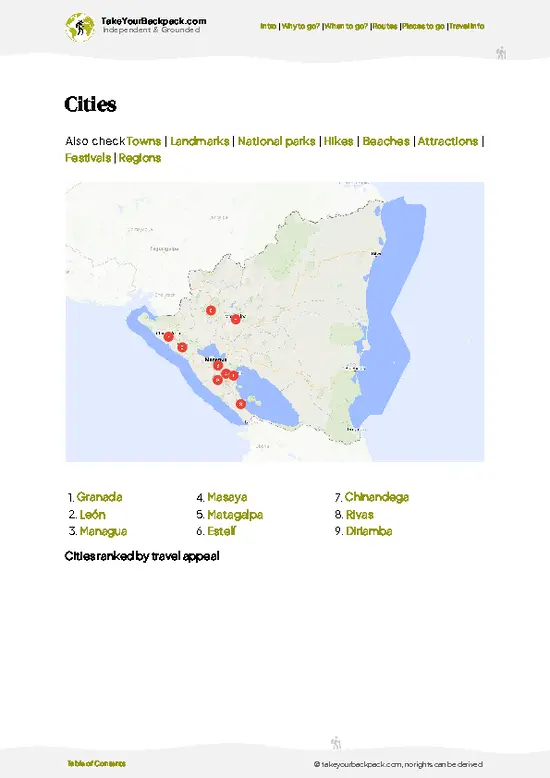
  • Masaya—Active volcano crater, hammock workshops, walled craft market, lagoon overlook| 15 km away
  • Diriamba—San Sebastián basilica, January dancers, Chorotega masks, Carazo coffee hills| 32 km away
  • Managua—Quake-ruined cathedral, Malecón, Tiscapa crater, transit hub| 36 km away

💡 Not sure where to go next?
Create a personalized itinerary for Nicaragua including Granada and the places that fit your trip.

Generate my itinerary

👉 Discover all cities

Or checkout all Nicaragua has to offer (think cities, towns, villages, national parks, hikes, beaches, festivals)
Country photo of Nicaragua

We 💚 feedbackSumming up the experience

Granada rewards two or three nights, and that is plenty for the old town, the market and one lake or volcano outing. Stay a fourth only if you want to use it as a base for several side trips. I would book a hostel with a courtyard and eat at least half your meals at the market. After that, move on to León for contrast.

✈️ When did I visit Nicaragua?
Nicaragua I visited during my half year trip through South and Central America back in 2003

✍️ Help improve this page!
The information on this page is based on my own backpacking experience in Nicaragua, supplemented with up-to-date research and feedback from other travelers. Travel details can change, so if you notice anything outdated or incomplete, feel free to let me know.


🙋‍♂️ Give feedback

👋 Meet the founderWho’s Behind Take Your Backpack?

Johan, backpacker and founder of TakeYourBackpackHi, I’m Johan (Netherlands 🇳🇱), the creator of TakeYourBackpack. Over the past 3 decades, I’ve backpacked through 90+ countries across six continents, gaining extensive experience with independent travel, long-term trips, and overland routes.

This site is built on a combination of firsthand travel experience and carefully curated insights from other backpackers. Many guides are based on places I’ve personally visited, while others bring together tips, observations, and practical advice shared by trusted travelers I’ve met along the way.

The goal is to provide realistic, experience-driven guidance — not generic itineraries — so you can explore destinations with better context, clearer expectations, and more confidence.