×

Nicaragua🇳🇮 | citiesMasayaSmoking crater, artisan market, Thursday verbena, hammock weavers | things to do and best time to go

Explore LeónExplore Estelí

Backpacking in Masaya
🌟 Highlightcity ranked #4
By Johan Kruseman 🇳🇱 | Updated October 20, 2026

Masaya suits travelers who like their culture loud, handmade and a little sweaty: craft shoppers, volcano chasers and anyone who wants Nicaragua without the polish of Granada. If you need beaches, a big hostel scene or quiet nights, you may find it less rewarding. It sits in the west of Nicaragua, between Managua and Granada. I asked a vendor at the craft market why her hammock cost more than the one next door, and she rubbed the weave between my fingers, thick and tight, and said the cheap ones sag by Christmas. Buy there, not at the roadside stalls, because tight weave is what lasts, and haggle gently since prices are already modest. Cooking smoke, horn blasts and marimba from a radio fill the streets. A good first day: arrive by late morning, eat a plate of baho or grilled meat, wander the market, then catch the glow of the volcano after dark.

Discover everything you want to know in the 📖 Nicaragua Travel Guide.


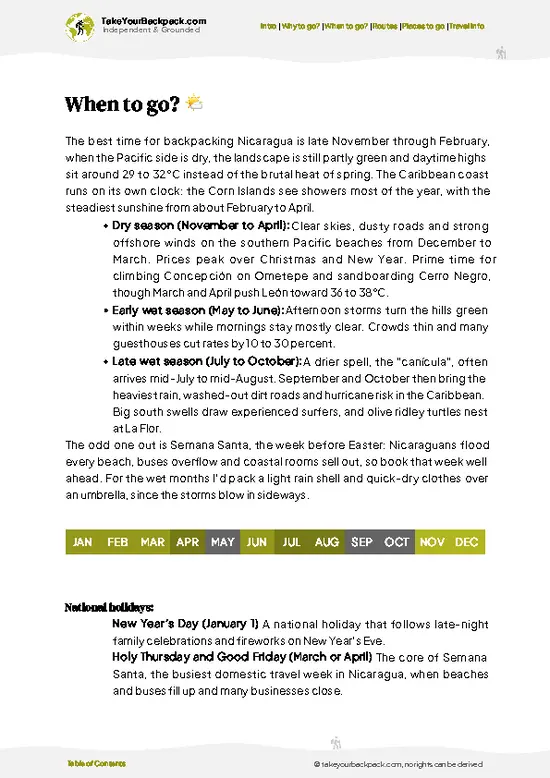
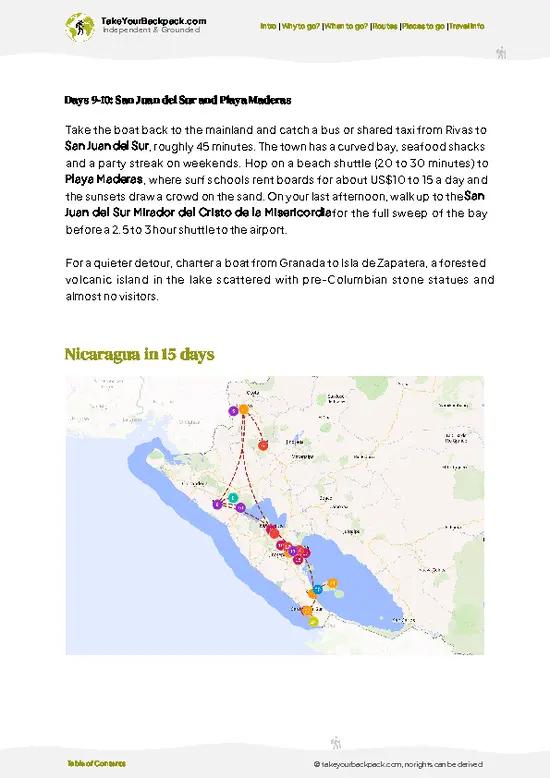
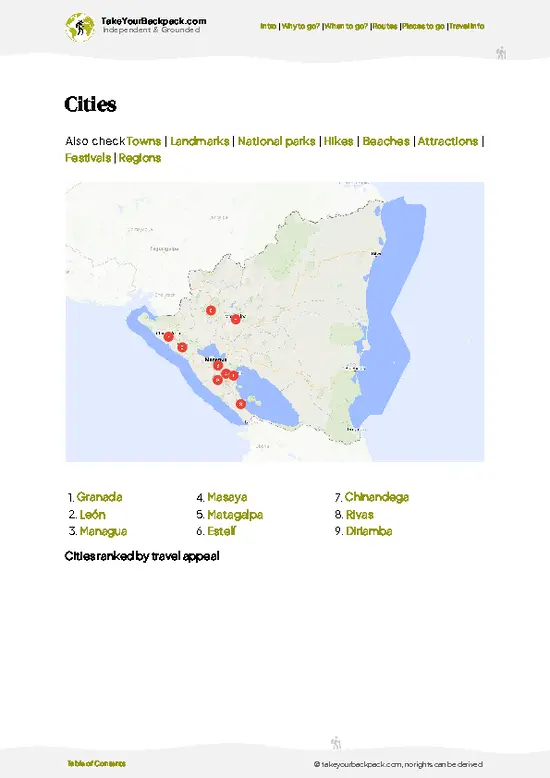
example page 0 from our offline Travel Guide for Nicaragua
example page 1 from our offline Travel Guide for Nicaragua
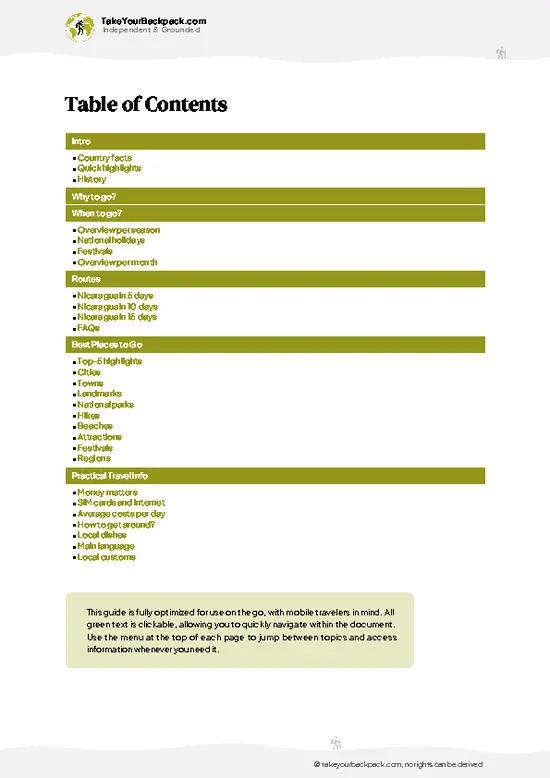
example page 2 from our offline Travel Guide for Nicaragua
example page 3 from our offline Travel Guide for Nicaragua
example page 4 from our offline Travel Guide for Nicaragua
example page 5 from our offline Travel Guide for Nicaragua
example page 6 from our offline Travel Guide for Nicaragua
example page 7 from our offline Travel Guide for Nicaragua
Loading the map 🌍
CLICK TO FILTER
cities
towns
landmarks
national parks
hikes
beaches
attractions
festivals
regions
SHOW COUNTRY’S BESTSHOW ALL

✨ Why go?
Ranked #4 city in Nicaragua
The unique appeal for travelers

Masaya works because it packs a lot into a small, flat town and sits in the middle of Nicaragua's most traveled corridor. You can reach the volcano, the lagoon and the craft villages without ever repacking your bag, so it makes a calmer alternative base to Granada, with the added bonus of real local life. The Old Market area and the Thursday night Noche de Verbena street party give you food, folk music and people-watching that tourists rarely dominate. Hostels are few and simple, so you will hear Spanish more than English at breakfast. Buses and shared minivans leave constantly for both big cities, which makes onward travel painless. It is a poor choice if you want a packed party scene or polished sights, but it excels as a one or two night stop for anyone who likes markets, handmade goods … read more 👉
Masaya works because it packs a lot into a small, flat town and sits in the middle of Nicaragua's most traveled corridor. You can reach the volcano, the lagoon and the craft villages without ever repacking your bag, so it makes a calmer alternative base to Granada, with the added bonus of real local life. The Old Market area and the Thursday night Noche de Verbena street party give you food, folk music and people-watching that tourists rarely dominate. Hostels are few and simple, so you will hear Spanish more than English at breakfast. Buses and shared minivans leave constantly for both big cities, which makes onward travel painless. It is a poor choice if you want a packed party scene or polished sights, but it excels as a one or two night stop for anyone who likes markets, handmade goods and a town that feels lived in. Treat it as a base with character rather than a checklist city.

💡 HighlightsMust-see experiences and standout moments

  1. Masaya Volcano National Park: Drive up to the rim of Santiago crater and look into a smoking, sulfur-scented pit, with glowing lava sometimes visible at night on guided tours. Go late afternoon into dusk. Entry is about US$4 to 5 for foreigners, with night tours around US$10 to 15. Allow 1.5 to 2 hours.
  2. Mercado Nacional de Artesanías: A fortress-like market of hammocks, leather, pottery, and carved wood. Go in the morning when it is cooler and vendors are fresh. Entry is free, and plan 1 to 2 hours.
  3. Noche de Verbena: Thursday evening street party with grilled meats, folk dance and live music around the old market area. Arrive by 6 PM. Free to wander, with snacks at US$1 to 4. Stay 2 hours.
  4. Laguna de Masaya Viewpoint: Overlooks a deep crater lake ringed by forest and homes. Late afternoon light
… read more 👉
  1. Masaya Volcano National Park: Drive up to the rim of Santiago crater and look into a smoking, sulfur-scented pit, with glowing lava sometimes visible at night on guided tours. Go late afternoon into dusk. Entry is about US$4 to 5 for foreigners, with night tours around US$10 to 15. Allow 1.5 to 2 hours.
  2. Mercado Nacional de Artesanías: A fortress-like market of hammocks, leather, pottery, and carved wood. Go in the morning when it is cooler and vendors are fresh. Entry is free, and plan 1 to 2 hours.
  3. Noche de Verbena: Thursday evening street party with grilled meats, folk dance and live music around the old market area. Arrive by 6 PM. Free to wander, with snacks at US$1 to 4. Stay 2 hours.
  4. Laguna de Masaya Viewpoint: Overlooks a deep crater lake ringed by forest and homes. Late afternoon light is best. Free to look, with small costs for lakeside restaurants. About 45 minutes.
  5. Fortaleza de Coyotepe: A hilltop fort with a grim history as a prison, and wide views toward the volcano. Go in the morning. Entry around US$3 to 4 with a guide, 1 hour.
  6. Iglesia de San Jerónimo: The town's main church, home to the patron saint festival that runs for months. Visit mornings, free, 20 to 30 minutes.
  7. Hammock workshops: Family workshops in town let you watch weavers at work and buy direct. Mornings are best. Free to watch, hammocks from about US$20 to 50. Allow 45 minutes.
Around Masaya, day trips work well to Granada, Catarina's lookout over Laguna de Apoyo, and the pottery village of San Juan de Oriente. The Old Market stroll and the church cost nothing at all.
Spotted a mistake or missing something? Contact us.

Things to do around Masaya

Ratings based on Tripadvisor reviews. When you book through this link, you support our work at no extra cost to you.

🏘️ NeighborhoodsKey areas and districts to know

Masaya is compact enough to cover on foot, but the heat and the cobbles change how you do it: start early, because by 11 a.m. the pavement radiates and the shade is gone.
  • Old Market (Mercado Viejo): The restored 19th-century market complex near the center is a cluster of arched stalls selling hammocks, leather and woodcarving. It smells of tanned hide and fried dough. Come in the morning before tour buses arrive, and haggle calmly, since first prices run high.
  • Mercado Nuevo: The working market, loud with bus horns and vendors shouting prices, with piles of mangoes, tripe, tortillas and plastic buckets. Go here for lunch and real prices rather than souvenirs. Keep your bag in front, because crowds are tight.
  • Central Park and Cathedral area: The shaded plaza is where families gather after 5 p.m.
… read more 👉
Masaya is compact enough to cover on foot, but the heat and the cobbles change how you do it: start early, because by 11 a.m. the pavement radiates and the shade is gone.
  • Old Market (Mercado Viejo): The restored 19th-century market complex near the center is a cluster of arched stalls selling hammocks, leather and woodcarving. It smells of tanned hide and fried dough. Come in the morning before tour buses arrive, and haggle calmly, since first prices run high.
  • Mercado Nuevo: The working market, loud with bus horns and vendors shouting prices, with piles of mangoes, tripe, tortillas and plastic buckets. Go here for lunch and real prices rather than souvenirs. Keep your bag in front, because crowds are tight.
  • Central Park and Cathedral area: The shaded plaza is where families gather after 5 p.m. when the air cools. Vendors push carts of shaved ice and grilled corn. It is flat, easy and the best place to sit and watch.
  • Malecón and Laguna de Masaya viewpoint: A cliff-edge promenade above the crater lake, breezy and open, with bars that get lively on weekends. Take a taxi back at night, as the access road is dark.
  • San Jerónimo and Monimbó: Monimbó is an Indigenous barrio of low houses and workshops where drums, masks and woven goods are made. Walk with a purpose and visit workshops by day, since the streets are quiet and plain after dark.

⌛️ 1 dayA smart one-day plan

8:30 AM: Mercado Nacional de Artesanías
Start here, because the market is the one stop not to skip. Wander the stalls for hammocks, leather and pottery while vendors are friendly and the heat is gentle. Browse first, buy later, and compare weaves before haggling. Walk ten minutes to the center.
10:30 AM: Iglesia de San Jerónimo and the plaza
Sit on a bench near the church and watch the town carry on. Step inside for the cool, quiet interior and a look at the saint's altar. Grab a fresh fruit drink from a plaza vendor.
12:00 PM: Lunch in the old market area
Order a fritanga plate of grilled meat, gallo pinto and fried plantain, or a bowl of baho if it is on offer. Eat where locals queue.
1:30 PM: Monimbó neighborhood and hammock workshops
This is the route off the standard tourist path. Walk the residential … read more 👉
8:30 AM: Mercado Nacional de Artesanías
Start here, because the market is the one stop not to skip. Wander the stalls for hammocks, leather and pottery while vendors are friendly and the heat is gentle. Browse first, buy later, and compare weaves before haggling. Walk ten minutes to the center.
10:30 AM: Iglesia de San Jerónimo and the plaza
Sit on a bench near the church and watch the town carry on. Step inside for the cool, quiet interior and a look at the saint's altar. Grab a fresh fruit drink from a plaza vendor.
12:00 PM: Lunch in the old market area
Order a fritanga plate of grilled meat, gallo pinto and fried plantain, or a bowl of baho if it is on offer. Eat where locals queue.
1:30 PM: Monimbó neighborhood and hammock workshops
This is the route off the standard tourist path. Walk the residential streets of Monimbó, where families weave, carve and paint at home, and stop at a workshop to see how a hammock is made. Ask permission before photos. Buying direct usually gets you a better price.
3:30 PM: Fortaleza de Coyotepe
Take a taxi up the hill for views and the sobering history of the old fort. A guide makes the visit far more meaningful. Allow an hour.
5:00 PM: Masaya Volcano National Park
Head up by taxi or tour as the light softens. Peer into the smoking crater, then stay for dusk when any glow shows against the dark rock.

🌤️ When to go?Choosing the right time of year

Masaya is best from December to February, when mornings are dry and cool enough to walk the markets comfortably.
  • Dry Season (November to April): Days run 30 to 35°C (86 to 95°F), with cooler nights near 22°C (72°F). Dust and heat build in March and April, the hottest stretch. Daylight lasts about 11 to 12 hours year-round, so plan outdoor stops before noon.
  • Wet Season (May to October): Afternoon downpours arrive most days, with highs around 29 to 32°C (84 to 90°F). Mornings are usually clear, the surrounding hills turn green, and crowds thin. Rooms and tours are easier to bargain for.
  • Festivals (September to December): Masaya’s folkloric celebrations, including the long San Jerónimo festivities from late September, bring drums, masks and street dancing. Beds fill and prices rise, but it is the
… read more 👉
Masaya is best from December to February, when mornings are dry and cool enough to walk the markets comfortably.
  • Dry Season (November to April): Days run 30 to 35°C (86 to 95°F), with cooler nights near 22°C (72°F). Dust and heat build in March and April, the hottest stretch. Daylight lasts about 11 to 12 hours year-round, so plan outdoor stops before noon.
  • Wet Season (May to October): Afternoon downpours arrive most days, with highs around 29 to 32°C (84 to 90°F). Mornings are usually clear, the surrounding hills turn green, and crowds thin. Rooms and tours are easier to bargain for.
  • Festivals (September to December): Masaya’s folkloric celebrations, including the long San Jerónimo festivities from late September, bring drums, masks and street dancing. Beds fill and prices rise, but it is the liveliest time in town.
  • Holy Week and Christmas: Nicaraguans travel, so expect packed buses and higher prices.
Visit the Thursday evening folklore night in the dry season for comfortable weather and music.


source: climatestotravel.comJANJanuary: excellent for travelingFEBFebruary: excellent for travelingMARMarch: excellent for travelingAPRApril: highly recommended for travelingMAYMay: good for travelingJUNJune: fair for travelingJULJuly: fair for travelingAUGAugust: fair for travelingSEPSeptember: fair for travelingOCTOctober: good for travelingNOVNovember: highly recommended for travelingDECDecember: excellent for traveling
nicaragua-city-masaya
© Google |

✈️ The backpacker research shortcutNicaragua Travel Guide

An offline-friendly backpacking guide with optimized travel routes, ranked highlights, transport advice, and the best areas to stay.
example page 0 from our offline Travel Guide for Nicaragua
example page 1 from our offline Travel Guide for Nicaragua
example page 2 from our offline Travel Guide for Nicaragua
example page 3 from our offline Travel Guide for Nicaragua
example page 4 from our offline Travel Guide for Nicaragua
example page 5 from our offline Travel Guide for Nicaragua
example page 6 from our offline Travel Guide for Nicaragua
example page 7 from our offline Travel Guide for Nicaragua
The digital guide (256 pages) contains:
✅ 77 highlights, ranked by travel appeal
✅ Optimized 5, 10 & 15-day travel routes
✅ Cities, national parks, landmarks, beaches
✅ How to get around
✅ Offline-friendly for travel without Wi-Fi
👉 Click to see all 30+ guide features

📅 Plan smarter in minutes, not weeks
✅ Month by month travel advice
✅ Festivals & national holidays
✅ Budget expectations

🗺️ Go to the right places, skip the overrated ones
✅ Honest pros & cons of destinations
✅ Top hikes, parks & viewpoints
✅ Lesser-known places most travelers miss
✅ Clear “worth it vs skip it” guidance

🛏️ Travel smoothly without rookie mistakes
✅ Best areas to stay
✅ Transport systems explained simply
✅ Common scams & safety advice
✅ SIM cards, money & practical tips

🌍 Understand the country, not just visit it
✅ Culture & traditions
✅ 52 Essential phrases & customs
✅ Festivals worth planning around
✅ Traveler-friendly historical context
✅ Insights that make places more meaningful

📱 Built for real travel conditions
✅ Fully downloadable PDF
✅ Works completely offline
✅ Optimized for phone use
✅ Useful in remote areas & buses
✅ Everything in one place
Stop searching, start planning
Get instant access to your full guide. 30‑day money-back guarantee.
+ Add another guide for just

By proceeding you agree to our terms.
Sent to your inbox immediately after payment • 100% Secure Checkout
Best Backpacking Travel Advisor 2025 tourism awardBest Backpacking
Travel Advisor
2025
What others say about Take Your Backpack Guides:
⭐⭐⭐⭐⭐
Fantastic, amazing amount of information!
⭐⭐⭐⭐⭐
My goodness this is amazing, it's what I've been looking for hats off too you!
⭐⭐⭐⭐⭐
I think this is absolutely BRILLIANT
⭐⭐⭐⭐
Very complete and informative. It's still missing places, but I gotta to commend you
⭐⭐⭐⭐⭐
This is truly amazing, thank you, can't wait to explore it with my kids!
⭐⭐⭐⭐⭐
Awesome resource, thank you!
⭐⭐⭐⭐⭐
This is amazing! Can't wait to explore the ones I haven't seen
⭐⭐⭐⭐
I love this! Well done, great idea.
⭐⭐⭐⭐⭐
Thanks for taking the time to make this gem!
⭐⭐⭐⭐⭐
This might be the best website I've ever seen.
⭐⭐⭐⭐⭐
Congratulations, and thank you so much for your work; it's incredibly valuable.
⭐⭐⭐⭐
In all seriousness I think you did a great job pointing out the important spots
⭐⭐⭐⭐⭐
10/10 very good
⭐⭐⭐⭐⭐
As someone who's only just starting to visit regularly this is awesome, thank you.
⭐⭐⭐⭐
Thank you very much! I'm going to visit my dad, it's going to be very useful!
⭐⭐⭐⭐⭐
This is really cool! We'll be travelling for the first time and this definitely come in handy.
⭐⭐⭐⭐⭐
You are now our minister of culture, congratulations 👨‍💼
⭐⭐⭐⭐⭐
Just wanted to tell you that this is a pearl! Going to follow your recommendations.
⭐⭐⭐⭐⭐
This is so cool. I'll definitely be using the resource for my travels soon.
⭐⭐⭐⭐⭐
This is very impressive! Good work.
⭐⭐⭐⭐⭐
This is an amazing and informative site. Very well done!

🛏️ Where to stay?Choosing the right base

The best budget base in Masaya is the blocks around the central park and the old market, where small guesthouses and a few hostels sit within a short walk of everything. Dorm beds are limited compared with Granada, so private rooms at modest prices are common. The area is calm at night, with quiet streets after about 9 p.m., though church bells and early market trucks can wake light sleepers. Buses and taxis pass nearby, so reaching Managua or Granada is easy.
The second option is staying in nearby Granada, about 30 minutes away by bus. It has far more hostels, more social energy and a wider choice … read more 👉
The best budget base in Masaya is the blocks around the central park and the old market, where small guesthouses and a few hostels sit within a short walk of everything. Dorm beds are limited compared with Granada, so private rooms at modest prices are common. The area is calm at night, with quiet streets after about 9 p.m., though church bells and early market trucks can wake light sleepers. Buses and taxis pass nearby, so reaching Managua or Granada is easy.
The second option is staying in nearby Granada, about 30 minutes away by bus. It has far more hostels, more social energy and a wider choice of dorms, and Masaya is simple to reach each morning. This works best if you want nightlife and other backpackers. Choose Masaya itself if you prefer a quieter, more local feel, early market mornings and the Thursday folklore evenings without a commute. Book ahead for festival weeks, when rooms fill quickly, and pick a room with a fan or air conditioning, as nights stay warm.

🚌 Getting aroundGetting around like a local

A ride in a Masaya taxi or shared cab costs roughly US$0.50 to 1 per person within town, paid in cash in córdobas to the driver at the end, though small US dollar bills are also accepted at poor rates. Masaya is flat and compact, so most of the center is walkable, but heat, fumes and honking make long walks tiring. Buses connect it to Managua and Granada, and local rides are cheap but chaotic.
  • Walking: Free and best for the market, plaza and cathedral zones, all within about 15 minutes of each other. Go early or after 4 p.m., since midday sun on pavement is punishing.
  • Shared taxis: Drivers pick up several passengers along a fixed route for about US$0.50 to 1. Hail one, say your destination and confirm the price before climbing in. This is the smart choice over a private fare.
  • Private taxis: Short
… read more 👉
A ride in a Masaya taxi or shared cab costs roughly US$0.50 to 1 per person within town, paid in cash in córdobas to the driver at the end, though small US dollar bills are also accepted at poor rates. Masaya is flat and compact, so most of the center is walkable, but heat, fumes and honking make long walks tiring. Buses connect it to Managua and Granada, and local rides are cheap but chaotic.
  • Walking: Free and best for the market, plaza and cathedral zones, all within about 15 minutes of each other. Go early or after 4 p.m., since midday sun on pavement is punishing.
  • Shared taxis: Drivers pick up several passengers along a fixed route for about US$0.50 to 1. Hail one, say your destination and confirm the price before climbing in. This is the smart choice over a private fare.
  • Private taxis: Short trips cost US$2 to 4. Agree on the fare first because there are no meters, and use them at night for the Malecón.
  • Mototaxis: Three-wheeled rides for US$0.50 to 1.50 are handy in the barrios, loud and open to the dust.
  • Buses: Old converted school buses (chicken buses) run to Managua in about 45 to 60 minutes for US$0.80 to 1.20, and to Granada in about 30 minutes for US$0.50 to 1. They leave when full, usually from roughly 5 a.m. to 6 p.m. Keep your daypack on your lap, because the aisles pack tight and pickpockets work the crush. Minibuses (expresos) cost a bit more, US$1 to 2, but leave faster and are less crowded.

👛 Costs (as of 20 October 2026)How expensive it really is

Masaya costs backpackers about US$32 a day, which is cheaper than neighboring Granada.
CategoryBudget RangeLocal Reality
Dorm (high season)US$10 to 14Few true hostels, so a simple private room often costs US$15 to 25
Dorm (off-season)US$8 to 11Easier to bargain in the wet months
MealsUS$6 to 10Market plates US$2 to 4, street snacks under US$1
Local transportUS$1 to 3Shared taxis and short mototaxi rides
City transport passNot availablePay per ride in cash; no pass exists
Basic activities/entry feesUS$3 to 6Volcano park entry about US$4 to 5, markets are free
MiscellaneousUS$2 to 4Water, snacks, a beer
Total Daily BudgetUS$32Using the high-season dorm rate at the midpoint of other rows
Eat your main meal at the market at lunchtime, when plates are cheapest and freshest.

source: visitnicaragua.us
⚠️ Prices can change and everyone travels differently, so take this as a rough guide. Hope it helps you plan your adventure!

🚌 Day tripsBest day trips from Masaya

Masaya works well as a base because volcano, lake and craft villages all sit within an hour, and buses are frequent.Masaya Volcano National Park: Walk or ride up to the crater rim, where sulfur gas drifts over a glowing, steaming vent. The park is about 20 minutes from town by taxi (US$8 to 12 round trip with waiting time) plus an entry fee near US$4 to 5. The best time is late afternoon into dusk for the glow, though visits at the vent are time-limited. First-timers often arrive with no water and no layers, and the crater wind and fumes are harsh.
👉 Explore Masaya Volcano National ParkCatarina: This cliff-top village looks over Laguna de Apoyo and is famous for plant nurseries and a lake view. It is 15 minutes by bus or taxi for US$0.50 to 3. Go in the morning when views are clear, and order … read more 👉
Masaya works well as a base because volcano, lake and craft villages all sit within an hour, and buses are frequent.Masaya Volcano National Park: Walk or ride up to the crater rim, where sulfur gas drifts over a glowing, steaming vent. The park is about 20 minutes from town by taxi (US$8 to 12 round trip with waiting time) plus an entry fee near US$4 to 5. The best time is late afternoon into dusk for the glow, though visits at the vent are time-limited. First-timers often arrive with no water and no layers, and the crater wind and fumes are harsh.
👉 Explore Masaya Volcano National ParkCatarina: This cliff-top village looks over Laguna de Apoyo and is famous for plant nurseries and a lake view. It is 15 minutes by bus or taxi for US$0.50 to 3. Go in the morning when views are clear, and order a drink at a terrace café.
👉 Explore CatarinaLaguna de Apoyo: A warm crater lake swimming spot, about 30 minutes away. Public access via small beaches costs US$3 to 6, with kayaks for rent. Weekdays are quiet, and dry season is best for sun. Many first-timers underestimate the steep road and take a taxi down.
👉 Explore Laguna de ApoyoGranada: The colonial city on Lake Nicaragua is about 30 minutes by bus for under US$1. Walk the cathedral square and lakeshore, and take a small boat to the isletas for US$15 to 25 per boat shared. Daylight is enough, but leave by 5 p.m. to avoid crowded buses.
👉 Explore Granada

🍲 FoodLocal Cuisine & Drinks

Masaya is known for its street food and for a few local specialties found nowhere else on the usual circuit. Try nacatamales from stalls, banana-leaf bundles of pork, rice and corn dough that are heavy and warm. Masaya is also famed for sopa de albóndigas (meatball soup) and for sweets such as cajeta and candied fruit sold near the market. The Thursday folklore evening brings stalls of grilled meats, fried plantain and fresh tiste, a cold cacao and corn drink.
For cheap meals, head to the Mercado Nuevo food counters, where a plate of rice, beans and meat costs about US$2 to 4, with the smell of charcoal and fried cheese filling the aisles. Around the central park, vendors sell raspados (shaved ice with syrup) for under US$1, perfect in the midday heat. The Malecón has casual bars with views … read more 👉
Masaya is known for its street food and for a few local specialties found nowhere else on the usual circuit. Try nacatamales from stalls, banana-leaf bundles of pork, rice and corn dough that are heavy and warm. Masaya is also famed for sopa de albóndigas (meatball soup) and for sweets such as cajeta and candied fruit sold near the market. The Thursday folklore evening brings stalls of grilled meats, fried plantain and fresh tiste, a cold cacao and corn drink.
For cheap meals, head to the Mercado Nuevo food counters, where a plate of rice, beans and meat costs about US$2 to 4, with the smell of charcoal and fried cheese filling the aisles. Around the central park, vendors sell raspados (shaved ice with syrup) for under US$1, perfect in the midday heat. The Malecón has casual bars with views over the lagoon, where a local beer costs US$1.50 to 3. Eat at busy stalls, because turnover keeps food fresh, and carry your own bottled water.

🛡️ SafetyStaying Safe: What Travelers Should Know

Masaya is broadly safe for backpackers, and the usual problems are petty theft and overcharging rather than serious crime. Pickpockets work the crowded Mercado Nuevo and packed buses, so carry a small bag in front and leave your passport at your room. Prices at craft stalls often start high, and taxi drivers rarely use meters, so agree on the fare first. After dark, stay on the main plaza and Malecón, and take a taxi rather than walking quiet barrio streets or the road to the lake viewpoint. Solo travelers, women included, do fine with normal city habits, though catcalls are common and best ignored. At the volcano, follow rangers’ instructions about gas and time limits. Keep small bills handy so no one has to find change, and use only marked or recommended taxis at night.

FAQFrequently asked questions about Masaya

One to two days is enough for Masaya. A full day covers the old market, central park, Malecón and Thursday folklore night, and a second lets you add Masaya Volcano (entry about US$4 to 5) or Laguna de Apoyo, about 20 to 30 minutes away.
Masaya is generally safe for solo backpackers who use ordinary city sense. Pickpocketing in Mercado Nuevo and on buses is the main risk, so carry a small bag in front, and take a taxi (about US$2 to 4) rather than walking dark streets at night.
Masaya is known as the capital of Nicaraguan folklore and handicrafts, with hammocks, leather and woodcarving sold in the Old Market. It is also known for nearby Masaya Volcano, with its glowing crater, and for the Malecón view over the lagoon, about 30 minutes from Granada.
⚠️ Things can change over time, so always validate details locally before you go.

Other Nicaraguan cities near Masaya

Explore more nearby:

  • Granada—Mustard cathedral, La Calzada, lakeshore, Choco Museo| 15 km away
  • Diriamba—San Sebastián basilica, January dancers, Chorotega masks, Carazo coffee hills| 21 km away
  • Managua—Quake-ruined cathedral, Malecón, Tiscapa crater, transit hub| 23 km away

💡 Not sure where to go next?
Create a personalized itinerary for Nicaragua including Masaya and the places that fit your trip.

Generate my itinerary

👉 Discover all cities

Or checkout all Nicaragua has to offer (think cities, towns, villages, national parks, hikes, beaches, festivals)
Country photo of Nicaragua

We 💚 feedbackIs it worth it?

Masaya pairs well with Granada, whose colonial streets and lake life balance the town's raw craft energy, and with Laguna de Apoyo for a swim afterward. I would give it one night, schedule it around a Thursday, and bring small bills for the market. Skip it if you want polished comfort.

✈️ When did I visit Nicaragua?
Nicaragua I visited during my half year trip through South and Central America back in 2003

✍️ Help improve this page!
The information on this page is based on my own backpacking experience in Nicaragua, supplemented with up-to-date research and feedback from other travelers. Travel details can change, so if you notice anything outdated or incomplete, feel free to let me know.


🙋‍♂️ Give feedback

👋 Meet the founderWho’s Behind Take Your Backpack?

Johan, backpacker and founder of TakeYourBackpackHi, I’m Johan (Netherlands 🇳🇱), the creator of TakeYourBackpack. Over the past 3 decades, I’ve backpacked through 90+ countries across six continents, gaining extensive experience with independent travel, long-term trips, and overland routes.

This site is built on a combination of firsthand travel experience and carefully curated insights from other backpackers. Many guides are based on places I’ve personally visited, while others bring together tips, observations, and practical advice shared by trusted travelers I’ve met along the way.

The goal is to provide realistic, experience-driven guidance — not generic itineraries — so you can explore destinations with better context, clearer expectations, and more confidence.