×

Nicaragua🇳🇮 | attractionsTeatro Nacional Rubén Daríoconcert hall, marble foyer, cultural performances | things to do and best time to go

Explore Museo de Arte Fundación Ortiz-GurdiánExplore Museo Nacional de Nicaragua Diocleciano Chaves

Backpacking in Teatro Nacional Rubén Darío
👌 Worth visitingattraction ranked #12
By Johan Kruseman 🇳🇱 | Updated May 17, 2026

Let’s kill the myth: Teatro Nacional Rubén Darío is not some stuffy, velvet-roped relic reserved for Nicaragua’s elite or a place you just snap a selfie in front of and move on. It’s right in the heart of Managua, and yes, the outside is more 1960s bunker than baroque fantasy—don’t expect a Parisian opera house. But step inside and you’ll feel the pulse of Nicaragua’s cultural pride. Backpackers often skip it, thinking it’s too formal or expensive, but tickets to concerts or dance performances can cost less than a hostel dorm bed. The real magic isn’t in the architecture—it’s in the acoustics and the electric energy when a local crowd cheers on a folk ballet or a poetry reading. Sure, you’ll dodge school groups and the odd government function, and the area around the theater is no colonial postcard, but if you want to see Nicaragua’s creative soul, this is the stage.

Discover everything you want to know in the 📖 Nicaragua Travel Guide.
Loading the map 🌍
CLICK TO FILTER
cities
towns
landmarks
national parks
hikes
beaches
attractions
festivals
regions
SHOW COUNTRY’S BESTSHOW ALL

✨ Why go?
Ranked #12 attraction in Nicaragua
Reasons people choose to visit here

The Teatro Nacional Rubén Darío is not just another pretty building to snap for Instagram—it’s the beating heart of Nicaragua’s cultural identity. Sure, it’s smack in the middle of Managua, which means you’ll deal with crowds and the usual city chaos. But that’s part of the deal. This theater isn’t about quiet contemplation; it’s about feeling the pulse of a nation that’s fought hard to preserve its art and history. Named after Nicaragua’s most revered poet, Rubén Darío, the theater is a living monument to the country’s literary and artistic soul. Walking through its doors, you’re stepping into a space where history and culture collide—where revolutionary plays, classical music, and modern performances all share the same stage. For backpackers, it’s a milestone because it offers a break from … read more 👉
The Teatro Nacional Rubén Darío is not just another pretty building to snap for Instagram—it’s the beating heart of Nicaragua’s cultural identity. Sure, it’s smack in the middle of Managua, which means you’ll deal with crowds and the usual city chaos. But that’s part of the deal. This theater isn’t about quiet contemplation; it’s about feeling the pulse of a nation that’s fought hard to preserve its art and history. Named after Nicaragua’s most revered poet, Rubén Darío, the theater is a living monument to the country’s literary and artistic soul. Walking through its doors, you’re stepping into a space where history and culture collide—where revolutionary plays, classical music, and modern performances all share the same stage. For backpackers, it’s a milestone because it offers a break from the usual nature-heavy itinerary and a chance to dive deep into Nicaragua’s intellectual and creative spirit. The effort to navigate Managua’s traffic and the modest entrance fee are small prices to pay for an experience that’s as enriching as it is energizing. This isn’t a tourist trap; it’s a cultural crucible that rewards those willing to look beyond the surface.
Want to include Teatro Nacional Rubén Darío in your Nicaragua route?
Create a personalized Nicaragua itinerary that includes Teatro Nacional Rubén Darío and the places that fit your trip — based on your travel style, budget, and available time. Get your route in seconds.

Generate my trip

💡 HighlightsMust-see experiences and standout moments

1. The Main Auditorium: Nicaragua’s Acoustic Powerhouse
Forget the Instagram shots of the ornate façade—step inside and you’ll understand why this place is the beating heart of Nicaraguan culture. The main auditorium is a marvel of 1960s architecture, built not for show but for sound. The acoustics are so sharp you can hear a pin drop from the balcony, and the sightlines are flawless from every seat. This isn’t just a pretty room; it’s a sonic cathedral where every note, from a lone guitar to a full symphony, lands with goosebump-inducing clarity. If you’re used to tinny sound in old theaters, prepare to have your standards reset.


2. National Symphony Orchestra Performances
This is where the magic happens. The National Symphony Orchestra of Nicaragua isn’t just a local act—they’re a living, … read more 👉
1. The Main Auditorium: Nicaragua’s Acoustic Powerhouse
Forget the Instagram shots of the ornate façade—step inside and you’ll understand why this place is the beating heart of Nicaraguan culture. The main auditorium is a marvel of 1960s architecture, built not for show but for sound. The acoustics are so sharp you can hear a pin drop from the balcony, and the sightlines are flawless from every seat. This isn’t just a pretty room; it’s a sonic cathedral where every note, from a lone guitar to a full symphony, lands with goosebump-inducing clarity. If you’re used to tinny sound in old theaters, prepare to have your standards reset.


2. National Symphony Orchestra Performances
This is where the magic happens. The National Symphony Orchestra of Nicaragua isn’t just a local act—they’re a living, breathing testament to the country’s resilience and artistry. The programming is ambitious: Beethoven one week, Nicaraguan composers the next, with the occasional wild-card jazz or folk ensemble thrown in. The crowd is a mix of tuxedos and T-shirts, and the energy is contagious. If you want to feel the pulse of Managua, skip the tourist circuit and catch a live performance here. It’s not about perfection; it’s about passion, and you’ll feel it in your bones.


3. Dance and Folklore Festivals
Instagram will show you the costumes, but it won’t capture the stomp of heels on the hardwood or the roar of the crowd when a local troupe nails a traditional Palo de Mayo. The theater hosts regular dance festivals that are pure, unfiltered Nicaragua—think swirling skirts, pounding drums, and a sense of pride that fills the room. These aren’t sanitized performances for tourists; they’re community events, and you’re invited to join the celebration. If you want to understand Nicaragua beyond the guidebooks, this is your ticket.


4. The Foyer Murals and Art Installations
Most visitors rush past the lobby, but slow down and you’ll find a rotating gallery of Nicaraguan visual art—murals, sculpture, and photography that tell the country’s story in bold, sometimes brutal strokes. It’s not always pretty, but it’s always honest. The foyer is a living museum, and the art here is as much a part of the experience as anything on stage. This is where you see the soul of Nicaragua, raw and unfiltered.


5. The People-Watching (Personal Favorite)
Here’s the real secret: the best show isn’t always on stage. It’s in the lobby, on the steps, in the buzz before the curtain rises. You’ll see everyone from local legends to wide-eyed kids on their first night out, all dressed in their own version of “theater best.” The energy is electric, the conversations are loud, and the sense of anticipation is universal. I’ve lost count of how many times I’ve come for the performance and left talking about the crowd. If you want to feel connected—to the city, to the culture, to the moment—this is where it happens.
Spotted a mistake or missing something? Contact us.

Things to do around Teatro Nacional Rubén Darío

Ratings based on Tripadvisor reviews. When you book through this link, you support our work at no extra cost to you.

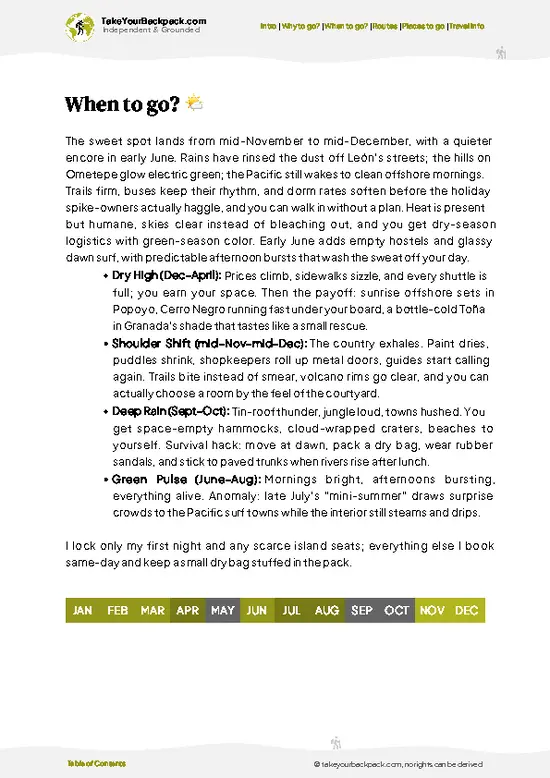
🌤️ When to go?When to go for the best experience


  • Weather: Nicaragua’s dry season from November to April is your best bet for Teatro Nacional Rubén Darío. Expect clear skies and minimal rain, perfect for exploring without soggy shoes. The wet season, May through October, brings heavy afternoon showers that can disrupt plans.

  • Temperature: Temperatures hover around 27-32°C (80-90°F) year-round, but the dry season feels less oppressive thanks to lower humidity. The wet season’s humidity can make the heat feel sticky and draining, which isn’t ideal for wandering around a historic theater.

  • Daylight Hours: Daylight is fairly consistent, about 11-12 hours daily. This means you have plenty of time to catch performances or explore the surrounding city without rushing.

  • Crowds: Tourist numbers peak during the dry season, especially December
read more 👉

  • Weather: Nicaragua’s dry season from November to April is your best bet for Teatro Nacional Rubén Darío. Expect clear skies and minimal rain, perfect for exploring without soggy shoes. The wet season, May through October, brings heavy afternoon showers that can disrupt plans.

  • Temperature: Temperatures hover around 27-32°C (80-90°F) year-round, but the dry season feels less oppressive thanks to lower humidity. The wet season’s humidity can make the heat feel sticky and draining, which isn’t ideal for wandering around a historic theater.

  • Daylight Hours: Daylight is fairly consistent, about 11-12 hours daily. This means you have plenty of time to catch performances or explore the surrounding city without rushing.

  • Crowds: Tourist numbers peak during the dry season, especially December and January, when locals and visitors flock to cultural events. If you want a quieter experience, aim for November or April, just outside the busiest months.

  • Seasonal Activities: The dry season aligns with Nicaragua’s cultural calendar, including festivals and performances at the theater. This is when you’ll find the most authentic shows and local engagement, not just tourist-targeted events.

  • Price Fluctuations: Expect higher prices for accommodations and tickets during the dry season’s peak months. Booking early can save you money, but off-season visits in May or October offer better deals, albeit with the risk of rain.


Pro-tip: Visit Teatro Nacional Rubén Darío in late November or early April—enough dry weather to enjoy the theater without the crush of peak-season crowds or inflated prices.


source: climatestotravel.comJANJanuary: highly recommended for travelingFEBFebruary: excellent for travelingMARMarch: excellent for travelingAPRApril: highly recommended for travelingMAYMay: fair for travelingJUNJune: fair for travelingJULJuly: fair for travelingAUGAugust: fair for travelingSEPSeptember: fair for travelingOCTOctober: good for travelingNOVNovember: highly recommended for travelingDECDecember: highly recommended for traveling
when-to-go

✈️ The backpacker research shortcutNicaragua Travel Guide

An offline-friendly backpacking guide with optimized travel routes, ranked highlights, transport advice, and the best areas to stay.
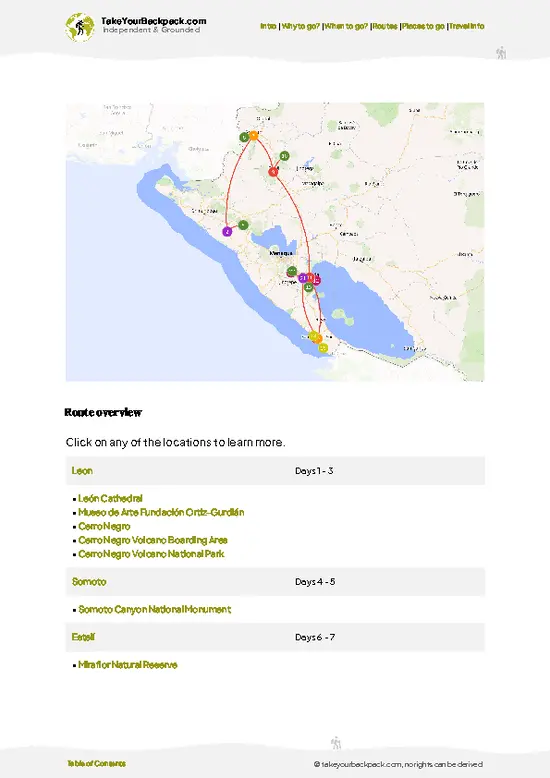
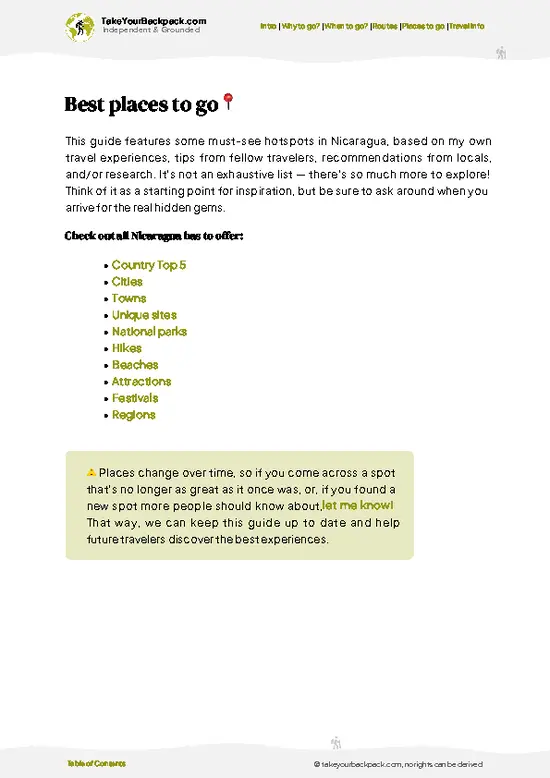
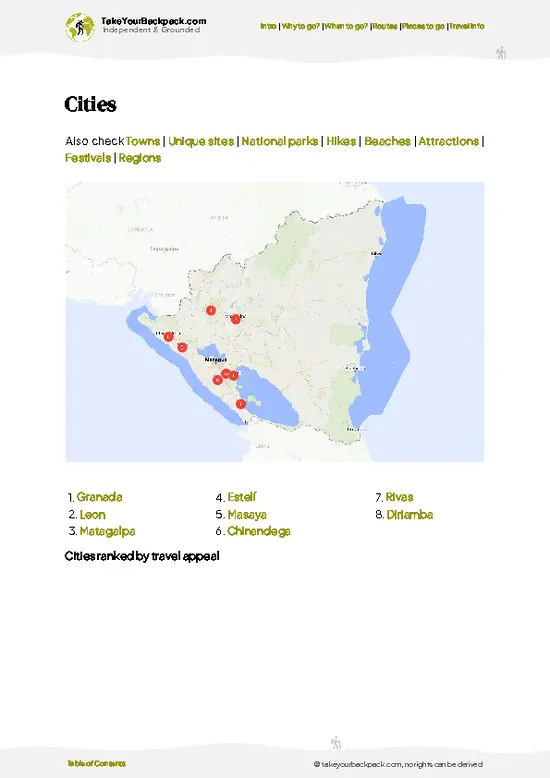
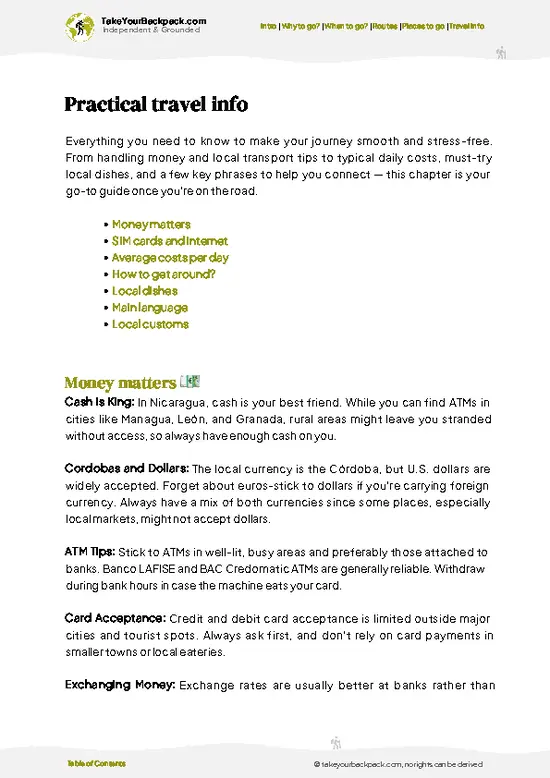
example page 0 from our offline Travel Guide for Nicaragua
example page 1 from our offline Travel Guide for Nicaragua
example page 2 from our offline Travel Guide for Nicaragua
example page 3 from our offline Travel Guide for Nicaragua
example page 4 from our offline Travel Guide for Nicaragua
example page 5 from our offline Travel Guide for Nicaragua
example page 6 from our offline Travel Guide for Nicaragua
example page 7 from our offline Travel Guide for Nicaragua
The digital guide (342 pages) contains:
86 highlights, ranked by travel appeal
Optimized 5, 10 & 15-day travel routes
Cities, national parks, landmarks, beaches
How to get around
Offline-friendly for travel without Wi-Fi
👉 Click to see all 30+ guide features

📅 Plan smarter in minutes, not weeks
Month by month travel advice
Festivals & national holidays
Budget expectations

🗺️ Go to the right places, skip the overrated ones
Honest pros & cons of destinations
Top hikes, parks & viewpoints
Lesser-known places most travelers miss
Clear “worth it vs skip it” guidance

🛏️ Travel smoothly without rookie mistakes
Best areas to stay
Transport systems explained simply
Common scams & safety advice
SIM cards, money & practical tips

🌍 Understand the country, not just visit it
Culture & traditions
52 Essential phrases & customs
Festivals worth planning around
Traveler-friendly historical context
Insights that make places more meaningful

📱 Built for real travel conditions
Fully downloadable PDF
Works completely offline
Optimized for phone use
Useful in remote areas & buses
Everything in one place
Save weeks of stressful planning
Get instant access to your full guide. 30‑day money-back guarantee.


By proceeding you agree to our terms.
Sent to your inbox immediately after payment • 100% Secure Checkout
Best Backpacking Travel Advisor 2025 tourism awardBest Backpacking
Travel Advisor
2025
What others say about Take Your Backpack Guides:
⭐⭐⭐⭐⭐
Fantastic, amazing amount of information!
⭐⭐⭐⭐⭐
My goodness this is amazing, it's what I've been looking for hats off too you!
⭐⭐⭐⭐⭐
I think this is absolutely BRILLIANT
⭐⭐⭐⭐
Very complete and informative. It's still missing places, but I gotta to commend you
⭐⭐⭐⭐⭐
This is truly amazing, thank you, can't wait to explore it with my kids!
⭐⭐⭐⭐⭐
Awesome resource, thank you!
⭐⭐⭐⭐⭐
This is amazing! Can't wait to explore the ones I haven't seen
⭐⭐⭐⭐
I love this! Well done, great idea.
⭐⭐⭐⭐⭐
Thanks for taking the time to make this gem!
⭐⭐⭐⭐⭐
This might be the best website I've ever seen.
⭐⭐⭐⭐⭐
Congratulations, and thank you so much for your work; it's incredibly valuable.
⭐⭐⭐⭐
In all seriousness I think you did a great job pointing out the important spots
⭐⭐⭐⭐⭐
10/10 very good
⭐⭐⭐⭐⭐
As someone who's only just starting to visit regularly this is awesome, thank you.
⭐⭐⭐⭐
Thank you very much! I'm going to visit my dad, it's going to be very useful!
⭐⭐⭐⭐⭐
This is really cool! We'll be travelling for the first time and this definitely come in handy.
⭐⭐⭐⭐⭐
You are now our minister of culture, congratulations 👨‍💼
⭐⭐⭐⭐⭐
Just wanted to tell you that this is a pearl! Going to follow your recommendations.
⭐⭐⭐⭐⭐
This is so cool. I'll definitely be using the resource for my travels soon.
⭐⭐⭐⭐⭐
This is very impressive! Good work.
⭐⭐⭐⭐⭐
This is an amazing and informative site. Very well done!

🛏️ Where to stay?Where staying makes the most sense

Forget the postcard-perfect image of Teatro Nacional Rubén Darío bathed in golden light with no one around. Reality check: this spot in Managua’s Centro Histórico is smack in the middle of a bustling city, and yes, it gets busy. Tourists, locals, street vendors, and the occasional honking car all share the space. It’s not a quiet shrine; it’s a living, breathing hub. That means if you want to soak in the theater’s vibe without feeling like you’re in a zoo, your choice of neighborhood matters.

For backpackers, the best move is to base yourself in the neighborhoods just a short walk or a quick … read more 👉
Forget the postcard-perfect image of Teatro Nacional Rubén Darío bathed in golden light with no one around. Reality check: this spot in Managua’s Centro Histórico is smack in the middle of a bustling city, and yes, it gets busy. Tourists, locals, street vendors, and the occasional honking car all share the space. It’s not a quiet shrine; it’s a living, breathing hub. That means if you want to soak in the theater’s vibe without feeling like you’re in a zoo, your choice of neighborhood matters.

For backpackers, the best move is to base yourself in the neighborhoods just a short walk or a quick taxi ride away—places that balance safety, social buzz, and budget. The area around the Old City (Ciudad Antigua) is a solid pick. It’s where you’ll find a mix of hostels, cafes, and bars that attract solo travelers and groups alike. It’s lively but not overwhelming, and you get a real slice of Managua’s everyday pulse. Plus, it’s close enough to the theater to pop over for a show or just to admire the architecture without the hassle of city-center chaos.

Another smart zone is the upscale neighborhood of Santo Domingo. It’s safer, cleaner, and has a handful of social spots where backpackers can meet locals and fellow travelers. It’s a bit pricier but still manageable on a budget if you pick your digs wisely. The trade-off is worth it for peace of mind and a more relaxed vibe after a day navigating Managua’s streets.

Skip the immediate theater vicinity for overnight stays. It’s noisy, less secure after dark, and not exactly where you want to crash if you’re solo or budget-conscious. Instead, aim for these neighborhoods where you get the best mix of safety, social life, and easy access to the Teatro Nacional Rubén Darío. That’s the real magic—being close enough to the action without getting swallowed by it.

👛 Costs (as of 25 August 2025)How expensive it really is

Tickets for performances at the Teatro Nacional Rubén Darío in Managua, Nicaragua, typically range from €9 to €63, depending on the event and seating selection. For the most accurate and up-to-date information, it's advisable to consult the official website of the theater.
⚠️ Prices can change and everyone travels differently, so take this as a rough guide. Hope it helps you plan your adventure!

Other Nicaraguan attractions near Teatro Nacional Rubén Darío

Explore more nearby:


💡 Not sure where to go next?
Create a personalized itinerary for Nicaragua including Teatro Nacional Rubén Darío and the places that fit your trip.

Generate my itinerary

👉 Discover all attractions

Or checkout all Nicaragua has to offer (think cities, towns, villages, national parks, hikes, beaches, festivals)
Country photo of Nicaragua

We 💚 feedbackParting advice and final tips

Teatro Nacional Rubén Darío isn’t just another pretty building to snap and move on from. Yes, it gets busy, especially during events, and ticket prices can feel steep if you’re on a tight budget. But step inside, and you’re hit with a raw pulse of Nicaraguan culture—its history, its art, its soul. That’s the real magic. If you want more than a photo, this place delivers a genuine connection worth the hassle.

✈️ When did I visit Nicaragua?
Nicaragua I visited during my half year trip through South and Central America back in 2003

✍️ Help improve this page!
The information on this page is based on my own backpacking experience in Nicaragua, supplemented with up-to-date research and feedback from other travelers. Travel details can change, so if you notice anything outdated or incomplete, feel free to let me know.


🙋‍♂️ Give feedback

👋 Meet the founderWho’s Behind Take Your Backpack?

Johan, backpacker and founder of TakeYourBackpackHi, I’m Johan (Netherlands 🇳🇱), the creator of TakeYourBackpack. Over the past decade, I’ve backpacked through 80+ countries across six continents, gaining extensive experience with independent travel, long-term trips, and overland routes.

This site is built on a combination of firsthand travel experience and carefully curated insights from other backpackers. Many guides are based on places I’ve personally visited, while others bring together tips, observations, and practical advice shared by trusted travelers I’ve met along the way.

The goal is to provide realistic, experience-driven guidance — not generic itineraries — so you can explore destinations with better context, clearer expectations, and more confidence.

Get full Nicaragua guide •
Instant download • 86 highlights • Full Offline guide