×

Niger🇳🇪 | citiesKeitareforestation projects, hillside villages, dry valleys | things to do and best time to go

Explore IllélaExplore Mainé-Soroa

Backpacking in Keita
👀 For curious travelerscity ranked #17
By Johan Kruseman 🇳🇱 | Updated June 9, 2026

Everyone hears about Keita because of the massive reforestation project, but if you’re coming for a dramatic “green miracle,” you’ll be underwhelmed—the real draw is the quiet, sun-baked rhythm of a Sahel town that’s learned to adapt. Keita sits in central Niger, west of Agadez, where the air smells of dust and millet, and the horizon is all ochre hills. For backpackers, Keita is less a destination than a pause: a practical, low-key stopover between the busier cities of Tahoua and Agadez. The market is lively but not overwhelming, and the town’s size means you can walk everywhere, though you’ll need bush taxis for anything further afield. Nights are slow, with few hostels and little nightlife—expect to swap stories with locals over tea, not beers with other travelers. Costs are low, safety is decent if you keep your wits, and compared to Agadez, Keita feels more relaxed but less scenic or social.

Discover everything you want to know in the 📖 Niger Travel Guide.
Safety warning

The current risk level for Niger is high. Check the advice before going.


Get your Niger guide
69 ranked highlights, routes & tips, works offline (292 pages)
Loading the map 🌍
CLICK TO FILTER
cities
towns
villages
landmarks
national parks
hikes
attractions
festivals
regions
SHOW COUNTRY’S BESTSHOW ALL

✨ Why go?
Ranked #17 city in Niger
Why Keita should be on your travel list

Backpackers flock to Keita for its strategic location along the route to stunning hikes and cultural sites. The town serves as a gateway to the Aïr Mountains, where trails wind through dramatic landscapes. You can find small-scale hostels and guesthouses that offer a cozy, communal vibe, perfect for solo travelers or small groups looking to connect. The walkable streets are lined with local eateries, where the aroma of spiced stews fills the air, inviting you to savor authentic Nigerien cuisine. Most travelers stay a few days, soaking in the friendly atmosphere and sharing stories with fellow adventurers. It’s a place to recharge before diving deeper into the wilds of Niger.
Want to include Keita in your Niger route?
Create a personalized Niger itinerary that includes Keita and the places that fit your trip — based on your travel style, budget, and available time. Get your route in seconds.

Generate my trip

💡 HighlightsDon't-miss highlights and experiences

  • Marché central de Keita (the weekly town market) — The best way to read a town: rows of spices, millet sacks, bright cloths and bargaining in Hausa. Market day is where food, gossip and bus schedules meet, and it’s alive every week.
  • Livestock market / cattle pen — Loud, dusty and utterly Nigerien. If you want to see camel, cattle and goats being traded, and to watch Fulani herders and traders work, this is it — great for photos and for understanding the local economy.
  • The central Friday mosque — The social and spiritual heartbeat for Keita. Attend respectfully (or just observe from the square) to get a sense of community rhythms and Friday prayers that shape daily life.
  • Keita Integrated Watershed project demonstration sites — The on-the-ground works (stone lines, terraces, micro-catchments)
read more 👉
  • Marché central de Keita (the weekly town market) — The best way to read a town: rows of spices, millet sacks, bright cloths and bargaining in Hausa. Market day is where food, gossip and bus schedules meet, and it’s alive every week.
  • Livestock market / cattle pen — Loud, dusty and utterly Nigerien. If you want to see camel, cattle and goats being traded, and to watch Fulani herders and traders work, this is it — great for photos and for understanding the local economy.
  • The central Friday mosque — The social and spiritual heartbeat for Keita. Attend respectfully (or just observe from the square) to get a sense of community rhythms and Friday prayers that shape daily life.
  • Keita Integrated Watershed project demonstration sites — The on-the-ground works (stone lines, terraces, micro-catchments) that helped turn erosion-prone land into usable plots. Visiting these gives a tangible view of Sahelian landscape restoration and local coping strategies for drought.
  • Community tree nurseries and reforestation plots — Part of Keita’s long-running reclamation efforts. Walking through the saplings and meeting the farmers who tend them shows grassroots environmental work that’s actually changed the valley.
  • Seasonal reservoir / water-harvesting basins — Small dams and retention ponds around the town store rainwater for people and animals. They’re simple, low-cost engineering you can walk to and learn from — especially interesting at the end of the rainy season.
  • Artisan quarter near the market (blacksmiths & leatherworkers) — Traditional trades still practiced by hand: tools, metalwork and leather goods made on-site. Watching a blacksmith or a leather crafter is a direct link to crafts that keep the local economy moving.
  • Town square / mairie area — Where buses stop, officials meet and kids play football. Not a museum, but essential for people-watching and catching announcements about market days, transport or cultural events.
  • Household and courtyard visits (arranged through a local fixer) — Staying or being hosted in a family compound is one of the richest experiences: food, storytelling, millet processing demos and a chance to see daily domestic life up close. Always arrange visits respectfully through a local contact.
  • Local food stalls and millet-processing spots — Simple street food and the communal areas where grain is threshed and milled. Tasting fresh, locally prepared tô or grilled meat and watching post-harvest work is a small-but-true cultural immersion.
A few easy day trips from Keita include the surrounding reforested villages and watershed sites in the Keita valley, the small seasonal ponds and dams outside town, and neighboring market villages where you can see larger regional trade and pastoral life up close.
Spotted a mistake or missing something? Contact us.

🏘️ NeighborhoodsUnderstanding the local layout

Keita, Niger, is a vibrant tapestry of culture and community, offering backpackers a unique blend of experiences. Here’s how to navigate its neighborhoods for the best adventure.

Centre Ville: This is the heart of Keita. Bustling markets and street vendors fill the air with the scent of spices. It’s walkable, making it easy to explore local shops. Nightlife is lively but not overwhelming. Perfect for short stays, you’ll find budget accommodations here.

Quartier des Artisans: Known for its crafts, this area has a quieter vibe. You can wander through artisan workshops, soaking in the creativity. It’s less touristy, offering a more authentic experience. Ideal for longer stays, with cozy guesthouses and a slower pace.

Zone Industrielle: A bit more chaotic, this neighborhood is where you’ll … read more 👉
Keita, Niger, is a vibrant tapestry of culture and community, offering backpackers a unique blend of experiences. Here’s how to navigate its neighborhoods for the best adventure.

Centre Ville: This is the heart of Keita. Bustling markets and street vendors fill the air with the scent of spices. It’s walkable, making it easy to explore local shops. Nightlife is lively but not overwhelming. Perfect for short stays, you’ll find budget accommodations here.

Quartier des Artisans: Known for its crafts, this area has a quieter vibe. You can wander through artisan workshops, soaking in the creativity. It’s less touristy, offering a more authentic experience. Ideal for longer stays, with cozy guesthouses and a slower pace.

Zone Industrielle: A bit more chaotic, this neighborhood is where you’ll find transport hubs. It’s less scenic but practical for getting around. If you’re looking for a base to explore further afield, this is your spot. Just be prepared for the hustle and bustle.

⌛️ 1 dayHow to make the most of one day

Keita, Niger, is a tapestry of rich history and vibrant culture, nestled against the backdrop of the Aïr Mountains. The town pulses with life, where the scent of spices mingles with the earthy aroma of the surrounding landscape.

Start your morning at the bustling market in the heart of the town. The vibrant colors of fresh produce and handmade crafts will awaken your senses. Engage with local vendors; their stories are as rich as their wares. Grab a breakfast of *fura*, a traditional millet dish, paired with *kunu*, a refreshing millet drink.

In the afternoon, wander through the historic neighborhoods, particularly the old town area. Here, you’ll find mud-brick houses that tell tales of generations. Don’t miss the ancient mosque, a stunning example of Sahelian architecture. For a unique … read more 👉
Keita, Niger, is a tapestry of rich history and vibrant culture, nestled against the backdrop of the Aïr Mountains. The town pulses with life, where the scent of spices mingles with the earthy aroma of the surrounding landscape.

Start your morning at the bustling market in the heart of the town. The vibrant colors of fresh produce and handmade crafts will awaken your senses. Engage with local vendors; their stories are as rich as their wares. Grab a breakfast of *fura*, a traditional millet dish, paired with *kunu*, a refreshing millet drink.

In the afternoon, wander through the historic neighborhoods, particularly the old town area. Here, you’ll find mud-brick houses that tell tales of generations. Don’t miss the ancient mosque, a stunning example of Sahelian architecture. For a unique experience, visit the nearby village of Tazalit, where you can witness traditional pottery-making. It’s a slice of life that often escapes the typical tourist path.

As evening falls, return to Keita and find a local eatery. Enjoy a dish of *djerma*, a savory stew, while the sun sets, casting a warm glow over the town. The laughter and chatter around you will remind you that you’re part of something special.
Turn your Keita visit into an Niger adventure
Build a complete Niger route with Keita, hidden gems, must-see destinations, and realistic travel times included.

Generate my trip

🌤️ When to go?Weather, crowds, and seasonal trade-offs


  • Weather: Keita’s climate is harshly Sahelian—expect scorching dry heat from March to June, with temperatures soaring above 40°C (104°F). The rainy season, July to September, cools things down but turns roads to mud, complicating travel.

  • Temperature: The coolest months, December to February, hover around 20-25°C (68-77°F) during the day, offering relief from the relentless heat and more comfortable hiking conditions.

  • Daylight Hours: Daylight stays steady year-round, roughly 12 hours, but early mornings and late afternoons in the cooler months provide the best light and temperature for trekking.

  • Crowds: Keita is off the beaten path, so crowds are minimal year-round. However, local festivals during the cooler season can bring a burst of activity and cultural immersion.

  • Seasonal Activities:
read more 👉

  • Weather: Keita’s climate is harshly Sahelian—expect scorching dry heat from March to June, with temperatures soaring above 40°C (104°F). The rainy season, July to September, cools things down but turns roads to mud, complicating travel.

  • Temperature: The coolest months, December to February, hover around 20-25°C (68-77°F) during the day, offering relief from the relentless heat and more comfortable hiking conditions.

  • Daylight Hours: Daylight stays steady year-round, roughly 12 hours, but early mornings and late afternoons in the cooler months provide the best light and temperature for trekking.

  • Crowds: Keita is off the beaten path, so crowds are minimal year-round. However, local festivals during the cooler season can bring a burst of activity and cultural immersion.

  • Seasonal Activities: The post-rain period reveals greener landscapes and bird migrations, rewarding those who brave the mud with vibrant natural scenes.

  • Price Fluctuations: Travel costs dip during the rainy season due to lower demand, but the trade-off is tougher logistics and fewer open services.


Pro-tip: Aim for late November to early February—cooler air, manageable terrain, and a chance to catch local life in full swing without the oppressive heat or mud.


source: climatestotravel.comJANJanuary: excellent for travelingFEBFebruary: excellent for travelingMARMarch: fair for travelingAPRApril: fair for travelingMAYMay: fair for travelingJUNJune: fair for travelingJULJuly: good for travelingAUGAugust: good for travelingSEPSeptember: good for travelingOCTOctober: highly recommended for travelingNOVNovember: highly recommended for travelingDECDecember: excellent for traveling
when-to-go

✈️ The backpacker research shortcutNiger Travel Guide

An offline-friendly backpacking guide with optimized travel routes, ranked highlights, transport advice, and the best areas to stay.
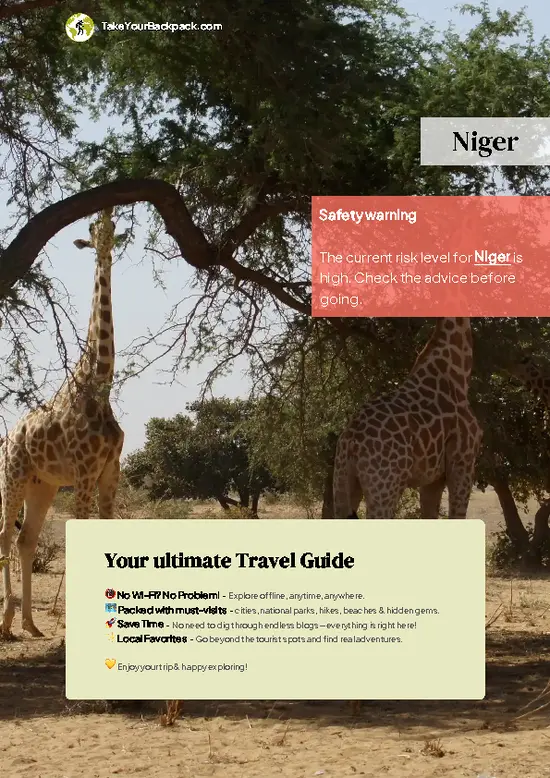
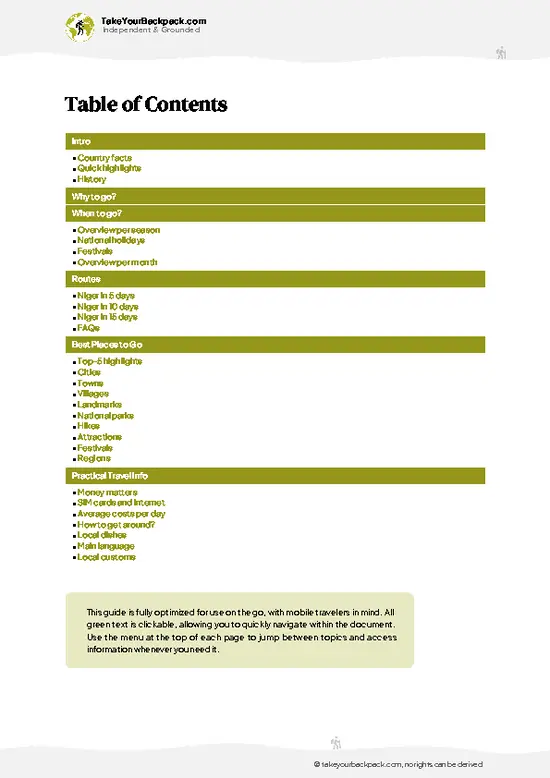
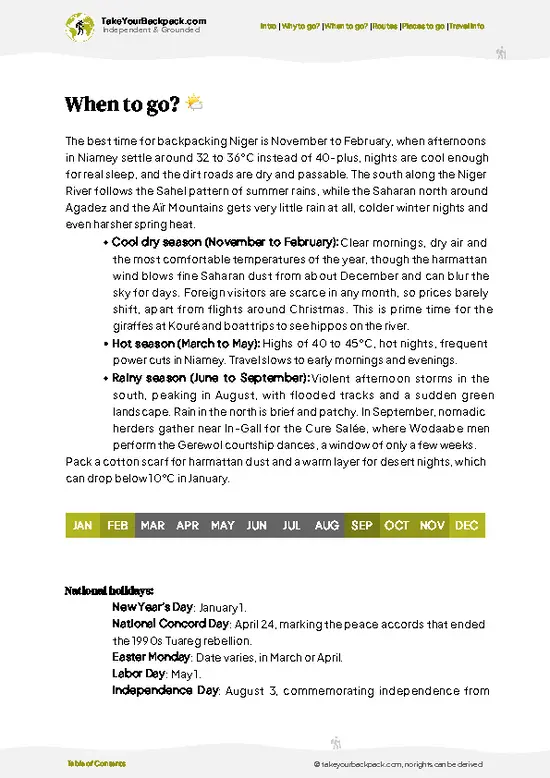
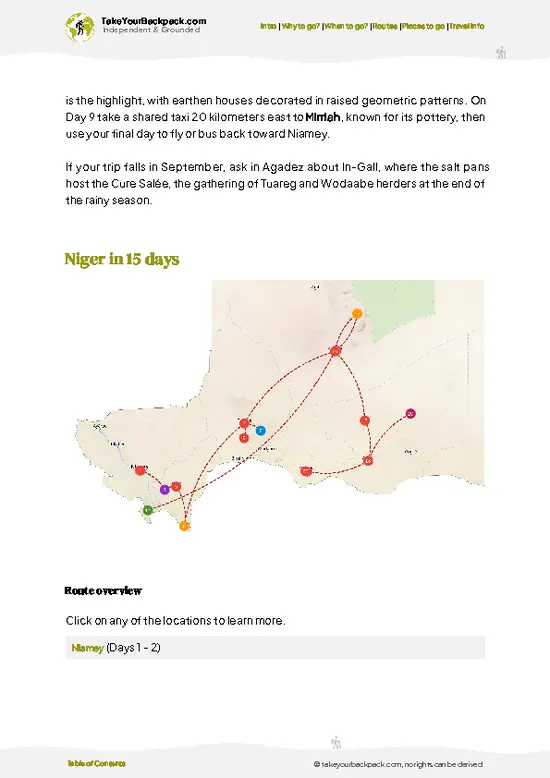
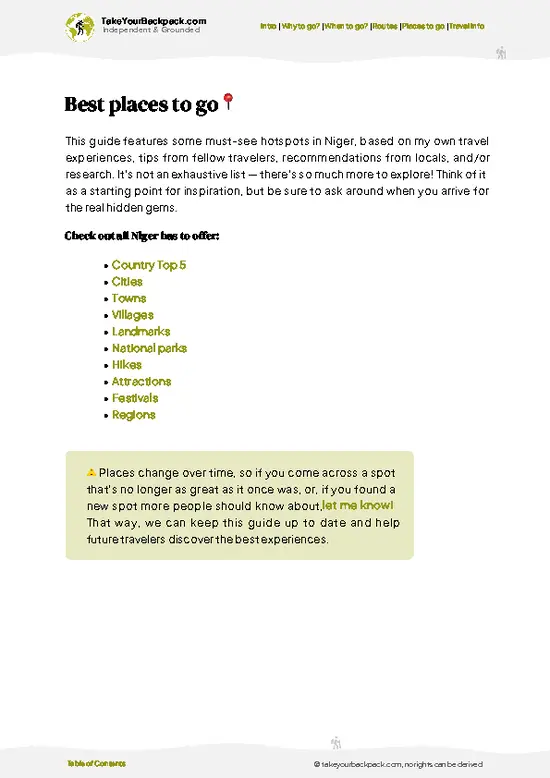
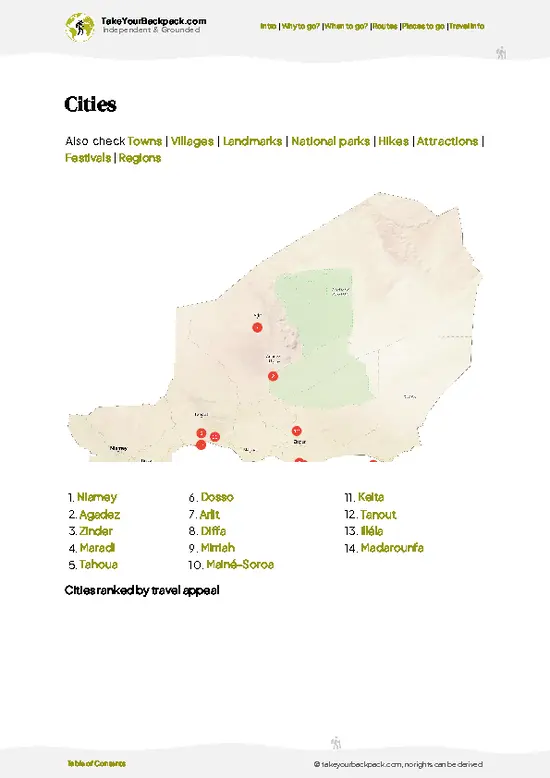
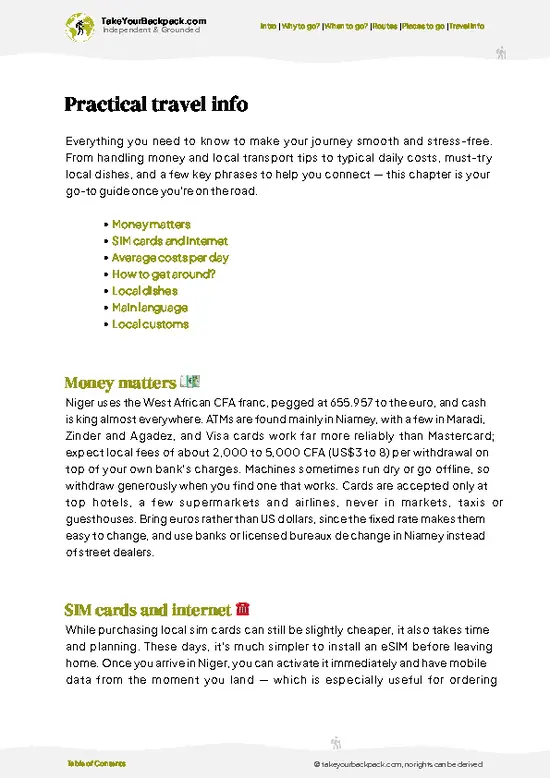
example page 0 from our offline Travel Guide for Nigerexample page 1 from our offline Travel Guide for Nigerexample page 2 from our offline Travel Guide for Nigerexample page 3 from our offline Travel Guide for Nigerexample page 4 from our offline Travel Guide for Nigerexample page 5 from our offline Travel Guide for Nigerexample page 6 from our offline Travel Guide for Nigerexample page 7 from our offline Travel Guide for Niger
The digital guide (292 pages) contains:
69 highlights, ranked by travel appeal
Optimized 5, 10 & 15-day travel routes
Cities, national parks, landmarks, beaches
How to get around
Offline-friendly for travel without Wi-Fi
👉 Click to see all 30+ guide features

📅 Plan smarter in minutes, not weeks
Month by month travel advice
Festivals & national holidays
Budget expectations

🗺️ Go to the right places, skip the overrated ones
Honest pros & cons of destinations
Top hikes, parks & viewpoints
Lesser-known places most travelers miss
Clear “worth it vs skip it” guidance

🛏️ Travel smoothly without rookie mistakes
Best areas to stay
Transport systems explained simply
Common scams & safety advice
SIM cards, money & practical tips

🌍 Understand the country, not just visit it
Culture & traditions
52 Essential phrases & customs
Festivals worth planning around
Traveler-friendly historical context
Insights that make places more meaningful

📱 Built for real travel conditions
Fully downloadable PDF
Works completely offline
Optimized for phone use
Useful in remote areas & buses
Everything in one place
Save weeks of stressful planning
Get instant access to your full guide. 30‑day money-back guarantee.


By proceeding you agree to our terms.
Sent to your inbox immediately after payment • 100% Secure Checkout
Best Backpacking Travel Advisor 2025 tourism awardBest Backpacking
Travel Advisor
2025
What others say about Take Your Backpack Guides:
⭐⭐⭐⭐⭐
Fantastic, amazing amount of information!
⭐⭐⭐⭐⭐
My goodness this is amazing, it's what I've been looking for hats off too you!
⭐⭐⭐⭐⭐
I think this is absolutely BRILLIANT
⭐⭐⭐⭐
Very complete and informative. It's still missing places, but I gotta to commend you
⭐⭐⭐⭐⭐
This is truly amazing, thank you, can't wait to explore it with my kids!
⭐⭐⭐⭐⭐
Awesome resource, thank you!
⭐⭐⭐⭐⭐
This is amazing! Can't wait to explore the ones I haven't seen
⭐⭐⭐⭐
I love this! Well done, great idea.
⭐⭐⭐⭐⭐
Thanks for taking the time to make this gem!
⭐⭐⭐⭐⭐
This might be the best website I've ever seen.
⭐⭐⭐⭐⭐
Congratulations, and thank you so much for your work; it's incredibly valuable.
⭐⭐⭐⭐
In all seriousness I think you did a great job pointing out the important spots
⭐⭐⭐⭐⭐
10/10 very good
⭐⭐⭐⭐⭐
As someone who's only just starting to visit regularly this is awesome, thank you.
⭐⭐⭐⭐
Thank you very much! I'm going to visit my dad, it's going to be very useful!
⭐⭐⭐⭐⭐
This is really cool! We'll be travelling for the first time and this definitely come in handy.
⭐⭐⭐⭐⭐
You are now our minister of culture, congratulations 👨‍💼
⭐⭐⭐⭐⭐
Just wanted to tell you that this is a pearl! Going to follow your recommendations.
⭐⭐⭐⭐⭐
This is so cool. I'll definitely be using the resource for my travels soon.
⭐⭐⭐⭐⭐
This is very impressive! Good work.
⭐⭐⭐⭐⭐
This is an amazing and informative site. Very well done!

🛏️ Where to stay?Best areas and accommodation options

In Keita, the best spot for backpackers is the central market district. It’s where the town’s pulse is strongest—early mornings filled with the scent of fresh millet and the chatter of traders. This area is naturally safer because it’s busy, and locals are used to visitors, making it easier to strike up conversations and find fellow travelers. Hostels here are modest but reliable, offering a chance to connect with others over shared meals or stories under the dry, open sky. Compared to quieter residential neighborhoods, the market district keeps you in the flow, where the rhythm of daily life … read more 👉
In Keita, the best spot for backpackers is the central market district. It’s where the town’s pulse is strongest—early mornings filled with the scent of fresh millet and the chatter of traders. This area is naturally safer because it’s busy, and locals are used to visitors, making it easier to strike up conversations and find fellow travelers. Hostels here are modest but reliable, offering a chance to connect with others over shared meals or stories under the dry, open sky. Compared to quieter residential neighborhoods, the market district keeps you in the flow, where the rhythm of daily life becomes your backdrop. It’s not about luxury—it’s about feeling part of the town’s fabric, with every narrow street and dusty corner offering a new layer of experience.

🚌 Getting aroundTransportation options and practical tips

Keita moves at its own rhythm—less a clockwork town and more a pulse you feel in the dust and chatter. The sun climbs high, baking the earth and sharpening shadows, while locals navigate the streets with a mix of practiced ease and improvisation. Timetables exist, but they’re more like suggestions whispered over the hum of engines and the shuffle of feet. This isn’t a place where you’ll find neat schedules posted on every corner; instead, you learn to read the flow by watching the crowd, catching the scent of diesel mixed with fresh millet bread, and tuning into the cadence of calls from vendors. The payoff is a town that rewards patience and curiosity, where every delay is a chance to soak in the atmosphere and every ride a window into daily life.


  • Walking: The heart of Keita beats strongest
read more 👉
Keita moves at its own rhythm—less a clockwork town and more a pulse you feel in the dust and chatter. The sun climbs high, baking the earth and sharpening shadows, while locals navigate the streets with a mix of practiced ease and improvisation. Timetables exist, but they’re more like suggestions whispered over the hum of engines and the shuffle of feet. This isn’t a place where you’ll find neat schedules posted on every corner; instead, you learn to read the flow by watching the crowd, catching the scent of diesel mixed with fresh millet bread, and tuning into the cadence of calls from vendors. The payoff is a town that rewards patience and curiosity, where every delay is a chance to soak in the atmosphere and every ride a window into daily life.


  • Walking: The heart of Keita beats strongest on foot. Streets are compact and lively, making walking the cheapest and most immersive way to get around. Expect dusty paths and occasional bursts of street market aromas; it’s slow but rich in texture.

  • Shared Taxis: These minibuses run roughly from dawn until dusk, costing just a few hundred CFA francs. They don’t follow strict schedules but leave when full, so timing is flexible but unpredictable. They’re cramped but fast, zipping through town and connecting to nearby villages.

  • Motorcycle Taxis (Jakartas): Available all day and into the early evening, these are your go-to for quick hops or reaching spots off the main roads. Prices are negotiable but generally affordable; hold tight as the driver weaves through the dust and chatter.

  • Bicycle Rentals: For those wanting control and speed without the noise, renting a bike is a smart move. Early morning rides beat the heat and let you explore outskirts at your own pace, with rental costs low and negotiable.

👛 Costs (as of 24 October 2025)What things cost and how to budget

Backpacking in Keita, Niger, means embracing a raw, off-the-beaten-path experience where every cost reflects the simplicity and pace of life in this Sahelian town.
  • Dorm Accommodation: Options are extremely limited and basic, often guesthouses or small local inns rather than formal hostels. Expect to pay around €5 to €10 per night. The rooms are simple, with minimal amenities, sometimes just a mattress and a fan, so pack your patience and a good sleeping mat or liner.
  • Meals: Food here is straightforward and hearty—think millet porridge, rice, and local stews. Street food and small local eateries will cost between €1 and €3 per meal. Fresh water and soft drinks are affordable but bottled water is a must for safety, adding a small extra cost.
  • Local Transport: Keita is small, so walking is
read more 👉
Backpacking in Keita, Niger, means embracing a raw, off-the-beaten-path experience where every cost reflects the simplicity and pace of life in this Sahelian town.
  • Dorm Accommodation: Options are extremely limited and basic, often guesthouses or small local inns rather than formal hostels. Expect to pay around €5 to €10 per night. The rooms are simple, with minimal amenities, sometimes just a mattress and a fan, so pack your patience and a good sleeping mat or liner.
  • Meals: Food here is straightforward and hearty—think millet porridge, rice, and local stews. Street food and small local eateries will cost between €1 and €3 per meal. Fresh water and soft drinks are affordable but bottled water is a must for safety, adding a small extra cost.
  • Local Transport: Keita is small, so walking is often the best way to get around. For longer distances, shared taxis or motorbike rides can be found for about €0.50 to €1.50 per trip. Don’t expect fixed schedules or formal stops; it’s all about catching a ride when you can.
  • Basic Activities/Entry Fees: Tourist infrastructure is minimal. Any cultural visits or local markets are free or ask for a small donation, usually under €2. The real draw is the landscape and community life, which costs nothing but your time and respect.
  • Miscellaneous Expenses: Budget a few euros for essentials like SIM cards, snacks, or occasional bottled water. Internet access is patchy and expensive, so plan accordingly. Around €1 to €3 daily should cover these extras.

All told, you’re looking at roughly €8 to €20 per day to keep things running smoothly in Keita. It’s not about luxury but about tuning into the rhythms of a place where every euro stretches far, and the real currency is patience and openness.
⚠️ Prices can change and everyone travels differently, so take this as a rough guide. Hope it helps you plan your adventure!

🚌 Day tripsExploring the surroundings

Keita, Niger, is a fantastic launchpad for day trips that offer a taste of the region’s rich culture and stunning landscapes. Each excursion is a chance to dive deeper into the heart of Niger, making the effort feel worthwhile.

Trip to the Aïr Mountains
Just a few hours from Keita, the Aïr Mountains rise dramatically from the desert floor, offering breathtaking views and a chance to connect with the Tuareg culture. The journey takes about three hours by shared taxi, costing around 1,500 CFA. Best visited during the cooler months from November to February, this trip rewards you with crisp air and vibrant sunsets. A common mistake is underestimating the need for water and snacks; the remote areas can be surprisingly barren.
👉 Explore Aïr Mountains

Visit to the Niger River
A short drive … read more 👉
Keita, Niger, is a fantastic launchpad for day trips that offer a taste of the region’s rich culture and stunning landscapes. Each excursion is a chance to dive deeper into the heart of Niger, making the effort feel worthwhile.

Trip to the Aïr Mountains
Just a few hours from Keita, the Aïr Mountains rise dramatically from the desert floor, offering breathtaking views and a chance to connect with the Tuareg culture. The journey takes about three hours by shared taxi, costing around 1,500 CFA. Best visited during the cooler months from November to February, this trip rewards you with crisp air and vibrant sunsets. A common mistake is underestimating the need for water and snacks; the remote areas can be surprisingly barren.
👉 Explore Aïr Mountains

Visit to the Niger River
A short drive from Keita, the Niger River is a lifeline for the region, teeming with life. Spend a day exploring the riverbanks, where you can spot fishermen and local wildlife. It takes about an hour to reach, and you can do it for less than 1,000 CFA. Early mornings are ideal for birdwatching, as the light dances on the water. Many first-timers miss the chance to interact with locals; don’t hesitate to strike up a conversation.


Excursion to the Ténéré Desert
The Ténéré Desert, a vast expanse of sand and solitude, is about a four-hour drive from Keita. This trip is worth every minute for the surreal landscapes and the chance to see ancient rock art. Expect to spend around 2,000 CFA for transport. The best time is during the cooler months, but be prepared for the sun’s intensity. A common pitfall is not bringing enough sunscreen; the desert sun is relentless.
Want to know what more Niger offers?
The Niger Travel Guide describes 69 highlights, from cities to national parks, from beaches to hikes

Get the Travel Guide -

🍲 FoodLocal Cuisine & Drinks

In Keita, Niger, food is a gateway to the Sahel’s heart. You’ll want to dive into fufu, a dense, doughy staple made from millet or sorghum, often paired with rich, spicy stews brimming with peanuts and local greens. The aroma of grilled meat skewers sizzling over charcoal is irresistible—expect bold, smoky flavors that hit just right after a dusty day on the trail.

Backpackers find their rhythm at bustling markets and street stalls, where meals are fresh, fast, and fiercely authentic. Casual eateries hum with locals sharing stories over bowls of hearty porridge or plates of jollof rice—a West African classic with a peppery kick.

Drinking culture here is simple but social: tea is king, served sweet and strong, often with a side of lively conversation. Respect the local pace—meals aren’t … read more 👉
In Keita, Niger, food is a gateway to the Sahel’s heart. You’ll want to dive into fufu, a dense, doughy staple made from millet or sorghum, often paired with rich, spicy stews brimming with peanuts and local greens. The aroma of grilled meat skewers sizzling over charcoal is irresistible—expect bold, smoky flavors that hit just right after a dusty day on the trail.

Backpackers find their rhythm at bustling markets and street stalls, where meals are fresh, fast, and fiercely authentic. Casual eateries hum with locals sharing stories over bowls of hearty porridge or plates of jollof rice—a West African classic with a peppery kick.

Drinking culture here is simple but social: tea is king, served sweet and strong, often with a side of lively conversation. Respect the local pace—meals aren’t rushed, and sharing food is a quiet way to connect.

🛡️ SafetyScams, Hazards, and Annoyances

Keita, Niger, is generally safe, but a few practical tips can enhance your experience. Stay aware in crowded markets; pickpockets can be a nuisance. If you’re solo, avoid wandering too far after dark—stick to well-lit areas and travel in groups when possible.

Be cautious with offers from overly friendly locals; they might be fishing for a tip or trying to sell you something you don’t need. Carry a small amount of cash in local currency for small purchases, as many places don’t accept cards. Keep your belongings close, and you’ll navigate Keita like a pro.

Other Nigerien cities near Keita

Explore more nearby:

  • Tahoua—market town, Hausa architecture, regional crossroads| 57 km away
  • Illéla—livestock markets, Hausa villages, rural plateau| 65 km away
  • Maradi—Hausa markets, agricultural hub, regional crossroads| 200 km away

💡 Not sure where to go next?
Create a personalized itinerary for Niger including Keita and the places that fit your trip.

Generate my itinerary

👉 Discover all cities

Or checkout all Niger has to offer (think cities, towns, villages, national parks, hikes, beaches, festivals)
Country photo of Niger

We 💚 feedbackFinal thoughts on visiting Keita

Keita pulses with life, especially at dusk when the air fills with the aroma of grilled meat and spices. Expect the unexpected; a local might invite you to share a meal. Just be ready for the heat—stay hydrated and pace yourself. Embrace the chaos; it’s part of the charm.

✍️ Help improve this page!
The information on this page is based on in-depth research, insights shared by experienced travelers, and feedback from the local travel community in Niger. While every effort is made to keep the information accurate and current, conditions can change — so if you spot anything incorrect or outdated, please get in touch.


🙋‍♂️ Give feedback

👋 Meet the founderWho’s Behind Take Your Backpack?

Johan, backpacker and founder of TakeYourBackpackHi, I’m Johan (Netherlands 🇳🇱), the creator of TakeYourBackpack. Over the past decade, I’ve backpacked through 80+ countries across six continents, gaining extensive experience with independent travel, long-term trips, and overland routes.

This site is built on a combination of firsthand travel experience and carefully curated insights from other backpackers. Many guides are based on places I’ve personally visited, while others bring together tips, observations, and practical advice shared by trusted travelers I’ve met along the way.

The goal is to provide realistic, experience-driven guidance — not generic itineraries — so you can explore destinations with better context, clearer expectations, and more confidence.

Get full Niger guide •
Instant download • 69 highlights • Full Offline guide